Introduction/Overview
Natural products, as an important source of drug discovery, play an irreplaceable role in the long history of human fight against diseases. Flavonoids, as the most widely distributed class of secondary metabolites in nature, have attracted much attention due to their structural diversity and extensive biological activity. Among them, Scutellarin is derived from the traditional Chinese medicine Scutellaria baicalensis(Erigeron breviscapus The flavonoid active ingredients isolated from (Vant.) Hand. - Mazz. have significant pharmacological effects such as anti-inflammatory, antioxidant, anti apoptotic, and microcirculation improvement, and are widely used in clinical practice to treat cardiovascular and cerebrovascular diseases. However, natural flavonoids generally have defects such as poor water solubility, low bioavailability, and unstable metabolism, which seriously restrict their clinical application potential.
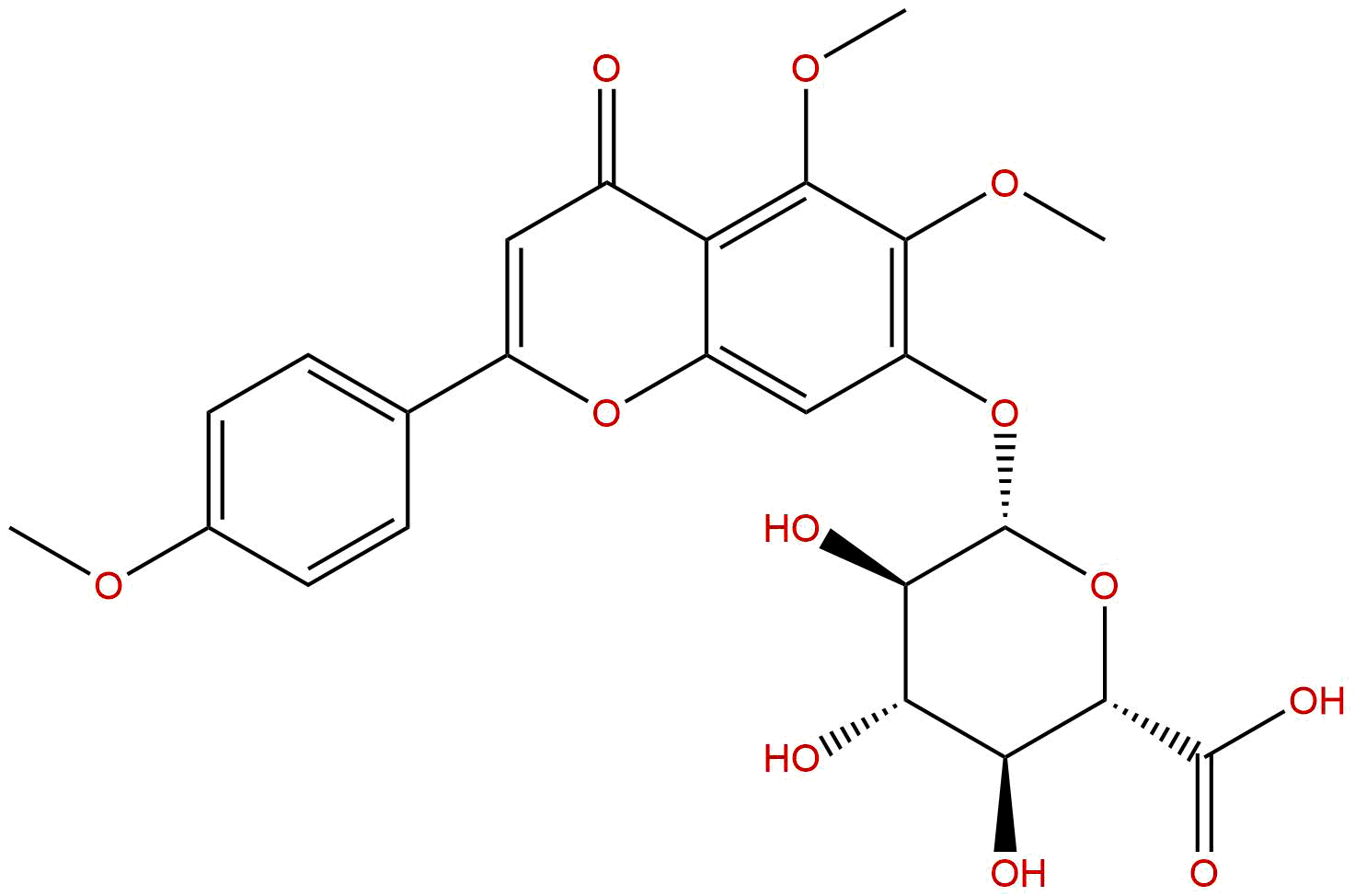
To overcome these limitations, medicinal chemists modify the structure of natural products in order to obtain derivatives with stronger activity and better drug properties. 5,6,4 '- trimethoxyscutellarin (CAS number: 1195208-73-1) is a representative semi synthetic derivative that emerged in this context. This compound changes the electron cloud distribution, lipid water partition coefficient, and spatial configuration of the molecule by introducing three methoxy groups at positions 5, 6, and 4 'in the parent nucleus of Lampyridamole B, which may affect its interaction mode with biological targets. Preliminary studies have shown that this derivative not only retains the core pharmacological activity of the parent compound, but also exhibits unique advantages in the treatment of specific disease models, especially myocardial ischemia.
Myocardial ischemia is the core pathophysiological process of coronary atherosclerotic heart disease (CHD). Its pathogenesis is complex, involving energy metabolism disorder, oxidative stress, calcium overload, inflammatory reaction, apoptosis and autophagy. Although existing drugs such as nitrates, beta blockers, and calcium channel blockers can alleviate symptoms to some extent, the search for compounds that can intervene in myocardial ischemic injury through multiple targets and pathways remains a current research hotspot. 5,6,4 '- trimethoxybreviscapine due to its potential anti myocardial ischemia activity and clear molecular targets (such as...) BCL2、IL-6、NFE2L2、HIF1A、SIRT1、MAPK1、TNF、NOS2、PPARG、ACE It has become a candidate molecule worthy of further exploration in the field of natural product pharmacology. This article aims to systematically review the chemical structure, physicochemical properties, plant origin, pharmacological activity, mechanism of action, pharmacological evaluation, and clinical application prospects of the compound, in order to provide comprehensive theoretical references for subsequent research.
Chemical structure and physicochemical properties
5,6,4 '- trimethoxybreviscapine belongs to the flavonoid glycoside derivatives of flavonoids. Its chemical structure is based on the parent nucleus of scutellarin (5,6,4 '- trihydroxyflavone-7-O - β - D-glucuronide), but undergoes methylation modification at key hydroxyl sites. Specifically, its structural features are as follows: the hydroxyl groups at positions 5 and 6 on the A ring of the flavonoid mother nucleus are replaced by methoxy groups (- OCH ∝), the hydroxyl group at position 4 'on the B ring is also replaced by methoxy groups, and the glucuronic acid group is retained at position 7. This structural modification significantly alters the physicochemical properties of the molecule.
In terms of molecular weight, the compound has a molecular weight of 504.4440 Da, which is an increase compared to the parent compound, scutellarin (approximately 462 Da), mainly due to the introduction of three methyl groups. The lipid water partition coefficient (LogP) is a key parameter for measuring the lipophilicity of compounds, with a LogP value of 0.7623 for 5,6,4 '- trimethoxybreviscapine. This value indicates that the compound has a certain degree of lipophilicity, but overall it still leans towards hydrophilicity. Compared with the parent plant Lampyridin-B (LogP is usually negative and highly hydrophilic), methylation modification significantly improves its lipid solubility. This moderate improvement in lipid solubility theoretically facilitates its penetration of cell membranes, enhances its binding ability to membrane receptors or intracellular targets, and may also improve its absorption and distribution in vivo.
The polar surface area (TPSA) is 174.3500 Å ², which is relatively high and mainly attributed to the presence of multiple oxygen atoms in the molecule (including oxygen in glycosidic bonds and oxygen in methoxy groups) as well as carboxyl groups on uronic acids. High TPSA is usually associated with low oral absorption rate and low blood-brain barrier permeability. In fact, the blood-brain barrier permeability of the compound was evaluated as' low ', which is consistent with its high TPSA value. Low blood-brain barrier permeability may be an advantage in the treatment of peripheral diseases such as myocardial ischemia, as it can reduce central nervous system side effects.
In terms of water solubility, the predicted water solubility value of this compound is 0.6789 mg/mL, which is at a moderate to low level. Although the introduction of three methoxy groups increased lipid solubility, the glucuronic acid group at position 7 still endowed the molecule with a certain degree of water solubility. This amphiphilic characteristic may lead to the formation of micelles or binding with other carrier molecules in the in vivo environment, thereby affecting its pharmacokinetic behavior. In addition, the risk assessment of hERG inhibition is' no ', indicating that the compound has a low potential risk in terms of cardiac safety, which is a positive indication of drug efficacy. The Ames test result is 0.6, indicating a low risk of genetic toxicity, but further rigorous experimental verification is needed.
Plant sources and extraction methods
5,6,4 '- trimethoxy breviscapine is not a widely present primitive component in natural plants, but a semi synthetic derivative obtained through structural modification of the natural product breviscapine. Therefore, its "plant source" actually refers to the source of its precursor compound - genistein.
Lamplighter B is mainly derived from the plant Lamplighter in the Asteraceae family(Erigeron breviscapus)Also known as Dengzhan Xixin, it is mainly distributed in southwestern regions of China such as Yunnan, Guizhou, and Sichuan. This plant is used in traditional Chinese medicine to treat post-stroke sequelae, coronary heart disease, angina pectoris and other diseases. Lamplighter B is the most abundant flavonoid active ingredient in Lamplighter flowers and is also the main indicator for its quality control.
The traditional methods for extracting astaxanthin from Scutellaria baicalensis mainly include solvent extraction, ultrasound assisted extraction, and microwave-assisted extraction. The commonly used solvent is an ethanol water mixture system (such as 70% ethanol), which is extracted by heating reflux or percolation method. The extract is concentrated, defatted, and enriched by macroporous adsorption resin (such as HPD-100, D101) column chromatography. It is then further purified by polyamide column chromatography or preparative high-performance liquid chromatography (Prep HPLC) to obtain high-purity breviscapine.
After obtaining breviscapine B, the preparation of 5,6,4 '- trimethoxybreviscapine B relies on chemical synthesis methods. Selective methylation strategy is usually adopted. Due to the presence of multiple phenolic hydroxyl groups (5,6,4 '- positions) and a carboxyl group on a glucuronic acid in the molecule of Lamplighter B, direct methylation can lead to non-specific reactions. Therefore, it is necessary to adopt a protective group strategy: first, protect the glucuronic acid group at position 7 (such as converting it into an ester), and then use mild methylation reagents (such as iodomethane or dimethyl sulfate) to selectively methylate the phenolic hydroxyl groups at positions 5, 6, and 4 'under alkaline conditions. Finally, the target product is obtained by removing the protective group through hydrolysis. The reaction conditions need to be strictly controlled to avoid excessive methylation or hydrolysis of glycosidic bonds. In recent years, enzymatic methylation or green synthesis strategies based on click chemistry have also been explored for the preparation of such derivatives, aiming to improve yield and selectivity and reduce the use of organic solvents.
Pharmacological activity research
The pharmacological activity research of 5,6,4 '- trimethoxybreviscapine mainly focuses on the known efficacy of its parent compound breviscapine, with a particular emphasis on its protective effect in myocardial ischemia models.
Anti myocardial ischemia activity This is the core pharmacological research direction of this compound. In vitro hypoxia/reoxygenation (H/R) or oxygen glucose deprivation/reoxygenation (OGD/R) induced myocardial cell injury models, 5,6,4 '- trimethoxybreviscapine can significantly improve the survival rate of myocardial cells (such as H9c2 cells or primary neonatal rat myocardial cells). Its protective effect is reflected in multiple aspects: firstly, it can effectively reduce the release of lactate dehydrogenase (LDH) and creatine kinase isoenzyme (CK-MB), which are classic markers of myocardial cell injury. Secondly, it can inhibit cell apoptosis by reducing morphological changes in apoptotic cell nuclei, lowering the expression of pro apoptotic protein Bax, and upregulating the expression of anti apoptotic protein Bcl-2. In addition, the compound can alleviate endoplasmic reticulum stress and inhibit the overexpression of stress proteins such as CHOP and GRP78.
Antioxidant stress response Oxidative stress is a key driving factor for myocardial ischemia-reperfusion injury. Research has shown that 5,6,4 '- trimethoxybreviscapine can significantly reduce the levels of intracellular reactive oxygen species (ROS) and malondialdehyde (MDA), while increasing the activity of endogenous antioxidant enzymes such as superoxide dismutase (SOD) and glutathione peroxidase (GSH Px). This antioxidant effect is partially achieved by activating the nuclear factor E2 related factor 2 (NFE2L2, also known as Nrf2) signaling pathway. Nrf2 is a core transcription factor in the cellular antioxidant defense system, and its activation can initiate the expression of a series of downstream antioxidant enzyme genes.
anti-inflammatory effect Myocardial ischemic injury is accompanied by a strong inflammatory response. This compound can inhibit the production of pro-inflammatory cytokines, such as tumor necrosis factor - α (TNF - α) and interleukin-6 (IL-6). At the same time, it can also downregulate the expression of inducible nitric oxide synthase (NOS2, iNOS), reduce the production of excessive nitric oxide (NO), and thus alleviate inflammation mediated tissue damage. These anti-inflammatory effects may be related to the inhibition of the mitogen activated protein kinase 1 (MAPK1, ERK2) signaling pathway and the activation of nuclear factor kappa B (NF - κ B).
Improve energy metabolism Myocardial ischemia leads to mitochondrial dysfunction and energy metabolism disorders. This compound can promote mitochondrial biosynthesis and autophagy, improve mitochondrial function, and maintain ATP production by activating the SIRT1 (deacetylase Sirtuin 1) and HIF1A (hypoxia inducible factor 1 alpha) signaling pathways. The activation of SIRT1 can also regulate the activity of various metabolism related proteins through deacetylation, thereby improving the energy metabolism status of myocardial cells.
Vascular protective effect In addition to directly protecting myocardial cells, this compound may also have beneficial effects on the vascular system. It can inhibit the activity of angiotensin-converting enzyme (ACE), thereby reducing the production of angiotensin II and exerting vasodilation and blood pressure lowering effects. In addition, it may also improve endothelial function and inhibit abnormal proliferation and migration of vascular smooth muscle cells by regulating the activity of peroxisome proliferator activated receptor gamma (PPARG).
Mechanism of action and molecular targets
The pleiotropic pharmacological effects of 5,6,4 '- trimethoxybreviscapine stem from its ability to regulate multiple key signaling pathways and molecular targets. These targets do not exist in isolation, but form a complex network that collectively determines their protective effects in myocardial ischemia.
1. Anti apoptotic and mitochondrial protective mechanisms: BCL2 and SIRT1
BCL2 family proteins are the core regulators of mitochondrial pathway apoptosis. This compound can upregulate the expression of anti apoptotic protein BCL2, while inhibiting the mitochondrial translocation of pro apoptotic protein BAX, thereby maintaining the stability of mitochondrial membrane potential (Δ PSI m), preventing the release of cytochrome c, and inhibiting the activation of caspase cascade reaction. In addition, as an energy sensor, SIRT1 activation is a key upstream event for the compound to exert its protective effect. SIRT1 can activate downstream PGC-1 α (peroxisome proliferator activated receptor gamma co activator 1 α) through deacetylation, promoting mitochondrial biosynthesis; At the same time, it can also inhibit the activity of FOXO transcription factor and reduce oxidative stress-induced apoptosis. Therefore, the SIRT1-BCL2 axis constitutes the core of the compound's anti apoptotic effect.
2. Antioxidant defense mechanism: NFE2L2 (Nrf2) pathway
NFE2L2 is the main regulatory factor for cellular response to oxidative stress. Under normal conditions, Nrf2 binds to Keap1 and is degraded by ubiquitination. Under oxidative stress or the action of this compound, Nrf2 dissociates from Keap1, translocates into the nucleus, binds to antioxidant response elements (ARE), and initiates the transcription of downstream antioxidant enzyme genes, including SOD, GSH Px, heme oxygenase-1 (HO-1), and quinone oxidoreductase 1 (NQO1). This compound significantly enhances the antioxidant capacity of myocardial cells by activating the Nrf2 pathway.
3. Inflammatory regulatory mechanism: MAPK1 and TNF/IL-6
MAPK1 (ERK2) is a key member of the MAPK signaling pathway, involved in cell proliferation, differentiation, and inflammatory response. In myocardial ischemia-reperfusion injury, excessive activation of MAPK1 promotes the release of inflammatory factors. This compound can inhibit the phosphorylation of MAPK1, thereby blocking the activation of downstream NF - κ B. NF - κ B is a core transcription factor in inflammatory response, and its inhibition directly leads to a decrease in the production of pro-inflammatory cytokines TNF - α and IL-6. In addition, the compound can directly downregulate the expression of NOS2, reduce the excessive production of NO, and thus alleviate inflammation mediated cytotoxicity.
4. Hypoxia adaptation and metabolic regulation: HIF1A and PPARG
HIF1A is a key transcription factor for cellular adaptation to low oxygen environments. During myocardial ischemia, the stability and activation of HIF1A can induce the expression of vascular endothelial growth factor (VEGF) and promote angiogenesis; At the same time, it can also upregulate the expression of glycolytic enzymes, helping cells maintain energy supply under hypoxic conditions. This compound may enhance the hypoxia tolerance of myocardial cells by stabilizing HIF1A protein or promoting its transcriptional activity. Meanwhile, PPARG, as a nuclear receptor, participates in lipid metabolism and inflammation regulation. The regulatory effect of this compound on PPARG may help improve lipid metabolism disorders in cardiomyocytes and exert anti-inflammatory effects.
5. Regulation of vascular function: ACE
Angiotensin converting enzyme (ACE) is a key enzyme in the renin-angiotensin system (RAS), which converts angiotensin I into the potent vasoconstrictor angiotensin II. This compound has an inhibitory effect on ACE, similar to classical ACEI drugs, and can reduce the production of angiotensin II, thereby dilating blood vessels, reducing cardiac afterload, inhibiting myocardial fibrosis, and indirectly protecting against myocardial ischemia.
In summary, 5,6,4 '- trimethoxybreviscapine forms a multi-level protective network by simultaneously acting on multiple targets such as BCL2, IL-6, NFE2L2, HIF1A, SIRT1, MAPK1, TNF, NOS2, PPARG, and ACE, synergistically exerting anti myocardial ischemia effects from multiple dimensions including anti apoptosis, antioxidant, anti-inflammatory, improving energy metabolism, and regulating vascular function.
Evaluation of drug properties and pharmacokinetics
The evaluation of drug properties is a key bridge connecting basic research and clinical translation. Based on the provided parameters and existing knowledge, a preliminary evaluation was conducted on the pharmacological properties of 5,6,4 '- trimethoxybreviscapine.
Physical and chemical properties and drug like properties The molecular weight of this compound (504.44 Da) is slightly higher than the classical "Lipinski rule" (molecular weight<500), but still within an acceptable range. The LogP value (0.7623) conforms to the rule (LogP<5), indicating moderate lipophilicity. The number of hydrogen bond donors (carboxyl groups from uronic acids and possibly incompletely methylated hydroxyl groups) and hydrogen bond acceptors (multiple oxygen atoms) also follows the rules. Despite having a slightly higher molecular weight, its overall structure still exhibits good drug like properties. However, its high TPSA (174.35 Å ²) and low water solubility (0.6789 mg/mL) pose potential challenges. High TPSA is often associated with low oral absorption rates, while low water solubility may affect the development and in vivo absorption of formulations.
safety assessment The negative risk of hERG inhibition is an important positive signal, indicating a lower risk of inducing QT interval prolongation and apical torsion ventricular tachycardia in the heart. The Ames test result is 0.6, indicating that no significant mutagenicity was observed in the bacterial recovery mutation test, and the risk of genetic toxicity is low. These preliminary security data provide confidence for its further development. Of course, a more comprehensive safety evaluation, including acute toxicity, long-term toxicity, reproductive toxicity, and carcinogenicity testing, is a necessary step in subsequent research.
Pharmacokinetic characteristics At present, the specific pharmacokinetic data of 5,6,4 '- trimethoxybreviscapine are not sufficient, but reasonable speculation can be made based on its structural characteristics and the data of the parent compound breviscapine.
-
absorb Due to its high molecular weight, low water solubility, and high TPSA, its oral absorption may be poor and its bioavailability may be low. This may be one of the main obstacles facing its development. Similar to the mother plant Scutellaria baicalensis B, its absorption may depend on intestinal transporters (such as glucose transporters) or passive diffusion. Methylation modification may improve its membrane permeability to some extent, but the presence of uronic acid groups still limits its absorption. Therefore, developing non oral routes of administration (such as intravenous injection, sublingual administration, or transdermal administration) or adopting novel drug delivery systems (such as liposomes, nanoparticles, phospholipid complexes) may be effective strategies to improve their bioavailability.
-
distribution Its moderate LogP value suggests that it may have good organizational distribution ability. Low blood-brain barrier permeability indicates limited distribution in the central nervous system, which is beneficial for treating peripheral diseases such as myocardial ischemia and can reduce central side effects. It may be mainly distributed in organs with abundant blood flow, such as the heart, liver, and kidneys.
-
Metabolism Flavonoids mainly undergo phase II metabolism in the body, such as glucuronidation, sulfation, and methylation. The compound itself is highly methylated, which may slow down its metabolic rate in the body and prolong its half-life. However, its uronic acid groups may be hydrolyzed by gut microbiota or liver enzymes, releasing glycosides. In addition, cytochrome P450 enzymes (CYP450) in the liver may also demethylate their methoxy groups. Therefore, its metabolic pathways and the activity of metabolites need to be further studied.
-
excretion Flavonoids and their metabolites are mainly excreted through bile and urine. Its highly water-soluble uronic acid portion may promote its excretion through the kidneys.
Clinical application prospects and prospects
Based on its clear pharmacological activity against myocardial ischemia and multi-target mechanism of action, 5,6,4 '- trimethoxybreviscapine has shown broad application prospects in the field of cardiovascular disease.
1. Treatment of acute myocardial infarction and ischemia-reperfusion injury This compound has shown protective effects against myocardial ischemia-reperfusion injury in both in vitro and in vivo models. It is expected to be developed as an adjuvant drug for patients with acute myocardial infarction after percutaneous coronary intervention (PCI) or thrombolytic therapy through multiple mechanisms such as anti apoptosis, antioxidant, and anti-inflammatory, in order to alleviate reperfusion injury, reduce myocardial infarction area, and improve cardiac function.
2. Long term management of chronic stable coronary heart disease Its anti-inflammatory, improvement of vascular function (ACE inhibition), and regulation of metabolism (PPARG) effects may make it suitable for long-term secondary prevention in patients with chronic stable coronary heart disease. By delaying the progression of atherosclerosis, stabilizing plaque, and improving myocardial microcirculation, this compound may help reduce angina attacks and improve the quality of life of patients.
3. Potential treatment of diabetes cardiomyopathy Cardiomyopathy is often associated with diabetes, and its pathological mechanism involves oxidative stress, inflammation and metabolic disorder. The regulatory effect of this compound on SIRT1, NFE2L2 and PPARG may have potential therapeutic value for diabetes cardiomyopathy, and can improve insulin resistance and energy metabolism disorders of cardiomyocytes.
4. Drug combination and synergistic therapy Due to its multi-target nature, the compound may exhibit synergistic effects when used in combination with other cardiovascular drugs such as statins, antiplatelet drugs, and beta blockers, and may reduce the dosage and side effects of a single drug. For example, when used in combination with ACEI drugs, it may produce stronger vascular and cardiac protective effects through different mechanisms (direct inhibition of ACE vs. multi-target regulation).
Future research directions and challenges:
- Pharmacokinetic optimization Low oral bioavailability is its main bottleneck. Future research should focus on developing novel drug delivery systems, such as nanocrystals, lipid nanoparticles, phospholipid complexes, or prodrug designs, to enhance their solubility and oral absorption. At the same time, the metabolic pathways and activity of metabolites in the body should be systematically studied.
- In depth mechanism research Although multiple targets are known, the direct molecular target protein (i.e. the protein directly bound by the compound) is not yet clear. It is necessary to use techniques such as Drug Affinity Reaction Target Stability (DARTS), Cell Thermal Transition Analysis (CETSA), or Activity Based Proteomic Analysis (ABPP) to identify its direct binding targets, in order to more accurately understand its mechanism of action.
- Comprehensive security evaluation Strict preclinical safety evaluation is required, including long-term toxicity, reproductive toxicity, and carcinogenicity studies. Especially for its potential liver and kidney toxicity, it needs to be given special attention.
- Clinical translational research After completing sufficient preclinical studies, rigorous clinical trials should be designed to gradually advance from Phase I (safety, tolerability, pharmacokinetics) to Phase II (dose exploration, preliminary efficacy) and Phase III (confirmatory efficacy). Choosing the appropriate patient population and sensitive efficacy endpoints (such as myocardial infarction area assessed by cardiac magnetic resonance imaging, NT proBNP levels, and incidence of major adverse cardiovascular events) is crucial.
Conclusion
5,6,4 '- trimethoxybreviscapine, as a structurally optimized derivative of breviscapine, exhibits better lipid solubility and potential drug formation through clever methylation modification while retaining the core pharmacological activity of the parent compound. It forms a multi-level protective network by simultaneously regulating multiple molecular targets closely related to the pathological process of myocardial ischemia, such as BCL2, IL-6, NFE2L2, HIF1A, SIRT1, MAPK1, TNF, NOS2, PPARG, and ACE. It synergistically exerts cardioprotective effects from multiple dimensions, including anti apoptosis, antioxidant, anti-inflammatory, improving energy metabolism, and regulating vascular function. Although its oral bioavailability and pharmacokinetic properties still face challenges, with the help of modern drug delivery technologies, these issues are expected to be resolved. This compound represents a successful example of obtaining innovative drugs with independent intellectual property rights by optimizing the structure of traditional Chinese medicine active ingredients through medicinal chemical methods. In the future, with the in-depth revelation of its mechanism of action and continuous improvement of its pharmacokinetic properties, 5,6,4 '- trimethoxybreviscapine is expected to become a new candidate drug for the treatment of myocardial ischemia and related cardiovascular diseases, bringing new treatment options to patients.