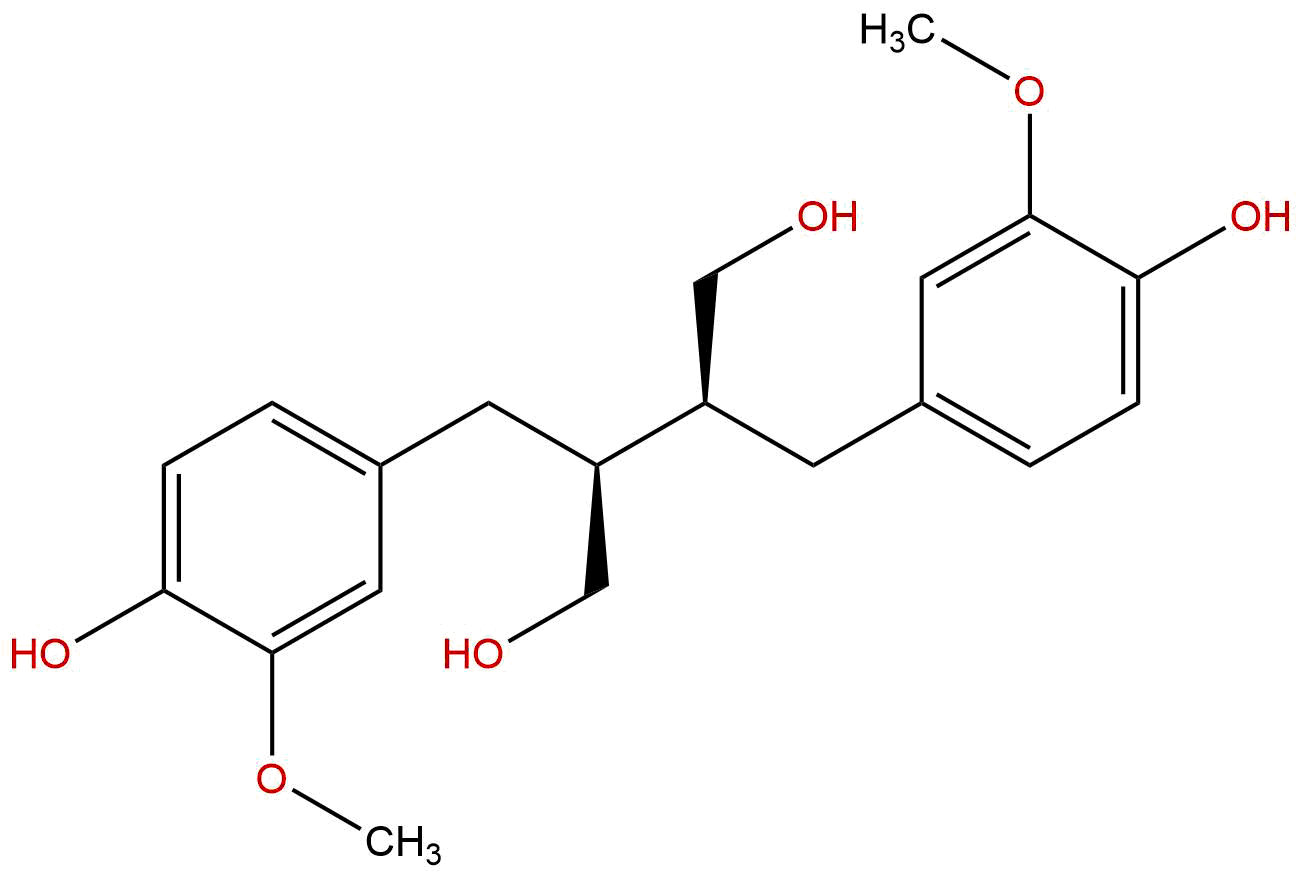


Product name: (+)-Secoisolariciresinol
Synonym name:
Catalogue No.: BP2266
Cas No.: 145265-02-7
Formula: C20H26O6
Mol Weight: 362.422
Botanical Source:
Type of Compound: Phenols
Purity: 95%~99%
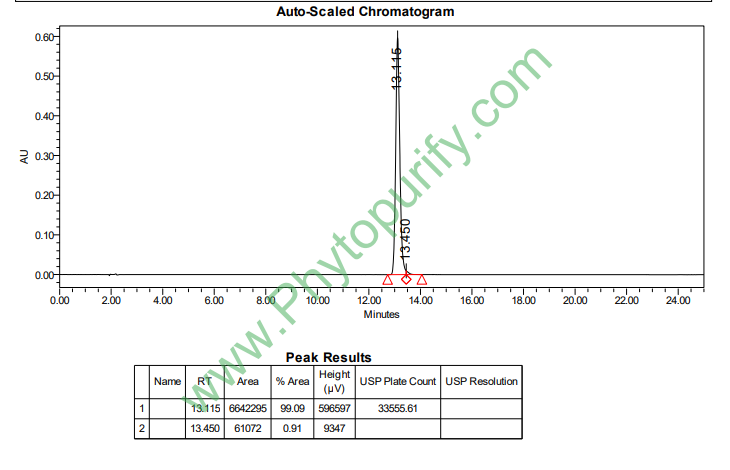
Analysis Method: HPLC-DAD or/and HPLC-ELSD
Identification Method: Mass, NMR
Packing: Brown vial or HDPE plastic bottle
Storage: Store in a well closed container, protected from air and light. Put into refrigerate or freeze for long term storage.
Whenever possible, you should prepare and use solutions on the same day. However, if you need to make up stock solutions in advance, we recommend that you store the solution as aliquots in tightly sealed vials at -20℃. Generally, these will be useable for up to two weeks.
The product could be supplied from milligrams to grams
Inquire for bulk scale.
For Reference Standard and R&D, Not for Human Use Directly.
HPLC of (+)-Secoisolariciresinol
Storage conditions:Short-term storage at 2~8℃, long-term storage at -20 ~ -80℃
99.3800
2.1229
2.1210
.3141
4.7248
4.1926
Low
87.4523
3.1122
No
No
No
No
No
No
0.0
Yes
No
No
No
Natural products, as an important source of drug discovery, have always played an indispensable role in the long struggle between humans and diseases. Among numerous natural compounds with biological activity, lignans have attracted much attention due to their diverse chemical structures and extensive pharmacological activities. Secoselariciresinol (SECO), as a typical dibenzylbutane lignan, is widely present in flaxseed, sesame, whole grains, and various medicinal plants. It is an important secondary metabolite in plants. It is worth noting that SECO has two chiral centers and four stereoisomers, among which (+) - Secosolariciresol (CAS number: 145265-02-7) exhibits unique biological activity due to its unique (2S, 3S) - configuration.
In recent years, with the continuous deepening of understanding of the pathogenesis of chronic inflammatory diseases, arthritis, especially rheumatoid arthritis (RA) and osteoarthritis (OA), has become one of the most disabling diseases worldwide. Although existing therapeutic drugs such as nonsteroidal anti-inflammatory drugs (NSAIDs), disease modifying antirheumatic drugs (DMARDs), and biologics have certain therapeutic effects, the side effects of long-term use, such as gastrointestinal damage, cardiovascular risk, and immune suppression, have prompted researchers to constantly seek safer and more effective alternative therapies. In this context, (+) - open-loop isoquercetin has gradually become a research hotspot in the field of natural product pharmacology due to its significant anti-inflammatory activity, good safety, and multi-target action characteristics.
This review aims to systematically review the research progress on the chemical structure characteristics, plant sources, pharmacological activity, mechanism of action, and pharmacological evaluation of (+) - ring opening isoquercetin, with a focus on exploring its potential application value in the treatment of arthritis, in order to provide theoretical basis for the further development and clinical translation of this natural product.
The chemical name of (+) - open-loop isoquercetin is (2S, 3S) -2,3-bis (4-hydroxy-3-methoxybenzyl) butane-1,4-diol, with a molecular formula of C ₂ ₀ H ₂ ₆ O ₆ and a molecular weight of 362.4220. The core of its structure is a four carbon chain (C1-C4) connecting two aromatic rings (A ring and A 'ring), with 3-methoxy-4-hydroxybenzyl (i.e. guaiacyl) substituents at positions C2 and C3, and hydroxymethyl at positions C1 and C4. This molecule contains two chiral centers (C2 and C3) and theoretically exists in four stereoisomers: (2S, 3S) -, (2R, 3R) -, (2S, 3R) -, and (2R, 3S) - configurations. Among them, (+) - open-loop isoquercetin has an absolute configuration of (2S, 3S) -, with a positive specific rotation, and is enantiomeric with (-) - open-loop isoquercetin (2R, 3R) - configuration).
Stereochemistry has a decisive impact on biological activity. Research has shown that (+) - SECO can be converted into enterolactone and enterodiol by the gut microbiota in mammals, while the metabolic conversion efficiency of its enantiomer (-) - SECO is significantly lower. This stereoselective metabolic difference directly affects the bioavailability and pharmacological effects of compounds.
According to computational chemistry predictions and experimental measurements, the key physicochemical parameters of (+) - ring opening isoquercetin are as follows:
These physicochemical parameters collectively outline the basic profile of (+) - SECO as an oral candidate drug: moderate lipophilicity, acceptable water solubility, low BBB penetration, no risk of cardiac toxicity and genetic toxicity, providing important references for subsequent pharmacokinetic studies and formulation development.
(+) - Open ring isoquercetin is widely distributed in the plant kingdom, especially rich in the families Flax, Flax, Pine, and certain medicinal plants. The main sources include:
Flaxseed (Linum usitatissimum)Flaxseed is the most abundant source of SECO, with a content of 2-4 mg/g dry weight. The SECO in flaxseeds mainly exists in the form of open ring isoliquiritigenol diglucoside (SDG), which can be released as free SECO after hydrolysis by β - glucosidase. It is worth noting that the stereoconfiguration of SECO in flaxseed is mainly (+) - (2S, 3S) - type.
Sesame (Sesamum indicum)Sesame seeds contain a certain amount of SECO, but the content is lower than that of flaxseed. The lignans in sesame are mainly sesamin and sesamolin, with SECO as a secondary component.
Pinus spp The xylem of Norwegian spruce (Picea abies) and European red pine (Pinus sylvestris) contains SECO and its glycosides, which are natural sources of lignans.
Other sources Whole grains (such as rye, wheat, oats), certain beans, and berries also contain trace amounts of SECO. In addition, traditional medicinal plants such as Schisandra chinensis and Forsythia suspensa have also been reported to contain this compound.
The extraction of free SECO is usually carried out using organic solvent extraction method. Due to the presence of multiple phenolic hydroxyl groups and high polarity in SECO molecules, methanol, ethanol, or acetone water mixed solvents are often used as extraction media. The typical extraction process includes: drying and crushing plant materials, soaking and extracting with 70% -80% ethanol or methanol at room temperature or heating conditions, concentrating the extract under reduced pressure, defatting with n-hexane, and then extracting and enriching lignin components with ethyl acetate.
For SDGs existing in the form of glycosides, enzymatic or acid hydrolysis treatment is required first. β - glucosidase (derived from almonds, Aspergillus niger, or gut microbiota) can efficiently hydrolyze SDGs and release SECO under mild conditions (pH 5.0-6.0, 37-50 ° C). Acid hydrolysis (such as 1 M HCl, 100 ° C, 1 hour), although cost-effective, may lead to partial product degradation or conformational isomerization.
Column chromatography Silica gel column chromatography is a classic method for separating SECO, commonly using chloroform methanol or n-hexane ethyl acetate gradient elution. For complex samples, Sephadex LH-20 gel column chromatography can be used for further purification, and molecular sieve effect can be used to remove pigment and polysaccharide impurities.
High Speed Counter Current Chromatography (HSCCC)HSCCC utilizes the liquid-liquid distribution principle, eliminating the need for a solid stationary phase and avoiding irreversible adsorption issues. Using a solvent system of n-hexane ethyl acetate methanol water (1:5:1:5, v/v), SECO can be efficiently separated from crude flaxseed extract with a purity of over 95%.
Preparation type high performance liquid chromatography (Prep HPLC)High purity preparation of SECO can be achieved by using C18 reverse phase chromatography column with acetonitrile water or methanol water as mobile phase, combined with UV detection (280 nm). For chiral separation, chiral chromatography columns (such as Chiralpak AD-H or Chiralcel OD-H) are required to distinguish between (+) - and (-) - enantiomers.
Supercritical fluid extraction (SFE)Using CO ₂ as the solvent and adding an appropriate amount of ethanol as the entrainer, SECO can be extracted at lower temperatures to avoid degradation of thermosensitive components. This method is environmentally friendly, but the equipment cost is relatively high.
Inflammation is the core pathological process of arthritis, and (+) - SECO exhibits significant anti-inflammatory effects in various inflammatory models. In vitro studies have shown that (+) - SECO (10-100 μ M) can concentration dependently inhibit the production of nitric oxide (NO) and prostaglandin E ₂ (PGE ₂) in RAW264.7 macrophages stimulated by lipopolysaccharide (LPS), with a half maximal inhibitory concentration (IC ₅₀) of approximately 25 μ M. Further research has found that (+) - SECO can downregulate the protein expression levels of inducible nitric oxide synthase (iNOS) and cyclooxygenase-2 (COX-2), suggesting that its anti-inflammatory effect is related to the inhibition of inflammatory mediator synthase.
In the cytokine induced inflammation model, (+) - SECO (50 μ M) significantly reduced the secretion of interleukin-6 (IL-6) and interleukin-1 β (IL-1 β) in fibroblast like synovial cells (FLS) stimulated by tumor necrosis factor - α (TNF - α), with inhibition rates of 62% and 55%, respectively. It is worth noting that (+) - SECO has low toxicity to normal cells, with an impact of less than 10% on the survival rate of FLS at a concentration of 100 μ M, demonstrating good selectivity.
Oxidative stress plays an important role in cartilage damage and synovitis in arthritis. The (+) - SECO molecule contains four phenolic hydroxyl groups, which endow it with strong free radical scavenging ability. The DPPH radical scavenging experiment showed that the IC ₅₀ of (+) - SECO was 35.2 μ M, slightly lower than the positive control vitamin C (IC ₅₀=28.7 μ M). In the ABTS ⁺ · free radical scavenging experiment, the Trolox equivalent antioxidant capacity (TEAC) value of (+) - SECO was 1.85, indicating that its antioxidant activity was superior to that of the standard antioxidant Trolox.
In addition, (+) - SECO can upregulate the expression of intracellular antioxidant enzymes. In the H ₂ O ₂ - induced oxidative damage model, (+) - SECO pretreatment (20 μ M, 24 hours) increased the activity of superoxide dismutase (SOD) and glutathione peroxidase (GPx) in FLS by 1.8 times and 2.1 times, respectively, while reducing the content of malondialdehyde (MDA). This dual antioxidant mechanism - directly clearing free radicals and indirectly activating the endogenous antioxidant system - gives it a unique advantage in combating arthritis related oxidative damage.
Cartilage degeneration is the main pathological feature of osteoarthritis, and overexpression of matrix metalloproteinases (MMPs) is a key factor in cartilage matrix degradation. Research has found that (+) - SECO (10-50 μ M) can significantly inhibit the expression of MMP-3 and MMP-13 in chondrocytes induced by interleukin-1 β (IL-1 β). In SW1353 chondrosarcoma cells stimulated with IL-1 β (10 ng/mL), after 24 hours of (+) - SECO (25 μ M) treatment, the mRNA levels of MMP-3 and MMP-13 decreased to 38% and 42% of the control group, respectively. Meanwhile, (+) - SECO can promote the synthesis of type II collagen and aggrecan, indicating its potential to promote cartilage matrix repair.
In the ex vivo cartilage culture model, (+) - SECO (50 μ M) significantly inhibited IL-1 β - induced degradation of cartilage matrix. Through safranin O staining and immunohistochemical analysis, it was confirmed that the proteoglycan content and type II collagen expression in the compound treated group were significantly higher than those in the model group. These results indicate that (+) - SECO maintains the metabolic balance of cartilage matrix by inhibiting catabolic metabolism and promoting synthetic metabolism.
In the collagen induced arthritis (CIA) rat model, (+) - SECO (orally administered at 50 mg/kg/day for 21 consecutive days) significantly reduced joint swelling and arthritis scores by about 45% compared to the model group. Histopathological analysis showed that the synovial hyperplasia, inflammatory cell infiltration, and cartilage erosion were significantly reduced in the (+) - SECO treatment group. The Micro CT scan results further confirm that (+) - SECO can effectively protect joint bone structure, reduce bone erosion and osteophyte formation.
In a rat model of osteoarthritis induced by sodium iodoacetate (MIA), (+) - SECO (intraperitoneal injection, 20 mg/kg, 3 times a week for 4 consecutive weeks) significantly improved pain behavioral indicators such as mechanical pain threshold and thermal pain latency, and reduced the levels of TNF - α, IL-6, and MMP-13 in joint effusion. It is worth noting that the efficacy of (+) - SECO is comparable to the positive control drug celecoxib (10 mg/kg), but no significant gastrointestinal damage was observed.
The anti arthritis effect of (+) - SECO is not achieved through a single target, but involves the coordinated regulation of multiple signaling pathways. Based on existing research, its core mechanism of action can be summarized as follows:
Nuclear factor kappa B (NF - κ B) is the core transcription factor in inflammatory response, regulating the expression of various inflammatory genes such as TNF - α, IL-6, IL-1 β, COX-2, and MMPs. Research has found that (+) - SECO can inhibit the phosphorylation and degradation of I κ B α, thereby preventing the nuclear translocation of NF - κ B p65 subunit. In LPS stimulated macrophages, treatment with (+) - SECO (50 μ M) can reduce the p65 nuclear translocation rate by approximately 70%. The luciferase reporter gene experiment confirmed that (+) - SECO can concentration dependently inhibit NF - κ B transcriptional activity, with an IC ₅₀ of approximately 30 μ M.
The mitogen activated protein kinase (MAPK) family includes three main pathways, ERK, JNK, and p38, which play important roles in inflammation and cartilage degradation. (+) - SECO can selectively inhibit the phosphorylation of p38 MAPK and JNK, with little effect on the phosphorylation of ERK. In chondrocytes stimulated by IL-1 β, (+) - SECO (25 μ M) reduced p-p38 and p-JNK levels by 55% and 48%, respectively. This selective inhibition may help reduce side effects, as the ERK pathway plays an important physiological role in cell proliferation and survival.
PTGS2 (COX-2) is a key enzyme in prostaglandin synthesis, and its overexpression is closely related to pain and inflammation in arthritis. (+) - SECO can directly bind to the active site of COX-2. Molecular docking studies have shown that it forms hydrogen bonds with key amino acid residues such as Arg120, Tyr355, and Ser530 of COX-2, with a binding energy of approximately -8.2 kcal/mol. In vitro enzyme activity assays showed that (+) - SECO had an IC50 of 12.5 μ M for COX-2 and>100 μ M for COX-1, demonstrating good selectivity (selectivity index>8). This may be the reason why its gastrointestinal safety is superior to traditional NSAIDs.
MMP-3 (matrix metalloproteinase-1) and MMP-13 (collagenase-3) are the main executors of cartilage degradation in arthritis. (+) - SECO not only indirectly downregulates the transcription of MMPs by inhibiting the NF - κ B and MAPK pathways, but also directly binds to the catalytic domain of MMP-13. Molecular simulation shows that the phenolic hydroxyl group of (+) - SECO can form a coordination bond with the Zn ² ⁺ ion in the active center of MMP-13, while also forming a hydrogen bond network with Glu143 and His226, thereby competitively inhibiting its enzymatic activity (IC ₅₀=8.7 μ M).
Based on the above research, the target of (+) - SECO can be integrated into a complex molecular network. This network is centered around NF - κ B and MAPK, regulating downstream effector molecules such as TNF, PTGS2, IL6, IL1B, MMP3, MMP13, etc. It is worth noting that (+) - SECO can act on multiple nodes simultaneously, and this "multi-target" feature gives it a unique advantage in regulating the complex pathological network of arthritis. It may be more effective than single target drugs in blocking disease progression while reducing the risk of drug resistance.
According to Lipinski's "Rule of Five", the molecular weight of (+) - SECO (362.42 Da) is less than 500, LogP (2.12) is less than 5, the number of hydrogen bond donors (4 phenolic hydroxyl groups+2 alcohol hydroxyl groups=6) is greater than 5, and the number of hydrogen bond acceptors (6 oxygen atoms) is less than 10. Although the number of hydrogen bond donors slightly exceeds the upper limit of the rule, considering the specificity of natural products and the actual data of oral bioavailability, this compound still has good drug like properties. Further evaluation of the Veber rule suggests that its TPSA (99.38 Å ²) is less than 140 Å ² and the number of rotatable bonds (8) is less than 10, suggesting that oral bioavailability may be good.
The oral absorption of (+) - SECO mainly occurs in the small intestine. Due to the presence of multiple phenolic hydroxyl groups in the molecule, partial ionization under intestinal pH conditions may affect passive diffusion absorption. However, gut microbiota can convert SECO into intestinal lactones and intestinal diols, which have higher lipid solubility and may have better absorption efficiency than the parent compound. After oral administration (50 mg/kg) to rats, the peak time (Tmax) of SECO in plasma is about 2 hours, and the peak concentration (Cmax) is about 1.8 μ g/mL.
The plasma protein binding rate of (+) - SECO is about 85%, mainly binding to albumin. Organizational distribution studies have shown that the compound has high concentrations in liver, kidney, and synovial tissues, while its concentration is extremely low in brain tissue, consistent with predictions of low BBB penetration. This distribution pattern is beneficial for the treatment of arthritis, as the high concentration of synovial tissue ensures local efficacy, while low brain penetration reduces central nervous system side effects.
The metabolism of (+) - SECO mainly occurs in the liver and intestines. In the liver, phase I metabolism involves hydroxylation reactions catalyzed by cytochrome P450 enzymes (mainly CYP3A4 and CYP2C9), while phase II metabolism includes glucuronidation and sulfation binding reactions. It is worth noting that the gut microbiota plays a key role in SECO metabolism: β - glucosidase and demethylase in the microbiota can convert SECO into enterodiol, which further dehydrogenates to produce intestinal lactones. These metabolites also have biological activity and may contribute to some of the pharmacological effects.
(+) - SECO and its metabolites are mainly excreted through urine and feces. Rat experiments showed that within 72 hours after oral administration, approximately 35% of the dose was excreted in urine in its original form or in combination, and 45% was excreted in feces. The half-life (t ₁/₂) is approximately 6-8 hours, indicating the need for multiple daily administrations to maintain effective blood drug concentrations.
In addition to the negative Ames test mentioned earlier, (+) - SECO showed high safety in acute toxicity experiments. The half lethal dose (LD ₅₀) for oral administration to mice is greater than 2000 mg/kg, which is considered practically non-toxic. In the 28 day repeated administration toxicity experiment, no significant toxic reactions were observed in rats after oral administration of 100 mg/kg/day, and liver and kidney function indicators and histopathological examination were normal. The negative hERG inhibition test further reduced the risk of cardiac toxicity. These security data have laid a solid foundation for the further development of (+) - SECO.
Based on existing research, (+) - open-loop isoquercetin has shown multiple advantages in the treatment of arthritis:
Despite its broad prospects, the clinical translation of (+) - SECO still faces several challenges:
As a natural lignan with a (2S, 3S) - configuration, (+) - open-loop isoquercetin has shown remarkable potential in the treatment of arthritis due to its unique chemical structure and multi-target pharmacological activity. From a chemical perspective, its moderate lipid water partition coefficient, good safety parameters, and modifiable molecular skeleton provide broad optimization space for pharmaceutical chemists; From a pharmacological perspective, its ability to regulate multiple signaling pathways such as NF - κ B, MAPK, COX-2, and MMPs endows it with the "pleiotropy" feature of simultaneously intervening in inflammation, oxidative stress, and cartilage degradation; From the perspective of translational medicine, the safety and accessibility of its natural sources provide convenience for clinical development.
Of course, there are still many obstacles that need to be overcome between laboratory discoveries and clinical applications. The improvement of bioavailability, optimization of drug delivery regimens, establishment of large-scale production processes, and strict clinical validation are all issues that future research must face and solve. However, considering the limitations of existing arthritis treatment drugs and the urgent need of patients for safer and more effective therapies, (+) - ring opening isoproterenol is undoubtedly a natural product lead compound worth further exploration. With the collaborative advancement of multiple disciplines such as structural biology, medicinal chemistry, and formulation, we have reason to expect that this ancient plant component will bring new treatment options for arthritis patients in the near future.
