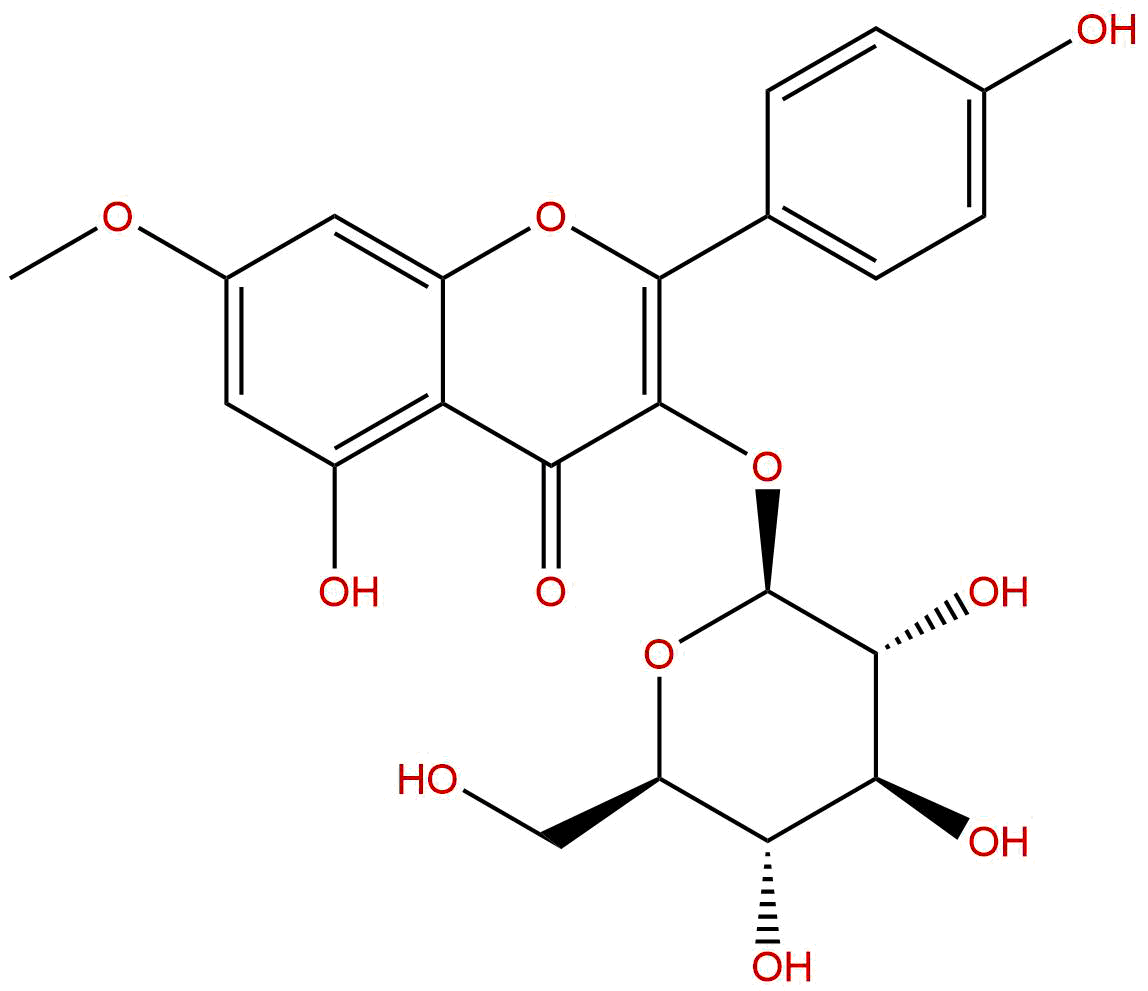


Product name: Rhamnocitrin 3-O-β-D-glucoside
Synonym name: Kaempferol 7-O-methyl ether 3-O-glucoside
Catalogue No.: BP5342
Cas No.: 41545-37-3
Formula: C22H22O11
Mol Weight: 462.407
Botanical Source:
Type of Compound: Flavonoids
Purity: 95%~99%
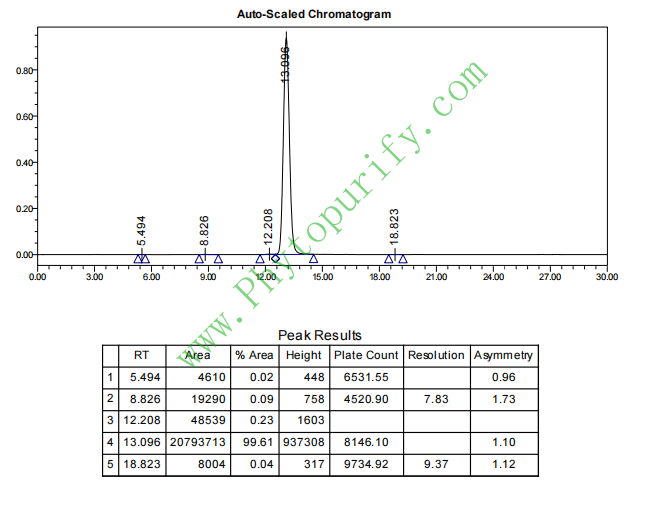
Analysis Method: HPLC-DAD or/and HPLC-ELSD
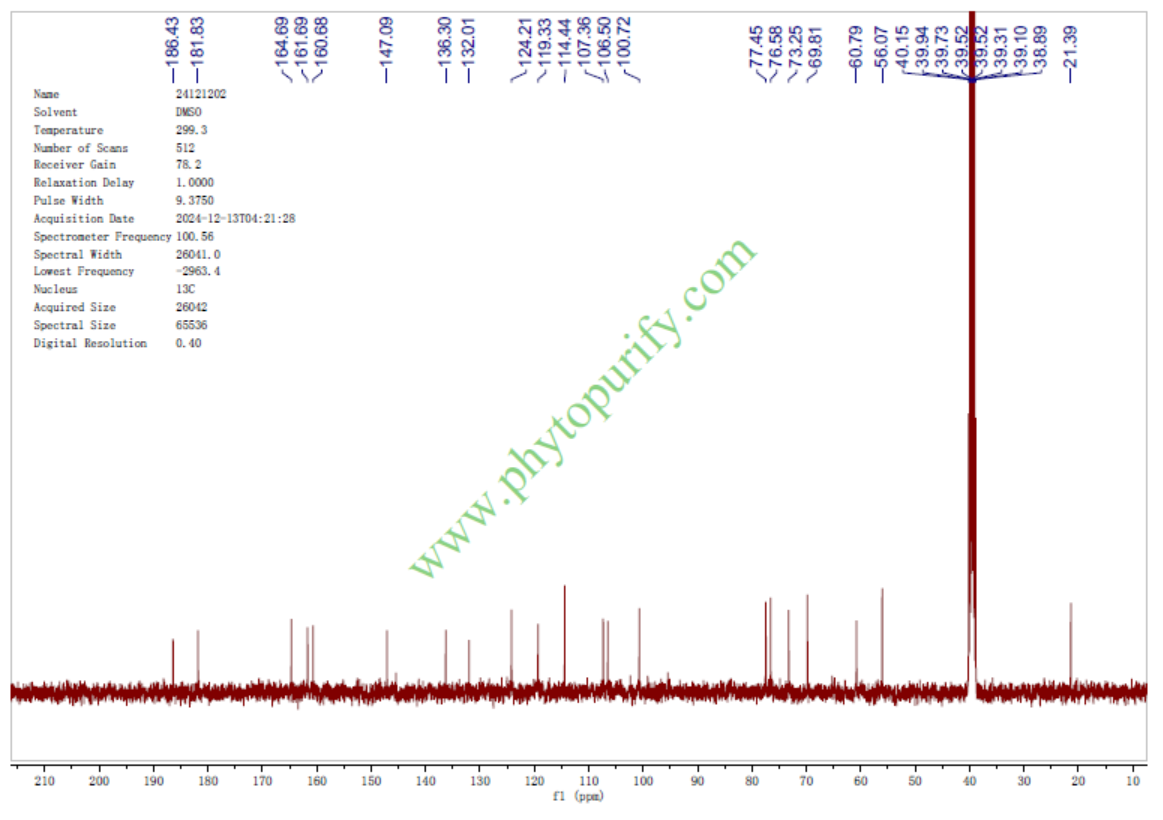
Identification Method: Mass, NMR
Packing: Brown vial or HDPE plastic bottle
Storage: Store in a well closed container, protected from air and light. Put into refrigerate or freeze for long term storage.
Whenever possible, you should prepare and use solutions on the same day. However, if you need to make up stock solutions in advance, we recommend that you store the solution as aliquots in tightly sealed vials at -20℃. Generally, these will be useable for up to two weeks.
The product could be supplied from milligrams to grams
Inquire for bulk scale.
For Reference Standard and R&D, Not for Human Use Directly.
HPLC of Rhamnocitrin 3-O-β-D-glucoside
NMR of Rhamnocitrin 3-O-β-D-glucoside
Storage conditions:Short-term storage at 2~8℃, long-term storage at -20 ~ -80℃
179.2800
.3310
.3176
1.1414
.5025
.2569
Low
80.3880
3.8357
Yes
No
No
No
Yes
No
0.6
Yes
Yes
Yes
Yes
Natural products, as an important source of drug discovery, play an irreplaceable role in the long history of human struggle against diseases. Flavonoids, as the most widely distributed class of secondary metabolites in nature, have attracted much attention due to their structural diversity and extensive biological activity. Among them, flavonoid glycosides, which are products formed by the connection of flavonoid mother nucleus and sugar group through glycosidic bonds, not only improve the physicochemical properties of flavonoid glycosides, such as solubility and stability, but also exhibit unique pharmacokinetic characteristics and pharmacological activities in vivo. Rhamnochrin 3-O - β - D-glucoside (R3G), as a typical flavonoid glycoside, has gradually emerged in the field of natural product pharmacology in recent years.
The chemical structure of R3G is composed of the flavonoid glycoside Rhamnochrin (4 ', 5,7-trihydroxy-3' - methoxyflavone) and a molecule of β - D-glucose connected by an O-glycosidic bond at the C-3 position. This structure endows it with unique chemical properties and biological activity. Early research mainly focused on its phytochemical taxonomic significance as a characteristic component of certain specific plant genera. However, with the advancement of modern pharmacological research methods, especially the widespread application of network pharmacology, molecular docking, and in vitro activity screening techniques, the various pharmacological potentials of R3G have gradually been revealed, among which its intervention effect in allergic diseases is particularly noteworthy.
Allergic diseases, including allergic rhinitis, bronchial asthma, atopic dermatitis, and food allergies, have become a global public health issue, affecting the quality of life of hundreds of millions of people. Its pathogenesis is complex, involving multiple factors such as genetics, environment, and immune system dysfunction. Traditional anti allergic drugs, such as antihistamines and glucocorticoids, although effective in relieving symptoms, often come with side effects such as drowsiness and metabolic disorders, and have limited efficacy for some refractory patients. Therefore, the search for efficient and low toxicity new anti allergic lead compounds from natural products has become a hot topic in drug development. R3G, with its potential regulatory effects on multiple key allergic reaction targets such as ALOX5, HRH1, IL4, IL5, IL13, FCER1A, TBXA2R, STAT6, TSLP, demonstrates great potential as a candidate molecule for novel anti allergic drugs. This article will provide a systematic review of the research progress of R3G from multiple dimensions, including chemical structure, plant origin, pharmacological activity, mechanism of action, medicinal properties, and clinical application prospects, aiming to provide comprehensive scientific basis for the in-depth development and utilization of this compound.
The chemical name of R3G is rhamnose-3-O - β - D-glucoside, and its systematic naming follows the naming conventions of flavonoids. Its glycoside is Rhamnochtrin, a flavonol compound, and its parent nucleus is 2-phenylchromenone. In the structure of rhamnosus, hydroxyl groups (- OH) are attached to the C-5 and C-7 positions of the A ring, as well as to the C-4 'position of the B ring, while a methoxy group (- OCH ∝) is attached to the C-3' position of the B ring. The substitution mode of multiple hydroxyl and single methoxy groups is the key structural feature that distinguishes resveratrol from other common flavanols such as quercetin and kaempferol. The sugar moiety of R3G is β - D-glucose, which forms an O - β - D-glycosidic bond through dehydration condensation of its anomeric carbon (C-1 '') with the C-3 hydroxyl group of the glycoside rhamnosus. The configuration of the glycosidic bond is β - type, meaning that the anomeric hydroxyl group of glucose is in a trans configuration with the C-3 hydroxyl group of the aglycone. The complete chemical structural formula can be expressed as: 5,7,4 '- trihydroxy-3' - methoxyflavone-3-O - β - D-glucopyranoside. Its molecular formula is C ₂₂ H ₂₂ O ₁₁, with an accurate molecular weight of 462.1162 Da, which is consistent with the provided molecular weight of 462.4070 Da (the latter being the average molecular weight).
Based on its chemical structure, R3G exhibits typical physicochemical characteristics of flavonoid glycosides. Firstly, its molecule contains multiple phenolic hydroxyl groups (C-5, C-7, C-4 ') and multiple alcohol hydroxyl groups on a sugar group, giving it strong polarity and hydrophilicity. The calculated LogP value is 0.3310, indicating low lipid solubility and good solubility in water and polar solvents. The calculated value of its water solubility (LogS) is 1.1414, further confirming its good water solubility, which is beneficial for its absorption and transport in organisms. The topological polar surface area (TPSA) is 179.2800 Å ², which is much higher than the recommended threshold of 140 Å ² for oral drugs, indicating that it may be difficult to penetrate cell membranes, especially the blood-brain barrier (BBB), through passive diffusion. In fact, its blood-brain barrier penetration ability was evaluated as' low ', which is consistent with high TPSA values, indicating that R3G mainly acts on peripheral tissues and has little impact on the central nervous system. In addition, the UV absorption characteristics of R3G are similar to typical flavonoids, with two main absorption bands at 240-280 nm (band II, A-ring benzoyl system) and 300-400 nm (band I, B-ring cinnamoyl system). Its solid form is usually a light yellow or off white powder, with a certain degree of hygroscopicity. Under acidic or alkaline conditions, glycosidic bonds may undergo hydrolysis to produce aglycones and glucose. In the body, its metabolism mainly involves phase II metabolic reactions such as deglycosylation, methylation, sulfation, and glucuronidation.
R3G is not a universal component widely present in all plants, but rather a characteristic secondary metabolite of specific plant genera or species. At present, the main plant sources reported in literature are concentrated in the following families and genera:
It is worth noting that the content of R3G varies significantly among different plants and is influenced by factors such as plant growth stage, harvest season, and geographical environment. Therefore, selecting plants with high content and abundant resources as extraction materials is the key to achieving large-scale preparation.
Given the polarity and stability of R3G, its extraction and purification are typically carried out using classical natural product chemistry methods combined with modern chromatographic techniques.
Extraction method:
1. Solvent extraction method This is the most commonly used method. Due to the high polarity of R3G, polar solvents are usually used for extraction. Common solvents include methanol, ethanol, acetone, or their aqueous solutions. For example, using a 70% -80% ethanol aqueous solution, multiple extractions of dried and crushed plant materials can effectively extract R3G at room temperature or under heating reflux conditions. After the extraction solution is concentrated under reduced pressure, crude extract is obtained.
2. Other auxiliary extraction techniques Modern assisted extraction techniques are also widely used to improve extraction efficiency and shorten time. For example, ultrasound assisted extraction (UAE) utilizes the cavitation effect of ultrasound to destroy cell walls and accelerate solvent penetration; Microwave assisted extraction (MAE) utilizes microwave energy to selectively heat polar molecules for rapid extraction; Enzyme assisted extraction (EAE) degrades cell wall polysaccharides through cellulase, pectinase, and other enzymes to promote the release of target components. These methods significantly improve the extraction rate while maintaining the structural integrity of R3G.
Separation and purification methods:
1. Liquid-liquid extraction After concentration, the crude extract is often subjected to liquid-liquid extraction using solvents of different polarities to preliminarily enrich the target components. For example, by first defatting with petroleum ether or n-hexane, and then extracting with ethyl acetate or n-butanol, R3G can be enriched in a medium polarity extraction layer.
2. Column chromatography method This is the core method for separating and purifying R3G. Common fixed phases include:
- Macroporous adsorption resin For example, D101, AB-8, etc. are suitable for the preliminary separation of crude extracts. Through different concentrations of ethanol water gradient elution, a large amount of impurities such as sugars and pigments can be effectively removed, and flavonoid glycosides can be enriched.
- Polyamide resin It has specific adsorption ability for flavonoids and achieves separation through hydrogen bonding, which is a common choice for purifying R3G.
- Silica gel column chromatography R3G can be further purified by gradient elution using solvent systems such as chloroform methanol water.
- Sephadex gel column chromatography Like Sephadex LH-20, it is separated based on molecular size and adsorption, and is commonly used in the final refining step.
3. High performance liquid chromatography (HPLC)For the preparation of high-purity R3G, preparative HPLC is commonly used. Using a C18 reverse phase chromatography column with methanol water or acetonitrile water as the mobile phase, R3G monomer with a purity of over 98% can be rapidly obtained through isocratic or gradient elution.
The entire extraction and purification process usually requires real-time monitoring using thin-layer chromatography (TLC) and HPLC to ensure separation efficiency. The structural identification of the final product relies on modern analytical techniques such as nuclear magnetic resonance spectroscopy (NMR) and high-resolution mass spectrometry (HR-MS).
In recent years, significant progress has been made in the pharmacological activity research of R3G, especially in the areas of anti allergic, anti-inflammatory, antioxidant, and anti-tumor effects, showing potential. Among them, its anti allergic activity is currently a hot research topic.
Allergic reactions are excessive immune responses of the body to harmless antigens (allergens), mainly involving type I hypersensitivity reactions. The anti allergic activity of R3G has been confirmed in multiple in vitro and in vivo models.
Inflammation is one of the core pathological processes of allergic reactions. The anti-inflammatory activity of R3G is closely related to its anti allergic effect. Research has shown that R3G can inhibit the production of nitric oxide (NO) and prostaglandin E2 (PGE2) in macrophages (such as RAW264.7 cells) induced by lipopolysaccharide (LPS), and downregulate the expression of inducible nitric oxide synthase (iNOS) and cyclooxygenase-2 (COX-2). In addition, R3G can also inhibit the release of pro-inflammatory cytokines such as tumor necrosis factor - α (TNF - α), interleukin-1 β (IL-1 β), and IL-6. These effects are partially achieved by inhibiting the activation of the nuclear factor kappa B (NF - κ B) and mitogen activated protein kinase (MAPK) signaling pathways.
Flavonoids are famous natural antioxidants. The multiple phenolic hydroxyl groups in R3G molecules endow it with excellent free radical scavenging ability. In vitro chemical experiments (such as DPPH, ABTS, FRAP methods) have confirmed that R3G has significant antioxidant activity and can effectively scavenge reactive oxygen species (ROS) such as superoxide anions, hydroxyl radicals, and hydrogen peroxide. In cell models, R3G can alleviate cell damage caused by hydrogen peroxide (H ₂ O ₂) or other oxidative stress inducers, increase the activity of antioxidant enzymes such as superoxide dismutase (SOD) and glutathione peroxidase (GSH Px), and reduce the levels of lipid peroxidation products such as malondialdehyde (MDA).
The pharmacological activity of R3G, especially its anti allergic effect, is achieved through synergistic regulation of multiple targets and pathways. Based on network pharmacology prediction and experimental verification, the key molecular targets and mechanisms of action can be summarized as follows:
Based on the above targets, the anti allergic mechanism of R3G mainly involves the following core signaling pathways:
To promote R3G from a natural product candidate molecule to clinical drugs, a systematic evaluation of its pharmacological properties and pharmacokinetic characteristics is required.
Challenges and Strategies in Drug Development The main pharmacological challenges faced by R3G are low oral bioavailability and potential weak genetic toxicity. To address the issue of oral bioavailability, the following strategies can be adopted: 1) designing prodrugs, such as esterifying or phosphorylating phenolic hydroxyl groups to improve lipid solubility; 2) Develop new drug delivery systems, such as liposomes, nanoparticles, phospholipid complexes, etc., to improve their transmembrane transport capacity; 3) Used in combination with absorption enhancers (such as surfactants). A more comprehensive toxicological assessment is needed to address the risk of genetic toxicity, including in vivo micronucleus tests, chromosome aberration tests, etc., to clarify their safety margins.
Based on the unique anti allergic mechanism and preliminary safety evaluation of R3G, it has shown broad prospects in clinical applications, but also faces many challenges.
As a typical flavonoid glycoside natural product, rhamnose-3-O - β - D-glucoside (R3G) has a clear chemical structure and unique physicochemical properties. It mainly exists in plants such as the Rhamnaceae and Leguminosae families, and can be obtained through mature extraction and separation techniques. In recent years, significant progress has been made in the pharmacological activity research of R3G, especially in the field of anti allergy, showing significant advantages in multi-target and multi pathway synergistic regulation. It can not only inhibit the release of allergic mediators and antagonize their receptors, but also inhibit the initiation and amplification of Th2 type immune responses upstream. Its mechanism of action covers multiple key targets such as ALOX5, HRH1, IL-4, STAT6, TSLP, etc. Its pharmacological evaluation shows that although there are challenges such as low oral bioavailability and potential genetic toxicity risks, its good water solubility, low hERG inhibition risk, and low blood-brain barrier penetration provide favorable conditions for its development.
In summary, R3G is a highly promising lead compound for anti allergic natural products. Future research should focus on further elucidating its molecular mechanisms, optimizing its pharmacokinetic properties, conducting comprehensive toxicological evaluations, and actively exploring its clinical translation pathways. With the continuous deepening of research, R3G is expected to provide a natural, novel, and safe treatment option for patients with allergic diseases, injecting new vitality into the field of natural product drug development.
