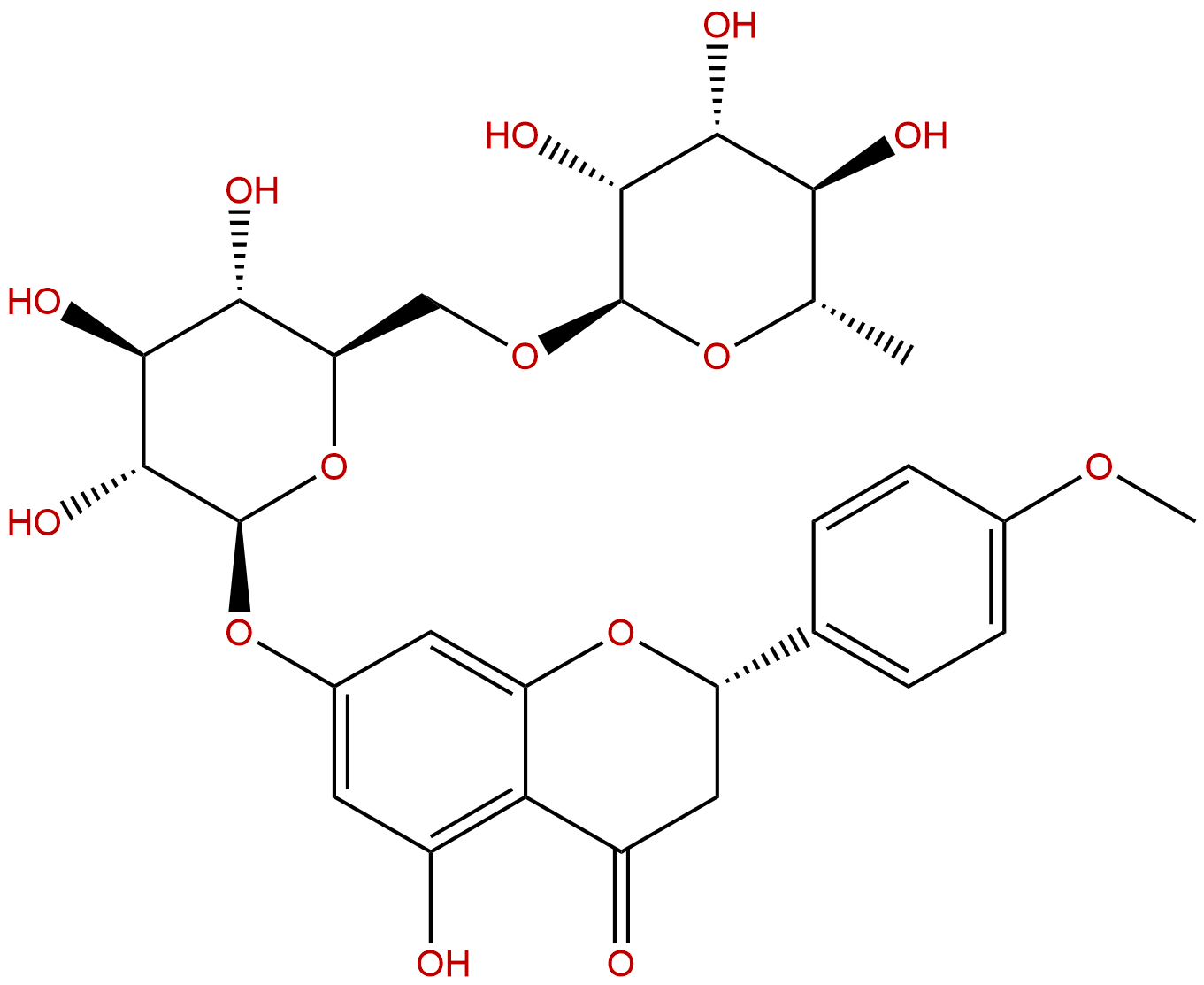


Product name: Didymin
Synonym name: Neoponcirin; (S)-5,7-Dihydroxy-4′-methoxyflavanone-7-β-rutinoside;Isosakuranetin 7-O-rutinoside
Catalogue No.: BP1502
Cas No.: 14259-47-3
Formula: C28H34O14
Mol Weight: 594.566
Botanical Source: "Leaves of Monarda didyma (bergamot), from Acinos alpinus and Citrus spp."
Physical Description: Powder
Type of Compound: Flavonoids
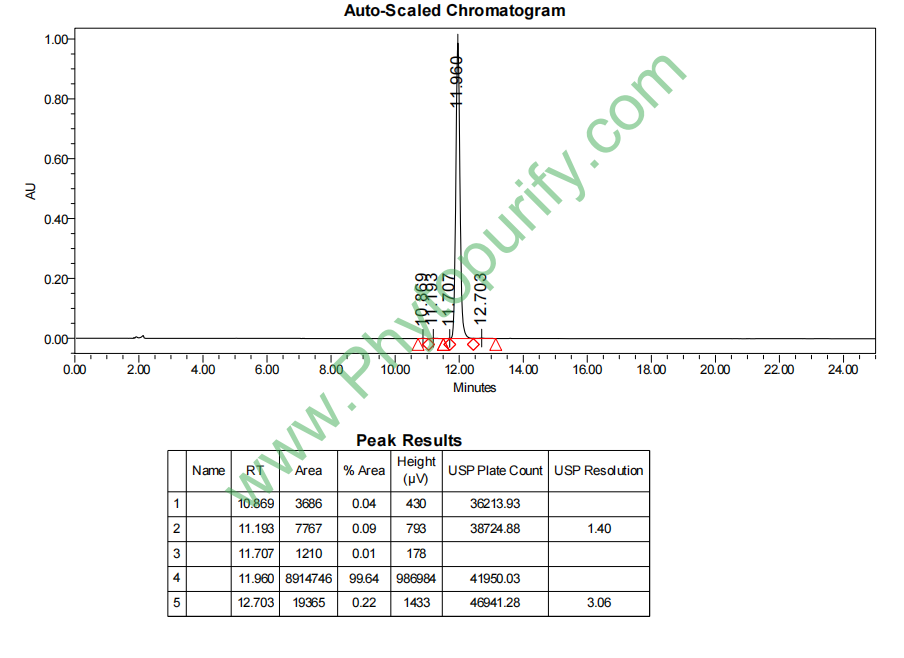
Purity: 95%~99%
Analysis Method: HPLC-DAD or/and HPLC-ELSD
Identification Method: Mass, NMR
Packing: Brown vial or HDPE plastic bottle
The product could be supplied from milligrams to grams. Inquire for bulk scale.
We provide solution to improve the water-solubility of compounds, thereby facilitating the variety of activity tests and clinic uses.
For Reference Standard and R&D, Not for Human Use Directly.
Description:
Didymin is a citrus-derived natural compound that kills p53 wild-type as well as drug-resistant p53-mutant neuroblastoma cells in culture, it induces apoptosis by inhibiting N-Myc and upregulating RKIP in neuroblastoma. Didymin possesses antioxidant, anti-inflammation and anti-cancer properties.
References:
Cells Tissues Organs. 2014;199(2-3):184-200.
Neuroprotective effect of didymin on hydrogen peroxide-induced injury in the neuronal membrane system.
METHODS AND RESULTS:
In this study, the flavonoid Didymin was administered in vitro in neuronal cells after hydrogen peroxide (H2O2)-induced injury (neurorescue) in order to investigate the effects of this natural molecule on cell damage in a neuronal membrane system. The results showed the effects of Didymin in neuronal cells by using a polycaprolactone biodegradable membrane system as an in vitro model. Two major findings are presented in this study: first is the antioxidant property of Didymin and, second, for the first time we provide evidence concerning its ability to rescue neuronal cells from oxidative damage. Didymin showed radical scavenging activities and it protected the neuronal cells against H2O2-induced neurotoxicity. Didymin increased cell viability, decreased intracellular reactive oxygen species generation, stimulated superoxide dismutase, catalase and glutathione peroxidase activity in neuronal cells which were previously insulted with H2O2. In addition, Didymin strikingly inhibited H2O2-induced mitochondrial dysfunctions in terms of reduction of mitochondria membrane potential and the activation of cleaved caspase-3, and also decreased dramatically the H2O2-induced phosphorylation of c-Jun N-terminal kinase. Therefore, this molecule is capable of inducing recovery from oxidative damage, and promoting and/or restoring normal cellular conditions. Moreover, the mechanism underlying the protective effects of Didymin in H2O2-injured neuronal cells might be related to the activation of antioxidant defense enzymes as well as to the inhibition of apoptotic features, such as p-JNK and caspase-3 activation.
CONCLUSIONS:
These data suggest that Didymin may be a potential therapeutic molecule for the treatment of neurodegenerative disorders associated with oxidative stress.
Lung Cancer. 2010 Jun;68(3):366-74.
Didymin, a dietary flavonoid glycoside from citrus fruits, induces Fas-mediated apoptotic pathway in human non-small-cell lung cancer cells in vitro and in vivo.
Epidemiological studies provided evidence that the high dietary intake of flavonoids with fruits and vegetables could be associated with lower cancer prevalence in humans. Didymin, a dietary flavonoid glycoside from citrus fruits, possesses antioxidant properties.
METHODS AND RESULTS:
This study first investigates the anticancer effect of Didymin in human non-small-cell lung cancer A549 and H460 cells. To identity the anticancer mechanism of Didymin, we assayed its effect on apoptosis, cell cycle distribution, and levels of p53, p21/WAF1, Fas/APO-1 receptor, and Fas ligand. The results showed that Didymin-induced apoptosis of A549 and H460 cells without mediation of p53 and p21/WAF1. We suggest that Fas/Fas ligand apoptotic system is the main pathway of Didymin-mediated apoptosis of A549 and H460 cells. Importantly, a novel chemotherapeutic agent for the treatment of non-small-cell lung cancer, and is supported by animal studies which have shown Didymin delay the tumor growth in nude mice.
CONCLUSIONS:
Our study reports here for the first time that the activity of the Fas/Fas ligand apoptotic system may participate in the antiproliferative activity of Didymin in A549 and H460 cells.
HPLC of Didymin
Storage conditions:Short-term storage at 2~8℃, long-term storage at -20 ~ -80℃
214.0600
.4002
.3765
3.4129
.5252
.3304
Low
73.6303
4.6922
No
No
No
No
No
No
0.0
Yes
No
No
No
Natural products have always been an important treasure trove for innovative drug discovery, among which flavonoids have attracted much attention due to their broad biological activity and low toxicity. Didymin, also known as 7- [[6-O - (6-deoxy - α - L-mannopyranosyl) - β - D-glucopyranosyl] oxy] -5-hydroxy-2- (4-methoxyphenyl) -4H-1-benzopyran-4-one, is a flavonoid glycoside compound with significant biological value. Its CAS number is 14259-47-3. Early research mainly focused on its antioxidant properties, but in recent years, with the development of molecular pharmacology, the potential of coumarin in anti-tumor, neuroprotective, and psychiatric intervention has gradually been revealed. Especially in neuroblastoma, its mechanism of inducing cell apoptosis by regulating key oncogene N-Myc and pro apoptotic factor RKIP provides a new approach for tumor treatment. In addition, its potential interactions with various targets related to neurological and psychiatric disorders, particularly with monoamine oxidase A (MAOA), serotonin transporter (SLC6A4), and multiple subtypes of gamma aminobutyric acid (GABA) receptors, suggest its broad application prospects in fields such as anti anxiety. This article aims to systematically review the chemical properties, plant sources, pharmacological activities, molecular mechanisms of action, pharmacological evaluation, and clinical application potential of apigenin, in order to provide comprehensive scientific references for the in-depth research and development of this compound.
The molecular formula of apigenin is C28H34O14, with a molecular weight of 594.5660. Its core structure is the flavonoid nucleus (2-phenylchromenone), which is connected to a disaccharide chain at position 7 of the A ring through an oxygen glycosidic bond. The disaccharide is composed of one molecule of glucose and one molecule of rhamnose. In addition, there is a methoxy substitution at position 4 of its B ring. This unique glycosylation structure has a decisive impact on its water solubility and biological activity.
In terms of physical and chemical properties, the theoretical lipid water partition coefficient (LogP) of apigenin is about 0.4002, indicating that it has a certain degree of lipophilicity, but overall tends to be hydrophilic. Its topological polar surface area (TPSA) is as high as 214.0600 Å ², mainly attributed to the numerous oxygen atoms and sugar moieties in the molecule, indicating that it has more hydrogen bond donor and acceptor sites. The predicted value of water solubility is 3.4129 (usually measured in mg/mL or log mol/L, indicating moderate to high solubility), which is consistent with its glycoside structure and beneficial for its absorption and distribution in organisms. However, based on its high polarity and molecular weight, it is predicted that its ability to penetrate the blood-brain barrier (BBB) is low, which poses a certain challenge to its potential to act on the central nervous system. In early safety screening, apigenin did not show significant hERG potassium channel inhibitory activity (hERG inhibition: No), and the Ames test result was 0.0, indicating that it has no mutagenic risk and has a good safety basis.
Vanillin is widely present in various Rutaceae and Lamiaceae plants. Its main plant sources include the peel and flesh of citrus fruits, such as lemon, sweet orange, and grapefruit. In addition, it has also been found in traditional medicinal plants such as Melissa officinalis, and its name "Apicin" is derived from this.
Solvent extraction method is commonly used to extract vanillin from plant materials. Methanol, ethanol, or ethanol water mixed solvents are preferred due to their good solubility in flavonoid glycosides. In order to improve extraction efficiency, modern technologies such as ultrasound assisted extraction (UAE), microwave-assisted extraction (MAE), and supercritical fluid extraction (SFE) have been widely used. These methods destroy plant cell walls through physical means, significantly reducing extraction time, lowering solvent consumption, and increasing the yield of target compounds.
The crude extract after extraction usually requires further separation and purification steps to obtain high-purity vanillin. The conventional purification process includes: first, use macroporous adsorption resins (such as AB-8, D101) for preliminary enrichment, and then use silica gel column chromatography, polyamide column chromatography or Sephadex gel (LH-20) column chromatography for subdivision. Ultimately, high-performance liquid chromatography (HPLC), especially preparative HPLC, is the key technology for obtaining chromatographically pure apigenin. In recent years, high-speed counter current chromatography (HSCCC) has shown great potential in the preparation and separation of natural products such as vanillin as a solid-liquid distribution chromatography technique without solid carriers, due to its high recovery rate and advantages in maintaining compound activity.
Numerous in vitro and in vivo studies have confirmed that coumarin has diverse and significant pharmacological activities.
anticancer activity This is one of the most in-depth areas of research on apigenin. Research has shown that coumarin has inhibitory effects on proliferation and induces apoptosis in various cancer cell lines, including neuroblastoma, liver cancer, gastric cancer, lung cancer, and colon cancer cells. Its anti-cancer effect is dose-dependent and time-dependent. In neuroblastoma, coumarin can significantly induce cell apoptosis, which is closely related to the downregulation of key oncogene N-Myc and the upregulation of tumor suppressor RKIP. In addition, it can exert anti-cancer effects by regulating the Bcl-2/Bax ratio, activating the caspase cascade, inducing cell cycle arrest (such as G2/M phase arrest), and inhibiting cell migration and invasion.
Antioxidant and anti-inflammatory activities As a flavonoid glycoside, apigenin has the ability to scavenge free radicals (such as DPPH, ABTS free radicals) and reduce metal ions, exhibiting strong in vitro antioxidant activity. In the inflammatory model, coumarin can inhibit the excessive production of inflammatory factors (such as TNF - α, IL-6, IL-1 β) induced by lipopolysaccharides (LPS), and exert anti-inflammatory effects by regulating the nuclear factor kappa B (NF - κ B) and mitogen activated protein kinase (MAPK) signaling pathways.
Neuroprotection and Anti Anxiety Potential Although there is relatively little in-depth research on the anti anxiety effects of coumarin, its chemical structural analogues and related flavonoid glycosides provide strong evidence for its activity. Pharmacological network analysis suggests that coumarin may act on multiple targets related to the pathophysiology of anxiety disorders, including monoamine oxidase A (MAOA, which degrades monoamine neurotransmitters), serotonin transporter (SLC6A4, which regulates 5-HT reuptake), serotonin receptor (HTR1A, HTR2A), dopamine D2 receptor (DRD2), and multiple subunits of GABA_A receptor (GABRA1, GABRB2, GABRG2). By regulating these targets, coumarin may indirectly affect the expression of brain-derived neurotrophic factor (BDNF) and transcription factor CREB1, thereby exerting potential anti anxiety and neuroprotective effects. Animal behavior experiments (such as elevated cross maze and open field experiments) have also preliminarily observed the anti anxiety like effects of extracts containing coumarin.
Other activities The study also found that coumarin has potential activities in liver protection, antiviral (such as anti dengue virus), anti obesity, and improving metabolic syndrome.
The pharmacological effects of apigenin are achieved by intervening in multiple signaling pathways and molecular targets, and its mechanism of action has the characteristics of multiple targets and pathways.
The mechanism of action in cancer:
Potential mechanisms of action in the neuropsychiatric field:
Although apigenin has shown good biological activity, its pharmacological properties still need to be comprehensively evaluated.
Absorption, distribution, metabolism, excretion (ADME):
Challenges and optimization strategies for drug development:
The multi-target pharmacological properties of coumarin have brought its application prospects in multiple therapeutic fields.
As a naturally occurring flavonoid glycoside, apigenin has become a highlight molecule in natural product pharmacology research due to its extensive pharmacological activities, particularly its clear anti-cancer effects and potential neuropsychiatric regulatory abilities. The mechanism by which it induces tumor cell apoptosis by regulating key axes such as N-Myc/RKIP is relatively clear, and its potential effects on multiple neural targets such as MAOA, SLC6A4, GABA receptors have opened up new imaginative space for the treatment of anxiety and other diseases. However, its low bioavailability and limited brain distribution are currently the main bottlenecks for its translation into clinical drugs. Future research should focus on overcoming these barriers to drug formation through pharmacology, prodrug strategies, and targeted delivery technologies, combined with in-depth molecular mechanism studies and rigorous clinical validation, to fully tap into the therapeutic potential of apigenin, making it a promising natural compound and ultimately developing into an innovative drug that benefits human health.
