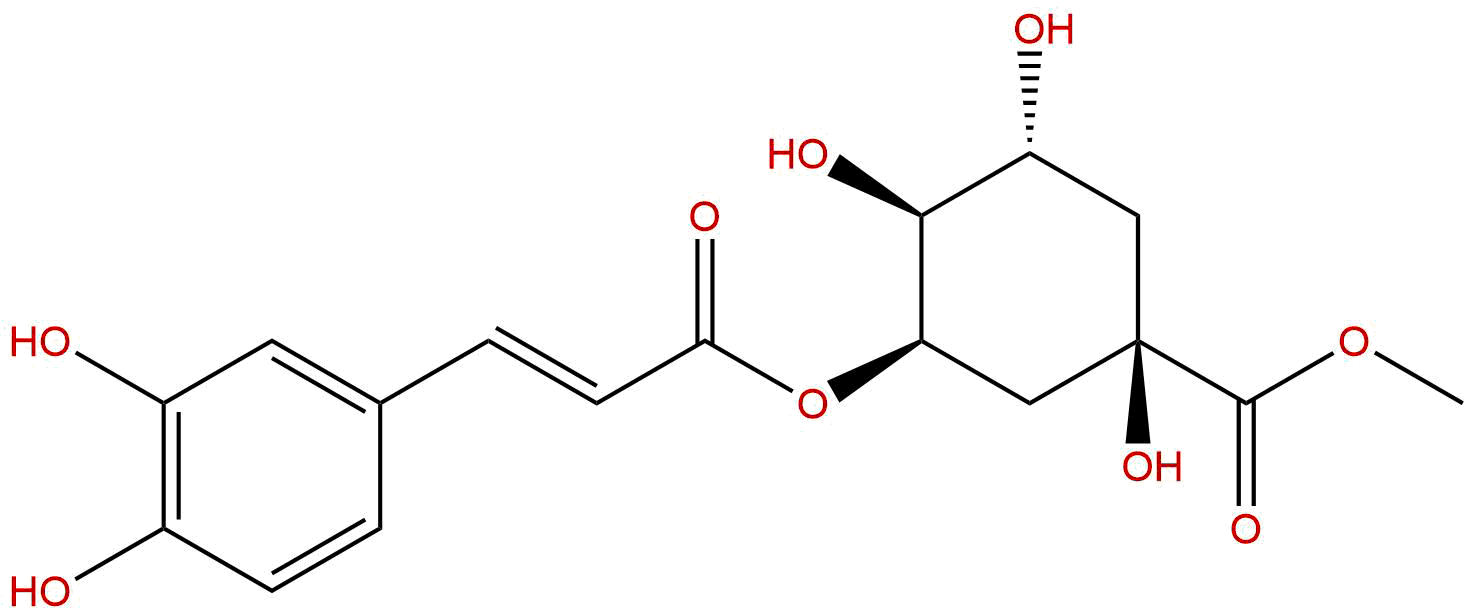


Product name: Neochlorogenic acid methyl ester
Synonym name:
Catalogue No.: BP2297
Cas No.: 123410-65-1
Formula: C17H20O9
Mol Weight: 368.338
Botanical Source:
Type of Compound: Phenylpropanoids
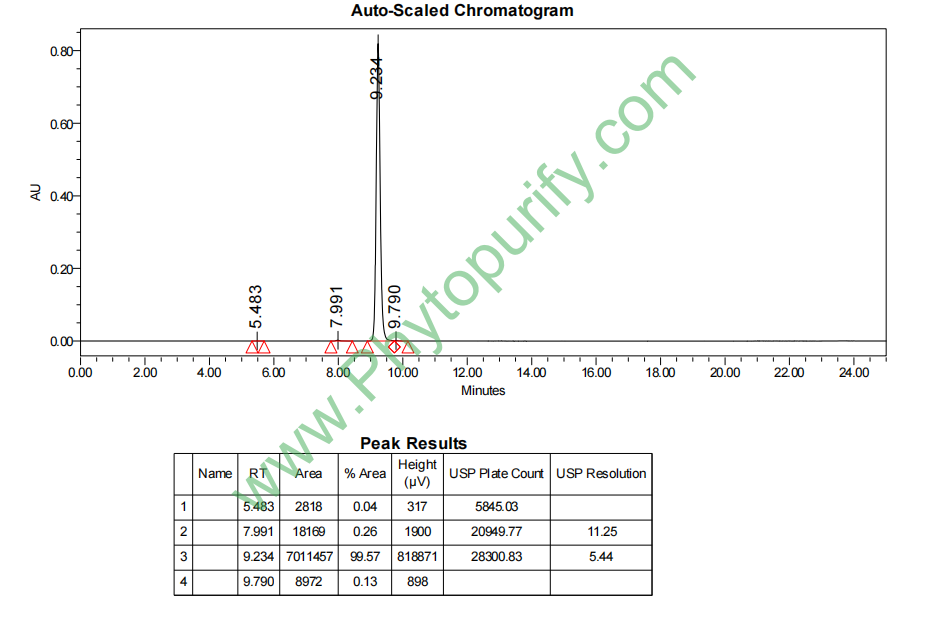
Purity: 95%~99%
Analysis Method: HPLC-DAD or/and HPLC-ELSD
Identification Method: Mass, NMR
Packing: Brown vial or HDPE plastic bottle
Storage: Store in a well closed container, protected from air and light. Put into refrigerate or freeze for long term storage.
Whenever possible, you should prepare and use solutions on the same day. However, if you need to make up stock solutions in advance, we recommend that you store the solution as aliquots in tightly sealed vials at -20℃. Generally, these will be useable for up to two weeks.
The product could be supplied from milligrams to grams
Inquire for bulk scale.
For Reference Standard and R&D, Not for Human Use Directly.
HPLC of Neochlorogenic acid methyl ester
Storage conditions:Short-term storage at 2~8℃, long-term storage at -20 ~ -80℃
153.7500
.1991
.1927
4.8917
.6318
.3202
Low
59.0818
3.8934
Yes
No
No
No
Yes
No
0.0
Yes
Yes
Yes
Yes
Natural products, as an important source of drug discovery, play an irreplaceable role in the long history of human struggle against diseases. Phenolic acid compounds, as a widely distributed and structurally diverse class of secondary metabolites in plants, have attracted much attention due to their significant biological activities such as antioxidant, anti-inflammatory, antibacterial, and anti-tumor effects. Among numerous phenolic acid compounds, chlorogenic acid (CGA) and its isomers have become a research hotspot due to their abundant content and excellent health benefits in coffee, fruits, and traditional Chinese medicine. Neochlorogenic acid methyl ester (NCME), as a member of the chlorogenic acid family, is a methylated derivative of 5-O-caffeoylquinic acid (Neochlorogenic acid). Compared to its parent compound, neochlorogenic acid, methylation modification endows NCME with unique physicochemical properties and potential biological characteristics, making it exhibit unique research value and application potential in the field of natural product pharmacology.
In recent years, with the advancement of modern separation and analysis techniques and the improvement of pharmacological activity screening systems, research on NCME has gradually deepened. Especially its protective effect in inflammatory bowel disease, especially in colitis models, has attracted widespread attention from the academic community. Colitis is a chronic intestinal inflammatory disease with complex etiology and increasing incidence rate year by year. Its pathogenesis involves genetic susceptibility, imbalance of intestinal flora, abnormal immune response and environmental factors. Existing therapeutic drugs such as aminosalicylic acid preparations, immunosuppressants, and biologics, although having certain therapeutic effects, often come with side effects, drug resistance, or high costs. Therefore, searching for efficient and low toxicity new therapeutic molecules from natural products has become an important research direction. NCME has shown great potential in intervening in colitis related signaling pathways due to its excellent safety and multi-target action characteristics. This review aims to systematically sort out the chemical structure, plant origin, pharmacological activity, mechanism of action, and pharmacological characteristics of NCME, in order to provide comprehensive scientific basis for the in-depth development and clinical application of this compound.
The chemical structure of methyl ester of new chlorogenic acid belongs to the phenylpropanoid class compounds, specifically the methyl ester derivatives of quinic acid and caffeic acid esters. Its core skeleton is composed of quinic acid (1,3,4,5-tetrahydroxycyclohexanecarboxylic acid) and caffeic acid (3,4-dihydroxycinnamic acid) connected by ester bonds. In terms of naming, "neochlorogenic acid" specifically refers to the attachment of the caffeoyl group to the 5-hydroxy group of quinic acid (i.e. 5-O-caffeoylquinic acid), while "methyl ester" refers to the methylation of the carboxyl group on the quinic acid ring. Therefore, the complete chemical name of NCME is 5-O-caffeoylquinate methyl ester. Its molecular formula is C17H20O9 and its molecular weight is 368.3380 g/mol. This structure contains multiple phenolic hydroxyl groups (from the caffeic acid moiety) and alcohol hydroxyl groups (from the quinic acid moiety), as well as one ester group and one methyl ester group, which together determine its chemical properties and biological activity.
From the perspective of physical and chemical properties, NCME exhibits moderate to strong hydrophilicity. The calculated lipid water partition coefficient (LogP) is 0.1991, indicating that the compound has a good balance between the aqueous and lipid phases, and is not easily excessively lipophilic and difficult to dissolve, nor is it excessively hydrophilic and difficult to penetrate biofilms. Its total polar surface area (TPSA) is as high as 153.7500 Å ², mainly attributed to the numerous hydroxyl and ester bonded oxygen atoms in the molecule. A higher TPSA value usually indicates that the compound has good water solubility, but it also suggests that its transmembrane passive diffusion ability may be limited. The calculated water solubility value is 4.8917, further confirming its good water solubility, which provides favorable conditions for its absorption and distribution in organisms. It is worth noting that the blood-brain barrier (BBB) penetration ability of NCME is evaluated as "low", which is consistent with its high polarity surface area and molecular weight, indicating its limited potential in the treatment of central nervous system diseases, but also reduces the potential risk of central neurotoxicity. In addition, the hERG inhibition prediction was "no", and the Ames test result was 0.0, indicating that NCME has a low risk of cardiac toxicity and genetic toxicity, providing a positive signal for its safety as a candidate drug. The comprehensive characteristics of these physical and chemical properties may make NCME have good solubility and certain absorption potential after oral administration, but its metabolic stability and bioavailability still need further experimental verification.
Methyl chloroformate is not a rare isolated compound, but a natural phenolic acid component widely present in various plants. Its source plants span across multiple families and genera, especially in plants such as Asteraceae, Lonicera japonica, and Rubiaceae, which are relatively abundant. Common plants rich in NCME include but are not limited to: fruits and leaves of honeysuckle (Lonicera japonica Thunb.), coffee (Coffea arabica L.), flower discs of sunflowers (Helianthus annuus L.), Echinacea purpurea (L.) Moench, and various medicinal plants of the Chrysanthemum family such as Artemisia capillaris Thunb. In these plants, NCME usually coexists with similar compounds such as chlorogenic acid, cryptochlorogenic acid, isochlorogenic acid, etc., forming a complex phenolic acid spectrum. It is worth noting that the content of NCME in plants is influenced by various factors such as variety, growth environment, harvest season, and processing methods. For example, in honeysuckle, its content may vary significantly with different flowering periods and drying methods.
For the extraction of NCME, modern extraction techniques such as solvent extraction, ultrasound assisted extraction, microwave-assisted extraction, and enzyme assisted extraction are currently mainly used. Due to NCME's good water and alcohol solubility, commonly used extraction solvents are methanol, ethanol, or water alcohol mixed systems of different concentrations. For example, using a 50% -80% methanol or ethanol aqueous solution for leaching or reflux extraction at room temperature or heating conditions (usually 40-60 ° C) can achieve higher extraction rates. Ultrasound assisted extraction and microwave-assisted extraction can significantly shorten extraction time and improve efficiency by disrupting plant cell walls, accelerating solvent permeation and solute diffusion. In recent years, deep eutectic solvents (DES) have also been attempted as a novel green solvent for the extraction of phenolic compounds, demonstrating promising application prospects.
The extracted crude extract has complex components and requires a series of separation and purification steps to obtain high-purity NCME. Common separation and purification methods include:
1. Liquid-liquid extraction By using solvents of different polarities (such as petroleum ether, ethyl acetate, n-butanol, etc.) for fractional extraction of crude extracts, NCME can be enriched in the moderately polar ethyl acetate or n-butanol fractions.
2. Column chromatography method Silica gel column chromatography is the most classic method, which uses solvent systems such as chloroform methanol water or ethyl acetate methanol water for gradient elution. In addition, polyamide column chromatography utilizes hydrogen bonding adsorption to achieve good separation efficiency for phenolic acid compounds. In recent years, macroporous adsorption resins (such as HPD-100, AB-8, etc.) have been widely used for the preliminary separation and enrichment of phenolic acid components due to their low cost, reusability, and large sample loading capacity.
3. High performance liquid chromatography (HPLC)Preparation HPLC is a key method for achieving high-purity separation of NCME. Usually, a reverse phase C18 chromatography column is used, with methanol water or acetonitrile water (often containing a small amount of formic acid or acetic acid) as the mobile phase. Through isocratic or gradient elution, combined with a UV detector (usually detected at 325 nm or 254 nm), NCME monomer compounds with a purity of over 98% can be obtained.
4. High Speed Counter Current Chromatography (HSCCC)As a liquid-liquid distribution chromatography technique, HSCCC does not require a solid stationary phase, avoiding irreversible adsorption of samples on the column. It is particularly suitable for the separation of phenolic compounds and has the advantages of high recovery rate and large preparation capacity.
By optimizing the combination of the above methods, sufficient high-purity NCME can be efficiently obtained from natural plants, laying a material foundation for its in-depth pharmacological activity research and drug evaluation.
The pharmacological activity research of methyl chlorogenic acid is still in its infancy, but existing research results have revealed its multifaceted biological effects, especially in anti-inflammatory, antioxidant, and intestinal protection.
1. Anti inflammatory activity
Inflammation is a defensive response of the body to injury and infection, but excessive or persistent inflammation can lead to tissue damage and various diseases. NCME has shown significant inhibitory effects in various inflammatory models. In the lipopolysaccharide (LPS) - induced macrophage RAW264.7 inflammation model, NCME can dose dependently inhibit the production of nitric oxide (NO) and prostaglandin E2 (PGE2), and downregulate the protein expression levels of inducible nitric oxide synthase (iNOS) and cyclooxygenase-2 (COX-2). In addition, NCME can significantly reduce the secretion of pro-inflammatory cytokines such as tumor necrosis factor - α (TNF - α), interleukin-1 β (IL-1 β), and interleukin-6 (IL-6). These results indicate that NCME exerts a powerful anti-inflammatory effect by inhibiting the production of key inflammatory enzymes and cytokines.
2. Antioxidant activity
The multiple phenolic hydroxyl groups in the molecular structure of NCME are the structural basis for its antioxidant activity. These phenolic hydroxyl groups can effectively scavenge free radicals (such as DPPH free radicals, ABTS cationic free radicals, hydroxyl free radicals, and superoxide anion free radicals), chelate transition metal ions (such as Fe ² ⁺, Cu ² ⁺), and thus block free radical chain reactions. In the cellular oxidative stress model, NCME pretreatment can significantly reduce the levels of reactive oxygen species (ROS) induced by hydrogen peroxide (H ₂ O ₂) or tert butyl hydroperoxide (t-BHP), increase the activity of endogenous antioxidant enzymes such as superoxide dismutase (SOD), catalase (CAT), and glutathione peroxidase (GSH Px), and increase the content of reduced glutathione (GSH). This direct and indirect antioxidant capacity makes it of significant value in protecting cells from oxidative damage.
3. Protective effect on colitis
Given the dual activity of NCME in anti-inflammatory and antioxidant aspects, its protective role in intestinal inflammatory diseases, especially colitis, has become a research focus. In a mouse experimental colitis model induced by dextran sulfate sodium (DSS), oral administration of NCME significantly improved disease activity index (DAI), including reduced weight loss, decreased rectal bleeding, and diarrhea severity. Histopathological analysis showed that the colon tissue damage in mice treated with NCME was significantly reduced, manifested as decreased infiltration of inflammatory cells, reduced destruction of crypt structures, and restoration of mucosal integrity. In addition, NCME can effectively reduce the activity of myeloperoxidase (MPO) in colon tissue (reflecting neutrophil infiltration), decrease the expression of pro-inflammatory cytokines (TNF - α, IL-1 β, IL-6) and chemokines, and inhibit the activation of the nuclear factor kappa B (NF - κ B) signaling pathway. Meanwhile, NCME upregulated the expression of antioxidant enzymes in colon tissue, restoring redox balance. These in vivo experimental results strongly suggest that NCME effectively alleviates the pathological progression of experimental colitis through the synergistic effect of multiple targets and pathways.
4. Other potential activities
In addition to the main activities mentioned above, preliminary studies also suggest that NCME may have other pharmacological effects. For example, there are reports that it has certain antibacterial activity and has inhibitory effects on certain Gram positive and Gram negative bacteria. In addition, based on the known activity of its parent compound chlorogenic acid, NCME may also play a role in regulating glucose and lipid metabolism, protecting the liver, etc., but there is still a lack of systematic research data in these fields.
The pharmacological activity of NCME is not derived from a single target, but is achieved by regulating multiple interrelated signaling pathways and molecular targets. According to existing research, especially regarding the therapeutic potential for colitis, its mechanism of action mainly involves the following aspects and is highly consistent with the given targets.
1. Regulating the TLR4/NF - κ B signaling pathway
Toll like receptor 4 (TLR4) is a key pattern recognition receptor that recognizes pathogen associated molecular patterns, such as LPS. Its activation can activate the downstream NF - κ B signaling pathway, leading to the expression of a large number of pro-inflammatory cytokines. In colitis, damage to the intestinal barrier leads to the entry of endotoxins such as LPS into the submucosal layer, overactivating TLR4. Research has shown that NCME can significantly inhibit the expression of TLR4 in colon tissue of colitis mice. Meanwhile, NCME inhibits the phosphorylation and degradation of I κ B α, preventing the nuclear translocation of NF - κ B p65 subunit (RELA) and thus blocking the transcriptional activity of NF - κ B. This directly leads to downregulation of downstream pro-inflammatory genes such as TNF - α, IL-1 β, iNOS, COX-2. Therefore,TLR4 and RELA It is one of the core targets for NCME to exert anti-inflammatory effects.
2. Activate the Nrf2/ARE antioxidant pathway
Nuclear factor E2 related factor 2 (NFE2L2, abbreviated as Nrf2) is a key transcription factor for cells to cope with oxidative stress. Under normal circumstances, Nrf2 binds to Kelch like ECH related protein 1 (Keap1) and is degraded. When subjected to oxidative or electrophilic stimulation, Nrf2 dissociates from Keap1, translocates into the nucleus, binds to antioxidant response elements (ARE), and initiates the transcription of a series of antioxidant enzymes and phase II detoxifying enzymes (such as SOD, CAT, HO-1, NQO1). NCME has been shown to activate the Nrf2 signaling pathway, promote nuclear translocation of Nrf2, and upregulate the expression of downstream target genes. This explains why it can enhance the endogenous antioxidant capacity of cells, thereby protecting intestinal epithelial cells from oxidative damage. Therefore,NFE2L2 It is a key target for NCME to exert antioxidant effects.
3. Inhibit inflammasome activation
NLRP3 inflammasome is a multi protein complex that can be assembled and activated to activate cysteine aspartic protease 1 (CASP1), thereby cleaving pro-IL-1 β and pro-IL-18 into mature forms and inducing cell pyroptosis. In colitis, abnormal activation of NLRP3 inflammasomes exacerbates the inflammatory response. Research has found that NCME can inhibit the activation of CASP1 in colon tissue of colitis mice and reduce the production of mature IL-1 β. This suggests that NCME may inhibit the CASP1 dependent inflammatory pathway by intervening in the assembly or activity of NLRP3 inflammasomes. Therefore,CASP1 It is another important target for NCME to exert anti-inflammatory effects.
4. Regulating lipid signaling and intestinal barrier function
- CES1 (Carboxyesterase 1)CES1 is highly expressed in the liver and intestine, and is involved in the hydrolysis metabolism of various endogenous and exogenous ester compounds. NCME, as a methyl ester compound, may be a substrate for CES1. Its metabolite, chlorogenic acid, may further exert its activity. In addition, CES1 activity is associated with lipid metabolism and inflammation regulation, and NCME may regulate the intestinal microenvironment by affecting CES1 activity.
- NR1H4 (farnesol X receptor, FXR)FXR is a bile acid activated nuclear receptor that plays a critical role in maintaining intestinal barrier integrity, regulating bile acid homeostasis, and inhibiting inflammation. NCME may promote intestinal barrier repair and expression of anti-inflammatory factors by activating FXR signaling.
- LPAR2 (Lysophosphatidic Acid Receptor 2)Lysophosphatidic acid (LPA) participates in various physiological and pathological processes through its receptor (LPAR1-3). LPAR2 is expressed in intestinal epithelial cells, and its activation is associated with intestinal barrier function and inflammatory response. NCME may affect intestinal permeability by regulating LPAR2 signaling.
- FAAH (fatty acid amide hydrolase)FAAH is a key enzyme for degrading endogenous cannabinoids such as anandamide. Inhibition of FAAH can increase endogenous cannabinoid levels, which exert anti-inflammatory and analgesic effects by activating cannabinoid receptors. Whether NCME enhances endogenous cannabinoid signaling and alleviates colitis by inhibiting FAAH activity is a mechanism worth exploring.
- SPHK1 (Sphingosine Kinase 1)SPHK1 catalyzes the production of sphingosine-1-phosphate (S1P), which participates in immune cell migration and inflammation regulation through its receptor. In colitis, the SPHK1/S1P signaling pathway is typically activated to promote inflammation. NCME may inhibit the activity of SPHK1, reduce S1P production, and thus suppress the infiltration of immune cells into the site of intestinal inflammation.
In summary, NCME exerts its effects through a multi-target and multi pathway network regulation mode. It simultaneously inhibits pro-inflammatory signals (TLR4/NF - κ B, NLRP3/CASP1, SPHK1/S1P), activates the antioxidant defense system (Nrf2/ARE), and may synergistically improve the pathological status of colitis by regulating lipid metabolism and intestinal barrier related targets (CES1, FXR, LPAR2, FAAH). This multi-target action characteristic is the advantage of its treatment for complex diseases such as colitis.
To push NCME from a natural product candidate molecule to clinical drugs, a systematic evaluation of its pharmacological properties is required. Based on computational predictions and preliminary experimental data, its pharmacokinetic properties and safety can be preliminarily evaluated.
1. Analysis of drug properties
According to Lipinski's Rule of Five, the molecular weight of NCME (368.34) is less than 500, LogP (0.20) is less than 5, the number of hydrogen bond donors (phenolic hydroxyl and alcohol hydroxyl, a total of 6) is greater than 5, and the number of hydrogen bond acceptors (9) is greater than 10. Although the number of hydrogen bond donors exceeds the limit of 5, considering its good water solubility and low LogP, the overall drug like properties are still acceptable. Its high TPSA value (153.75 Å ²) suggests that its oral absorption may be limited, as passive diffusion requires a lower polar surface area (typically<140 Å ²). However, this is not absolute, as certain transport proteins may mediate their absorption.
2. Absorption, distribution, metabolism, and excretion (ADME) prediction
- absorb NCME has good water solubility (4.89), which is beneficial for dissolution in the gastrointestinal tract. But high polarity and molecular weight may result in weaker ability to penetrate intestinal epithelial cells. Its absorption may depend on the mediation of intestinal transporters such as monocarboxylate transporters (MCTs). The Caco-2 cell model experiment will help evaluate its intestinal permeability.
- distribution Due to its hydrophilicity, NCME is mainly distributed in extracellular fluid and blood. The binding rate with plasma proteins is still unclear. Low BBB penetration indicates that it is difficult to enter the central nervous system.
- Metabolism NCME, as an ester compound, is highly susceptible to hydrolysis by esterases in the body. Carboxylic esterases (such as CES1) in the intestine and liver may rapidly hydrolyze it into parent chlorogenic acid and methanol. Therefore, NCME may be a prodrug, and its in vivo active form may be chlorogenic acid. In addition, chlorogenic acid itself undergoes phase II metabolism, such as methylation, sulfation, and glucuronidation. NCME and its metabolites may also be further metabolized by gut microbiota, producing smaller phenolic acids such as caffeic acid and quinic acid.
- excretion Metabolites are mainly excreted through the kidneys (urine) and bile (feces).
3. Safety evaluation
The preliminary toxicological predictions are encouraging. HERG inhibition is predicted as' no ', indicating a lower risk of causing QT interval prolongation and arrhythmia in the heart. The Ames test result is 0.0, indicating no significant mutagenicity. However, these are only computer predicted results and still require systematic in vitro and in vivo toxicological studies, including acute toxicity, subchronic toxicity, reproductive and developmental toxicity, etc. In addition, the potential toxicity of its hydrolysis product methanol also needs attention, although the amount of methanol produced at pharmacological doses is usually very low and can be cleared by normal metabolism.
4. Pharmacokinetic challenges and strategies
The main pharmacokinetic challenges faced by NCME are Poor metabolic stability and Oral bioavailability may be low The rapid hydrolysis of ester bonds is the main reason for its metabolic instability. To improve its medicinal properties, the following strategies can be considered:
- Structural modification On the premise of maintaining activity, ester bonds can be modified by introducing steric hindrance groups or converting them into more stable bioelectronic equivalents such as amide bonds and carbonates to improve metabolic stability.
- Formulation design The use of novel drug delivery systems such as nanoparticles, liposomes, and phospholipid complexes can protect NCME from gastrointestinal enzyme degradation, improve its solubility and intestinal permeability, thereby achieving sustained release and targeted delivery.
- Prodrug strategy Since NCME itself may serve as a prodrug for chlorogenic acid, further design of more stable and better absorbing prodrugs for chlorogenic acid can be carried out.
As a natural phenolic acid derivative with multi-target action characteristics, methyl chloroformate has shown potential application prospects in the treatment of various diseases, especially in the field of inflammatory bowel disease (IBD).
1. Treatment of colitis/inflammatory bowel disease
This is the most promising application direction for NCME. It can comprehensively improve inflammation, oxidative stress, and intestinal barrier damage in colitis by inhibiting the TLR4/NF - κ B, NLRP3/CASP1 inflammatory pathways, activating the Nrf2 antioxidant pathway, and possibly regulating targets such as FXR, LPAR2, FAAH, and SPHK1. Compared with existing IBD treatment drugs, the multi-target mode of action of NCME may bring more comprehensive efficacy, and its natural source and initially predicted low toxicity make it have better safety advantages. In the future, the development of NCME or its optimized derivatives as oral or rectal IBD treatment drugs has important clinical translational value.
2. Metabolic diseases and liver protection
Based on the known regulation of glucose and lipid metabolism activity by the chlorogenic acid family, NCME may play a role in improving insulin resistance, reducing blood lipids, and protecting the liver. Its antioxidant and anti-inflammatory activities also make it potentially applicable in metabolic liver diseases such as non-alcoholic fatty liver disease (NAFLD).
3. Other inflammation related diseases
In view of its anti-inflammatory and antioxidant mechanisms, the application potential of NCME can also be extended to other chronic inflammatory diseases, such as arthritis, dermatitis, atherosclerosis, etc. However, research in these fields is currently blank and requires further exploration.
Future research directions:
1. In depth mechanism research It is necessary to use gene knockout mice, specific inhibitors, and advanced molecular biology techniques to further elucidate the direct interaction mode between NCME and targets such as CES1, NR1H4, LPAR2, FAAH, SPHK1, and clarify its main active form in vivo (whether it is NCME itself or its hydrolysis product, chlorogenic acid).
2. Pharmacokinetic optimization Conduct pharmacokinetic studies of NCME in vivo to clarify its absorption, distribution, metabolism, and excretion characteristics. On this basis, the metabolic instability and potential low bioavailability issues can be addressed through structural modification or formulation design.
3. Systematic Toxicological Evaluation Conduct comprehensive preclinical safety evaluations, including long-term toxicity, reproductive toxicity, and immunotoxicity, to provide sufficient safety data support for clinical trials.
4. Study on Structure Activity Relationship Synthesize a series of structural analogues of NCME, systematically study the effects of caffeoyl position, methyl ester group, and phenolic hydroxyl group number and position on activity, and search for lead compounds with stronger activity and more stable metabolism.
5. Clinical translational research After completing sufficient preclinical research, design and conduct standardized clinical trials to validate the efficacy and safety of NCME in IBD patients.
As a rising star in the natural phenolic acid family, New Chlorogenic Acid Methyl Ester has attracted high attention from pharmaceutical researchers due to its unique chemical structure, good physicochemical properties, and preliminary verified pharmacological activities, especially its significant protective effect in experimental colitis models. Its mechanism of action involves precise regulation of multiple key signaling pathways such as TLR4/NF - κ B, Nrf2/ARE, NLRP3/CASP1, and is associated with potential targets such as CES1, NR1H4, LPAR2, FAAH, SPHK1, reflecting the typical characteristics of multi-target and multi pathway synergistic effects of natural products. Although it faces challenges in terms of metabolic stability and oral bioavailability, these issues are expected to be resolved through modern medicinal chemistry methods and intervention with novel drug delivery technologies. In the future, with the in-depth analysis of its mechanism of action, comprehensive elucidation of its pharmacokinetic characteristics, and systematic toxicological evaluation, methyl chlorogenic acid and its derivatives are expected to be developed as new candidate drugs for the treatment of chronic inflammatory diseases such as colitis, contributing the wisdom and power of natural products to human health. The study of NCME not only expands our understanding of the biological activity of chlorogenic acid compounds, but also provides valuable examples for discovering and developing innovative drugs from traditional medicinal plants.
