Introduction/Overview
As an important treasure trove for drug discovery and development, natural products continue to provide novel and diverse lead compounds for human health. Capsicum spp. are not only widely used spices worldwide, but also rich in capsaicinoids and their structural analogues, capsinoids, which have attracted attention from the pharmacological community due to their unique biological activities. Dihydrocapsaicin ester (CAS: 205687-03-2), as a representative member of the Dihydrocapsaicin ester family, is a rising star in the field of metabolic disease research in recent years. Compared with the classic capsaicin, dihydrocapsaicin ester exhibits better oral tolerance and application potential due to its significantly reduced irritability while retaining key pharmacological activity. Its core mechanism of action is to act as an orally active agonist of Transient Receptor Potential Vanilloid 1 (TRPV1), mediating a series of energy metabolism regulatory effects by activating this receptor. This article aims to systematically review the chemical structure, plant origin, pharmacological activity, molecular mechanism of action, pharmacological characteristics, and clinical application prospects of dihydrocapsaicin ester in metabolic diseases, in order to provide comprehensive academic references for the in-depth research and development of this natural product.
Chemical structure and physicochemical properties
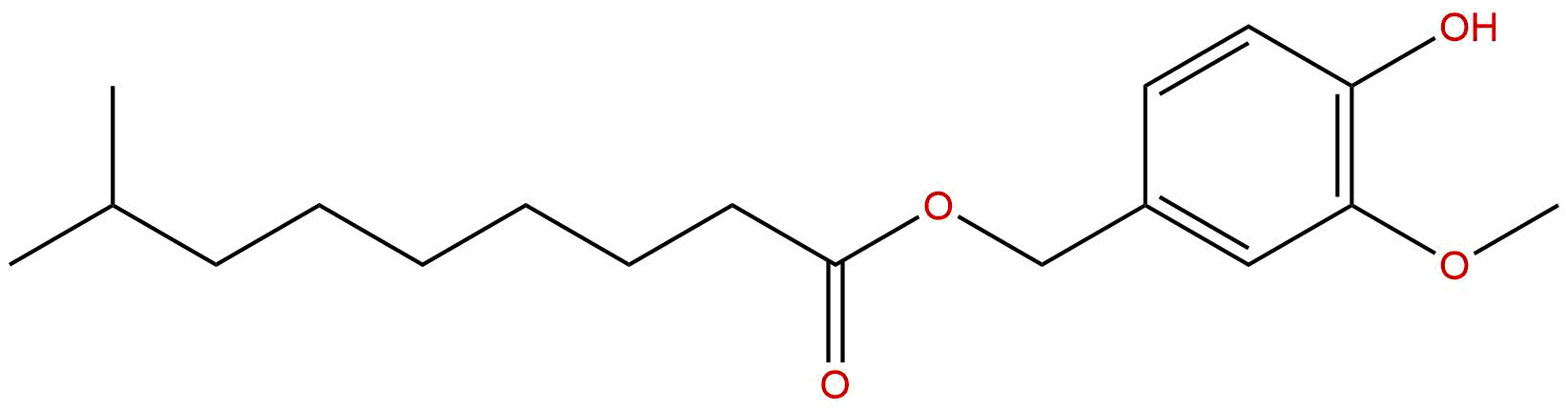
The chemical name of dihydrocapsaicin ester is (E) -8-methyl-6-nonenoic acid 4-hydroxy-3-methoxybenzyl ester, which is a fatty acid ester derived from vanillin. Its molecular formula is C18H28O4 and its molecular weight is 308.4180. Structurally, dihydrocapsaicin ester is highly similar to capsaicin ester, with the main difference being that the carbon atoms at positions 8-9 of its fatty acid side chain are single bonds (saturation bonds), while capsaicin ester is a double bond here. This subtle saturation difference directly leads to changes in its physicochemical properties and some biological activities.
The compound has moderate hydrophobicity, with a calculated lipid water partition coefficient (LogP) of 4.9475, indicating strong lipophilicity. Its topological polar surface area (TPSA) is 55.7600 Å ², reflecting the presence of polar groups such as ester bonds and phenolic hydroxyl groups in the molecule. The water solubility is poor, about 0.0185 mg/mL, which is consistent with its high LogP value, indicating that it may need to consider solubilization strategies in formulation development. Based on its physicochemical parameters, dihydrocapsaicin ester has a high blood-brain barrier permeability, providing a structural basis for its potential central nervous system role. In early safety screening, the compound did not show significant hERG potassium channel inhibitory activity (low risk of arrhythmia) and Ames test mutagenicity (result 0.0), laying a preliminary safety foundation for its further drug development.
Plant sources and extraction methods
Dihydrocapsaicin esters are mainly present in the fruits of certain specific varieties of sweet peppers or low spiciness peppers (such as CH-19 Sweet variety), and are one of the natural derivatives of capsaicin ester compounds. In the plant body, it forms the capsaicin ester family together with capsaicin esters, Nordihydrocapsaicin esters, etc. Its biosynthetic pathway is similar to capsaicin, both originating from the convergence of phenylpropanoid metabolism pathway and branched chain fatty acid metabolism pathway.
The extraction of dihydrocapsaicin esters from plant materials is usually carried out using organic solvent extraction method. The common process includes soaking or reflux extraction of dried and crushed chili fruits using polar organic solvents such as acetone, methanol, or ethanol. After filtration and concentration, the crude extract can be separated and purified using various chromatographic techniques, such as silica gel column chromatography, high-performance liquid chromatography (HPLC), etc. Due to the relative sensitivity of capsaicin ester compounds to light, heat, and alkaline conditions, attention should be paid to avoiding light, controlling temperature, and avoiding strong alkaline environments during the extraction and purification process to maintain their chemical stability. With the increasing demand for natural products, green and efficient technologies such as supercritical CO2 extraction have also been explored for the extraction of such compounds, in order to improve yield while reducing residual organic solvents.
Pharmacological activity research
The pharmacological activity research of dihydrocapsaicin esters mainly focuses on their metabolic regulatory effects, and extends to the fields of analgesia, antioxidation, etc.
-
Metabolic regulation and anti obesity effects This is the core activity of dihydrocapsaicin ester that has received the most attention. Numerous preclinical and clinical studies have shown that oral administration of dihydrocapsaicin esters can effectively increase the body's energy expenditure and fat oxidation without causing significant oral burning sensation. Its function is similar to the "thermogenic effect", by activating brown adipose tissue (BAT) and inducing "browning" of white adipose tissue, promoting thermogenesis and increasing resting metabolic rate. Long term intervention studies have shown that it helps reduce visceral fat area and improve obesity related metabolic parameters such as dyslipidemia and insulin resistance.
-
Analgesic effect Although less stimulating than capsaicin, dihydrocapsaicin ester, as a TRPV1 agonist, still exhibits analgesic potential. Its analgesic mechanism may be similar to capsaicin, which causes desensitization of nociceptive neurons through initial activation of TRPV1, thereby inhibiting the transmission of pain signals. The research involves various models such as inflammatory pain and neuropathic pain.
-
Other activities The study also suggests that dihydrocapsaicin esters may have antioxidant and anti-inflammatory properties, which can help alleviate the chronic low-grade inflammatory state associated with metabolic diseases. In addition, it may also have a regulatory effect on gastrointestinal function.
Mechanism of action and molecular targets
The biological effects of dihydrocapsaicin ester stem from its interactions with multiple molecular targets, among which the TRPV1 receptor is its most core and thoroughly studied target.
-
Core target: TRPV1 receptor TRPV1 is a non selective cation channel widely expressed in various tissues such as sensory neurons, adipocytes, and gastrointestinal cells. Dihydrocapsaicin ester, as an orally active agonist of TRPV1, binds to the intracellular domain of the receptor, causing channel opening and calcium ion influx. In sensory neurons, this may initially cause mild stimulation, but later lead to neuronal desensitization. In adipose tissue and skeletal muscle, calcium influx triggers a series of cascade reactions: activating AMP activated protein kinase (AMPK), upregulating the expression of thermogenic genes such as uncoupling protein 1 (UCP1), and ultimately promoting mitochondrial thermogenesis and fatty acid oxidation. This is the core molecular pathway that promotes energy consumption and improves metabolism.
-
Other target networks related to analgesia Analgesia is a complex multi-target regulatory process. In addition to TRPV1, the analgesic effect of dihydrocapsaicin esters may indirectly or directly involve other targets:
- Endogenous cannabinoid system Activation of TRPV1 may affect the levels of endogenous cannabinoids (such as anandamide), which in turn act on the cannabinoid receptor CB1 (CNR1) and participate in pain and inflammation regulation.
- Opioid system The pain regulation pathway is closely related to the μ -, δ -, and κ - opioid receptors (OPRM1, OPRD1, OPRK1). Capsaicin like substances can produce analgesic effects by affecting the release of endogenous opioid peptides.
- Cyclooxygenase (PTGS1/COX-1, PTGS2/COX-2)As a key enzyme involved in the synthesis of prostaglandins, a mediator of inflammation and pain, its activity may be regulated by downstream signals after TRPV1 activation.
- Other receptors Transient receptor potential anchor protein subtype 1 (TRPA1), dopamine D2 receptor (DRD2), serotonin transporter (SLC6A4), and others all play roles in pain perception and modulation. Dihydrocapsaicin esters may indirectly affect the function of these systems through complex neuroendocrine networks.
In summary, the mechanism of action of dihydrocapsaicin ester starts with TRPV1 activation, and forms a multi-target and multi pathway pharmacological system by affecting two core networks: energy metabolism and neural signal transduction.
Evaluation of drug properties and pharmacokinetics
Based on its physical and chemical properties and preliminary research, dihydrocapsaicin ester has shown certain potential as a drug.
- Absorption and oral bioavailability Dihydrocapsaicin ester has strong lipophilicity and is mainly absorbed through passive diffusion in the small intestine after oral administration. Due to its ester bond structure, it may be partially hydrolyzed by esterases in the intestine to produce vanillin and corresponding fatty acids, which may also contribute to some of its activity. Studies have shown that its oral absorption is rapid, but the first pass effect may be more pronounced. Formulation technology (such as lipid formulations, nanoemulsions, etc.) is used to improve their solubility and bioavailability.
- distribution The compound has a high LogP value, indicating its widespread tissue distribution and ability to cross the blood-brain barrier. Animal experiments have confirmed that it has a high distribution in metabolically active tissues such as fat and liver.
- Metabolism The liver is its main metabolic site, undergoing oxidative metabolism through cytochrome P450 enzyme systems (such as CYP2C9, CYP2C19, CYP3A4) and hydrolysis through esterases. Metabolites are mainly excreted through urine and bile.
- Preliminary evaluation of safety Existing data indicates that it has low acute toxicity, no genotoxicity warning (Ames test negative), and no significant risk of cardiac toxicity (hERG inhibition negative). Its biggest advantage is that there is almost no strong burning sensation peculiar to capsaicin when it is taken orally, and the gastrointestinal tract is well tolerated, which provides key convenience for its long-term use in the management of chronic diseases (such as obesity and diabetes).
However, comprehensive clinical pharmacokinetic parameters, long-term toxicological data, and studies on interactions with other drugs still require further clarification in clinical stage work.
Clinical application prospects and prospects
The clinical application prospects of dihydrocapsaicin esters mainly revolve around their core metabolic regulatory activities and are gradually expanding into related fields.
-
Management of metabolic diseases:
- Obesity and weight management As a dietary supplement or prescription drug ingredient, it is used to assist in reducing body fat and increasing energy expenditure, especially suitable for patients with visceral obesity.
- Type 2 diabetes By improving insulin sensitivity and regulating glucose and lipid metabolism, it may become an auxiliary means for comprehensive treatment of diabetes.
- Non alcoholic fatty liver disease (NAFLD)It promotes fat oxidation and anti-inflammatory effects, which may be beneficial for improving liver steatosis and inflammation.
-
pain management Develop low irritant topical preparations (such as creams, patches) for the treatment of chronic pain such as muscle and joint pain, neuralgia, etc., to avoid the strong burning sensation of traditional capsaicin preparations during initial use and improve patient compliance.
-
Sports nutrition and healthy food As a functional ingredient added to exercise supplements or health foods, it utilizes its mild thermogenic effect to help optimize body composition and promote recovery for active individuals.
Future research directions and challenges include:
* In depth mechanism exploration Elucidate the precise signaling pathways underlying its specific effects in different tissues such as fat, muscle, and intestine.
* Clinical Evidence Enhancement Conduct large-scale, long-term, randomized controlled clinical trials to confirm its effectiveness and safety in different populations.
* Structural optimization and formulation development Improve its pharmacokinetic properties through chemical modification; Develop new delivery systems to improve bioavailability and targeting.
* Combination therapy strategy Explore the synergistic effects of its combination with other anti obesity or analgesic drugs with different mechanisms of action.
Conclusion
Dihydrocapsaicin ester, as a natural active molecule derived from chili peppers, has successfully bridged the gap between traditional edible plants and modern metabolic pharmacology through its unique chemical structure - significantly reducing sensory stimulation while retaining TRPV1 activation activity. From chemical structure, plant extraction to multi-level pharmacological mechanism research, especially its core path of regulating energy metabolism by activating TRPV1 receptor, it reveals its great potential in dealing with global obesity, diabetes and other metabolic diseases. Although it has advantages such as strong lipophilicity and good oral tolerance in drug development, its complete clinical translation pathway still requires more solid pharmacokinetic, long-term toxicological, and high-level clinical efficacy evidence support. Looking ahead to the future, with the in-depth analysis of its mechanism of action and continuous innovation in formulation technology, dihydrocapsaicin ester is expected to develop from a promising natural product into an effective and easily accepted new treatment option for the prevention and treatment of metabolic syndrome and related diseases, fully demonstrating the enduring vitality of natural products in innovative drug development.