Introduction/Overview
Diabetes, especially Type 2 diabetes (T2DM), has become a major chronic metabolic disease threatening human health worldwide. Its pathological and physiological mechanisms are complex, with core features including insulin resistance (IR) and progressive failure of pancreatic beta cell function. Although existing drugs such as metformin, sulfonylureas, DPP-4 inhibitors, and SGLT2 inhibitors have been widely used in clinical practice, there are still problems such as significant individual differences in efficacy, side effects (such as hypoglycemia, weight gain, gastrointestinal reactions), and decreased efficacy after long-term use. Therefore, the search for new anti diabetes lead compounds with novel structure, unique mechanism and high safety from natural products has always been a hot spot in pharmaceutical chemistry and pharmacology.
Phloridzin and its derivatives are a class of dihydrochalcones existing in rose plants such as apples and pears. They are famous for their inhibition of sodium glucose cotransporter 2 (SGLT2), and are the lead compounds of classical anti diabetes drugs such as daggligin and engegligin. However, the selectivity and oral bioavailability of paeoniflorin have limited its direct application due to drug formation issues. 3-hydroxyphloridzin (CAS number: 30779-02-3), as a hydroxylated derivative of phloridzin, has attracted attention in recent years due to its unique pharmacological activity spectrum. Unlike the parent compound, which mainly acts on renal glucose reabsorption, 3-hydroxyquercetin has been proven to be an effective inhibitor of protein tyrosine phosphatase 1B (PTP1B), which can directly intervene in the insulin signaling pathway and improve insulin resistance. In addition, its target network also involves multiple key molecules closely related to energy metabolism and glucose and lipid metabolism regulation, such as AMPK, AKT, PPAR γ, etc. This multi-target synergistic mode of action demonstrates unique potential in the treatment of complex metabolic syndrome. This article will provide a systematic review of the research progress of 3-hydroxyquercetin from the aspects of chemical structure, plant origin, pharmacological activity, mechanism of action, pharmacological evaluation, and clinical application prospects.
Chemical structure and physicochemical properties
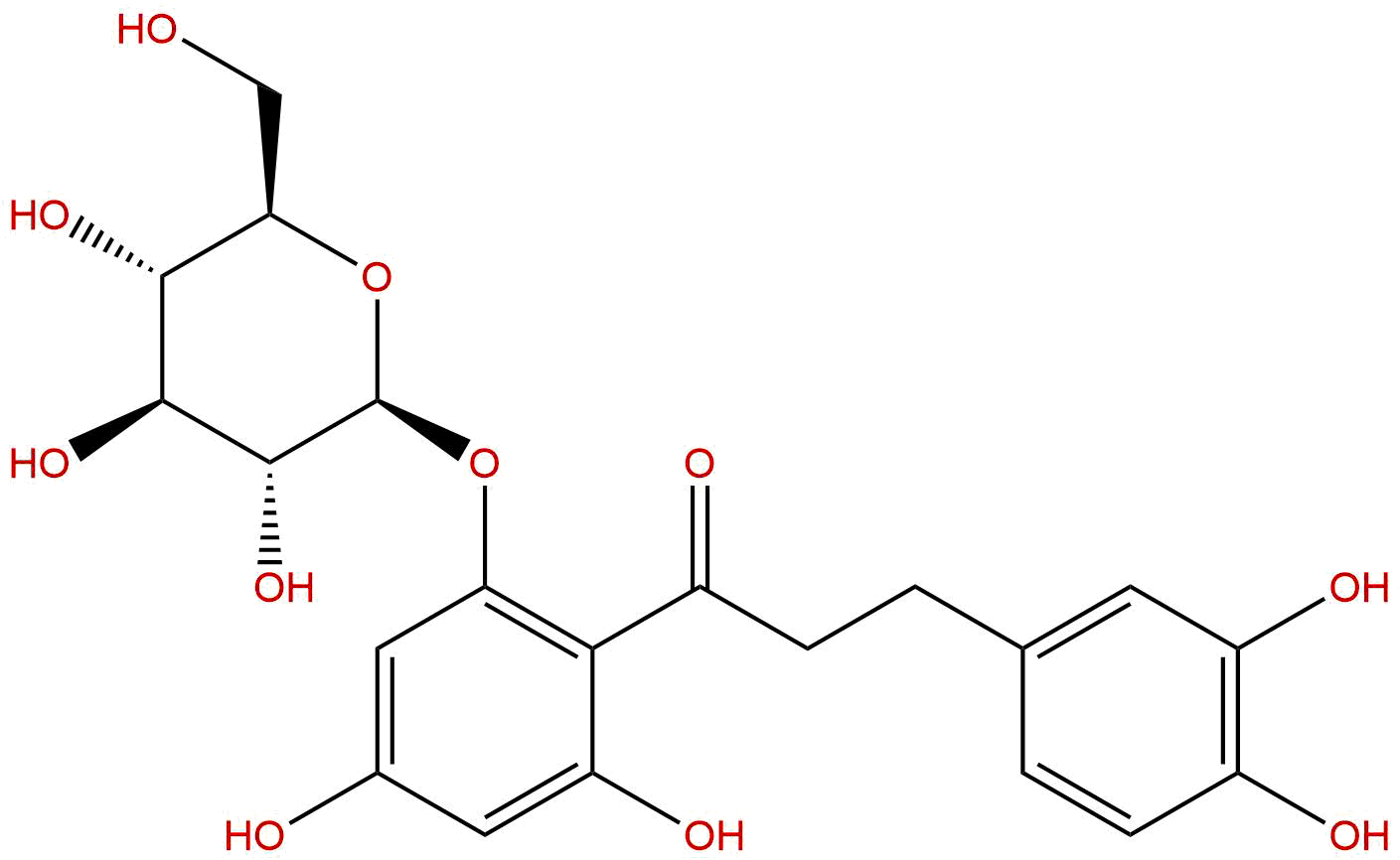
The chemical name of 3-hydroxyphloridzin is 1- [2- (β - D-glucopyranosyl) -4,6-dihydroxyphenyl] -3- (3,4-dihydroxyphenyl) -1-propanone, which belongs to the dihydrochalcone glycoside class. Its core skeleton consists of dihydrochalcone glycoside (Phloretin) and a glucose group. Compared with Phloridzin, 3-hydroxyphloretin has an additional hydroxyl substituent at the 3rd position (i.e. the meta position) of the B ring, hence its aglycone is 3-hydroxyphloretin. This structural difference significantly alters the polarity and hydrogen bond donor/acceptor ability of the molecule, thereby affecting its biological activity and physicochemical properties.
From the perspective of physical and chemical properties, the molecular weight of 3-hydroxyquercetin is 452.4120 g/mol, which is a medium-sized molecule. Its lipid water partition coefficient (LogP) is -0.1045, indicating that the compound has high hydrophilicity and good water solubility (water solubility parameter is 4.7633). The higher topological polar surface area (TPSA, 197.3700 Å ²) further confirms its strong polarity characteristics, mainly due to multiple phenolic hydroxyl groups and hydroxyl groups on glucose groups in the molecule. High polarity and good water solubility are usually beneficial for the dissolution and transport of drugs in the blood, but may also make it difficult for them to penetrate the lipid bilayer of the cell membrane, thereby affecting oral absorption and the arrival of intracellular targets. In addition, according to the predictive model, the blood-brain barrier (BBB) penetration ability of 3-hydroxyquercetin is relatively low, indicating that its peripheral effects are predominant and the risk of central nervous system related side effects may be low. The preliminary toxicity prediction shows that the compound has no risk of hERG cardiac toxicity, and the Ames test result is negative (0.0), indicating a low risk of mutagenicity and good preliminary safety characteristics.
Plant sources and extraction methods
The distribution of 3-hydroxyquercetin in nature is relatively limited, mainly found in Rosaceae plants, especially in the apple genus(Malus)It has been found in the leaves, bark, fruits, and root bark of plants. In addition, in strawberries(Fragaria × ananassa)There have also been reports in berry plants. Its content is usually lower than that of root bark glycoside, and is greatly influenced by variety, growth environment, harvest season, and tissue location. For example, in the young leaves and skin of certain apple varieties, the content of 3-hydroxyquercetin is relatively high and can serve as a potential source of extraction.
For the extraction of 3-hydroxyquercetin, the current strategy mainly adopts a combination of solvent extraction, ultrasound assisted extraction, and modern chromatographic separation technology. Due to the high polarity of the compound, highly polar solvents such as methanol, ethanol, or their aqueous solutions are usually used as extraction solvents. A typical extraction process involves crushing dried plant materials (such as apple leaves or root bark) and conducting multiple extractions or percolation extraction using a 70% -80% ethanol aqueous solution at room temperature or heating conditions (40-60 ℃). After the extraction solution is concentrated under reduced pressure, crude extract is obtained. In order to enrich the target compound, the crude extract usually needs to undergo preliminary liquid-liquid extraction (such as petroleum ether defatting, ethyl acetate or n-butanol extraction) to remove lipid soluble impurities and polysaccharides. Subsequently, various column chromatography techniques were used for separation and purification, among which reverse phase silica gel column chromatography (such as ODS-C18) and polyamide column chromatography were the most commonly used. The elution system is mostly a methanol water or acetonitrile water gradient system. Finally, high-purity 3-hydroxyquercetin monomer can be obtained through semi preparative high-performance liquid chromatography (HPLC). In recent years, efficient and low loss separation techniques such as high-speed countercurrent chromatography (HSCCC) have also been applied to the preparation of such compounds, showing promising application prospects. It is worth noting that due to the presence of multiple phenolic hydroxyl groups in 3-hydroxyquercetin, prolonged high temperature and strong alkaline environments should be avoided during the extraction and separation process to prevent its oxidative degradation or structural transformation.
Pharmacological activity research
The pharmacological activity of 3-hydroxyphloridzin mainly focuses on its anti diabetes effect, and has been extended to related metabolic diseases.
-
Antidiabetic activity This is the most essential pharmacological activity of 3-hydroxyquercetin. Research has shown that 3-hydroxyquercetin can significantly improve insulin resistance. In vitro cell models, such as insulin resistant HepG2 liver cells or 3T3-L1 adipocytes, treatment with 3-hydroxyquercetin can dose dependently increase glucose uptake and improve glycogen synthesis under insulin stimulation. In animal models, oral or intraperitoneal injection of 3-hydroxyquercetin can significantly reduce fasting and postprandial blood glucose levels in db/db mice or high-fat diet induced obese mice, while improving their impaired glucose tolerance. More importantly, unlike resveratrol, which mainly reduces blood glucose by inhibiting SGLT2 and promoting urinary glucose excretion, 3-hydroxyquercetin exhibits stronger activity in improving insulin sensitivity, indicating differences in its mechanism of action.
-
PTP1B inhibitory activity Protein tyrosine phosphatase 1B (PTP1B) is a negative regulator of the insulin signaling pathway, which can dephosphorylate the insulin receptor (IR) and its substrate (IRS), thereby terminating signal transduction. Overexpression or increased activity of PTP1B is an important cause of insulin resistance. 3-hydroxyquercetin has been identified as an effective PTP1B inhibitor. Its inhibitory mechanism typically involves interaction with key amino acid residues (such as Cys215) at the PTP1B active site, thereby blocking its catalytic function. By inhibiting PTP1B, 3-hydroxyquercetin can prolong and enhance the phosphorylation level of insulin receptors, thereby restoring damaged insulin signaling transduction and improving insulin resistance.
-
Regulating insulin receptor phosphorylation As a PTP1B inhibitor, the direct downstream effect of 3-hydroxyquercetin is to regulate the phosphorylation status of insulin receptors (IR). Research has shown that in a cell model of insulin resistance, 3-hydroxyquercetin can significantly increase the tyrosine phosphorylation levels of the IR β subunit and its downstream substrate IRS-1. This effect is a key step in improving insulin signaling, which can promote the activation of downstream PI3K/AKT pathways, ultimately promoting GLUT4 translocation to the cell membrane and increasing glucose uptake.
-
Other metabolic regulatory activities In addition to its anti diabetes effect, 3-hydroxyphloridzin also showed other beneficial metabolic regulation activities. For example, it can activate AMP activated protein kinase (AMPK), which is a key sensor for cellular energy metabolism. Its activation helps promote fatty acid oxidation, inhibit liver gluconeogenesis, and improve mitochondrial function. In addition, studies suggest that 3-hydroxyquercetin may have certain effects on adipocyte differentiation (involving PPAR γ) and the metabolism of glucagon like peptide-1 (GLP-1) (involving DPP-4), but its specific mechanism and physiological significance still need further clarification.
Mechanism of action and molecular targets
The pharmacological effect of 3-hydroxyphloridzin is not a single target, but exerts its anti diabetes and metabolic regulation effects through multiple targets and pathways. The core mechanism network is as follows:
-
Core target: PTP1B and insulin signaling pathway This is the most critical mechanism that distinguishes 3-hydroxy quercetin from resveratrol. By directly inhibiting the activity of PTP1B, 3-hydroxyquercetin blocks the negative feedback regulation of the insulin signaling pathway. Specifically, it maintains tyrosine phosphorylation levels of insulin receptor (IR) and insulin receptor substrate 1 (IRS1), thereby enhancing the activity of PI3K (phosphatidylinositol 3-kinase, a regulatory subunit encoded by PIK3R1). The activation of PI3K further leads to the phosphorylation activation of downstream key kinase AKT1 (protein kinase B). Activated AKT1 promotes the phosphorylation and inactivation of glycogen synthase kinase 3 (GSK3), thereby promoting glycogen synthesis; On the other hand, it promotes the translocation of vesicles containing GLUT4 (protein encoded by SLC2A4) to the cell membrane, increasing glucose transport and uptake. Therefore, 3-hydroxyquercetin effectively reverses insulin resistance through the classic pathway of PTP1B → IR/IRS1 → PI3K → AKT1 → GLUT4.
-
Energy metabolism sensor: AMPK pathway 3-hydroxyquercetin has been shown to activate AMPK (the catalytic subunit encoded by PRKAA1). The activation mechanism of AMPK may involve indirect effects on cellular energy status or direct binding to AMPK subunits. Activated AMPK can phosphorylate and inhibit acetyl CoA carboxylase (ACC), thereby reducing fatty acid synthesis and promoting fatty acid oxidation. Meanwhile, the activation of AMPK can also inhibit the expression of key hepatic gluconeogenesis enzymes such as phosphoenolpyruvate carboxykinase PEPCK and glucose-6-phosphatase G6Pase, reducing hepatic glucose output. In addition, the activation of AMPK is also associated with improving mitochondrial biosynthesis and function. Therefore, the AMPK pathway is an important supplement to the systemic metabolic improvement effect of 3-hydroxyquercetin.
-
Sugar metabolism and intestinal regulation: SGLT2 and GCK Although the inhibitory activity of 3-hydroxyquercetin on SGLT2 may be weaker than that of resveratrol, it may still to some extent inhibit the reabsorption of glucose by the renal proximal tubules, thereby assisting in lowering blood sugar by increasing urinary glucose excretion. In addition, glucokinase (GCK), as a "sensor" of glucose metabolism, regulates glucose phosphorylation in liver and pancreatic β cells. Whether 3-hydroxyquercetin directly or indirectly affects GCK activity, thereby regulating glucose stimulated insulin secretion or liver glucose uptake, is currently lacking direct evidence, but this is a direction worth exploring.
-
Other potential targets: PPARG and DPP4 Peroxisome proliferator activated receptor gamma (PPARG) is a key transcription factor for adipocyte differentiation and insulin sensitization. Although there are few reports on the direct effects of 3-hydroxyquercetin on PPARG, its ability to improve insulin resistance may be related to indirect regulation of PPARG activity. Dipeptidyl peptidase 4 (DPP4) is a key enzyme for degrading enteropancreatin GLP-1. Inhibiting DPP4 can prolong the half-life of GLP-1 and promote insulin secretion. It is currently unclear whether 3-hydroxyquercetin has DPP4 inhibitory activity, but given its multi-target nature, further research is warranted.
In summary, the mechanism of action of 3-hydroxyquercetin is a complex network centered around PTP1B inhibition, synergistic activation of AMPK, and may involve multiple targets such as SGLT2, PPARG, DPP4, etc. This multi target mode of action has unique advantages in the treatment of type 2 diabetes and its complications, which can simultaneously improve insulin resistance, promote energy consumption and regulate glucose metabolism.
Evaluation of drug properties and pharmacokinetics
To develop 3-hydroxyquercetin from a natural product into a clinical candidate drug, a systematic evaluation of its pharmacological properties is required.
-
Physical and chemical properties and drug like properties As mentioned earlier, 3-hydroxyquercetin has high water solubility (4.7633), low LogP (-0.1045), and high TPSA (197.37 Å ²). According to the Lipinski Five Rules, its molecular weight (452.4) is slightly higher than 500, and there are more hydrogen bond donors (phenolic and sugar hydroxyl groups) (>5), with a negative LogP. These characteristics suggest that its oral absorption may be poor, and it belongs to Class III or IV drugs in the Biopharmaceutical Classification System (BCS). High polarity and high TPSA are not conducive to its passive diffusion through the intestinal epithelial cell membrane. Therefore, low oral bioavailability is its main challenge in drug development.
-
Pharmacokinetic characteristics At present, there is relatively limited research data on the pharmacokinetics (ADME) of 3-hydroxyquercetin in vivo. Based on the study of its physicochemical properties and analogues (such as puerarin), it can be inferred that:absorb Oral absorption may be poor, with the main absorption site possibly in the small intestine, but may be influenced by gut microbiota metabolism (such as deglycosylation).distribution Due to its high polarity, its distribution volume may be small and mainly distributed in the extracellular fluid. Low BBB penetration ability indicates low exposure to the central nervous system.Metabolism The main metabolic pathways may include: ① hydrolysis by β - glucosidase in the intestine or liver into aglycones (3-hydroxyquercetin); ② Glycosides or prototype drugs undergo phase II metabolism, such as glucuronidation and sulfation binding reactions.excretion Due to its high polarity, the prototype drug and its metabolites may be mainly excreted through the kidneys and bile.
-
safety evaluation The preliminary toxicity prediction results are encouraging. The Ames test result was negative (0.0), indicating no significant mutagenicity. HERG inhibition prediction is' no ', indicating a low risk of cardiac toxicity. These preliminary data provide a security foundation for subsequent development. However, comprehensive in vitro and in vivo toxicology studies are still needed, including acute toxicity, long-term toxicity, reproductive toxicity, and effects on liver and kidney function.
-
Optimization strategy for drug properties Given that low oral bioavailability is the main bottleneck, future strategies for optimizing the pharmacological properties of 3-hydroxyquercetin may include:
- Prodrug design Esterification or phosphorylation modification of its phenolic hydroxyl group to enhance lipid solubility, promote absorption, and release the active prototype drug through enzymatic interpretation in vivo.
- Formulation development Using nanotechnology (such as liposomes, solid lipid nanoparticles), phospholipid complexes, or self microemulsifying drug delivery systems to enhance their solubility and oral absorption.
- Structural modification Based on the structure-activity relationship of PTP1B inhibitors, simplify or modify the dihydrochalcone skeleton to search for non glycosidic derivatives with stronger activity and higher oral bioavailability.
Clinical application prospects and prospects
As a natural PTP1B inhibitor with multi target action characteristics, 3-hydroxyphloridzin has shown broad application prospects in the treatment of type 2 diabetes and related metabolic diseases.
-
As a lead compound of new anti diabetes drugs Its core value is to directly improve insulin resistance by inhibiting PTP1B, which is a pathological link that many anti diabetes drugs (such as metformin and sulfonylurea) cannot completely cover at present. Compared with SGLT2 inhibitors such as dapagliflozin, 3-hydroxyquercetin not only improves insulin signaling through renal glucose excretion, but also has a more comprehensive therapeutic potential. In the future, it is expected to develop new anti diabetes candidate drugs with independent intellectual property rights by optimizing its structure through pharmaceutical chemistry.
-
Application in the treatment of metabolic syndrome Given its ability to activate AMPK and potentially affect lipid metabolism and energy balance, 3-hydroxyquercetin may also have therapeutic effects on metabolic syndrome components such as obesity and non-alcoholic fatty liver disease (NAFLD). Combining the anti diabetes effect with the effects of improving lipid metabolism and weight loss, it is in line with the current concept of comprehensive treatment for metabolic syndrome.
-
As a functional food or dietary supplement Given that it originates from common fruits such as apples and has relatively high safety, 3-hydroxyquercetin or its plant extracts rich in this ingredient have the potential to be developed into functional foods or dietary supplements with auxiliary hypoglycemic functions. This has important value for early intervention of pre diabetes population or mild type 2 diabetes patients.
-
Future research directions:
- In depth pharmacokinetic research Systematic in vivo ADME research is needed to clarify its absorption, distribution, metabolism, and excretion characteristics, especially the reasons for low oral bioavailability and improvement strategies.
- Study on Structure Activity Relationship Systematically investigate the effects of different hydroxyl substitution modes, sugar types, and positions in the dihydrochalcone skeleton on the inhibitory activity, selectivity, and pharmacokinetic properties of PTP1B, providing guidance for structural optimization.
- Pharmacodynamic validation in vivo: In a variety of animal models (such as hereditary diabetes model, diet induced obesity model), further verify its long-term efficacy and impact on diabetes complications (such as kidney disease, neuropathy).
- safety evaluation Conduct comprehensive toxicology research, especially safety assessment of long-term medication.
- Combination therapy research Explore its synergistic effect with existing drugs such as metformin and SGLT2 inhibitors in order to achieve better clinical efficacy.
Conclusion
3-hydroxyquercetin, as a natural dihydrochalcone glycoside compound, exhibits significant pharmacological activity in improving insulin resistance and glucose metabolism disorders by regulating the insulin signaling pathway and activating AMPK energy sensors through multi-target mechanisms, with its unique PTP1B inhibitory activity as the core. Its good preliminary safety characteristics and natural advantages make it a potential anti diabetes lead compound. Despite the challenges of low oral bioavailability and drug development, these obstacles can be overcome through strategies such as prodrug design, novel formulation technology, and structural optimization. In the future, with the deepening of research on its mechanism of action, pharmacokinetic characteristics and structure-activity relationship, 3-hydroxyphloretin and its derivatives are expected to provide new and more effective solutions for the treatment of type 2 diabetes and metabolic syndrome, and promote the transformation process from traditional natural products to modern innovative drugs.