Pharmacological research progress on cinnamon tannin A2: a multi-target natural tetramer proanthocyanidin
Introduction/Overview
Natural products, as an important source of drug discovery, have always played an irreplaceable role in the long struggle between humans and diseases. Among numerous natural compounds with biological activity, proanthocyanidins have attracted much attention due to their unique chemical structure and extensive pharmacological activities. Anthocyanins are a class of polyphenolic compounds widely present in the plant kingdom, formed by the polymerization of flavan-3-ol units through carbon carbon bonds. They can be classified into dimers, trimers, tetramers, and oligomers with higher degrees of polymerization based on their degree of polymerization. Among them, tetramer anthocyanins exhibit excellent bioavailability and multiple pharmacological activities in organisms due to their moderate molecular weight and unique spatial conformation.
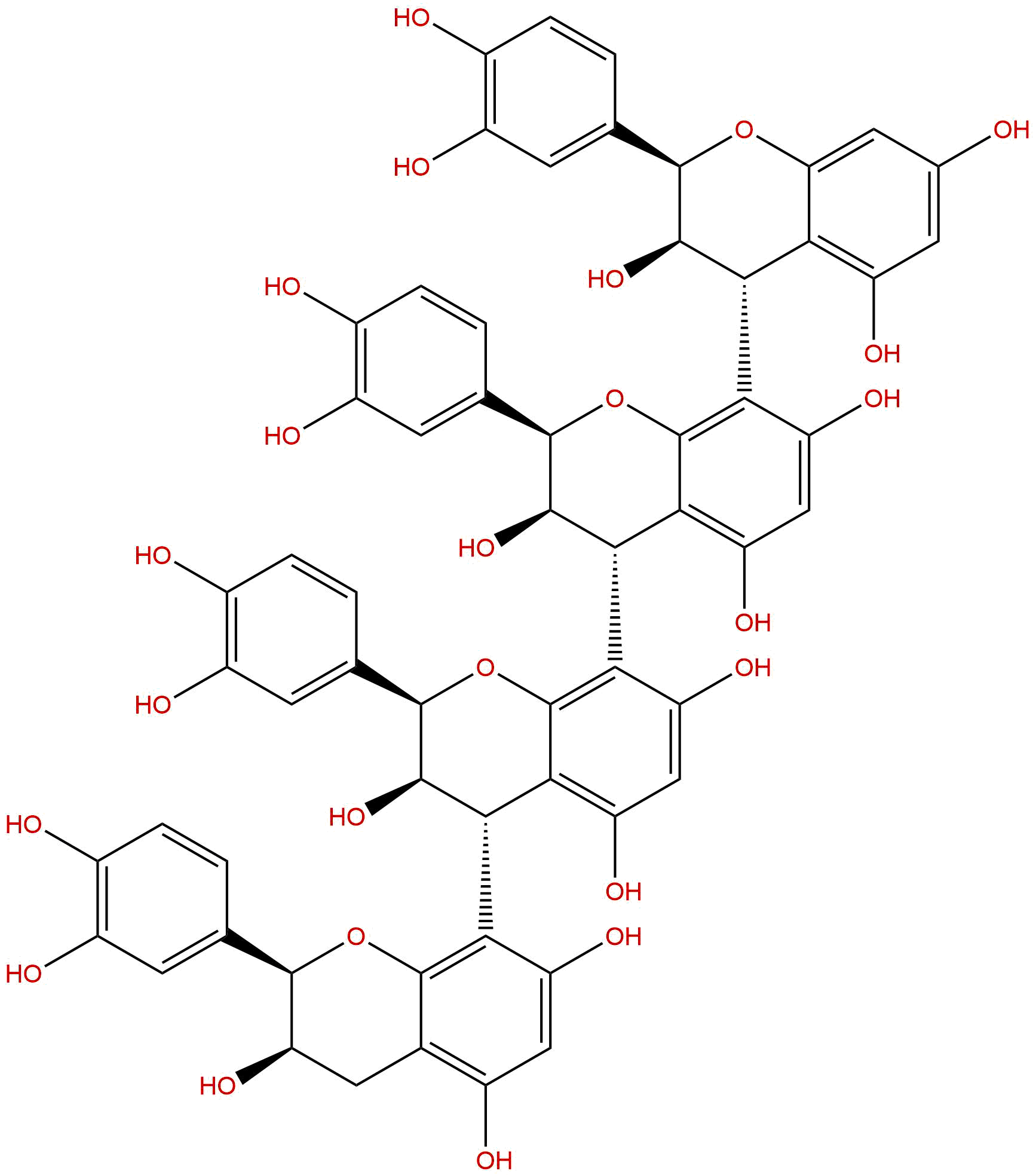
Cinnamtannin A2 (CAS number: 86631-38-1) is a tetramer anthocyanin isolated from plants of the cinnamon genus. Its chemical structure consists of four flavan-3-ol units connected by specific C4-C8 and C4-C6 bonds. Cinnamon from Ceylon was first introduced in the 1980s(Cinnamomum zeylanicum)Since the separation and identification of cinnamic tannin A2, it has gradually attracted widespread attention from natural product chemists and pharmacologists. In recent years, with the deepening of research, the pharmacological activities of cinnamon tannin A2 in metabolic diseases, oxidative stress injury, kidney protection and other fields have been gradually revealed, especially its unique role in regulating glucagon like peptide-1 (GLP-1) and insulin secretion, making it a potential candidate compound for the treatment of type 2 diabetes and its complications.
This article will systematically review the research progress of cinnamic tannin A2 from the aspects of chemical structure and physicochemical properties, plant sources and extraction methods, pharmacological activity research, mechanism of action and molecular targets, drug evaluation and pharmacokinetics, and clinical application prospects, in order to provide reference for the in-depth research and development of this natural product.
Chemical structure and physicochemical properties
Chemical structural characteristics
Cinnamtannin A2 belongs to A-type proanthocyanidin, and its basic structural units are catechin and epicatechin. Unlike common B-type anthocyanins, A-type anthocyanins not only have carbon carbon bond connections of C4 → C8 or C4 → C6, but also contain an additional C2 → O → C7 ether bond, forming a unique double bond connection structure. This structural feature endows A-type anthocyanins with higher conformational rigidity and unique biological activity.
Specifically, Cinnamtannin A2 is a tetramer composed of four flavan-3-ol units, with a molecular formula of C ₆₀ H ₅₀ O ₂ ₄ and a molecular weight of 1155.0360 Da. Structural analysis shows that the compound is composed of two epicatechin units and two epicatechin units alternately connected, with the first and second units connected by A-type double bonds (C4 → C8 and C2 → O → C7), and subsequent units connected by B-type single bonds (C4 → C8). This complex connection method results in a unique spatial conformation of cinnamon tannin A2, where multiple phenolic hydroxyl groups form specific distribution patterns in space, providing a structural basis for interactions with various biological targets.
Physicochemical properties
Cinnamtannin A2 is a light yellow to brownish amorphous powder with certain hygroscopicity. The physicochemical parameters are as follows: the coefficient of lipid water partition (LogP) is 2.8148, indicating that the compound has moderate lipophilicity and is conducive to transmembrane transport; The topologically polar surface area (TPSA) is as high as 441.5200 Å ², mainly attributed to the large number of phenolic hydroxyl and ether oxygen atoms in the molecule, indicating its good hydrogen bonding ability in aqueous environments. The water solubility experiment data shows that its solubility is 0.0117 mg/mL, which belongs to insoluble compounds. This characteristic may limit its oral bioavailability.
In terms of spectral characteristics, cinnamon tannin A2 exhibits a characteristic absorption peak near 280 nm in the UV Vis region, which is attributed to the π →π * transition of the B-cyclic phenolic hydroxyl group shared by anthocyanin compounds. In infrared spectroscopy (IR), the broad peak around 3400 cm ⁻¹ corresponds to the O-H stretching vibration of phenolic hydroxyl groups, the 1610-1450 cm ⁻¹ region is the aromatic ring skeleton vibration, and the absorption peak between 1100-1000 cm ⁻¹ belongs to the stretching vibration of C-O-C ether bonds. The typical signal of the flavan-3-ol unit and the characteristic chemical shift of the A-type double bond connection (such as the C2 signal shifting to a low field of about 100 ppm) in nuclear magnetic resonance hydrogen spectrum (¹ H NMR) and carbon spectrum (¹ ³ C NMR) are key criteria for structural identification.
It is worth noting that cinnamon tannin A2 is relatively stable under acidic conditions, but is prone to oxidative degradation in alkaline environments. Multiple adjacent phenolic hydroxyl groups in its molecule endow it with strong free radical scavenging ability, which is also the chemical basis for its antioxidant activity.
Plant sources and extraction methods
Main plant sources
Cinnamtannin A2 was originally derived from the Cinnamomum cassia plant in the Lauraceae family(Cinnamomum zeylanicum Separated from the bark of Blume. Subsequently, research found that the compound was distributed in various cinnamon plants, including Chinese cinnamon(Cinnamomum cassia Presl)、 Yin Xiang(Cinnamomum burmannii)And Vietnamese cinnamon(Cinnamomum loureirii)Wait. In addition to cinnamon plants, cinnamon tannin A2 has also been found in other families and genera, such as strawberries in the Rosaceae family(Fragaria × ananassa)Fabaceae's catechu(Acacia catechu)And mangoes from the Anacardiaceae family(Mangifera indica)Wait, indicating that the compound has a certain distribution breadth in the plant kingdom.
In cinnamon plants, cinnamon tannin A2 is mainly present in the bark and tender branches, and its content is influenced by various factors, including plant variety, growth environment, harvest season, and tree age. Research has shown that the content of cinnamon tannin A2 in Ceylon cinnamon is usually higher than that in Chinese cinnamon, and the content is relatively higher in older plants. In addition, drought stress and low temperature environment may induce the accumulation of anthocyanins in plants, thereby affecting the content of cinnamic tannin A2.
Extraction and purification methods
The extraction of cinnamon tannin A2 is usually carried out by solvent extraction, utilizing the characteristics of its polyphenolic compounds and selecting an appropriate solvent system for extraction. Common extraction solvents include methanol, ethanol, acetone, and their mixed aqueous solutions. Among them, 70% -80% acetone aqueous solution is widely used due to its good solubility and selectivity towards anthocyanin compounds. The extraction process is usually carried out at room temperature or under mild heating conditions to avoid degradation of compounds caused by high temperatures.
The extracted crude extract needs multi-step purification to obtain high-purity cinnamon tannin A2. The classic purification processes include liquid-liquid extraction (such as ethyl acetate or n-butanol extraction for enrichment of polyphenol components), column chromatography (such as Sephadex LH-20 gel column chromatography, silica gel column chromatography, ODS reverse phase column chromatography) and preparative high-performance liquid chromatography (Prep HPLC). Among them, Sephadex LH-20 column chromatography is a key step in separating oligomers of anthocyanins, achieving separation of anthocyanins with different degrees of polymerization based on differences in molecular size and phenolic hydroxyl groups. Subsequently, using reverse phase preparative HPLC with acetonitrile water or methanol water as the mobile phase, cinnamon tannin A2 with a purity of over 95% can be further purified.
In recent years, new separation techniques such as high-speed countercurrent chromatography (HSCCC) and supercritical fluid extraction (SFE) have also been attempted for the preparation of cinnamic tannin A2. HSCCC utilizes the liquid-liquid distribution principle to avoid irreversible adsorption caused by solid stationary phases, making it suitable for large-scale preparation; SFE has advantages such as green environmental protection and adjustable selectivity, but due to equipment cost and extraction efficiency, it has not yet been industrialized.
Pharmacological activity research
Antidiabetic activity
The most striking pharmacological activity of cinnamon tannin A2 is its anti diabetes effect. Type 2 diabetes (T2DM) is a metabolic disease characterized by insulin resistance and progressive decline of pancreatic beta cell function. Its pathogenesis involves the disorder of multiple signal pathways. Research has shown that cinnamon tannin A2 can significantly increase the secretion levels of glucagon like peptide-1 (GLP-1) and insulin in mice. GLP-1 is an intestinal insulinotropic hormone secreted by intestinal L cells, which has multiple physiological functions such as promoting insulin secretion, inhibiting glucagon release, delaying gastric emptying, and protecting pancreatic beta cells. Cinnamtannin A2 indirectly enhances glucose stimulated insulin secretion (GSIS) by upregulating GLP-1 secretion, thereby exerting a hypoglycemic effect.
In the streptozotocin (STZ) induced diabetes mouse model, after oral administration of cinnamon tannin A2 (50-100 mg/kg/day) for 4 weeks, the fasting blood glucose level of the mice was significantly reduced, and the oral glucose tolerance test (OGTT) showed that the glucose tolerance was significantly improved. At the same time, serum insulin levels increased, and morphological observations of pancreatic beta cells showed reduced cell damage and increased quantity. These results indicate that cinnamon tannin A2 not only has hypoglycemic effects, but may also have protective effects on pancreatic beta cells.
antioxidant activity
Cinnamtannin A2 molecules contain multiple ortho phenolic hydroxyl groups, making it an efficient natural antioxidant. In vitro experiments have shown that Cinnamtannin A2 exhibits significant scavenging activity against 1,1-diphenyl-2-trinitrophenylhydrazine (DPPH) free radicals, 2,2 '- bis (3-ethylbenzothiazoline-6-sulfonic acid) (ABTS) cationic free radicals, and superoxide anion free radicals. Its half maximal inhibitory concentration (IC ₅₀) value is at the micromolar level, superior to common antioxidants vitamin C and vitamin E.
At the cellular level, cinnamon tannin A2 can alleviate oxidative stress damage induced by hydrogen peroxide (H ₂ O ₂). After pretreatment of human umbilical vein endothelial cells (HUVECs) with cinnamon tannin A2, the intracellular levels of reactive oxygen species (ROS) were significantly reduced, while the activities of superoxide dismutase (SOD) and glutathione peroxidase (GPx) increased, and the content of malondialdehyde (MDA) decreased. In addition, cinnamon tannin A2 can activate the nuclear factor E2 related factor 2 (Nrf2) signaling pathway, promote the expression of downstream antioxidant enzyme genes, and enhance the endogenous antioxidant defense ability of cells.
Renal protective effect
Diabetes nephropathy (DN) is one of the most common microvascular complications of diabetes and the main cause of end-stage renal disease. Cinnamon tannin A2 showed significant renal protection in the model of diabetes nephropathy. In the STZ induced diabetes rat model, the urine protein excretion, blood creatinine and blood urea nitrogen and water in cinnamon tannin A2 treatment group were significantly lower than those in the model group. Pathological examination of renal tissue showed that cinnamic tannin A2 can alleviate pathological changes such as glomerular hypertrophy, mesangial matrix dilation, and tubulointerstitial fibrosis.
Further research has found that the renal protective effect of cinnamon tannin A2 may be related to its inhibition of oxidative stress, inflammatory response, and fibrosis process. In renal tissue, cinnamon tannin A2 can downregulate the expression of pro fibrotic factors such as transforming growth factor - β 1 (TGF - β 1), connective tissue growth factor (CTGF), and fibronectin, while inhibiting the activation of the nuclear factor kappa B (NF - κ B) signaling pathway and reducing the production of inflammatory factors such as tumor necrosis factor - α (TNF - α) and interleukin-6 (IL-6).
Antibacterial activity
Cinnamtannin A2 has inhibitory effects on various pathogenic bacteria, including Gram positive and Gram negative bacteria. Research on antibacterial mechanisms has shown that cinnamon tannin A2 can act on multiple bacterial targets, including DNA gyrase A subunit (GYRA), DNA gyrase B subunit (GYPB), cell division protein FtsZ (FTSZ), acyl acyl carrier protein reductase (FABI), dihydrofolate reductase (DHFR), penicillin binding protein 2a (MECA), penicillin binding protein (PENA), lanosterol 14 α - demethylase (ERG11/CYP51A1), and resistance related protein CDR1. This multi-target mode of action makes it difficult for bacteria to develop drug resistance, providing ideas for the development of new antibacterial drugs.
It is worth noting that cinnamon tannin A2 also exhibits certain inhibitory activity against methicillin-resistant Staphylococcus aureus (MRSA), with a minimum inhibitory concentration (MIC) in the range of 32-128 μ g/mL. Although its antibacterial activity is weaker than traditional antibiotics, as a natural product, its low toxicity and multi-target properties make it potentially valuable in the development of antibacterial drugs.
Mechanism of action and molecular targets
Molecular mechanism regulating GLP-1 secretion
The molecular mechanism of cinnamon tannin A2 promoting GLP-1 secretion is currently a hot research topic. GLP-1 is mainly secreted by intestinal L cells, and its secretion is regulated by various factors such as nutrients, neurotransmitters, and hormones. Research has shown that cinnamon tannin A2 can upregulate the expression of corticotropin releasing hormone (CRH). CRH is a neuropeptide secreted by the hypothalamus, which has been found to be expressed in the intestine and involved in regulating the secretion of intestinal hormones in recent years. Cinnamtannin A2 may promote the transcription and expression of CRH genes by activating specific signaling pathways in intestinal L cells, such as cAMP/PKA pathway or Ca ² ⁺/calmodulin dependent protein kinase pathway, thereby stimulating the release of GLP-1 through autocrine or paracrine pathways.
In addition, cinnamon tannin A2 may also prolong the half-life of GLP-1 by inhibiting the activity of dipeptidyl peptidase-4 (DPP-4). DPP-4 is a key enzyme in the degradation of GLP-1 in the body, and inhibiting its activity can increase the level of endogenous GLP-1. Molecular docking studies have shown that cinnamon tannin A2 can bind to the active site of DPP-4, forming stable hydrogen bonds and hydrophobic interactions, thereby competitively inhibiting the enzymatic activity of DPP-4.
Antioxidant and anti-inflammatory signaling pathways
The antioxidant activity of cinnamon tannin A2 is mainly achieved by activating the Nrf2/ARE signaling pathway. Under normal physiological conditions, Nrf2 binds to Kelch like ECH related protein 1 (Keap1) and is in an inactive state. When cells are subjected to oxidative stress, cinnamon tannin A2 can modify cysteine residues on Keap1, causing Nrf2 to dissociate from Keap1 and translocate to the nucleus, binding to antioxidant response elements (ARE) and initiating transcription of downstream antioxidant enzyme genes (such as HO-1, NQO1, SOD, GPx, etc.).
In terms of anti-inflammatory effects, cinnamon tannin A2 can inhibit the activation of the NF - κ B signaling pathway. NF - κ B is the core transcription factor of inflammatory response, and its activation leads to the expression of various pro-inflammatory cytokines. Cinnamtannin A2 maintains the inactive state of NF - κ B in the cytoplasm by inhibiting the activity of I κ B kinase (IKK), preventing the phosphorylation and degradation of I κ B α. In addition, cinnamon tannin A2 can directly interact with the p65 subunit, interfere with its binding ability to DNA, and further inhibit the transcription of inflammatory genes.
Multi target antibacterial mechanism
The antibacterial activity of cinnamon tannin A2 originates from its interaction with multiple essential bacterial proteins. Molecular docking and enzyme activity inhibition experiments have shown that cinnamon tannin A2 can bind to the ATP binding sites of GYRA and GYPB, inhibiting the activity of DNA gyrase and hindering bacterial DNA replication. Meanwhile, cinnamon tannin A2 can also bind to the GTPase active site of FtsZ, interfering with the formation of the Z-ring during bacterial cell division. In addition, inhibition of key metabolic enzymes such as FABI and DHFR also contributes to their antibacterial activity.
This multi-target mode of action is a typical feature of natural polyphenolic compounds. Although the affinity of a single target may not be as good as synthetic drugs, the synergistic effect of multiple targets makes it difficult for bacteria to develop resistance through a single mutation. This characteristic has important clinical significance in today's increasingly severe antibiotic resistance.
Evaluation of drug properties and pharmacokinetics
Analysis of drug properties parameters
Based on Lipinski's Five Rules and Veber's Rules, the pharmacological evaluation of Cinnamtannin A2 was conducted. The results showed that the molecular weight was 1155.0360 Da (>500 Da), LogP was 2.8148 (<5), the number of hydrogen bond donors (phenolic hydroxyl groups) was 12 (>5), the number of hydrogen bond acceptors was 24 (>10), and the TPSA was 441.5200 Å ² (>140 Å ²). These parameters indicate that Cinnamtannin A2 does not conform to the classical pharmacological rules of oral medication, mainly due to its high molecular weight, excessive number of hydrogen bond donors and acceptors, and large polar surface area, which may lead to poor oral absorption and low bioavailability.
However, it is worth noting that the blood-brain barrier permeability of cinnamon tannin A2 is evaluated as "low", which to some extent reduces the risk of central nervous system toxicity. The negative result of hERG inhibition experiment indicates a low risk of cardiac toxicity. The Ames test result is 0.0, indicating that the compound does not exhibit significant mutagenicity. These safety data provide favorable conditions for it as a candidate drug.
Pharmacokinetic characteristics
The pharmacokinetic study of cinnamic tannin A2 is not yet sufficient, but its in vivo processes can be inferred based on the common characteristics of anthocyanin compounds. After oral administration, the absorption rate of cinnamon tannin A2 in the gastrointestinal tract is relatively low, and most of it enters the colon in its original form, undergoing metabolic transformation under the action of intestinal microbiota. The main metabolic pathways include methylation, glucuronidation, and sulfation of phenolic hydroxyl groups, as well as cleavage of the anthocyanin skeleton to generate low molecular weight phenolic acid metabolites (such as 3-hydroxyphenylpropionic acid, 4-hydroxyphenylacetic acid, etc.).
It is worth noting that although the bioavailability of the prototype compound is low, its metabolites may have biological activity and exert pharmacological effects in vivo. Research has shown that certain metabolites of anthocyanins can be absorbed into the bloodstream and reach effective concentrations in target tissues. Therefore, the in vivo efficacy of cinnamon tannin A2 may be partially attributed to its active metabolites.
After intravenous administration, the distribution volume of cinnamic tannin A2 in the body is relatively large, indicating that it can be widely distributed in various tissues and organs. Metabolism mainly occurs in the liver, undergoing biotransformation through the cytochrome P450 enzyme system and phase II metabolic enzymes. The main excretory pathways are bile and feces, with less excretion in urine.
Clinical application prospects and prospects
The application potential in the treatment of diabetes
Cinnamtannin A2 exerts hypoglycemic effects by promoting GLP-1 and insulin secretion, a mechanism similar to commonly used GLP-1 receptor agonists (such as liraglutide and semaglutide) and DPP-4 inhibitors (such as sitagliptin) in clinical practice, but with different modes of action. As a natural product, cinnamon tannin A2 may have better safety and tolerance. In addition, it has antioxidant and renal protective effects at the same time, and can play a comprehensive role in treating multiple pathological links of diabetes complications, which makes it have unique advantages in the treatment of diabetes and its complications.
However, the low oral bioavailability of cinnamon tannin A2 is the main bottleneck restricting its clinical application. Future research directions include: developing novel drug delivery systems (such as nanoliposomes, polymer micelles, phospholipid complexes, etc.) to enhance their oral absorption; Design prodrug strategies to improve lipid solubility and membrane permeability through chemical modifications; And explore the activity of metabolites in the gut microbiota, searching for more easily absorbable active metabolites.
Application prospects in the treatment of kidney diseases
Diabetes nephropathy is a potential important application field of cinnamon tannin A2. At present, the drugs used clinically to treat diabetes nephropathy mainly include angiotensin converting enzyme inhibitor (ACEI), angiotensin Ⅱ receptor antagonist (ARB) and a new type of sodium glucose cotransporter 2 (SGLT2) inhibitor. Cinnamtannin A2 exerts renal protective effects through multiple mechanisms such as antioxidant, anti-inflammatory, and anti fibrotic effects, and may have a synergistic effect when used in combination with existing drugs.
In addition, the renal protective effect of cinnamon tannin A2 may not be limited to diabetes nephropathy, but may also have therapeutic potential for other types of chronic kidney diseases (such as hypertensive nephropathy, glomerulonephritis, etc.). This requires further preclinical and clinical studies to verify.
Development prospects as antibacterial drugs
Although the antibacterial activity of cinnamon tannin A2 is relatively weak, its multi-target mode of action gives it a unique advantage in combating drug-resistant bacteria. Especially for clinically refractory infections such as MRSA, cinnamon tannin A2 may serve as an adjuvant drug for antibiotics, restoring bacterial sensitivity to traditional antibiotics by inhibiting the activity of bacterial resistance related proteins such as MECA and CDR1. The development strategy of this' antibiotic enhancer 'is an important direction for addressing antibiotic resistance.
Challenges and Future Directions
Although cinnamon tannin A2 exhibits various pharmacological activities, it still faces many challenges from laboratory research to clinical application. Firstly, its complex chemical structure makes large-scale synthesis and purification costly, limiting further development. Secondly, the pharmacokinetic properties are poor, and effective delivery systems need to be developed. Thirdly, current research is mainly based on cell and animal models, lacking human clinical trial data, and its effectiveness and safety need to be verified.
Future research should focus on the following aspects: establishing efficient and green extraction and purification processes to reduce production costs; Thoroughly study its metabolic pathways and pharmacokinetic characteristics in vivo, and clarify the active forms that exert pharmacological effects; Conduct a systematic toxicological evaluation to determine the safe dose range; Design a reasonable clinical trial program to verify its clinical efficacy in diabetes, kidney disease and other diseases.
Conclusion
Cinnamtannin A2, as a natural tetramer anthocyanin, has attracted widespread attention from researchers due to its unique chemical structure and multifaceted pharmacological activities. From the anti diabetic effect of promoting GLP-1 and insulin secretion, to the antioxidant activity of scavenging free radicals, to the renal protective effect of protecting the kidney, cinnamon tannin A2 shows great potential as a multi-functional natural drug. Its multi-target mechanism of action not only provides scientific basis for understanding the pharmacological basis of traditional herb cinnamon, but also provides lead compounds for the development of new drugs for the treatment of metabolic and kidney diseases.
However, research on cinnamon tannin A2 is still in its early stages, and the path from laboratory to clinical translation is full of challenges. The drug defects of high molecular weight and low oral bioavailability need to be overcome through modern medicinal chemistry and pharmacology methods. With the development of synthetic biology, nanotechnology, and drug delivery systems, these challenges are expected to be solved. It is believed that in the near future, cinnamon tannin A2 and its derivatives will play an important role in the treatment of chronic diseases such as diabetes and kidney disease, and make contributions to human health.
Natural products are an inexhaustible source of drug discovery, and the research process of cinnamon tannin A2 once again proves this. In the context of returning to nature and pursuing green health, exploring the medicinal value of natural products and combining modern science and technology for innovative development will undoubtedly bring new breakthroughs to the field of medicine.