Introduction/Overview
Hedysarum coumestan B (CAS number 899436-04-5) is a natural product isolated from the root of Hedysarum multijugum, a leguminous plant. As a class of natural estrogenic compounds with multiple biological activities, Honghuayan Huangqi Xiangdouestrol B has attracted widespread attention in the field of natural product pharmacology in recent years due to its unique chemical structure and potential pharmacological activity. This compound interacts with various estrogen related targets, demonstrating the potential to regulate endocrine system function, especially in the treatment of estrogen regulated diseases.
This article aims to systematically review the chemical structure and physicochemical properties, plant sources and extraction methods, pharmacological activity and mechanism of action, pharmacological evaluation and pharmacokinetic characteristics of Honghuayan Huangqi Xiangdouestrol B, and explore its clinical application prospects and future research directions, providing theoretical basis and scientific basis for the drug development of this natural product.
Chemical structure and physicochemical properties
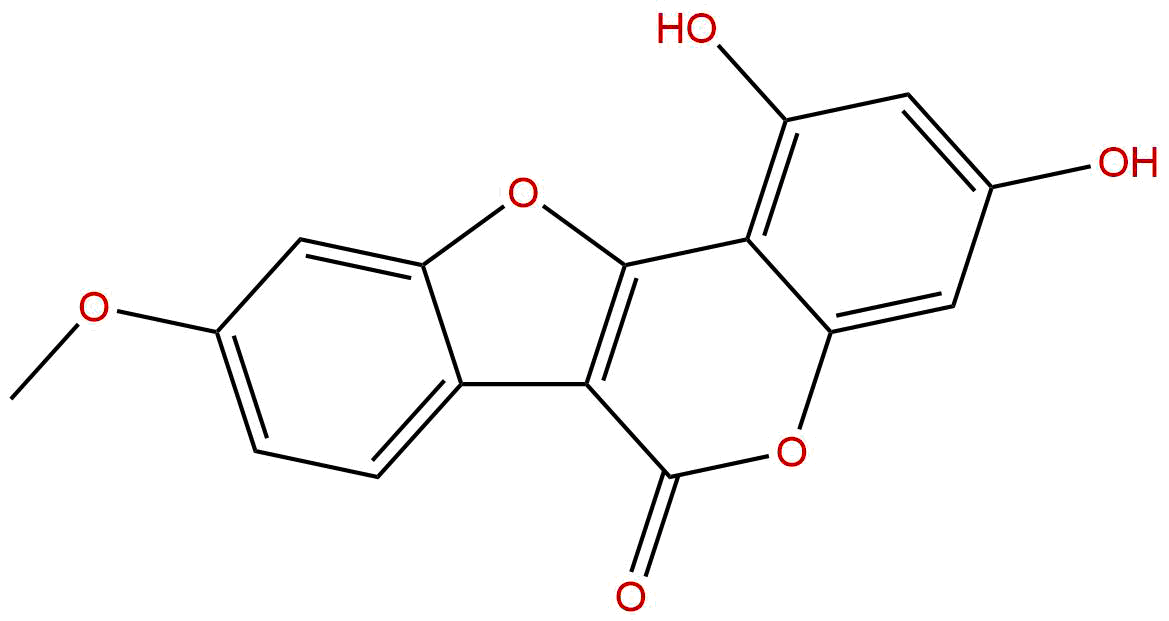
Honghuayan Huangqi Xiangdouestrol B is a flavonoid coumarin derivative with a molecular formula of C17H14O5 and a molecular weight of 298.25. Its structural features include a typical coumarin skeleton containing multiple hydroxyl and methoxy substituents, which endow it with certain polarity and biological activity. The LogP value of this compound is 2.9511, indicating that it has moderate lipid solubility, which is beneficial for membrane penetration and in vivo distribution. Its topological polar surface area (TPSA) is 93.04 Å ², indicating that the molecule has a certain polarity and hydrogen bond donor/acceptor ability, which facilitates binding to protein targets.
Honghuayan Huangqi Xiangdouestrol B has low water solubility (0.0200 mg/mL), which to some extent limits its oral bioavailability, but its low blood-brain barrier permeability reduces the risk of central nervous system toxicity. In addition, the compound did not exhibit hERG channel inhibitory activity, indicating a low risk of cardiac toxicity. The Ames test result is 0.6, indicating a low risk of genotoxicity and a good safety foundation.
Plant sources and extraction methods
Honghuayan Huangqi Xiangdouestrol B mainly exists in the roots of Hedysarum multijugum. Honghuayan Huangqi is a leguminous plant widely distributed in northwest China and the Qinghai Tibet Plateau. It is traditionally used as a traditional Chinese medicinal herb and has the effects of nourishing qi, blood, and regulating endocrine system.
The common methods for extracting estrol B from Huangqi, Xiangdou, and Honghuayan include:
- Solvent extraction Using polar solvents such as ethanol or methanol for reflux extraction of dried Astragalus membranaceus roots, the extract is concentrated and separated.
- Liquid liquid distribution Using solvent systems of different polarities (such as ethyl acetate water) for distribution and enrichment of target compounds.
- chromatographic separation Purification of the extract was carried out using techniques such as silica gel column chromatography and reverse phase high performance liquid chromatography (RP-HPLC) to obtain high-purity Honghuayan Huangqi coumarin B.
In recent years, ultrasound assisted extraction and microwave-assisted extraction techniques have also been applied to improve extraction efficiency and purity, reduce solvent usage and extraction time.
Pharmacological activity research
The pharmacological activity of Honghuayan Huangqi Xiangdouestrol B mainly revolves around its effect on estrogen regulatory targets. Previous studies have shown that this compound exhibits various biological activities in vitro and in vivo models, including:
-
Estrogen receptor regulation
Honghuayan Huangqi Xiangdouestrol B can bind to estrogen receptor alpha (ESR1) and estrogen receptor beta (ESR2), exhibiting selective regulatory effects. By activating or inhibiting these two receptors, downstream gene expression is regulated, affecting cell proliferation, differentiation, and apoptosis processes.
-
Regulation of sex hormone binding globulin (SHBG)
This compound has a regulatory effect on the expression and activity of SHBG, indirectly affecting the levels of free sex hormones in the blood and regulating the bioavailability of hormones.
-
Aromatase (CYP19A1) inhibition
Aromatase is a key enzyme in estrogen biosynthesis, and Honghuayan Huangqi Xiangdouestrol B has certain inhibitory activity against it, which may exert anti estrogenic effects by reducing estrogen synthesis and is suitable for the treatment of estrogen dependent diseases.
-
Regulation of androgen receptor (AR) and progesterone receptor (PGR)
This compound has a regulatory effect on AR and PGR, affecting the sex hormone signaling pathway and regulating endocrine balance.
-
Effects of follicle stimulating hormone receptor (FSHR) and luteinizing hormone beta chain (LHB)
Honghuayan Huangqi Xiangdouestrol B may affect ovarian function and reproductive endocrine system by regulating the expression of FSHR and LHB.
In addition, preliminary in vitro cell experiments have shown that the compound has the potential for antioxidant, anti-inflammatory, and cell cycle regulation, providing theoretical support for its application in related diseases.
Mechanism of action and molecular targets
The mechanism of action of Honghuayan Huangqi Xiangdouestrol B mainly depends on its interaction with various estrogen related targets. Molecular docking and cellular signaling pathway studies have revealed the following key mechanisms:
-
Receptor binding and signal regulation
Honghuayan Huangqi Xiangdouestrol B induces receptor conformational changes by binding to the ligand binding domains of ESR1 and ESR2, regulating its interactions with transcription factors and co activators, thereby affecting the transcription level of target genes. Its selective regulation of ESR2 may help achieve more refined estrogen signaling regulation and reduce side effects.
-
Aromatase inhibition
By binding to the active site of CYP19A1, Honghuayan Huangqi coumarin B inhibits the aromatase catalyzed conversion of androgens to estrogens, reduces estrogen levels, and exerts anti estrogenic effects, making it suitable for adjuvant therapy of hormone dependent tumors.
-
Hormone binding protein regulation
This compound regulates the expression of SHBG, affects the binding and release of hormones in plasma, and regulates the biological activity and half-life of hormones.
-
Downstream signal pathway impact
By regulating targets such as PGR, AR, FSHR, and LHB, Honghuayan Huangqi Xiangdouestrol B affects cell cycle, apoptosis, and reproductive endocrine function, regulating the homeostasis of the endocrine system.
-
Antioxidant and anti-inflammatory mechanisms
The phenolic hydroxyl groups in its structure endow it with the ability to scavenge free radicals, alleviate oxidative stress, inhibit the release of inflammatory mediators, and indirectly protect tissues from damage caused by hormonal imbalances.
In summary, Honghuayan Huangqi Xiangdouestrol B exhibits complex and refined pharmacological properties by synergistically regulating the estrogen signaling network through multiple targets and pathways.
Evaluation of drug properties and pharmacokinetics
The pharmacological parameters of Honghuayan Huangqi Xiangdouestrol B show that it has certain potential for drug development:
- Molecular weight 298.25 Complies with Lipinski's rules and is beneficial for oral bioavailability.
- LogP 2.9511 It indicates that its lipophilicity is moderate and conducive to cell membrane penetration.
- TPSA 93.04 ŲSuitable for binding to protein targets while maintaining good absorption properties.
- Low water solubility (0.0200 mg/mL)It may limit its oral absorption and requires improved solubility through formulation technology.
- Low permeability of blood-brain barrier Reduce the risk of central nervous system side effects.
- No hERG channel inhibitory activity Good cardiac safety.
- Ames test result is low (0.6)The risk of genotoxicity is relatively low.
In terms of pharmacokinetics, although there is currently a lack of systematic in vivo metabolism and pharmacokinetic studies, based on its physicochemical properties, it is speculated that Honghuayan Huangqi coumarin B may be metabolized through liver metabolic enzymes (such as the CYP450 family), and its low water solubility and moderate lipid solubility may lead to lower oral bioavailability and limited tissue distribution. In the future, it is necessary to clarify its absorption, distribution, metabolism, and excretion characteristics through pharmacokinetic studies in vivo.
Clinical application prospects and prospects
Honghuayan Huangqi Xiangdouestrol B, as a natural estrogen regulator, has potential value in the prevention and treatment of various estrogen related diseases:
-
Hormone dependent tumors
By regulating estrogen receptor and inhibiting aromatase, Honghuayan Astragalus coumarin estrol B may be used as adjuvant therapy for hormone dependent tumors such as breast cancer and endometrial cancer, especially in patients with abnormal hormone levels.
-
Endocrine disorders
Its regulatory effect on hormone receptors and hormone binding proteins is expected to be used for the treatment of endocrine disorders such as polycystic ovary syndrome (PCOS), amenorrhea, and menopausal syndrome.
-
Osteoporosis and Cardiovascular Protection
The role of estrogen regulators in bone metabolism and cardiovascular protection has been widely recognized. Honghuayan Huangqi Xiangdouestrol B may improve bone density and cardiovascular function by regulating hormone levels.
-
Security advantage
The low risk of cardiac toxicity and genotoxicity makes it safer for long-term use.
Future research should focus on its in vivo pharmacokinetics, toxicological evaluation, and preclinical animal model validation, combined with modern formulation technology to improve its solubility and bioavailability, and promote its clinical translation.
Conclusion
As a natural coumarin compound derived from the roots of Huangqi in Honghuayan, coumarin B has shown broad research and application prospects in the field of natural product pharmacology due to its unique chemical structure and multi-target ability to regulate estrogen signaling. Its potential therapeutic value in estrogen regulation related diseases, combined with good safety and pharmacological parameters, provides an important theoretical basis for the development of new natural estrogen regulators.
However, there is still a lack of systematic pharmacokinetic, in vivo distribution, and long-term toxicological studies on Honghuayan Huangqi Xiangdouestrol B, which limits its clinical application. In the future, interdisciplinary research should be strengthened, combined with modern medicinal chemistry, molecular biology, and clinical medicine, to deeply elucidate its mechanism of action, optimize drug formulations, and promote it as an effective natural medicine for treating estrogen related diseases.
In summary, Honghuayan Huangqi Xiangdouestrol B, as a natural product with multiple biological activities, has the potential to become an important candidate drug for future estrogen regulators, and is worthy of in-depth exploration and development in the fields of natural product pharmacology and drug development.