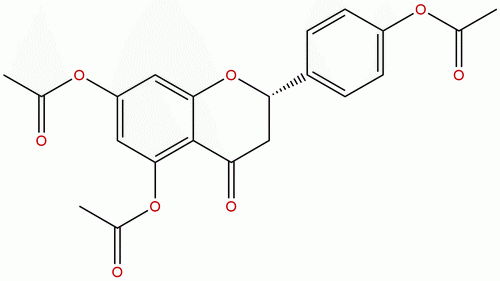


Product name: Naringenintriacetate
Synonym name: Naringenin triacetate
Catalogue No.: SBP00371
Cas No.: 3682-04-0
Formula: C21H18O8
Mol Weight: 398.367
Botanical Source:
Physical Description:
Type of Compound: Flavonoids
Purity: 95%~99%
Analysis Method: HPLC-DAD or/and HPLC-ELSD
Identification Method: Mass, NMR
Packing: Brown vial or HDPE plastic bottle
The product could be supplied from milligrams to grams
Inquire for bulk scale.
For Reference Standard and R&D, Not for Human Use Directly.
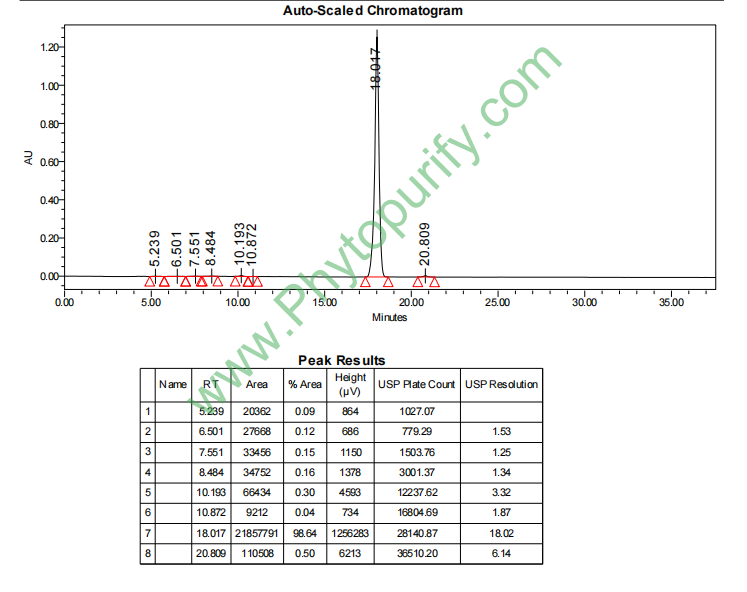
HPLC of Naringenintriacetate
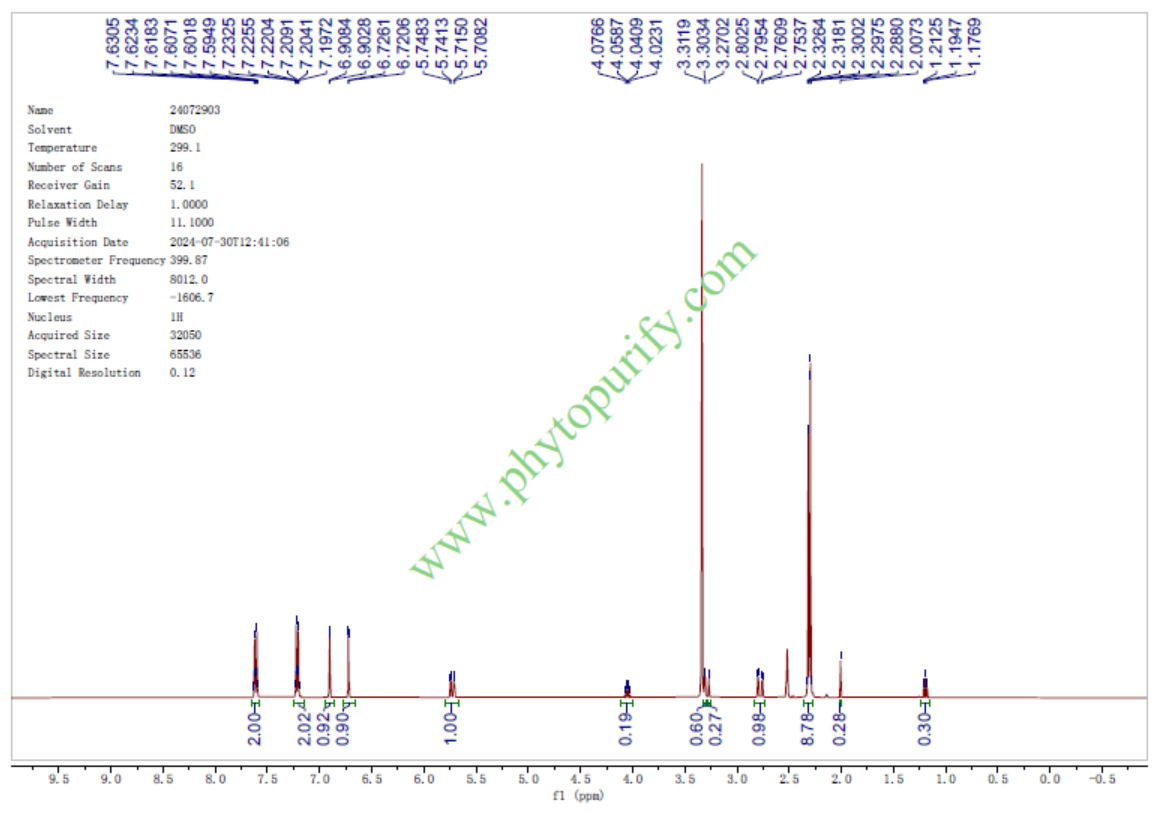
HNMR of Naringenintriacetate
Storage conditions:Short-term storage at 2~8℃, long-term storage at -20 ~ -80℃
119.5300
4.1500
Low
Unknown
Unknown
No
Unknown
Unknown
Unknown
Natural products, as an important source of drug discovery, play an indispensable role in the long history of human struggle against diseases. Flavonoids, as the most widely distributed class of polyphenolic secondary metabolites in nature, have attracted much attention due to their structural diversity and extensive biological activity. Naringenin, also known as 4 ', 5,7-trihydroxyflavanone, is a dihydroflavonoid compound abundant in citrus fruits. It has been proven to have various pharmacological activities such as antioxidant, anti-inflammatory, anti-tumor, hepatoprotective, and neuroprotective properties. However, natural flavonoids generally have problems such as poor water solubility, insufficient lipid solubility, unstable metabolism, and low bioavailability, which seriously restrict their clinical translation as candidate drugs.
To overcome the above limitations, structural modification of natural flavonoid skeletons, especially acylation, methylation or glycosylation modification of phenolic hydroxyl groups, has become an important strategy to improve their physicochemical properties and drug properties. Naringenin triacetate (CAS number: 3682-04-0) is an important compound derived from this idea. This molecule acetylates all three phenolic hydroxyl groups (C-4 ', C-5, C-7) on the core of naringin to obtain a triacetate derivative. This chemical modification not only changes the polarity and spatial configuration of the molecule, but may also affect its interaction mode with biological targets, resulting in a pharmacological activity spectrum different from that of the parent compound.
In recent years, research on naringin triacetate has gradually increased, especially in the field of antioxidant stress-related diseases, showing unique advantages. Compared with naringin, its acetylated form has significantly improved lipid solubility, membrane permeability, and metabolic stability, making it exhibit stronger biological effects in in vitro and in vivo models. This article aims to systematically review the chemical structure, plant origin, pharmacological activity, mechanism of action, and medicinal characteristics of naringin triacetate, providing comprehensive academic references for the in-depth research and development of this compound.
The molecular formula of naringin triacetate is C ₂₁ H ₁₈ O ₉, with a molecular weight of 414.37 g/mol. Its chemical structure is based on the naringin (4 ', 5,7-trihydroxyflavanone) skeleton, which is formed by esterification of the three phenolic hydroxyl groups at positions C-4', C-5, and C-7 with acetyl (- COOH ∝). This reaction replaces the originally hydrophilic phenolic hydroxyl group with a hydrophobic acetyl group, significantly altering the overall physicochemical properties of the molecule.
From the perspective of structural features, naringin triacetate retains the C6-C3-C6 basic skeleton of the flavanone core, which consists of a chromone ring (A and C rings) connected to a phenyl substituent (B ring). The C-ring is a dihydropyranone structure, with a single bond between C-2 and C-3, giving the molecule a certain degree of flexibility. The introduction of three acetyl groups not only blocks the hydrogen supply ability of phenolic hydroxyl groups, but also increases the spatial hindrance of the molecule, which may affect its binding mode with enzymes or receptors.
In terms of physicochemical properties, naringin triacetate exhibits significantly different characteristics from the parent compound. Its lipid water partition coefficient (LogP) is 4.15, much higher than naringin (LogP of about 2.5-3.0), indicating a significant increase in its lipid solubility. This characteristic is beneficial for molecules to penetrate biological membranes and improve cellular uptake efficiency. The topological polar surface area (TPSA) is 119.53 Å ², which is lower than naringin (about 140 Å ²), indicating an improvement in its passive diffusion ability. The molecule contains 8 hydrogen bond acceptors (mainly from carbonyl and ether oxygen atoms), but the number of hydrogen bond donors is zero (because all phenolic hydroxyl groups are protected), which further reduces the interaction between the molecule and the aqueous environment and facilitates its distribution in the lipid environment.
It is worth noting that the blood-brain barrier penetration ability of naringin triacetate is evaluated as "Low", indicating that it may be difficult to effectively enter the central nervous system. This characteristic may be advantageous in the treatment of peripheral oxidative stress-related diseases, as it can reduce adverse reactions in the central nervous system. In addition, the compound has a negative inhibitory risk on hERG potassium channels, indicating a low risk of cardiac toxicity. However, its liver toxicity and Ames test results are currently unclear and require further toxicological evaluation.
Naringin triacetate is not a naturally abundant compound, but a derivative of naringin obtained through chemical synthesis or semi synthesis methods. However, its parent compound naringin is widely distributed in nature and mainly exists in citrus plants of the Rutaceae family, such as grapefruit (Citrus paradisi), orange (Citrus sinensis), lemon (Citrus limon), etc. In addition, fruits and vegetables such as tomatoes, strawberries, cocoa, cherries, as well as certain medicinal plants such as licorice and milk thistle, also contain naringin or its glycoside form (such as naringin).
The preparation of naringin triacetate is usually carried out by chemical acetylation method. Using natural naringin as raw material, it reacts with acetic anhydride (Ac ₂ O) under alkaline conditions (such as pyridine or triethylamine). By controlling the reaction temperature and time, the three phenolic hydroxyl groups are completely acetylated. After the reaction is completed, the target product is purified by methods such as extraction, column chromatography, or recrystallization. This synthetic route is mature, with high yield, and suitable for laboratory scale preparation.
From the perspective of extraction and separation, if naringin triacetate is directly obtained from plant materials, naringin needs to be extracted first and then derivatized. The extraction methods of naringin mainly include solvent extraction (such as ethanol, methanol, or acetone extraction), ultrasound assisted extraction, microwave-assisted extraction, and supercritical fluid extraction. Among them, ethanol reflux extraction is the most commonly used method in industry. After concentration, the extract can be preliminarily purified by macroporous adsorption resins (such as HPD-100, AB-8), and further separated by polyamide column chromatography or high-performance liquid chromatography (HPLC) to obtain high-purity naringin. Subsequently, the purified naringin is subjected to acetylation reaction to obtain naringin triacetate.
In recent years, with the promotion of green chemistry concepts, enzyme catalyzed acetylation methods have also received attention. The use of lipase (such as Novozym 435) to catalyze the reaction of naringin with vinyl acetate in organic solvents can achieve selective acetylation, but complete triacetylation is often difficult to achieve. Therefore, chemical methods are still the mainstream method for preparing naringin triacetate.
Antioxidant activity is one of the core pharmacological activities of naringin triacetate. Oxidative stress is the common pathological basis of many diseases (such as cardiovascular diseases, neurodegenerative diseases, diabetes and cancer). Naringin triacetate exerts antioxidant effects through various pathways.
Firstly, at the chemical level, although acetyl groups block the direct free radical scavenging ability of phenolic hydroxyl groups, naringin triacetate can be hydrolyzed by esterases in the body, releasing naringin, which directly scavenges reactive oxygen species (ROS) and reactive nitrogen species (RNS) through the phenolic hydroxyl hydrogenation mechanism. Secondly, the acetylated form itself has stronger lipid solubility and can more effectively embed into the cell membrane, protecting membrane lipids from oxidative damage. Research has shown that naringin triacetate exhibits better protective effects than naringin in lipid peroxidation models, which may be related to its high distribution coefficient in the lipid phase.
In cell models, naringin triacetate can significantly reduce intracellular ROS levels induced by hydrogen peroxide (H ₂ O ₂), tert butyl hydroperoxide (t-BHP), or ultraviolet radiation. Meanwhile, it can upregulate the expression and activity of various antioxidant enzymes, including superoxide dismutase (SOD1, SOD2), catalase (CAT), glutathione peroxidase (GPX1), and heme oxygenase-1 (HMOX1). These effects together constitute its powerful cellular protective network.
Inflammatory response is closely related to oxidative stress, and naringin triacetate also shows potential in anti-inflammatory effects. Research has shown that this compound can inhibit the production of nitric oxide (NO) and prostaglandin E ₂ (PGE ₂) in macrophages stimulated by lipopolysaccharide (LPS), and downregulate the expression of pro-inflammatory cytokines such as tumor necrosis factor - α (TNF - α), interleukin-6 (IL-6), and interleukin-1 β (IL-1 β). Its anti-inflammatory mechanism is partially related to the inhibition of the nuclear factor kappa B (NF - κ B) signaling pathway, and the activation of NF - κ B is regulated by the intracellular redox state.
Due to its antioxidant and anti-inflammatory activities, naringin triacetate has attracted attention in the field of skin protection. Ultraviolet radiation (especially UVA and UVB) can induce the production of a large amount of ROS in the skin, activate matrix metalloproteinases (MMPs), lead to collagen degradation, and trigger skin photoaging. Naringin triacetate can inhibit UVB induced expression of MMP-1 and MMP-3, while promoting collagen synthesis. In addition, it can also inhibit tyrosinase (TYR) activity, reduce melanin production, suggesting that it may have whitening effects. These effects make it a potential active ingredient in cosmetics and skin care products.
Preliminary studies also suggested that naringenin triacetate may have liver protective, anti atherosclerosis and neuroprotective activities. In the liver cell injury model, this compound can reduce transaminase levels and alleviate liver cell apoptosis. In endothelial cells, it can inhibit oxidative low-density lipoprotein (ox LDL) - induced damage and improve endothelial function. However, the evidence in these fields is still insufficient and requires more systematic research to verify.
The pharmacological mechanism of naringin triacetate involves multiple molecular targets and signaling pathways, among which the nuclear factor E2 related factor 2 (NFE2L2/NRF2) signaling pathway is the most critical.
NRF2 is the core transcription factor that cells use to respond to oxidative stress. Under normal physiological conditions, NRF2 binds to Kelch like ECH related protein 1 (KEAP1) and is in an inhibited state of ubiquitination degradation. When cells are subjected to oxidative or electrophilic stimulation, NRF2 dissociates from KEAP1, translocates into the nucleus, binds to antioxidant response elements (ARE), and initiates the transcription of a series of downstream antioxidant and detoxification genes.
Naringin triacetate and its hydrolysis product naringin can be used as electrophilic reagents to modify cysteine residues on KEAP1 protein, thereby releasing NRF2. Activated NRF2 upregulates the expression of multiple target genes, including SOD1, SOD2, CAT, GPX1, HMOX1, glutathione S-transferase (GST), and NAD (P) H quinone oxidoreductase 1 (NQO1). These gene products together form a powerful antioxidant defense system, enhancing cells' ability to resist oxidative damage.
It is worth noting that the acetyl group of naringin triacetate may enhance its electrophilic reactivity with KEAP1 or alter its distribution and metabolism within cells, resulting in a different NRF2 activation mode than naringin. This may be one of the mechanisms by which its antioxidant activity is superior to that of the parent compound.
MMP-1 (interstitial collagenase) and MMP-3 (matrix metalloproteinase) are key enzymes involved in extracellular matrix remodeling, and their excessive activation is closely related to skin photoaging, arthritis, and tumor invasion. Naringin triacetate can inhibit the expression of MMP-1 and MMP-3 induced by UVB or inflammatory factors. This effect is partially achieved by inhibiting the activation of mitogen activated protein kinase (MAPK) pathways (such as ERK, JNK, p38) and AP-1 transcription factors. In addition, the activation of NRF2 may indirectly inhibit the expression of MMPs through antioxidant mechanisms, as ROS is an important activation signal of the MAPK/AP-1 pathway.
Tyrosinase is the rate limiting enzyme in the process of melanin synthesis, and abnormal increase in its activity can lead to pigment deposition diseases. Naringin triacetate has an inhibitory effect on TYR. Compared with naringin, acetylated derivatives have enhanced lipid solubility and may be more easily able to penetrate cell membranes to reach enzyme active sites. However, its inhibitory mechanism is not fully understood and may involve copper ion chelation with enzyme active centers or downregulation of TYR protein expression levels.
Overall, the action of naringin triacetate is not a single target, but rather a synergistic network effect formed by regulating multiple signaling pathways such as NRF2, MAPK, NF - κ B. This multi-target mode of action conforms to the characteristics of natural products being "multi-component and multi-target", and provides a theoretical basis for their application in complex diseases.
According to Lipinski's "Rule of Five", the molecular weight of naringin triacetate (414.37) is less than 500, LogP (4.15) is less than 5, the number of hydrogen bond acceptors (8) is less than 10, and the number of hydrogen bond donors is 0 (less than 5). Only one rule is violated (the number of hydrogen bond acceptors is slightly higher), and overall it meets the requirements of drug likeness. Its TPSA is 119.53 Å ², which is within an acceptable range (usually<140 Å ²), indicating that its oral absorption potential is still acceptable.
However, the water solubility of the compound is poor (high LogP value), which may limit its oral bioavailability. The presence of acetyl groups increases lipid solubility, but also poses a challenge to its dissolution and efflux in the gastrointestinal tract. In addition, ester bonds are easily hydrolyzed by esterases in the body, which is both an advantage (releasing active parent drugs) and a disadvantage (possibly leading to rapid metabolism and short half-life).
At present, the systematic pharmacokinetic study of naringin triacetate is not sufficient, but it can be inferred based on its structural characteristics and data of similar compounds. After oral administration, naringin triacetate may be widely metabolized in the intestine and liver. Carboxyesterases (CES1, CES2) in the intestinal lumen and liver cells can hydrolyze acetyl groups to produce naringin monoacetate, diacetate, and fully deacetylated naringin. Therefore, its active form in vivo may be a mixture of parent compounds and metabolites.
Due to its high lipid solubility, naringin triacetate may have a high tissue distribution volume, especially in lipid rich tissues such as liver and adipose tissue. Its plasma protein binding rate may be high. The main excretion pathways may be bile and urine, mainly in the form of metabolic products.
Preliminary safety evaluation shows that naringin triacetate has no inhibitory effect on hERG potassium channels, indicating a low risk of cardiac toxicity. However, its liver toxicity and genetic toxicity (Ames test) data are missing, which is a key gap in the current drug efficacy evaluation. Considering that acetylation modification may alter the metabolic pathways of compounds and produce potentially toxic intermediates, it is necessary to conduct systematic toxicological studies, including acute toxicity, subchronic toxicity, reproductive toxicity, and carcinogenicity tests.
In addition, the interaction between naringin triacetate and other drugs is also worth paying attention to. Due to the potential impact on the activity of the CYP450 enzyme system (especially CYP3A4, CYP2C9), pharmacokinetic interactions may occur when combined with drugs metabolized by these enzymes.
Based on its antioxidant, anti-aging, and tyrosinase inhibition activity, naringin triacetate has clear application prospects in cosmetics and skin care products. Compared with naringin, its better lipid solubility and skin permeability make it more suitable as an active ingredient in topical formulations. It can be developed into sunscreen, anti-aging essence, whitening cream and other products. Future research should focus on its transdermal absorption kinetics, skin irritation, and long-term safety.
Oxidative stress is a common feature of various chronic diseases. Naringin triacetate, as an NRF2 agonist, may be used as an adjuvant in the treatment of nonalcoholic fatty liver disease (NAFLD), atherosclerosis, diabetes complications, etc. Its advantage lies in activating the endogenous antioxidant system rather than directly clearing free radicals, making its effect more long-lasting and comprehensive. However, the transition from laboratory to clinical trials faces many challenges, including improving oral bioavailability, optimizing dosage forms, and conducting clinical trials.
To overcome the problems of poor water solubility and first pass metabolism, various formulation strategies can be explored. Nanotechnology, such as liposomes, nanoemulsions, and solid lipid nanoparticles, can enhance their solubility and bioavailability. Precursor design (such as phosphate ester prodrugs) can improve water solubility. In addition, combination with absorption enhancers (such as piperine) or designed as sustained-release formulations may also enhance their therapeutic efficacy.
Future research should focus on the following aspects: (1) systematically elucidating the pharmacokinetic characteristics of naringin triacetate in vivo, including absorption, distribution, metabolism, and excretion; (2) Conduct a comprehensive toxicological evaluation and clarify its safety window; (3) Using medicinal chemical methods to further optimize its structure, such as introducing other functional groups to improve targeting and metabolic stability; (4) Explore its synergistic effects with other natural products or clinical drugs; (5) Validate its therapeutic effect on specific diseases through preclinical animal models, laying the foundation for clinical trials.
As an important acetylated derivative of naringin, naringin triacetate has successfully improved the lipid solubility and membrane permeability of the parent compound through structural modification, while retaining its various pharmacological activities, especially demonstrating unique advantages in the field of antioxidant stress. It exerts antioxidant, anti-inflammatory, and skin protective effects by activating the NRF2 signaling pathway, regulating molecular targets such as MMPs and TYR. The evaluation of drug properties indicates that the compound meets the basic requirements of drug likeness and has a low risk of cardiac toxicity. However, poor water solubility and metabolic instability remain its main challenges, and safety data is still incomplete.
Overall, naringin triacetate is a natural product derivative with potential for development and has promising applications in skin care and adjuvant therapy for oxidative stress-related diseases. However, the road from lead compounds to clinical drugs is still long and requires collaborative efforts from multiple disciplines such as chemistry, pharmacology, pharmacy, and toxicology. With the deepening of research and the advancement of technology, naringin triacetate is expected to become a model case for optimizing the structure of flavonoids and drug development, providing useful references for the clinical translation of natural products.
