Introduction/Overview
Natural products, as an important source of drug discovery, play an irreplaceable role in the long history of human struggle against diseases. From the classic analgesic morphine to the anti-cancer drug paclitaxel, countless active molecules derived from plants, microorganisms, and marine organisms have laid a solid foundation for the modern pharmaceutical system. In the field of neurodegenerative diseases, due to the limitations of existing treatment methods and the complexity of disease pathogenesis, searching for lead compounds with multi-target regulatory potential from natural products has become a research hotspot. Rutaretin, a furan coumarin compound found in plants of the Rutaceae family, has gradually entered the field of researchers in recent years due to its potential neuroprotective activity. Its unique chemical structure, excellent blood-brain barrier permeability, and ability to regulate multiple key targets related to Alzheimer's disease (AD) make it a candidate molecule for developing novel neuroprotective drugs. This article will provide a systematic review of the research progress of Rutin Pavilion from the aspects of chemical structure, plant origin, pharmacological activity, molecular mechanism, medicinal properties, and clinical application prospects, aiming to provide comprehensive scientific basis for the in-depth development and utilization of this compound.
Chemical structure and physicochemical properties
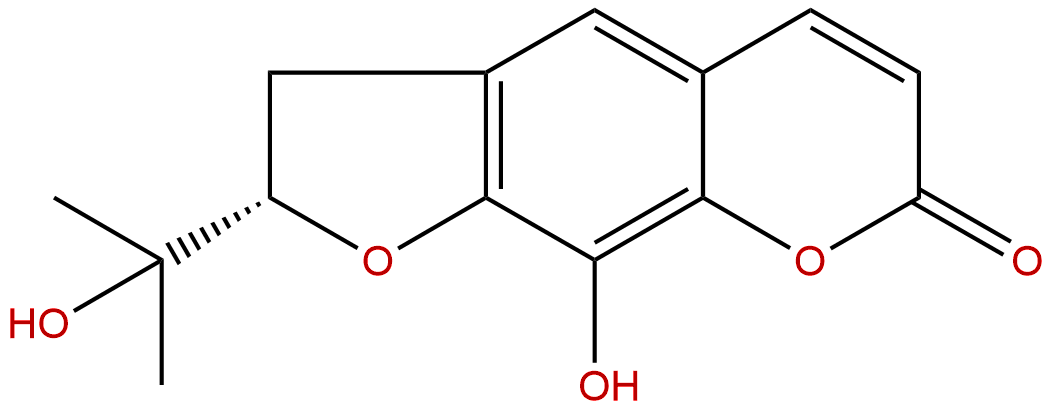
The chemical name of Rutaretin is 5,7-dimethoxy-8- (3-methyl-2-oxobutyl) -2H-furano [2,3-h] benzopyran-2-one, belonging to the linear furanocoumarin family. Its molecular formula is C ₁₅ H ₁₄ O ₅, and its molecular weight is 262.2610 g/mol. Structurally, the core skeleton of Rutin Pavilion is composed of a coumarin core (benzo [a] - pyranone) and a furan ring at positions 7 and 8, with one methoxy group (- OCH [a]) at positions 5 and 7, and a 3-methyl-2-oxobutyl group attached to the side chain at position 8. This unique substitution pattern endows Rutin Pavilion with specific chemical properties and biological activities. Furan coumarin compounds typically exhibit photosensitivity and certain cytotoxicity, but the carbonyl and methyl branches on the side chains of rutin may have significant impacts on their interactions with biological targets.
In terms of physical and chemical properties, the lipid water partition coefficient (LogP) of Rutin Pavilion is 1.8946, indicating its moderate lipophilicity, which facilitates its penetration into biological membranes. Its topological polar surface area (TPSA) is 79.9000 Å ², which is lower than the upper limit of passive diffusion through the blood-brain barrier (approximately 90 Å ²), indicating its good potential for central nervous system penetration. The water solubility data (0.1822 mg/mL) shows that Rutin has a low solubility in water and is a poorly soluble compound, which may pose challenges to its oral bioavailability and formulation development. It is worth noting that the prediction of pharmacological parameters shows that Rutin has high blood-brain barrier (BBB) permeability and no inhibitory risk on hERG potassium channels (hERG inhibition: no). The Ames test result is 0.9, indicating a low risk of genetic toxicity. These preliminary pharmacological evaluation results provide positive signals for its potential as a candidate drug for the central nervous system.
Plant sources and extraction methods
The Rutaceae Pavilion was first discovered and isolated from plants in the Rutaceae family. Specifically, the compound is present in the racemose wine cake(Atalantia racemosa)This is a shrub or small tree distributed in tropical and subtropical regions of Asia. In addition, in other Rutaceae plants such as certain Huangpi genus(Clausena)And Sichuan pepper genus(Zanthoxylum)In plants, there may also be Rutin Pavilion or its structural analogues. Rutaceae plants are renowned for their abundant secondary metabolites, particularly coumarins, alkaloids, and volatile oils, making them an important resource pool for searching for biologically active natural products.
The extraction of Rutin from plant materials usually follows the classic natural product chemical separation process. Firstly, crush the dried plant materials (such as roots, stems, or leaves) and extract them using organic solvents. Common solvents include methanol, ethanol, or their aqueous solutions, which use the principle of "similar solubility" to dissolve medium polarity compounds, including Rutin, from plant tissues. The crude extract was obtained by vacuum concentration of the extraction solution. Subsequently, the crude extract was preliminarily separated by liquid-liquid extraction (such as fractional extraction using solvents of different polarities such as petroleum ether, ethyl acetate, n-butanol, etc.), and rutin is usually enriched in the ethyl acetate or chloroform extraction layer. Further purification mainly depends on various chromatographic technologies, including silica gel column chromatography, Sephadex LH-20 gel column chromatography and preparative high-performance liquid chromatography (Prep HPLC). In the process of chromatographic separation, solvent systems such as n-hexane ethyl acetate or chloroform methanol are often used for gradient elution, and the target compound is tracked by thin layer chromatography (TLC) combined with ultraviolet detection (rutin has characteristic absorption at 254 nm or 365 nm) or color reagents (such as sulfuric acid ethanol solution). Finally, the isolated pure product was structurally identified using spectroscopic techniques such as nuclear magnetic resonance spectroscopy (NMR) and mass spectrometry (MS), confirming its identity as Rutin. Due to the low content of Rutin Pavilion in plants and the cumbersome separation process, the yield is often low, which to some extent limits its large-scale biological research and subsequent development.
Pharmacological activity research
At present, the pharmacological activity research on Yunxiangting is still in its infancy, and the existing evidence mainly focuses on its neuroprotective potential, which is closely related to the regulatory effect of this compound on multiple targets related to Alzheimer's disease. Alzheimer's disease is a complex neurodegenerative disease characterized by senile plaques formed by β - amyloid (A β) deposition, neurofibrillary tangles formed by excessive phosphorylation of Tau protein, neuroinflammation, oxidative stress, and neuronal apoptosis.
Preliminary in vitro studies suggest that Rutin Pavilion may exert neuroprotective effects through multiple pathways. For example, it may inhibit the activity of β - secretase 1 (BACE1) by regulating the processing of amyloid precursor protein (APP), thereby reducing the production of neurotoxic A β peptide segments. BACE1 is a key rate limiting enzyme in the process of A β production, and its inhibitors are an important direction for the development of anti AD drugs. Meanwhile, Yunxiangting may also affect the phosphorylation status of Tau protein (MAPT) by inhibiting the activity of glycogen synthase kinase 3 β (GSK3B), reducing the formation of over phosphorylated Tau protein, and thus alleviating the pathological process of neurofibrillary tangles. In addition, Yunxiangting is predicted to upregulate the expression of anti apoptotic protein BCL2 and inhibit the activation of pro apoptotic protein CASP9, thereby protecting neurons from apoptosis induced by A β toxicity or other stressors. In terms of oxidative stress, Rutin chinensis may enhance the expression of intracellular antioxidant enzymes (such as heme oxygenase-1, quinone oxidoreductase, etc.) by activating the nuclear factor E2 related factor 2 (NFE2L2, also known as Nrf2) signaling pathway, thereby improving the ability of neurons to resist oxidative damage. Silencing information regulatory factor 1 (SIRT1) is an NAD ⁺ - dependent deacetylase that plays a critical role in energy metabolism, stress resistance, and aging processes. The potential regulatory effect of Yunxiangting on SIRT1 may be related to its ability to delay aging and improve cognitive function. Finally, mitogen activated protein kinase 1 (MAPK1, ERK2) is a core member of the MAPK signaling pathway, involved in cell proliferation, differentiation, and survival. The regulation of MAPK1 by Yunxiangting may affect neuronal plasticity and survival signals.
Although the pharmacological activities mentioned above are mostly based on computer simulation predictions or limited cell experiments, the potential regulatory ability of Rutin Pavilion on multiple key nodes in the AD pathological network makes it an attractive candidate molecule for multi-target neuroprotection. However, there is currently a lack of systematic in vivo pharmacological evaluation, and its effects on cognitive function, pathological markers, and neuroinflammation in animal models still need to be elucidated.
Mechanism of action and molecular targets
The neuroprotective mechanism of Yunxiangting is closely related to its direct or indirect regulation of multiple molecular targets. Based on existing information, its functional network can be summarized as follows:
-
Regulating the A β metabolic pathway Yunxiangting may directly or indirectly inhibit the enzymatic activity of BACE1, reduce the β - secretase cleavage of APP, and thus decrease the production of A β. Meanwhile, it may further reduce the generation and aggregation of A β by affecting the expression level or processing of the APP. This mechanism is one of the core strategies in the development of anti AD drugs.
-
Inhibit excessive phosphorylation of Tau protein GSK3B is one of the key kinases involved in Tau protein phosphorylation. Yunxiangting may inhibit the activity of GSK3B, reduce the phosphorylation of Tau protein at Ser396, Ser404 and other sites, thereby preventing the formation of neurofibrillary tangles. In addition, it may also maintain the phosphorylation balance of Tau protein by regulating the activity of other kinases or phosphatases.
-
Anti apoptotic and pro survival signals Yunxiangting can upregulate the expression of anti apoptotic protein BCL2 and inhibit the activation of key executor CASP9 in the mitochondrial mediated apoptosis pathway. This helps to maintain mitochondrial membrane potential, prevent the release of cytochrome c, and thus block the apoptotic cascade reaction. Meanwhile, activation of the MAPK1 (ERK) pathway may promote cell survival and neurite outgrowth.
-
Anti oxidative stress defense Yunxiangting activates the NFE2L2 (Nrf2) transcription factor, promotes its nuclear translocation, and binds to antioxidant response elements (ARE), initiating the transcription of a series of downstream phase II detoxifying enzymes and antioxidant enzymes (such as HO-1, NQO1, GST, etc.). This can effectively eliminate reactive oxygen species (ROS) and alleviate oxidative stress damage to neurons.
-
Epigenetics and Regulation of Energy Metabolism SIRT1 acts as an energy receptor and deacetylase, and its activity is regulated by NAD ⁺ levels. Yunxiangting may enhance the deacetylation of downstream targets (such as PGC-1 α, p53, NF - κ B) by directly activating SIRT1 or indirectly increasing NAD ⁺ levels, thereby improving mitochondrial function, inhibiting inflammatory responses, and promoting cell survival.
In summary, the mechanism of action of Yunxiangting exhibits typical "multi-target, multi pathway" characteristics. It does not act on a single pathogenic target, but forms a synergistic network regulatory effect by regulating multiple key proteins related to A β production, Tau phosphorylation, apoptosis, oxidative stress, and energy metabolism. This multi-target characteristic has unique advantages in dealing with complex diseases such as AD, and may have better efficacy and lower risk of drug resistance than single target drugs.
Evaluation of drug properties and pharmacokinetics
The evaluation of drug properties is a crucial step in determining whether natural products can be transported from the laboratory to clinical practice. The preliminary pharmacological parameters of Yunxiangting indicate that it has certain development potential, but also faces challenges.
Advantages:
* High blood-brain barrier permeability This is one of the most prominent advantages of Yunxiang Pavilion. For central nervous system drugs, the ability to effectively cross the blood-brain barrier is a prerequisite for their efficacy. Its moderate lipophilicity (LogP ≈ 1.89) and low TPSA value endow it with good passive diffusion ability, predicting its ability to enter the brain parenchyma at effective concentrations.
* Low risk of cardiac toxicity HERG potassium channel inhibition is the main cause of drug-induced QT interval prolongation and fatal arrhythmias. The prediction results show that Yunxiangting has no risk of hERG inhibition, which greatly reduces its potential risk of cardiac toxicity.
* Low genetic toxicity risk The Ames test result was 0.9, indicating that it did not show significant mutagenicity in the bacterial recovery mutation test and had good genetic safety.
Challenges and Shortcomings:
* Poor water solubility The water solubility of Yunxiangting is relatively low (0.1822 mg/mL), which may lead to poor oral absorption and low bioavailability. Improving water solubility is the primary issue that needs to be addressed in formulation development, which can be achieved through techniques such as salt formation, preparation of prodrugs, use of nanocarriers (such as liposomes, micelles, nanocrystals), or cyclodextrin inclusion to enhance their solubility and dissolution rate.
* Lack of pharmacokinetic data At present, there is almost no information on the absorption, distribution, metabolism, and excretion (ADME) process of Rutin Pavilion in the body. How is its metabolic stability? Is it easy to be quickly cleared by metabolic enzymes (such as CYP450 enzymes) in the liver or intestine? Key parameters such as half-life, plasma protein binding rate, major metabolites, and excretion pathways are unknown. These pieces of information are crucial for evaluating their in vivo exposure levels and dosing regimens.
* Potential metabolic instability Furancoumarin compounds often contain unsaturated structures that are easily oxidized by metabolic enzymes, leading to faster metabolic clearance. In addition, the carbonyl groups on its side chains may also undergo reduction or binding reactions. Therefore, the metabolic stability of Yunxiangting needs to be evaluated with emphasis.
* Phototoxicity risk Many furan coumarins (such as psoralen) have photosensitivity and phototoxicity, and can crosslink with DNA under ultraviolet irradiation. Whether Yunxiangting also has similar phototoxicity risks needs to be rigorously evaluated when administered topically or systemically.
Overall, Yunxiangting has a good foundation as a lead compound for central nervous system drugs, especially in terms of targeting and safety. However, its poor water solubility and uncertainty in pharmacokinetic properties are currently the main obstacles it faces. Future research should focus on overcoming these deficiencies through drug chemical modifications (such as structural optimization, prodrug design) and advanced formulation techniques, and systematically conducting in vivo pharmacokinetic studies.
Clinical application prospects and prospects
Based on the unique pharmacological activity spectrum and preliminary pharmacological characteristics of Yunxiangting, its clinical application prospects mainly focus on the treatment of neurodegenerative diseases, especially Alzheimer's disease. In addition, its antioxidant and anti apoptotic properties may also enable it to play a role in other neurological diseases such as ischemic stroke, Parkinson's disease, and amyotrophic lateral sclerosis.
Main application directions:
1. Multi target therapy for Alzheimer's disease Given the complexity of the pathogenesis of AD, single target drugs often have limited efficacy. Yunxiangting is expected to develop into a "multi-target oriented" anti AD drug by simultaneously acting on multiple pathways such as A β generation, Tau phosphorylation, oxidative stress, apoptosis, and energy metabolism, which may provide more comprehensive neuroprotection than existing drugs such as cholinesterase inhibitors.
2. Neuroprotective adjuvant medication Yunxiangting can be used as an adjuvant therapy drug in combination with existing AD treatment drugs (such as donepezil and memantine) to enhance efficacy through synergistic effects, or to reduce the side effects of existing drugs through its antioxidant and anti-inflammatory effects.
3. Treatment of ischemic stroke Oxidative stress, excitotoxicity, and apoptosis are key factors leading to neuronal death in cerebral ischemia-reperfusion injury. The antioxidant (activating Nrf2) and anti apoptotic (upregulating BCL2 and inhibiting CASP9) properties of Yunxiangting endow it with the potential to alleviate cerebral ischemic injury.
Future research directions:
1. In depth mechanism research It is necessary to use gene knockout or RNA interference techniques to verify the direct interactions between Rutin and targets such as BCL2, BACE1, GSK3B, NFE2L2 in cell and animal models. At the same time, utilizing systems biology methods such as transcriptomics and proteomics, comprehensively revealing its functional network.
2. Pharmacodynamic validation in vivo Systematic evaluation of the effects of long-term administration of rutin on cognitive function (Morris water maze, new object recognition, etc.), A β plaque burden, Tau pathology, neuroinflammation, and synaptic plasticity in various AD transgenic mouse models (such as APP/PS1, 3xTg AD mice).
3. Pharmacokinetic optimization Systematically study the ADME process of Rutin Pavilion in rodents, clarify its metabolic pathways and metabolites. On this basis, derivatives with better pharmacokinetic properties can be obtained through structural modifications (such as introducing polar groups to improve water solubility, blocking easily metabolized sites to enhance metabolic stability) or prodrug design.
4. Formulation development To address the issue of poor water solubility, develop nano formulations suitable for oral or injection administration (such as lipid nanoparticles, polymer micelles) to improve their bioavailability and brain targeting.
5. toxicological evaluation Conduct systematic acute, subchronic, and chronic toxicity experiments to evaluate the safety of long-term medication, particularly its effects on liver, kidney, and phototoxicity.
Conclusion
As a natural furan coumarin derived from plants in the Rutaceae family, Yunxiangting exhibits great potential as a novel neuroprotective lead compound due to its potential regulatory ability on multiple key targets related to Alzheimer's disease, such as BACE1, GSK3B, NFE2L2, SIRT1, BCL2, as well as good blood-brain barrier permeability and low initial toxicity risk. Its "multi-target, multi pathway" mode of action is in line with the current treatment concept for complex neurodegenerative diseases. However, current research on Yunxiangting is still in a very early stage, with a huge gap between basic discoveries and clinical applications. Future research urgently needs breakthroughs in molecular mechanism validation, in vivo pharmacological evaluation, pharmacokinetic property optimization, and systematic toxicology assessment. Only by overcoming bottlenecks such as poor water solubility and unstable metabolism, and confirming its effectiveness and safety through rigorous preclinical studies, can Rutin truly transform from a phytochemical into a neuroprotective drug that benefits humanity. The in-depth exploration of Yunxiangting is not only expected to provide new candidate molecules for the treatment of Alzheimer's disease, but also to further enrich our understanding of the relationship between the chemical diversity and biological activity of natural products.