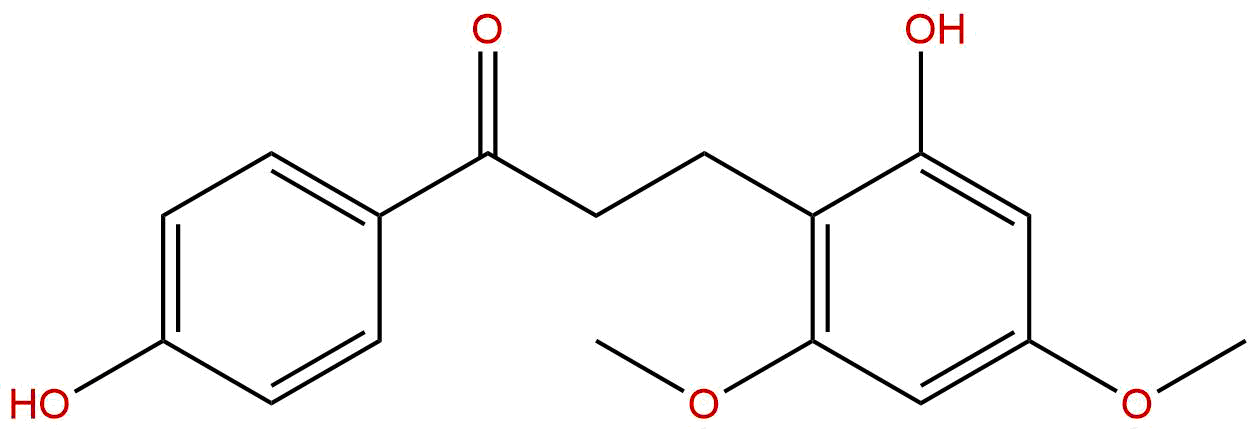
4 ', 2-dihydroxy-4,6-dimethoxydihydrochalcone: a natural dihydrochalcone compound with multi-target regulatory potential
Introduction/Overview
Natural products, as an important source of drug discovery, play an irreplaceable role in the long struggle between humans and diseases. Among them, flavonoids have attracted much attention due to their structural diversity and wide range of biological activities. As an important branch of the flavonoid family, dihydrochalcone compounds have gradually become a hot topic in natural product chemistry and pharmacology research in recent years due to their unique C6-C3-C6 carbon skeleton structure and significant pharmacological activity. Dihydrochalcone is the reduced form of chalcone, characterized by the reduction of α, β - unsaturated ketones to saturated ketones. This structural modification endows it with unique physicochemical properties and biological activity spectrum distinct from the parent chalcone.
Among numerous dihydrochalcone compounds, 4 ', 2-dihydroxy-4,6-dimethoxydihydrochalcone (DDDC) has attracted the attention of researchers due to its unique substitution mode and potential biological activity. The CAS registration number of this compound is 151752-07-7, with a molecular formula of C17H18O5 and a molecular weight of 302.32 g/mol. Structurally, the A ring of DDDC contains two methoxy groups (4-position and 6-position) and one hydroxyl group (2-position), while the B ring contains one hydroxyl group (4 '- position). This specific substitution pattern of hydroxyl and methoxy groups gives it unique chemical characteristics and biological activity in the dihydrochalcone family.
In recent years, with the advancement of separation technology and the improvement of activity screening methods, the potential application value of DDDC and its analogues in anti-inflammatory, antioxidant, anti-tumor, antibacterial, and metabolic regulation has gradually been revealed. However, compared to some classic flavonoids such as quercetin and kaempferol, the research on DDDC is still in a relatively early stage, and its pharmacological mechanism, pharmacokinetic characteristics, and clinical application potential still need further exploration. This article aims to systematically review the chemical structure characteristics, plant sources, extraction and isolation methods, pharmacological activities, and mechanisms of action of DDDC, and evaluate and prospect its pharmacological properties and clinical application prospects, in order to provide reference for the subsequent research and development of this compound.
Chemical structure and physicochemical properties
DDDC belongs to dihydrochalcone compounds, whose basic skeleton is composed of two aromatic rings (A ring and B ring) connected by a three carbon chain (C6-C3-C6), with the C3 segment being a saturated propane ketone structure. Specifically, the chemical structure of DDDC can be described as 1- (2-hydroxy-4,6-dimethoxyphenyl) -3- (4-hydroxyphenyl) propan-1-one. From a naming perspective, this compound follows the numbering rule of dihydrochalcone: the substituent positions on the A ring are 2-hydroxy, 4-methoxy, and 6-methoxy, and the substituent position on the B ring is 4 '- hydroxyl.
From the perspective of physical and chemical properties, the molecular weight of DDDC is 302.32 Da, which belongs to the category of natural products with medium molecular weight. Its molecule contains multiple phenolic hydroxyl and methoxy groups, and the presence of these functional groups significantly affects the polarity and solubility of the compound. Specifically, the two phenolic hydroxyl groups (2-position and 4 '- position) endow DDDC with certain hydrophilicity and the ability to form hydrogen bonds, while the two methoxy groups increase its lipophilicity. This hydrophilic lipophilic balance enables DDDC to have good solubility in organic solvents such as methanol, ethanol, ethyl acetate, dimethyl sulfoxide, etc., while its solubility in water is relatively low. This property has a significant impact on its extraction, separation, and biological activity evaluation.
From the spectroscopic characteristics, the UV visible absorption spectrum of DDDC usually shows characteristic absorption peaks in the range of 280-320 nm, which is mainly attributed to the π→π * transitions of the benzene ring and carbonyl group in its molecule. In the infrared spectrum, a stretching vibration absorption peak of phenolic hydroxyl group can be observed around 3400 cm ⁻¹, and a characteristic absorption peak of carbonyl group (C=O) can be observed in the range of 1650-1700 cm ⁻¹. Nuclear magnetic resonance hydrogen spectroscopy (¹ H NMR) and carbon spectroscopy (¹ ³ C NMR) can provide detailed chemical shift information of hydrogen and carbon atoms for structural confirmation. For example, the two methoxy groups on the A ring typically exhibit a single peak signal at δ 3.8-3.9 ppm, while the phenolic hydroxyl group shows a broad peak in the range of δ 8-10 ppm. In mass spectrometry analysis, the molecular ion peak [M+H] ⁺ or [M-H] ⁻ of DDDC can be used for molecular weight confirmation, while its fragment ion peak can provide structural fragment information.
It is worth noting that DDDC molecules contain multiple phenolic hydroxyl groups, which make them prone to deprotonation under alkaline conditions, thereby affecting their spectral properties and biological activity. In addition, the compound may degrade under light, high temperature, or oxidative conditions, so attention should be paid to avoiding light, storing at low temperatures, and minimizing exposure to oxidative environments during storage and experimental operations.
Plant sources and extraction methods
DDDC, as a naturally occurring dihydrochalcone, is mainly isolated from certain specific plants. According to existing literature reports, this compound mainly comes from Rosaceae plants, especially the apple genus(Malus)Plants. For example, there is research from Shanjingzi(Malus baccata)Or apples(Malus domestica)DDDC and its analogues have been isolated from tree bark, root bark, or fruit. In addition, some Fabaceae plants may also contain this compound, but there are relatively few related reports.
From the perspective of plant chemical taxonomy, dihydrochalcones are widely distributed in Rosaceae plants, especially in the genus Malus, which is considered a rich source of these compounds. These compounds typically accumulate in the heartwood, bark, or root bark of plants and may act as plant defense factors to resist infection by pathogenic microorganisms. It is worth noting that the content of DDDC in plants is usually low and belongs to trace components, which poses certain challenges for its large-scale acquisition.
For the extraction and separation of DDDC, researchers usually adopt the following strategies. The first step is the selection of extraction solvents. Based on the polarity characteristics of DDDC, commonly used extraction solvents include methanol, ethanol, acetone, or their aqueous solutions. Among them, methanol or 70% -80% ethanol aqueous solutions are widely used due to their good solubility in moderately polar compounds. In terms of extraction methods, traditional cold immersion method, hot reflux extraction method, as well as modern ultrasonic assisted extraction method, microwave-assisted extraction method, etc. can all be used for the extraction of DDDC. Ultrasound assisted extraction is commonly used in laboratory research due to its high extraction efficiency, short time, and controllable temperature.
After extraction, the crude extract needs to undergo a series of chromatographic separation steps to obtain purified DDDC. Common separation methods include: liquid-liquid extraction (such as sequential extraction with petroleum ether, ethyl acetate, n-butanol and other solvents), silica gel column chromatography, reverse phase silica gel column chromatography (such as ODS column), dextran gel column chromatography (such as Sephadex LH-20), and preparative high-performance liquid chromatography. Specifically, the ethyl acetate extraction site is usually rich in moderately polar dihydrochalcone compounds, which can be used as starting materials for further separation. Silica gel column chromatography often uses solvent systems such as chloroform methanol or petroleum ether acetone for gradient elution, while reverse phase column chromatography commonly uses methanol water or acetonitrile water systems. Ultimately, high-purity DDDC monomers can be obtained through preparative HPLC.
In terms of structural identification, the isolated compounds need to undergo structural confirmation through various spectroscopic techniques, including ultraviolet spectroscopy (UV), infrared spectroscopy (IR), mass spectrometry (MS), nuclear magnetic resonance hydrogen spectroscopy (¹ H NMR) and carbon spectroscopy (¹ ³ C NMR), as well as two-dimensional nuclear magnetic resonance techniques (such as HSQC, HMBC, ¹ H - ¹ H COSY, etc.). By comparing with the spectral data reported in literature, the structure of the compound can be ultimately determined.
It should be pointed out that due to the low content of DDDC in plants, traditional extraction and separation methods often require a large amount of plant materials and cumbersome operating steps, resulting in low yields. Therefore, developing efficient extraction processes and synthesis methods is crucial for meeting the needs of subsequent pharmacological research and potential applications. At present, researchers have attempted to obtain DDDC and its analogues through chemical synthesis or biosynthetic pathways, providing new ideas for overcoming the limitations of natural sources.
Pharmacological activity research
In recent years, with the gradual deepening of research on DDDC, its various pharmacological activities have been reported, covering multiple fields such as anti-inflammatory, antioxidant, anti-tumor, antibacterial, and metabolic regulation. The main pharmacological activities will be described below.
anti-inflammatory activity
Inflammation is a defensive response of the body to injury and infection, but excessive or sustained inflammatory reactions are closely related to the occurrence and development of various diseases. Research has shown that DDDC exhibits significant anti-inflammatory activity in various inflammatory models. At the cellular level, DDDC can inhibit the production of nitric oxide (NO) in macrophages (such as RAW264.7 cells) stimulated by lipopolysaccharide (LPS), which is related to its inhibition of inducible nitric oxide synthase (iNOS) expression. Meanwhile, DDDC can also reduce the secretion levels of pro-inflammatory cytokines such as tumor necrosis factor - α (TNF - α), interleukin-6 (IL-6), and interleukin-1 β (IL-1 β). In animal models, DDDC can alleviate carrageenan induced toe swelling and xylene induced ear swelling in mice, demonstrating certain anti-inflammatory effects in vivo. These findings suggest that DDDC may exert anti-inflammatory effects by regulating multiple inflammatory signaling pathways.
antioxidant activity
Oxidative stress is the result of an imbalance between the production and clearance of reactive oxygen species (ROS) and reactive nitrogen species (RNS), and is associated with various pathological processes such as aging, cardiovascular disease, neurodegenerative diseases, and cancer. The phenolic hydroxyl groups in DDDC molecules endow them with potential antioxidant capacity. In vitro chemical experiments have shown that DDDC can effectively scavenge 1,1-diphenyl-2-trinitrophenylhydrazine (DPPH) free radicals, 2,2 '- bis (3-ethylbenzothiazoline-6-sulfonic acid) (ABTS) cationic free radicals, and superoxide anion free radicals. Its antioxidant activity is closely related to the number and position of phenolic hydroxyl groups in the molecule. In cell models, DDDC can reduce oxidative damage induced by hydrogen peroxide (H ₂ O ₂), decrease intracellular ROS levels, and enhance the activity of antioxidant enzymes such as superoxide dismutase (SOD) and glutathione peroxidase (GSH Px). These results suggest that DDDC may exert antioxidant effects by directly scavenging free radicals and enhancing the endogenous antioxidant defense system.
Antitumor activity
Natural products play an important role in the discovery of anti-tumor drugs. Preliminary studies have shown that DDDC exhibits certain cytotoxicity towards certain tumor cell lines. For example, it has been reported that DDDC can inhibit the proliferation of human liver cancer cells (such as HepG2 cells), human breast cancer cells (such as MCF-7 cells) and human colon cancer cells (such as HT-29 cells), and its mechanism may involve the induction of apoptosis and cell cycle arrest. Specifically, DDDC treatment can upregulate the expression of pro apoptotic proteins (such as Bax) and downregulate the expression of anti apoptotic proteins (such as Bcl-2) in tumor cells, thereby activating the caspase cascade reaction and ultimately inducing cell apoptosis. In addition, DDDC may exert anti-tumor effects by inhibiting the PI3K/Akt/mTOR signaling pathway or activating the p38 MAPK pathway. However, current research on the anti-tumor activity of DDDC is still limited, and its in vivo anti-tumor effect and selective toxicity need further evaluation.
Antibacterial activity
Dihydrochalcone compounds typically exhibit certain antibacterial activity. Research has shown that DDDC is effective against certain Gram positive bacteria, such as Staphylococcus aureus Staphylococcus aureus)And Gram negative bacteria (such as Escherichia coli)Escherichia coli)It exhibits a moderate inhibitory effect, with a minimum inhibitory concentration (MIC) typically ranging from tens to hundreds of micrograms per milliliter. In addition, DDDC may also be effective against certain fungi, such as Candida albicans Candida albicans)Has inhibitory effect. Its antibacterial mechanism may be related to the destruction of bacterial cell membrane integrity, inhibition of bacterial biofilm formation, or interference with bacterial metabolic processes. However, compared with traditional antibiotics, the antibacterial activity of DDDC is relatively weak, and its potential as an antibacterial drug is limited, but it can be used as a lead compound for structural optimization.
Metabolic regulatory activity
In recent years, the potential application of dihydrochalcones in metabolic diseases (such as diabetes and obesity) has aroused the interest of researchers. Preliminary studies suggest that DDDC may regulate glucose and lipid metabolism by activating the AMP activated protein kinase (AMPK) signaling pathway. In the cell model of insulin resistance, DDDC can improve insulin sensitivity, promote glucose uptake, and inhibit fat production. In addition, DDDC may also inhibit the activity of alpha glucosidase, thereby delaying the digestion and absorption of carbohydrates and reducing postprandial blood glucose levels. These findings suggest that DDDC may have the potential of anti diabetes and anti obesity, but related research is still in its infancy and needs more experimental evidence to support it.
Mechanism of action and molecular targets
The pharmacological activity of DDDC originates from its interaction with specific biomolecules (such as proteins, nucleic acids, etc.), which in turn regulates multiple signaling pathways. Although the current research on the mechanism of action of DDDC is not yet in-depth, some clues have revealed its possible molecular targets and signaling pathways.
Anti inflammatory mechanism
The anti-inflammatory effect of DDDC is mainly related to its inhibition of the nuclear factor kappa B (NF - κ B) and mitogen activated protein kinase (MAPK) signaling pathways. In the resting state, NF - κ B binds to its inhibitory protein I κ B α and exists in an inactive form in the cytoplasm. When cells are stimulated by inflammation such as LPS, I κ B α is phosphorylated and degraded, and the released NF - κ B is translocated into the nucleus, initiating the transcription of pro-inflammatory genes such as iNOS, COX-2, TNF - α, IL-6, etc. Research has shown that DDDC can inhibit the phosphorylation and degradation of I κ B α, thereby blocking the nuclear translocation of NF - κ B and reducing the expression of pro-inflammatory cytokines. Meanwhile, DDDC can also inhibit the phosphorylation of MAPK family members such as p38, JNK, and ERK, further weakening the transmission of inflammatory signals. In addition, DDDC may indirectly exert anti-inflammatory effects by activating the nuclear factor E2 related factor 2 (Nrf2) pathway, inducing the expression of antioxidant enzymes.
Antioxidant mechanism
The antioxidant effect of DDDC involves two mechanisms: direct and indirect. The direct mechanism refers to the phenolic hydroxyl group in DDDC molecules acting as a hydrogen atom donor, directly neutralizing free radicals and terminating the free radical chain reaction. The indirect mechanism involves activating the endogenous antioxidant defense system in cells. Research has shown that DDDC can activate the Nrf2/ARE signaling pathway. Nrf2 is a transcription factor that translocates from the cytoplasm to the nucleus under oxidative stress conditions, binds to antioxidant response elements (ARE), and initiates gene expression of downstream antioxidant enzymes such as SOD, CAT, GSH Px, HO-1, etc. DDDC may enhance the antioxidant capacity of cells by modifying cysteine residues on Keap1 protein, promoting the release and activation of Nrf2.
Antitumor mechanism
The anti-tumor mechanism of DDDC is complex and may involve multiple targets and pathways. Firstly, DDDC can induce tumor cell apoptosis through the mitochondrial pathway. Specifically, DDDC treatment can lead to a decrease in mitochondrial membrane potential, promote the release of cytochrome c from mitochondria to the cytoplasm, activate caspase-9 and caspase-3, and ultimately trigger apoptosis. Secondly, DDDC can induce cell cycle arrest, such as blocking cells in G0/G1 or G2/M phases, which is related to changes in the expression of cyclins and cyclin dependent kinases (CDKs). In addition, DDDC may also inhibit tumor cell proliferation and survival by suppressing the PI3K/Akt/mTOR signaling pathway. The PI3K/Akt pathway is a key pathway regulating cell growth, metabolism, and survival, and its abnormal activation is closely related to the occurrence and development of various tumors. DDDC can exert anti-tumor effects by inhibiting the phosphorylation of Akt and reducing the activity of downstream effector molecules such as mTOR and GSK-3 β.
Metabolic regulation mechanism
The regulatory effect of DDDC on glucose and lipid metabolism may be related to its activation of the AMPK signaling pathway. AMPK is a key sensor for cellular energy metabolism, activated during energy depletion, promoting catabolic metabolism (such as glucose uptake, fatty acid oxidation) and inhibiting synthetic metabolism (such as fat synthesis, gluconeogenesis). Research has shown that DDDC can activate AMPK by increasing the intracellular AMP/ATP ratio or directly acting on AMPK conformational sites. Activated AMPK can phosphorylate downstream target proteins such as acetyl CoA carboxylase (ACC) and hydroxymethylglutarate monoacyl CoA reductase (HMGCR), thereby inhibiting the synthesis of fatty acids and cholesterol. Meanwhile, the activation of AMPK can also promote the translocation of glucose transporter 4 (GLUT4) to the cell membrane, increase glucose uptake, and improve insulin sensitivity.
Evaluation of drug properties and pharmacokinetics
Developing natural products into clinical drugs requires a systematic evaluation of their drug sensitivity and pharmacokinetic (PK) characteristics. At present, research on the pharmacological properties and PK of DDDC is still very limited, but it can be analyzed based on its chemical structure and limited experimental data.
Drugability assessment
According to the Lipinski Rule of Five, a compound with good oral drug properties typically needs to meet the following criteria: molecular weight ≤ 500 Da, number of hydrogen bond donors ≤ 5, number of hydrogen bond acceptors ≤ 10, and lipid water partition coefficient (logP) ≤ 5. The molecular weight of DDDC is 302.32 Da, much lower than 500 Da; its molecule contains 2 phenolic hydroxyl groups (hydrogen bond donors) and 5 oxygen atoms (hydrogen bond acceptors), both of which meet the regulatory requirements. Regarding the logP value, although there is currently no precise experimental measurement for DDDC, it is speculated that the logP value of dihydrochalcone compounds with similar structures may be between 2-3, in accordance with Lipinski's rule. Therefore, from a chemical structure perspective, DDDC has good potential for oral drug formation.
However, the evaluation of drug properties also needs to consider other factors such as metabolic stability, water solubility, toxicity, etc. DDDC molecules contain multiple phenolic hydroxyl groups, which are prone to undergo glucuronidation or sulfation binding reactions in vivo, leading to rapid metabolic clearance and affecting their bioavailability. In addition, phenolic hydroxyl groups also make them susceptible to oxidative metabolism. Therefore, the metabolic stability of DDDC may be a concern. In terms of toxicity, there are currently no reports on toxicological studies of DDDC systems, but preliminary cytotoxicity experiments have shown that DDDC has low toxicity to normal cells and exhibits certain selectivity.
Pharmacokinetic characteristics
At present, there is almost no research on the absorption, distribution, metabolism, and excretion (ADME) process of DDDC in the body. Based on its chemical structure and PK data of analogues, some reasonable speculations can be made. In terms of absorption, the molecular weight and logP value of DDDC indicate that it may be absorbed by the intestine through passive diffusion, but the presence of phenolic hydroxyl groups may lead to its interaction with intestinal transporters (such as P-glycoprotein), affecting absorption efficiency. In terms of distribution, DDDC may bind to plasma proteins (such as albumin), affecting their free concentration and distribution volume. In terms of metabolism, as mentioned earlier, DDDC mainly undergoes phase II metabolism (glucuronidation, sulfation) and phase I metabolism (oxidation), with the liver and intestine possibly being its main metabolic organs. In terms of excretion, DDDC and its metabolites may be mainly excreted through bile and urine.
It is worth noting that the PK study of dihydrochalcone compounds (such as resveratrol, naringenin dihydrochalcone, etc.) can provide reference for DDDC. For example, the oral bioavailability of phloretin is relatively low, mainly due to its rapid metabolism in the intestine and liver. Therefore, DDDC may face similar challenges. In order to improve its bioavailability, strategies such as structural modification (such as prodrug design, introduction of methyl or acetyl groups to protect phenolic hydroxyl groups), formulation optimization (such as nano formulations, liposomes, cyclodextrin inclusion complexes), or changes in administration routes (such as transdermal administration) can be considered.
Clinical application prospects and prospects
Based on the various pharmacological activities of DDDC, it shows potential clinical application prospects in the following fields.
Anti inflammatory and antioxidant related diseases
Given its anti-inflammatory and antioxidant activities, DDDC may be developed to treat diseases related to chronic inflammation and oxidative stress, such as rheumatoid arthritis, inflammatory bowel disease, atherosclerosis, neurodegenerative diseases (such as Alzheimer's disease, Parkinson's disease), etc. However, from laboratory discovery to clinical application, many obstacles need to be overcome, including confirming in vivo efficacy, elucidating the mechanism of action, evaluating long-term toxicity, and establishing appropriate dosing regimens.
neoadjuvant therapy
The anti-tumor activity of DDDC, especially its ability to induce apoptosis and cell cycle arrest, makes it a potential adjuvant therapy or chemotherapy sensitizer for tumors. However, its anti-tumor activity is relatively weak and lacks in vivo anti-tumor experimental data. Future research should focus on the effects of DDDC on tumor stem cells, its synergistic effects with chemotherapy drugs, and its protective effects on normal tissues. In addition, improving its anti-tumor activity and selectivity through structural modification is an important research direction.
Metabolic diseases
The regulation of DDDC on glucose and lipid metabolism, especially its activation of AMPK and inhibition of α - glucosidase activity, suggests that DDDC may be used for the prevention and treatment of type 2 diabetes and obesity. However, current research mainly remains at the cellular level, lacking evidence from animal models and clinical trials. In the future, it is necessary to conduct systematic in vivo pharmacological studies to evaluate the effects of DDDC on indicators such as blood glucose, blood lipids, and insulin resistance, and to explore the safety of its long-term use.
Cosmetics and health products
Considering the antioxidant activity of DDDC, it may be used as a functional ingredient in cosmetics (such as anti-aging and whitening products) and health products. However, its stability, transdermal absorption capacity, and safety need further evaluation. In addition, the low content of DDDC in plants poses challenges for large-scale production, making the development of efficient chemical or biological synthesis methods crucial.
Challenges and Future Directions Faced
Despite the multifaceted biological activities of DDDC, its research and development still face many challenges. Firstly, basic research is weak, and there is a severe lack of data on the pharmacological mechanisms, pharmacokinetics, and toxicology of DDDC. Secondly, natural sources are limited and difficult to meet the needs of large-scale research and potential applications. Thirdly, the bioavailability may be low, requiring the development of effective delivery systems or structural modifications.
Future research directions should include: 1) conducting systematic in vivo pharmacological studies on DDDC to confirm its therapeutic effects in disease models; 2) Thoroughly elucidate its molecular mechanism of action, identify key targets and signaling pathways; 3) Comprehensively evaluate its pharmacokinetic characteristics and safety; 4) Develop efficient chemical synthesis or semi synthesis methods, as well as biosynthetic pathways; 5) Design and synthesize derivatives with stronger activity, better selectivity, and more stable metabolism through structure-activity relationship (SAR) research; 6) Explore the synergistic effects of DDDC with other drugs and its potential applications in combination therapy.
Conclusion
4 ', 2-dihydroxy-4,6-dimethoxydihydrochalcone (DDDC), as a structurally unique natural dihydrochalcone compound, exhibits various pharmacological activities such as anti-inflammatory, antioxidant, anti-tumor, antibacterial, and metabolic regulation. Its mechanism of action involves multiple key signaling pathways such as NF - κ B, MAPK, Nrf2, PI3K/Akt/mTOR, and AMPK, exhibiting characteristics of multi-target regulation. From the perspective of drug development, DDDC conforms to Lipinski's rules and has good potential for oral drug development, but its metabolic stability and bioavailability may face challenges.
Although research on DDDC is still in its early stages, its unique chemical structure and diverse biological activities make it a natural product lead compound worthy of further investigation. In the future, with a deeper understanding of its pharmacological mechanisms, pharmacokinetic characteristics, and toxicological properties, as well as the establishment of efficient synthesis methods and the advancement of structural optimization work, DDDC and its derivatives are expected to play an important role in the fields of anti-inflammatory, anti-tumor, and metabolic disease treatment. We look forward to more research focusing on this compound, promoting its transition from laboratory to clinical applications, and contributing to the cause of human health.