Introduction/Overview
Natural products have always been an important source of drug discovery and development, and their diverse chemical structures and unique biological activities provide valuable lead compounds for overcoming major human diseases. Among numerous natural products, Chalcone compounds have attracted much attention due to their simple structure, ease of synthesis and modification, and wide pharmacological activity. Chalcone is a subclass of flavonoids, whose basic structure consists of two aromatic rings connected by an α, β - unsaturated ketone bridge (1,3-diphenyl-2-propen-1-one). This unique structure endows chalcone compounds with rich chemical properties, enabling them to interact with various biological targets and exhibit various biological activities such as anti-inflammatory, antioxidant, antibacterial, antiviral, antiparasitic, and anti-tumor.
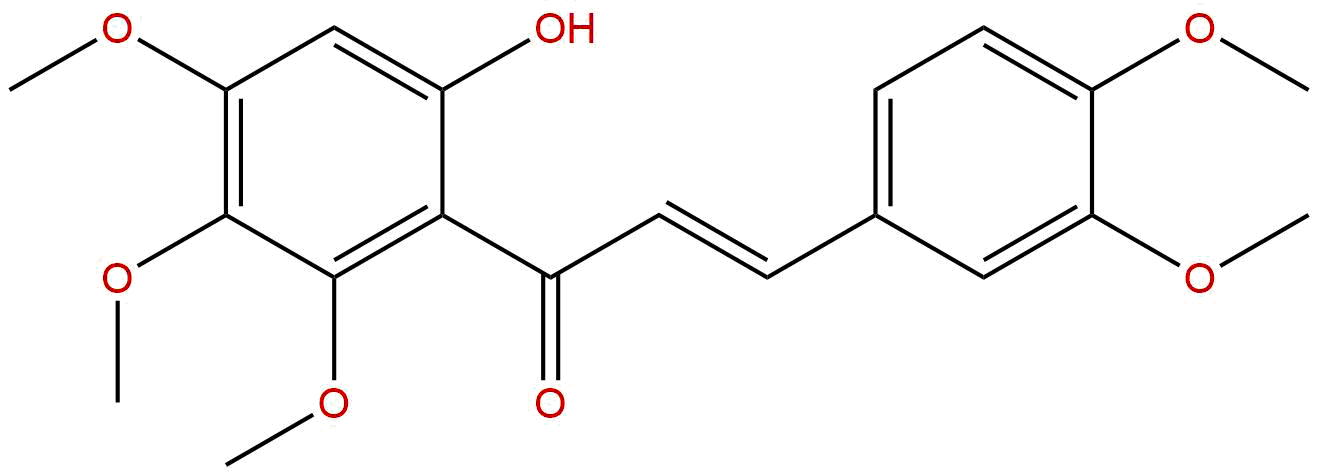
In the chalcone family, multi methoxy substituted chalcones have become a research hotspot due to their unique physicochemical properties and significant biological activity. 6 '- Hydroxy-3,4,2', 3 ', 4' - pentamethoxychalcone (HPMC) is a highly representative member among them. The molecular formula of this compound is C ₂₀ H ₂₂ O ₇, with a molecular weight of 374.3890 and a CAS number of 114021-62-4. Its structural feature is that there are five methoxy groups connected to the A ring (2 ', 3', 4 '- trimethoxy) and the B ring (3,4-dimethoxy), and there is a free hydroxyl group at the 6' position of the A ring. This highly methoxylated mode, combined with a key phenolic hydroxyl group, makes HPMC stand out among numerous chalcone analogues, exhibiting unique chemical and biological properties.
In recent years, with the deepening of the research on natural anti-tumor drugs, HPMC has attracted extensive attention because of its potential value in the treatment of breast cancer. Breast cancer is one of the malignant tumors with the highest incidence rate among women in the world. Its pathogenesis is complex and involves abnormal regulation of multiple signal pathways. Although existing treatment methods such as surgery, radiotherapy, chemotherapy, and targeted therapy have achieved certain results, issues such as drug resistance, toxic side effects, and tumor recurrence remain severe. Therefore, it is urgent to find new anti breast cancer drugs with high efficiency, low toxicity and multiple targets. Preliminary studies show that HPMC can induce apoptosis, inhibit proliferation and migration of breast cancer cells, and possibly reverse multidrug resistance by regulating multiple key signaling pathways such as AMPK, STAT3, NOTCH1. This article aims to provide a systematic review of the chemical structure, plant origin, pharmacological activity, mechanism of action, and medicinal properties of HPMC, in order to provide comprehensive scientific basis for further research and development of this compound.
Chemical structure and physicochemical properties
The chemical structure of HPMC belongs to a typical chalcone skeleton, and its precise chemical name is (E) -1- (6-hydroxy-2,3,4-trimethoxyphenyl) -3- (3,4-dimethoxyphenyl) prop-2-en-1-one. Structurally, the molecule consists of two parts: an A ring containing three methoxy groups and one hydroxyl group (derived from the acetophenone moiety), and a B ring containing two methoxy groups (derived from the benzaldehyde moiety), connected by an alpha, beta unsaturated ketone bridge. The 6 '- hydroxyl group on the A ring is the only free phenolic hydroxyl group in the molecule. This group is not only an important hydrogen bond donor, but also endows the molecule with certain acidity and antioxidant potential. The five methoxy groups (3,4,2 ', 3', 4 'positions) significantly increase the lipophilicity of the molecule and may affect its binding mode with the target protein.
In terms of physicochemical properties, the molecular weight of HPMC is 374.3890 g/mol, which belongs to the category of small molecule compounds and meets the basic requirements for molecular weight in Lipinski's Rule of Five (<500 Da). The calculated lipid water partition coefficient (LogP) is 3.3945, indicating that the compound has moderate to high lipid solubility, which is beneficial for its penetration of cell membranes, but may also affect its solubility in aqueous phase. In fact, the solubility of HPMC is only 0.0917 mg/mL, which is a low water solubility compound, which may be one of the main challenges facing its oral bioavailability. The polar surface area (TPSA) is 83.45 Å ², which is less than 140 Å ² and typically indicates good oral absorption and cell membrane permeability. It is worth noting that the permeability of the blood brain barrier (BBB) is predicted to be "high", suggesting that the compound may enter the central nervous system, which may have potential value in treating brain metastasis of breast cancer or developing drugs for central nervous system diseases, but it is also necessary to be alert to potential central nervous toxicity.
In addition, key toxicological predictions in the drug efficacy evaluation showed that HPMC had a "no" risk of inhibiting hERG potassium channels, indicating a low risk of causing QT interval prolongation and arrhythmia in the heart. The Ames test result is 0.6 (usually considered negative if less than 0.5 and weakly positive if 0.5-0.9), indicating that the compound may have weak mutagenicity, but further in vitro and in vivo experiments are needed to verify this. Overall, HPMC has certain drug like properties, but its low water solubility and potential genetic toxicity are areas that require special attention and optimization.
Plant sources and extraction methods
HPMC, as a naturally occurring polymethoxychalcone, is mainly derived from certain medicinal plants, among which the most well-known is Fabaceae plants. Research has shown that HPMC is one of the main active ingredients in the traditional Chinese medicine "Spatholobus suberectus Dunn". Chicken blood vine is commonly used in traditional Chinese medicine for promoting blood circulation, nourishing blood, regulating meridians, and relieving pain. Modern pharmacological research has confirmed that it has various activities such as anti-tumor, anti-inflammatory, and antioxidant properties. In addition, there have been reports of isolating this compound from other plants such as certain Lagerstroemia plants or Rutaceae plants, but chicken blood vine is considered its main and most abundant natural source.
The extraction and isolation of HPMC from chicken blood vine usually follow the classic process of natural product chemistry. Firstly, crush the dried chicken blood vine stems and vines, and then extract them using organic solvents. Due to the moderate polarity of HPMC, commonly used extraction solvents include methanol, ethanol, or their aqueous solutions. To improve extraction efficiency, techniques such as heating reflux extraction, ultrasound assisted extraction, or microwave-assisted extraction can be used. The extract is filtered and concentrated under reduced pressure to obtain the total extract.
Subsequently, a systematic separation and purification of the total extract is required. This process typically relies on the combination of multiple chromatographic techniques. Firstly, the total extract is preliminarily segmented through liquid-liquid extraction (such as sequential extraction with petroleum ether, ethyl acetate, and n-butanol), and HPMC is usually enriched in the ethyl acetate extraction site. Then, using silica gel column chromatography, gradient elution was performed with different ratios of petroleum ether ethyl acetate or chloroform methanol mixed solvents to separate the ethyl acetate fraction. During the elution process, the fraction containing the target compound is collected by monitoring with thin layer chromatography (TLC). For further purification, Sephadex LH-20 gel column chromatography (methanol or chloroform methanol as mobile phase) is often used to remove pigments and impurities. Finally, high-purity HPMC monomers were obtained by preparative high-performance liquid chromatography (Pre HPLC). Throughout the entire separation process, the structural identification of compounds relies on spectroscopic techniques, including ultraviolet spectroscopy (UV), infrared spectroscopy (IR), mass spectrometry (MS), and one-dimensional and two-dimensional nuclear magnetic resonance spectroscopy (1D/2D NMR). The chemical structure is ultimately confirmed by comparing with literature data.
Pharmacological activity research
The pharmacological activity of HPMC mainly focuses on its anti-tumor effect, especially for breast cancer. In addition, its anti-inflammatory and antioxidant activities have also been occasionally reported.
1. Anti breast cancer activity
This is the core pharmacological research direction of HPMC. A large number of in vitro cell experiments showed that HPMC showed significant proliferation inhibitory activity on a variety of breast cancer cell lines, including estrogen receptor positive (ER+) MCF-7 cells and triple negative breast cancer (TNBC) MDA-MB-231 cells. Its mechanism of action exhibits the characteristics of multi-target and multi pathway. It has been found that HPMC can inhibit the activity of breast cancer cells and induce apoptosis in a dose-dependent and time-dependent manner. For example, by activating the AMPK (adenosine monophosphate activated protein kinase) signaling pathway, HPMC can inhibit the activity of downstream mTOR (rapamycin target protein), thereby blocking protein synthesis and cell growth, inducing autophagy and apoptosis. Meanwhile, HPMC can downregulate the expression of anti apoptotic proteins MCL-1 and BCL-2, upregulate the expression of pro apoptotic protein BAX, disrupt mitochondrial membrane potential, activate Caspase cascade reaction, and ultimately lead to cell apoptosis.
In addition, HPMC also showed a potential inhibitory effect on breast cancer stem cells (CSCs). The Notch and STAT3 signaling pathways are key pathways for maintaining self-renewal of CSCs and tumor heterogeneity. Research has shown that HPMC can inhibit the activation of NOTCH1 receptors and the phosphorylation of STAT3, thereby weakening the stemness of CSCs, reducing their balling ability and tumorigenicity. This is of great significance for preventing tumor recurrence and metastasis. For triple negative breast cancer, HPMC also showed the ability to inhibit cell migration and invasion, which may be related to regulating the expression of epithelial mesenchymal transformation (EMT) related proteins.
2. Reverse multidrug resistance (MDR) effects
Chemotherapy resistance is one of the main reasons for treatment failure of breast cancer. Overexpression of ABC transporters (such as ABCB1/P-gp and ABCG2/BCRP) is one of the core mechanisms leading to MDR. HPMC has been proven to be an effective inhibitor of ABC transporters. Research has shown that HPMC can directly interact with the substrate binding sites of ABCB1 and ABCG2, competitively inhibiting their efflux function, thereby increasing the accumulation of chemotherapy drugs (such as doxorubicin and paclitaxel) in resistant cells and restoring their sensitivity to chemotherapy drugs. This discovery provides a theoretical basis for the application of HPMC as a chemotherapy sensitizer.
3. Other pharmacological activities
In addition to anti-tumor activity, HPMC also exhibits certain anti-inflammatory and antioxidant activities. The phenolic hydroxyl groups in its structure endow it with the ability to scavenge free radicals, which can reduce intracellular reactive oxygen species (ROS) levels. In an inflammatory model, HPMC can inhibit the production of nitric oxide (NO) and prostaglandin E2 (PGE2) in macrophages induced by lipopolysaccharide (LPS), which may be related to its inhibition of the activation of the NF - κ B signaling pathway. In addition, HPMC also has an inhibitory effect on tyrosinase (TYR), suggesting its potential application in skin whitening or the treatment of pigmentation diseases.
Mechanism of action and molecular targets
The pharmacological activity of HPMC stems from its complex interactions with multiple intracellular molecular targets. Based on existing research, its mechanism of action can be summarized into the following key aspects:
1. Regulating energy metabolism and apoptosis: AMPK and MCL1/BCL2 axis
AMPK is the core sensor for cellular energy homeostasis. HPMC can directly or indirectly activate AMPK (PRKAA1), phosphorylate the activated AMPK, and inhibit its downstream mTORC1 complex, thereby suppressing protein synthesis and cell proliferation. Meanwhile, the activation of AMPK also leads to the activation of the pro apoptotic protein BAD. On the other hand, HPMC downregulates the expression of anti apoptotic proteins MCL1 and BCL2 through transcriptional or post-translational modifications. MCL1 and BCL2 are key protective proteins on the outer membrane of mitochondria, which inhibit mitochondrial outer membrane permeabilization (MOMP) by interacting with BAX/BAK. The downregulation of MCL1 and BCL2 by HPMC disrupts this balance, leading to the oligomerization of BAX/BAK, the formation of mitochondrial apoptotic channels, the release of cytochrome C, and the activation of Caspase-9 and Caspase-3, executing the cell apoptosis program. Therefore, the activation of AMPK and the down-regulation of MCL1/BCL2 constitute the core mechanism of HPMC inducing apoptosis of breast cancer cells.
2. Inhibit the dry signaling pathway: NOTCH1 and STAT3
The presence of tumor stem cells is the root cause of tumor drug resistance and recurrence. HPMC can effectively inhibit the NOTCH1 signaling pathway. It may inhibit the activity of gamma secretase, reduce the cleavage of NOTCH1 receptor and the release of intracellular domain (NICD), thereby blocking the transcription of downstream target genes such as Hes1 and Hey1. Meanwhile, HPMC can also inhibit the phosphorylation of STAT3 (Tyr705 site), preventing its dimerization and incorporation into the nucleus, thereby suppressing the expression of genes related to maintaining dryness (such as Sox2, Oct4, Nanog). HPMC can effectively eliminate breast cancer stem cells and reduce tumor recurrence potential by simultaneously acting on two key dry pathways, NOTCH1 and STAT3.
3. Reversing multidrug resistance: ABCB1 and ABCG2
HPMC, as an inhibitor of ABC transporter, mainly acts through direct binding. Molecular docking and dynamic simulation studies have shown that HPMC can be embedded in the substrate binding pockets of ABCB1 (P-gp) and ABCG2 (BCRP), forming hydrogen bonds and hydrophobic interactions with key amino acid residues. This binding is competitive, meaning that HPMC can compete with chemotherapy drugs for binding sites on transport proteins, thereby preventing the drugs from being pumped out of the cell. In addition, HPMC may also inhibit the function of transporters by affecting their ATPase activity or altering their conformation. Importantly, HPMC itself is not an excellent substrate for these transporters, so it is not effectively excreted and can continue to exert inhibitory effects.
4. Other potential targets: ESR2, TYR, and PRKCA
The effect of HPMC on estrogen receptor β (ESR2) is not completely clear, but since its structure is similar to some phytoestrogens, there may be weak activation or antagonism, which may explain part of its activity in ER+breast cancer cells. The inhibitory effect on tyrosinase (TYR) is directly attributed to the copper ion chelation between its phenolic hydroxyl group and the active center of tyrosinase. In addition, protein kinase C alpha (PRKCA) is an important signaling molecule involved in cell proliferation, differentiation, and apoptosis. The regulation of PRKCA by HPMC may affect its downstream MAPK/ERK signaling pathway, thereby synergistically exerting anti proliferative effects. These multi-target modes of action may give HPMC an advantage over single target drugs in treating complex diseases such as cancer, and can reduce the development of drug resistance.
Evaluation of drug properties and pharmacokinetics
Although HPMC exhibits strong pharmacological activity in vitro, its successful conversion into clinical drugs depends on its pharmacological properties, especially its pharmacokinetic (ADME) characteristics.
1. Absorption and solubility
As mentioned earlier, the water solubility of HPMC is extremely low (0.0917 mg/mL), which severely limits its oral absorption. According to the Biopharmaceutical Classification System (BCS), HPMC is likely to belong to Class II (low solubility, high permeability) or Class IV (low solubility, low permeability) drugs. Although its high LogP value (3.39) is beneficial for membrane permeability, it also exacerbates water solubility issues. Therefore, how to improve the bioavailability of HPMC is the primary challenge in the development process. Possible strategies include preparing solid dispersions, liposomes, nanoparticles, phospholipid complexes, or forming inclusion complexes with cyclodextrin to increase their apparent solubility. In addition, designing as prodrugs, such as phosphorylating or esterifying 6 '- hydroxyls, may also release the original drug after enzymatic hydrolysis in vivo, thereby improving absorption.
2. Distribution and Metabolism
HPMC is predicted to have high blood-brain barrier permeability, indicating its widespread distribution in the body and potential high concentrations in the central nervous system. This is an advantage for the treatment of brain metastasis of breast cancer, but we also need to pay attention to the potential neurotoxicity. Regarding metabolism, polymethoxyflavones and chalcones typically undergo extensive phase I and phase II metabolism in the body. Phase I metabolism mainly involves O-demethylation reactions catalyzed by cytochrome P450 enzymes (CYPs), generating more hydroxylated metabolites. Phase II metabolism mainly involves the binding reaction between phenolic hydroxyl groups and glucuronic acid or sulfuric acid, generating more water-soluble complexes that promote excretion. The 6 '- hydroxyl group and potential demethylation metabolites of HPMC are targets of phase II metabolism. These metabolic processes typically reduce the activity of the original drug, but may also produce metabolites with new activity.
3. Toxicity and Safety
Preliminary toxicological predictions indicate that HPMC has no risk of hERG inhibition, which is a positive signal. However, the weak positive result (0.6) of the Ames test suggests a possible genetic toxicity risk. This may be due to the fact that the alpha, beta unsaturated ketone structure is a Michael receptor that theoretically can covalently bind to nucleophilic groups (such as thiol and amino groups) in DNA or proteins, resulting in toxicity. Therefore, its safety must be confirmed through standard in vitro and in vivo genetic toxicity tests, such as chromosome aberration tests and micronucleus tests. In addition, long-term toxicity testing and reproductive toxicity testing are also indispensable parts of future preclinical research.
4. Current status of pharmacokinetic research
At present, there is very limited publicly available research data on the pharmacokinetics of HPMC in vivo. A few animal experiments have shown that after oral administration of HPMC, its blood drug concentration is very low, and its absolute bioavailability may be less than 10%, which is consistent with the prediction of low water solubility. After intravenous injection, its half-life is shorter, indicating faster clearance in the body. In the future, more systematic pharmacokinetic studies are needed, including absorption, distribution, metabolism, and excretion (ADME) characteristics in different species of animals, as well as food effects, dose linear relationships, etc., to provide a basis for the design of clinical dosing regimens.
Clinical application prospects and prospects
Although HPMC still has a long way to go before clinical application, its unique chemical structure and multi-target pharmacological activity have shown promising application prospects in multiple therapeutic fields.
1. breast cancer treatment and chemosensitivity enhancement
Based on the killing effect of HPMC on a variety of breast cancer cell lines (including ER+and TNBC), and its ability to clear breast cancer stem cells, it is expected to be developed into a new candidate drug for breast cancer. Especially its ability to reverse multidrug resistance, when combined with existing chemotherapy drugs such as doxorubicin, paclitaxel, and cisplatin, may result in synergistic and attenuated effects. In the future, we can design a combination drug program for drug resistant breast cancer, inhibit ABC transporter through HPMC, and restore the sensitivity of chemotherapy drugs, which will be a research direction with great clinical transformation value.
2. Optimize the structure as a lead compound
HPMC itself is not a perfect drug molecule, and its low water solubility and potential genetic toxicity are the main shortcomings. Therefore, conducting systematic structure-activity relationship (SAR) studies using HPMC as a lead compound is a key pathway to enhance its pharmacological properties. For example:
- Improve water solubility Introducing hydrophilic groups such as amino, carboxyl, and phosphate groups into molecules, or preparing salts.
- Reduce toxicity Modification or substitution of α, β - unsaturated ketone structures, such as reducing them to dihydrochalcones or introducing steric hindrance groups, to reduce their reactivity as Michael receptors while retaining or enhancing their biological activity.
- Enhance targeting capability Through prodrug design, HPMC is coupled with targeted ligands such as folate and RGD peptides to achieve precise delivery to tumor cells.
3. Explore other therapeutic areas
In addition to anti-tumor effects, the anti-inflammatory, antioxidant, and tyrosinase inhibitory activities of HPMC are also worth exploring in depth. For example, in the field of skin care, as a tyrosinase inhibitor, it can be used to develop cosmetics or drugs for whitening or treating melasma. In terms of inflammatory diseases, its anti-inflammatory activity may have therapeutic effects on diseases such as arthritis and colitis. Given its high BBB permeability, exploring its potential role in neurodegenerative diseases such as Alzheimer's disease and Parkinson's disease is also an interesting direction, as oxidative stress and neuroinflammation are common pathological features of these diseases.
4. Challenges faced and future research directions
The main challenges faced by the clinical translation of HPMC include: ① Low bioavailability How to effectively improve oral absorption through formulation or structural modification. ② Toxicity issue It is necessary to thoroughly clarify the risk of genetic toxicity and evaluate the safety of long-term medication. ③ Target confirmation Although multiple targets have been identified, their direct action on target proteins is not yet clear, and chemical biological methods such as drug affinity reaction target stability DARTS, heat transfer analysis CETSA, light affinity labeling, etc. are needed for identification. ④ In vivo efficacy verification At present, the research mostly stays at the in vitro level, and it is urgent to verify its efficacy and safety in vivo in a variety of breast cancer animal models (such as xenograft tumor models, orthotopic tumor models, drug resistant tumor models).
Conclusion
6 '- Hydroxy-3,4,2', 3 ', 4' - Pentamethoxychalcone (HPMC) is a natural multi methoxychalcone derived from the traditional Chinese medicine Caulis Caulis. Its unique chemical structure endows it with rich biological activities. Especially in the field of anti breast cancer, it shows great potential to reverse multidrug resistance by regulating multiple signal pathways such as AMPK, MCL1/BCL2, NOTCH1, STAT3, and inhibiting ABCB1/ABCG2 transporter. Although its low water solubility and potential genetic toxicity are the main bottlenecks in current development, structural optimization and advanced formulation technology through modern medicinal chemistry methods are expected to overcome these obstacles. As a new star in the field of natural product drug discovery, HPMC not only provides a valuable model for understanding the structure-activity relationship of chalcones, but also points out the direction for developing new multi target treatment strategies for complex diseases such as breast cancer. Future research should focus on the confirmation of its direct target of action, systematic evaluation of its in vivo efficacy and toxicology, and innovative drug design based on its skeleton, ultimately promoting the clinical application of this natural product.