Introduction/Overview
Natural products, as the source of drug discovery, play an irreplaceable role in the long history of human struggle against diseases. Among them, coumarin compounds have attracted much attention due to their structural diversity and wide range of biological activities. Among numerous coumarin derivatives, Dicoumarol has become an important example in natural product pharmacology research due to its unique discovery process, clear molecular targets, and classic therapeutic applications. Dicoumarin is not directly derived from plants, but is a product formed by the dimerization of 4-hydroxycoumarin, a natural precursor in plants, under specific conditions (such as mold growth or improper storage) through fungal action. This discovery originated from the etiological study of "Sweet Clover Disease" in the 1920s and 1940s, which caused severe hemorrhagic syndrome in livestock. Scientists ultimately isolated and identified coumarin from moldy Melilotus officinalis, and revealed its mechanism of exerting anticoagulant effects by antagonizing vitamin K. This milestone discovery not only elucidates the etiology of livestock bleeding, but also lays the foundation for the development of oral anticoagulant drugs, directly giving rise to more effective synthetic analogues such as Warfarin.
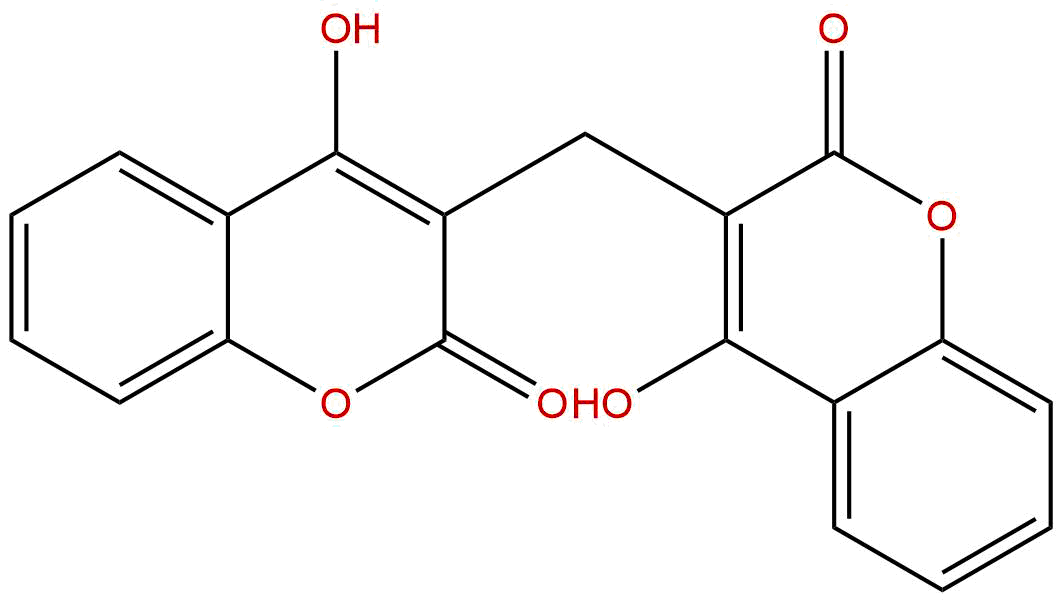
The chemical name of coumarin is 3,3 '- methylenebis (4-hydroxycoumarin), with a CAS number of 66-76-2. Structurally, it is a symmetrical dimer composed of two 4-hydroxycoumarin molecules connected by a methylene bridge. This unique structure endows it with multiple pharmacological activities. In addition to its classic anticoagulant effect, modern pharmacological research has revealed broader application prospects for coumarin. It has been identified as an effective inhibitor of NAD (P) H: quinone oxidoreductase 1 (NQO1) and 3-phosphoinositol dependent protein kinase 1 (PDK1), with half maximal inhibitory concentrations (IC50) of 0.37 μ M and 19.42 μ M, respectively. The potent inhibition of NQO1 makes it a key tool compound for studying its role in oxidative stress, cellular metabolism, and tumorigenesis. Meanwhile, the inhibitory activity of PDK1 suggests its potential value in regulating cellular metabolism, growth, and survival signaling pathways. In addition, coumarin has been found to have Hsp90 inhibitor activity, further expanding its research space as an anti-tumor lead compound.
This review aims to comprehensively review the research progress of coumarin, starting from its chemical structure and physicochemical properties, trace its plant origin and extraction methods, systematically expound its classic and emerging pharmacological activities, deeply analyze its molecular mechanisms of action on multiple targets such as NQO1, PDK1, and vitamin K cycle, and objectively evaluate and prospect its pharmacological properties, pharmacokinetic characteristics, and clinical application prospects, in order to provide comprehensive academic references for the in-depth research and potential translational applications of this classic natural product.
Chemical structure and physicochemical properties
The chemical structure of Dicoumarol is the material basis for its biological functions. Its system is named 3,3 '- methylenebis (4-hydroxycoumarin), with a molecular formula of C19H12O6 and a molecular weight of 336.2990 g/mol. Structurally, it is composed of two 4-hydroxycoumarin mother nuclei connected by a methylene group (- CH2-) at the 3rd carbon atom, forming a highly symmetrical molecule. The 4-hydroxy group (- OH) on each coumarin ring is a key active group that can form hydrogen bonds and interact with target proteins. This dimer structure significantly enhances its binding affinity with targets such as NQO1, and its activity is much higher than that of monomeric 4-hydroxycoumarin.
In terms of physical and chemical properties, coumarin exhibits typical weak acidic organic compound characteristics. Its lipid water partition coefficient (LogP) is 3.3017, indicating that it has a certain lipophilicity, which is beneficial for penetrating biological membranes, but at the same time, it also leads to extremely poor water solubility. The calculated water solubility value is only 0.0060 mg/mL, which is a significant challenge in practical applications, limiting its oral bioavailability and formulation development. The topological polar surface area (TPSA) is 100.88 Å ², which is a relatively high value and is usually associated with poor cell membrane permeability, explaining its low ability to cross the blood-brain barrier. Dicoumarin has characteristic absorption under ultraviolet light and can be used for its qualitative and quantitative analysis. Its chemical properties are relatively stable, but under strong alkaline conditions, the lactone ring may undergo ring opening hydrolysis. It is worth noting that coumarin can highly bind to plasma proteins (especially albumin) both in vitro and in vivo, which has important implications for its pharmacokinetic behavior and drug interactions. In addition, the multiple carbonyl and hydroxyl functional groups in its structure endow it with the ability to act as a hydrogen bond donor and acceptor, which is crucial for its specific interactions with various enzymes and acceptors.
Plant sources and extraction methods
Dicoumarin is not a secondary metabolite directly synthesized by plants, but rather a precursor substance in plants that undergoes chemical transformation under specific conditions (mainly fungal infection and mold growth). Therefore, its "plant origin" has an indirect nature. The main natural sources are plants containing 4-hydroxycoumarin or its precursors (such as coumaric acid, melanol, etc.), especially Fabaceae plants in the Melilotus genus, such as M. officinalis and M. albus. Under normal growth conditions, these plants contain non-toxic coumarin or its glucoside. When plants are improperly harvested, stored, and especially moldy in humid environments, fungi (mainly certain species of Aspergillus and Penicillium) metabolize coumarins in plants, converting them into 4-hydroxycoumarins. Through enzymatic or non enzymatic reactions, a methylene bridge (possibly derived from formaldehyde) is introduced between two 4-hydroxycoumarin molecules, ultimately producing coumarins. Therefore, moldy sweet clover hay is a classic source for the discovery and extraction of coumarins in history.
In addition to sweet clover, other plants containing 4-hydroxycoumarin, such as Dipteryx odorata and certain Trifolium plants, may also produce coumarin under moldy conditions. However, due to the fact that coumarin is a product of fungal contamination, its content is greatly affected by environmental factors, and there are safety hazards (such as co contamination with other fungal toxins), so extracting it from natural plants is not the mainstream method for obtaining this compound. In modern research, coumarin is mainly obtained through chemical synthesis, which involves the condensation of 4-hydroxycoumarin with formaldehyde under alkaline or acidic conditions, resulting in high yield and purity.
However, the extraction method from natural sources such as moldy sweet clover still has historical significance and research value. The classic extraction process typically involves drying and crushing moldy plant materials, followed by percolation or reflux extraction using organic solvents such as ethanol, acetone, or chloroform. After concentration, the extraction solution is purified by utilizing the properties of salt dissolution of coumarin under alkaline conditions and precipitation under acidic conditions. Specifically, the concentrate is dissolved in a dilute alkaline solution (such as sodium hydroxide solution), filtered to remove insoluble impurities, and the filtrate is adjusted to acidity with acid (such as hydrochloric acid), resulting in the precipitation of coumarin. The crude product can be further purified by recrystallization (commonly using ethanol or acetone water mixed solvents) or column chromatography (such as silica gel column) to obtain white or slightly yellow crystalline powder. Modern analytical techniques, such as high-performance liquid chromatography (HPLC) and mass spectrometry (MS), are used to identify and quantify coumarins in extracts.
Pharmacological activity research
The pharmacological activity research of coumarin began with its anticoagulant effect, and with the development of modern molecular pharmacology, its potential in multiple fields such as anti-tumor, anti-inflammatory, and neuroprotective effects has been continuously revealed.
-
anticoagulant activity This is the most classic and well-known pharmacological effect of coumarin. As a vitamin K antagonist, coumarin inhibits the activity of vitamin K epoxide reductase complex (VKORC1) in the liver, blocking the circulation and regeneration of vitamin K. Vitamin K is an essential cofactor for gamma glutamyl carboxylase (GGCX), which is responsible for carboxylating glutamate residues in the precursors of coagulation factors II (prothrombin), VII, IX, X, as well as anticoagulant proteins C and S, to gamma carboxyglutamic acid (Gla). Gla residues are necessary for these proteins to bind to calcium ions and anchor on the surface of phospholipid membranes, thereby exerting their coagulation or anticoagulant functions. Dicoumarin, by consuming active vitamin K, causes the lack of Gla residues in these coagulation factors synthesized by the liver, making them inactive precursors and thus producing strong anticoagulant effects. This mechanism makes it an important drug for the prevention and treatment of thrombotic diseases such as deep vein thrombosis, pulmonary embolism, and atrial fibrillation related stroke in clinical practice. Although its application has been largely replaced by more effective synthetic analogues such as warfarin, coumarin remains an important tool for studying the vitamin K cycle and coagulation mechanisms.
-
NQO1 inhibitory activity Dicoumarin is the gold standard compound used as an NQO1 inhibitor in modern research. NQO1 is a flavoenzyme that catalyzes the two electron reduction of quinone compounds, converting them into less toxic hydroquinone while consuming NAD (P) H. This enzyme is highly expressed in various tumor cells and is considered an important antioxidant defense enzyme and tumor cell protective factor. Dicoumarin competitively inhibits the activity of NQO1 with extremely high affinity (IC50=0.37 μ M). Its inhibitory mechanism is twofold: on the one hand, it competes with quinone substrates as a substrate analogue for the active site of NQO1; On the other hand, it can form a charge transfer complex with the cofactor FAD of NQO1, thereby inhibiting the catalytic cycle of the enzyme. By inhibiting NQO1, coumarin can: a) enhance the cytotoxicity of quinone chemotherapy drugs (such as mitomycin C, β - rapaqone), as it inhibits NQO1's detoxification effect on them; b) Increase intracellular reactive oxygen species (ROS) levels, induce oxidative stress, and selectively kill tumor cells that rely on NQO1 antioxidant defense; c) Affects the NAD+/NADH ratio and energy metabolism within cells. Therefore, coumarin has been widely used to study the role of NQO1 in tumorigenesis, oxidative stress, cell apoptosis, and drug sensitivity.
-
PDK1 inhibitory activity Research has found that coumarin is an inhibitor of PDK1 (IC50=19.42 μ M). PDK1 is a key kinase in the PI3K/Akt signaling pathway, responsible for phosphorylating and activating downstream kinases such as Akt, S6K, SGK, etc., thereby regulating cell growth, proliferation, survival, and metabolism. The abnormal activation of PDK1 is closely related to the occurrence and development of various cancers. Dicoumarin inhibits the activity of PDK1, which can block the phosphorylation of Akt, thereby inhibiting downstream signaling, inducing tumor cell apoptosis and growth arrest. This discovery provides a new theoretical basis for the use of coumarin as a multi-target anti-tumor drug, and also suggests that it may produce synergistic anti-tumor effects by simultaneously inhibiting NQO1 and PDK1.
-
Other pharmacological activities:
- Hsp90 inhibitory activity Heat shock protein 90 (Hsp90) is a molecular chaperone responsible for maintaining the correct folding, stability, and function of its client proteins, including many oncogenic kinases and transcription factors. Dicoumarin has been reported as an inhibitor of Hsp90, which may exert broad-spectrum anti-tumor effects by interfering with its ATPase activity or interacting with client proteins, leading to the degradation of various carcinogenic proteins.
- anti-inflammatory activity Dicoumarin can exhibit certain anti-inflammatory activity by inhibiting the NF - κ B signaling pathway and reducing the production of pro-inflammatory cytokines such as TNF - α and IL-6.
- Antibacterial and antiviral activity Some studies have reported that coumarin has inhibitory effects on certain bacteria and viruses (such as the main protease of SARS-CoV-2), but its activity is relatively weak and the mechanism is not fully understood.
- Neuroprotective effect In cellular and animal models, coumarin has shown potential protective effects against neurodegenerative diseases such as Parkinson's disease and Alzheimer's disease through its antioxidant and anti apoptotic mechanisms, but its complex pharmacological effects such as anticoagulation limit its application in neurological diseases.
Mechanism of action and molecular targets
The pharmacological effects of coumarin are the result of the combined action of multiple targets and mechanisms. Its core mechanism of action can be summarized as follows:
-
Vitamin K cycle antagonism mechanism (anticoagulant)This is the most classic mechanism of action of coumarin. The target is Vitamin K epoxide reductase complex subunit 1 (VKORC1)As a competitive inhibitor of VKORC1, coumarin prevents the reduction of oxidized vitamin K (vitamin K 2,3-epoxide) to reduced vitamin K (vitamin K hydroquinone). Reduced vitamin K is an essential cofactor for gamma glutamyl carboxylase (GGCX). GGCX is responsible for carboxylating glutamic acid residues in coagulation factors II, VII, IX, X, as well as anticoagulant protein C and S precursors into gamma carboxyglutamic acid (Gla). Gla residues are necessary for these proteins to bind to calcium ions and anchor on the surface of platelet phospholipids, thereby exerting their biological functions. Dicoumarin blocks the circulation and regeneration of vitamin K, resulting in the lack of Gla residues in these coagulation factors synthesized by the liver, which become inactive precursors and produce anticoagulant effects. Its targets also include multiple proteins related to the coagulation cascade reaction, such as SERPINE1(plasminogen activator inhibitor-1)F3(Organizational factors)F2(Prothrombin)F7(coagulation factor VII)F9(coagulation factor IX)F10(coagulation factor X)VWF(Von Willebrand factor)PROC(Protein C) and PROS1(Protein S), but coumarin indirectly regulates its activity by affecting the post-translational modifications (Glaylation) of these proteins, rather than directly acting on these proteins themselves.
-
NQO1 inhibition mechanism The target is NAD (P) H: Quinone oxidoreductase 1 (NQO1)Dicoumarin is a potent competitive inhibitor of NQO1. Its inhibitory mechanism includes: a) Compete with substrates The structure of coumarin is similar to that of NQO1's natural substrates (such as quinones), which can occupy the active site of the enzyme and prevent substrate binding; b) Interaction with cofactor FAD Dicoumarin can form a stable charge transfer complex with NQO1 cofactor flavin adenine dinucleotide (FAD), interfering with the redox cycle of FAD and inhibiting the entire catalytic process. By inhibiting NQO1, coumarin blocks the detoxification pathway of quinone compounds, leading to an increase in intracellular ROS levels, inducing oxidative stress, and affecting the balance of NAD+/NADH. This mechanism is the basis for enhancing the toxicity of certain chemotherapy drugs (such as mitomycin C) and selectively killing NQO1 overexpressing tumor cells.
-
PDK1 inhibition mechanism The target is 3-phosphate inositol dependent protein kinase 1 (PDK1)Dicoumarin inhibits the kinase activity of PDK1 by binding to its ATP binding pocket or allosteric site. PDK1 is a key node in the PI3K/Akt signaling pathway, responsible for phosphorylation and activation of Akt (protein kinase B). The activation of Akt further phosphorylates a series of downstream substrates, such as mTOR, GSK-3 β, Bad, Caspase-9, etc., thereby promoting cell survival, proliferation, growth, and metabolism. Dicoumarin inhibits PDK1, leading to a decrease in Akt phosphorylation levels and downstream signaling pathway obstruction, ultimately inducing tumor cell apoptosis and inhibiting its growth. This mechanism, in conjunction with the NQO1 inhibition mechanism, may produce stronger anti-tumor effects.
-
Hsp90 inhibition mechanism The target is Heat shock protein 90 (Hsp90)Hsp90 is a molecular chaperone whose function depends on the binding and hydrolysis of ATP. Dicoumarin may inhibit the ATPase activity of Hsp90 by binding to its N-terminal ATP binding domain, thereby disrupting the molecular chaperone function of Hsp90. This results in the client proteins of Hsp90, such as Her2, Akt, Raf-1, CDK4, mutant p53, etc., not folding correctly and ultimately being degraded by the ubiquitin proteasome pathway. Due to the fact that many client proteins are key drivers of carcinogenesis, Hsp90 inhibition can simultaneously block multiple oncogenic signaling pathways, resulting in a broad-spectrum anti-tumor effect.
Evaluation of drug properties and pharmacokinetics
As a classic drug, coumarin has both successful and significant challenges in terms of its pharmacological characteristics.
Drugability assessment:
* Advantages:
* Clear targets and mechanisms The clear inhibitory effects on targets such as VKORC1, NQO1, and PDK1 provide a clear blueprint for drug design.
* Classic oral anticoagulant drugs In history, it has been successfully used as an oral anticoagulant, proving its effectiveness and certain safety in the human body (although the treatment window is narrow).
* Multi target potential Its multi-target properties (NQO1, PDK1, Hsp90) give it unique advantages in the field of anti-tumor and other complex diseases.
* Disadvantages and challenges:
* Extremely poor water solubility The water solubility is only 0.0060 mg/mL, which severely limits its oral absorption and bioavailability, and is the main obstacle to formulation development.
* Narrow treatment window As an anticoagulant, the safety range between its anticoagulant effect and bleeding risk is narrow, requiring frequent monitoring of coagulation function (such as the International Normalized Ratio INR), with significant individual differences, and susceptible to food drug interactions.
* High plasma protein binding rate Highly bound to plasma proteins (mainly albumin) (>99%), this limits the concentration of free drugs and makes them easily replaceable with other high protein bound drugs, resulting in drastic fluctuations in efficacy and toxicity.
* Metabolism and drug interactions Mainly metabolized by the liver CYP450 enzyme system (such as CYP2C9), it is a common site for multiple drug interactions.
* HERG safety The Ames test result is 0.9, indicating a potential genetic toxicity risk that requires further evaluation. The hERG inhibition result is negative, indicating a relatively low risk of cardiac toxicity.
* Low blood-brain barrier permeability High TPSA (100.88 Å ²) and moderate LogP (3.30) make it difficult for it to cross the blood-brain barrier, limiting its application in central nervous system diseases.
Pharmacokinetic characteristics:
* absorb Oral absorption is slow and incomplete, with significant individual differences in bioavailability. The extremely low water solubility is the main limiting step in absorption. Food, especially foods rich in vitamin K, can significantly affect their absorption and efficacy.
* distribution Widely distributed in the body, but mainly tightly bound to plasma albumin. The apparent distribution volume is relatively small.
* Metabolism Mainly in the liver, oxidative metabolism occurs through the CYP450 enzyme system (mainly CYP2C9), generating inactive hydroxylated metabolites.
* excretion Metabolites are mainly excreted through urine and bile. The coumarin itself and its metabolites may exist in the enterohepatic circulation, resulting in a longer half-life (about 1-3 days, but with significant individual differences).
* Pharmacodynamics Its anticoagulant effect is slow to take effect (waiting for the existing active coagulation factors in the body to be consumed), and the effect lasts for a long time after discontinuation (waiting for the synthesis of new active coagulation factors). Its anticoagulant strength is monitored through prothrombin time (PT) or INR.
Clinical application prospects and prospects
Although the position of coumarin as a first-line anticoagulant has been replaced by new drugs such as warfarin, dabigatran, and rivaroxaban, its unique pharmacological properties still make it valuable in modern medical research and potential clinical applications.
1. Potential applications in the field of anti-tumor therapy:
This is the most promising research direction for coumarin. As a dual inhibitor of NQO1 and PDK1, it provides a unique approach for developing novel anti-tumor strategies.
* Combination chemotherapy sensitizer: Inhibition of NQO1 by dicoumarin can enhance the killing effect of quinone chemotherapy drugs (such as mitomycin C, β - lapadione) on tumors with high NQO1 expression (such as non-small cell lung cancer, breast cancer, colorectal cancer), and may protect normal tissues with low NQO1 expression. This "synthetic lethal" strategy is currently a research hotspot in cancer treatment.
* Targeting tumor metabolism By inhibiting PDK1, coumarin can block the PI3K/Akt signaling pathway, inhibit glycolysis (Warburg effect) and growth of tumor cells. Synergistic inhibition with NQO1 induced oxidative stress may effectively suppress energy metabolism and antioxidant defense in tumor cells.
* Hsp90 inhibitor As an Hsp90 inhibitor, coumarin can simultaneously degrade multiple carcinogenic client proteins and has broad-spectrum anti-tumor potential. However, its low potency and poor pharmacokinetic properties limit its direct application, and it can be used as a lead compound for structural optimization.
2. Research value as a tool medicine:
Dicoumarin is a gold standard tool compound for studying the biological functions of NQO1. In basic research, it is widely used for:
*Elucidate the role of NQO1 in oxidative stress, cell apoptosis, autophagy, inflammation, and aging.
*Study the mechanism of NQO1 in tumor occurrence, development, and drug resistance.
*Screening and evaluation of novel NQO1 inhibitors or activators.
*Study the circulation of vitamin K and its role in coagulation, bone metabolism, and vascular calcification.
3. Structural optimization and development of new drugs:
Given the shortcomings in the pharmacological properties of coumarin, its structural framework is an ideal starting point for pharmaceutical chemists to optimize. Future research directions include:
* Improve water solubility By introducing polar groups (such as carboxyl, amino, phosphate groups) or preparing prodrugs (such as phosphate esters, amino acid esters), its water solubility and oral bioavailability can be improved.
* Improve selectivity By structural modification, the selectivity towards specific targets (such as NQO1 or PDK1) is enhanced, while the activity towards other targets (such as VKORC1) is reduced, thereby reducing side effects such as anticoagulation.
* Improve pharmacokinetics By structural modification, the plasma protein binding rate is reduced, metabolic stability is optimized, and half-life is prolonged.
* Develop new formulations Using nanotechnology (such as liposomes, polymer micelles, nanocrystals) to encapsulate coumarin and improve its solubility and targeted delivery efficiency.
4. Other potential applications:
* Anti inflammatory and autoimmune diseases Based on its NF - κ B inhibitory activity, explore its application in diseases such as rheumatoid arthritis and inflammatory bowel disease.
* cardiovascular disease In addition to anticoagulation, its inhibitory effect on the proliferation and migration of vascular smooth muscle cells may be beneficial for the prevention and treatment of vascular restenosis.
* Neurodegenerative diseases Although the blood-brain barrier has low permeability, its effective concentration in the brain may be achieved through nano delivery systems or structural modifications for the study or treatment of neurodegenerative diseases associated with oxidative stress.
Conclusion
Biscoumarin, a natural product derived from moldy grass, has left a significant mark in the history of drug development with its unique discovery process and clear pharmacological mechanism. The research process of coumarin itself is a microcosm of the development of natural product pharmacology, from the initial revelation of vitamin K's antagonistic anticoagulant mechanism to its modern identification as a multi-target inhibitor of NQO1, PDK1, and Hsp90. It is not only a successful clinical drug (anticoagulant), but also an indispensable molecular tool, and a promising lead compound.
Although its position as a first-line anticoagulant has been replaced, and it has drug defects such as poor water solubility and narrow treatment window, the unique value of coumarin in cutting-edge fields such as anti-tumor, combination chemotherapy sensitization, and targeted tumor metabolism has made its research far from over. In the future, through structural optimization of medicinal chemistry, development of novel drug delivery systems, and exploration of combination therapy strategies based on their multi-target properties, it is expected to overcome their inherent shortcomings and unleash their enormous potential as a novel therapeutic drug. In depth research on coumarin not only helps us to better understand the role of key targets such as NQO1 and PDK1 in diseases, but also provides valuable ideas and examples for developing innovative drugs based on natural product frameworks. The story of coumarin is far from over, it is moving from a classic old medicine to a hopeful new life.