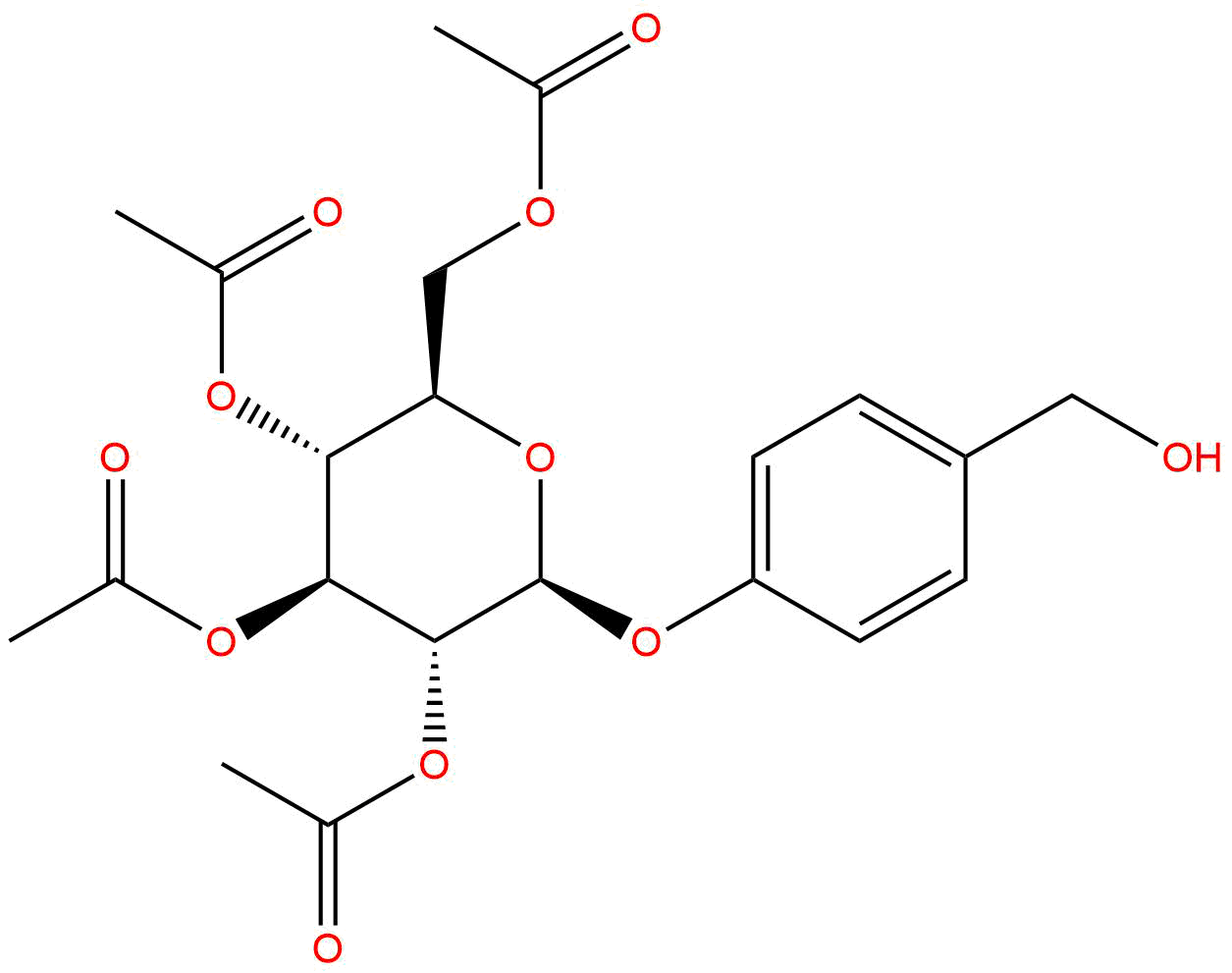


Product name: Acetagastrodin
Synonym name: Acetagastrodine
Catalogue No.: BP4580
Cas No.: 64291-41-4
Formula: C21H26O11
Mol Weight: 454.428
Botanical Source:
Type of Compound: Phenols
Purity: 95%~99%
Analysis Method: HPLC-DAD or/and HPLC-ELSD
Identification Method: Mass, NMR
Packing: Brown vial or HDPE plastic bottle
Storage: Store in a well closed container, protected from air and light. Put into refrigerate or freeze for long term storage.
Whenever possible, you should prepare and use solutions on the same day. However, if you need to make up stock solutions in advance, we recommend that you store the solution as aliquots in tightly sealed vials at -20℃. Generally, these will be useable for up to two weeks.
The product could be supplied from milligrams to grams
Inquire for bulk scale.
For Reference Standard and R&D, Not for Human Use Directly.
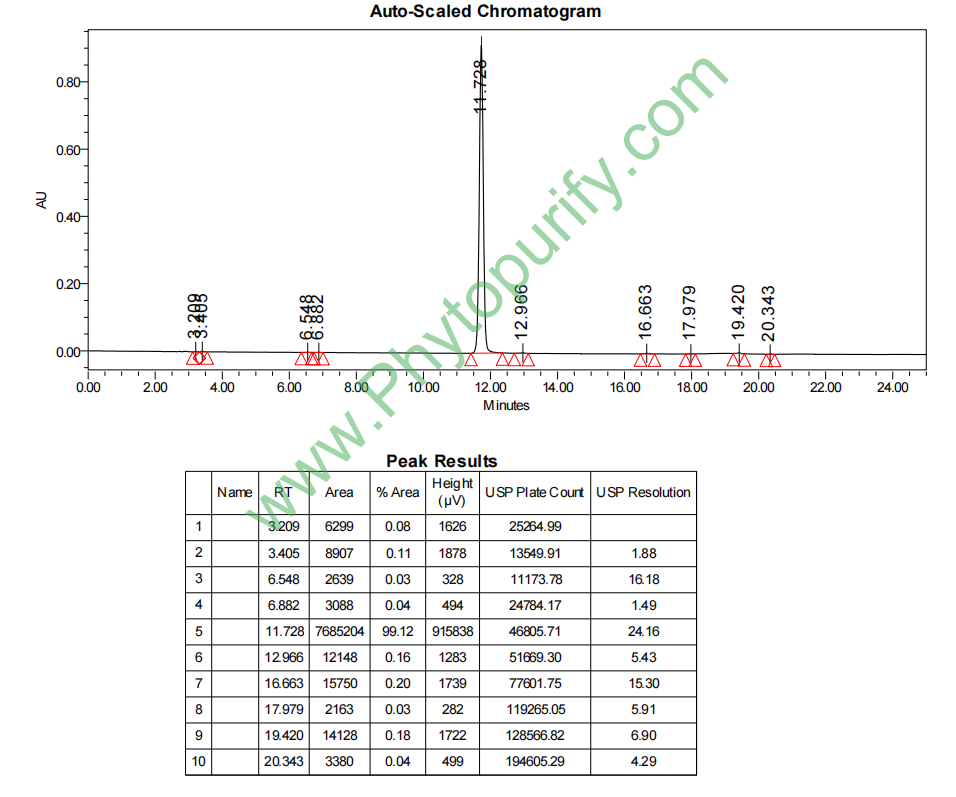
HPLC of Acetagastrodin
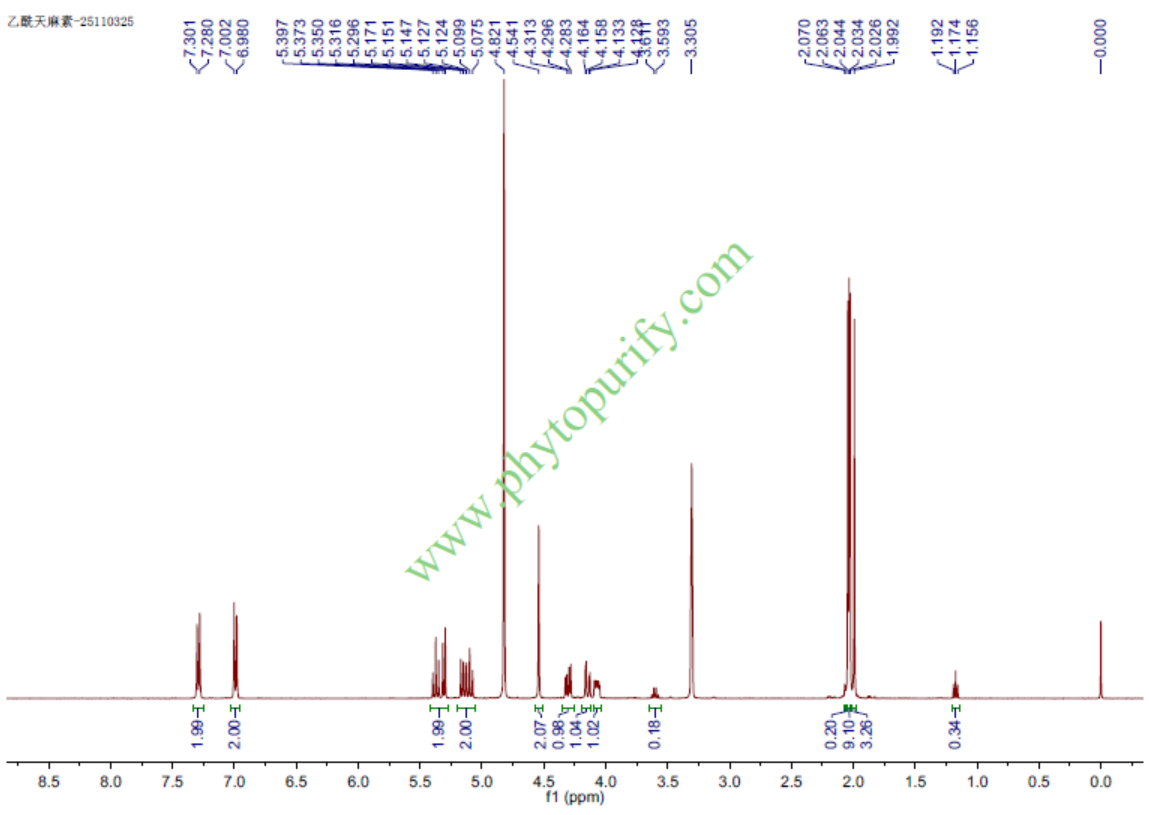
HNMR of Acetagastrodin
Storage conditions:Short-term storage at 2~8℃, long-term storage at -20 ~ -80℃
143.8900
.4834
.4833
2.7987
1.6187
.2088
Low
47.3458
3.6970
Yes
Yes
No
No
No
No
0.0
Yes
Yes
Yes
Yes
Neurodegenerative diseases such as Alzheimer's disease (AD) and Parkinson's disease (PD) have become major global public health challenges. Its complex pathological mechanism involves multiple links such as oxidative stress, mitochondrial dysfunction, protein misfolding and aggregation, neuroinflammation, and cell apoptosis, which poses great difficulties for drug development. In the search for multi-target and low toxicity treatment strategies, natural products and their derivatives have shown unique potential due to their structural diversity and rich biological activity. Acetylastrodin (CAS number: 64291-41-4), as an acetylated derivative of Gastrodin, a traditional Chinese medicine active ingredient, and a key intermediate for the synthesis of p-hydroxyphenylmethanol - β - D-glucopyranoside (DBPG), has received widespread attention from pharmacological researchers in recent years due to its significant antioxidant and neuroprotective activities. This article aims to systematically review the chemical properties, pharmacological activities, mechanisms of action, pharmacological properties, and application prospects of acetyl gastrodin in the treatment of neurodegenerative diseases, in order to provide comprehensive academic references for the in-depth research and development of this compound.
Acetylgastrodin, chemical name 4- (hydroxymethyl) phenyl-2,3,4,6-tetra-O-acetyl - β - D-glucopyranose, molecular formula C21H26O11, molecular weight 454.4280. Its structure is formed by acetylating all four hydroxyl groups (2 ', 3', 4 ', 6' positions) in the glucose moiety of gastrodin (p-hydroxyphenylmethanol - β - D-glucopyranoside). This structural modification significantly alters its physicochemical properties.
Compared with the highly hydrophilic gastrodin, the lipid water partition coefficient (LogP) of acetyl gastrodin is 0.4834, indicating its moderate lipophilicity, which facilitates its penetration into cell membranes. Its topological polar surface area (TPSA) is 143.89 Å ², reflecting the size of the polar regions in the molecule. The water solubility parameter is 2.7987, indicating that it has a certain solubility in water, but it has significantly decreased compared to gastrodin. The changes in these physicochemical parameters directly affect their bioavailability and tissue distribution, especially for neuroprotective drugs that need to cross the blood-brain barrier (BBB). The preliminary pharmacological prediction model shows that the blood-brain barrier permeability of acetylgastrodin is relatively low, which may be an important consideration for its use as a drug precursor or further structural optimization.
Acetylgastrodin is not a natural component extracted directly from plants in large quantities, but is mainly obtained through chemical synthesis. Its precursor gastrodin is widely present in the traditional precious Chinese medicine Tianma(Gastrodia elata In the dried tubers of Blume. As a orchid plant, the accumulation of active ingredients in Tianma is closely related to specific growth environments and symbiotic microorganisms.
The extraction methods of gastrodin are relatively mature, mainly including solvent extraction (such as water extraction, alcohol extraction), ultrasound assisted extraction, microwave-assisted extraction, and supercritical fluid extraction. Usually, Tianma powder is refluxed and extracted with methanol, ethanol, or water, and then separated and purified using techniques such as macroporous adsorption resin column chromatography, silica gel column chromatography, or high-performance liquid chromatography (HPLC) to obtain high-purity Tianma extract.
The preparation of acetyl gastrodin starts from gastrodin and is synthesized through classical acetylation reaction. In the presence of alkaline catalysts such as pyridine, gastrodin reacts with acetylation reagents such as acetic anhydride or acetyl chloride to protect the four hydroxyl groups on the glucose ring as acetyl groups, thereby obtaining acetyl gastrodin. This synthetic route is concise, efficient, and has a high yield, providing sufficient material basis for its pharmacological research. As an intermediate for the synthesis of DBPG, the optimization of its synthesis process is also a part of related research.
The core pharmacological activity of acetyl gastrodin revolves around its powerful antioxidant and neuroprotection The effect has been demonstrated and validated in various experimental models.
antioxidant activity Acetylgastrodin is a clear antioxidant. In vitro chemical models, such as DPPH radical and ABTS radical scavenging experiments, as well as iron ion reduction ability (FRAP) assays, acetyl gastrodin exhibits significant free radical scavenging ability and reduction potential. In cell models, it can effectively counteract oxidative stress induced by stimuli such as hydrogen peroxide (H ₂ O ₂), beta amyloid (A β), or glutamate, reduce intracellular levels of reactive oxygen species (ROS) and malondialdehyde (MDA), and enhance the activity of endogenous antioxidant enzymes such as superoxide dismutase (SOD) and glutathione peroxidase (GSH Px).
Neuroprotective activity:
In addition, the study suggests that acetyl gastrodin may have certain anti-inflammatory and anti apoptotic effects, which are closely related to neuroprotective effects.
The neuroprotective effect of acetyl gastrodin is not achieved through a single target, but exhibits the characteristics of multi-target and multi pathway synergy, which perfectly fits the complex pathological network of neurodegenerative diseases. Its mechanism of action involves the following key aspects:
Activate endogenous antioxidant pathway (KEAP1-NFE2L2)Acetylgastrodin is an effective activator of the nuclear factor E2 related factor 2 (NFE2L2/Nrf2) pathway. It can promote the dissociation and translocation of Nrf2 from the cytoplasmic chaperone protein KEAP1 to the nucleus, where it binds to the antioxidant response element (ARE), thereby initiating the transcriptional expression of a series of downstream phase II detoxifying enzymes and antioxidant proteins (such as HO-1, NQO1, GCLC), constructing a powerful cellular defense system, which is the core molecular basis of its antioxidant effect.
Regulating apoptosis and balance of survival:
Intervention of key pathological proteins in AD:
Other potential targets Acetylgastrodin may also exert protective effects by reducing abnormal aggregation of alpha synuclein (SNCA), which is important in PD, and inhibiting the activation of neuroinflammasomes such as NLRP3.
In summary, acetyl gastrodin forms a synergistic network by simultaneously acting on multiple targets such as NFE2L2, BCL2, BACE1, MAPT, SIRT1, MAPK1, ACHE, CASP3, SNCA, etc., jointly resisting oxidative damage, protein homeostasis imbalance, and cell apoptosis, ultimately achieving neuroprotection.
Based on the given parameters and existing research, a preliminary evaluation of the pharmacological properties of acetyl gastrodin is conducted
Acetylgastrodin has shown clear potential in the prevention and treatment of neurodegenerative diseases, but its clinical application still faces opportunities and challenges.
prospect:
1. As a candidate drug for multi-target neuroprotective agents Its unique multi-target mechanism of action is particularly suitable for intervening in multifactorial diseases such as AD and PD. Compared with single target drugs, it may have better comprehensive efficacy and disease modification potential.
2. As a prodrug or lead compound Acetylgastrodin itself can be considered as a prodrug of gastrodin, and its acetyl modification may alter pharmacokinetic behavior. More importantly, it can serve as an excellent lead compound Optimize the structure of the system. For example, by modifying substituents on the glucose or benzene ring to maintain pharmacological activity while optimizing parameters such as LogP and TPSA, the aim is to Significantly improve its blood-brain barrier permeability This is currently the most critical research and development direction.
3. Components of combination therapy In the future, it may be considered to combine acetylgastrodin or its optimized derivatives with existing drugs (such as acetylcholinesterase inhibitors, memantine, etc.) to achieve synergistic effects, improve efficacy, or reduce side effects.
Challenges and Prospects:
1. Difficulty of blood-brain barrier penetration This is the biggest bottleneck that limits its direct development as a central nervous system drug. Future research should focus on achieving efficient and safe brain delivery through prodrug strategies, nanocarrier systems (such as liposomes, polymer nanoparticles), or coupling them with BBB targeting peptides.
2. In depth pharmacological and pharmacokinetic studies Long term efficacy needs to be validated in genetically modified animal models that are closer to human diseases, such as APP/PS1 mice. Complete preclinical ADME and PK/PD studies must be conducted to clarify their in vivo fate, active metabolites, and effective exposure levels.
3. Deep exploration of the mechanism of action Using proteomics, metabolomics, and network pharmacology methods, further reveal its action network in a panoramic manner, discover new potential targets, and elucidate the cross dialogue between various pathways.
4. Security system evaluation Although the initial prediction is good, comprehensive preclinical toxicology studies are still needed, including acute toxicity, long-term toxicity, reproductive toxicity, etc., to ensure its safety.
Acetylgastrodin, as an acetylated derivative of gastrodin, has emerged in the field of drug development for neurodegenerative diseases due to its significant antioxidant and multiple neuroprotective activities. It demonstrates great potential as a multi-target disease modification therapy by activating the Nrf2 antioxidant pathway, regulating apoptosis/survival balance, intervening in A β production and tau phosphorylation, and other multi-target synergistic effects. However, its low predictive blood-brain barrier permeability is the main obstacle to translating its pharmacological activity into clinical efficacy. The current research focus should be on the structural optimization and development of novel delivery systems using acetyl gastrodin as a lead compound, in order to obtain novel derivatives with good brain distribution. With a deeper understanding of its mechanism of action and gradual breakthroughs in drug development, acetylgastrodin and its derivatives are expected to provide new candidate drugs for the prevention and treatment of major brain diseases such as Alzheimer's disease and Parkinson's disease, continuing and innovating the wisdom of traditional Chinese medicine.
