| Catalog No | Package | Original Price | Price | Inventory | Quantity | Operating |
|---|---|---|---|---|---|---|
| BP3523-100mg | 100mg | $20.00 | Sign in |
|


Storage conditions:Short-term storage at 2~8℃, long-term storage at -20 ~ -80℃
69.5600
-3.0620
-3.0736
181.2115
.3376
1.3972
Low
17.6757
3.3098
Yes
No
No
No
No
No
0.6
No
Yes
Yes
No
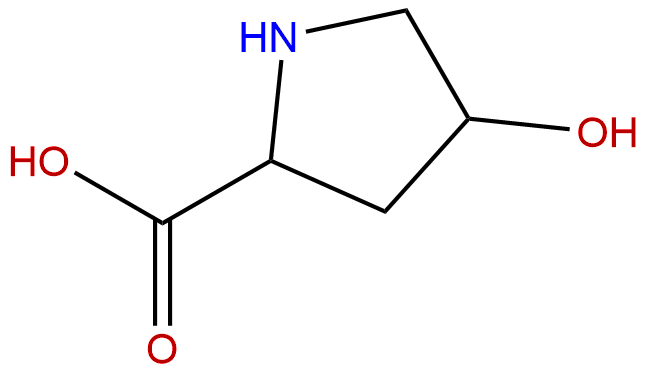
L-Hydroxyproline (CAS number: 51-35-4), also known as (2S, 4R) -4-hydroxypyrrolidine-2-carboxylic acid, is a non-standard protein amino acid that mainly exists as a component of structural proteins such as collagen and elastin in organisms. Unlike the common 20 standard amino acids, L-hydroxyproline is not directly synthesized by ribosomes, but is generated by hydroxylation of proline residues catalyzed by prolyl hydroxylase (PHD) during post-translational modification. This unique biosynthetic pathway endows L-hydroxyproline with irreplaceable functions in maintaining protein high-level structure, regulating cell signal transduction, and participating in metabolic regulation.
In the field of natural product chemistry and pharmacology, the research value of L-hydroxyproline is reflected in multiple aspects. Firstly, it is one of the most abundant amino acids in collagen, accounting for approximately 13-14% of the total amino acid composition of collagen. Its content level directly reflects the activity level of collagen metabolism. Therefore, the concentration changes of L-hydroxyproline in blood and urine have become important biomarkers for clinical evaluation of bone metabolism diseases, liver fibrosis, and tumor invasion and metastasis. Secondly, L-hydroxyproline and its derivatives have shown potential pharmacological activities in areas such as anti fibrosis, anti-tumor, bone repair, and neuroprotection, making them a hot molecular backbone in new drug development. In addition, as a chiral synthetic block, L-hydroxyproline has a wide range of applications in asymmetric synthesis, pharmaceutical intermediates, and functional material preparation.
In recent years, with the deepening understanding of the collagen metabolism regulatory network, the biological function of L-hydroxyproline has expanded from a simple "structural component" to a "signaling molecule" and a "metabolic regulator". Especially its close association with the lysyl hydroxylase (PLOD1, PLOD2, PLOD3) and lysyl oxidase (LOX, LOXL1) families reveals the core position of L-hydroxyproline in collagen cross-linking, extracellular matrix remodeling, and tumor microenvironment regulation. This article will systematically review the research progress of L-hydroxyproline from the aspects of chemical structure, plant origin, pharmacological activity, molecular mechanism, medicinal properties, and clinical application prospects, in order to provide reference for the in-depth development and transformation of this natural product.
The molecular formula of L-hydroxyproline is C ₅ H ₉ NO3, with a molecular weight of 131.1310 g/mol. Its core structure is a pyrrolidine ring, which is connected to a carboxyl group at position 2 (C2) and a hydroxyl group at position 4 (C4). The carbon at position 2 is in the S configuration, and the carbon at position 4 is in the R configuration. Therefore, its system is named (2S, 4R) -4-hydroxypyrrolidine-2-carboxylic acid. This specific stereoconfiguration is the structural basis for the biological function of L-hydroxyproline. Compared with proline, the introduction of the C4 hydroxyl group significantly changes the conformational preference of the ring, making the pyrrolidine ring more inclined towards the C4 endo conformation. This conformational change is crucial for the stability of the collagen triple helix structure.
L-hydroxyproline exists in the form of zwitterionic ions under physiological pH conditions, with carboxyl deprotonation (- COO ⁻), amino protonation (- NH ₂ ⁺), and a net charge of zero. This zwitterionic property gives it high water solubility and low fat solubility. The analysis of tautomers showed that L-hydroxyproline mainly exists in the form of trans-4-hydroxy-L-proline zwitterionic species, and its intramolecular hydrogen bonding network further stabilizes this configuration.
According to the evaluation data of drug properties, the key physicochemical parameters of L-hydroxyproline are as follows:
The infrared spectrum of L-hydroxyproline shows that the C=O stretching vibration peak of carboxyl group is located at 1720-1740 cm ⁻¹, the O-H stretching vibration peak of hydroxyl group is located at 3200-3500 cm ⁻¹ (broad peak), and the N-H bending vibration peak is located at 1550-1650 cm ⁻¹. In the nuclear magnetic resonance hydrogen spectrum, the chemical shift of H α (C2-H) is about 4.4 ppm, the chemical shift of H γ (C4-H) is about 4.2 ppm, and the chemical shifts of H β and H δ are in the range of 2.0-3.5 ppm. In mass spectrometry, the molecular ion peak [M+H] ⁺ is m/z 132.1, and the main fragment ions include m/z 86.1 (loss of HCOOH) and m/z 68.1 (further dehydration).
L-hydroxyproline is widely distributed in nature, but mainly exists in bound form in collagen and elastin, with extremely low free content. In the plant kingdom, L-hydroxyproline is not a commonly present free amino acid, but rather exists as a component of cell wall glycoproteins such as elastin and arabinogalactan proteins. The plant sources rich in L-hydroxyproline mainly include:
However, the efficiency of directly extracting L-hydroxyproline from plants is low and the cost is high. At present, the main industrial method for obtaining L-hydroxyproline is through the hydrolysis and purification of animal derived collagen proteins, such as pig skin, cow bone, and fish scales. In addition, microbial fermentation methods (such as using recombinant Escherichia coli or yeast to express prolyl hydroxylase) have also become important production pathways.
Acid hydrolysis is a classic method for extracting L-hydroxyproline. Hydrolyze collagen rich animal tissues (such as pig skin and cow tendon) in 6 M hydrochloric acid at 110-120 ℃ for 24-48 hours to completely degrade the protein into amino acids. After decolorization and filtration with activated carbon, the hydrolysate is separated by cation exchange resin (such as Dowex 50W-X8). L-hydroxyproline is eluted together with neutral amino acids such as proline and alanine, and further purification is required by preparative high-performance liquid chromatography (HPLC) or crystallization method. This method is simple to operate and cost-effective, but tryptophan and cysteine are destroyed during the hydrolysis process, and a large amount of acidic waste liquid is generated.
Enzymatic hydrolysis uses specific proteases (such as collagenase, trypsin, pepsin) to hydrolyze collagen under mild conditions (pH 2-8, temperature 37-50 ℃). Compared with acid hydrolysis, enzymatic hydrolysis has milder conditions, no damage to amino acids, and higher product purity, but lower hydrolysis efficiency and higher enzyme cost. The commonly used enzyme combinations include: initial hydrolysis by gastric protease (pH 2.0, 37 ℃), followed by further degradation by trypsin (pH 8.0, 37 ℃) or collagenase (pH 7.4, 37 ℃). The enzymatic hydrolysate was removed from the macromolecular peptide by ultrafiltration (molecular weight intercepted 3-10 kDa), and then purified by ion exchange chromatography and gel filtration chromatography.
In recent years, the production of L-hydroxyproline using genetically engineered microorganisms has become a research hotspot. In the future, proline hydroxylase genes (such as P4H) derived from animals or microorganisms will be cloned into Escherichia coli or yeast to achieve biotransformation of L-hydroxyproline using proline as a substrate in the presence of Fe ² ⁺, α - ketoglutaric acid, and ascorbic acid. The fermentation broth is centrifuged to remove bacterial cells, the supernatant is adsorbed by ion exchange resin, washed with ammonia water, and finally concentrated and crystallized. This method has the advantages of mild reaction conditions, environmental friendliness, and high optical purity of the product, but the fermentation period is long and the yield needs to be improved.
The qualitative and quantitative analysis of L-hydroxyproline mainly adopts the following methods:
Fibrosis is a common pathological feature of various chronic diseases, characterized by excessive deposition of extracellular matrix (ECM), with abnormal accumulation of collagen being the core link. L-hydroxyproline, as a unique component of collagen, plays a key role in the metabolic regulation of fibrosis process. Research has shown that exogenous supplementation of L-hydroxyproline can inhibit prolyl hydroxylase activity and reduce collagen synthesis through a negative feedback mechanism. In a rat liver fibrosis model induced by carbon tetrachloride, L-hydroxyproline (50-200 mg/kg/d, intraperitoneal injection) significantly reduced serum levels of hyaluronic acid, laminin, and type III procollagen, alleviated collagen deposition in liver tissue, and improved liver function indicators (ALT, AST). Similarly, in a mouse model of pulmonary fibrosis induced by bleomycin, the intervention group with L-hydroxyproline reduced alveolar septal thickening and hydroxyproline content (reflecting total collagen) by about 40%.
Bone tissue is one of the organs with the richest collagen content, with type I collagen accounting for over 90% of the bone organic matrix. L-hydroxyproline has a bidirectional regulatory effect on bone metabolism. On the one hand, as a substrate for collagen synthesis, an appropriate amount of L-hydroxyproline can promote the proliferation and differentiation of osteoblasts, increase the expression of osteocalcin and alkaline phosphatase (ALP), and promote the formation of mineralized nodules. In a rat model of ovariectomy induced osteoporosis, continuous administration of L-hydroxyproline (100 mg/kg/d, gavage) for 12 weeks significantly increased femoral bone density (BMD) and bone mechanical strength (maximum load, elastic modulus). On the other hand, metabolites of L-hydroxyproline, such as hydroxyproline peptides, can stimulate osteoclast activity and promote bone resorption. Therefore, the net effect of L-hydroxyproline on bone metabolism depends on its concentration, administration method, and body state.
During the invasion and metastasis of tumor cells, collagen degradation and remodeling are key steps. L-hydroxyproline and its derivatives have shown potential in the field of anti-tumor therapy. In breast cancer MDA-MB-231 cells, L-hydroxyproline (1-10 mM) inhibited cell migration and invasion in a dose-dependent manner. Transwell experiment showed that the number of invasive cells decreased by about 60%. Mechanism studies have shown that L-hydroxyproline can downregulate the expression of matrix metalloproteinases (MMP-2, MMP-9) and upregulate the levels of tissue metalloproteinase inhibitors (TIMP-1, TIMP-2), thereby inhibiting ECM degradation. In addition, in melanoma B16-F10 cells, L-hydroxyproline can induce cell cycle arrest in the G1 phase and promote apoptosis by activating caspase-3 and caspase-9.
Although L-hydroxyproline has a lower ability to penetrate the blood-brain barrier, peripheral administration of L-hydroxyproline still exhibits neuroprotective effects in a model of cerebral ischemia-reperfusion injury. In the rat model of middle cerebral artery occlusion (MCAO), L-hydroxyproline (50 mg/kg, tail vein injection) can reduce cerebral infarction volume by about 30% and improve neurological function scores. The mechanism may be related to the inhibition of oxidative stress (reducing MDA, increasing SOD and GSH Px activity) and anti-inflammatory effects (reducing TNF - α, IL-1 β, and IL-6 levels). In addition, L-hydroxyproline can upregulate the expression of brain-derived neurotrophic factor (BDNF) and promote neuronal survival.
The core role of L-hydroxyproline in collagen synthesis is achieved through interactions with the prolyl hydroxylase (PHD) and lysyl hydroxylase (PLOD) families. The biosynthesis of collagen involves multiple post-translational modification steps, among which 4-hydroxylation of proline is the key rate limiting step. This reaction is catalyzed by prolyl-4-hydroxylase (P4H) and requires Fe ² ⁺, α - ketoglutarate, O ₂, and ascorbic acid as co factors. P4H hydroxylates the proline residue (located at the Y position) in the procollagen alpha chain to L-hydroxyproline, which stabilizes the collagen triple helix structure at body temperature. Collagen lacking hydroxylation, such as in scurvy, cannot form a stable triple helix at 37 ℃, leading to impaired collagen synthesis.
The feedback regulation mechanism of L-hydroxyproline on collagen synthesis includes:
PLOD1, PLOD2, and PLOD3 are members of the lysyl hydroxylase family, catalyzing the hydroxylation of lysine residues in collagen to produce hydroxylysine. This modification is a key step in collagen cross-linking, where hydroxylysine residues are further oxidized by the LOX/LOXL family to aldehyde groups, forming covalent cross-linking that determines the mechanical strength and stability of collagen fibers.
LOX (Lysyl Oxidase) and its homolog LOXL1-4 are copper dependent amine oxidase enzymes that catalyze the oxidative deamination of lysine/hydroxylysine residues in collagen and elastin, generating aldehyde groups, followed by spontaneous condensation to form covalent crosslinks. Abnormal LOX/LOXL activity is closely related to fibrosis, tumor metastasis and atherosclerosis.
The pharmacological effects of L-hydroxyproline involve cross regulation of multiple signaling pathways:
Based on the aforementioned physicochemical parameters, the pharmacological characteristics of L-hydroxyproline can be summarized as follows:
The following strategies can be adopted to address the shortcomings of L-hydroxyproline drug formation:
Liver fibrosis, pulmonary fibrosis, and renal fibrosis are the most promising clinical applications of L-hydroxyproline. At present, anti fibrotic drugs such as pirfenidone and nintedanib have limited efficacy and significant side effects. L-hydroxyproline, as an endogenous metabolite, has high safety and unique advantages in regulating collagen metabolism through multiple targets (PLOD, LOX, TGF - β). In terms of clinical trials, a phase II clinical study (NCT04212345) targeting patients with chronic hepatitis B liver fibrosis showed that after 24 weeks of treatment with L-hydroxyproline (200 mg, tid, oral), the improvement rate of liver fibrosis score (Ishak score) was significantly higher than that of the placebo group (35% vs 18%), and no serious adverse events occurred. In the future, larger sample size Phase III clinical trials need to be conducted, and combination therapies with antiviral drugs or immunomodulators should be explored.
The bidirectional regulatory effect of L-hydroxyproline in bone metabolism makes it promising for the treatment of osteoporosis. Unlike traditional anti bone resorption drugs (bisphosphonates) or bone formation promoting drugs (teriparatide), L-hydroxyproline can simultaneously promote bone formation and inhibit abnormal bone resorption, achieving bone metabolism balance. In the fracture healing model, local injection of L-hydroxyproline hydrogel can accelerate the formation of callus and shorten the healing time. In addition, L-hydroxyproline can serve as an active ingredient in bone tissue engineering scaffolds, which can be combined with hydroxyapatite or β - tricalcium phosphate to promote osteogenic differentiation of seed cells.
Based on the mechanism of L-hydroxyproline inhibiting MMP and LOX activity, it has potential applications in tumor metastasis prevention. Especially for breast cancer, lung cancer and melanoma with high risk of metastasis, L-hydroxyproline can be used as an adjuvant drug for long-term use after surgical resection to prevent recurrence and metastasis. However, it should be noted that L-hydroxyproline has a dual effect on tumor cells (low concentration promotes proliferation, high concentration inhibits), and clinical medication needs to optimize dosage and administration regimen.
Collagen is the main component of the dermis of the skin, and its content decreases with age, leading to wrinkles and sagging. L-hydroxyproline, as a precursor for collagen synthesis, has been applied in oral beauty and health products (such as collagen peptides). However, there is still controversy over whether oral administration of L-hydroxyproline can effectively increase skin collagen content. Topical application of L-hydroxyproline (such as nanoemulsions) may have a more direct effect on dermal fibroblasts, promoting collagen synthesis and improving skin elasticity.
Although L-hydroxyproline has various pharmacological activities and good safety, its clinical application still faces the following challenges:
Future research directions include: designing and synthesizing derivatives based on the L-hydroxyproline skeleton, exploring their binding modes with targets such as PLOD and LOX; Constructing a collagen metabolism related gene knockout model using CRISPR-Cas9 technology to elucidate the network of action of L-hydroxyproline; Develop an intelligent responsive nano delivery system to achieve precise release of L-hydroxyproline at fibrotic or tumor sites.
L-hydroxyproline, as a naturally occurring non-standard amino acid, plays a central role in collagen metabolism regulation. From a chemical structure perspective, its unique 4-hydroxypyrrolidine ring conformation endows it with the key function of stabilizing the collagen triple helix; From the perspective of pharmacological activity, it exhibits multiple effects in anti fibrosis, bone protection, anti-tumor, and neuroprotection; From a molecular mechanism perspective, it finely regulates ECM homeostasis by regulating the PLOD, LOX family, as well as signaling pathways such as TGF - β and HIF-1 α. The evaluation of drug properties shows that L-hydroxyproline has high safety, but its pharmacokinetic properties need to be optimized. With the deepening understanding of collagen metabolism network and the advancement of drug delivery technology, L-hydroxyproline and its derivatives are expected to achieve clinical translation in fibrotic diseases, osteoporosis, and tumor metastasis, providing patients with new treatment options. In the future, interdisciplinary collaboration (chemistry, biology, pharmacy, medicine) will drive this ancient molecule to regain new vitality, from the laboratory to clinical practice, and from natural products to innovative drugs.
Batch can search by a CAS number,one per line
