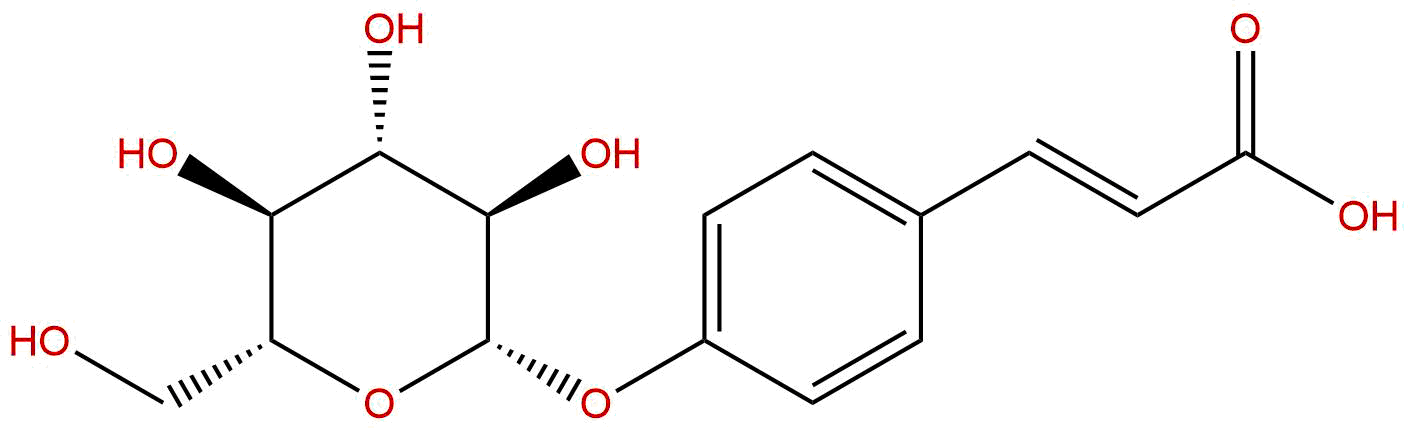


Product name: p-Coumaric acid 4-O-β-D-glucopyranoside
Synonym name: 4-O-β-D-Glucopyranosyl-trans-p-coumaric acid;14364-05-7
Catalogue No.: BP2318
Cas No.: 117405-49-9
Formula: C15H18O8
Mol Weight: 326.301
Botanical Source:
Type of Compound: Coumarins
Purity: 95%~99%
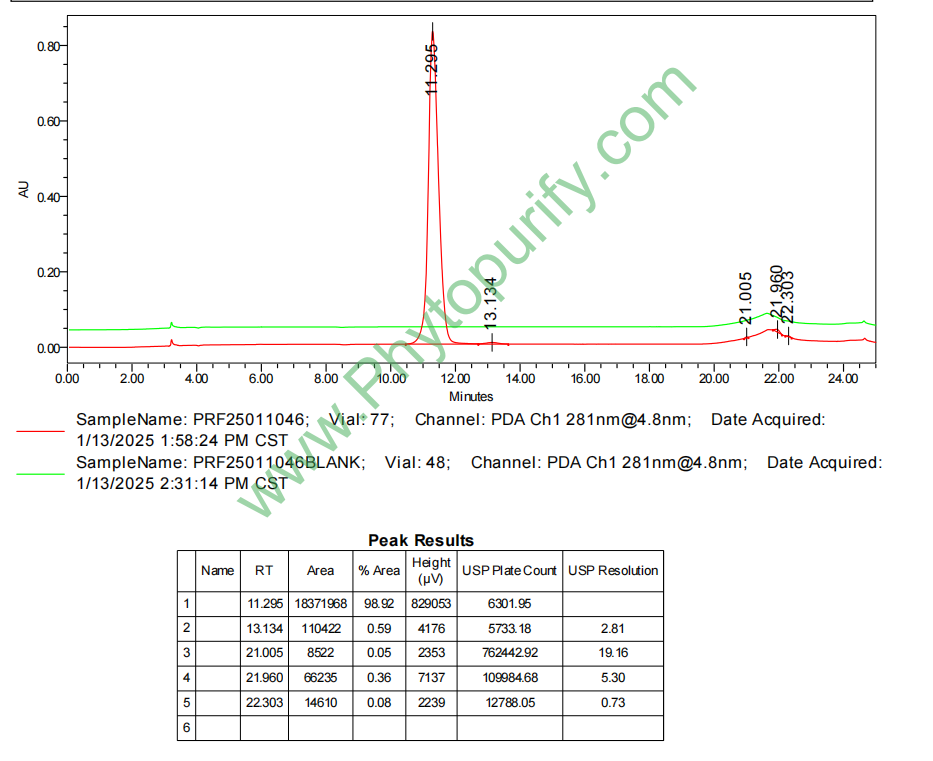
Analysis Method: HPLC-DAD or/and HPLC-ELSD
Identification Method: Mass, NMR
Packing: Brown vial or HDPE plastic bottle
Storage: Store in a well closed container, protected from air and light. Put into refrigerate or freeze for long term storage.
Whenever possible, you should prepare and use solutions on the same day. However, if you need to make up stock solutions in advance, we recommend that you store the solution as aliquots in tightly sealed vials at -20℃. Generally, these will be useable for up to two weeks.
The product could be supplied from milligrams to grams
Inquire for bulk scale.
For Reference Standard and R&D, Not for Human Use Directly.
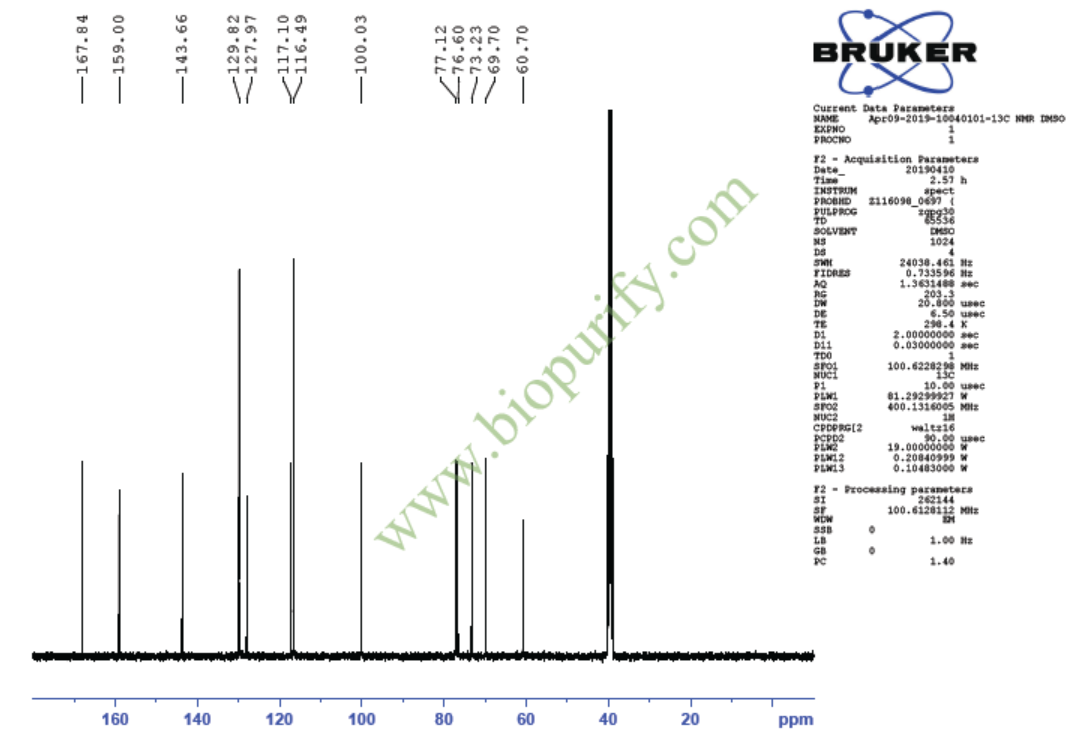
NMR of trans-p-Coumaric acid 4-O-β-D-glucopyranoside
HPLC of p-Coumaric acid 4-O-β-D-glucopyranoside
Storage conditions:Short-term storage at 2~8℃, long-term storage at -20 ~ -80℃
136.6800
-.1781
-2.6191
14.5817
.6666
.0967
Low
53.2371
3.4511
Yes
No
No
No
No
No
0.0
Yes
Yes
Yes
Yes
Natural products, as an important source of drug discovery, play an irreplaceable role in the long history of human struggle against diseases. Phenolic acid compounds are a widely present class of secondary metabolites in the plant kingdom, which have attracted much attention due to their diverse biological activities and relatively low toxicity. Among them, p-Coumaric acid, as a common derivative of hydroxycinnamic acid, is abundant in fruits, vegetables, and grains and has been proven to have various pharmacological effects such as antioxidant, anti-inflammatory, antimicrobial, and cardioprotective effects. However, naturally occurring phenolic acid compounds often exist in a bound state, with glycosylation being an important modification method to enhance their water solubility, stability, and bioavailability.
P-Coumaric acid-4-O - β - D-glucopyranoside (CAS number: 117405-49-9) is a glycoside compound formed by connecting coumaric acid and glucose molecules through a β - glycosidic bond at the 4-hydroxy position. This compound usually exists as a storage and transport form of coumaric acid in plants, and releases active aglycones through enzymatic interpretation under specific conditions. In recent years, with the in-depth study of the biological activity of glycosides in natural products, coumarin-4-glucoside has gradually transformed from a common plant metabolite to a research hotspot with potential medicinal value. Especially in the field of inflammatory bowel disease (IBD), particularly in the treatment of colitis, this compound has demonstrated remarkable intervention potential.
Colitis is a digestive system disease characterized by chronic and recurrent inflammation of the colonic mucosa. Its pathogenesis is complex, involving genetic susceptibility, dysbiosis of the gut microbiota, abnormal activation of the immune system, and environmental factors. The current clinical treatment mainly relies on aminosalicylic acid preparations, immunosuppressants, and biologics, but these drugs have limitations such as large individual differences in efficacy, significant long-term side effects, and high costs. Therefore, it is of great practical significance to search for efficient and low toxicity new therapeutic molecules from natural products. Xiangdousuan-4-glucoside provides a new approach for drug development in colitis due to its unique chemical structure and multi-target action characteristics. This article will systematically review the chemical properties, plant sources, pharmacological activities, mechanisms of action, and medicinal characteristics of the compound, aiming to provide comprehensive references for in-depth research in related fields.
The chemical structure of coumarin-4-glucoside consists of two parts: the glycoside part is trans-p-Coumaric acid, and the sugar part is β - D-glucopyranose. Both are connected to the 4-hydroxy group of coumaric acid benzene ring through glycosidic bonds. The system name of this compound is 4-O - β - D-glucosyl-trans-4-coumaric acid, and its double bond configuration is trans (E configuration), which is the most common stable configuration of coumaric acid and its derivatives in nature. Structurally, the molecule possesses dual characteristics of phenolic acid and glycoside: the phenolic acid moiety provides the potential to interact with multiple biological targets, while the introduction of the glucose group significantly alters its physicochemical properties.
In terms of physical and chemical properties, coumarin-4-glucoside has a molecular weight of 326.3010 g/mol and belongs to the class of small molecule glycosides. Its lipophilic water partition coefficient (LogP) is -0.1781, indicating that the compound has strong hydrophilicity, which is closely related to the presence of multiple hydroxyl groups (phenolic hydroxyl and multiple alcohol hydroxyl groups on the sugar ring) and a carboxylic acid group in the molecule. The high water solubility (14.5817 mg/mL) makes it easy to dissolve and disperse in physiological environments, which is beneficial for the development of oral formulations. The topological polar surface area (TPSA) is 136.6800 Å ², which is higher than the commonly believed passive diffusion threshold (about 140 Å ²), indicating that the compound may be difficult to cross the cell membrane through simple passive diffusion, and its transmembrane transport may depend on specific transport proteins or endocytosis mechanisms.
It is worth noting that the blood-brain barrier (BBB) penetration assessment shows that the compound has low penetration, which is a favorable feature for treating peripheral diseases such as colitis and can reduce potential side effects related to the central nervous system. In addition, the hERG inhibition risk assessment was negative, and the Ames test result was 0.0, indicating that the compound has a low risk of cardiac toxicity and genetic toxicity. These pharmacological parameters provide a positive chemical basis for the further development of coumarin-4-glucoside as an oral candidate drug.
Xiangdousuan-4-glucoside is widely distributed in the plant kingdom, but its content is usually low, mainly found in some medicinal and edible plants. The reported plant sources containing this compound include but are not limited to Perilla frutescens, Scutellaria baicalensis, Salvia miltiorrhiza, Lonicera japonica, as well as various berry plants such as blueberries (Vaccinium spp.) and strawberries (Fragaria × ananassa). In addition, the presence of this glycoside has also been detected in the bran of some grains such as wheat (Triticum aestivum) and corn (Zea mays). It is worth noting that this compound often coexists with other glycoside forms of coumaric acid in plants, such as isomers of 4-O - β - D-glucoside or different glycosylation forms, and its content is influenced by various factors such as plant variety, growth stage, environmental stress, and processing methods.
The extraction of coumarin-4-glucoside from plant materials usually follows the classic extraction strategy of natural glycoside compounds. Due to the good water solubility of the compound, traditional solvent extraction methods often use water or alcohol water mixed solvents of different concentrations (such as methanol water, ethanol water systems) as extraction media. In order to improve extraction efficiency and selectivity, modern extraction techniques such as ultrasound assisted extraction (UAE), microwave-assisted extraction (MAE), and pressurized liquid extraction (PLE) have been successfully applied. For example, using a 60% ethanol aqueous solution for ultrasonic extraction at 40-50 ℃ for 30 minutes can achieve a high extraction rate. After concentration of the extract, preliminary purification steps are usually required, such as liquid-liquid extraction (using ethyl acetate or n-butanol to remove lipophilic impurities) or macroporous adsorption resin column chromatography (such as D101 resin), to enrich the target glycosides.
Further separation and purification depend on the combined application of multiple chromatographic techniques. Preparation based high-performance liquid chromatography (Prep-HPLC) is the most effective method for obtaining high-purity coumarin-4-glucoside. It often uses a reverse phase C18 chromatography column and gradient elution with acetonitrile water or methanol water (containing a small amount of formic acid or acetic acid) as the mobile phase. In addition, high-speed countercurrent chromatography (HSCCC), as a liquid-liquid distribution chromatography technique, has shown unique advantages in separating glycosides with similar polarity. The structural identification of the final product usually requires the use of nuclear magnetic resonance spectroscopy (NMR, including 1H-NMR, 13C-NMR, and two-dimensional spectra) and high-resolution mass spectrometry (HR-MS) techniques to confirm the connection position of glycosidic bonds (4-O - β - D -), the configuration of sugars (β - D-glucopyranose), and the geometric configuration of double bonds (trans).
In recent years, research on the pharmacological activity of coumarin-4-glucoside has gradually deepened, especially in the areas of anti-inflammatory and intestinal protection, where significant progress has been made. Existing evidence suggests that this compound exhibits positive intervention effects in various inflammatory models, with colitis related research being the most systematic and in-depth.
In vitro cell models, coumarin-4-glucoside can significantly inhibit the inflammatory response of intestinal epithelial cells (such as Caco-2 and HT-29 cell lines) induced by lipopolysaccharide (LPS) or tumor necrosis factor - α (TNF - α). Specifically, it manifests as reducing the secretion levels of pro-inflammatory cytokines such as interleukin-6 (IL-6), interleukin-1 β (IL-1 β), and TNF - α; Inhibit the expression of cyclooxygenase-2 (COX-2) and inducible nitric oxide synthase (iNOS); Reduce the production of reactive oxygen species (ROS). These effects suggest that the compound can block the cascade amplification of inflammatory signals from multiple levels.
In an in vivo animal model, coumarin-4-glucoside has a clear protective effect on experimental colitis induced by dextran sulfate sodium (DSS) in mice. Oral administration of this compound (usually at a dose range of 20-100 mg/kg/day) can significantly alleviate typical symptoms such as weight loss, increased disease activity index (DAI), and shortened colon length in model mice. Histopathological analysis showed that the colon mucosal structural damage, inflammatory cell infiltration, and crypt destruction in the treated group of mice were significantly reduced. In addition, the compound can effectively restore intestinal barrier function, manifested by upregulating the expression of tight junction proteins (such as Occludin, Claudin-1, ZO-1), reducing intestinal permeability, and thus reducing bacterial endotoxin translocation.
In addition to its direct anti-inflammatory effect, coumarin-4-glucoside has also been found to regulate the composition of gut microbiota. In DSS induced colitis models, treatment with this compound can increase the relative abundance of beneficial bacteria such as Lactobacillus and Bifidobacterium, while reducing the proportion of potential pathogenic bacteria such as Escherichia coli Shigella. This positive regulatory effect on the gut microbiota may be closely related to its mechanism of improving colitis symptoms.
In addition, preliminary studies suggest that coumarin-4-glucoside may have antioxidant stress and anti apoptotic activities. In the oxidative damage model, this compound can activate the nuclear factor E2 related factor 2 (NFE2L2/Nrf2) signaling pathway, upregulate the expression of a series of antioxidant enzymes such as heme oxygenase-1 HO-1 and quinone oxidoreductase NQO1, thereby enhancing the antioxidant defense ability of cells. At the same time, it can also inhibit the mitochondrial mediated apoptosis pathway, reduce excessive cell death of intestinal epithelial cells, and maintain the integrity of intestinal mucosa.
The pharmacological effects of coumarin-4-glucoside are not mediated by a single target, but reflect the typical characteristics of natural products with multiple targets and pathways. Based on existing research, its anti colitis effect involves the synergistic regulation of multiple key signaling pathways and molecular targets.
1. Regulating the TLR4/NF - κ B signaling pathway: Toll like receptor 4 (TLR4) is a key pattern recognition receptor that recognizes bacterial lipopolysaccharides (LPS) and plays a central role in the initiation of intestinal inflammation. Xiangdousuan-4-glucoside can directly or indirectly inhibit the activation of TLR4, thereby blocking downstream myeloid differentiation factor 88 (MyD88) - dependent signaling. This leads to a decrease in the activity of the I κ B kinase (IKK) complex, inhibiting the phosphorylation and degradation of nuclear factor kappa B inhibitory protein alpha (I κ B α), thereby preventing the translocation of transcription factor RELA (p65 subunit) to the nucleus. Ultimately, the transcription of NF - κ B target genes such as pro-inflammatory cytokines (TNF - α, IL-1 β, IL-6) and chemokines was significantly inhibited. RELA, as a key member of the NF - κ B family, is one of the core targets for this compound to exert anti-inflammatory effects.
2. Activate the Nrf2/ARE antioxidant pathway: Nuclear factor E2 related factor 2 (NFE2L2/Nrf2) is the main transcriptional regulator that cells use to respond to oxidative stress. Xiangdousuan-4-glucoside can promote the dissociation of Nrf2 from the cytoplasmic chaperone protein Keap1, stabilizing and translocating it into the nucleus, binding with antioxidant response elements (ARE), and initiating the gene expression of a series of downstream antioxidant enzymes and phase II detoxifying enzymes. This mechanism not only directly enhances the antioxidant capacity of colon tissue, but also indirectly exerts anti-inflammatory effects by inhibiting ROS mediated inflammatory signals (such as the NF - κ B pathway). Therefore, NFE2L2 is a key hub for the compound to achieve dual antioxidant anti-inflammatory effects.
3. Regulating NLRP3 inflammasome and CASP1: The inflammasome containing NLR family Pyron domain protein 3 (NLRP3) is an important component of the innate immune system, and its abnormal activation plays a crucial role in the pathogenesis of colitis. Xiangdouacid-4-glucoside can inhibit the assembly and activation of NLRP3 inflammasomes, thereby reducing the cleavage activation of cysteine aspartic protease 1 (CASP1). The decrease in activity of CASP1 directly leads to a reduction in the maturation and secretion of its substrates, pro-inflammatory cytokines IL-1 β and IL-18, thereby alleviating the inflammatory response. In addition, CASP1 is also involved in a pro-inflammatory cell death mechanism called "pyroptosis", so inhibiting CASP1 activity also helps protect intestinal epithelial cells from excessive cell death.
4. Affects the signal of farnesol X receptor (NR1H4/FXR): The farnesol X receptor (FXR, gene name NR1H4) is a bile acid activated nuclear receptor that plays an important role in maintaining intestinal homeostasis, regulating bile acid metabolism, and inhibiting inflammation. Research has shown that coumarin-4-glucoside may act as an indirect regulator of FXR, improving intestinal barrier function and inhibiting inflammation by restoring the suppressed FXR signal in colitis. The activation of FXR can induce the expression of antimicrobial peptides, regulate gut microbiota, and inhibit NF - κ B-mediated inflammatory responses.
5. Other potential targets: This compound may also exert a comprehensive effect by acting on other targets. For example, carboxylesterase 1 (CES1) is involved in the metabolism of various endogenous and exogenous substances, and changes in its activity may affect the inflammatory microenvironment. Protein kinase C alpha (PRKCA) is involved in cellular signal transduction and barrier function regulation. Lysophosphatidic acid receptor 2 (LPAR2) and sphingosine kinase 1 (SPHK1) are key nodes in the metabolism and function of lipid signaling molecules, closely related to cell proliferation, migration, and inflammation. Fatty acid amide hydrolase (FAAH) is involved in the regulation of the endogenous cannabinoid system, affecting pain and inflammation perception. The discovery of these targets suggests that the network of action of coumarin-4-glucoside is much more complex than currently understood and deserves further exploration.
The conversion of natural products into clinical drugs must undergo strict pharmacological evaluation. The preliminary pharmacological parameters of coumarin-4-glucoside have shown certain advantages, but there are also challenges that need to be overcome.
Physical and chemical properties and drug like properties: As mentioned earlier, the compound has high water solubility (14.58 mg/mL) and low LogP value (-0.18), which meets the basic requirements for solubility of oral drugs. Its molecular weight (326 Da) and number of hydrogen bond donors/acceptors (5 and 9, respectively) are both within the acceptable range of Lipinski's Rule of Five, although the TPSA is slightly higher, it is still within the acceptable boundary. Importantly, the low risk of hERG inhibition and negative Ames test provide initial assurance for its safety.
Pharmacokinetic characteristics: The pharmacokinetic studies of coumarin-4-glucoside in vivo are not yet sufficient, but based on its structural characteristics and related analogues, it can be inferred that after oral administration, the compound may undergo partial hydrolysis in the gastrointestinal tract, releasing coumarin glycosides. However, intact glycoside molecules may also be actively absorbed through glucose transporters in the intestine, such as SGLT1. The absorbed coumaric acid-4-glucoside and its metabolites (mainly coumaric acid and its further metabolites such as sulfate and glucuronic acid complexes) will be distributed throughout the body. Due to the low penetration of the blood-brain barrier, the distribution of the central nervous system is limited. In terms of metabolism, the liver and intestines are its main metabolic sites, involving hydrolysis, binding reactions (glucuronidation, sulfation), etc. The main excretion pathways may be urine and bile. It is worth noting that glycosylation is often considered a strategy to improve pharmacokinetics, as it can enhance the water solubility of compounds, prolong their duration of action, and potentially achieve colon targeted delivery, as the colon microbiota is rich in β - glucosidase, which can specifically hydrolyze glycosidic bonds and release active aglycones at the site of the lesion.
Potential challenges: Despite the optimistic outlook, the drug potential of this compound still faces challenges. Firstly, its oral bioavailability may be limited by intestinal metabolism and first pass effects, and needs to be improved through formulation techniques such as nanoemulsions, liposomes, and prodrug design. Secondly, as a glycoside, its metabolic stability in vivo needs to be systematically evaluated. In addition, long-term toxicology studies and more comprehensive safety evaluations (such as the impact on CYP450 enzyme systems) are still blank.
Xiangdousuan-4-glucoside, as a natural glycoside with multi-target action characteristics, has shown encouraging application prospects in the treatment of colitis. Its mechanism of action covers multiple aspects such as anti-inflammatory, antioxidant, repairing intestinal barrier, and regulating intestinal microbiota. This multi pronged mode of action perfectly fits the complex and variable pathological characteristics of colitis, and is expected to overcome the bottleneck of limited efficacy of existing single target drugs.
As a dietary supplement or functional food ingredient: Given that coumarin-4-glucoside naturally exists in various edible plants and has good initial safety, it has the potential to be developed as a dietary supplement or functional food ingredient for the adjuvant treatment of colitis or prevention in high-risk populations. Daily dietary intake or supplements may help maintain intestinal health and alleviate mild inflammation symptoms.
As a lead compound for structural optimization: The glycoside structure of this compound provides abundant modification sites for medicinal chemists. For example, chemical modifications can be made to the glucose group (such as introducing methyl, acetyl, etc.) to alter its lipid solubility and metabolic stability; Alternatively, it can be designed as a prodrug to achieve targeted release using colon specific enzymes such as azo reductase and glycosidase. In addition, exploring analogs of other sugar groups (such as galactose, xylose) or different linkage modes (such as alpha glycosidic bonds) may also reveal molecules with better activity.
Combination therapy strategy: Considering the complexity of treating colitis, the combination of coumarin-4-glucoside with other drugs such as 5-aminosalicylic acid, probiotics, or biologics is worth exploring. Its multi-target action characteristics may produce synergistic effects, while potentially reducing the dosage and side effects of existing drugs.
Future research directions: Although some progress has been made, there are still a large number of scientific problems that urgently need to be solved. Firstly, it is necessary to use gene knockout or knock in animal models to confirm the exact role of key targets such as TLR4, NFE2L2, CASP1 in mediating their in vivo pharmacological effects. Secondly, a systematic pharmacokinetic pharmacodynamic (PK-PD) correlation study should be conducted to clarify its active form (prototype or metabolite) and effective blood drug concentration. Thirdly, it is necessary to evaluate its long-term intervention effects in chronic colitis models and colitis related cancer models. Finally, high-quality and standardized clinical trials are essential for verifying their clinical value, determining the optimal dosage and administration regimen.
Xiangdousuan-4-glucoside, as an important phenolic acid glycoside in nature, is moving from basic chemical identification to in-depth pharmacological mechanisms and drug development. This article systematically reviews the research status of the compound in terms of chemical structure, plant origin, pharmacological activity, molecular mechanism, and drug properties, with a particular emphasis on its multi-target regulatory potential in the treatment of colitis. This compound forms a three-dimensional intestinal protective network by inhibiting the TLR4/NF - κ B and NLRP3/CASP1 inflammatory pathways, activating the Nrf2 antioxidant pathway, regulating FXR signaling, and improving intestinal microbiota. Its good water solubility, low toxicity risk, and potential colon targeting properties make it a highly valuable natural lead molecule for development.
However, the road from laboratory discovery to clinical application of coumarin-4-glucoside conversion is still long and challenging. Future research needs to validate its efficacy in more complex disease models, elucidate its complete pharmacokinetic profile in the human body, and optimize its pharmacological properties through pharmacochemical means. With the continuous deepening of understanding of the interaction between gut microbiota and hosts, as well as the development of new drug delivery systems, we have reason to believe that this ancient plant metabolite is expected to bring new treatment options for patients suffering from colitis in the near future. The in-depth study of coumarin-4-glucoside not only helps to reveal the material basis of traditional medicinal plants, but also provides valuable natural inspiration for the discovery of modern innovative drugs.
