Introduction/Overview
Flavonoids are a class of secondary metabolites of C6-C3-C6 flavonoids that are widely present in nature and have attracted much attention for their diverse biological activities. 4 '- Hydroxyflavanone (CAS number: 6515-37-3), as a member of the flavanone family, is a relatively simple monohydroxyflavanone. Its molecular structure introduces a key 4 '- phenolic hydroxyl group on the basic skeleton of the flavanone, which not only affects its physicochemical properties, but also endows it with unique chemical reactivity and potential biological functions. Although its popularity is not as high as classical polyphenolic flavonoids such as quercetin and apigenin, in recent years, with the deepening of natural product research and the development of modern pharmacological technology, 4 '- hydroxyflavanone has shown remarkable potential as a lead compound or active molecule in fields such as antioxidant, anti-inflammatory, anti-tumor, neuroprotective, and metabolic disease intervention. This article aims to systematically review the chemical properties, natural sources, pharmacological activities, mechanisms of action, and pharmacological properties of 4 '- hydroxyflavanone, in order to provide comprehensive scientific references for the in-depth research and future development of this compound.
Chemical structure and physicochemical properties
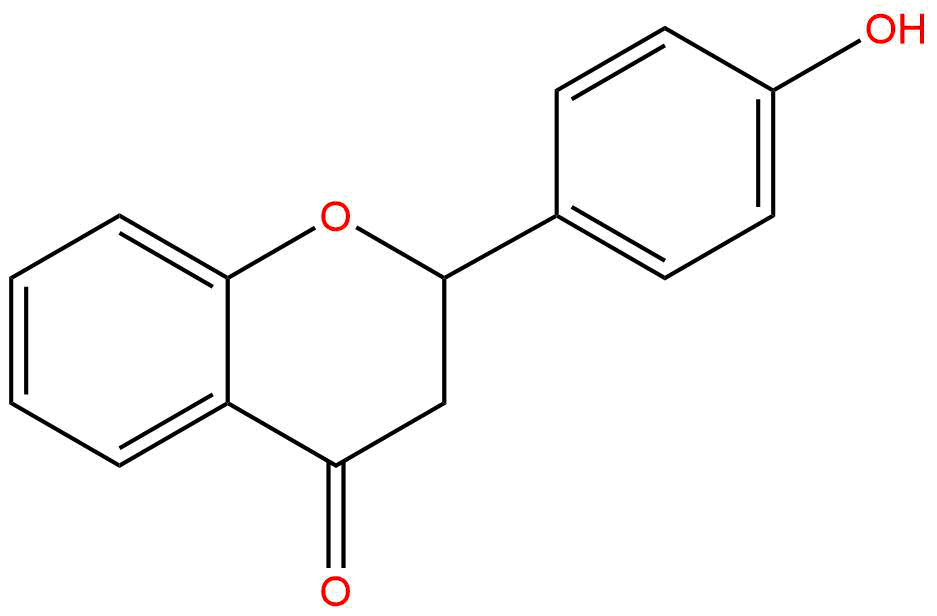
The chemical name of 4 '- hydroxyflavanone is 2,3-dihydro-2-phenyl-4H-1-benzopyran-4-one-4' - ol, with a molecular formula of C15H12O3 and a molecular weight of 240.2580. Its core structure is dihydroflavone, which is a partially saturated state with a single bond between the 2nd and 3rd positions of the C ring. This gives the molecule a chiral center (C-2 position) and usually exists in the form of (±) racemic form. The A and B rings are connected by a saturated three carbon chain (C ring). Compared with the parent flavanone, its most significant structural feature is the substitution of a hydroxyl group (- OH) at the 4 '- position (para) of the B ring.
This structure determines its fundamental physicochemical properties. The calculated and experimentally measured lipid water partition coefficient (LogP) is approximately 2.63, indicating that the compound has moderate lipophilicity, which is beneficial for transmembrane transport and absorption. Its topological polar surface area (TPSA) is 46.53 Å ², which is relatively small and further supports its good membrane permeability. The water solubility data (about 0.12 mg/mL) shows that it belongs to the category of slightly soluble to poorly soluble compounds, which to some extent limits its direct application in aqueous systems. However, it can be improved through formulation methods such as cyclodextrin inclusion, nanomaterialization, prodrug modification, etc. It is worth noting that its predicted blood-brain barrier (BBB) permeability is "high", which suggests its unique advantages in treating central nervous system diseases by directly targeting brain targets. In addition, preliminary pharmacological warning parameters showed no significant inhibition of hERG potassium channels (hERG inhibition: No), and the Ames test result was negative (0.0), indicating a low potential risk of arrhythmia and genetic toxicity, laying a good foundation for subsequent safety evaluation.
Plant sources and extraction methods
4 '- Hydroxyflavanone is not a widely abundant compound, but rather an intermediate or specific component in the flavonoid metabolic pathway, distributed in various plants. It is commonly found in the Rutaceae, Fabaceae, Asteraceae, and some medicinal plants. For example, in traditional Chinese medicine licorice(Glycyrrhiza The root and stem of spp Citrus genus(Citrus Spp.) Peel and leaves Psoralea(Psoralea corylifolia)The seeds and some propolis There have been reports of detection or isolation in plant sources. In these plants, it often coexists with other flavonoids and coumarin compounds.
The extraction method follows the general principles of natural product chemistry.Solvent extraction method It is the most commonly used preliminary enrichment method, which uses methanol, ethanol, acetone or their aqueous solutions to leach or reflux extract dried and crushed plant materials based on the principle of "similar solubility". Due to the phenolic hydroxyl group of 4 '- hydroxyflavanone, using a medium polarity solvent (such as 70-80% ethanol) can usually achieve good extraction efficiency. Subsequently, multiple chromatographic techniques are required for separation and purification.Silica gel column chromatography It is a conventional method, using gradient elution of petroleum ether ethyl acetate or chloroform methanol in different ratios.Preparation type high-performance liquid chromatography Prep HPLC is a key step in obtaining high-purity monomers, often using a reverse phase C18 column with methanol water or acetonitrile water (pH adjusted with a small amount of formic acid or acetic acid) as the mobile phase for separation. Modern technology such as High-speed countercurrent chromatography HSCCC, due to its advantages of irreversible adsorption and high recovery rate, is also suitable for the preparation of such medium polarity flavanones. Structural identification relies on Nuclear Magnetic Resonance(1H NMR, 13C NMR)、mass spectrometry(MS, HR-MS) and ultraviolet spectrum Spectral techniques such as UV spectroscopy, whose spectral characteristics (such as Band I absorption due to the 4 '- hydroxy substitution of the B ring in UV spectra) have indicative significance for rapid identification.
Pharmacological activity research
A large number of in vitro and partially in vivo studies have shown that 4 '- hydroxyflavanone has multiple biological activities.
1. Antioxidant activity: As a phenolic compound, its 4 '- hydroxyl group is an active site that provides hydrogen atoms or electrons, which can effectively scavenge free radicals (such as DPPH, ABTS ⁺ free radicals, superoxide anions, etc.) and exhibit metal ion chelating ability. Although its antioxidant efficacy is not as good as that of polyhydroxyflavonoids, its structure is simple and easy to chemically modify to enhance its activity.
2. Anti inflammatory effect: In the lipopolysaccharide (LPS) - induced macrophage (such as RAW264.7) inflammation model, 4 '- hydroxyflavanone can dose dependently inhibit the production of nitric oxide (NO) and prostaglandin E2 (PGE2), and downregulate the protein and mRNA expression of inducible nitric oxide synthase (iNOS) and cyclooxygenase-2 (COX-2). Meanwhile, it can inhibit the release of pro-inflammatory cytokines such as tumor necrosis factor - α (TNF - α), interleukin-6 (IL-6), and IL-1 β.
3. Antitumor activity: Research shows that 4 '- hydroxyflavanone has growth inhibition and apoptosis promoting effects on many cancer cell lines (such as breast cancer MCF-7, lung cancer A549, liver cancer HepG2, colon cancer HT-29, etc.). The mechanism involves inducing cell cycle arrest (often in G1 or G2/M phase), activating caspase cascade reactions, regulating the imbalance of Bcl-2/Bax ratio, and inducing a decrease in mitochondrial membrane potential. In addition, it can also inhibit the migration and invasion of certain cancer cells, indicating its potential anti metastatic ability.
4. Neuroprotective effect: Thanks to its excellent BBB permeability and antioxidant properties, 4 '- hydroxyflavanone has attracted much attention in the field of neuroprotection. In cell models induced by β - amyloid protein (A β), hydrogen peroxide (H ₂ O ₂) damage, or glutamate excitotoxicity, it can improve neuronal survival, reduce lactate dehydrogenase (LDH) leakage, alleviate oxidative stress and mitochondrial dysfunction. In animal models of Alzheimer's disease, preliminary studies have shown that it can improve cognitive impairment.
5. Metabolic regulatory effect: Recent studies have found that 4 '- hydroxyflavanone has the potential to regulate metabolic disorders. In insulin resistance cell models or high-fat diet induced obese mice models, it can improve glucose uptake, enhance insulin sensitivity, and regulate the expression of genes related to lipid metabolism, showing the prospect of anti diabetes and anti obesity.
6. Antibacterial and antiviral activity: Some studies have reported that it has certain antibacterial (such as against Staphylococcus aureus) and antiviral (such as against herpes simplex virus) activities, but its efficacy is usually moderate, and the mechanism needs to be further explored.
Mechanism of action and molecular targets
The multiple pharmacological effects of 4 '- hydroxyflavanone stem from its regulation of multiple signaling pathways within cells, and its targets have the characteristics of pleiotropy and networking.
1. Inhibition of nuclear factor kappa B (NF - κ B) pathway: This is one of the core mechanisms of its anti-inflammatory and partially anti-tumor effects. 4 '- Hydroxyflavanone can inhibit the phosphorylation and degradation of I κ B α, thereby preventing the nuclear translocation of NF - κ B p65 subunit and preventing it from initiating the transcription of numerous downstream pro-inflammatory factors, cell survival factors, and proliferation related genes.
2. Regulation of mitogen activated protein kinase (MAPK) pathway: It can regulate the phosphorylation levels of MAPK family members (ERK, JNK, p38). In different cellular contexts, it may inhibit the excessive activation of ERK (related to proliferation) or activate the JNK/p38 pathway (related to stress-induced apoptosis), thereby achieving precise regulation of cell fate.
3. Activation of the nuclear factor E2 related factor 2/antioxidant response element (Nrf2/ARE) pathway: By promoting the dissociation and translocation of Nrf2 from Keap1 to the nucleus, 4 '- hydroxyflavanone can upregulate the expression of a series of phase II detoxifying enzymes and antioxidant proteins (such as HO-1, NQO1), which are key molecular basis for its antioxidant and cell protective effects.
4. Intervention of phosphatidylinositol 3-kinase/protein kinase B (PI3K/Akt) pathway: This pathway is closely related to cell survival, proliferation, and metabolism. 4 '- Hydroxyflavanone can induce tumor cell apoptosis by inhibiting the abnormal phosphorylation of Akt, blocking its downstream pro survival signals. Meanwhile, in terms of metabolism, it may improve insulin resistance by regulating Akt mediated GLUT4 translocation.
5. Cell cycle and apoptosis related targets: It can upregulate pro apoptotic proteins (such as Bax, Bad), downregulate anti apoptotic proteins (such as Bcl-2, Bcl xL), and activate caspase-3, -8, -9. At the same time, cell cycle arrest is induced by regulating cell cycle proteins (such as cyclin D1, cyclin B1) and cyclin dependent kinase inhibitors (such as p21, p27).
6. Epigenetic targets: The latest research suggests that flavonoids may affect the activity of histone deacetylases (HDACs) or DNA methyltransferases (DNMTs). Whether 4 '- hydroxyflavanones have similar epigenetic regulatory effects is a new direction worth exploring.
Evaluation of drug properties and pharmacokinetics
Although 4 '- hydroxyflavanones exhibit a wide range of biological activities, their development from lead compounds to drugs still requires systematic pharmacological evaluation.
Absorption, distribution, metabolism, excretion (ADME):
* Absorption: Its moderate LogP value and small TPSA indicate good oral absorption potential, possibly through passive diffusion through intestinal epithelial cells. But its poor water solubility may be the main factor limiting its bioavailability.
* Distribution: The predicted high BBB permeability is its significant advantage, indicating that the drug can effectively distribute to the central nervous system. The binding rate with plasma proteins still requires experimental data, which will affect its free blood drug concentration and distribution volume.
* Metabolism: As a flavanone, its main experiences in the body are II combined reaction Including glucuronidation and sulfation, especially at the phenolic hydroxyl position. In addition, the liver cytochrome P450 enzyme system (CYP450) may be involved in its oxidative metabolism. Metabolites usually have increased polarity and are easily excreted, but they may also lead to loss of activity. Studying its specific metabolic enzyme subtypes (such as UGT, SULT, CYP isoenzymes) is crucial for predicting drug interactions.
* Excretion: Metabolites are mainly excreted through the kidneys with urine, and the prototype drug may also be partially excreted through bile.
Challenges and optimization strategies for drug development:
1. Water solubility and bioavailability: Low water solubility is the primary challenge. Can be used Nanocrystal technology、liposome、Solid dispersion Or with Cyclodextrin forms inclusion complexes To improve its solubility and dissolution rate.
2. Metabolic stability: Phenolic hydroxyl groups are the "soft ribs" of metabolism. Through Structural modification Such as hydroxymethylation, introducing fluorine atoms, or preparing them into Prodrug(such as ester prodrugs, which hydrolyze and release the original drug in the body), can slow down binding metabolism and prolong half-life.
3. Targeted: To improve therapeutic efficacy and reduce systemic side effects, it is possible to develop Targeted delivery system For example, nanoparticles modified with ligands such as folate and peptides can be used to deliver drugs specifically to tumor or inflammatory sites.
4. Pharmacokinetic studies: It is urgent to conduct systematic pharmacokinetic studies in rodent and even higher-level animal models to clarify key parameters such as absolute bioavailability, half-life (t1/2), area under the blood concentration time curve (AUC), clearance rate (CL), etc.
Clinical application prospects and prospects
The clinical application prospects of 4 '- hydroxyflavanone are based on its multi-target and multi pathway characteristics, especially in the treatment of complex diseases, which may have advantages.
Potential application directions:
1. Adjuvant treatment for neurodegenerative diseases: For Alzheimer's disease, Parkinson's disease, etc., its antioxidant, anti-inflammatory, and direct neuroprotective effects, combined with good BBB penetration, make it promising for development as an oral neuroprotective agent or adjuvant therapy drug.
2. Diseases related to metabolic syndrome: It can be used as an insulin sensitizer and lipid metabolism regulator, or for the prevention and early intervention of type 2 diabetes and non-alcoholic fatty liver disease, and may be used as a supplement or combination of existing drugs.
3. Cancer chemoprevention and adjuvant therapy: Its low toxicity and multi-target anti-tumor properties make it potential for cancer chemoprevention (especially for high-risk populations) or in combination with conventional chemotherapy/radiotherapy to enhance sensitivity and reduce toxicity.
4. Inflammatory related diseases: Chronic arthritis, colitis, etc. have clear anti-inflammatory mechanisms and can be considered for development as local or systemic anti-inflammatory drugs.
Future research prospects:
1. In depth mechanism exploration: Utilize Chemical proteomics(such as drug affinity target stability screening, DARTS) and Network Pharmacology Based on experimental verification, the system discovered its direct target and drew a more accurate "compound target pathway disease" network.
2. Structural optimization and structure-activity relationship (SAR) research: Using it as the parent nucleus, the system undergoes structural modifications (such as introducing different substituents into the A and B rings, and modifying the C ring) to systematically study SAR, aiming to obtain derivatives with stronger activity, more stable metabolism, and higher selectivity.
3. Advanced delivery system development: Combine Nanomedicine and Biomaterials Develop intelligent responsive (such as pH responsive, enzyme responsive) delivery systems to achieve precise drug release at the lesion site.
4. Preclinical and clinical studies: Complete the system Preclinical safety evaluation(Acute toxicity, chronic toxicity, reproductive toxicity, etc.), and based on this, design a reasonable clinical trial plan to gradually promote its clinical translation.
Conclusion
4 '- Hydroxyflavanone, as a naturally occurring flavanone molecule with a clear structure, has demonstrated solid activity in various pharmacological fields such as antioxidant, anti-inflammatory, anti-tumor, neuroprotective, and metabolic regulation due to its chemical properties endowed by its 4' - phenolic hydroxyl group. Its mechanism of action involves the regulation of key signaling pathways such as NF - κ B, MAPK, Nrf2, PI3K/Akt, reflecting the typical characteristics of multi-target action of natural products. Despite facing challenges such as water solubility and metabolic stability in drug development, these obstacles are expected to be overcome through the optimization of modern medicinal chemistry and pharmacology methods. In the future, through interdisciplinary deep integration, the molecular target network will be deeply revealed, efficient derivatives will be rationally designed, and intelligent delivery strategies will be developed. 4 '- hydroxyflavanone and its derivatives are expected to move from the laboratory to clinical practice, providing new candidate drugs or lead compounds for the treatment of major human health problems such as neurodegenerative diseases, metabolic diseases, and cancer, demonstrating the sustained vitality of natural products in modern drug development.