| Catalog No | Package | Original Price | Price | Inventory | Quantity | Operating |
|---|---|---|---|---|---|---|
| BP3874-5mg | 5mg | $260.00 | Sign in |
|


Storage conditions:Short-term storage at 2~8℃, long-term storage at -20 ~ -80℃
230.7400
-.3746
-.4744
1.3024
.6415
.5144
Low
78.5953
4.7166
Yes
No
No
No
Yes
No
0.6
Yes
No
Yes
No
Natural products, as an important source of drug discovery, play an irreplaceable role in human health maintenance and disease treatment. Among them, flavonoids have attracted much attention due to their widespread biological activity and relatively low toxicity. Apigenin, as a typical flavonoid glycoside, is renowned for its significant anti-inflammatory, antioxidant, and anti-tumor activities. However, naturally occurring apigenin mostly exists in the form of glycosides, and glycosylation modification not only affects its physicochemical properties such as solubility and stability, but also profoundly alters its bioavailability and pharmacological activity spectrum. Among the numerous apigenin glycosides, a class of compounds with a dual carbon glycoside (C-glycoside) structure is particularly unique. Due to their stable C-C bond connection, they are not easily hydrolyzed by acids or degraded by intestinal enzymes, exhibiting different pharmacokinetic characteristics and biological activities from traditional O-glycosides.
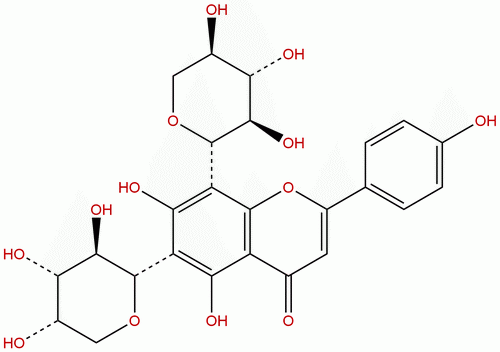
Apigenin-6-C - α - L-arabinopyranosyl-8-C - β - D-xylopyranoside (hereinafter referred to as A6C8X) is one of the representative members of this class of dual carbon glycoside flavonoids. This compound forms a unique disaccharide chain structure by connecting an alpha-L-pyranose arabinose group and a beta-D-pyranose xylose group at positions 6 and 8 of the A ring of apigenin, respectively. This structure endows the molecule with potential application value in antioxidant, skin protection, and cell protection. In recent years, with the deepening of the exploration of trace component activity in natural products, A6C8X has gradually entered the field of researchers' vision, especially in the areas of oxidative stress-related diseases and skin aging intervention, showing remarkable prospects. This article will provide a systematic review of the research progress of A6C8X from the aspects of chemical structure, plant origin, pharmacological activity, molecular mechanism, medicinal properties, and clinical application prospects, in order to provide reference for the in-depth development and utilization of this compound.
The chemical structure of A6C8X belongs to the flavonoid dicarboside class, and its parent nucleus is apigenin (5,7,4 '- trihydroxyflavone). Unlike common apigenin O-glycosides (such as apigenin 7-O-glucoside), the two glycosides of A6C8X are directly connected to the A ring of the flavonoid nucleus through C-C bonds. Specifically, the alpha-L-arabinopyranosyl group is connected at position 6, and the beta-D-xylopyranoside group is connected at position 8. This dual C-glycoside structure is relatively rare in nature, and its formation typically involves complex biosynthetic pathways catalyzed by specific C-glycosyltransferases.
From the perspective of physical and chemical properties, the molecular formula of A6C8X is C ₂₅ H ₂₆ O ₁ VNet, with a molecular weight of 534.47 g/mol. The lipid water partition coefficient (LogP) of the compound is -0.3746, indicating that it has good hydrophilicity, which is closely related to the presence of multiple hydroxyl groups and two five carbon sugar groups in the molecule. The polar surface area (TPSA) is as high as 230.74 Å ², further confirming its strong polarity and good water solubility (with a water solubility parameter of 1.3024 mg/mL). These physicochemical characteristics determine the absorption, distribution, metabolism, and excretion behavior of A6C8X in living organisms. For example, high polarity and low LogP values typically mean that the compound is difficult to passively diffuse through the lipid bilayer of the cell membrane, and its transmembrane transport may rely more on carrier mediated active transport or endocytosis. In addition, high TPSA values also indicate a lower ability to cross the blood-brain barrier, which to some extent limits its application in central nervous system diseases, but also reduces the potential risk of neurotoxicity.
It is worth noting that the stability of C-glycosidic bonds is one of the key features that distinguishes A6C8X from O-glycosides flavonoids. Under the action of acidic gastric juice or intestinal microbial enzymes, O-glycosidic bonds are prone to hydrolysis, releasing glycosides; The C-glycosidic bond is relatively stable and can be absorbed into the bloodstream in its complete glycosidic form. This characteristic suggests that A6C8X may exert more persistent biological effects in its prototype form in vivo, but its metabolic pathways and final excretion form still require further research. In addition, the compound exhibits typical flavonoid absorption characteristics in the UV spectral region, typically with strong absorption around 270 nm (band II, A-ring benzoyl) and 340 nm (band I, B-ring cinnamoyl), which facilitates its qualitative and quantitative analysis.
A6C8X, as a naturally occurring flavonoid glycoside, is mainly distributed in certain medicinal and edible plants. According to existing literature reports, this compound was first isolated and identified from Asteraceae plants, for example, in Chrysanthemum morifolium The flowers of (Hangbai Chrysanthemum) and Artemisia It has been found in plants of the genus (Artemisia). In addition, in leguminous plants such as Glycyrrhiza uralensis Some parts of licorice, as well as some traditional Chinese medicines such as Scutellaria baicalensis The presence of this compound was also detected in the extract of Scutellaria baicalensis. It is worth noting that the content of A6C8X in these plants is usually low, belonging to trace or trace components, which poses certain challenges for its large-scale acquisition.
For the extraction of A6C8X, researchers typically use classical solvent extraction methods combined with modern chromatographic separation techniques. Due to the high polarity of the compound, commonly used extraction solvents include methanol, ethanol, acetone water mixed systems, or hot water extraction. In order to improve extraction efficiency, green extraction techniques such as ultrasound assisted extraction, microwave-assisted extraction, or enzyme assisted extraction have also been attempted to be applied. For example, using a 70% ethanol aqueous solution for ultrasonic extraction at 50 ℃ can significantly improve the dissolution rate of flavonoid carbon glycosides. After filtration and concentration, the extraction solution usually needs to undergo multi-step column chromatography separation and purification, including macroporous adsorption resin (such as D101, HP-20), polyamide column chromatography, silica gel column chromatography, and preparative high-performance liquid chromatography (Prep HPLC). Among them, using a C18 reverse phase silica gel column and gradient elution with methanol water or acetonitrile water system is an effective method for separating and purifying A6C8X. Due to the similarity in polarity between this compound and structurally similar flavonoid carbon glycosides (such as apigenin 6,8-di-C-glucoside), separation is difficult and requires precise optimization of chromatographic conditions.
From the perspective of plant chemical taxonomy, the distribution of A6C8X has a certain regularity. Plants rich in this type of compound often have high antioxidant and anti-inflammatory activity, which is consistent with the efficacy of many traditional Chinese medicine herbs that clear heat, detoxify, and improve eyesight. However, due to its extremely low content in plants (usually less than 0.1% of dry weight), extracting pure products directly from plants is costly and difficult to meet the needs of large-scale pharmacological research and drug development. Therefore, in recent years, researchers have begun to explore the use of biotechnology methods, such as plant cell suspension culture, hairy root culture, and even the reconstruction of its biosynthetic pathway in microbial hosts (such as yeast and Escherichia coli) through synthetic biology methods, in order to achieve sustainable production of A6C8X. Although these methods are still in the laboratory research stage, they provide new ideas for the future large-scale supply of this compound.
The pharmacological activity research of A6C8X is still in the early exploration stage, but there is evidence that it has multiple biological activities, especially outstanding in antioxidant and skin protection.
antioxidant activity It is one of the core pharmacological effects of A6C8X. Multiple in vitro chemical experiments have shown that the compound has significant scavenging ability against DPPH free radicals, ABTS cationic free radicals, and superoxide anion free radicals. Its half maximal scavenging concentration (IC ₅₀) is comparable or slightly better than positive controls such as vitamin C or Trolox. In cell models, A6C8X can effectively reduce intracellular reactive oxygen species (ROS) levels induced by hydrogen peroxide (H ₂ O ₂), tert butyl hydroperoxide (t-BHP), or ultraviolet light (UVB). For example, in human keratinocytes (HaCaT), A6C8X pretreatment can significantly inhibit the ROS burst caused by UVB irradiation and reduce the production of lipid peroxidation product malondialdehyde (MDA). In addition, the compound can protect mitochondrial membrane potential, inhibit the release of cytochrome c, and thereby alleviate oxidative stress-induced cell apoptosis.
Skin protection and anti-aging effects It is another highly anticipated active field of A6C8X. Given its strong antioxidant capacity, researchers speculate that it has a protective effect during skin photoaging and natural aging processes. Experimental evidence shows that A6C8X can inhibit the expression of UVB induced matrix metalloproteinases (MMPs), particularly MMP1 (collagenase) and MMP3 (matrix metalloproteinase). The excessive activation of MMPs is a key factor leading to the degradation of skin collagen, skin sagging, and the formation of wrinkles. By inhibiting MMPs, A6C8X helps maintain the integrity of the extracellular matrix in skin cells. At the same time, the compound can also promote the synthesis of type I procollagen, demonstrating potential for anti photoaging. In addition, A6C8X also has a certain inhibitory effect on the activity of tyrosinase (TYR), suggesting that it may have whitening effects and can be used to improve pigmentation.
anti-inflammatory activity Preliminary studies have shown that A6C8X can inhibit the production of nitric oxide (NO) and prostaglandin E ₂ (PGE ₂) in macrophages (such as RAW264.7 cells) stimulated by lipopolysaccharide (LPS), and downregulate the mRNA expression of pro-inflammatory cytokines such as tumor necrosis factor - α (TNF - α) and interleukin-6 (IL-6). These effects may be related to their regulation of the nuclear factor kappa B (NF - κ B) signaling pathway.
Other activities In addition to the aforementioned activities, A6C8X also exhibits certain cellular protective effects. For example, in models of myocardial or liver cell injury, this compound can protect cells by reducing oxidative stress and inhibiting apoptosis. In addition, some studies suggest that it may have mild antibacterial or antiviral activity, but the relevant data is not sufficient and needs further verification.
Overall, the pharmacological activity spectrum of A6C8X is closely related to its structural characteristics. The dual C-glycoside structure gives it high chemical stability, allowing it to circulate in its original form in the body, thereby continuously exerting antioxidant and anti-inflammatory effects. However, most current research still remains at the level of in vitro cellular or chemical experiments, and there is a relative lack of in vivo animal experimental data. The exact pharmacological parameters and in vivo effects still need to be confirmed through systematic in vivo studies.
The molecular mechanism by which A6C8X exerts its pharmacological activity involves multiple signaling pathways and targets, among which the regulation of the antioxidant defense system and the inhibition of matrix metalloproteinases (MMPs) are the most critical.
Activate Nrf2/ARE antioxidant pathway This is the core mechanism by which A6C8X exerts antioxidant effects. Nuclear factor E2 related factor 2 (NFE2L2, also known as Nrf2) is the main transcriptional regulator that cells use to respond to oxidative stress. Under normal physiological conditions, Nrf2 binds to Keap1 protein in the cytoplasm and is in an inhibited state. When cells are stimulated by oxidation or electrophilic agents, Nrf2 dissociates from Keap1, translocates into the nucleus, binds to antioxidant response elements (ARE), and initiates the transcription of downstream antioxidant and detoxifying enzyme genes. Research has shown that A6C8X can effectively promote nuclear translocation of Nrf2 and upregulate the expression of its target genes, including Superoxide dismutase 1 (SOD1) and Superoxide dismutase 2 (SOD2)、Catalase (CAT)、Glutathione peroxidase 1 (GPX1) and Heme oxygenase 1 (HMOX1)SOD is responsible for dismutation of superoxide anions into H ₂ O ₂, while CAT and GPX further decompose H ₂ O ₂ into water and oxygen, forming a complete chain of antioxidant enzymes. HMOX1 catalyzes the degradation of heme, producing biliverdin and carbon monoxide with antioxidant activity. By synergistically upregulating the expression of these enzymes, A6C8X significantly enhances the endogenous antioxidant capacity of cells, effectively clearing excess ROS and protecting cells from oxidative damage.
Inhibition of MMPs activity and expression In the skin photoaging model, the target of A6C8X is mainly concentrated in the matrix metalloproteinase family. Ultraviolet irradiation activates the MAPK (such as ERK, JNK, p38) and AP-1 (activator protein-1) signaling pathways within cells, leading to transcriptional upregulation of MMP1 and MMP3 expression. A6C8X can downregulate the mRNA expression of MMP1 and MMP3 at the transcriptional level by inhibiting the phosphorylation of upstream MAPK and blocking the activation of AP-1. In addition, the compound may also directly chelate zinc ions from MMP active centers or inhibit MMP enzyme activity at the protein level. Through a dual mechanism (inhibition of expression+inhibition of activity), A6C8X effectively reduces the degradation of collagen and maintains the homeostasis of the extracellular matrix in skin cells.
Inhibition of Tyrosinase (TYR) Activity TYR is a key rate limiting enzyme in the process of melanin synthesis. The inhibitory effect of A6C8X on TYR may be achieved through two pathways: one is direct chelation with copper ions in the TYR active center, competitively inhibiting the binding of substrate (L-tyrosine); The second is to indirectly inhibit enzyme activity by clearing reactive oxygen species intermediates generated in TYR catalytic reactions through its antioxidant activity. This inhibitory effect makes A6C8X potentially valuable in the field of skin whitening.
Regulating other signaling pathways In addition to the main targets mentioned above, A6C8X may also exert anti-inflammatory effects by inhibiting the NF - κ B signaling pathway, and exert anti apoptotic effects by regulating Bcl-2 family proteins and caspase activity. The multi-target characteristics of A6C8X may give it an advantage over single target drugs in dealing with complex diseases such as chronic inflammation and aging driven by oxidative stress.
In summary, A6C8X enhances cellular antioxidant defense by activating the Nrf2/ARE pathway, while inhibiting key enzymes such as MMPs and TYR, forming the molecular basis for its protective, anti-aging, and whitening effects on cells. The discovery of these targets provides clear molecular targets for the development of functional skincare or health foods based on A6C8X.
The evaluation of drug properties is a crucial step in pushing natural products from the laboratory to clinical applications. The pharmacological characteristics of A6C8X can be analyzed from three aspects: its physicochemical properties, pharmacokinetic potential, and safety.
Physical and chemical properties and drug like properties According to the Lipinski Five Rules, an ideal candidate drug should typically meet conditions such as molecular weight less than 500, LogP less than 5, hydrogen bond donor less than 5, and hydrogen bond acceptor less than 10. The molecular weight of A6C8X is 534.47, slightly higher than 500; LogP is -0.3746, which meets the requirements; But the number of hydrogen bond donors (phenolic hydroxyl and sugar hydroxyl) and acceptors (oxygen atoms) far exceeds the upper limit of the five rules. This indicates that A6C8X has poor drug properties and belongs to a typical "polar molecule", and its oral bioavailability may be low. The high TPSA value (230.74 Å ²) also confirms this, as it limits its passive diffusion through the intestinal epithelial cell membrane. However, the stability of C-glycosides may partially compensate for this deficiency, allowing them to be recognized and absorbed in their intact form by intestinal transporters such as glucose transporters.
Pharmacokinetic characteristics At present, there is very limited direct research data on the pharmacokinetics of A6C8X in vivo, but reasonable speculation can be made based on its structural characteristics and studies of similar compounds. In terms of absorption, after oral administration, A6C8X may be partially absorbed in the stomach and small intestine, but the absorption rate may not be high. Its absorption may depend on carriers such as sodium dependent glucose transporter 1 (SGLT1) or glucose transporter 2 (GLUT2) on the apical membrane of small intestinal epithelial cells. In terms of distribution, due to its strong hydrophilicity, A6C8X is mainly distributed in plasma and extracellular fluid, making it difficult to enter cells or penetrate the blood-brain barrier. In terms of metabolism, the stability of C-glycosidic bonds means that A6C8X is not easily hydrolyzed in the liver and intestines, and its metabolism may mainly involve phase II metabolic reactions such as glucuronidation, sulfation, or methylation, which occur on the glycosyl or phenolic hydroxyl groups of the mother nucleus. In terms of excretion, metabolites and small amounts of prototype drugs may be mainly excreted through bile and urine. It is worth noting that the gut microbiota may have a certain degree of degradation of C-glycosides, but the degree is much lower than that of O-glycosides.
safety evaluation The preliminary safety data is encouraging. Computer simulation predictions show that A6C8X has a low risk of inhibiting hERG potassium ion channels (hERG inhibition: No), which means its risk of inducing QT interval prolongation and arrhythmia in the heart is relatively low. The Ames test result (0.6) indicates that the compound does not exhibit significant mutagenicity. In addition, based on its natural sources and traditional application background, the acute toxicity of A6C8X may be relatively low. However, these are all computer predictions or preliminary experimental results, and formal toxicological evaluations, including acute toxicity, subchronic toxicity, genetic toxicity, and reproductive toxicity tests, must be completed before drug development.
Challenges and Strategies in Drug Development The main challenge for the pharmacological development of A6C8X lies in its low oral bioavailability. To address this issue, the following strategies can be adopted: 1)Formulation technology Adopting novel drug delivery systems such as nanoliposomes, phospholipid complexes, and cyclodextrin inclusion complexes to enhance their solubility and membrane permeability. 2)Structural modification Under the premise of maintaining the core pharmacophore, appropriate chemical modifications should be made to the sugar group (such as prodrug design), or the activity of its aglycone (apigenin) should be explored, but attention should be paid to changes in activity. 3)Non oral administration route In view of its potential in skin protection, developing topical preparations (such as cream and gel) is a more direct and effective strategy, which can bypass oral absorption barriers and directly act on target organs. 4)combination therapy Combined with absorption enhancers such as piperine, it may increase its bioavailability.
Based on the unique chemical structure and discovered pharmacological activity of A6C8X, its clinical application prospects mainly focus on the following directions, but it also faces many challenges.
Skin care and beauty field This is the most promising application direction for A6C8X conversion. Its powerful antioxidant, MMPs inhibiting, and TYR inhibiting abilities make it an ideal candidate ingredient for developing anti-aging, whitening, and sun protection skincare products. Compared with traditional vitamins C, E, or arbutin, A6C8X, as a natural plant extract, has better stability and safety. Developing it as an external preparation can directly act on the epidermis and dermis of the skin, effectively resisting oxidative damage and photoaging caused by ultraviolet radiation, and reducing the formation of wrinkles and pigmentation. In the future, it can be foreseen that high-end functional skincare products containing A6C8X will enter the market.
Adjuvant therapy for oxidative stress-related diseases Oxidative stress is the common pathological basis of many chronic diseases (such as cardiovascular disease, diabetes, neurodegenerative disease, nonalcoholic fatty liver, etc.). A6C8X enhances the overall antioxidant capacity of the body by activating the Nrf2 pathway, and may play a role in the prevention and adjuvant treatment of these diseases. For example, as a dietary supplement, it is used to improve the oxidative stress status of patients with metabolic syndrome; Or as an adjuvant drug to alleviate the cardiac or hepatic toxicity caused by chemotherapy drugs. However, to achieve this goal, it is necessary to address the bottleneck of low oral bioavailability and develop efficient oral formulations.
Anti inflammatory and immune regulation The anti-inflammatory activity of A6C8X suggests its potential application value in inflammatory skin diseases (such as atopic dermatitis, psoriasis) or chronic intestinal inflammation (such as ulcerative colitis). The key to determining its therapeutic effect is whether it can reach an effective concentration at the site of inflammation after topical or oral administration.
Challenges and Future Research Directions:
1. Source issue The extremely low natural content is the primary obstacle to the research and application of A6C8X. In the future, it is necessary to vigorously develop biosynthetic (such as genetically engineered yeast) or chemical total synthesis technologies to provide sufficient and high-purity compounds for research.
2. In vivo efficacy verification Currently, the vast majority of research is conducted in vitro experiments. Systematic in vivo animal experiments must be conducted to verify its actual therapeutic effects in photoaging and oxidative stress models, and to clarify its dose-response relationship.
3. Pharmacokinetic study It is necessary to use radioactive labeling or LC-MS/MS technology to elucidate in detail the absorption, distribution, metabolism, and excretion processes of A6C8X in animals, especially its absolute bioavailability after oral administration.
4. safety evaluation Comprehensive toxicology studies are required, including long-term toxicity, reproductive toxicity, and carcinogenicity tests, to ensure the safety of its long-term use as a drug or health supplement.
5. Deepening mechanism Although targets such as Nrf2 and MMPs have been discovered, their direct binding modes, binding sites, and the existence of other unknown targets still need to be further explored through techniques such as molecular docking and surface plasmon resonance (SPR).
Apigenin 6-C - α - L-arabinopyranose 8-C - β - D-xylopyranose glycoside, as a structurally unique natural flavonoid dual carbon glycoside, has demonstrated unique value in the field of natural product pharmacology due to its stable C-glycosidic bond and excellent antioxidant activity. This article systematically reviews its chemical structure, plant origin, pharmacological activity, molecular mechanism, and medicinal characteristics. Although current research is still in its early stages, especially in terms of in vivo efficacy and pharmacokinetics, its clear role in activating the Nrf2 antioxidant pathway, inhibiting MMPs and TYR activity, has laid a solid scientific foundation for its application in skin anti-aging and whitening.
In the future, with breakthroughs in biosynthesis technology and advances in formulation processes, A6C8X is expected to overcome the two major bottlenecks of source and bioavailability, and move from laboratory research to practical applications. Whether as an active ingredient in high-end skincare products or as a dietary supplement for preventing oxidative stress-related diseases, A6C8X has enormous potential for development. In depth research on this compound will not only help to reveal the unique biological functions of flavonoid carbon glycosides in nature, but also contribute new candidate molecules to human health. We look forward to more high-quality research results emerging to promote the early realization of clinical value of this natural product.
Batch can search by a CAS number,one per line
