Introduction/Overview
In the field of natural product chemistry and pharmacology research, isoflavone compounds have attracted much attention due to their extensive biological activities, especially in the treatment of hormone related diseases, showing great potential. 6 '' - O-xylosyl-glytin (CAS number: 231288-18-9), as a structurally unique flavonoid glycoside, has gradually entered the field of researchers in recent years. This compound is a glycosylated derivative of genistein, and the introduction of xylose groups in its molecule may significantly alter its physicochemical properties, bioavailability, and pharmacological activity. Preliminary studies have shown that 6 '' - O-xylose daidzein plays a complex and critical role in the estrogen regulatory network, involving multiple targets such as estrogen receptors (ESR1/ESR2), sex hormone binding globulin (SHBG), aromatase (CYP19A1), and gonadotropin receptors (such as FSHR, LHB). This suggests its potential value in the prevention and treatment of diseases such as perimenopausal syndrome, osteoporosis, and hormone dependent tumors. This article aims to systematically review the chemical properties, plant sources, pharmacological activities, mechanisms of action, and medicinal properties of the compound, in order to provide comprehensive scientific references for further research and development.
Chemical structure and physicochemical properties
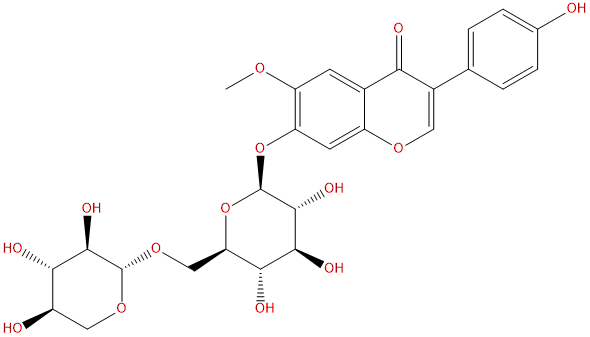
The molecular formula of 6 '' - O-xylose daidzein is C ₂₈ H ∝₀ O ₁₄, with a molecular weight of 578.5230. Its core structure is the 7-O-glucoside of glycine, also known as daidzein, which is further linked to a xylosyl group at the 6 '' position of the glucose group. This disaccharide chain structure significantly increases its polarity.
From the analysis of physical and chemical properties, the lipophilic water partition coefficient (LogP) of this compound is -0.3239, indicating its hydrophilicity. Its topological polar surface area (TPSA) is as high as 217.9700 Å ², which is mainly attributed to the numerous oxygen atoms and sugar based structures in the molecule, further confirming its strong polarity characteristics. The calculated water solubility value is 1.6511, which belongs to the solubility range and is beneficial for its distribution in the biological aqueous environment. However, higher polarity and TPSA also mean that its ability to penetrate lipid bilayers is limited, and its blood-brain barrier permeability is predicted to be "low", which to some extent limits its direct potential for central nervous system diseases. In terms of early safety indicators, this compound has no inhibitory activity on hERG potassium channels (hERG inhibition: No), indicating a low risk of causing QT interval prolongation in the heart. The Ames test result is 0.6, indicating a low risk of mutagenicity, but further genetic toxicity studies are needed to confirm.
Plant sources and extraction methods
6 '' - O-xylose daidzein is mainly found in leguminous plants, especially in soybeans (Glycine max) and related products, and is one of the relatively low content isoflavone glycoside components. Compared with major isoflavones such as daidzein and genistein, their content is usually lower, but specific varieties or processing such as fermentation may affect their content distribution. In addition, trace amounts may also exist in some traditional medicinal leguminous plants.
The extraction method follows the general strategy of flavonoids in plant chemistry. Usually, alcohol water mixed solvents (such as methanol water or ethanol water) are used for reflux extraction or ultrasound assisted extraction of dried plant materials. Due to the strong polarity of the compound, increasing the proportion of water in the solvent may help improve extraction efficiency. After filtration and concentration, the crude extract needs to be further enriched by macroporous adsorption resin column chromatography, commonly eluted with gradient ethanol aqueous solution. The subsequent refinement and separation highly depend on various chromatographic techniques, including silica gel column chromatography, reverse phase C18 column chromatography, and high-performance liquid chromatography (HPLC) or preparative liquid chromatography (pre HPLC). Its identification mainly relies on mass spectrometry (MS) to provide molecular weight information, while nuclear magnetic resonance spectroscopy (NMR, especially ¹ H-NMR and ¹ ³ C-NMR) is used to accurately analyze its sugar linkage position and configuration, and to confirm it by comparing it with known standards or literature data.
Pharmacological activity research
Current research focuses on the estrogenic regulatory activities of 6 '' - O-xylose daidzein, which has shown multifaceted pharmacological effects in various in vitro and partially in vivo models.
1. Estrogen like and anti estrogen like bidirectional activity: This compound exhibits selective estrogen receptor modulator (SERM) properties. In estrogen receptor (ER) positive cells, it exhibits a higher affinity or selective activation tendency towards ER β (ESR2) than ER α (ESR1), which may bring tissue-specific benefits, such as estrogen like protective effects in the bone and cardiovascular system, while in the breast and endometrium, it shows weaker stimulating or even antagonistic effects, potentially reducing the risk of proliferation.
2. Effects on sex hormone binding globulin (SHBG): Research has shown that 6 '' - O-xylose daidzein can upregulate the expression or binding activity of SHBG. The elevation of SHBG levels can reduce the concentration of free and biologically active sex hormones (such as estradiol and testosterone) in the blood, thereby indirectly regulating the strength of hormone signaling pathways. This may have regulatory significance for androgen dependent diseases (such as polycystic ovary syndrome) or estrogen dependent tumors.
3. Regulation of aromatase (CYP19A1): Aromatase is a key rate limiting enzyme for the conversion of androgens to estrogens. Preliminary evidence suggests that the compound may have a mild inhibitory effect on CYP19A1 activity, which helps to reduce local estrogen synthesis (such as in breast and adipose tissue), providing another potential mechanism for preventing estrogen dependent tumors.
4. Effects on hypothalamic pituitary gonadal axis related targets: This compound may have a regulatory effect on follicle stimulating hormone receptor (FSHR) and luteinizing hormone receptor (LHB), suggesting that it may participate in regulating follicle development, ovulation, and synthesis of gonadal steroids by affecting the signaling of gonadotropins. However, its specific effects (excitation or antagonism) still need to be further studied.
5. Effects on other hormone receptors: There are studies suggesting that it also interacts with androgen receptors (AR) and progesterone receptors (PGR), but its activity and physiological significance are not yet clear, and it may form part of its complex hormone regulatory network.
Overall, 6 '' - O-xylose daidzein regulates the endocrine balance of the body through a multi-target and networked approach, rather than simply replacing estrogen. This provides a pharmacological basis for its application in menopausal health management, osteoporosis prevention, and chemoprevention of hormone related cancers.
Mechanism of action and molecular targets
The estrogenic regulatory mechanism of 6 '' - O-xylose daidzein involves multiple pathways, both direct and indirect, and its molecular targets form an interconnected network.
Core target: Estrogen receptor (ESR1 and ESR2)
This compound acts as a plant estrogen, and its glycoside component (daidzein), after hydrolysis by intestinal microbiota glycosidase in vivo, may be more easily able to enter the nucleus and bind with ER. Its relatively high affinity for ER β (ESR2) is a key feature. The activation of ER β is often associated with anti proliferative, pro apoptotic, and anti-inflammatory effects. It may function through the following pathways: (1) Classical genomic pathway After dimerization of the compound ER complex, it binds to the estrogen response element (ERE) in the promoter region of the target gene, regulating the transcription of specific genes, such as regulating the expression of cell cycle proteins and apoptosis related proteins. (2) Non genomic pathways Rapid activation of intracellular kinase signaling cascades (such as MAPK, PI3K/Akt pathways) through membrane associated ER or G protein coupled receptor 30 (GPER1) produces rapid cellular effects.
Key regulatory protein: Sex hormone binding globulin (SHBG)
6 '' - O-xylose daidzein may promote the transcription and protein synthesis of SHBG genes by activating transcription factors such as hepatocyte nuclear factor (HNF-4 α). The elevated level of SHBG in the blood can effectively bind and reduce the concentration of free testosterone and estradiol, thereby globally weakening the signal output of testosterone and estrogen. This is an important indirect mechanism for its systemic hormone balance regulation.
Key enzyme for hormone synthesis: aromatase (CYP19A1)
This compound may competitively bind to the active site of aromatase or interfere with its transcription (such as affecting the activity of promoters I.3/II), inhibiting its ability to convert androstenedione and testosterone to estrone and estradiol. This inhibitory effect is particularly important in local tissues such as breast adipose stromal cells and ovarian granulosa cells, helping to reduce the production of "in situ" estrogen.
Hypothalamic pituitary axis related receptors: FSHR and LHB
Its potential regulatory effect on FSHR and LHB may affect the stimulating effect of gonadotropins on the ovaries or testes, thereby regulating the synthesis and secretion of gonadal steroid hormones, forming a long feedback or short feedback regulatory loop. However, there is currently a lack of clear evidence as to whether it acts as a conformational regulator or a direct ligand.
Cross talk with other nuclear receptors
The interaction with AR and PGR may make their effects more complex. For example, weak antagonism of AR may enhance its anti androgen effect; The impact on PGR may be related to the transformation and stability of the endometrium.
In summary, the mechanism of action of 6 '' - O-xylose daidzein is a multi-target, multi-level synergistic network, and its ultimate biological effects depend on various factors such as receptor subtype distribution, co regulatory protein expression, and endogenous hormone levels in tissues.
Evaluation of drug properties and pharmacokinetics
Based on its physicochemical parameters and preliminary biological data, the pharmacological properties of 6 '' - O-xylose daidzein were preliminarily evaluated.
Absorption: As a highly polar glycoside compound, its oral absorption may face challenges. The complete glycoside form has poor passive diffusion absorption in the upper small intestine. Its absorption mainly depends on two pathways: one is that sodium dependent glucose transporter 1 (SGLT1) on the brush edge of small intestinal epithelial cells may mediate its partial active transport; The second main pathway is through the hydrolysis of β - glucosidase and xylosidase secreted by the gut microbiota of the colon, which successively remove xylose and glucose to generate the aglycone daidzein. The lipid solubility of aglycones is significantly enhanced and can be absorbed through passive diffusion. Therefore, its bioavailability largely depends on the composition and activity of individual gut microbiota.
Distribution: The absorbed aglycones undergo extensive II binding metabolism (glucuronidation and sulfation) in the intestinal wall and liver, and are converted back into more water-soluble bound metabolites that enter the systemic circulation. The concentration of the original glycoside in the blood may be extremely low. Due to the strong polarity of its aglycone form and conjugates, its distribution volume is predicted to be limited, mainly distributed in organs with abundant blood flow, difficult to penetrate the blood-brain barrier (BBB permeability is low), and its concentration in cerebrospinal fluid is extremely low.
Metabolism: As mentioned earlier, hydrolysis of gut microbiota is its most important pre metabolic step. Liver metabolism is mainly characterized by II binding reactions. In addition, aglycones may also undergo phase I metabolism such as hydroxylation and demethylation, but not the main pathway. Its metabolites (aglycones and their complexes) are the main circulating and effector forms.
Excretion: Its metabolites (glucuronides and sulfates) are mainly excreted through the kidneys and urine. Some unabsorbed glycoside forms and intestinal hydrolysis products can also be excreted through feces.
Challenges and optimization of drug development:
1. Low bioavailability: The absorption of original glycosides is poor, relying on gut microbiota transformation, with significant individual differences. The strategy includes developing prodrugs (such as esterification modification to improve lipid solubility), using nano formulations (liposomes, polymer micelles) or cyclodextrin inclusion technology to enhance their solubility and membrane permeability; Or combined with probiotics to stabilize their metabolic environment.
2. Targeted: Lack of selectivity for specific tissues such as bone and breast. Targeted delivery systems based on ligands (such as derivatives with high affinity for ER β) or tissue microenvironments (such as pH sensitive, enzyme sensitive) can be explored.
3. Unclear active form: The substance forms that truly exert pharmacological effects in its body (whether they are prototype glycosides, aglycones, or specific metabolites) still need to be further studied, which is crucial for formulation design and efficacy evaluation.
Clinical application prospects and prospects
The multi-target estrogen regulatory properties of 6 '' - O-xylose daidzein have brought potential application prospects in multiple clinical fields, but also face many challenges.
Potential clinical application directions:
1. Health management for perimenopausal/postmenopausal women: As a potential SERM, it can be used to alleviate vasomotor symptoms such as hot flashes and night sweats. At the same time, due to its selectivity for ER β and potential protective effect on bones, it may have advantages in preventing postmenopausal osteoporosis, and may have lower breast and endometrial risks than traditional hormone replacement therapy (HRT).
2. Chemical prevention of hormone dependent cancer: By inhibiting CYP19A1, up regulating SHBG and selectively regulating ER (especially antagonizing ER α mediated proliferation signal), this compound may help reduce the risk of breast cancer, endometrial cancer and prostate cancer. Especially suitable for long-term, low-dose prevention in populations with a family history or high-risk factors.
3. Metabolic syndrome and cardiovascular health: Phytoestrogens have been proven to have positive effects on improving lipid metabolism and endothelial function. This compound may have a protective effect on the cardiovascular system of postmenopausal women through estrogen receptor mediated mechanisms.
4. Male Health: By regulating SHBG and AR, it may have a regulatory effect on benign prostatic hyperplasia (BPH) or symptoms associated with androgen levels.
Future research prospects and challenges:
1. In depth study of the mechanism of action: It is necessary to use techniques such as gene knockout cells, reporter gene systems, and co crystallization to accurately elucidate their modes of action (excitation/antagonism/regulation), binding sites, and downstream signaling networks on targets such as ESR1/ESR2, SHBG, and CYP19A1.
2. Preclinical efficacy and safety evaluation of the system: It is necessary to carry out long-term and different dose pharmacodynamics and toxicology studies in animal models closer to human diseases (such as ovariectomized rat models, breast cancer transgenic mouse models) to clarify their effective dose range and safety window.
3. Pharmacokinetic and Metabolomics Studies: A complete ADME study is required to clarify its pharmacokinetic characteristics, major active metabolites, and tissue distribution in different species. Combining metabolomics, evaluate its impact on the systemic metabolic network.
4. Structural optimization and formulation development: Based on its pharmacophore and pharmacological shortcomings, reasonable chemical structural modifications (such as glycosylation and aglycone modifications) should be carried out to improve its absorption, metabolic stability, and targeting. At the same time, develop new drug delivery systems to improve their bioavailability and efficacy.
5. Clinical translational studies: After obtaining sufficient preclinical data support, gradually promote human tolerance trials, pharmacokinetic trials, and exploratory efficacy trials to ultimately verify their clinical value.
Conclusion
6 '' - O-xylose daidzein, as a naturally occurring isoflavone glycoside, has shown remarkable research value in the field of natural product pharmacology due to its unique chemical structure and multi-target ability to act on the estrogen regulatory network. It is not just a simple estrogen mimic, but also a network regulator that can finely regulate endocrine balance. Although research on it is still in its early stages and there are significant challenges in terms of bioavailability, clear mechanisms of action, and clinical efficacy evidence, its potential application prospects in the prevention of perimenopausal syndrome, osteoporosis, and hormone dependent tumors are highly anticipated. Future research requires close collaboration among multiple disciplines such as chemistry, pharmacology, pharmacy, and clinical medicine, from molecular mechanisms to formulation development, and then to clinical validation, in order to transform this natural active molecule into a candidate drug or functional health product with practical application value and contribute to human health.