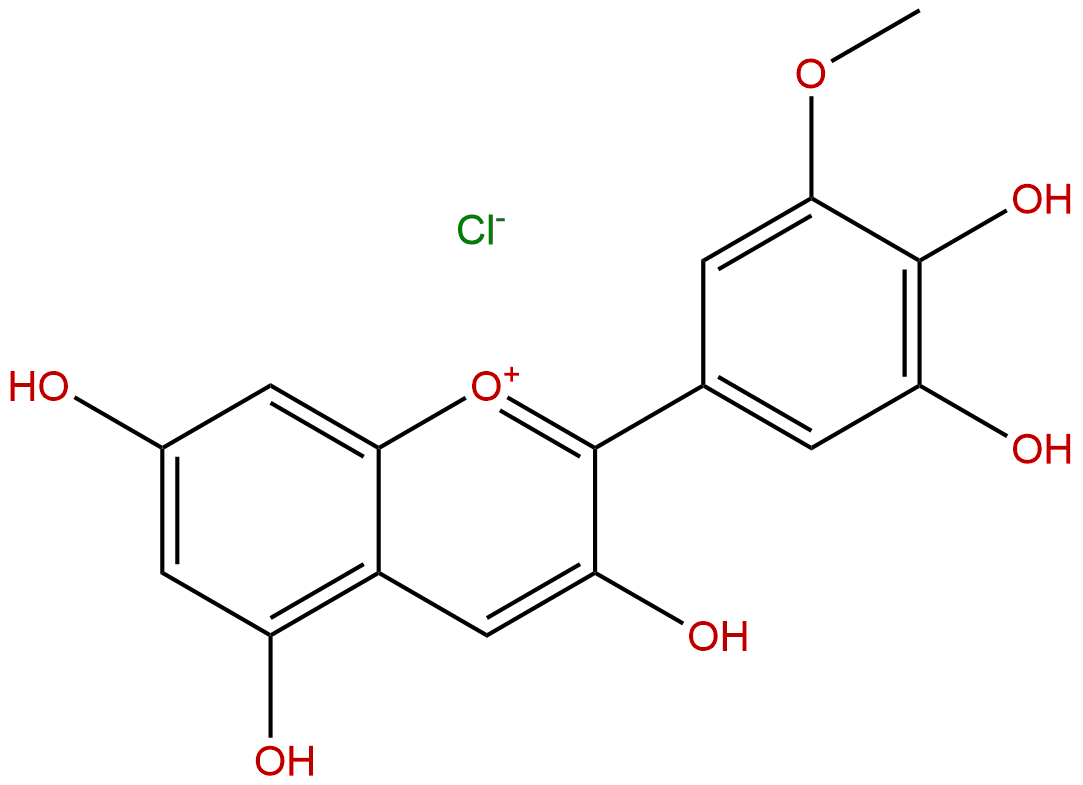


Product name: Petunidin chloride
Synonym name:
Catalogue No.: BPF2036
Cas No.: 1429-30-7
Formula: C16H13ClO7
Mol Weight: 352.723
Botanical Source: numerous plant spp.
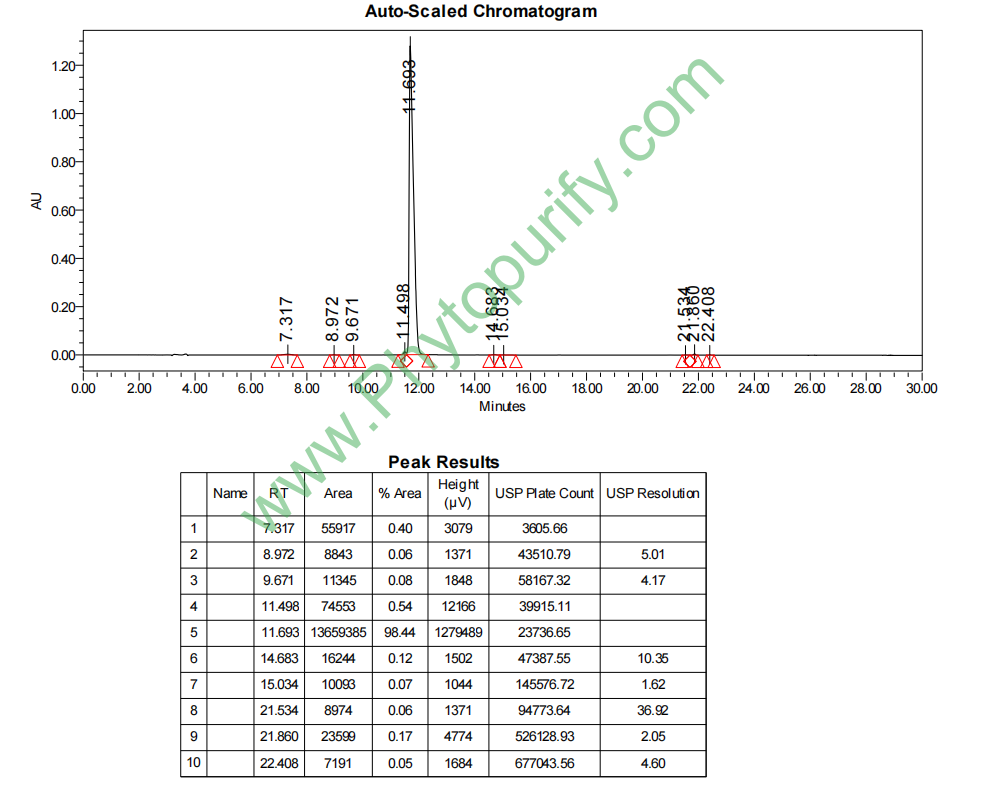
Purity: 95%~99%
Analysis Method: HPLC-DAD or/and HPLC-ELSD
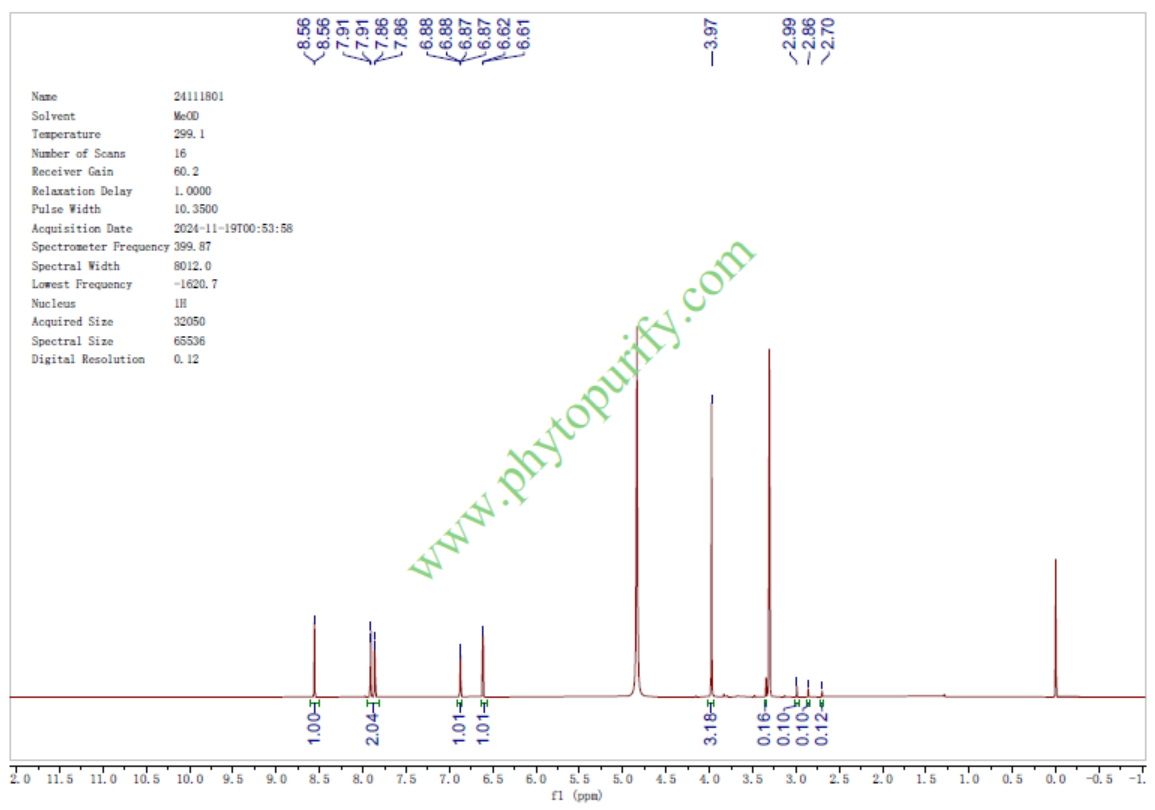
Identification Method: Mass, NMR
Packing: Brown vial or HDPE plastic bottle
Can be supplied from milligrams to grams.
For Reference Standard and R&D, Not for Human Use Directly.
Inquire for bulk scale.
HPLC of Petunidin chloride
HNMR of Petunidin chloride
Storage conditions:Short-term storage at 2~8℃, long-term storage at -20 ~ -80℃
121.6800
-.5375
-1.4098
.1222
.8177
7.8385
Low
68.8052
3.2130
Yes
No
Yes
No
Yes
Yes
1.2
Yes
No
Yes
No
Natural products, as an important source of drug discovery, play a pivotal role in the history of human health maintenance and disease treatment. Among them, anthocyanins, as a water-soluble pigment widely present in the plant kingdom, not only endow fruits, vegetables, and flowers with rich colors, but also attract attention due to their significant biological activity. Anthocyanins belong to flavonoid compounds, and their basic structure is 2-phenylbenzopyran cation (i.e. anthocyanins). In nature, common anthocyanins include cyanidin, Delphinidin, Pelargonidin, Peonidin, Petunidin, and Malvidin. These compounds typically exist in the form of glycosides, which are modified through glycosylation, acylation, and other processes to form structurally diverse anthocyanins.
Petunidin chloride (CAS number: 1429-30-7) is a chloride salt form of Petunidin and belongs to O-methylated anthocyanins. Its chemical structure is derived from Delphinidin, specifically by methylation modification at the 3 '- hydroxyl site of the B ring of Delphinidin, forming 3' - methoxy-4 ', 5,7-trihydroxy-3,5' - dimethoxy anthocyanins. This structural modification endows chlorinated petunias with unique physicochemical properties and biological activity. As an important member of the anthocyanin family, chlorinated petunians are widely present in various dark berries, purple sweet potatoes, purple cabbage, grapes, and certain flowers in nature. They are one of the key pigments that determine the blue purple hue of these plant tissues.
In recent years, with the in-depth study of the health effects of dietary polyphenolic compounds, the pharmacological activity of chlorinated petunians has gradually been revealed. Research has shown that chlorinated petunias not only has classic antioxidant activity, but also exhibits multiple effects such as anti-inflammatory, anti proliferative, anti angiogenic, and cardiovascular protection. Of particular note is that berberine chloride can bind to and inhibit the activity of Focal Adhesion Kinase (FAK), thereby suppressing the migration of aortic smooth muscle cells induced by Platelet Derived Growth Factor (PDGF). This discovery provides a new molecular target and potential intervention strategy for the prevention and treatment of vascular proliferative diseases such as atherosclerosis. Atherosclerosis is the main pathological basis of cardiovascular and cerebrovascular diseases. Its occurrence and development involve vascular endothelial injury, lipid deposition, inflammatory reaction, and abnormal proliferation and migration of smooth muscle cells. The migration of smooth muscle cells from vascular media to intima is a key event in the formation and progression of atherosclerotic plaque. Therefore, inhibiting smooth muscle cell migration by targeting FAK signaling pathway has important pathophysiological significance for delaying or preventing atherosclerosis.
This article aims to systematically review the research progress of chlorinated petunias, covering its chemical structure and physicochemical properties, plant sources and extraction methods, pharmacological activity, mechanism of action and molecular targets, pharmacological evaluation and pharmacokinetic properties, and prospects for its clinical application prospects, in order to provide comprehensive scientific basis for the in-depth research and development of this natural product.
The chemical structure of chlorinated petunians is based on the core skeleton of anthocyanins -2-phenylbenzopyran cation (yellow salt structure). Its system is named 3,5,7-trihydroxy-2- (4-hydroxy-3,5-dimethoxyphenyl) benzopyran-1-ium chloride. Structurally speaking, chlorinated petunians belong to derivatives of delphinidin, with the 3 'hydroxyl group on the B ring replaced by a methoxy group (- OCH ∝), while the 5' hydroxyl group remains. Specifically, the 5,7 positions of ring A are hydroxyl groups, the 3 positions of ring C are hydroxyl groups, the 3 'and 5' positions of ring B are methoxy and hydroxyl groups, respectively, and the 4 'position is hydroxyl. This substitution mode with both hydroxyl and methoxy groups on the B ring gives it a unique electron distribution and chemical reactivity in the anthocyanin family.
The molecular formula of chlorinated petunian is C ₁₆ H ₁∝ ClO ₇, with a molecular weight of 317.2730 g/mol. As a chloride salt of anthocyanin cations, it presents a cationic form in aqueous solution, which is a common feature of anthocyanin compounds. Under acidic conditions (pH<3), berberine chloride mainly exists in the form of red yellow salt cations; As the pH increases, its structure undergoes rapid hydration reactions and tautomerization, transforming into colorless methanol pseudobases, chalcones, and other forms. Under neutral or weakly alkaline conditions, it may form purple quinone bases. This pH dependent color change is the basis for anthocyanins as natural pH indicators.
In terms of physical and chemical properties, chlorinated petunians exhibit typical polyphenolic compound characteristics. Its lipid water partition coefficient (LogP) is -0.5375, indicating strong hydrophilicity and good solubility in water. The calculated water solubility value is 0.1222 mg/mL, which is related to the presence of multiple hydroxyl and cationic structures in its molecule. The polar surface area (TPSA) is 121.6800 Å ², which is a relatively high value reflecting the presence of numerous hydrogen bond donor and acceptor sites in the molecule, facilitating interactions with biomolecules such as proteins and nucleic acids through hydrogen bonding and electrostatic interactions. A high TPSA value also indicates limited transmembrane passive diffusion ability, especially difficulty in crossing the blood-brain barrier (BBB permeability is low). In addition, chlorinated petunians usually exist in the form of dark purple to purple black crystals or powders at room temperature, and have hygroscopicity. They should be stored away from light, sealed, and at low temperatures to prevent oxidative degradation.
From the perspective of chemical reactivity, the phenolic hydroxyl group in the molecule of chlorinated petunias endows it with excellent antioxidant activity, which can effectively remove free radicals and chelate metal ions. Meanwhile, its cationic structure enables it to undergo electrostatic adsorption with negatively charged biofilms or protein surfaces. These chemical properties are the structural basis for its various biological activities. It is worth noting that the stability of chlorinated petunias is poor in both in vivo and in vitro environments, and it is easily degraded by pH, temperature, light, oxygen, and enzyme systems. This poses challenges for its application in food and medicine, and also prompts researchers to explore ways to improve its stability through encapsulation, acylation modification, or combination with auxiliary colorants.
Chlorinated petunians are widely distributed in nature and mainly exist in angiosperms, especially in plant tissues that appear blue purple, purple red, or dark purple. As a methylated derivative of delphinidin, it is commonly found in berry fruits, root vegetables, and certain ornamental plants. Specifically, plant sources rich in chlorinated petunias include blueberries (Vaccinium spp.), kumquats (Vaccinium vitis idaea), blackberries (Rubus fruticosus), purple sweet potatoes (Ipomoea batatas), purple cabbage (Brassica oleracea var. capitata f. rubra), purple glutinous rice (Zea mays), grapes (Vitis vinifera, especially red grape varieties), eggplants (Solanum melongena, purple varieties), and petunias (Petunia hybrida). In these plants, chlorinated petunians usually exist in the form of glycosides, with the most common glycosylation site at the C3 position, connecting monosaccharides such as glucose, galactose, rhamnose, or arabinose, and sometimes undergoing acylation modifications (such as binding with phenolic acids such as coumaric acid, caffeic acid, and ferulic acid) to form more stable complex anthocyanins.
The extraction method of chlorinated petunians is mainly based on its polarity characteristics, using solvent extraction method. Due to the stable cationic form of anthocyanins under acidic conditions, acidic solvents are usually used during the extraction process to improve extraction efficiency and stability. Common extraction solvents include acidified methanol, acidified ethanol, or acidified water. Commonly used acids include hydrochloric acid, formic acid, acetic acid, or trifluoroacetic acid, with concentrations typically controlled between 0.1% -1% (v/v). The selection of extraction conditions should comprehensively consider the stability of the target compound, solvent safety, and compatibility with subsequent purification processes. For example, soaking in a methanol solution containing 0.1% HCl at room temperature or low temperature (4 ° C) can effectively extract chlorpromazine and its glycosides from blueberry pomace or purple sweet potato. Modern extraction techniques such as ultrasound assisted extraction (UAE) and microwave-assisted extraction (MAE) have also been applied to improve extraction efficiency and shorten extraction time, while reducing thermal degradation.
The crude extract after extraction usually contains a large amount of impurities, including sugars, organic acids, proteins, other phenolic compounds, etc., which require purification steps to obtain high-purity chlorinated petunians. Common purification methods include liquid-liquid extraction (such as removing low polarity impurities with ethyl acetate), column chromatography (such as using macroporous adsorption resin, polyamide resin, or C18 reverse phase silica gel column), preparative high-performance liquid chromatography (Prep HPLC), etc. Macroporous adsorption resins (such as XAD-7, HP-20) are often used for the preliminary purification of anthocyanin crude extracts due to their easy operation, low cost, and scalable application. For situations that require high-purity standards, Prep HPLC combined with diode array detector (DAD) or mass spectrometry detector (MS) is usually used for precise separation of target compounds. Due to the generally low content of chlorinated petunians in plants (compared to cyanidins and delphinidin), and the difficulty in separating them from structurally similar compounds (such as paeoniflorin and paeoniflorin), the preparation of high-purity chlorinated petunians still faces certain challenges.
In addition, in recent years, with the development of synthetic biology and chemical synthesis technology, it has become possible to obtain chlorinated petunians through in vitro enzymatic synthesis or total chemical synthesis pathways. For example, by using recombinant flavonoid compound methyltransferase and performing region selective methylation on delphinidin as a substrate, dwarfisin can be synthesized in a targeted manner. These methods provide a new approach for obtaining sufficient and high-purity chlorinated petunians for further research.
The pharmacological activity research of chlorinated petunias mainly focuses on its antioxidant, anti-inflammatory, cardiovascular protection, and anti-tumor effects, among which the protective effect on the cardiovascular system is particularly prominent.
antioxidant activity As a typical anthocyanin compound, chlorinated petunians exhibit strong free radical scavenging ability. The multiple phenolic hydroxyl groups in its molecular structure can effectively supply hydrogen, neutralize reactive oxygen species (ROS) and reactive nitrogen species (RNS), such as hydroxyl radicals (· OH), superoxide anions (O ₂⁻·), peroxynitrite (ONOO ⁻), etc. In vitro chemical experiments (such as DPPH, ABTS, FRAP methods) have shown that the antioxidant capacity of chlorinated petunians is comparable to that of delphinidin and superior to some non methylated anthocyanins. In addition, chlorinated petunias can indirectly exert antioxidant effects by chelating transition metal ions (such as Fe ² ⁺, Cu ² ⁺) to inhibit hydroxyl radicals generated by Fenton reaction. In cell models, berberine chloride can upregulate the expression and activity of antioxidant enzymes such as superoxide dismutase (SOD), glutathione peroxidase (GPx), and catalase (CAT), enhancing the intracellular antioxidant defense system.
anti-inflammatory activity Inflammation is the common pathological feature of many chronic diseases (including atherosclerosis, diabetes, neurodegenerative diseases). Research has found that berberine chloride can inhibit inflammatory responses induced by lipopolysaccharides (LPS) or cytokines. In the macrophage model, berberine chloride can significantly reduce the production of pro-inflammatory factors such as tumor necrosis factor - α (TNF - α), interleukin-6 (IL-6), interleukin-1 β (IL-1 β), as well as nitric oxide (NO) and prostaglandin E ₂ (PGE ₂). The mechanism involves inhibiting the activation of the nuclear factor kappa B (NF - κ B) signaling pathway, as well as downregulating the expression of cyclooxygenase-2 (COX-2) and inducible nitric oxide synthase (iNOS). In addition, berberine chloride can activate the nuclear factor E2 related factor 2 (Nrf2) pathway, promote the expression of antioxidant and anti-inflammatory genes, and thus upregulate the inflammatory response at the transcriptional level.
Cardiovascular protective activity The research on the cardiovascular protection of chlorinated petunians is the most in-depth. In addition to the aforementioned antioxidant and anti-inflammatory effects, its most notable activity is the inhibition of abnormal migration of vascular smooth muscle cells. The migration of vascular smooth muscle cells (VSMCs) from vascular media to intima is a key cellular event in atherosclerotic plaque formation, vascular restenosis and hypertensive vascular remodeling. Platelet derived growth factor (PDGF) is one of the strongest stimulating factors for inducing VSMC migration and proliferation. Research has shown that berberine chloride can significantly inhibit PDGF-BB-induced migration of rat aortic smooth muscle cells in a dose-dependent manner, without affecting cell survival rate. This discovery suggests that berberine chloride may exert anti migratory effects by interfering with downstream signaling pathways of PDGF receptors. In addition, petunidin chloride can also inhibit angiogenesis induced by vascular endothelial growth factor (VEGF), which may have positive significance in inhibiting angiogenesis in atherosclerotic plaque and stabilizing plaque. In animal models, dietary supplementation of anthocyanin rich extracts (including chlorinated petunia) has been proven to reduce atherosclerosis induced by high-fat diet, improve vascular endothelial function, and reduce blood pressure and lipid levels.
Antitumor activity Some studies have also explored the anti-tumor potential of chlorinated petunians. In many cancer cell lines (such as colon cancer, breast cancer and liver cancer cells), petunidin chloride can inhibit cell proliferation, induce cell cycle arrest and apoptosis. The mechanism may involve regulating proliferation related signaling pathways such as PI3K/Akt and MAPK/ERK, as well as activating mitochondrial mediated endogenous apoptosis pathways. However, compared to other anthocyanins such as cyanidin-3-glucoside, there is relatively little research on the anti-tumor activity of chlorinated petunians, and most of them are in vitro experiments. The in vivo anti-tumor effect and bioavailability still need further verification.
Other activities: Preliminary studies also suggest that petunia chloride may have neuroprotective effects (reduce neuronal damage through antioxidant and anti-inflammatory mechanisms), anti diabetes effects (improve insulin resistance and promote glucose uptake), and antibacterial activity (inhibit the growth of some pathogenic bacteria). However, the evidence in these fields is still insufficient and requires more systematic research to confirm.
The molecular mechanism by which chlorinated petunians exert their biological activity is multi-layered and multi-target, among which the regulation of adhesion focal kinase (FAK) is one of the core mechanisms of their cardiovascular protection.
FAK signaling pathway and smooth muscle cell migration Adhesive focal kinase (FAK) is a non receptor tyrosine kinase that plays a critical regulatory role in cell adhesion, migration, proliferation, and survival processes. FAK aggregates and undergoes autophosphorylation (Tyr397 site) in the adhesion plaque complex through integrin mediated extracellular matrix (ECM) adhesion signals, recruiting Src family kinases to form the FAK Src signaling complex, activating downstream signaling pathways including Ras MAPK, PI3K Akt, and Rho GTPases. In vascular smooth muscle cells, PDGF stimulation can induce phosphorylation and activation of FAK, promote cytoskeleton rearrangement, pseudopodia formation, and directed migration. Research has confirmed that berberine chloride can directly bind to FAK protein, inhibit its kinase activity, and thus block PDGF induced phosphorylation of FAK Tyr397. This inhibitory effect further weakens the activation of downstream signaling molecules such as paxillin, Crk, and Rac1, ultimately inhibiting the migration ability of smooth muscle cells. Molecular docking and dynamic simulation studies further revealed the binding mode between chlorinated petunians and the FAK kinase domain: its yellow salt cation core forms hydrogen bonds and π - π stacking interactions with key amino acid residues (such as Cys502, Asp564, etc.) in the ATP binding pocket of FAK, thereby competitively inhibiting the binding of ATP to FAK. This discovery provides an important structural biology basis for the development of FAK inhibitors based on anthocyanin structures.
NF - κ B and Nrf2 signaling pathway The anti-inflammatory and antioxidant effects of chlorinated petunians are mainly achieved through the regulation of two key transcription factors, NF - κ B and Nrf2. In the resting state, NF - κ B binds to the inhibitory protein I κ B and exists in an inactive form in the cytoplasm. When stimulated by inflammation (such as LPS, TNF - α), I κ B kinase (IKK) is activated, phosphorylating and ubiquitinating I κ B, releasing NF - κ B into the nucleus and initiating the transcription of pro-inflammatory genes. Chlorpromazine can inhibit the activity of IKK, prevent the degradation of I κ B, and thus block the nuclear translocation and transcriptional activity of NF - κ B. At the same time, berberine chloride can activate the Nrf2 pathway, promote the dissociation and translocation of Nrf2 and Keap1 into the nucleus, bind to antioxidant response elements (ARE), and upregulate the expression of a series of protective genes, including heme oxygenase-1 (HO-1), quinone oxidoreductase-1 (NQO1), glutathione synthase, etc. This "dual pronged" regulatory mode - inhibiting the pro-inflammatory pathway (NF - κ B) while activating the protective pathway (Nrf2) - is an important mechanism for the comprehensive cellular protective effect of berberine chloride.
Other potential targets In addition to FAK, NF - κ B, and Nrf2, berberine chloride may also exert its effects through the following mechanisms: (1) inhibiting the PI3K/Akt/mTOR signaling pathway, thereby inhibiting cell proliferation and inducing autophagy; (2) Regulating the phosphorylation levels of MAPK family members (such as ERK1/2, JNK, p38), affecting cellular stress response and apoptosis; (3) Directly eliminate free radicals and chelate metal ions to reduce oxidative damage; (4) Regulating mitochondrial membrane potential and permeability transition pore (mPTP), affecting the process of cell apoptosis; (5) Interacts with lipid rafts or receptors on the cell membrane, such as integrins and growth factor receptors, to alter membrane fluidity and signal transduction microenvironment. However, the specific contributions of these mechanisms under different cell types and pathological conditions still need further clarification.
Overall, berberine chloride forms a multi-level pharmacological network by directly targeting FAK kinase, regulating key signaling pathways such as NF - κ B and Nrf2, and exerting direct chemical antioxidant effects. This multi target mode of action has potential advantages in the prevention and treatment of atherosclerosis and other complex diseases, but also increases the complexity of its mechanism of action.
The conversion of natural products into clinical drugs, drug efficacy evaluation, and pharmacokinetic properties are key thresholds that must be crossed. Although chlorinated petunians have significant pharmacological activity, their medicinal properties face many challenges.
Analysis of drug properties parameters According to the provided parameters, the molecular weight of chlorinated petunias is 317.27 Da, which meets the requirement of Lipinski's Rule of Five for molecular weight less than 500. Its LogP is -0.5375, much lower than 5, indicating that it has extremely strong hydrophilicity and is not conducive to passive transmembrane diffusion. The TPSA is 121.68 Å ², and a threshold greater than 140 Å ² is generally considered poor oral absorption and difficult to cross the blood-brain barrier. The water solubility is 0.1222 mg/mL, which is at a moderate to low level. However, considering its cationic properties, its solubility may increase in acidic gastric acid environment. HERG inhibition prediction is' no ', indicating a low risk of cardiac toxicity. The Ames test result is 1.2, usually indicating no mutagenicity or extremely low mutagenicity, with a low risk of genetic toxicity. Overall, chlorinated petunians have a good pharmacological basis in terms of molecular weight and toxicity, but their high hydrophilicity, high polar surface area, and low permeability are the main obstacles to their oral bioavailability.
Pharmacokinetic properties At present, there is relatively limited direct research data on the pharmacokinetics of chlorinated petunias in vivo, but its general outline can be inferred based on the common characteristics of anthocyanin compounds. After oral intake, berberine chloride is relatively stable in the acidic environment of the stomach, but after entering the small intestine, its structure may undergo transformation as the pH increases, and some may be absorbed by intestinal epithelial cells in the form of glycosides. However, the absorption rate of most anthocyanins is extremely low, and their oral bioavailability is usually less than 2%. After absorption, chlorinated petunians undergo extensive metabolism in the body, mainly including: (1) Phase II metabolic reactions such as glucuronidation, sulfation, and methylation in the intestine and liver, generating corresponding complexes; (2) Metabolized by gut microbiota, it is degraded into phenolic acid small molecules (such as protocatechuic acid, vanillic acid, etc.), which may also have biological activity. The concentration of the prototype drug detected in plasma is usually very low and mainly exists in the form of metabolites. The distribution volume of chlorinated petunias may be large, but due to its high polarity, it is not easy to cross the blood-brain barrier and cell membrane. Its elimination pathway is mainly through bile and urine excretion. It is worth noting that anthocyanins have a fast metabolism and elimination rate in the body, and their half-life is usually short (several hours), which poses a challenge to maintaining effective blood drug concentrations.
Strategies for improving bioavailability Given the low oral bioavailability of petunias chloride, researchers have explored various strategies to improve its pharmacokinetic properties: (1) structural modification: introducing acyl groups or alkyl chains through chemical synthesis or enzymatic methods to enhance its lipid solubility and improve membrane permeability; (2) Nano delivery system: using technologies such as liposomes, nanoparticles, micelles, or cyclodextrin inclusion complexes to improve their stability, solubility, and intestinal absorption; (3) Auxiliary color effect: forms molecular complexes with other flavonoids or organic acids, enhances their stability, and may improve absorption; (4) Prodrug design: Design prodrug molecules that can explain the release of active precursors in vivo, such as phosphate or amino acid ester prodrugs; (5) Combination administration: Used in combination with absorption enhancers (such as piperine) or metabolic enzyme inhibitors to increase systemic exposure. These strategies have successful precedents in the development of anthocyanin drugs, providing reference for optimizing the drug properties of chlorinated petunias.
Chlorinated petunian, as a natural anthocyanin with unique pharmacological activity, has shown promising clinical application prospects in the field of cardiovascular disease prevention and treatment. However, it still faces many challenges in transitioning from laboratory to clinical use.
Prevention and treatment of cardiovascular diseases Based on its core mechanism of inhibiting FAK activity and blocking smooth muscle cell migration, petunidin chloride has potential therapeutic value in atherosclerosis, vascular restenosis (such as after percutaneous coronary intervention), hypertension and vascular remodeling. Compared with existing anti proliferative drugs such as rapamycin and paclitaxel, berberine chloride, as a natural product, may have better safety, and its multi-target mode of action (simultaneously anti-inflammatory and antioxidant) may bring more comprehensive vascular protection effects. In the future, chlorinated petunidin or its derivatives may be developed as oral dietary supplements or local drug delivery agents (such as drug eluting stent coating) for the prevention of atherosclerosis or adjuvant treatment after interventional therapy.
Functional foods and nutritional supplements Given that chlorinated petunian is present in various common berries and vegetables, its application as a dietary functional ingredient is more direct. Plant extracts rich in chlorinated petunias can be developed as functional food ingredients or nutritional supplements to improve vascular health and reduce the risk of cardiovascular disease. However, more rigorously designed clinical human trials are needed to validate its long-term effectiveness and safety, and determine the optimal intake dose. In addition, its stability issues during food processing and storage also need to be addressed through formula optimization, such as microencapsulation and the addition of stabilizers.
Drug development and structural optimization The development of FAK inhibitors with higher activity and better pharmacokinetic properties through systematic structure-activity relationship (SAR) studies using chlorinated petunians as lead compounds is an important direction in the field of medicinal chemistry. For example, by retaining the core skeleton of its Huangyan salt and introducing hydrophobic groups or optimizing methylation modes, derivatives with higher oral bioavailability may be obtained. Meanwhile, high-throughput screening and structure based drug design targeting the FAK kinase domain are expected to discover more specific and efficient inhibitors.
Challenges and Future Directions Faced(1) bioavailability bottleneck: As mentioned earlier, the oral bioavailability of chlorinated petunias is extremely low, which is the biggest obstacle to its clinical translation. Future research should focus on developing efficient delivery systems or prodrug strategies. (2) Target selectivity and off target effects: Although FAK is a key target for its cardiovascular protection, it also plays an important role in various normal tissues, and long-term inhibition of FAK may bring unknown side effects. Further research is needed to investigate the selectivity of berberine chloride for FAK and its effects on other kinases. (3) In vivo metabolism and active metabolites: Anthocyanins are rapidly metabolized in the body, and their metabolites (such as phenolic acids) may also have biological activity. It is necessary to clarify the active form of berberine chloride in the body, whether it is a prototype drug or a metabolite, and their respective contributions to the overall efficacy. (4) Lack of clinical evidence: Currently, research on chlorinated petunians mainly remains at the level of in vitro and animal experiments, lacking high-quality human clinical trial data. In the future, it is necessary to conduct rigorously designed randomized controlled trials to evaluate their efficacy and safety in patients with cardiovascular disease. (5) Large scale preparation and quality control: The large-scale preparation process of high-purity chlorinated petunias extract is not yet mature, and it is necessary to develop efficient and economical extraction, purification or synthesis methods, and establish strict quality control standards to meet the needs of drug or health product development.
Chlorinated petunian, as a naturally occurring O-methylated anthocyanin, occupies a special position in the field of natural product pharmacology due to its unique chemical structure and multi-level biological activity. From a chemical perspective, the methylation pattern derived from its delphinidin endows it with distinct physicochemical properties and biological targeting compared to other anthocyanins. From the pharmacological point of view, its specific inhibition of FAK kinase and the resulting anti smooth muscle cell migration provide new molecular targets and candidate compounds for the intervention of vascular proliferative diseases such as atherosclerosis. Meanwhile, its multiple activities such as antioxidant and anti-inflammatory further enhance its potential as a cardiovascular protective agent.
However, we must also be aware that the road to the conversion of chlorinated petunias from natural products to clinical drugs is still long and challenging. The problems of low oral bioavailability, complex metabolism in vivo, and lack of clinical evidence urgently need to be addressed. Future research should be based on interdisciplinary approaches, utilizing a combination of medicinal chemistry, pharmacy, pharmacokinetics, and clinical medicine to elucidate its mechanism of action, optimize its drug properties, and validate its clinical value through rigorous clinical trials. In addition, with the rise of precision nutrition and personalized medical concepts, differentiated applications based on individual genetic backgrounds and gut microbiota characteristics may also become a new direction for the future application of chlorinated petunias.
In short, chlorinated petunias is a brilliant gem in the treasure trove of natural products. Its research not only deepens our understanding of the biological activity of anthocyanin compounds, but also opens up new ideas for the prevention and treatment of cardiovascular diseases. We have reason to believe that with the unremitting efforts of scientists, chlorinated petunias and its derivatives will eventually play their due role in human health.
