Introduction/Overview
Flavonoids, as one of the most widely distributed plant secondary metabolites in nature, have attracted the attention of pharmacological researchers due to their diverse biological activities. Spiraeoside, also known as Quercetin-4 '- O - β - D-glucopyranoside, is an important glycosylated derivative of Quercetin with a CAS number of 20229-56-5. Compared with quercetin, the introduction of sugar groups significantly alters its physicochemical properties and bioavailability, which may lead to unique pharmacological properties. Modern pharmacological studies have shown that steviol glycosides not only inherit the powerful antioxidant capacity of quercetin, but also exhibit significant activities in anti-inflammatory, anti allergic, and anti-tumor aspects. Its function involves the regulation of multiple key inflammatory and tumor related targets, such as interleukin-6 (IL-6), signal transduction and transcription activator 3 (STAT3), nuclear factor kappa B (NF - κ B), cyclooxygenase (COX), and tumor necrosis factor alpha (TNF - α). This article aims to provide a systematic review of the chemical properties, plant sources, pharmacological activities, molecular mechanisms of action, and medicinal potential of steviol glycosides, in order to provide scientific basis for the deep development and clinical application of this natural product.
Chemical structure and physicochemical properties
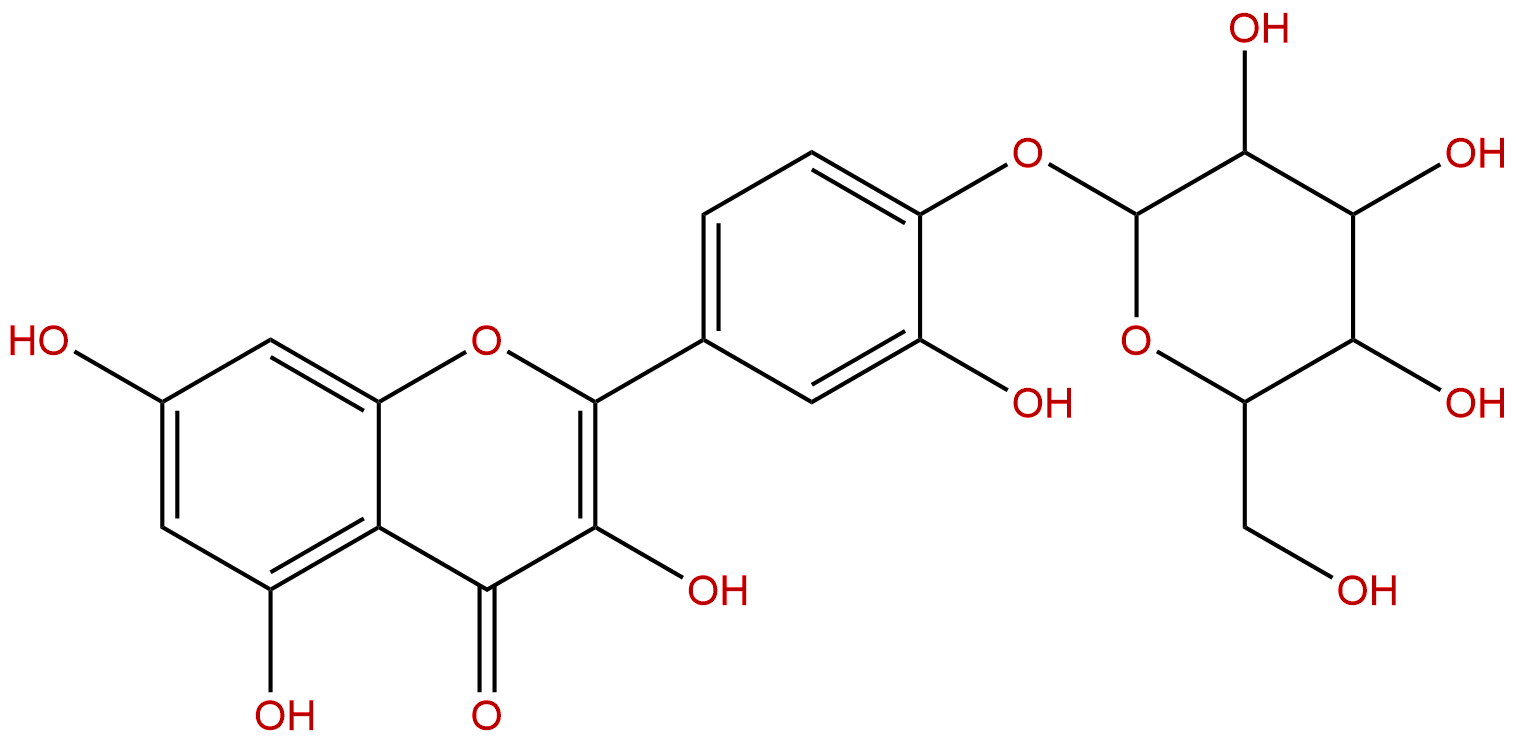
The molecular formula of steviol glycoside is C21H20O12, with a molecular weight of 464.38 g/mol. Its core structure is the flavonol skeleton quercetin (3,5,7,3 ', 4' - pentahydroxyflavone), which is connected to a β - D-glucopyranose group through an O-glycosidic bond on the 4 '- hydroxyl group of the B ring. This structural feature classifies it as quercetin O-glucoside.
In terms of physicochemical properties, the introduction of glycosidic bonds significantly enhances the hydrophilicity of the molecule. The calculated lipid water partition coefficient (LogP) is -0.1494, indicating that it has good hydrophilic properties. The topologically polar surface area (TPSA) is as high as 210.51 Å ², mainly attributed to the numerous hydrogen bond donors and acceptors (hydroxyl and glycosyl oxygen atoms) in the molecule. The theoretical water solubility value is 1.4769, indicating that it has a certain degree of solubility in water, which is better than the quercetin core with stronger lipid solubility. However, its high polarity and molecular weight also pose challenges to its ability to penetrate biological membranes, and it is predicted that its blood-brain barrier permeability will be lower. In the preliminary safety screening, its Ames test value was 0.6, indicating a low risk of mutagenicity and no significant inhibitory effect on hERG potassium channels, suggesting a low risk of cardiac toxicity. These basic pharmacological parameters lay the foundation for subsequent activity research and development.
Plant sources and extraction methods
Spiraea glycoside is widely present in various plants and is one of the characteristic components of the Spiraea genus, from which its name comes. In addition, it is distributed in onions (Allium cepa), ginkgo biloba, eucalyptus spp., and various medicinal plants such as Equisetum arvense. Its content varies in different plant parts and is often concentrated in organs such as flowers and leaves.
Solvent extraction method is commonly used to extract steviol glycosides from plant materials. Due to their polarity, methanol, ethanol, and ethanol water mixed solutions are commonly used extraction solvents. In order to improve extraction efficiency, modern technologies such as ultrasound assisted extraction (UAE), microwave-assisted extraction (MAE), and pressurized liquid extraction (PLE) have been widely used. These methods destroy plant cell walls through physical means, accelerate solvent penetration and component dissolution, and can achieve higher extraction rates in a shorter time while reducing solvent consumption.
The crude extract after extraction usually requires further separation and purification to obtain high-purity steviol glycosides. The conventional purification strategy includes: 1) liquid-liquid extraction, using solvents of different polarities (such as ethyl acetate, n-butanol) for initial enrichment; 2) Column chromatography techniques, such as silica gel column chromatography, polyamide column chromatography, and reverse phase C18 column chromatography, are effective means of separating compounds based on their polarity and hydrogen bonding forces; 3) High performance liquid chromatography (HPLC) or preparative HPLC is currently the gold standard method for obtaining high-purity monomer compounds. In recent years, high-speed countercurrent chromatography (HSCCC) has shown unique advantages in separating natural product glycosides as a liquid-liquid distribution chromatography technique that does not require solid carriers, and can avoid sample loss caused by adsorption.
Pharmacological activity research
A large number of in vitro and in vivo studies have confirmed that steviol glycosides have various pharmacological activities, and their core functions are closely related to antioxidant, anti-inflammatory, anti allergic, and anti-tumor effects.
1. Antioxidant activity
The antioxidant capacity of steviol glycoside is the basis for its many biological activities. The catechol structure (B ring 3 ', 4' - dihydroxy) and the 3-hydroxy-4-carbonyl structure of the C ring in its molecular structure enable it to effectively quench free radicals and chelate metal ions. Research has shown that inulin can significantly inhibit the generation of reactive oxygen species (ROS) induced by hydrogen peroxide (H2O2), iron ions/ascorbic acid, and other systems, and reduce the level of malondialdehyde (MDA), a final product of lipid peroxidation. In cell models, it can enhance the activity of antioxidant enzymes such as superoxide dismutase (SOD) and glutathione peroxidase (GPx), thereby strengthening the cell's antioxidant defense system.
2. Anti inflammatory and anti allergic activity
Embroidery thread chrysanthemum glycoside exhibits potent anti-inflammatory effects in various acute and chronic inflammation models. In a mouse colitis model induced by carrageenan or dextran sulfate sodium (DSS), oral administration of salidroside significantly reduced colonic tissue edema, inflammatory cell infiltration, and mucosal damage. Its anti-inflammatory effect is closely related to the inhibition of pro-inflammatory mediators such as prostaglandin E2 and nitric oxide. In terms of allergic reactions, steviol glycoside can inhibit degranulation of mast cells and histamine release, alleviate the severity of passive skin allergic reactions (PCA), and its mechanism may be related to stabilizing cell membranes and regulating intracellular calcium signaling.
3. Antitumor activity
Embroidery thread chrysanthemum glycoside exhibits growth inhibition and pro apoptotic effects on various tumor cell lines. Studies have shown that it can inhibit the proliferation of human breast cancer MCF-7 cells, human hepatoma HepG2 cells, human lung cancer A549 cells, and induce cell cycle arrest (usually in G2/M phase) and apoptosis. Its anti-tumor effect is not limited to direct cytotoxicity, but also involves inhibiting the migration and invasion of tumor cells, suggesting that it may have anti metastatic potential. It is worth noting that compared to some highly toxic chemotherapy drugs, steviol glycosides have relatively lower toxicity to normal cells and exhibit a certain degree of selectivity.
Mechanism of action and molecular targets
The multiple pharmacological activities of inulin stem from its diverse regulation of cellular signaling pathways, and its target network is complex and precise, especially in the fields of anti-inflammatory and anti-tumor effects.
1. Regulation of inflammatory signaling pathways
The anti-inflammatory effect of chrysanthemum glycoside is mainly achieved by inhibiting the activation of key transcription factors such as NF - κ B and STAT3. In macrophages stimulated by lipopolysaccharide (LPS) or TNF - α, steviol glycoside can prevent the degradation of I κ B α, thereby inhibiting the nuclear translocation of NF - κ B p65 subunit and downregulating the expression of downstream target genes, including inducible nitric oxide synthase (iNOS/NOS2), cyclooxygenase-2 (COX-2/PTGS2), TNF - α, and IL-6. IL-6 is an important pro-inflammatory cytokine, and its reduced secretion further affects the JAK/STAT3 signaling pathway. Embroidery chrysanthemum glycoside can directly or indirectly inhibit the phosphorylation and activation of STAT3, blocking its mediated inflammation and survival signals.
In addition, steviol glycoside can also act on the "sentinel" targets of inflammation perception. Research has shown that it can antagonize the activity of transient receptor potential vanillic acid subtype 1 (TRPV1) and ANKTM1 (TRPA1) channels, which are involved in pain perception and neurogenic inflammation. Inhibition of caspase-1 (CASP1) may interfere with the assembly of inflammasomes, reducing the maturation and release of inflammatory factors such as IL-1 β and IL-18.
2. Multi targeted intervention for tumor occurrence and development
In terms of anti-tumor effects, besides creating a microenvironment that is detrimental to tumor growth through the anti-inflammatory mechanisms mentioned above (inhibition of COX-2, NF - κ B, STAT3), steviol glycosides can also directly act on tumor cells. Inhibiting STAT3 signaling not only has anti-inflammatory effects, but also directly promotes tumor cell apoptosis and inhibits its proliferation. Embroidery chrysanthemum glycoside can induce apoptosis in the mitochondrial pathway, manifested as cytochrome c release, caspase-3 activation, and PARP cleavage. At the same time, it can upregulate pro apoptotic proteins (such as Bax) and downregulate the expression of anti apoptotic proteins (such as Bcl-2).
3. Molecular basis of antioxidant activity
Its antioxidant mechanism involves both direct chemical quenching and activation of the cell nuclear factor E2 related factor 2 (Nrf2) pathway. Nrf2 is a key transcription factor that regulates antioxidant response elements (ARE). Stevioside may modify Keap1 protein to promote Nrf2 nuclear entry, thereby initiating the expression of phase II detoxifying enzymes such as heme oxygenase-1 (HO-1), NAD (P) H: quinone oxidoreductase 1 (NQO1), and antioxidant proteins, forming a cell protective barrier.
Evaluation of drug properties and pharmacokinetics
Although steviol glycoside exhibits excellent biological activity in vitro, its drug like and pharmacokinetic (PK) properties in vivo are key factors determining its successful development as a drug.
According to its physical and chemical properties analysis, steviol glycoside conforms to the Rule of Five, with a molecular weight of<500, slightly higher numbers of hydrogen bond donors (8) and acceptors (12), and ideal LogP values. However, the higher TPSA may affect its oral absorption. Predicting its oral bioavailability (F) may be moderately low, with the main challenges being intestinal absorption and first pass metabolism.
Limited pharmacokinetic studies (mainly based on quercetin glycosides) suggest that after oral administration, steviol glycosides may be partially hydrolyzed by lactase rhizoglycoside hydrolase (LPH) on the brush edge of epithelial cells in the upper small intestine, releasing quercetin and glucose, which can be absorbed; The unhydrolyzed glycoside form may be slowly absorbed through the sodium dependent glucose transporter (SGLT1). After absorption, steviol glycoside and its metabolites undergo extensive II binding metabolism, mainly glucuronidation and sulfation, which are completed in the liver and intestines. Its prototype drug and metabolites are mainly excreted through bile and urine.
The low permeability of the blood-brain barrier limits its direct application in central nervous system diseases, but it may also reduce the risk of central nervous system side effects. Its good in vitro safety preliminary data (no hERG inhibition, Ames negative) is worthy of recognition, but comprehensive in vivo acute and chronic toxicity, reproductive toxicity, and other studies still need to be conducted. To improve its bioavailability, dosage form improvement strategies such as making phospholipid complexes, cyclodextrin inclusion complexes, nanocrystals, or lipid nanoparticles are important directions for future research.
Clinical application prospects and prospects
As a natural active molecule with multiple targets and functions, steviol glycoside has shown broad application prospects in the prevention and treatment of various diseases.
1. Inflammatory diseases Given its strong anti-inflammatory effects and inhibition of classic pathways such as NF - κ B and COX-2, steviol glycosides are expected to be developed for the treatment of chronic inflammatory diseases such as rheumatoid arthritis, inflammatory bowel disease (such as ulcerative colitis), asthma, and allergic dermatitis. Its combined anti allergic properties are particularly advantageous for the treatment of allergic diseases.
2. Tumor adjuvant therapy and chemoprevention The anti-tumor activity of steviol glycoside and its relatively low effect on normal cells make it possible to use it as a chemopreventive agent or in combination with conventional chemotherapy/radiotherapy to enhance efficacy and reduce side effects. Especially in tumors associated with abnormal activation of STAT3 or NF - κ B signaling, it may have the potential for targeted therapy.
3. Diseases related to metabolic syndrome Oxidative stress and chronic low-grade inflammation are the core pathological links of metabolic diseases such as obesity, type 2 diabetes, nonalcoholic fatty liver. The antioxidant and anti-inflammatory properties of steviol glycoside provide a theoretical basis for its application in these fields.
However, the clinical application still faces challenges: firstly, large-scale and standardized preclinical pharmacological evaluations and systematic toxicological studies are needed to clarify its effective dose range and safety. Secondly, it is necessary to address the issue of potentially low oral bioavailability, which relies on innovation in pharmaceutical technology. Furthermore, it is necessary to further elucidate its complex functional network and identify the main targets that play its core role, in order to avoid potential off target effects. Finally, stable and sustainable sources of raw materials or efficient biosynthetic pathways are also issues that industrialization must consider.
Future research should focus on utilizing modern molecular docking and proteomics techniques to discover new direct targets of action; Conduct in-depth pharmacological evaluation based on animal models of diseases; Explore advanced drug delivery systems; And ultimately promote standardized clinical trials to verify its safety and effectiveness in the human body.
Conclusion
As a natural source of flavonol glycoside, steviol glycoside has shown remarkable pharmacological potential in antioxidant, anti-inflammatory, anti allergic, and anti-tumor fields due to its unique chemical structure and multi-target mechanism of action. The molecular mechanisms underlying the inhibition of ROS generation and regulation of key signaling pathways such as NF - κ B and STAT3 are becoming increasingly clear. Despite facing challenges such as bioavailability in drug development, these obstacles are expected to be overcome through the optimization of modern medicinal chemistry and pharmacology methods. Overall, steviol glycoside is not only an excellent molecular tool for studying the mechanism of action of plant active ingredients, but also a drug lead compound with clear development prospects. Continued in-depth research on it will help promote the transformation of natural products into modern drugs, providing new candidate strategies and hope for the treatment of major diseases such as inflammation and tumors.