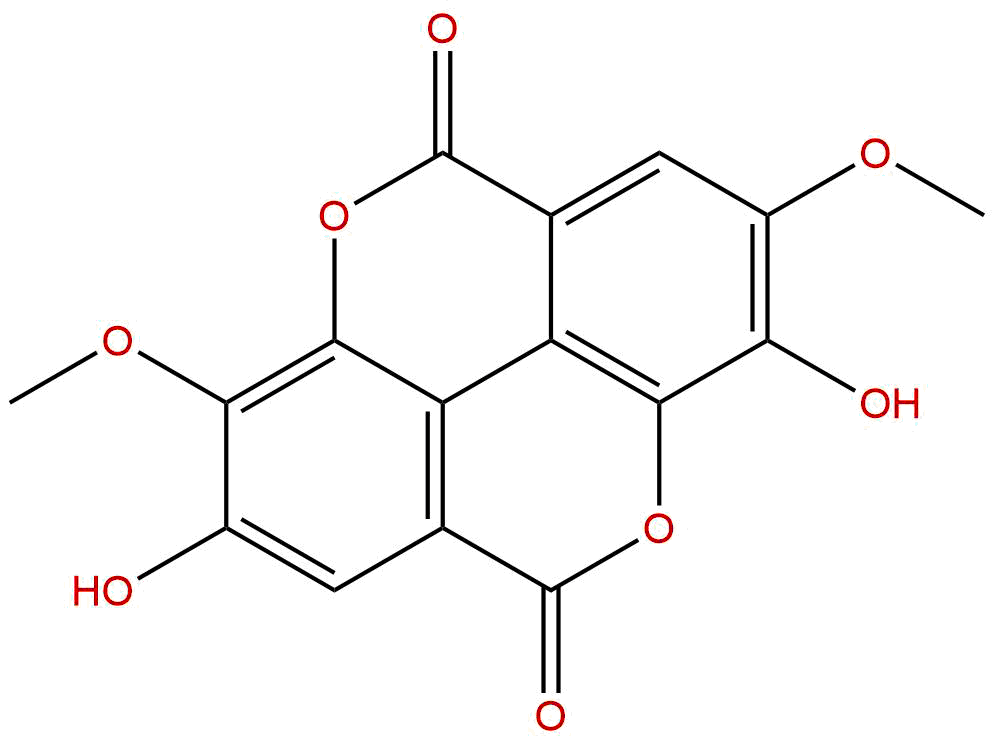


Product name: 3,4'-Di-O-methylellagic acid
Synonym name: 3,4'-O-Dimethylellagic acid
Catalogue No.: BP4758
Cas No.: 57499-59-9
Formula: C16H10O8
Mol Weight: 330.248
Botanical Source:
Type of Compound: Phenols
Purity: 95%~99%
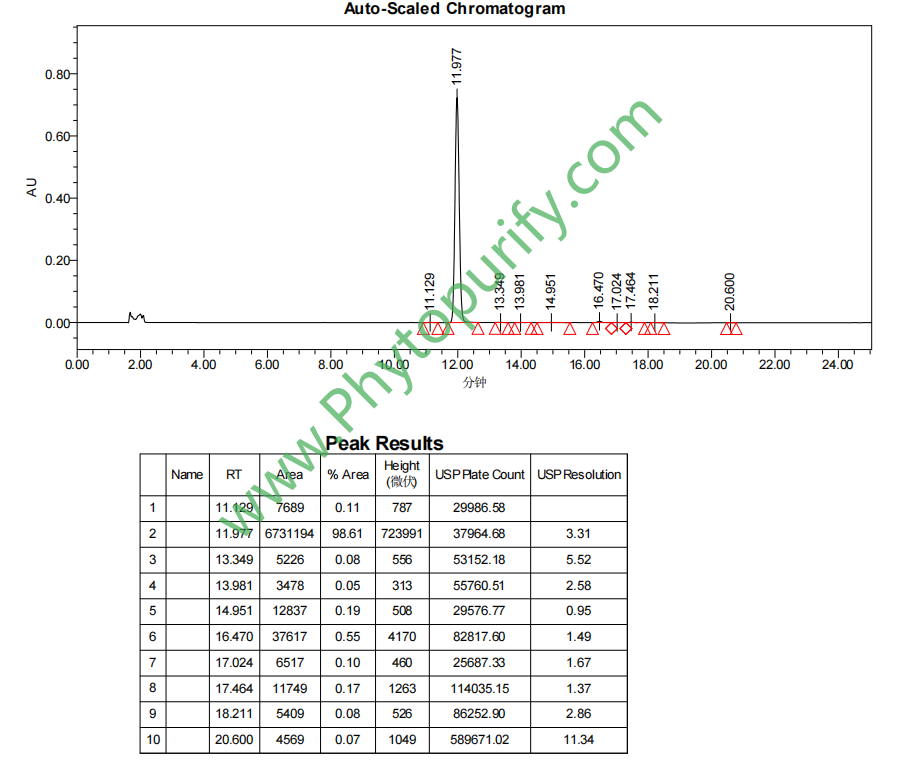
Analysis Method: HPLC-DAD or/and HPLC-ELSD
Identification Method: Mass, NMR
Packing: Brown vial or HDPE plastic bottle
Storage: Store in a well closed container, protected from air and light. Put into refrigerate or freeze for long term storage.
Whenever possible, you should prepare and use solutions on the same day. However, if you need to make up stock solutions in advance, we recommend that you store the solution as aliquots in tightly sealed vials at -20℃. Generally, these will be useable for up to two weeks.
The product could be supplied from milligrams to grams
Inquire for bulk scale.
For Reference Standard and R&D, Not for Human Use Directly.
HPLC of 3,4'-Di-O-methylellagic acid
Storage conditions:Short-term storage at 2~8℃, long-term storage at -20 ~ -80℃
119.3400
1.8091
1.1156
.0032
3.3427
6.6924
Low
84.1001
2.8494
Yes
No
Yes
No
Yes
Yes
0.9
Yes
No
Yes
Yes
Natural products, as an important source of drug discovery, play an irreplaceable role in the long history of human struggle against diseases. Tannic acid and its derivatives, as a class of polyphenolic compounds widely present in nature, have attracted much attention due to their diverse biological activities. Among them, 3,4 '- O-dimethylellagic acid (3,4' - Di-O-methylellagic acid, abbreviated as 3,4 '- DMEA), as a natural methylated derivative of ellagic acid, has emerged in the field of natural product pharmacology in recent years. This compound not only retains the core activities of antioxidant and anti-inflammatory properties of tannic acid mother nucleus, but also exhibits differentiated pharmacological properties and better metabolic stability due to its unique methylation modification. The chemical structure of 3,4 '- DMEA with CAS number 57499-59-9 determines its potential for interaction with various inflammation related signaling pathways and target proteins, including IL-6, STAT3, CASP1, TRPV1, RELA, PTGS1, TNF, TRPA1, IKBKB, and NOS2. These targets are widely involved in key physiological and pathological processes such as inflammation, oxidative stress, cell apoptosis, and pain transmission. This article aims to systematically review the chemical properties, plant sources, pharmacological activities, mechanisms of action, medicinal properties, and clinical application prospects of 3,4 '- O-dimethyltannic acid, in order to provide comprehensive academic references for the in-depth research and development of this natural product.
The chemical essence of 3,4 '- O-dimethylellagic acid is the dimethyl ether derivative of ellagic acid. Tannic acid itself is a dimer formed by the internal esterification reaction of two gallic acid molecules. Its core structure is a highly conjugated six membered ring system, containing four phenolic hydroxyl groups and one lactone ring. The structural feature of 3,4 '- DMEA is that specific phenolic hydroxyl groups located on two different benzene rings in the molecule are replaced by methoxy groups (- OCH ∝): one methoxy group is attached to the carbon atom at position 3, and the other is attached to the carbon atom at position 4'. This selective methylation modification alters the molecular polarity, hydrogen bond donor/acceptor ability, and spatial conformation of the compound while maintaining the basic framework of tannic acid, thereby profoundly affecting its physicochemical properties and biological activity.
From the perspective of physicochemical properties, the molecular weight of 3,4 '- DMEA is 330.2480 g/mol, which belongs to the category of small molecule compounds and meets the basic requirements of Lipinski's Rule of Five. The LogP of its lipid water partition coefficient is 1.8091, indicating that the compound has moderate lipophilicity, which facilitates its crossing of the phospholipid bilayer of the cell membrane, but also suggests its limited solubility in aqueous environments. In fact, its water solubility is only 0.0032 mg/mL, making it a poorly soluble compound, which may be one of the main challenges facing its oral bioavailability. The topological polar surface area (TPSA) is 119.3400 Å ², which is slightly higher than the recommended upper limit of 140 Å ² for oral medications, but still within an acceptable range. Higher TPSA is usually associated with lower membrane permeability, but it also suggests that the compound may not easily penetrate the blood-brain barrier (BBB), which is evaluated as "low". This limits its application in central nervous system diseases to some extent, but may also be an advantage in avoiding central side effects. In addition, the risk assessment of hERG inhibition is' no ', indicating a low risk of inducing QT interval prolongation and arrhythmia in the heart, which is a positive pharmacological signal. The Ames test result is 0.9, indicating a low potential genetic toxicity risk, but a more comprehensive toxicological evaluation is needed to confirm.
3,4 '- O-dimethyltannic acid is not a rare artificial compound, but a natural secondary metabolite widely present in various medicinal and edible plants. Its biosynthetic pathway usually originates from the shikimic acid pathway, passing through intermediates such as gallic acid and hexahydroxybiphenyldicarboxylic acid (HHDP), and ultimately generated under the catalysis of methyltransferase. There are numerous plant species reported to contain 3,4 '- DMEA, mainly concentrated in Rosaceae, Myrtaceae, Euphorbiaceae, Combretaceae, and other families. For example, the presence of this compound has been detected in the fruits and leaves of Rosaceae plants such as Fragaria × ananassa and Rubus idaeus, in the bark and leaves of Myrtle plants such as Eucalyptus spp., and in the entire plant of Euphorbiaceae plants such as Phyllanthus urinaria. In addition, some traditional Chinese medicinal herbs such as Terminalia chabula, Punica granatum peel, and Sanguisorba officinalis are also important sources of 3,4 '- DMEA. It is worth noting that there are significant differences in their content among different plants, tissue parts, and growth stages, which provides a basis for selecting the optimal raw materials for extraction.
For the extraction of 3,4 '- DMEA, solvent extraction method is currently mainly used, supplemented by modern separation and purification techniques. Due to its lipophilicity and frequent coexistence with tannic acid, gallic acid, and other polyphenolic substances in plant matrices, selecting appropriate solvents and extraction conditions is crucial. Common extraction solvents include methanol, ethanol, acetone, and their aqueous solutions. For example, using a 70% -80% methanol or ethanol aqueous solution for cold soaking or hot reflux extraction can effectively extract the target compound. In recent years, green extraction techniques such as ultrasound assisted extraction (UAE) and microwave-assisted extraction (MAE) have been successfully applied to improve extraction efficiency and selectivity. After concentration, the extraction solution is usually subjected to liquid-liquid extraction (such as ethyl acetate or n-butanol extraction) for preliminary enrichment. Further purification depends on various chromatographic techniques, such as silica gel column chromatography, Sephadex LH-20 gel column chromatography, preparative high-performance liquid chromatography (prep HPLC), etc. Due to the small polarity difference between 3,4 '- DMEA and structurally similar compounds such as tannic acid, high performance liquid chromatography (HPLC) combined with ultraviolet detector (UV) or mass spectrometry detector (MS) is the standard method for separating and identifying this compound. By optimizing the mobile phase system (such as acetonitrile water or methanol water, adding a small amount of formic acid or acetic acid), effective separation and purity identification of the target compound can be achieved.
The pharmacological activity research of 3,4 '- O-dimethyltannic acid, currently the most in-depth and extensive field, is its anti-inflammatory effect. Numerous in vitro and in vivo experimental evidence suggests that this compound is an effective anti-inflammatory molecule.
Anti inflammatory activity: In cell models, 3,4 '- DMEA can significantly inhibit the release of various pro-inflammatory cytokines, including tumor necrosis factor - α (TNF - α), interleukin-6 (IL-6), and interleukin-1 β (IL-1 β), by macrophages (such as RAW264.7 cells) stimulated by lipopolysaccharide (LPS). Meanwhile, it can also downregulate the expression of inducible nitric oxide synthase (iNOS, encoded by NOS2 gene) and cyclooxygenase-2 (COX-2, encoded by PTGS2 gene), thereby reducing the production of inflammatory mediators such as nitric oxide (NO) and prostaglandin E ₂ (PGE ₂). These effects have been validated in various inflammatory cell models. In animal models, 3,4 '- DMEA also demonstrated good anti-inflammatory effects. For example, in the carrageenan induced rat paw swelling model, oral or local administration of 3,4 '- DMEA can significantly reduce the degree of swelling, and its effect is comparable to that of the positive control drug. In chronic inflammation models such as collagen induced arthritis (CIA), this compound can also alleviate joint swelling, bone erosion, and inflammatory cell infiltration. In addition, 3,4 '- DMEA also exhibits protective effects on inflammation related disease models such as acute lung injury, colitis, and dermatitis.
Antioxidant activity: As a polyphenolic compound, 3,4 '- DMEA inherits the powerful free radical scavenging ability of tannic acid. The phenolic hydroxyl group and conjugated system in its molecular structure enable it to effectively scavenge 1,1-diphenyl-2-trinitrophenylhydrazine (DPPH) free radicals, 2,2 '- bis (3-ethylbenzothiazole-6-sulfonic acid) (ABTS) cationic free radicals, and hydroxyl free radicals. At the same time, it can chelate transition metal ions (such as Fe ² ⁺, Cu ² ⁺), inhibit the Fenton reaction, and thus reduce the generation of reactive oxygen species (ROS). In the cellular oxidative stress model, pre-treatment with 3,4 '- DMEA can significantly reduce intracellular ROS levels, protect cells from oxidative damage, and upregulate the activity of antioxidant enzymes such as superoxide dismutase (SOD), catalase (CAT), and glutathione peroxidase (GPx).
Other pharmacological activities: In addition to anti-inflammatory and antioxidant effects, 3,4 '- DMEA has also been reported to have various other biological activities. For example, some studies have shown that it has certain anti-tumor activity, can inhibit the proliferation of various cancer cells, and induce their apoptosis, which may be related to its inhibition of the STAT3 signaling pathway. In addition, it has been found to have potential for antibacterial, antiviral, anti fibrotic, and neuroprotective properties. Especially in pain management, considering its ability to act on the transient receptor potential (TRP) channels TRPV1 and TRPA1, which are closely related to pain conduction, 3,4 '- DMEA may have analgesic effects, providing new ideas for its application in the treatment of inflammatory pain.
The complex pharmacological activity of 3,4 '- O-dimethyltannic acid is rooted in its regulation of multiple molecular targets and signaling pathways. Based on existing research, its core mechanism of action can be summarized as follows:
1. Inhibition of NF - κ B signaling pathway: Nuclear factor kappa B (NF - κ B) is the core transcription factor in inflammatory response. In the resting state, NF - κ B (usually a p50/p65 heterodimer encoded by the RELA gene) binds to its inhibitory protein I κ B α and exists in an inactive form in the cytoplasm. When stimulated by inflammation such as LPS and TNF - α, I κ B kinase (IKK, encoded by genes such as IKBKB) is activated, phosphorylating I κ B α and leading to its ubiquitination degradation. The released NF - κ B is immediately translocated into the nucleus, initiating the transcription of various pro-inflammatory genes such as TNF - α, IL-6, iNOS, COX-2. Research has shown that 3,4 '- DMEA can effectively inhibit the activity of IKK, prevent the phosphorylation and degradation of I κ B α, and thus block the nuclear translocation and transcriptional activity of NF - κ B. This is one of the core mechanisms by which it exerts anti-inflammatory effects.
2. Regulating the STAT3 signaling pathway: Signal transducer and activator of transcription factor 3 (STAT3) plays a crucial role in inflammation, immune response, and tumorigenesis. Multiple cytokines (such as IL-6) and growth factors can activate STAT3. Activated STAT3 forms a dimer and translocates into the nucleus, regulating the expression of downstream target genes. Research has found that 3,4 '- DMEA can inhibit IL-6-mediated phosphorylation of STAT3, particularly at the Tyr705 site, thereby suppressing STAT3 activation and nuclear translocation. This explains why it can effectively inhibit the production of IL-6 and its downstream signaling, forming a negative feedback regulatory loop, further enhancing its anti-inflammatory effect.
3. Regulating NLRP3 inflammasome: NLRP3 inflammasome is a multi protein complex, and its activation is a key step in caspase-1 (encoded by the CASP1 gene) - dependent cell pyroptosis and the mature release of pro-inflammatory cytokines such as IL-1 β and IL-18. 3,4 '- DMEA has been reported to inhibit the assembly and activation of NLRP3 inflammasomes, thereby reducing the activation of caspase-1 and the secretion of IL-1 β. This mechanism may be related to its antioxidant activity, as ROS is an important signal for NLRP3 inflammasome activation.
4. Inhibit the arachidonic acid metabolism pathway: Cyclooxygenase (COX, including COX-1 and COX-2, encoded by PTGS1 and PTGS2 genes, respectively) and lipoxygenase (LOX) are key enzymes involved in the metabolism of arachidonic acid into inflammatory mediators such as prostaglandins and leukotrienes. 3,4 '- DMEA can directly inhibit the activity of COX-2 and reduce the production of PGE ₂. Its inhibitory effect on COX-1 is relatively weak, which may indicate a lower risk of gastrointestinal side effects. In addition, it may also inhibit the activity of phospholipase A2 (PLA2) and reduce the release of arachidonic acid, thereby suppressing the production of inflammatory mediators from the source.
5. Adjust TRP channel: TRPV1 and TRPA1 are non selective cation channels expressed on sensory neurons and are key molecules for sensing pain, heat, cold, and chemical stimuli. Inflammatory mediators can sensitize or directly activate these channels, leading to the generation of pain signals. Research has shown that 3,4 '- DMEA can directly or indirectly inhibit the activity of TRPV1 and TRPA1, which may be an important molecular basis for its analgesic effect.
In summary, 3,4 '- DMEA exerts its powerful anti-inflammatory and analgesic effects through multi-target and multi pathway synergistic effects, including inhibiting inflammatory signal transduction, blocking the synthesis of inflammatory mediators, regulating immune cell function, and intervening in pain transmission.
Although 3,4 '- O-dimethyltannic acid exhibits remarkable pharmacological activity, its successful conversion into clinical drugs still requires rigorous pharmacological evaluation, with pharmacokinetic (PK) properties being a key consideration factor.
Drug Evaluation: From the perspective of "drug like properties", the molecular weight (330.25 Da) and LogP (1.81) of 3,4 '- DMEA both conform to the Lipinski Five Rules (MW<500, LogP<5), indicating its good oral drug potential. Although its TPSA (119.34 Å ²) is slightly higher, it is still within an acceptable range. More importantly, its hERG inhibition risk is low, and the Ames test is negative, showing a good preliminary signal of safety. However, its extremely low water solubility (0.0032 mg/mL) is the biggest weakness, which will severely limit its oral absorption. In addition, the metabolic instability and first pass effects commonly present in polyphenolic compounds are also challenges that need to be overcome. Therefore, 3,4 '- DMEA is a typical compound with high activity and low solubility, and its dissolution and bioavailability need to be improved through formulation techniques such as solid dispersions, nanocrystals, liposomes, etc.
Pharmacokinetic characteristics: At present, there is insufficient systematic research on the pharmacokinetics of 3,4 '- DMEA in vivo. However, based on its structural similarity to tannic acid and some existing studies, its PK characteristics can be inferred
- Absorption: Poor oral absorption and low bioavailability. Its insolubility is the main reason. In addition, it may be partially absorbed in the small intestine, but to a limited extent.
- Distribution: Due to its moderate lipophilicity, it may have some tissue distribution ability. However, low BBB permeability indicates limited distribution in the central nervous system.
- Metabolism: This is the most critical aspect of its PK characteristics. Similar to tannic acid, 3,4 '- DMEA may undergo extensive phase II metabolism in the body, mainly binding with glucuronic acid and sulfuric acid to form more water-soluble complexes, which are easily excreted through urine and bile. In addition, the gut microbiota may also affect its metabolism, converting it into smaller phenolic acids. It is worth noting that methylation modification (i.e. 3,4 '- DMEA itself) may make it more resistant to phase I metabolism (such as oxidation) than tannic acid, thereby prolonging its half-life in vivo.
- Excretion: It is mainly excreted in the form of metabolites through urine and feces.
Improvement strategy: In order to improve the pharmacological properties of 3,4 '- DMEA, future research directions should include:
1. Pre drug design: By introducing phosphate ester, amino acid ester and other functional groups on its phenolic hydroxyl group, the water solubility is improved, and the original drug is released in vivo through enzymatic interpretation.
2. Development of new formulations: Utilize nanotechnology (such as lipid nanoparticles, polymer micelles) or phospholipid complex technology to enhance their solubility and oral bioavailability.
3. Structural modification: On the basis of maintaining the core pharmacophore, molecules should be modified reasonably to improve their physicochemical properties and metabolic stability.
Based on the unique pharmacological activity and relatively good safety of 3,4 '- O-dimethyltannic acid, it has shown broad application prospects in the treatment and prevention of various diseases.
1. Inflammatory diseases: This is its most direct application area. Given its strong anti-inflammatory activity, 3,4 '- DMEA is expected to be developed as a drug for treating chronic inflammatory diseases such as rheumatoid arthritis, inflammatory bowel disease (Crohn's disease, ulcerative colitis), psoriasis, asthma, etc. Its multi-target mechanism of action may have better efficacy and lower resistance risk than single target anti-inflammatory drugs.
2. Pain management: By inhibiting TRPV1 and TRPA1 channels, 3,4 '- DMEA may become a novel non opioid analgesic for the treatment of inflammatory pain, neuropathic pain, and other conditions. This provides a new option for the pain management field currently facing the opioid crisis.
3. Metabolic disorders: Chronic low-grade inflammation is the common pathological basis of obesity, type 2 diabetes, non-alcoholic fatty liver disease (NAFLD) and other metabolic diseases. The anti-inflammatory and antioxidant properties of 3,4 '- DMEA make it a potential candidate compound for improving insulin resistance, reducing liver steatosis, and regulating glucose and lipid metabolism.
4. Tumor adjuvant therapy: Although its direct anti-tumor activity may not be as good as some potent chemotherapy drugs, it can enhance the sensitivity of tumor cells to chemotherapy and radiotherapy and alleviate the inflammatory response caused by treatment by inhibiting the STAT3 and NF - κ B pathways. Therefore, it may serve as an adjuvant drug for tumor treatment, exerting a synergistic and detoxifying effect.
Outlook: Despite the promising prospects, the clinical translation of 3,4 '- DMEA still faces many challenges. Firstly, it is necessary to establish an efficient and economical large-scale preparation process to meet the needs of research and development. Secondly, it is necessary to conduct systematic and in-depth pharmacokinetic and toxicological studies, especially long-term toxicity, reproductive toxicity, and carcinogenicity assessments. Again, it is necessary to use modern medicinal chemistry methods to address the core issues of poor water solubility and low bioavailability through structural modification or formulation techniques. Finally, rigorous clinical trials need to be designed to validate its efficacy and safety in specific diseases. With the continuous deepening of research on natural products and the advancement of modern drug development technology, 3,4 '- O-dimethyltannic acid, an ancient and novel molecule, is expected to make important contributions to human health in the future.
3,4 '- O-dimethyltannic acid, as an important natural methylated derivative in the tannic acid family, exhibits significant biological activity in anti-inflammatory, antioxidant, analgesic and other fields due to its unique chemical structure and multi-target pharmacological mechanism of action. It exerts synergistic effects by regulating multiple key signaling nodes such as NF - κ B, STAT3, NLRP3 inflammasome, arachidonic acid metabolism pathway, and TRP ion channel, reflecting the advantages of natural products' multi-target and multi pathway effects. Although its poor water solubility and low oral bioavailability are the main bottlenecks in drug development, these problems are expected to be solved through prodrug design, new formulation technology, and reasonable structural modification. In the future, with in-depth research on its pharmacokinetic characteristics, toxicological spectrum, and role in a wider range of disease models, 3,4 '- DMEA is expected to gradually develop from a promising natural active molecule into an innovative drug candidate for treating inflammation, pain, and metabolic diseases, injecting new vitality into modern drug discovery and human health.
