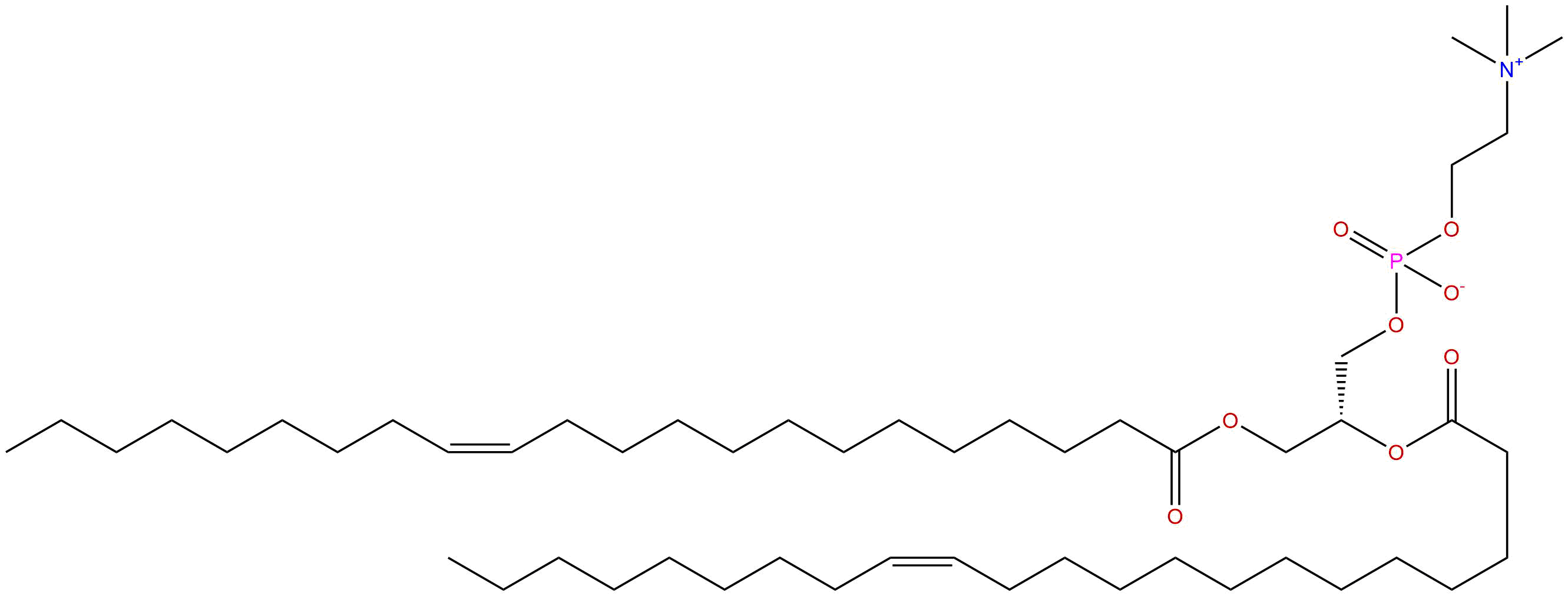


Product name: 1,2-dierucoyl-sn-glycero-3-phosphocholine
Synonym name: DEPC; 1,2-Dierucoyl-sn-glycero-3-PC;L-Dierucoyl lecithin;Dierucoyllecithin
Catalogue No.: BP2381
Cas No.: 51779-95-4
Formula: C52H100NO8P
Mol Weight: 898.345
Botanical Source:
Type of Compound: Aliphatics
Purity: 95%~99%
Analysis Method: HPLC-DAD or/and HPLC-ELSD
Identification Method: Mass, NMR
Packing: Brown vial or HDPE plastic bottle
Storage: Store in a well closed container, protected from air and light. Put into refrigerate or freeze for long term storage.
Whenever possible, you should prepare and use solutions on the same day. However, if you need to make up stock solutions in advance, we recommend that you store the solution as aliquots in tightly sealed vials at -20℃. Generally, these will be useable for up to two weeks.
The product could be supplied from milligrams to grams
Inquire for bulk scale.
For Reference Standard and R&D, Not for Human Use Directly.
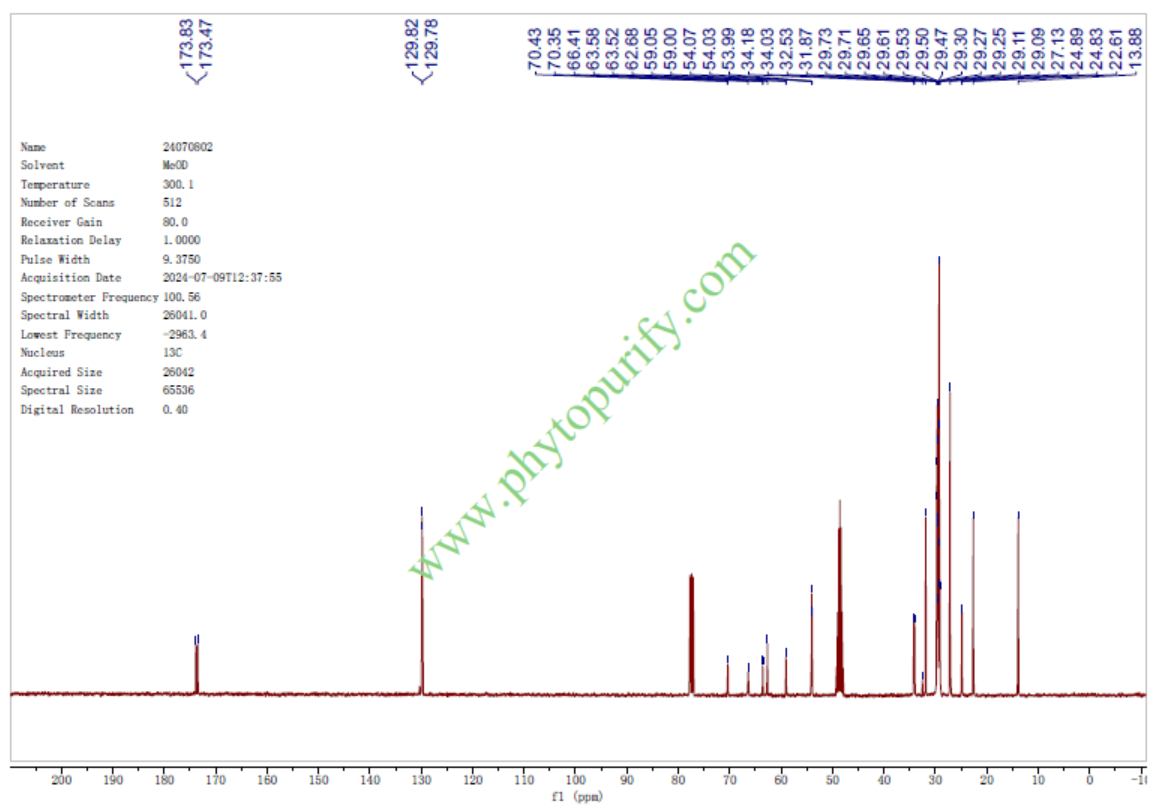
NMR of 1,2-dierucoyl-sn-glycero-3-phosphocholine
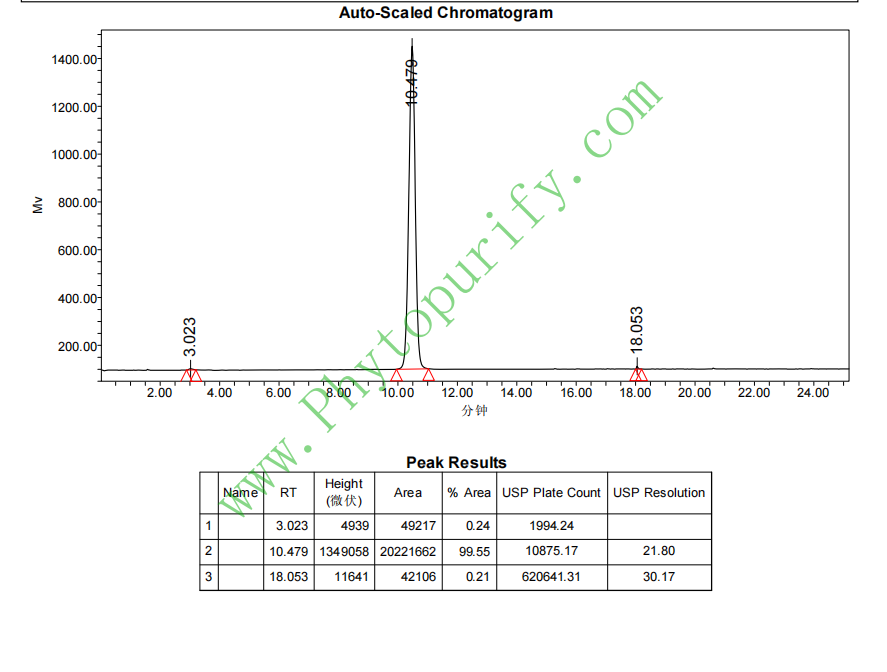
HPLC of 1,2-dierucoyl-sn-glycero-3-phosphocholine
Storage conditions:Short-term storage at 2~8℃, long-term storage at -20 ~ -80℃
108.3600
10.8771
10.4996
.0011
.3085
.1647
High
90.0381
4.3296
No
Yes
Yes
No
No
No
0.0
No
No
No
No
In the vast field of natural product chemistry and pharmacology research, phospholipid compounds have always occupied a pivotal position due to their unique amphiphilic structure and their core position in the biofilm system. Phosphatidylcholine (PC), as the main component of the phospholipid bilayer of the cell membrane, is not only the cornerstone for maintaining cell structural integrity, but also a key molecule involved in cell signal transduction, lipid metabolism regulation, and substance transmembrane transport. Among the numerous phosphatidylcholine molecules with different structures, di-n-butyl-sn-glycero-3-phosphocholine (DEPC) exhibits distinct physicochemical properties and biological activities from common phospholipids such as DOPC or DPPC due to its unique fatty acid chain composition - two erucic acid (C22:1, cis-13) chains. Mustard acid, as a long-chain monounsaturated fatty acid (C22:1, n-9), mainly exists in the oils and fats of cruciferous plants such as rapeseed and mustard seeds. When two erucic acid chains are simultaneously esterified at the sn-1 and sn-2 positions of the glycerol backbone, the resulting DEPC molecule exhibits significantly increased molecular volume, longer hydrophobic tails, and unique phase transition behavior.
For a long time, DEPC has been mainly used as a membrane material for the preparation of liposomes, especially when constructing nano delivery systems with high membrane rigidity, low permeability, and long cycling characteristics. DEPC is highly favored due to its high phase transition temperature (Tm) and tight molecular packing properties. However, in recent years, with the in-depth exploration of the pharmacological functions of natural products and endogenous lipid molecules, whether DEPC itself has direct biological activity beyond its role as an "inert carrier" has gradually become a research hotspot. Preliminary evidence suggests that DEPC and its metabolites may regulate inflammatory responses, cell proliferation and apoptosis, and even nervous system function by affecting cell membrane fluidity, regulating membrane protein function, and participating in lipid signaling networks. Given its unique structural features - the ultra long fatty acid chain (C22) and a specific position of a cis double bond, DEPC may form a special microdomain structure in biological membranes, which in turn affects the aggregation and signal transduction of membrane related receptors.
This review aims to systematically summarize the chemical nature, origin, pharmacological activity, mechanism of action, and potential for drug formation of the special phospholipid molecule, dipyridamoyl phosphatidylcholine. By integrating existing literature and computational prediction data, we will delve into the possibility of DEPC transitioning from a classic liposome excipient to a candidate molecule with independent pharmacological activity, and evaluate its application prospects in drug development, particularly for central nervous system diseases, metabolic diseases, and inflammation related diseases. Although there is currently insufficient research on the direct pharmacological activity of DEPC, its unique physicochemical parameters, such as extremely high lipid solubility (LogP>10), extremely low water solubility, and predicted high blood-brain barrier permeability, suggest that it may have pharmacokinetic behavior and biological effects different from conventional phospholipids. This article aims to provide comprehensive background knowledge for further research in this field and stimulate a re examination of these "atypical" phospholipid molecules.
The chemical structure of dicyclophosphatidylcholine is precisely defined in its nomenclature. Its core skeleton is sn-glycero-3-phosphocholine, which is a typical glycerophospholipid structure. A molecule of erucic acid is connected to the sn-1 and sn-2 hydroxyl positions of the glycerol skeleton through ester bonds, respectively. The chemical structure of Erucic acid is cis-13 docosenoic acid, with the molecular formula C22H42O2. This means that both fatty acid chains of DEPC are long chains of 22 carbon atoms, and there is a cis configuration double bond at the 13th carbon atom from the carboxyl end. This structure endows DEPC with a series of unique physicochemical properties.
In terms of molecular weight, the precise molecular weight of DEPC is 899.3530 Da, which belongs to high molecular weight phospholipids. Its large hydrophobic tail exhibits extremely strong lipophilicity, with a calculated LogP value of 10.8771, much higher than common phospholipids such as DOPC (LogP of about 8-9). The extremely high LogP value means that the solubility of DEPC in aqueous environments is extremely low, with a predicted water solubility of only 0.0011 mg/mL. This extreme hydrophobicity determines that DEPC tends to spontaneously form highly ordered lipid bilayers or other aggregate structures in aqueous solutions, rather than existing in monomeric form. Its polar surface area (TPSA) is 108.36 Å ², mainly derived from the phosphatidylcholine head group, which ensures its interfacial interaction ability with water molecules and is the basis for the formation of stable liposomes.
In terms of phase transition behavior, due to the length of the erucic acid chain and the position of the double bond, the phase transition temperature (Tm) of DEPC is significantly higher than that of phospholipids containing unsaturated short chains (such as oleic acid C18:1). Research has shown that the Tm value of DEPC is typically around 10-15 ° C, much higher than DOPC (around -20 ° C). This means that at the physiological temperature (37 ° C), the DEPC bilayer is in the relatively ordered gel phase or near gel phase, and its membrane fluidity is low, and its accumulation is more compact. The high rigidity and low fluidity of DEPC liposomes make them more stable in vivo circulation, effectively encapsulating drugs and reducing leakage. This is also the main reason why they have been widely studied as drug delivery carriers. In addition, the cis double bond in the erucic acid chain introduces a "twist" in the long chain, which to some extent prevents the complete extension and tight packing of the chain. However, compared to oleic acid (C18:1), its twist effect is relatively weakened due to its longer chain length, and overall it still maintains a high degree of orderliness. This structural feature enables DEPC to form a membrane structure with specific curvature and rigidity when mixed with other lipids such as cholesterol.
Diphosphatidylcholine is not a universal phospholipid widely present in all organisms, and its source has obvious species specificity. The naturally occurring DEPC is mainly enriched in the seed oil of certain Brassicaceae plants, especially those varieties with extremely high erucic acid content. Rapeseed (Brassica napus), mustard seed (Brassica juncea), and sea cabbage (Crambe Abyssinica) are known to be the main sources of erucic acid. In the seeds of these plants, triglycerides (TAG) are the main storage lipids, while phospholipids exist in the membrane structures of seed cells and oil bodies. When plant seeds are rich in erucic acid, the acyl chain composition in their membrane phospholipids will also be adjusted accordingly, and DEPC may exist as a component of membrane phospholipids. However, it should be noted that the content of DEPC in natural plant tissues is usually much lower than that of common phospholipids such as DL phosphatidylcholine (DLPC) or DOPC. Its biosynthesis may involve specific acyltransferases, which have substrate preferences for mustard coenzyme A.
Extracting and purifying DEPC from plants is a challenging task mainly due to its low content and coexistence with a large number of other lipids. The classic extraction process usually follows the principle of Folch method or Bligh Dyer method, using a chloroform methanol (2:1, v/v) mixed solvent system to extract total lipids from dried plant seed powder. After filtration and washing (usually using 0.9% NaCl solution to remove non lipid impurities), the total lipid extract is obtained. Subsequently, a series of chromatographic separation techniques are required to enrich and purify DEPC.
The first step is usually silica gel column chromatography, which utilizes the polarity differences of different lipid categories (such as neutral lipids, glycolipids, phospholipids) for preliminary separation. By using solvents such as chloroform, acetone, and methanol for gradient elution, triglycerides, free fatty acids, and glycolipids can be sequentially eluted. Finally, phospholipid components can be eluted using methanol or a chloroform methanol water mixture system. The obtained total phospholipid component still contains multiple phosphatidylcholine molecules (such as PC with different acyl chain combinations). In order to separate DEPC from it, more efficient chromatographic techniques such as high-performance liquid chromatography (HPLC) are needed. Reverse phase HPLC (RP-HPLC) is a commonly used method for separating different molecular species of PC, typically using a C18 chromatographic column and a methanol water or acetonitrile water system (often with added ammonium salts such as ammonium formate or ammonium acetate) as the mobile phase. Due to its longest carbon chain (C22:0/C22:1) and strongest hydrophobicity, DEPC has the longest retention time in reverse phase chromatography and can achieve baseline separation from PC containing shorter chains (such as C16, C18). In addition, normal phase HPLC (NP-HPLC) or supercritical fluid chromatography (SFC) can also be used for fine separation based on head group and acyl chain composition. Mass spectrometry (MS) detector, especially electrospray ionization mass spectrometry (ESI-MS), is a key tool to identify and confirm the purity of DEPC, which is confirmed by its precise molecular ion peak ([M+H]+or [M+Na]+) and characteristic fragment ions (such as choline phosphate headbase fragment m/z 184).
Given the low efficiency and high cost of extracting DEPC directly from plants, current research and commercial applications mainly use chemical synthesis or semi synthesis methods to prepare DEPC. High purity DEPC can be efficiently obtained by esterification reaction of sn-glycero-3-phosphocholine with Erucoyl chloride or erucic anhydride. The synthesized product needs to undergo strict purification (such as column chromatography, recrystallization) and characterization (NMR, MS, HPLC) to ensure that its chemical structure and purity meet research or application standards.
Although the physical and chemical properties of DEPC as a liposome membrane material have been extensively studied, its direct and independent pharmacological activity research is still in its infancy, and literature reports are relatively limited. However, based on its structural characteristics and preliminary biological experiments, the following potential active directions can be summarized.
1. Effects on the physical properties of cell membranes and regulation of cell functions: The most direct pharmacological effect of DEPC comes from its incorporation into the cell membrane, which alters the physical properties of the membrane. Research has shown that when exogenous DEPC is taken up by cells or integrated into the cell membrane through membrane fusion, its long chain and high phase transition temperature significantly increase the rigidity of the cell membrane and reduce its fluidity. The decrease in membrane fluidity can affect the functions of various membrane related proteins, including ion channels, receptors, and transporters. For example, in immune cells, a decrease in membrane fluidity may inhibit the aggregation and signal transduction of T cell receptors, thereby exerting immunomodulatory effects. In cancer cells, abnormal membrane fluidity is one of its characteristics, which may interfere with the invasion and metastasis ability of cancer cells by "hardening" the cell membrane through DEPC. In addition, DEPC may promote the formation of more ordered lipid raft structures in the membrane, thereby affecting lipid raft dependent signaling pathways such as PI3K/Akt and MAPK pathways.
2. Anti inflammatory and immune regulatory activity: Long chain fatty acids and their phospholipid derivatives play complex roles in inflammatory responses. Mustard acid itself is believed to have anti-inflammatory properties in some studies, such as reducing the production of pro-inflammatory cytokines by inhibiting the NF - κ B pathway. As a carrier of erucic acid, DEPC may exert anti-inflammatory effects through two pathways: one is as a prodrug, hydrolyzed by phospholipase A2 (PLA2) in the body, releasing free erucic acid, which then acts on the target; The second is that the complete DEPC molecule directly acts on the cell membrane or intracellular receptors. Preliminary cell experiments suggest that DEPC liposome pretreatment can reduce the secretion levels of TNF - α, IL-6, and IL-1 β in macrophages stimulated by lipopolysaccharide (LPS). The mechanism may be related to the inhibition of TLR4 receptor aggregation or downstream MyD88 dependent signal transduction. However, these findings still need to be validated in more rigorous in vivo models.
3. Effects on the nervous system: Given its predicted high blood-brain barrier (BBB) permeability, the potential impact of DEPC on the central nervous system (CNS) is particularly noteworthy. The brain is the organ with the richest lipid content, and phospholipid metabolism is closely related to neurodegenerative diseases such as Alzheimer's disease and Parkinson's disease. DEPC or its metabolite erucic acid may affect the membrane properties, synaptic plasticity, and myelin formation of neurons. Mustard acid is a precursor for the synthesis of neurogenic acid (C24:1, cis-15), which is an important component of myelin sheath phospholipids and crucial for nerve conduction. Therefore, supplementing DEPC may support the repair and maintenance of myelin sheaths by providing erucic acid, which has potential therapeutic value in demyelinating diseases such as multiple sclerosis. On the other hand, high erucic acid intake has been historically associated with myocardial steatosis ("myocardial lipid deposition syndrome"), although this is still controversial in humans, suggesting that its metabolism may have a dual nature. Therefore, the application of DEPC in CNS requires careful evaluation of its long-term safety.
4. Metabolic regulatory activity: As a lipid molecule, DEPC may be involved in regulating systemic energy metabolism and lipid homeostasis. The liver is the core organ for phospholipid metabolism. Exogenous DEPC may regulate the activity of lipid metabolism related enzymes (such as fatty acid synthase and acetyl CoA carboxylase) or affect the assembly and secretion of lipoproteins by affecting the composition of liver cell membranes. There is a hypothesis that phospholipids rich in long-chain monounsaturated fatty acids may improve liver steatosis by activating nuclear receptors such as PPAR alpha, promoting beta oxidation of fatty acids. However, there is currently a lack of direct evidence to support the significant anti obesity or lipid-lowering effects of DEPC.
The mechanism of action of DEPC is multi-layered, including non-specific membrane physical effects and possibly involving specific molecular interactions. At present, the understanding of its molecular targets is mainly based on inference and limited experimental data, which is not yet perfect.
1. Membrane targets and signal platform effects: The core mechanism of DEPC is to indirectly regulate membrane protein function by altering the physicochemical environment of the cell membrane. Its long-chain saturated/monounsaturated fatty acid chains tend to form thicker and more ordered microdomains in the membrane. This structural change can directly affect:
* Receptor aggregation and activation: The function of many cell surface receptors, such as receptor tyrosine kinases RTKs and G protein coupled receptors GPCRs, depends on their lateral diffusion and oligomerization on the membrane. The increase in membrane rigidity induced by DEPC limits the movement of receptors, thereby inhibiting ligand induced dimerization and downstream signal activation.
* Ionic channel gating: The thickness of the membrane and the lipid environment directly affect the conformational balance of transmembrane ion channels. DEPC may regulate the opening probability and ion permeability of channels by changing the elasticity of the membrane or interacting with specific lipid binding sites in the channels.
* Dynamics of lipid rafts: DEPC may preferentially allocate or exclude lipid raft microdomains, thereby altering the composition, size, and stability of lipid rafts. Due to the fact that lipid rafts serve as platforms for many signaling molecules, such as Src family kinases and GPI anchored proteins, DEPC intervention can reshape the entire signaling network.
2. Metabolic enzymes and signal lipid generation: DEPC is a substrate for various phospholipases.
* Phospholipase A2 (PLA2): CPLA2 and sPLA2 in cells can hydrolyze the sn-2 ester bond of DEPC, releasing free erucic acid and lysophosphatidylcholine (Lyso PC). Mustard acid itself can act as a signaling molecule to activate or inhibit nuclear receptors such as PPAR alpha and PPAR gamma, or as a substrate for long-chain fatty acid CoA to enter beta oxidation. Lyso PC is an important bioactive lipid that participates in inflammation, immunity, and metabolic regulation by acting on receptors such as GPR4 and GPR119.
* Phospholipase C (PLC) and phospholipase D (PLD): DEPC can also be hydrolyzed by PLC to produce diacylglycerol (DAG) and phosphatidylcholine, or hydrolyzed by PLD to produce phosphatidic acid (PA) and choline. DAG is a classic activator of protein kinase C (PKC), while PA is a key regulator of the mTOR signaling pathway. Therefore, the metabolism of DEPC can generate a series of second messengers with potent signaling functions.
3. Potential direct protein targets: Although the evidence is limited, DEPC or erucic acid may directly bind to certain proteins.
* Fatty acid binding proteins (FABPs): As a long-chain fatty acid, erucic acid can bind to FABPs in cells and be transported to the nucleus or mitochondria, affecting gene expression or energy metabolism.
* Nuclear receptors: Free erucic acid has been proven to be a weak agonist of PPAR alpha. It is not clear whether DEPC itself can act as a ligand to directly bind and activate certain nuclear receptors (such as LXRs, FXRs), but this is a direction worth exploring.
* Transporter protein: The extremely high lipophilicity of DEPC may make it a substrate or regulator for certain ABC transporters (such as ABCB1/P-gp, ABCG2/BCRP), which is related to its predicted high BBB permeability. If DEPC is a substrate of P-gp, its brain concentration may be limited; On the contrary, if it can inhibit P-gp, it may serve as an adjuvant to enhance the brain delivery of other CNS drugs.
Based on the provided pharmacological parameters, a preliminary evaluation of DEPC can reveal its enormous potential and severe challenges as a candidate drug.
1. Analysis of pharmacological parameters:
* Molecular weight (899.35 Da) and LogP (10.88): These two parameters far exceed the limits of the traditional "Lipinski Five Rules" (MW<500, LogP<5). This indicates that DEPC has extremely high lipophilicity and a large molecular size, and its oral bioavailability is extremely low, making it almost impossible to be absorbed by the intestine through passive diffusion. Therefore, DEPC is not suitable for development as a traditional oral small molecule drug. Its application pathways may be limited to injection (such as liposome injections), local administration, or as part of nanocarriers.
* Water solubility (0.0011 mg/mL): The extremely low water solubility further confirms its unsuitability for traditional oral dosage forms. However, in liposomes, DEPC is dispersed as a membrane material in the aqueous phase, and its "solubility" problem is avoided by its self-assembly behavior.
* High blood-brain barrier permeability: This is a highly attractive feature. Despite its high molecular weight, the extremely high lipophilicity of DEPC theoretically allows it to cross the BBB through passive diffusion. However, whether it will be recognized by efflux transporters (such as P-gp) on the endothelial cells of cerebral capillaries and pumped back into the bloodstream is the key to determining its actual concentration in the brain. The predicted result is' high ', indicating that it may not be a potent efflux transporter substrate or can effectively enter the brain parenchyma through some mechanism (such as membrane fusion). This gives it a unique advantage in CNS drug development.
* HERG inhibition (no) and Ames test (0.0): These two security indicators are very ideal. HERG negative indicates a low risk of DEPC causing prolonged QT interval and fatal arrhythmia in the heart. A negative Ames test indicates that it does not have significant mutagenicity and has a low risk of genetic toxicity. This provides a good security window for the further development of DEPC.
2. Pharmacokinetic characteristics (speculation):
* Absorption: Oral absorption is extremely poor. Injection administration (intravenous, intramuscular, subcutaneous) is the main route. When injected in the form of liposomes, the in vivo behavior of DEPC is mainly determined by the overall properties of the liposome particles (size, surface charge, degree of PEGylation), rather than the properties of individual DEPC molecules.
* Distribution: After intravenous injection, DEPC liposomes are mainly taken up by macrophages in the reticuloendothelial system (RES), such as the liver and spleen. Long cycle PEGylated liposomes can reduce RES uptake and prolong circulation time. Due to its high lipophilicity and predicted high BBB permeability, DEPC molecules (whether intact or released from liposomes) may be widely distributed in lipid rich tissues, particularly in the brain, adipose tissue, and liver.
* Metabolism: The main metabolic pathway of DEPC is enzymatic hydrolysis. In blood and tissues, various phospholipases (such as LCAT, PLA2, PLB) can hydrolyze it. Both sn-1 and sn-2 ester bonds can be hydrolyzed to generate glycerophosphocholine, free erucic acid, and Lyso-PC. Free erucic acid subsequently undergoes beta oxidation, partially converting into longer chain fatty acids (such as neuroacids). Lyso PC can be further metabolized or reacylated.
* Excretion: Metabolites such as erucic acid and water-soluble degradation products are mainly excreted through urine and bile. The complete DEPC molecule is almost not filtered by the glomerulus due to its enormous molecular weight and lipophilicity.
Based on the above analysis, the clinical application prospects of DEPC mainly focus on the following directions, among which nanomedicine and CNS diseases are the two core areas.
As a functional liposome membrane material: This is the most mature application direction of DEPC. Due to its high rigidity and low permeability, DEPC liposomes are particularly suitable for:
* Long acting sustained-release formulation: Encapsulate chemotherapy drugs, anesthetics, or hormones to achieve slow drug release, prolong the duration of action, and reduce the frequency of administration.
* Improve drug stability: Protect drugs that are easily hydrolyzed or oxidized (such as certain proteins, peptides, nucleic acids) from environmental damage in the body.
* Targeted delivery: Surface modification of targeting ligands (such as antibodies and peptides) on DEPC liposomes, utilizing their stable membrane structure to ensure that ligands are not shed during circulation, achieves precise targeting.
2. Central nervous system drug delivery: Given its high BBB permeability, DEPC is an ideal material for constructing brain targeted liposomes. By mixing DEPC with other lipids such as DSPE-PEG, nanocarriers that can stably encapsulate drugs and efficiently cross the BBB can be prepared. This is of great significance for the treatment of CNS diseases such as brain tumors, Alzheimer's disease, Parkinson's disease, epilepsy, etc.
3. Exploration of Active Pharmaceutical Ingredients (APIs): This is a more forward-looking direction. If the anti-inflammatory, neuroprotective, and metabolic regulatory activities of DEPC or its metabolites (erucic acid, Lyso PC) are confirmed in vivo, DEPC itself may become a therapeutic drug.
* Multiple sclerosis (MS) and other demyelinating diseases: Promoting myelin regeneration by providing erucic acid as a precursor to neuroacids.
* Chronic inflammatory diseases: Developing injectable liposomes for the treatment of rheumatoid arthritis, inflammatory bowel disease, and other conditions by utilizing their membrane hardening properties and potential NF - κ B inhibitory activity.
* Metabolic syndrome: Explore its potential to improve liver steatosis and regulate lipid metabolism.
4. As a vaccine adjuvant: Some phospholipids have immune adjuvant activity. The high rigidity membrane of DEPC may more effectively present antigens and activate specific immune pathways, making it a candidate component for novel vaccine adjuvant systems.
Future prospects and challenges:
* Mechanism research urgently needs to be deepened: At present, there is little understanding of the direct pharmacological mechanism of DEPC. It is necessary to use modern molecular biology techniques such as lipidomics, proteomics, and surface plasmon resonance to systematically identify its direct protein targets and elucidate its signaling network.
* In vivo efficacy and safety verification: Its anti-inflammatory and neuroprotective effects must be validated in various animal disease models. Meanwhile, rigorous long-term toxicity studies are required, particularly to evaluate the potential effects of high-dose erucic acid on the heart and liver.
* Pharmaceutical Science Challenge: How to prepare high concentration, uniform, and stable DEPC liposomes and achieve controlled drug release is a key issue that needs to be addressed in pharmaceutical science. Its extremely high Tm value may lead to instability of liposomes during preparation and storage.
* Metabolite activity attribution: It is necessary to clarify whether it is the DEPC molecule itself or its hydrolysis products erucic acid or Lyso PC that play the main pharmacological role in the body. This will determine the future direction of drug design, whether to develop DEPC prodrugs or directly use their active metabolites.
Diphosphatidylcholine, a phospholipid molecule initially considered as an "inert" membrane material for liposome preparation, is gradually showing potential beyond its traditional role with a deeper understanding of its chemical nature and biological effects. Its unique ultra long chain monounsaturated fatty acid structure endows it with extremely high lipophilicity, membrane rigidity, and predicted high blood-brain barrier permeability, making it an irreplaceable advantage in nanomedicine delivery, especially in central nervous system targeted therapy. More importantly, preliminary pharmacological activity studies suggest that DEPC and its metabolites may directly participate in physiological processes such as anti-inflammatory, neuroprotective, and metabolic regulation by regulating the physical properties of cell membranes, affecting lipid signaling networks, and suggesting that it may itself be a natural product with biological activity.
However, we must be aware that current research on the direct pharmacological activity of DEPC is still in a very early stage, and many findings are still at the cellular level or based on computational predictions. Key scientific issues such as its mechanism of action, in vivo efficacy, long-term safety, and metabolite activity attribution still require systematic and rigorous experimental research to clarify. The pharmacological properties of DEPC exhibit typical "double-edged sword" characteristics: its extremely high lipophilicity brings excellent membrane penetration ability and CNS targeting potential, but also brings extremely low oral bioavailability and challenges in formulation. Therefore, future research should focus on: 1) using modern pharmacological methods to deeply explore its direct molecular targets and signaling pathways; 2) Validate its efficacy and safety in various in vivo disease models; 3) Develop innovative formulation technologies to overcome their physical and chemical deficiencies and fully leverage their unique biological advantages.
In summary, dicyclophosphatidylcholine is an underestimated natural phospholipid molecule with multiple potentials. The transition from liposome excipients to potential active drugs will not only expand our understanding of phospholipid biological functions, but also potentially open up new avenues for the treatment of CNS diseases, inflammatory diseases, and metabolic diseases. The in-depth study of this molecule will undoubtedly bring new insights and breakthroughs to the fields of natural product pharmacology and nanomedicine.
