| Catalog No | Package | Original Price | Price | Inventory | Quantity | Operating |
|---|---|---|---|---|---|---|
| BP4749-5mg | 5mg | $420.00 | Sign in |
|


Storage conditions:Short-term storage at 2~8℃, long-term storage at -20 ~ -80℃
68.9000
1.9963
1.9962
.1904
1.8052
20.7679
High
75.4130
3.1420
No
No
No
No
Yes
Yes
0.9
Yes
No
Yes
Yes
Natural products, as an important source of drug discovery, play an irreplaceable role in the long history of human fight against diseases. From ancient medicinal plants to modern medicinal chemistry, the diverse structures and unique activities of secondary metabolites in nature have always been a treasure trove of inspiration for innovative drug development. Among the many biologically active natural products, it comes from the blood of the Rutaceae plant, the Flying Dragon Palm(Toddalia asiatica Toddanol, a coumarin compound of (L.) Lam., has attracted widespread attention from scholars at home and abroad in recent years due to its unique chemical skeleton and significant anti-tumor activity.
Flying Dragon Palm Blood, also known as Seeing Blood Flying, Three Hundred Stick, and Great Rescue, is a woody vine widely distributed in tropical and subtropical regions of Asia, Africa, and Oceania. In the traditional medical system, especially in some regions of China, India, and Africa, Feilong Palm Blood has been used for a long time to treat rheumatism, rheumatism, bruises, swelling and pain, malaria, and various inflammatory diseases. Its folk medicinal value has prompted scientists to conduct systematic research on its chemical composition. Since the 1970s, various compounds including alkaloids, coumarins, terpenes, and flavonoids have been isolated and identified from this plant. Among them, Toddanol (CAS number: 77715-99-2), as a novel furanocoumarin compound, has become one of the most important active ingredients in this plant due to its unique chemical structure and broad-spectrum cytotoxicity exhibited in various tumor cell lines.
Modern pharmacological research has shown that the anti-tumor effect of Feilongzhang Xueenolide is not a single mechanism, but is achieved through the synergistic action of multiple targets and pathways. It can simultaneously act on apoptosis regulatory proteins (such as MCL1, BCL2), signal transduction pathways (such as STAT3, MAPK1), tumor microenvironment (such as MMP2, HIF1A), DNA topoisomerases (such as TOP1, TOP2A), and hormone related targets (such as ESR1, CYP19A1), demonstrating great potential as a multi-target anti-tumor lead compound. However, despite its exciting pharmacological activity, the compound also faces challenges in drug development, such as poor water solubility and high blood-brain barrier permeability, which not only bring the possibility of targeted therapy for the central nervous system, but also increase the potential risk of neurotoxicity.
This article aims to systematically review the chemical structure, plant origin, extraction process, pharmacological activity, mechanism of action, pharmacological evaluation, and clinical application prospects of Feilongzhang blood enol lactone, in order to provide comprehensive scientific basis for the in-depth research and development of this natural product.
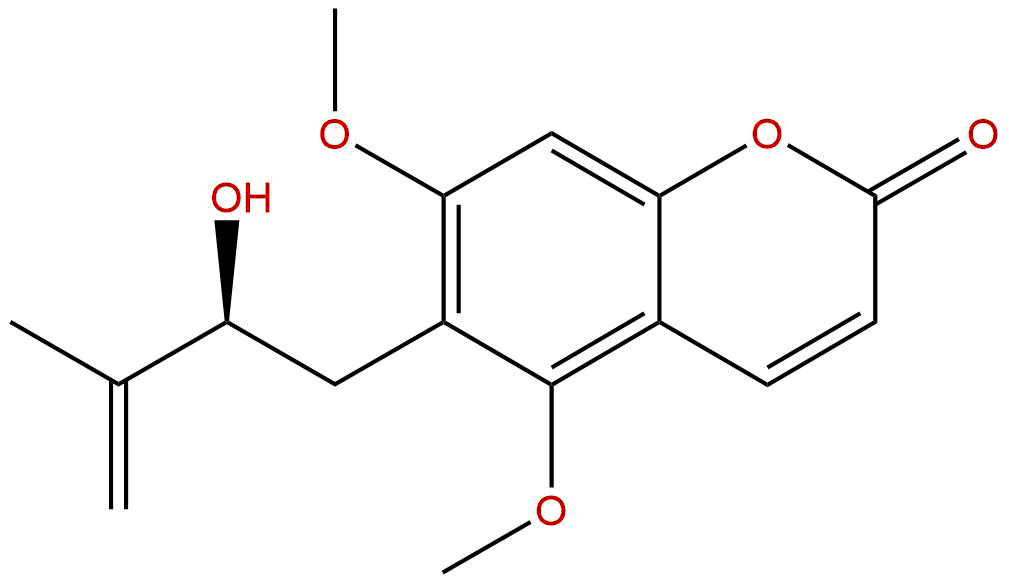
Toddanol belongs to the furanocoumarin class of compounds, and its core skeleton is formed by the linear or angular fusion of a coumarin parent nucleus (benzo [a] - pyranone) with a furan ring. Specifically, the structural feature of Toddanol is the presence of an isopentenyl side chain attached to its furan ring, and hydroxyl substitution at specific positions in the coumarin core. This unique structure endows the molecule with rich chemical properties and potential biological activity.
From the perspective of physicochemical properties, Toddanol has a molecular weight of 290.3150 Da, belonging to the category of small molecule compounds, which provides a structural basis for its binding to various target proteins in cells. Its lipid water partition coefficient (LogP) is 1.9963, which is in the moderate lipophilic range. This value indicates that Toddanol has both water solubility and good lipid solubility, making it easy to penetrate biofilms. However, its calculated water solubility is only 0.1904 mg/mL, which belongs to low water solubility compounds. This may pose challenges in actual drug development and in vivo administration, and needs to be improved through formulation methods such as liposomes, cyclodextrin inclusion complexes, nanoparticles, etc.
The topological polar surface area (TPSA) is 68.9000 Å ², which is lower than the threshold of passive diffusion through the blood-brain barrier (approximately 90 Å ²), indicating that the compound has good central nervous system penetration ability. In fact, its blood-brain barrier (BBB) permeability is predicted to be "high", which means Toddanol can effectively enter brain tissue in vivo. This characteristic has potential advantages for treating brain tumors (such as glioblastoma) or central nervous system diseases, but at the same time, it also means being vigilant about the potential neurotoxicity it may cause to normal brain tissue.
In terms of early assessment of drug safety, Toddanol's hERG inhibition prediction result is' no ', indicating a low risk of causing cardiac QT interval prolongation and fatal arrhythmias, which is a positive indication of drug efficacy. However, the Ames test predicted a value of 0.9, which is close to the positive threshold, indicating that the compound may have potential genotoxicity or mutagenicity. This risk needs to be rigorously validated and evaluated through in vitro and in vivo experiments in subsequent toxicology studies.
The main plant source of enol lactone in Feilongzhang blood is Feilongzhang blood, a plant of the genus Feilongzhang blood in the Rutaceae family(Toddalia asiatica). This plant is widely distributed and has abundant resources worldwide. In China, it is mainly distributed in southwestern China (Yunnan, Guizhou, Sichuan), southern China (Guangxi, Guangdong, Fujian), as well as provinces such as Hunan and Hubei. It often grows on mountain slopes, forest edges, or roadsides at an altitude of 400-2000 meters. Phytochemical studies have shown that Toddanol is distributed in the roots, stems, leaves, and fruits of the dragon's palm blood, but the content varies depending on the location, place of origin, harvest season, and processing method. Generally speaking, roots and rhizomes have relatively high content and are the main parts traditionally extracted.
Traditional extraction methods are mostly based on solvent extraction. Given Toddanol's moderate lipophilicity, organic solvents with moderate polarity are usually selected for extraction. The classic process route is to crush dried dragon palm blood roots or whole plants, and extract them repeatedly with ethanol (usually 70% -95%) or methanol at room temperature or heating conditions through percolation or reflux extraction. After the extraction solution is concentrated under reduced pressure, the total extract is obtained. Subsequently, preliminary separation was carried out using liquid-liquid extraction method, such as dispersing the total extract in water and sequentially extracting with solvents of different polarities such as petroleum ether, chloroform, ethyl acetate, n-butanol, etc. Due to Toddanol's LogP value approaching 2, it is typically enriched in chloroform or ethyl acetate extraction sites.
Further separation and purification require reliance on modern chromatographic techniques. Silica gel column chromatography is the most commonly used method, often using petroleum ether ethyl acetate or chloroform methanol systems for gradient elution. Collect the fraction containing the target compound through thin-layer chromatography (TLC) detection. For coumarin impurities with similar structures, it may be necessary to use Sephadex LH-20 gel column chromatography for molecular sieve separation, or use medium pressure preparative liquid chromatography (MPLC) and high performance preparative liquid chromatography (HPLC) for refining. In recent years, high-speed countercurrent chromatography (HSCCC) has been successfully applied for the rapid separation of coumarin components in the blood of Feilong Palm due to its high separation efficiency and irreversible adsorption advantages. Through the above comprehensive methods, high-purity Feilongzhang blood enol lactone monomers can ultimately be obtained.
It is worth noting that in order to improve extraction efficiency and protect the environment, some green extraction technologies have also been explored, such as ultrasound assisted extraction, microwave-assisted extraction, and supercritical fluid extraction (SC-CO ₂). These technologies can significantly shorten extraction time, improve the extraction rate of target compounds, and reduce the use of organic solvents, which is in line with the development trend of modern green chemistry.
The pharmacological activity research of Feilongzhang Xueenolide mainly focuses on its anti-tumor effect, while there are also a few studies involving its anti-inflammatory, antioxidant and other biological activities.
Antitumor activity This is the core pharmacological activity of Toddanol. Numerous in vitro cell experiments have confirmed that Toddanol exhibits significant inhibitory effects on the proliferation of various human tumor cell lines. Its action spectrum is very broad, covering many cell lines such as lung cancer (such as A549), breast cancer (such as MCF-7, MDA MB-231), liver cancer (such as HepG2, SMMC-7721), gastric cancer (such as SGC-7901), colon cancer (such as HT-29), prostate cancer (such as PC-3), cervical cancer (such as HeLa), and leukemia (such as HL-60, K562). The half maximal inhibitory concentration (IC ₅₀) value is usually at the micromolar level, and some sensitive cell lines can even reach the nanomolar level, demonstrating strong cytotoxicity. It is worth noting that Toddanol also exhibits certain cytotoxic activity against certain drug-resistant tumor cell lines, suggesting its potential to overcome multidrug resistance (MDR).
anti-inflammatory activity Given that the blood of Flying Dragon Palm is commonly used in folk medicine to treat inflammatory diseases, the anti-inflammatory activity of Toddanol has also received attention. Research has shown that this compound can inhibit the production of nitric oxide (NO) and prostaglandin E ₂ (PGE ₂) in macrophages induced by lipopolysaccharide (LPS), and its mechanism may be related to the inhibition of the expression of inducible nitric oxide synthase (iNOS) and cyclooxygenase-2 (COX-2). In addition, it can downregulate the levels of pro-inflammatory cytokines such as tumor necrosis factor - α (TNF - α), interleukin-6 (IL-6), and interleukin-1 β (IL-1 β).
antioxidant activity Coumarin compounds usually have a certain antioxidant capacity. Toddanol has shown activity in DPPH radical scavenging experiments, ABTS radical scavenging experiments, and reducing power measurements, indicating its ability to directly scavenge free radicals or chelate metal ions, thereby exerting antioxidant effects. This activity may have a synergistic relationship with its anti-inflammatory and anti-tumor effects.
Other activities Preliminary studies also suggest that Toddanol may have anti angiogenic, antibacterial (especially against certain Gram positive bacteria), and neuroprotective effects, but research in these areas is not yet in-depth and needs further validation.
The anti-tumor mechanism of Feilongzhang Xueenolide is extremely complex, exhibiting typical multi-target and multi pathway regulatory characteristics. According to existing research, its mechanism of action can be mainly summarized into the following aspects, which are highly consistent with the given targets.
1. Inducing cell apoptosis This is the core mechanism by which Toddanol exerts anti-tumor effects. It can induce tumor cell apoptosis through both endogenous (mitochondrial) pathway and exogenous (death receptor) pathway.
- Regulating BCL-2 family proteins Toddanol can significantly downregulate the expression of anti apoptotic proteins MCL1 (myeloid leukemia 1) and BCL2 (B-cell lymphoma 2), while upregulating the expression of pro apoptotic proteins BAX and BAK. The disruption of this balance leads to an increase in mitochondrial outer membrane permeability, the release of cytochrome c, which in turn activates Caspase-9 and Caspase-3, ultimately triggering a cascade of apoptotic reactions.
- Inhibition of STAT3 signaling pathway STAT3 (Signal Transduction and Transcription Activation Factor 3) is a key oncogenic transcription factor that is continuously activated in various tumors. Toddanol can inhibit the phosphorylation of STAT3 (Tyr705 site), block its nuclear translocation and transcriptional activity. The inactivation of STAT3 not only directly downregulates the expression of downstream target genes such as MCL1, BCL2, Cyclin D1, VEGF, but also enhances the sensitivity of tumor cells to apoptotic signals.
2. Inhibit cell proliferation and cycle arrest Toddanol can arrest the tumor cell cycle in the G0/G1 phase or G2/M phase. The mechanism is related to the inhibition of MAPK1 (mitogen activated protein kinase 1, ERK2) phosphorylation. The MAPK/ERK pathway is the core pathway that regulates cell proliferation and differentiation. Toddanol inhibits this pathway by downregulating the expression of Cyclin D1 and CDK4/6, thereby preventing cells from entering the S phase from the G1 phase and suppressing DNA synthesis.
3. Inhibit tumor invasion and metastasis The invasion and metastasis of tumors are the main causes of patient death. Toddanol can significantly inhibit the migration and invasion ability of tumor cells.
- Inhibition of MMP2 Matrix metalloproteinase-2 (MMP2) is a key enzyme that degrades the extracellular matrix (ECM) and plays an important role in tumor metastasis. Toddanol can downregulate the expression of MMP2 at both mRNA and protein levels, thereby reducing ECM degradation and inhibiting tumor cell invasion.
- Inhibit HIF1A Hypoxia inducible factor 1 alpha (HIF1A) is a key regulatory factor for tumor adaptation to the hypoxic microenvironment. Toddanol can inhibit the protein expression and transcriptional activity of HIF1A, thereby downregulating its downstream target genes such as VEGF (vascular endothelial growth factor), thereby inhibiting tumor angiogenesis and cutting off the tumor's nutritional supply.
4. Targeted DNA Topoisomerase Toddanol has inhibitory effects on both DNA topoisomerase I (TOP1) and topoisomerase II alpha (TOP2A). Topoisomerase is an essential enzyme in DNA replication and transcription processes. Toddanol forms stable "drug enzyme DNA" ternary complexes with TOP1 or TOP2A, preventing the reconnection of DNA strands, leading to DNA damage and cell death. This mechanism is similar to the widely used camptothecin inhibitors (TOP1 inhibitors) and etoposide inhibitors (TOP2 inhibitors) in clinical practice.
5. Interference with hormone signaling pathways Toddanol has shown a unique role in hormone dependent tumors (such as breast cancer).
- Antagonistic ESR1 ESR1 (estrogen receptor α) is an important target for the treatment of breast cancer. Research has shown that Toddanol can bind to ESR1 and antagonize estrogen induced transcriptional activity, acting similarly to selective estrogen receptor modulators (SERMs).
- Inhibition of CYP19A1 CYP19A1 (aromatase) is a key enzyme that catalyzes the conversion of androgens to estrogens. Toddanol can inhibit the activity of aromatase, thereby reducing the estrogen level in the body, which is of positive significance for the treatment of estrogen receptor positive breast cancer. This dual mechanism of simultaneously acting on receptors and synthetases gives it unique advantages in the treatment of breast cancer.
In summary, Toddanol forms a synergistic network by simultaneously acting on multiple key targets such as MCL1, BCL2, STAT3, MMP2, TOP1, HIF1A, TOP2A, MAPK1, ESR1, and CYP19A1, comprehensively inhibiting tumor growth, proliferation, metastasis, and angiogenesis, and inducing apoptosis.
Although Feilongzhang Xueenolide exhibits strong pharmacological activity in vitro, its successful conversion into clinical drugs depends on its drug like and pharmacokinetic (ADME) properties.
Drugability assessment:
- drug-likeness Toddanol's molecular weight (290.3 Da) and LogP (1.99) fully comply with the "Lipinski Five Rules" (molecular weight<500, LogP<5), indicating that it has good drug like properties and theoretically, its oral bioavailability should not be too poor.
- Water solubility As mentioned earlier, poor water solubility (0.19 mg/mL) is its main weakness. This may result in incomplete oral absorption or require the use of solubilizers for injection administration. This is a common problem in natural products, which can be improved through prodrug design, salt formation, or nanoformulation technology.
- Metabolic stability Coumarin compounds are usually easily metabolized by the liver cytochrome P450 enzyme system (CYP450), especially CYP3A4 and CYP2C9. The furan ring and isopentenyl side chain of Toddanol may be the main metabolic sites, which are prone to oxidation, epoxidation, or hydrolysis reactions. Its metabolic stability needs to be further evaluated through liver microsomal experiments.
- Toxicity risk The Ames test positive prediction (0.9) is a signal that requires high vigilance. This may be due to its furan ring structure, which, after metabolic activation in vivo, may produce electrophilic intermediates that covalently bind to DNA, leading to genetic toxicity. In addition, high BBB permeability also suggests the need to evaluate its potential neurotoxicity, such as dizziness, drowsiness, and even more severe central nervous system side effects.
Pharmacodynamics (Prediction and Prospect):
- absorb Due to the moderate LogP, Toddanol can theoretically be absorbed by the gastrointestinal tract through passive diffusion. But low water solubility will limit its dissolution rate, thereby affecting the degree of absorption. Its oral bioavailability may be low and needs to be improved through formulation methods.
- distribution High BBB permeability means Toddanol is widely distributed in the body, especially able to enter brain tissue. Its apparent distribution volume (Vd) may be relatively large. The plasma protein binding rate is not yet clear, but coumarins typically have a higher binding rate with albumin.
- Metabolism Expected to be mainly metabolized by liver CYP450 enzyme. Metabolites may include hydroxylation, dealkylation, or epoxidation products. Some metabolites may still be active, but they may also be toxic.
- excretion Metabolites and small amounts of prototype drugs may be excreted from the body through the kidneys (urine) and bile (feces).
Overall, Toddanol is a lead compound with a good drug like skeleton but significant shortcomings. The key to optimizing its medicinal properties lies in: 1) improving water solubility through structural modifications (such as introducing hydrophilic groups); 2) Improve metabolic stability by blocking metabolic sites or designing prodrugs; 3) Identify its genetic toxicity risk through toxicological studies and attempt to reduce toxicity through structural modifications.
Feilongzhang Xueenolide, with its unique chemical structure and multi-target mechanism of action, has shown broad application prospects in multiple disease fields, especially in tumor treatment.
1. Anti tumor therapy This is the most direct application direction of Toddanol. Its broad-spectrum anti-tumor activity, especially its inhibitory effect on breast cancer, lung cancer, liver cancer and leukemia, makes it have the potential to develop new anti-tumor drugs. Its dual mechanism of simultaneously targeting ESR1 and CYP19A1 may make it superior to a single target drug in the treatment of hormone receptor positive breast cancer. In addition, its inhibition of TOP1 and TOP2A activity gives it the potential to be developed as a novel topoisomerase inhibitor, overcoming the resistance issues of existing drugs such as camptothecin and etoposide. For brain tumors such as glioblastoma, Toddanol's high BBB permeability is a unique advantage that allows it to directly target intracranial lesions.
2. Combination therapy strategy Given Toddanol's multi-target properties, it is highly suitable as a component of combination therapy. For example, it can be used in combination with conventional chemotherapy drugs such as cisplatin and paclitaxel to enhance efficacy, reduce dosage and toxicity through synergistic effects. It can also be used in combination with targeted drugs (such as monoclonal antibodies or small molecule inhibitors targeting EGFR and HER2) to overcome drug resistance by blocking bypass signaling pathways. In addition, combination with immune checkpoint inhibitors such as PD-1/PD-L1 antibodies may enhance the efficacy of immunotherapy by regulating the tumor microenvironment (inhibiting HIF1A, MMP2).
3. Structural optimization and discovery of lead compounds Toddanol's natural skeleton provides an excellent platform for pharmaceutical chemists to modify. Through computer-aided drug design (CADD) and structure-activity relationship (SAR) studies, its structure can be systematically modified. For example, introducing different substituents on the coumarin core or furan ring to optimize its water solubility, metabolic stability, and target selectivity. The goal is to develop derivatives with stronger activity, lower toxicity, and better pharmacokinetic properties.
4. Challenges and Future Directions Faced:
- Toxicity issue A positive Ames test is the biggest obstacle. Future research must first confirm its genetic toxicity through in vitro and in vivo experiments (such as micronucleus assay, comet assay) and identify the toxic groups. If the toxicity does indeed originate from the furan ring, it can be considered to eliminate the toxicity through ring opening or saturation treatment.
- bioavailability Efficient drug delivery systems such as liposomes, polymer micelles, nanocrystals, etc. need to be developed to improve their water solubility and oral bioavailability.
- In depth study of mechanisms Although multiple targets are known, the primary secondary relationships, synergistic mechanisms, and actual functional networks among them still need to be further analyzed through methods such as gene knockout, proteomics, and network pharmacology.
- Resource sustainability Although Flying Dragon Palm Blood is widely distributed, its wild resources are limited. It is necessary to establish artificial cultivation techniques or utilize biotechnology (such as plant cell culture, genetic engineering) to sustainably produce Toddanol.
Toddanol, a natural furan coumarin derived from the traditional medicinal plant Toddanol, has become a remarkable new star in the field of natural product drug development due to its unique chemical structure and broad-spectrum anti-tumor activity on multiple key targets such as MCL1, BCL2, STAT3, MMP2, TOP1, HIF1A, TOP2A, MAPK1, ESR1, CYP19A1, etc. It not only reveals the modern scientific connotation of traditional medicinal use of Feilong Palm Blood, but also provides valuable lead compounds for the development of multi-target, low toxicity new anti-tumor drugs.
However, Toddanol still has a long way to go from laboratory discovery to clinical application. The low water solubility, potential genetic toxicity, and unknown risks associated with high blood-brain barrier permeability are the key bottlenecks restricting its drug development. Future research should focus on optimizing structures through medicinal chemistry to reduce toxicity and improve pharmacokinetic properties; Using advanced formulation technology to solve the problem of water solubility; And carry out systematic and in-depth in vivo pharmacological and toxicological evaluations.
In summary, Fei Long Zhang Xue enol lactone is a natural product lead compound with great potential for development. In depth research on it not only contributes to the advancement of natural product chemistry and pharmacology, but also has the potential to provide new ideas and candidate drugs for humanity to overcome major diseases such as cancer. We have reason to believe that, driven by the interdisciplinary integration of chemistry, biology, pharmacy, and medicine, this ancient plant molecule will eventually radiate new vitality.
Batch can search by a CAS number,one per line
