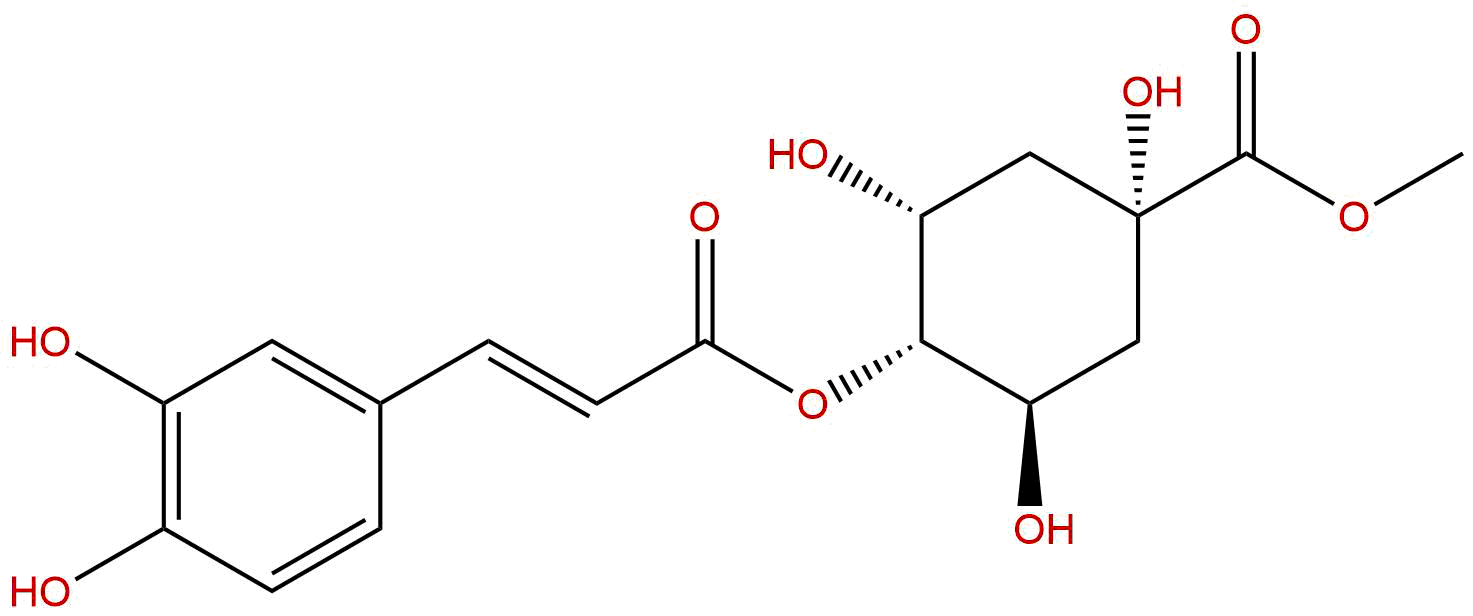


Product name: 4-O-Caffeoylquinic acid methyl ester
Synonym name: Methyl 4-caffeoylquinate;Methyl 4-O-caffeoyl quinate
Catalogue No.: BP2308
Cas No.: 123372-74-7
Formula: C17H20O9
Mol Weight: 368.338
Botanical Source:
Type of Compound: Phenylpropanoids
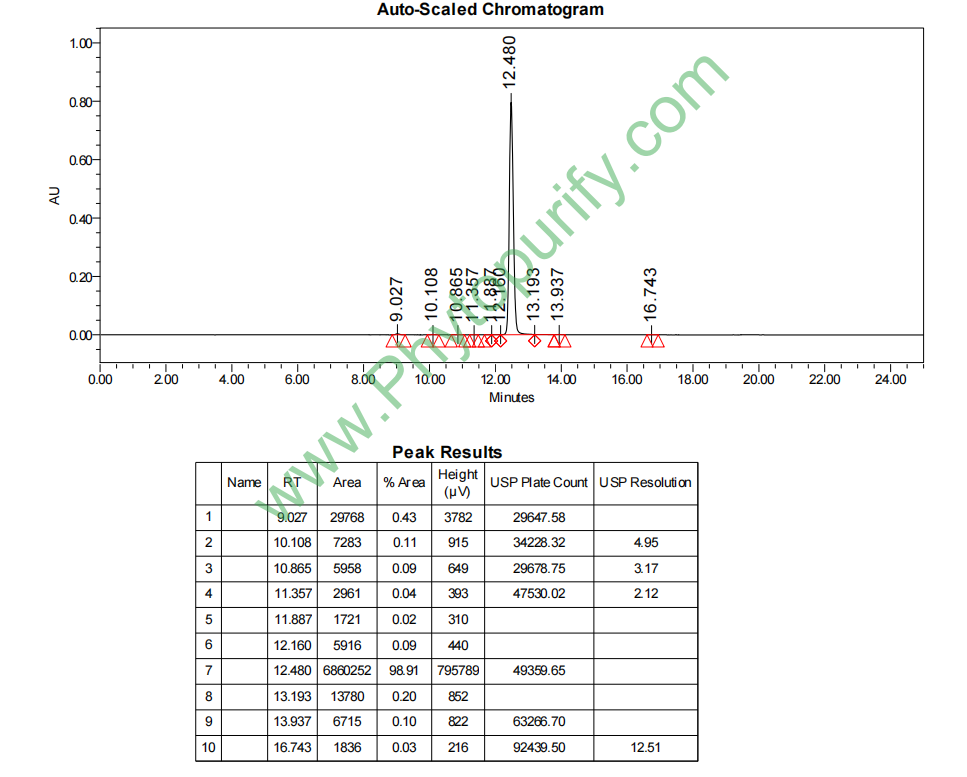
Purity: 95%~99%
Analysis Method: HPLC-DAD or/and HPLC-ELSD
Identification Method: Mass, NMR
Packing: Brown vial or HDPE plastic bottle
Storage: Store in a well closed container, protected from air and light. Put into refrigerate or freeze for long term storage.
Whenever possible, you should prepare and use solutions on the same day. However, if you need to make up stock solutions in advance, we recommend that you store the solution as aliquots in tightly sealed vials at -20℃. Generally, these will be useable for up to two weeks.
The product could be supplied from milligrams to grams
Inquire for bulk scale.
For Reference Standard and R&D, Not for Human Use Directly.
HPLC of 4-O-Caffeoylquinic acid methyl ester
Storage conditions:Short-term storage at 2~8℃, long-term storage at -20 ~ -80℃
153.7500
.2187
.2122
4.4982
.6367
.5582
Low
56.7160
3.6059
Yes
No
No
No
Yes
No
0.0
Yes
Yes
Yes
Yes
Natural products, as an important source of drug discovery, play an irreplaceable role in the long history of human fight against diseases. Among them, polyphenolic compounds, especially hydroxycinnamic acid derivatives, have attracted much attention due to their widespread presence in daily diets (such as coffee, fruits, vegetables) and diverse biological activities. Caffeoylquinic acids (CQAs) are a class of phenolic compounds formed by ester bonds between quinic acid and varying amounts of caffeic acid. Based on the substitution positions (3-, 4-, 5-position) and stereoconfigurations (cis or trans) of the caffeoyl group on the quinic acid nucleus, the CQAs family exhibits rich structural diversity. Common members include chlorogenic acid (3-O-caffeoylquinic acid), cryptochlorogenic acid (4-O-caffeoylquinic acid), neochlorogenic acid (5-O-caffeoylquinic acid), as well as their isomers and derivatives.
4-O-Caffeoylquinic acid methyl ester, as a naturally occurring CQA derivative, is the product of methylation of the carboxyl group of chlorogenic acid. Although not as common as its parent acid in nature, this compound has been found in various medicinal plants and exhibits a unique pharmacological activity spectrum. In recent years, with the deepening of research on the relationship between structural modification and activity of natural products, methyl chlorogenic acid has gradually become a research hotspot in the field of natural product pharmacology due to its potential anti-inflammatory, antioxidant, and metabolic regulatory effects, especially in the intervention of inflammatory diseases such as colitis. The molecular targets related to it, such as CES1, TLR4, NFE2L2, etc., reveal the mechanism of their potential synergistic effects through multiple targets and pathways, providing important clues for the development of novel, low toxicity lead compounds. This article aims to comprehensively review the chemical properties, plant sources, pharmacological activities, mechanisms of action, and potential medicinal properties of methyl chlorogenic acid, in order to provide a systematic reference for the in-depth research and development of this compound.
The chemical structure core of methyl chlorogenic acid is composed of two parts: a quinic acid skeleton and a trans caffeoyl group. Quinic acid (1,3,4,5-tetrahydroxycyclohexane-1-carboxylic acid) is a cyclic polyacid acid with six carbon atoms, and its carboxyl group is methylated to form methyl ester. Caffeic acid (3,4-dihydroxycinnamic acid) forms an ester bond with the hydroxyl group at position 4 of quinic acid through its carboxyl group. Therefore, its system is named 4-O - [(E) -3- (3,4-dihydroxyphenyl) acryloyl] quinic acid methyl ester. There are multiple chiral centers in this molecule, and its absolute configuration is usually inherited from the natural D - (-) - quinic acid. The molecular formula is usually expressed as C ₁₇ H ₂₀ O ₉.
From the perspective of physical and chemical properties, the molecular weight of methyl chlorogenic acid is 368.34 g/mol. Its lipophilic water partition coefficient (LogP) is 0.2187, indicating that the compound has moderate hydrophilicity, which is consistent with its structural characteristics of containing multiple hydroxyl groups and one carboxylic acid methyl ester group in its molecule. Moderate LogP values are beneficial for its absorption and distribution within living organisms. The topologically polar surface area (TPSA) is as high as 153.75 Å ², mainly attributed to multiple hydroxyl and ester oxygen atoms in the molecule. A higher TPSA value usually indicates good water solubility of the compound, but also suggests poor ability to penetrate cell membranes, especially the blood-brain barrier. The calculated water solubility is 4.4982 mg/mL, further confirming its good water solubility. These physicochemical properties collectively determine the pharmacokinetic characteristics of the compound, such as its high polarity and TPSA value leading to a predicted "low" blood-brain barrier penetration ability, which limits its application in central nervous system diseases. However, for the treatment of peripheral inflammatory diseases such as colitis, this may actually be an advantage as it can reduce central nervous system side effects.
Chlorogenic acid methyl ester is not a widely distributed primary metabolite, but a secondary metabolite accumulated in specific plant species. Its plant sources are mainly concentrated in plants such as Asteraceae, Rubiaceae, Eucommia ulmoides, etc. For example, in famous medicinal plants Eucommia(Eucommia ulmoides Chlorogenic acid methyl ester is one of the main active ingredients in the bark and leaves of Oliv. In addition, in honeysuckle(Lonicera japonica Thunb.)、Coffee(Coffea Spp. fruits and leaves, as well as certain echinacea(Echinacea The presence of this compound has also been detected in the spp. variety. It is worth noting that its content is usually much lower than that of common chlorogenic acid (3-CQA) and cryptochlorogenic acid (4-CQA), making its separation and purification challenging.
The extraction of methyl chlorogenic acid usually follows the classic process of natural product chemistry. Due to the polarity and thermal stability of the compound, the most commonly used extraction method is Solvent extraction method Usually, methanol, ethanol, or their aqueous solutions are chosen as extraction solvents to extract from dried and crushed plant materials through methods such as cold soaking, percolation, or heating reflux. Modern technologies such as ultrasound assisted extraction and microwave-assisted extraction have also been used to improve extraction efficiency and shorten time. After filtration and vacuum concentration of the extract, crude extract is obtained.
Further separation and purification require the combination of multiple chromatographic techniques.Liquid-liquid extraction Extraction with different polar solvents such as petroleum ether, ethyl acetate, n-butanol, etc. is a common method for preliminary separation, and methyl chlorogenic acid is usually enriched in the ethyl acetate or n-butanol extraction layer. Subsequently,Column chromatography It is the core purification step. The commonly used stationary phases include silica gel, ODS (octadecylsilane bonded silica gel), and Sephadex LH-20. Silica gel column chromatography typically uses solvent systems such as chloroform methanol water or ethyl acetate methanol water for gradient elution. ODS column chromatography often uses methanol water or acetonitrile water systems. Sephadex LH-20 gel column chromatography is based on molecular size and adsorption, which is particularly effective for removing pigments and separating CQA isomers with similar structures. Finally,Preparation type high-performance liquid chromatography (Pre HPLC) It is a key step in obtaining high-purity monomeric compounds. By optimizing the composition and flow rate of the mobile phase, efficient separation of the target compound from trace impurities can be achieved. The structural identification of the final compound relies on techniques such as nuclear magnetic resonance spectroscopy (NMR) and high-resolution mass spectrometry (HR-MS).
In recent years, research on the pharmacological activity of methyl chlorogenic acid has gradually deepened, mainly focusing on the following aspects:
1. Anti inflammatory activity:
This is the pharmacological activity of methyl chlorogenic acid that has received the most attention. Multiple in vitro and in vivo studies have shown that this compound can effectively inhibit the production of various inflammatory mediators. In a macrophage model stimulated by lipopolysaccharide (LPS), methyl chlorogenic acid significantly reduces the levels of pro-inflammatory factors such as nitric oxide (NO), prostaglandin E2 (PGE2), tumor necrosis factor - α (TNF - α), interleukin-6 (IL-6), and interleukin-1 β (IL-1 β). Its mechanism of action is closely related to the inhibition of the activation of nuclear factor kappa B (NF - κ B) and mitogen activated protein kinases (MAPKs) signaling pathways. Of particular note is that in colitis In animal models, oral or enema administration of methyl cryptochlorogenic acid can significantly alleviate colitis symptoms induced by dextran sulfate sodium (DSS) or trinitrobenzenesulfonic acid (TNBS), including weight loss, diarrhea, rectal bleeding, shortened colon length, and histopathological damage. This provides strong evidence for its application in the treatment of inflammatory bowel disease (IBD).
2. Antioxidant activity:
As a polyphenolic compound, methyl chlorogenic acid has multiple phenolic hydroxyl groups, endowing it with significant antioxidant capacity. It can directly scavenge various free radicals, such as DPPH free radicals, ABTS cationic free radicals, and hydroxyl free radicals. At the same time, it can chelate transition metal ions (such as Fe ² ⁺, Cu ² ⁺), thereby inhibiting the reactive oxygen species (ROS) produced by the Fenton reaction. More importantly, methyl chlorogenic acid can upregulate the expression of a series of antioxidant enzymes, such as heme oxygenase-1 (HO-1), quinone oxidoreductase 1 (NQO1), superoxide dismutase (SOD), and glutathione peroxidase (GPx), by activating the nuclear factor E2 related factor 2 (NFE2L2/Nrf2) signaling pathway, thereby enhancing the endogenous antioxidant defense system of cells. This dual antioxidant mechanism of direct clearance and indirect induction makes it excellent in protecting cells from oxidative stress damage.
3. Antiviral and antibacterial activity:
Some studies have reported that methyl chlorogenic acid has certain antiviral activity, such as inhibitory effects on respiratory syncytial virus (RSV) and influenza virus. The mechanism may be related to the inhibition of key enzymes involved in virus adsorption or replication. In addition, the compound also exhibits certain antibacterial activity against certain Gram positive bacteria (such as Staphylococcus aureus) and Gram negative bacteria (such as Escherichia coli), but its antibacterial efficacy is usually weaker than traditional antibiotics.
4. Other activities:
Preliminary studies also suggest that methyl chlorogenic acid may have hepatoprotective, hypoglycemic, and neuroprotective effects. For example, in liver cell injury models, it can reduce transaminase levels and alleviate liver cell apoptosis. In diabetes model animals, it shows the potential to improve insulin resistance and reduce blood sugar. These activities are closely related to their anti-inflammatory and antioxidant properties, but their specific mechanisms and in vivo efficacy still need further verification.
The pharmacological activity of methyl chlorogenic acid does not originate from the action of a single target, but rather forms a complex regulatory network by acting on multiple molecular targets and signaling pathways. Based on existing research and provided target information, its mechanism of action can be summarized as follows:
1. Regulating inflammatory signaling pathways:
- TLR4/NF - κ B pathway: Toll like receptor 4 (TLR4) is a key receptor that recognizes molecular patterns associated with pathogens such as LPS. Chlorogenic acid methyl ester can inhibit the expression of TLR4 or its binding to ligands, thereby blocking downstream signal transduction. This leads to the inhibition of the activity of I κ B kinase (IKK), preventing the phosphorylation and degradation of NF - κ B inhibitory protein (I κ B α), preventing NF - κ B (composed of subunits such as RELA/p65) from entering the nucleus to initiate the transcription of pro-inflammatory genes (such as TNF - α, IL-6, iNOS, COX-2). This is one of the core mechanisms of its anti-inflammatory effect.
- MAPKs pathway: This compound can also inhibit the phosphorylation of p38 MAPK, JNK, and ERK1/2, whose activation is also involved in the production of pro-inflammatory cytokines.
- CASP1/inflammasome pathway: Caspase-1 (CASP1) is a key effector enzyme for the activation of inflammasomes, such as NLRP3 inflammasome. Chlorogenic acid methyl ester may alleviate inflammation by inhibiting the assembly of inflammasomes or directly suppressing the activity of CASP1, reducing the maturation and secretion of IL-1 β and IL-18.
2. Activate the antioxidant defense system:
- NFE2L2/Nrf2 pathway: This is the core defense mechanism of cells in response to oxidative stress. Chlorogenic acid methyl ester can promote the dissociation and translocation of transcription factor NFE2L2 (Nrf2) from Keap1 protein into the nucleus, bind to antioxidant response elements (ARE), and initiate the gene expression of downstream antioxidant and detoxifying enzymes (such as HO-1, NQO1, GST). This significantly enhances the ability of cells to clear ROS and resist oxidative damage.
3. Regulating metabolism and lipid signaling:
- CES1: Carboxyesterase 1 (CES1) is an important drug and lipid metabolism enzyme in the body. Chlorogenic acid methyl ester, as an ester compound, may itself be a substrate of CES1. Meanwhile, it may also indirectly affect inflammation and metabolic diseases by regulating the activity or expression of CES1, affecting endogenous lipid metabolism such as the hydrolysis of triglycerides.
- NR1H4/FXR: The farnesol X receptor (FXR, encoded by the NR1H4 gene) is a key nuclear receptor for bile acid and lipid metabolism. The activation of FXR has anti-inflammatory and hepatoprotective effects. Chlorogenic acid methyl ester may act as an agonist of FXR, exerting anti-inflammatory effects by regulating bile acid homeostasis and inhibiting the NF - κ B pathway.
- LPAR2 and SPHK1: Lysophosphatidic acid receptor 2 (LPAR2) and sphingosine kinase 1 (SPHK1) are involved in sphingomyelin metabolism, cell proliferation, migration, inflammation, and other processes. Chlorogenic acid methyl ester may regulate immune cell migration and inflammatory response by modulating LPAR2 signaling or inhibiting SPHK1 activity, affecting the production of sphingosine-1-phosphate (S1P).
- FAAH: Fatty acid amide hydrolase (FAAH) is responsible for degrading endogenous cannabinoid anandamide. Inhibition of FAAH can increase levels of anandamide, which exerts anti-inflammatory and analgesic effects by activating cannabinoid receptors. The potential inhibitory effect of methyl chlorogenic acid on FAAH provides a new dimension for its anti-inflammatory mechanism.
4. Other potential targets:
- PRKCA/PKCα: Protein kinase C alpha (PKC alpha) is involved in various cellular processes, including inflammation, proliferation, and apoptosis. Chlorogenic acid methyl ester may affect downstream signals by regulating the activity of PKC α.
In summary, methyl chlorogenic acid activates the NFE2L2 antioxidant pathway by simultaneously acting on pro-inflammatory pathways such as TLR4, NF - κ B, and CASP1, and regulates metabolic and lipid signaling molecules such as CES1, FXR, and FAAH, forming a multi-target and multi-level synergistic network, thus demonstrating comprehensive therapeutic effects in complex diseases such as colitis.
The development of methyl chlorogenic acid from a natural product to a clinical drug requires a systematic evaluation of its pharmacological properties. Based on the provided parameters and existing literature, its pharmacological characteristics are as follows:
1. Analysis of pharmacological parameters:
- Molecular weight (368.34 Da): Complies with the Lipinski's Rule of Five requirement for molecular weight less than 500 Da, which is beneficial for oral absorption.
- LogP(0.2187): Far less than 5, with strong hydrophilicity. Although beneficial for water solubility and formulation development, a low LogP may make it difficult to penetrate biofilms, and oral bioavailability may be limited.
- TPSA(153.75 Ų): Above the usual upper limit of 140 Å ². High TPSA means high molecular polarity. Although it has good water solubility, it severely limits its passive diffusion through cell membranes, especially intestinal epithelial cells, which is the main reason for low oral bioavailability. At the same time, it also explains its low blood-brain barrier penetration ability.
- Water solubility (4.50 mg/mL): Good, beneficial for preparing oral or injectable formulations.
- HERG inhibition (No): This is a very advantageous feature, indicating that its risk of causing QT interval prolongation and fatal arrhythmias in the heart is low and its safety is good.
- Ames test (0.0): The prediction result is negative, indicating that it does not have genotoxicity and has a low risk of genotoxicity.
2. Pharmacokinetic characteristics:
At present, there are relatively few detailed studies on the pharmacokinetics of methyl chlorogenic acid in vivo, but inferences can be made based on its structural analogues, such as chlorogenic acid.
- Absorption: Oral absorption may be poor. Its high polarity and high TPSA are not conducive to passive diffusion. In addition, as an ester compound, it may be hydrolyzed by widely present esterases (such as CES1) in the intestine and liver, producing chlorogenic acid and methanol, resulting in extremely low oral bioavailability of its prototype drug. Therefore, the efficacy of its oral administration may be partially derived from its hydrolysis product, chlorogenic acid.
- Distribution: Due to its hydrophilicity, the distribution volume may be small and mainly distributed in the extracellular fluid. The low penetration ability of the blood-brain barrier limits the distribution of the central nervous system.
- Metabolism: Metabolism is its main clearance pathway. In addition to esterase hydrolysis, phase II metabolic reactions such as glucuronidation and sulfation may also occur. The gut microbiota also participates in its metabolism, converting it into smaller phenolic acids.
- Excretion: Metabolites are mainly excreted through urine and bile.
3. Challenges and strategies for drug development:
The main pharmacological challenges faced by methyl chlorogenic acid are Low oral bioavailability To overcome this obstacle, the following strategies can be considered:
- Structural modification: Modify its ester bonds, such as prodrug design, to increase its metabolic stability. Alternatively, specific functional groups can be introduced to improve their lipophilicity while maintaining their activity.
- Formulation design: Using nanotechnology (such as liposomes, polymer nanoparticles, solid lipid nanoparticles) or phospholipid complex technology to improve their encapsulation efficiency and oral absorption. Colonic targeted drug delivery systems (such as pH sensitive or enzyme triggered coated tablets) are particularly ideal for treating colitis, as they can directly deliver drugs to the lesion site, increase local concentration, and reduce systemic exposure.
- Optimization of administration route: For local diseases such as colitis, rectal administration (such as enemas or suppositories) is an effective alternative route that can bypass the first pass effect and directly act on the affected mucosa.
Based on its clear anti-inflammatory and antioxidant activities and preliminary safety evaluation, methyl chlorogenic acid has shown promising clinical application prospects in the following fields:
1. Treatment of inflammatory bowel disease (IBD):
This is its most direct and promising application direction. Multiple animal experiments have confirmed its effectiveness in treating experimental colitis. Its multi-target mechanism of action (inhibition of TLR4/NF - κ B, CASP1, activation of Nrf2, regulation of FXR, etc.) perfectly fits the complex pathophysiological process of IBD. If the problem of low oral bioavailability can be solved through appropriate dosage forms (such as colon targeted oral preparations or rectal administration), methyl chlorogenic acid is expected to be developed as a new, safe, and effective IBD treatment drug, especially as a supplement or alternative therapy for patients who have poor response or intolerance to existing treatments (such as mesalazine and biologics).
2. Adjuvant therapy for metabolic diseases:
Its potential hypoglycemic, lipid regulating and liver protecting activities, combined with its anti-inflammatory effect, make it have certain potential in the prevention and treatment of non-alcoholic fatty liver disease (NAFLD), type 2 diabetes and other metabolic syndrome related diseases. By activating the FXR and Nrf2 pathways, improving lipid metabolism and oxidative stress may be beneficial for delaying disease progression.
3. Functional foods and dietary supplements:
Considering its presence in common foods such as coffee and Eucommia ulmoides, as well as medicinal and edible plants, methyl chlorogenic acid can be used as a functional food or dietary supplement ingredient for daily health care, exerting antioxidant and anti-inflammatory effects, and preventing chronic diseases. However, further research is needed on its effective dosage and long-term safety.
Future research directions:
- In depth pharmacokinetic studies: Systematic pharmacokinetic studies are needed to clarify the absorption, distribution, metabolism, and excretion (ADME) characteristics, especially the metabolic fate and contribution of active metabolites after oral administration.
- Structure Activity Relationship (SAR) Study: The system compares the activity differences between methyl chlorogenic acid and its parent acid (chlorogenic acid) and other CQA isomers, elucidates the effects of methylation modification on its activity, selectivity, and metabolic stability, and provides guidance for structural optimization.
- Fine analysis of the mechanism of action: By utilizing techniques such as gene knockout, proteomics, and metabolomics, we aim to more accurately depict its molecular target network at the cellular and animal levels, particularly elucidating its direct interaction patterns with targets such as CES1, FAAH, and LPAR2.
- Safety evaluation: Although the preliminary toxicity predictions (hERG, Ames) are good, systematic preclinical safety evaluations such as acute and chronic toxicity, reproductive toxicity, etc. are still needed.
- Clinical translational studies: After completing sufficient preclinical research, rigorous clinical trials should be designed to evaluate their efficacy, safety, and optimal dosing regimen in IBD patients.
As a naturally occurring derivative of caffeoyl quinic acid, methyl chlorogenic acid has become a noteworthy molecule in the field of natural product drug discovery due to its unique chemical structure and multi-target pharmacological mechanism, especially its significant anti-inflammatory and antioxidant activities. Its regulatory ability on multiple targets closely related to the pathogenesis of colitis, such as TLR4, NF - κ B, CASP1, NFE2L2, FXR, etc., reveals its enormous potential as a lead compound for the treatment of inflammatory bowel disease. Although its low oral bioavailability is currently the main bottleneck in drug development, this challenge is expected to be overcome through modern medicinal chemical modifications and the design of novel drug delivery systems. Future research should focus on further elucidating its pharmacokinetic characteristics in vivo, finely analyzing its functional network, and accelerating its clinical translation process. It can be foreseen that with the continuous deepening of research, methyl chlorogenic acid and its derivatives are expected to bring new hope for the treatment of inflammatory diseases, especially colitis, and further enrich our understanding of the medicinal value of natural polyphenolic compounds.
