Introduction/Overview
Inflammation is a complex and sophisticated defense response of the body in response to infection, tissue damage, or harmful stimuli, involving precise regulation of multiple immune cells, inflammatory mediators, and signaling pathways. However, when the inflammatory reaction is excessive or persistent, it will turn into chronic inflammation and become the common pathological basis of many major diseases, such as rheumatoid arthritis, asthma, chronic obstructive pulmonary disease, atherosclerosis, neurodegenerative diseases and even cancer. Therefore, the development of efficient and low toxicity new anti-inflammatory drugs has always been a hot topic in pharmacological research. Although traditional nonsteroidal anti-inflammatory drugs and glucocorticoids are widely used, their long-term use limits their clinical application due to side effects such as gastrointestinal damage, cardiovascular risk, and metabolic disorders. This has prompted researchers to turn their attention to natural products in order to discover lead compounds with novel structures, unique mechanisms of action, and higher safety.
Moracin M, a phenolic compound isolated from the traditional medicinal plant mulberry, has attracted much attention in recent years due to its significant anti-inflammatory activity. Its CAS number is 56317-21-6. Early research revealed that sanxinsu M is an effective inhibitor of phosphodiesterase 4 (PDE4), exhibiting micromolar level inhibitory activity against PDE4D2 and PDE4B2 subtypes. PDE4 is a key enzyme for intracellular degradation of the second messenger cyclic adenosine monophosphate (cAMP), and its inhibition can lead to an increase in cAMP levels, which in turn activates protein kinase A (PKA) and exerts a wide range of anti-inflammatory and immunomodulatory effects. PDE4 inhibitors such as roflunomide have been approved for the treatment of chronic obstructive pulmonary disease, but central nervous system side effects such as nausea and vomiting limit their wider application. As a natural PDE4 inhibitor, the unique chemical structure of Sangxinsu M may bring different pharmacological properties. More importantly, subsequent research has continuously expanded our understanding of its anti-inflammatory mechanism, discovering that it can regulate multiple key inflammatory signaling pathways including IL-6, STAT3, TNF - α, NF - κ B, and NLRP3 inflammasome, demonstrating the potential for multi-target action. This article aims to provide a systematic review of the chemical properties, plant sources, pharmacological activities, molecular mechanisms of action, pharmacological evaluation, and clinical application prospects of sanxinsu M, in order to provide comprehensive scientific references for the in-depth research and development of this natural product.
Chemical structure and physicochemical properties
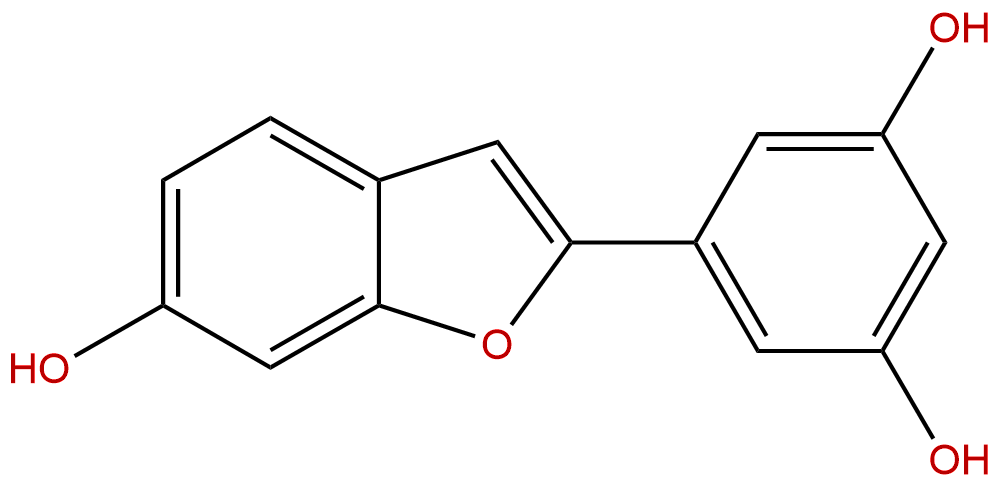
Sangxinsu M belongs to the 2-arylbenzofuran class of compounds and is a characteristic phenolic secondary metabolite in the Morus genus of plants. Its molecular formula is C ₁₄ H ₁₀ O ₄, and its molecular weight is 242.2300. Its core structure is composed of a benzofuran ring (A and C rings) connected to a benzene ring (B ring) through a C2-C1 'bond, forming a typical 2-arylbenzofuran skeleton. There are two hydroxyl groups (- OH) attached to the C-6 and C-7 positions of the benzofuran ring, which are the key pharmacophores for its phenolic antioxidant and anti-inflammatory activities. There are no substituents on the B ring. This highly planar conjugated aromatic structure determines some of its physical and chemical properties.
From the analysis of the parameters related to drug formation, the lipid water partition coefficient (LogP) of Sangxin M is 2.8832, indicating that it has moderate lipophilicity and is beneficial for penetrating cell membranes. However, excessive LogP may lead to a decrease in water solubility. Its topological polar surface area (TPSA) is 73.83 Å ², which is relatively small and usually favorable for membrane permeability. However, its water solubility data is relatively low, around 0.0725 mg/mL, which may be a potential limiting factor for its oral bioavailability. In the preliminary prediction of pharmacokinetics, the blood-brain barrier (BBB) permeability of sanxinsu M was predicted to be "low", which means it may not easily enter the central nervous system. This may be a potential advantage for PDE4 inhibitors aimed at avoiding central side effects, which can reduce central mediated adverse reactions such as nausea and vomiting caused by roflunomide. In early toxicity screening, its hERG inhibitory activity was' no ', indicating a low risk of causing QT interval prolongation in the heart. The Ames test result is 0.6, indicating a low risk of mutagenicity. However, this value still needs to be interpreted cautiously in conjunction with specific experimental conditions and further confirmation through in vitro and in vivo genetic toxicity experiments is required.
Plant sources and extraction methods
Mulberry extract M mainly comes from plants in the mulberry family, especially mulberry trees. The root bark, branch bark, leaves, and fruit (mulberries) of mulberry trees contain abundant phenolic compounds, among which mulberry bark (mulberry root bark) is the traditional and main source of mulberry extract M. Mulberry bark has the effects of purging the lungs, relieving asthma, promoting diuresis, and reducing swelling in traditional Chinese medicine theory. It is commonly used to treat lung heat, cough, asthma, edema, and other diseases. Its modern pharmacological basis is closely related to its anti-inflammatory, diuretic, and anti asthmatic effects. Mulberry extract M, as one of the characteristic components of mulberry bark, is the substance basis for its pharmacological activity.
The extraction and separation of quercetin M from plant materials usually follow the conventional process of natural product chemistry. Firstly, organic solvents are used to extract the dried and crushed mulberry bark. Common solvents include methanol, ethanol, acetone, or their aqueous solutions, and techniques such as reflux extraction, ultrasound assisted extraction, or microwave-assisted extraction are used to improve extraction efficiency. After obtaining the crude extract, systematic extraction is carried out using solvents such as petroleum ether, ethyl acetate, n-butanol, etc. Mulberry extract M is often enriched in the ethyl acetate extraction site due to its equipolarity.
Further purification relies on various chromatographic techniques. Silica gel column chromatography is commonly used for preliminary separation, with different ratios of petroleum ether ethyl acetate or chloroform methanol gradient elution. Then, fine purification was carried out in combination with reversed-phase silica gel column chromatography (such as C18 packing, methanol water as mobile phase), dextran gel column chromatography (such as Sephadex LH-20, methanol as eluent), and high performance liquid chromatography (HPLC, preparative or semi preparative) to finally obtain high-purity Sangxine M monomer compound. The structural identification is completed through spectroscopic techniques such as nuclear magnetic resonance (¹ H-NMR, ¹ ³ C-NMR), mass spectrometry (MS), ultraviolet spectroscopy (UV), and infrared spectroscopy (IR), and compared and confirmed with literature data or standard samples.
Pharmacological activity research
Numerous in vitro and in vivo pharmacological experiments have confirmed that sanxinsu M has a wide range of anti-inflammatory activities, which extend to other related biological activities.
1. Anti inflammatory activity:
This is the core pharmacological effect of sanxinsu M. In various inflammatory cell models, such as lipopolysaccharide (LPS) - stimulated macrophages RAW264.7, mouse peritoneal macrophages, and microglia, sanxin M can dose dependently inhibit the production of inflammatory mediators such as nitric oxide (NO) and prostaglandin E2 (PGE2). Meanwhile, it can significantly downregulate the expression levels of various pro-inflammatory cytokines and chemokines, including tumor necrosis factor - α (TNF - α), interleukin-6 (IL-6), interleukin-1 β (IL-1 β), monocyte chemoattractant protein-1 (MCP-1), etc. In animal models, sanxinsu M also showed good anti-inflammatory effects. For example, in a mouse model of acute lung injury, pretreatment with sanxin M can effectively alleviate LPS induced pulmonary inflammatory cell infiltration, pulmonary edema, and histopathological damage, and reduce the levels of TNF - α, IL-6, and IL-1 β in bronchoalveolar lavage fluid. In the rat paw swelling model induced by carrageenan or Freund's complete adjuvant, Sang Xin Su M also showed significant anti-inflammatory and anti-inflammatory effects.
2. Antioxidant activity:
The catechol structure in the M structure of sanxinsu is the key to its antioxidant capacity. Research has shown that it can effectively scavenge DPPH radicals, ABTS radicals, and superoxide anion radicals, and exhibits a certain ability to reduce iron ions. This antioxidant effect not only directly reduces oxidative stress damage, but also indirectly affects the inflammatory process, as reactive oxygen species (ROS) are important messengers that activate key pro-inflammatory signaling pathways such as NF - κ B.
3. Neuroprotective activity:
Based on its anti-inflammatory and antioxidant properties, sanxinsu M has also shown potential in neurological disease models. In the LPS activated model of microglia (the main immune cell of the central nervous system), sanxin M can inhibit the excessive activation of microglia and the production of neurotoxic factors, protecting neurons from inflammatory damage. This suggests that it may have practical value in neurodegenerative diseases such as Alzheimer's disease and Parkinson's disease.
4. Asthma relief and anti allergic potential:
Given its properties as a PDE4 inhibitor, sanxin M may play a role in airway hyperreactive diseases such as asthma by increasing cAMP levels in airway smooth muscle cells and immune cells, relaxing bronchial smooth muscle, inhibiting inflammation cell activation and mediator release. Preliminary studies have also shown that it has a certain inhibitory effect on degranulation of mast cells.
Mechanism of action and molecular targets
The anti-inflammatory effect of Sangxinsu M is not achieved through a single pathway, but involves multi-level regulation of multiple key inflammatory signaling pathways and molecular targets, reflecting the multi-target nature of natural products.
1. Inhibition of phosphodiesterase 4 (PDE4):
This is the earliest identified molecular target of sanxinsu M. Its IC50 values for PDE4D2 and PDE4B2 subtypes are 2.9 μ M and 4.5 μ M, respectively, while its inhibitory activity against PDE5 and PDE9 is weak (IC50>40 μ M), indicating a certain subtype selectivity. Inhibition of PDE4 leads to an increase in intracellular cAMP levels and activation of PKA. Activated PKA can phosphorylate and inhibit transcription factor CREB, as well as negatively regulate the expression of downstream pro-inflammatory genes by phosphorylating key proteins in the NF - κ B pathway (such as p65/RELA) or inhibiting the MAPK pathway. This is one of the core mechanisms by which it exerts fundamental anti-inflammatory effects.
2. Regulating the nuclear factor kappa B (NF - κ B) signaling pathway:
NF - κ B is a core transcription factor that regulates inflammation, immunity, and cell survival. Sangxinsu M can effectively inhibit NF - κ B activation induced by LPS and other stimuli. Its action includes: inhibiting the activity of I κ B kinase (IKK, especially IKBKB), preventing the phosphorylation and degradation of I κ B α; Reduce nuclear translocation of p65 (RELA) protein; Reduce the binding activity of p65 to DNA in the nucleus. Through these methods, sanxinsu M ultimately inhibited the expression of numerous pro-inflammatory factors (such as TNF - α, IL-6, IL-1 β, NOS2) and enzymes (such as COX-2/PTGS1) regulated by NF - κ B.
3. Inhibit the Signal Transduction and Transcription Activation Factor 3 (STAT3) pathway:
STAT3 is another important pro-inflammatory and pro survival signaling pathway. Sangxinsu M can inhibit STAT3 phosphorylation (activation) and nuclear translocation induced by cytokines such as IL-6. This may be partially attributed to its upstream inhibition of IL-6 production, or it may involve direct or indirect effects on JAK kinase. Inhibiting the STAT3 pathway can help break the positive feedback loop of inflammation and may affect cell proliferation and apoptosis.
4. Inhibit NLRP3 inflammasome activation:
NLRP3 inflammasome is a multi protein complex that perceives danger signals within cells and mediates the mature secretion of IL-1 β and IL-18, which is associated with various chronic inflammatory diseases. Research has shown that sanxinsu M can inhibit the assembly and activation of NLRP3 inflammasomes, specifically by reducing the activation level of caspase-1 (CASP1) and decreasing the secretion of mature IL-1 β. The mechanism may be related to inhibiting NF - κ B (reducing the transcription of NLRP3 and pro-IL-1 β), clearing ROS (inhibiting the trigger signal for NLRP3 activation), or directly affecting inflammasome components.
5. Regulating transient receptor potential (TRP) channels:
Sangxinsu M is predicted to potentially act on TRPV1 and TRPA1 channels. These channels are key molecules for sensory neurons to perceive pain and inflammatory stimuli, and their activation promotes neurogenic inflammation. Although direct experimental evidence is still needed, theoretically, regulating these channels may be involved in the anti-inflammatory and analgesic effects of sanxinsu M.
6. Inhibition of inducible nitric oxide synthase (iNOS/NOS2) and cyclooxygenase-2 (COX-2/PTGS1):
Sangxinsu M can downregulate LPS induced iNOS and COX-2 protein expression at the transcriptional and/or translational levels, thereby reducing the excessive production of its catalytic products NO and PGE2, which is a direct manifestation of its anti-inflammatory effect.
In summary, Sangxinsu M forms a synergistic anti-inflammatory network through multiple mechanisms such as inhibiting PDE4, blocking NF - κ B and STAT3 signaling, and inhibiting NLRP3 inflammasome, which may be the structural basis for its high efficacy and low toxicity potential.
Evaluation of drug properties and pharmacokinetics
Although sanxinsu M has shown good pharmacological activity in vitro and some animal models, its development into a drug still requires systematic pharmacological evaluation and pharmacokinetic studies. At present, there is relatively limited publicly available data in this area, mainly based on computational predictions and preliminary experiments.
Prediction and Preliminary Study of Absorption, Distribution, Metabolism, and Excretion (ADME):
* Absorption: Its moderate LogP (~2.88) and smaller TPSA are beneficial for passive transmembrane absorption. However, lower water solubility may limit its dissolution rate in the gastrointestinal tract, thereby affecting oral bioavailability. Formulation strategies, such as making nanocrystals, solid dispersions, or cyclodextrin inclusion complexes, may be effective means of improving their solubility and absorption.
* Distribution: Predicting low blood-brain barrier permeability, as mentioned earlier, may be beneficial for avoiding central side effects, but it is a disadvantageous factor for treating central nervous system inflammatory diseases. Its organizational distribution characteristics need to be clarified through in vivo radioactive labeling or LC-MS/MS studies.
* Metabolism: As a phenolic compound, quercetin M is likely to undergo extensive II phase metabolic binding reactions in vivo, such as glucuronidation and sulfation. Its benzofuran structure may also be metabolized by the liver microsomal cytochrome P450 enzyme system (CYP450). It is crucial to clarify its main metabolic enzymes, metabolites, and potential drug drug interactions.
* Excretion: It is speculated that its metabolites are mainly excreted through the kidneys or bile.
Preliminary safety assessment:
* Cardiac toxicity: The negative predictive result of hERG inhibition is a positive signal, but experimental verification is needed.
* Genetic toxicity: The Ames test result (0.6) needs to be interpreted in the specific experimental context, usually requiring a comprehensive evaluation combined with chromosome aberration test and micronucleus test.
* Acute toxicity: Standardized animal acute toxicity tests are needed to determine its median lethal dose (LD50) and safe dose range.
* Long term toxicity: Future development requires long-term toxicity testing with repeated administration to evaluate its potential impact on major organs.
Analysis of drug properties:
According to empirical rules such as the "Five Rules", the molecular weight of Sangxinsu M (242) is less than 500, the number of hydrogen bond donors (2-OH) is less than 5, the number of hydrogen bond acceptors (4 O) is less than 10, and the LogP is less than 5, which basically conforms to the common characteristics of orally active small molecules. The main development challenges may lie in water solubility and metabolic stability.
Clinical application prospects and prospects
Sangxinsu M, as a multi-target natural anti-inflammatory lead compound, has shown broad application prospects in the prevention and treatment of various inflammation related diseases, but also faces a series of challenges.
Potential clinical application directions:
1. Respiratory system diseases: As a PDE4 inhibitor, its most direct application direction is chronic airway inflammatory diseases, such as chronic obstructive pulmonary disease (COPD) and asthma. Its low BBB permeability may lead to superior central safety compared to existing PDE4 inhibitors. Compound preparations can be developed in combination with bronchodilators.
2. Autoimmune and inflammatory diseases: Its inhibitory effect on NF - κ B, STAT3, and NLRP3 inflammasomes makes it promising for the treatment of diseases such as rheumatoid arthritis, inflammatory bowel disease (such as ulcerative colitis), and psoriasis.
3. Neuroinflammatory related diseases: Although BBB permeability is low, its inhibitory effect on microglial cell activation suggests that it may still be valuable through formulation technology modifications (such as targeting the brain with nanodelivery systems) or for peripheral inflammatory diseases affecting the central nervous system (such as cognitive impairment caused by systemic inflammation).
4. Pain management: Its anti-inflammatory effect combined with potential regulatory effects on TRP channels may be used to develop novel anti-inflammatory and analgesic drugs for the treatment of neuropathic pain or inflammatory pain.
5. Adjuvant therapy and health products: Based on its antioxidant and anti-inflammatory properties, it can be used as a functional ingredient to prevent metabolic syndrome related to oxidative stress and chronic low-grade inflammation, as well as pre cardiovascular disease status.
Challenges and future research directions:
1. Pharmacokinetic optimization: The primary task is to systematically conduct in vivo ADME research, clarify its absolute bioavailability, half-life, tissue distribution, and major metabolic pathways. Systematic structural modification and structure-activity relationship research are needed to address the issues of poor water solubility and rapid metabolism. For example, esterification, etherification, or preparation of prodrugs on its phenolic hydroxyl groups to improve stability and lipid solubility; Or introduce other functional groups to improve solubility and targeting.
2. Deepening mechanism of action: More research is needed to precisely elucidate its direct interactions with various targets, especially TRP channels, IKK complexes, etc. (such as eutectic structure analysis), and to validate its core functional targets in vivo using techniques such as gene knockout.
3. Security system evaluation: A comprehensive preclinical toxicology study must be completed, including genetic toxicity, reproductive toxicity, long-term carcinogenicity, etc., to provide a safety basis for its clinical translation.
4. Formulation development: Develop drug delivery systems that are suitable for their physical and chemical properties, such as oral nano formulations, transdermal drug delivery systems, or inhaled powder sprays, to overcome their shortcomings and achieve the advantages of specific delivery routes.
5. Clinical translational studies: After completing sufficient preclinical research, gradually advance human clinical trials to verify its effectiveness and safety in different indications.
Conclusion
Sangxinsu M is a natural 2-arylbenzofuran compound with significant anti-inflammatory activity isolated from traditional Chinese medicine mulberry bark. It not only acts as a selective PDE4 inhibitor, but also synergistically inhibits key inflammatory signaling pathways such as NF - κ B, STAT3, and NLRP3 inflammasomes through a multi-target approach, demonstrating good anti-inflammatory, antioxidant, and neuroprotective effects in cell and animal models. Its chemical structure is clear, basically conforms to the rules of drug likeness, and is preliminarily predicted to have low central permeability and low risk of cardiac toxicity, demonstrating good potential as a lead compound for novel anti-inflammatory drugs.
However, the road from lead compounds to candidate drugs and even marketed drugs is long and challenging. At present, research on Sangxinsu M is still mainly focused on exploring its in vitro mechanisms. The pharmacokinetic characteristics of its system in vivo, long-term toxicological data, and deep structural optimization based on clinical needs urgently need to be carried out. Future research should focus on addressing the bottleneck of drug development, through interdisciplinary collaboration and the comprehensive use of medicinal chemistry, pharmacy, pharmacology, and toxicology methods, to deeply explore its therapeutic value. The research on Sangxinsu M is not only expected to provide new candidate molecules for the development of innovative anti-inflammatory drugs derived from traditional Chinese medicine, but also to provide modern scientific basis for elucidating the traditional efficacy of Sangbaipi in "clearing the lungs, relieving asthma, promoting diuresis and reducing swelling". It is a typical case of modernization of traditional Chinese medicine and research and development of new natural product drugs. With the continuous deepening of research, sanxinsu M is expected to occupy a place in the field of drug development for combating chronic inflammatory diseases.