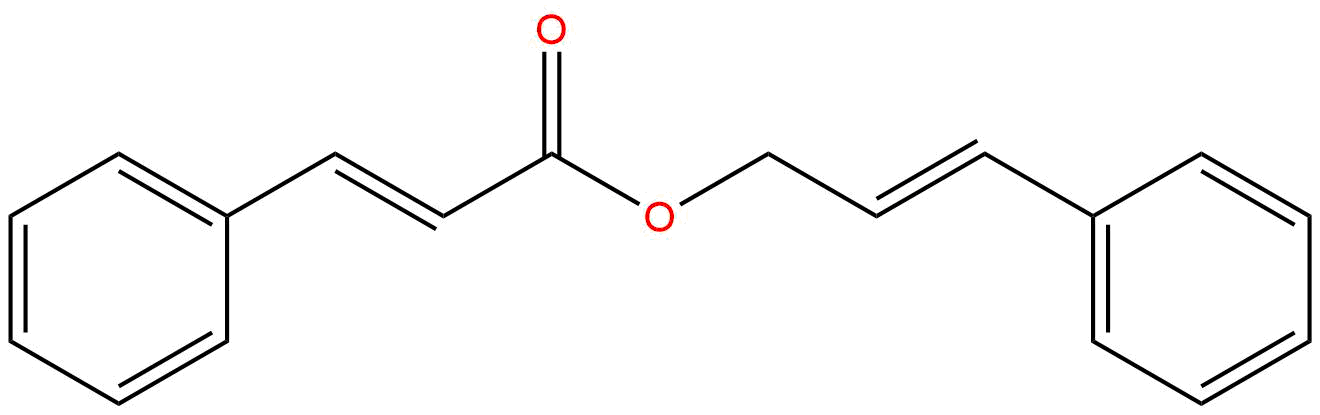


Product name: Cinnamyl cinnamate
Synonym name:
Catalogue No.: SBP02512
Cas No.: 122-69-0
Formula: C18H16O2
Mol Weight: 264.324
Botanical Source:
Physical Description: Powder
Type of Compound: Phenylpropanoids
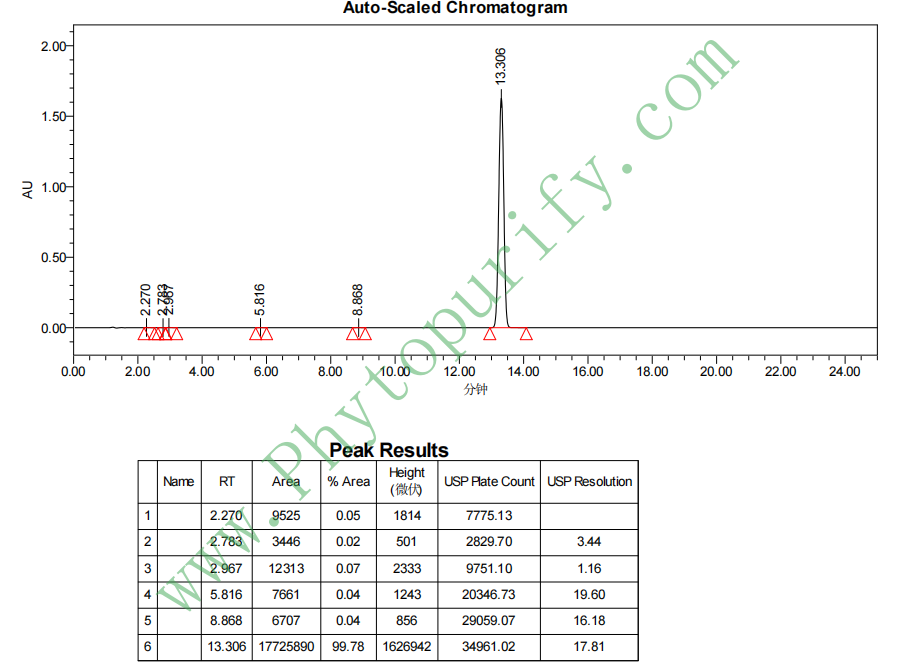
Purity: 95%~99%
Analysis Method: HPLC-DAD or/and HPLC-ELSD
Identification Method: Mass, NMR
Packing: Brown vial or HDPE plastic bottle
The product could be supplied from milligrams to grams. Inquire for bulk scale.
We provide solution to improve the water-solubility of compounds, thereby facilitating the variety of activity tests and clinic uses.
For Reference Standard and R&D, Not for Human Use Directly.
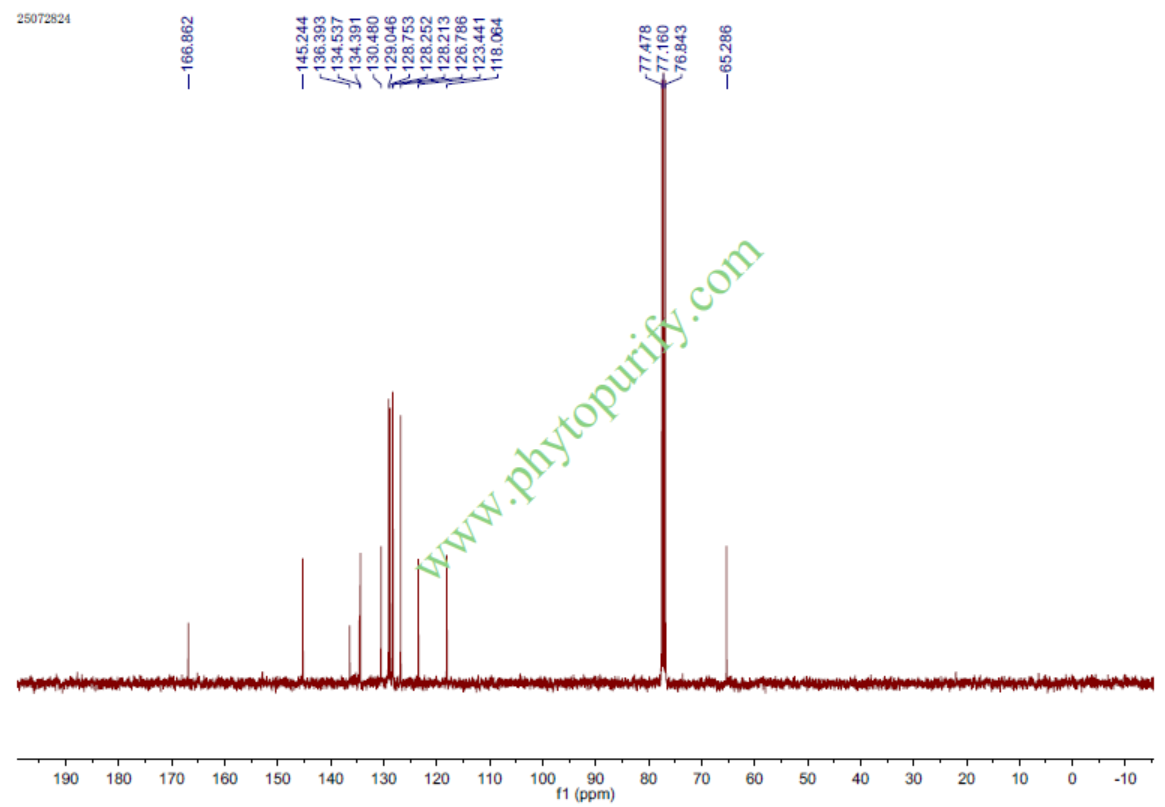
NMR of Cinnamyl cinnamate
HPLC of Cinnamyl cinnamate
Storage conditions:Short-term storage at 2~8℃, long-term storage at -20 ~ -80℃
26.3000
3.5000
Unknown
Yes
Unknown
Unknown
Unknown
Unknown
Unknown
Unknown
Cinnamyl cinnamate (CAS number: 122-69-0), commonly known as Styracin, is a naturally occurring ester compound mainly formed by the esterification reaction of cinnamic acid and cinnamyl alcohol. This compound has received widespread attention in the field of natural product pharmacology in recent years due to its unique aromatic structure and diverse biological activities. Cinnamic acid cinnamate is mainly found in plants such as Liquidambar orientalis Mill. As a secondary metabolite of plants, it has potential multiple pharmacological activities such as anti-inflammatory, antioxidant, antibacterial, and neuroprotective effects. With the in-depth study of the pharmacological mechanisms of natural products, the biological functions and molecular targets of cinnamic acid cinnamate have gradually been revealed, providing a theoretical basis for its development into a new type of drug.
This article aims to systematically review the chemical structure and physicochemical properties, plant sources and extraction methods, pharmacological activity and mechanism of action, pharmacological evaluation and pharmacokinetic characteristics of cinnamic acid cinnamate ester. Combined with current research progress, it explores its clinical application prospects and future development directions, providing reference for researchers and drug developers in related fields.
The molecular formula of cinnamic acid cinnamate is C18H16O2, with a molecular weight of 266.32. Its structure consists of a cinnamic acid molecule and a cinnamic alcohol molecule connected by ester bonds, forming typical aromatic ester compounds. The structure contains conjugated double bonds and aromatic rings, endowing it with strong chemical stability and biological activity. Its LogP value is 3.5, indicating that the compound has moderate lipid solubility, which may facilitate membrane penetration and in vivo distribution. The topological polar surface area (TPSA) is 26.3 Å ² and the number of hydrogen bond acceptors is 2, indicating its affinity for binding with biomolecules.
The physicochemical properties of cinnamic acid cinnamate include good thermal stability and relatively low polarity, which makes it easy to accumulate in plants and provides convenient conditions for its extraction and purification. Its aromatic structure gives it a characteristic UV absorption peak, which facilitates qualitative and quantitative analysis through spectroscopic methods.
Cinnamic acid cinnamate mainly comes from Liquidambar orientalis Mill, which is widely distributed in the Mediterranean region and is an important member of the Eurasian maple genus. The resin and leaves of this plant are rich in various phenolic and ester natural products, among which cinnamic acid cinnamate has a higher content.
The common methods for extracting cinnamic acid cinnamate include solvent extraction, ultrasound assisted extraction, and distillation. Solvent extraction usually uses organic solvents such as ethanol, methanol, or ethyl acetate, and the combination of ultrasound assisted technology can significantly improve extraction efficiency. After rotary evaporation and concentration, the extract was separated and purified using techniques such as column chromatography, thin layer chromatography (TLC), and high performance liquid chromatography (HPLC). In recent years, supercritical CO2 extraction technology has gradually been applied to the extraction of cinnamic acid cinnamate due to its green environmental protection and high selectivity, significantly improving purity and yield.
In addition, the study of plant tissue culture and biosynthetic pathways provides a theoretical basis for the biosynthesis of cinnamic acid cinnamate, which is expected to be produced on a large scale through genetic engineering methods.
Cinnamic acid cinnamate exhibits various biological activities, including anti-inflammatory, antioxidant, antibacterial, anti-tumor, and neuroprotective effects.
anti-inflammatory activity
Multiple in vitro and in vivo studies have shown that cinnamic acid cinnamate can significantly inhibit the production of inflammatory mediators, such as tumor necrosis factor - α (TNF - α), interleukin-6 (IL-6), and nitric oxide (NO). It exhibits good anti-inflammatory effects by inhibiting the nuclear factor kappa B (NF - κ B) signaling pathway, reducing the cascade amplification of inflammatory responses.
antioxidant activity
Cinnamic acid cinnamate has the ability to scavenge free radicals, effectively inhibit lipid peroxidation, and protect cells from oxidative stress damage. Its DPPH radical scavenging assay and ABTS radical scavenging assay both showed strong antioxidant capacity, indicating its potential application value in the prevention and treatment of oxidative related diseases.
Antibacterial activity
Research has shown that cinnamic acid cinnamate has inhibitory effects on various Gram positive and negative bacteria, particularly exhibiting lower minimum inhibitory concentrations (MIC) against Staphylococcus aureus and Escherichia coli. Its antibacterial mechanism may involve the destruction of bacterial cell membranes and metabolic inhibition.
Antitumor activity
Preliminary cell experiments have shown that cinnamic acid cinnamate can induce apoptosis of tumor cells and inhibit cell proliferation. Its mechanism of action involves regulating cell cycle proteins and activating mitochondrial dependent apoptosis pathways, demonstrating potential anti-cancer value.
Neuroprotective effect
Some studies suggest that cinnamic acid cinnamate may have potential neuroprotective effects, particularly in Parkinson's and Alzheimer's disease models, by inhibiting neuroinflammation and oxidative stress, reducing neuronal damage.
The biological activity of cinnamic acid cinnamate is closely related to its mechanism of action, mainly involving the following molecular targets and signaling pathways:
NF - κ B signaling pathway
As the core regulatory factor of inflammatory response, the activation of NF - κ B promotes the expression of various inflammatory factors. Cinnamic acid cinnamate exerts anti-inflammatory effects by inhibiting the phosphorylation and degradation of I κ B α, preventing NF - κ B nuclear translocation, and reducing the release of pro-inflammatory factors.
Nrf2 ARE antioxidant pathway
Cinnamic acid cinnamate can activate nuclear factor erythroid 2-related factor 2 (Nrf2), promote the expression of antioxidant enzymes such as superoxide dismutase (SOD) and glutathione peroxidase (GPx), and enhance the antioxidant defense ability of cells.
Mitochondrial apoptosis pathway
In tumor cells, cinnamic acid cinnamate regulates the expression of Bcl-2 family proteins, promotes cytochrome c release, activates caspase cascade reaction, induces cell apoptosis, and inhibits tumor cell proliferation.
Cell membrane integrity and metabolic enzyme inhibition
Its antibacterial effect is partially attributed to the destruction of bacterial cell membranes and inhibition of key metabolic enzymes, leading to disruption of bacterial energy metabolism and cell death.
At present, research on the interaction between cinnamic acid cinnamate and other molecular targets is still relatively limited. In the future, it is necessary to combine molecular docking, proteomics, and genomics technologies to deeply analyze its network of action.
From the perspective of medicinal properties, cinnamic acid cinnamate has ideal physicochemical properties. Its molecular weight is 266.32, which meets the requirement of Lipinski's "5 rules" for molecular weight less than 500; A LogP value of 3.5 indicates moderate lipid solubility, which is beneficial for cell membrane penetration and oral absorption; The TPSA is 26.3 Å ², and low polarity contributes to the permeability of the biofilm.
However, safety indicators such as blood-brain barrier penetration ability, liver toxicity, cardiac toxicity (including hERG channel inhibition), and genotoxicity (Ames test) are currently unclear and require further systematic evaluation. Preliminary in vitro cytotoxicity experiments have shown a wide safety window, but there is a lack of systematic in vivo toxicological data.
In terms of pharmacokinetics, there is a lack of relevant research. It is speculated that it has high lipid solubility and may have good oral bioavailability, but the metabolic pathway, half-life, tissue distribution, and excretion mode are still unclear. In the future, animal models are needed for absorption, distribution, metabolism, and excretion (ADME) studies to clarify their in vivo behavioral characteristics.
Given the excellent activities of cinnamic acid cinnamate in anti-inflammatory, antioxidant, antibacterial, and anti-tumor aspects, its clinical application prospects are broad. Especially in the adjuvant treatment of chronic inflammatory diseases, infectious diseases and some tumors, cinnamate cinnamate is expected to play a role as a natural drug or drug lead compound.
In addition, its potential neuroprotective effects provide new ideas for the treatment of neurodegenerative diseases. By combining modern drug design techniques and optimizing its efficacy and safety through structural modification, it is expected to develop more clinically valuable derivatives.
Future research should focus on the following directions:
Pharmacological and toxicological evaluation of the system
Improve safety and efficacy studies both in vitro and in vivo, clarify the dosage range and potential toxicity of the drug.
Pharmacokinetic and Pharmacodynamic Studies
Revealing its metabolic pathways and time concentration relationship, providing a basis for clinical medication.
In depth analysis of molecular mechanisms
Using multi omics techniques and computational biology methods, systematically elucidate its targets and signaling networks.
Formulation development and clinical translation
Explore drug delivery methods suitable for its physical and chemical properties, such as nanocarriers, sustained-release formulations, etc., to improve bioavailability and targeting.
Clinical trial design
Promote early clinical research to validate its safety and efficacy in specific diseases.
Cinnamic acid cinnamate, as a natural ester compound derived from Liquidabar Orientalis Mill, has shown great potential for drug development due to its unique chemical structure and diverse pharmacological activities. The current research has preliminarily revealed its multiple biological functions such as anti-inflammatory, antioxidant, antibacterial, and anti-tumor effects, as well as some molecular mechanisms. However, its safety, pharmacokinetics, and clinical applications still need to be further explored.
In the future, through interdisciplinary collaboration and modern drug development technology, cinnamic acid cinnamate is expected to become an important candidate molecule for new natural medicines, providing new strategies and means for the treatment of related diseases. Researchers should continue to pay attention to its mechanism research and clinical translation, in order to promote its progress from laboratory to clinical application.
