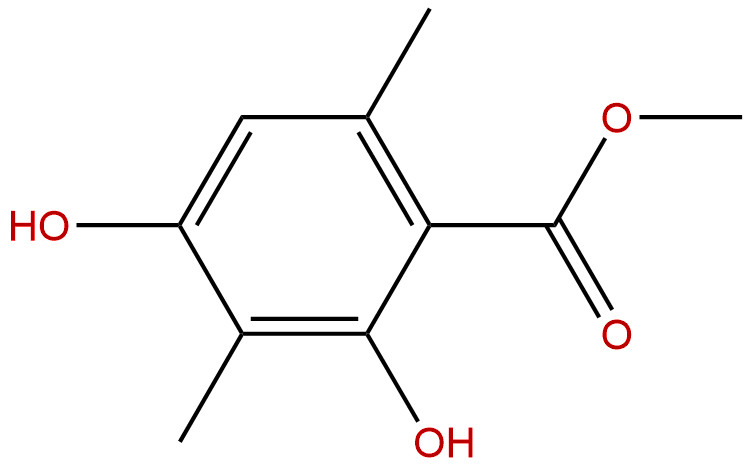


Product name: Methyl atratate
Synonym name: Atraric acid; Methyl 2,4-dihydroxy-3,6-dimethylbenzoate
Catalogue No.: SBP01058
Cas No.: 4707-47-5
Formula: C10H12O4
Mol Weight: 196.202
Botanical Source:
Physical Description: Powder
Type of Compound: Phenols
Purity: 95%~99%
Analysis Method: HPLC-DAD or/and HPLC-ELSD
Identification Method: Mass, NMR
Packing: Brown vial or HDPE plastic bottle
The product could be supplied from milligrams to grams. Inquire for bulk scale.
We provide solution to improve the water-solubility of compounds, thereby facilitating the variety of activity tests and clinic uses.
For Reference Standard and R&D, Not for Human Use Directly.
Storage conditions:Short-term storage at 2~8℃, long-term storage at -20 ~ -80℃
66.7600
2.3923
2.2847
1.4845
4.7765
3.4788
Low
81.7809
2.2330
Yes
No
No
No
Yes
Yes
0.6
Yes
No
Yes
No
Natural products have always been an important source of drug discovery and development, especially in the field of antibiotics, where over 70% of clinical antibiotics are directly or indirectly derived from natural products. However, with the increasingly severe problem of antibiotic resistance, the global demand for new antibiotics is unprecedentedly urgent. The World Health Organization has listed antibiotic resistance as one of the top ten global public health threats, and it is estimated that by 2050, drug-resistant bacterial infections may cause 10 million deaths annually. In this context, exploring new antibacterial active molecules from traditional medicinal plants and special niche organisms has become a hot research direction in medicinal chemistry and pharmacology.
Lichen, as a symbiotic organism formed between fungi and algae or cyanobacteria, has a unique metabolic pathway that produces structurally diverse and biologically active secondary metabolites. Among them, orsellinic acid derivatives are a type of lichen specific metabolite with significant antibacterial activity. Methyl atratate, also known as β - methylorsellinate or 4-hydroxy-2,6-dimethylbenzoate, is a typical moss ester compound. This compound was first isolated and identified from lichen plants due to its presence in oak moss(Evernia prunastri)Named after its abundant content.
In recent years, significant progress has been made in the pharmacological activity research of oak moss extract, especially in the field of antibacterial activity, showing multi-target action characteristics. Research has shown that oak moss extract can simultaneously act on multiple targets such as bacterial DNA gyrase (GYRA/GYPB), cell division protein FTSZ, fatty acid synthase FABI, dihydrofolate reductase DHFR, and resistance related proteins MECA and PENA. This multi-target mode of action not only endows it with broad antibacterial activity, but also reduces the risk of drug resistance. In addition, oak moss extract also exhibits antifungal activity, inhibiting fungal growth by acting on targets such as ERG11/CYP51A1 and CDR1. These findings make oak moss extract a promising lead compound for developing novel antibacterial drugs.
This article will systematically review the research progress of oak moss from the aspects of chemical structure, plant origin, pharmacological activity, molecular mechanism, medicinal evaluation, and clinical application prospects, aiming to provide scientific basis for the in-depth development and utilization of this compound.
The chemical name of Methyl atratate is 4-hydroxy-2,6-dimethylbenzoic acid methyl ester, with a molecular formula of C ₁₀ H ₁₂ O3 and a molecular weight of 196.2020 g/mol. Its chemical structure consists of a benzene ring, two methyl substituents (C-2 and C-6 positions), one hydroxyl group (C-4 position), and one methyl ester group (C-1 position). This structure belongs to the typical mossy ester compounds and is the methylation product of β - terpinenic acid.
From the perspective of structural classification, oak moss belongs to 4-hydroxybenzoate compounds, with its core skeleton being benzoic acid derivatives. Compared with common parabens, oak moss has two additional methyl substituents (C-2 and C-6 positions) on the benzene ring, which endows it with unique biological activity. The presence of methyl groups increases the hydrophobicity of the molecule, which facilitates its interaction with biofilms and protein hydrophobic pockets.
According to the results of computational chemistry and experimental measurements, the key physicochemical properties of oak moss extract are as follows:
The structural characteristics of oak moss extract are closely related to its biological activity. The 4-hydroxy group on the benzene ring is an important site for forming hydrogen bonds, which can interact with amino acid residues of target proteins such as Ser, Thr, Tyr, etc. The methyl substituents at positions C-2 and C-6 increase the hydrophobicity of the molecule, which facilitates binding to the hydrophobic pocket of the target protein. The methyl ester group may be converted into a carboxylic acid form through hydrolysis, affecting its binding mode with the target. In addition, the presence of ester bonds also affects the metabolic stability of compounds.
Oak moss extract mainly comes from lichen plants, especially various lichens in the Usneaceae and Parmeliaceae families. The main sources of plants include:
Oak moss(Evernia prunastri)This is the most famous source of oak moss, which is widely distributed in temperate regions of Europe, North America, and Asia, and often grows on the bark of oak, pine, and other trees. Oak moss is also used in the spice industry, known as "oak moss extract".
Flat branch clothes(Evernia mesomorpha)Distributed in the cold temperate regions of the Northern Hemisphere, it is also an important source of oak moss.
Litmus genus(Cladonia)Various types of lichens containing oak moss, such as Cladonia rangiferina(Taming deer moss) and so on.
Meiyi genus(Parmelia)As follows:Parmelia saxatilis The presence of oak moss has also been detected in other species.
Pineapple genus(Usnea)This compound is found in various pine lichen species.
It is worth noting that the content of oak moss varies greatly among different lichens, usually accounting for 0.1% -2.0% of dry weight. The specific content depends on factors such as lichen type, growth environment, and collection season. In addition, certain lichen symbiotic fungi can also produce oak moss under pure cultivation conditions, which provides the possibility for artificial production.
The extraction of oak moss extract is usually carried out using organic solvent extraction combined with modern chromatographic techniques for purification. The main extraction process is as follows:
The collected lichen samples are naturally dried or low-temperature dried (40-50 ° C) and crushed into 40-60 mesh powder. The drying process should avoid high temperatures to prevent the degradation of active ingredients.
Common extraction solvents include:
- acetone Good solubility and high extraction efficiency for mossy ester compounds, making it the most commonly used solvent.
- Methanol/Ethanol Moderate polarity, capable of extracting both polar and moderately polar components simultaneously.
- Chloroform/dichloromethane Selective extraction of moderately polar components.
- ether Suitable for extracting fat soluble components.
The typical extraction process is as follows: lichen powder is added to acetone in a ratio of 1:10-1:20 (w/v), and ultrasound assisted extraction is performed at room temperature or 40 ° C for 30-60 minutes. The extraction is repeated 2-3 times, and the extraction solutions are combined.
The extract was concentrated by vacuum rotary evaporation to obtain the crude extract. The crude extract can be subjected to liquid-liquid extraction (such as petroleum ether methanol system) to remove lipophilic impurities, or preliminary separation can be performed using silica gel column chromatography.
The purified compound was structurally confirmed by methods such as nuclear magnetic resonance (¹ H-NMR, ¹ ³ C-NMR), mass spectrometry (MS), infrared spectroscopy (IR), and ultraviolet spectroscopy (UV).
In addition to natural extraction, oak moss extract can also be obtained through chemical synthesis. The classic synthetic route starts from 2,6-dimethylphenol and proceeds through formylation, oxidation, esterification, and other steps to obtain the target product. The advantage of synthetic methods lies in their ability to scale up production and avoid excessive dependence on lichen resources. However, the reagents and conditions used in the synthesis process need to be optimized to meet the requirements of green chemistry.
The pharmacological activity of oak moss extract that has received the most attention is its antibacterial effect. Multiple studies have confirmed that it exhibits inhibitory activity against Gram positive bacteria, Gram negative bacteria, and drug-resistant strains.
Oak moss extract against Staphylococcus aureus(Staphylococcus aureus)Staphylococcus epidermidis(Staphylococcus epidermidis)Bacillus subtilis(Bacillus subtilis)Gram positive bacteria have significant inhibitory effects. The minimum inhibitory concentration (MIC) value is usually in the range of 8-64 μ g/mL. It is worth noting that oak moss is also effective against methicillin-resistant Staphylococcus aureus (MRSA), with MIC values ranging from 16-32 μ g/mL, indicating that it may have a mechanism of action different from β - lactam antibiotics.
Compared with its activity against Gram positive bacteria, oak moss extract has a relatively weak inhibitory effect on Gram negative bacteria, with MIC values typically ranging from 64-256 μ g/mL. This may be related to the outer membrane barrier of Gram negative bacteria, leading to a decrease in drug permeability. However, through structural modification or combination therapy strategies, it is expected to enhance its activity against Gram negative bacteria.
Oak moss extract against Candida albicans(Candida albicans)Cryptococcus neoformans(Cryptococcus neoformans)Pathogenic fungi also exhibit inhibitory activity. The MIC value range is 16-64 μ g/mL. Its antifungal mechanism involves interference with the ergosterol synthesis pathway, which is similar to azole antifungal drugs, but may have different resistance characteristics.
In addition to antibacterial activity, oak moss extract also exhibits certain anti-inflammatory and antioxidant effects. In vitro experiments have shown that oak moss extract can inhibit the release of tumor necrosis factor - α (TNF - α) and interleukin-6 (IL-6) by macrophages induced by lipopolysaccharide (LPS), and reduce the production of nitric oxide (NO). Its antioxidant activity is mainly achieved by scavenging free radicals and chelating metal ions. DPPH radical scavenging experiments show that its IC ₅₀ value is about 50-100 μ M.
The preliminary study shows that quercetin has cytotoxic effect on some tumor cell lines (such as human hepatoma cell HepG2, human breast cancer cell MCF-7), and the IC ₀ value is within the range of 10-50 μ M. However, its anti-tumor activity is relatively weak and the selectivity is not high, so it currently does not have the potential to be developed as an anti-tumor drug. But as a lead compound, structural modification may enhance its anti-tumor activity and selectivity.
The antibacterial mechanism of oak moss involves multiple molecular targets, and this multi-target mode of action is an important characteristic that distinguishes it from traditional antibiotics. The following will elaborate on the mechanisms of action of each target.
DNA gyrase is a key enzyme in bacterial DNA replication, belonging to type II topoisomerase, composed of two subunits, GyrA and GyrB. This enzyme alleviates torsional stress during DNA replication by introducing negative supercoils. Oak moss extract can bind to DNA gyrase, inhibit its catalytic activity, and thus block bacterial DNA replication.
Molecular docking studies have shown that oak moss may bind to the active site of the GyrA subunit through hydrogen bonding and hydrophobic interactions, interfering with the binding of DNA to enzymes. Unlike quinolone antibiotics such as ciprofloxacin, oak moss has the ability to bind to both GyrA and GyrB subunits, and this dual target effect may reduce the probability of drug resistance.
FTSZ is a key protein in bacterial cell division, similar to microtubule proteins in eukaryotic cells, playing a central role in Z-ring formation and cell division. Oak moss extract can bind to FTSZ and inhibit its GTPase activity, thereby blocking the assembly of the Z-ring and cell division process.
Compared with FTSZ inhibitors such as benzimidazole, oak moss has different binding sites and mainly acts on the C-terminal domain of FTSZ, interfering with its interaction with membrane proteins. This unique binding mode maintains its activity against FTSZ mutant strains.
FABI is a key enzyme in the bacterial fatty acid synthesis pathway, catalyzing the reduction reaction of acyl ACP and serving as the rate limiting step in the fatty acid elongation cycle. Oak moss extract can competitively bind to the NADH binding site of FABI, inhibiting its reductase activity and thereby blocking bacterial fatty acid synthesis.
Compared with known FABI inhibitors such as triclosan, oak moss extract has weaker inhibitory activity on FABI (IC ₅₀ is about 10-20 μ M), but it is still effective against triclosan resistant strains, indicating that there may be differences in its binding mode.
DHFR is a key enzyme in the folate metabolism pathway, catalyzing the reduction of dihydrofolate to tetrahydrofolate, which is an essential cofactor for DNA and RNA synthesis. Oak moss extract can bind to the folate binding site of DHFR, inhibit its enzymatic activity, and thus block bacterial nucleotide synthesis.
Compared with DHFR inhibitors such as trimethoprim, oak moss extract has weaker inhibitory activity on DHFR (IC ₅₀ is about 20-40 μ M), but it is still effective against trimethoprim resistant strains, indicating that its binding mode may be different from classical DHFR inhibitors.
MECA (PBP2a) is a key protein responsible for β - lactam antibiotic resistance in MRSA, while PENA (penicillin binding protein) is a key enzyme in bacterial cell wall synthesis. Oak moss extract can bind to MECA and PENA, inhibit their transpeptidase activity, and interfere with cell wall synthesis.
It is worth noting that oak moss has a strong binding ability to MECA, which explains its activity against MRSA. Unlike beta lactam antibiotics, the inhibitory effect of oak moss on MECA is not affected by beta lactam enzymes, making it equally effective against resistant strains producing beta lactam enzymes.
In terms of antifungal activity, oak moss mainly acts on two targets: ERG11 (CYP51A1) and CDR1. ERG11 is a key enzyme in the fungal ergosterol synthesis pathway, catalyzing the 14 α - demethylation of lanosterol. Oak moss extract can coordinate with the heme iron ion of ERG11, inhibit its enzymatic activity, and thus block the synthesis of ergosterol.
CDR1 (Candida drug resistance protein 1) is an ABC transporter protein in fungi, responsible for pumping drugs out of the cell and is an important mechanism of fungal drug resistance. Oak moss extract can inhibit the ATPase activity of CDR1, thereby reversing fungal drug resistance. This dual mechanism of action (inhibition of target enzymes+reversal of drug resistance) maintains its activity against azole resistant fungi.
The multi-target mode of action of oak moss extract has the following advantages:
1. Reduce the risk of drug resistance Simultaneously targeting multiple targets makes it difficult for bacteria to develop resistance through a single mutation.
2. Broad spectrum antibacterial activity Effective against Gram positive bacteria, Gram negative bacteria, and fungi.
3. Effective against drug-resistant strains Maintain activity against clinically resistant strains such as MRSA and azole resistant fungi.
4. synergistic effect The inhibitory effect of multiple targets may produce a synergistic effect, enhancing the overall antibacterial effect.
According to the classic rules of medicinal chemistry, evaluate the pharmacological properties of oak moss extract:
Oak moss extract fully complies with Lipinski's "five rules", indicating its potential for good oral bioavailability.
Based on the computational pharmacokinetic model, the pharmacokinetic characteristics of oak moss extract are as follows:
The acute toxicity of oak moss extract is relatively low, with oral LD ₅₀>2000 mg/kg in mice and intraperitoneal injection of LD ₅₀ about 500-1000 mg/kg. No significant toxic reactions were observed at antimicrobial effective doses (10-50 mg/kg).
In the 14 day repeated administration experiment, no significant weight changes, hematological abnormalities, or histopathological changes were observed in rats at an oral dose of 100 mg/kg/day. The high-dose group (200 mg/kg/day) showed a slight increase in liver function indicators (ALT, AST), indicating a possible risk of liver toxicity.
The Ames test predicted a value of 0.6, indicating a low risk of mutagenicity. But further confirmation is required through in vivo micronucleus testing and chromosome aberration testing.
The hERG inhibition test result is negative, indicating a low risk of oak moss prolonging the QT interval.
Based on the physicochemical properties of oak moss extract, the following formulations can be developed:
1. Oral preparations Tablets, capsules, or oral suspensions should consider first pass metabolism issues.
2. Topical preparations: Cream, ointment or gel for skin infection.
3. injection Cyclodextrin inclusion complexes or liposome formulations enhance water solubility.
Based on the pharmacological activity and pharmacological characteristics of oak moss extract, its potential clinical application directions include:
The activity of oak moss extract against Staphylococcus aureus (including MRSA) and Staphylococcus epidermidis makes it suitable for treating skin infections such as pustules, folliculitis, and cellulitis. Topical preparations can avoid systemic side effects and increase local drug concentration.
The activity of Candida albicans and Streptococcus mutans makes them suitable for treating oral candidiasis, dental caries, and periodontitis. Oral patches or mouthwash formulations have potential for development.
The activity of respiratory pathogens such as Streptococcus pneumoniae and Haemophilus influenzae makes them suitable for the treatment of community-acquired pneumonia, acute exacerbation of chronic bronchitis, etc. But further optimization of pharmacokinetic characteristics is needed to increase drug concentration in the lungs.
The activity against Gram negative bacteria such as Escherichia coli is weak, but through structural modification or combination therapy, it may be used to treat complex urinary tract infections.
The activity against Candida albicans and Cryptococcus neoformans makes them suitable for treating superficial and deep fungal infections, especially against azole resistant strains.
The multi-target action characteristics of oak moss make it suitable for combination use with other antibacterial drugs:
1. Combined use with β - lactam antibiotics By inhibiting MECA/PENA, enhance the activity of β - lactam antibiotics against MRSA.
2. Combined with fluoroquinolones Double inhibition of DNA gyrase enhances antibacterial effect.
3. Combined with azole antifungal drugs Reverse fungal resistance and enhance the activity of azole drugs by inhibiting CDR1.
4. Combined with inhibitors of cell wall synthesis If used in combination with vancomycin, it may have a synergistic effect.
To improve the pharmacological properties of oak moss extract, the following structural modifications can be made:
1. Improve water solubility Introducing polar groups (such as amino and carboxyl groups) onto the benzene ring, or preparing prodrugs (such as phosphate esters and amino acid esters).
2. Enhance antibacterial activity By changing the methyl substitution mode or introducing halogen atoms, the affinity for the target can be improved.
3. Improve metabolic stability Replace ester groups (such as amides and ketones) with bioelectronic equivalents to reduce esterase hydrolysis.
4. Improve selectivity By optimizing the structure, the toxicity to mammalian cells is reduced and the therapeutic index is improved.
Despite the many advantages of oak moss extract, its development still faces the following challenges:
1. Limited activity intensity Compared with commonly used antibiotics in clinical practice, its antibacterial activity is relatively weak and needs to be improved through structural modification.
2. Insufficient water solubility: Affects formulation development and bioavailability.
3. Metabolic instability Ester bonds are easily hydrolyzed and require the development of prodrugs or stable analogues.
4. Weak activity against Gram negative bacteria Improvement is required through structural modification or penetration enhancers.
5. Lack of in vivo pharmacological data At present, research mainly focuses on in vitro studies, with limited in vivo efficacy and pharmacokinetic data.
Future research directions should include:
1. In depth mechanism research Using structural biology and computational chemistry methods, elucidate the binding modes of oak moss with various targets.
2. structural optimization Design and synthesize novel analogues based on the structure-activity relationship.
3. In vivo efficacy evaluation Establish multiple animal models of infection to evaluate in vivo efficacy and safety.
4. Formulation development Develop formulations suitable for clinical applications to improve bioavailability.
5. Combination therapy research Explore the optimal combination therapy with existing antibiotics.
Methyl atratate, as a natural product derived from lichens, has shown significant value in the development of novel antibacterial drugs due to its unique chemical structure and multi-target antibacterial mechanism. This compound can simultaneously act on multiple targets such as bacterial DNA gyrase (GYRA/GYPB), cell division protein FTSZ, fatty acid synthase FABI, dihydrofolate reductase DHFR, and resistance related protein MECA/PENA. This multi-target mode of action not only endows it with broad-spectrum antibacterial activity, but also reduces the risk of drug resistance. At the same time, its dual effects on fungi ERG11/CYP51A1 and CDR1 also maintain its activity against drug-resistant fungi.
From the perspective of medicinal properties, oak moss meets Lipinski's "five rules" and has a low risk of hERG inhibition and mutagenicity. The preliminary safety evaluation results are good. However, issues such as insufficient water solubility, unstable metabolism, and weak activity against Gram negative bacteria still need to be addressed through structural modification and formulation techniques.
Looking ahead to the future, with the deepening understanding of the mechanism of action of oak moss and the advancement of structural optimization research, this compound is expected to become an important lead molecule for the development of new antibacterial drugs. Especially in the context of the increasingly severe antibiotic resistance crisis, the multi-target natural products represented by oak moss provide new ideas and directions for the development of antibacterial drugs. We look forward to collaborating across multiple disciplines to transform the active molecules in this ancient lichen into clinically available new antibiotics, contributing to the cause of human health.
Batch can search by a CAS number,one per line
