| Catalog No | Package | Original Price | Price | Inventory | Quantity | Operating |
|---|---|---|---|---|---|---|
| BP1355-100mg | 100mg | $30.00 | Sign in |
|


Synonym name: Cedar acid
Catalogue No.: BP1355
Cas No.: 530-57-4
Formula: C9H10O5
Mol Weight: 198.174
Botanical Source: Present in various plants free and combined, e.g. principal phenolic soyabean meal (Glycine max) and detected in whole wheat
Purity: 95%~99%
Analysis Method: HPLC-DAD or/and HPLC-ELSD
Identification Method: Mass, NMR
Packing: Brown vial or HDPE plastic bottle
Can be supplied from milligrams to grams.
For Reference Standard and R&D, Not for Human Use Directly.
Inquire for bulk scale.
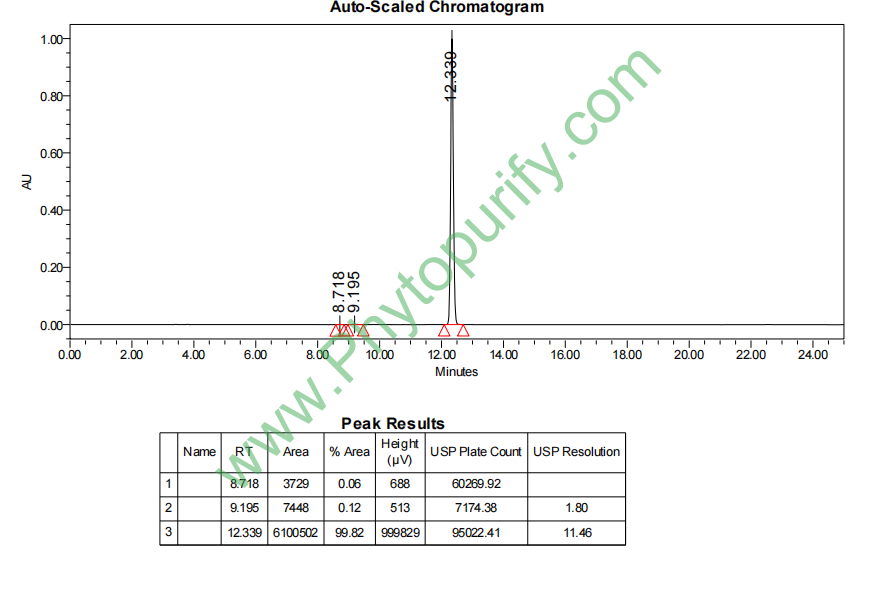
HPLC of Syringic acid
Storage conditions:Short-term storage at 2~8℃, long-term storage at -20 ~ -80℃
75.9900
1.5754
-1.2790
3.8743
4.3562
4.0436
Low
80.4280
1.7258
Yes
No
No
No
Yes
No
0.0
Yes
No
Yes
No
Natural products, as an important treasure trove for drug discovery and development, play an irreplaceable role in the long history of human fight against diseases. Among them, phenylpropanoid compounds have attracted much attention due to their wide range of biological activities. Syringic acid (SA), chemical name 4-hydroxy-3,5-dimethoxybenzoic acid, CAS number 530-57-4, is a phenolic acid compound widely present in various plants. It is not only a key product of secondary metabolism in plants, but also an important material basis for many medicinal plants to exert pharmacological effects. Early studies revealed that eugenoic acid is closely related to the high oxidative activity of low-density lipoprotein (LDL) and can effectively inhibit the oxidative modification of LDL. This discovery linked it with the prevention and treatment of oxidative stress related diseases such as atherosclerosis and cardiovascular disease, opening the prelude to its pharmacological research. As a 3,5-dimethyl ether derivative of gallic acid, syringic acid retains its phenolic hydroxyl antioxidant activity while possessing unique physicochemical properties and biological activity spectrum due to the introduction of its methoxy group. In recent years, with the deepening of research, its multiple pharmacological activities such as antibacterial, anti-inflammatory, anti-tumor, hepatoprotective, and neuroprotective have been successively revealed, showing broad development prospects. This article aims to systematically review the chemical properties, plant sources, pharmacological activities, mechanisms of action, medicinal properties, and clinical application potential of syringic acid, in order to provide comprehensive scientific references for the in-depth research and development of this natural product.
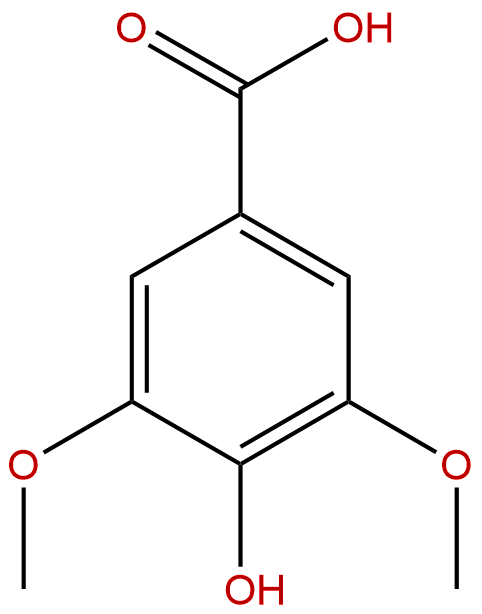
Syriac acid is a simple derivative of benzoic acid, belonging to phenolic acid compounds. Its molecular formula is C9H10O5 and its molecular weight is 198.1740 g/mol. Structurally, the 3rd and 5th positions on its benzene ring are each connected to a methoxy group (- OCH3), the 4th position is connected to a hydroxyl group (- OH), and the 1st position is connected to a carboxyl group (- COOH). This substitution mode of 3,5-dimethoxy-4-hydroxy is its structural feature and also makes it a methylated derivative of gallic acid (3,4,5-trihydroxybenzoic acid). This methylation modification significantly affects its physicochemical properties.
In terms of physical and chemical properties, the calculated lipid water partition coefficient (LogP) is 1.5754, indicating that syringic acid has a certain lipophilicity, but overall it still tends to be hydrophilic, which is consistent with the presence of its carboxyl and phenolic hydroxyl groups. Its topological polar surface area (TPSA) is 75.99 Å ², reflecting the surface area occupied by polar atoms (oxygen atoms) in the molecule, which has a significant impact on its solubility and membrane permeability. Experimental or predicted data shows that its water solubility is about 3.8743 mg/mL, which belongs to moderate to low water solubility. However, under alkaline conditions, its solubility will significantly increase due to carboxyl dissociation. These basic pharmacological parameters suggest that syringic acid has the basic structural characteristics as a lead compound, but its solubility and permeability may need to be optimized to improve bioavailability.
Dingxiang acid is widely distributed in nature and is a common ingredient in many plants, fruits, vegetables, and traditional medicinal herbs. Its main plant sources include:
1. medicinal plants Examples include Syzygium aromaticum, Salvia miltiorrhiza, Ligustrum Lucidum, Acanthopanax senticosus, etc. Among these medicinal herbs, syringic acid often coexists with other phenolic acid components, contributing to the overall therapeutic effect of the herbs.
2. Edible plants Such as olive oil, red wine, various grains (barley, corn), beans, as well as various fruits (such as grapes, kiwifruit) and vegetables, have all been detected. Daily dietary intake is the main pathway through which the human body comes into contact with syringic acid.
3. Other sources Some wood and bark also contain syringic acid, especially during the degradation of lignin, which produces such compounds.
The method of extracting syringic acid follows the conventional techniques of natural product chemistry, and is selected based on the target purity and application requirements
- Solvent extraction method The most commonly used method. Usually, methanol, ethanol, acetone, or alcohol water mixtures of different proportions are used for extraction, reflux, or ultrasound assisted extraction of dried and crushed plant materials. This method is simple, low-cost, and suitable for initial enrichment.
- Alkali extraction and acid precipitation method Purification is carried out by utilizing the characteristic of the carboxyl group of syringic acid dissolving in alkaline solution and precipitating under acidic conditions. This method has good selectivity for phenolic acid components.
- Modern Separation Technology Including macroporous adsorption resin chromatography (such as AB-8, D101 resin), preparative high-performance liquid chromatography (HPLC), and high-speed countercurrent chromatography (HSCCC). These techniques are commonly used for efficient separation and purification of high-purity syringic acid from complex crude extracts, particularly suitable for standard preparation and in-depth pharmacological research.
The optimization of extraction processes usually focuses on factors such as solvent type, concentration, solid-liquid ratio, temperature, time, and extraction times to improve yield and efficiency.
A large number of in vitro and in vivo studies have shown that syringic acid has diverse pharmacological activities, making it potentially applicable in multiple disease fields.
Antioxidant and Cardiovascular Protective Activities One of the core activities of syringic acid is its strong antioxidant capacity. It can effectively eliminate various free radicals such as DPPH, ABTS, superoxide anions, hydroxyl radicals, etc. Its role in inhibiting the oxidation of low-density lipoprotein (LDL) is particularly critical. Oxidative LDL is the core of atherosclerosis. Eugenoic acid protects LDL from oxidative damage through multiple pathways such as direct scavenging of free radicals, chelating metal ions (such as Fe2+, Cu2+), and up regulating the activity of endogenous antioxidant enzymes (such as superoxide dismutase SOD, glutathione peroxidase GSH Px), thus exerting the potential of anti atherosclerosis. Animal experiments have also confirmed its protective effect on myocardial ischemia-reperfusion injury.
Antibacterial and antifungal activity Syriac acid exhibits inhibitory activity against various bacteria and fungi. It has a certain inhibitory effect on both Gram positive bacteria (such as Staphylococcus aureus and Bacillus subtilis) and Gram negative bacteria (such as Escherichia coli and Pseudomonas aeruginosa). In terms of antifungal activity, there have also been reports on Candida albicans and other fungi. Its antibacterial mechanism may involve disrupting the integrity of microbial cell membranes, inhibiting energy metabolism, and interfering with the synthesis of key biomolecules. The relevant targets may include DNA gyrases (GYRA/GYRB), cell division protein FtsZ, dihydrofolate reductase (DHFR), etc., which makes it potential for developing novel antibacterial agents.
Anti inflammatory and immune regulatory activity Syriac acid has shown anti-inflammatory effects in various acute and chronic inflammation models. It can significantly inhibit the excessive production of nitric oxide (NO), prostaglandin E2 (PGE2), and pro-inflammatory cytokines (such as TNF - α, IL-1 β, IL-6) induced by lipopolysaccharides (LPS) and other factors in macrophages. Its function is closely related to the inhibition of key inflammatory signaling pathways such as nuclear factor kappa B (NF - κ B) and mitogen activated protein kinases (MAPKs).
Antitumor activity Preliminary studies have shown that syringic acid can inhibit the proliferation of many cancer cell lines (such as breast cancer, lung cancer, colon cancer, liver cancer), and can induce apoptosis and cell cycle arrest. Its anti-tumor mechanism involves inducing the generation of reactive oxygen species (ROS), activating the mitochondrial apoptosis pathway, regulating the Bcl-2/Bax protein ratio, and inhibiting survival signaling pathways such as PI3K/Akt.
Liver protection and neuroprotective activity In chemical substances (such as acetaminophen, carbon tetrachloride) or alcohol induced liver injury models, cinnamic acid, through its antioxidant and anti-inflammatory properties, reduces oxidative stress and inflammatory reactions, lowers liver enzyme levels, improves liver pathological changes, and exhibits liver protective effects. In addition, it has also shown protective effects in neurodegenerative disease models such as Alzheimer's disease and Parkinson's disease, which may be achieved by reducing beta amyloid toxicity, inhibiting tau protein hyperphosphorylation, and improving cholinergic system function.
Other activities It also includes anti diabetes activity (improving insulin resistance, protecting islet β cells), anti osteoporosis activity, etc.
The multiple pharmacological activities of syringic acid stem from its interactions with various biomolecules and signaling pathways. The molecular mechanism of action can be summarized as follows:
Direct antioxidant and signal regulation As a phenolic compound, syringic acid provides hydrogen atoms through its phenolic hydroxyl group, directly neutralizing free radicals and terminating chain reactions. In addition, it can activate the cellular defense system, such as by activating the Nrf2/ARE pathway, upregulating the expression of phase II detoxifying enzymes and antioxidant proteins such as heme oxygenase-1 (HO-1) and quinone oxidoreductase 1 (NQO1), enhancing the cell's resistance to oxidative damage.
Regulating key signaling pathways:
Specific targets for microorganisms(Based on the provided information): The antibacterial effect of syringic acid may involve inhibition of microbial specific enzyme systems or functional proteins. The relevant potential targets include:
Epigenetic regulation Research suggests that syringic acid may regulate gene expression by affecting histone modification or DNA methylation, providing a new perspective for understanding its long-term effects.
The preliminary drug like and pharmacokinetic (PK) evaluation of syringic acid is as follows:
Drug like parameters The molecular weight (198) meets the Lipinski "Five Rules" for small molecule drugs. The LogP value (~1.58) is within the ideal range (usually 1-3), indicating its balanced lipid water distribution. TPSA (~76 Å ²) is slightly higher and may have some impact on cell membrane permeability, but it is still within an acceptable range. Moderate water solubility needs to be considered in the formulation. The key toxicity warning indicators show that the hERG inhibition risk is "no", indicating a low potential risk of cardiac toxicity; The Ames test result is 0.0, indicating no mutagenicity and low genetic toxicity risk in this testing system. The blood-brain barrier (BBB) permeability is predicted to be 'low', which poses a challenge for the treatment of central nervous system diseases but may be beneficial in reducing central side effects.
Pharmacokinetic characteristics Current animal pharmacokinetic studies (mainly in rodents) have shown that syringic acid is rapidly absorbed after oral administration, but its absolute bioavailability may not be high, which is related to its possible metabolism in the gastrointestinal tract (such as binding reactions) and first pass effects. It is widely distributed in the body, but as predicted, the amount entering the brain is limited. In terms of metabolism, syringic acid mainly undergoes II phase binding reactions, such as glucuronidation and sulfation, to generate corresponding complexes. The prototype drug and its metabolites are mainly excreted through the kidneys and urine. Its plasma half-life is relatively short and may require frequent administration or dosage form modification to maintain effective blood drug concentration.
Summary Syriac acid has a good drug like basis and safety warning characteristics, but it faces common challenges such as low oral bioavailability, poor blood-brain barrier penetration, and short half-life in natural product drug formation. Future structural optimization or formulation development (such as prodrugs, nano formulations, phospholipid complexes, etc.) is a key direction to enhance its potential as a drug.
Based on its broad pharmacological activity and relatively good safety, syringic acid has potential application prospects in multiple fields:
As a functional food additive or health product Develop health products for the prevention of cardiovascular disease, metabolic syndrome, and chronic diseases related to oxidative stress by utilizing its powerful antioxidant and anti-inflammatory properties. Its natural origin characteristics are more easily accepted by consumers.
As lead compounds or auxiliary components of antibacterial drugs In response to the increasingly serious problem of antibiotic resistance, the multi-target antibacterial mechanism of syringic acid deserves further exploration. It can be used as the parent nucleus for structural modification, optimizing antibacterial activity and pharmacokinetic properties, and developing new antibacterial agents. It can also be used in combination with existing antibiotics to enhance efficacy or reverse drug resistance.
Developed as anti-inflammatory or organ protective drugs The liver protective and anti-inflammatory effects of syringic acid have shown therapeutic potential in non-alcoholic fatty liver disease (NAFLD), drug-induced liver injury, chronic inflammatory diseases, and other related conditions. Further preclinical toxicology and effective dose exploration are needed.
Exploration in Neurological Diseases Although BBB penetration is a barrier, it may still have a place in the treatment of diseases such as Alzheimer's and Parkinson's through formulation techniques (such as nanocarriers, prodrug strategies) or exploring the indirect benefits of peripheral anti-inflammatory effects on neuroinflammation.
Application in adjuvant therapy for tumors Its anti-tumor activity and sensitizing effect on chemotherapy drugs make it possible to use it as a tumor chemopreventive or adjuvant therapy drug, reducing the side effects of radiotherapy and chemotherapy and improving the quality of life of patients.
Challenges faced and future research directions:
- Deep analysis of the mechanism of action It is necessary to use techniques such as chemical biology, molecular docking, and gene knockout to accurately verify its direct interaction with the speculated targets (such as GYRA, FtsZ, DHFR, etc.) and its regulatory nodes in complex biological networks.
- Systematic pharmacokinetics and toxicology research Conduct a more comprehensive evaluation of ADMET (absorption, distribution, metabolism, excretion, and toxicity), especially for long-term toxicity, reproductive toxicity, etc., to lay a safe foundation for clinical translation.
- Structural optimization and formulation innovation By rational drug chemical modification, its solubility, permeability, metabolic stability, and targeting can be improved. Develop new delivery systems, such as liposomes, polymer nanoparticles, etc., to improve their bioavailability and disease site targeting.
- Clinical research advancement With sufficient preclinical research support, gradually promote human clinical trials to verify its safety and effectiveness in specific diseases such as mild dyslipidemia, skin infections, oral inflammation, etc.
As a natural phenolic acid widely present in nature, the research on cinnamic acid has expanded from its initial antioxidant properties to multidimensional pharmacological activities such as antibacterial, anti-inflammatory, anti-tumor, hepatoprotective, and neuroprotective. Its chemical structure is simple, its drug like characteristics are good, and the preliminary safety warning indicators are optimistic. The study of its mechanism of action revealed that it exerts multiple biological functions by directly antioxidant and regulating key signaling pathways such as NF - κ B/MAPK/PI3K Akt, and may act on multiple microbial specific targets. Despite common challenges in drug development such as oral bioavailability, blood-brain barrier penetration, and in vivo metabolic stability, these challenges are providing opportunities for innovation in the fields of medicinal chemistry and pharmacy. In the future, through interdisciplinary cooperation, we will further clarify its molecular action targets, systematically evaluate its pharmacokinetic and toxicological properties, and optimize it with the help of modern drug design and novel delivery technologies. Syringate is expected to gradually develop from a potential natural active molecule into a candidate drug or an important functional component for the prevention or treatment of infectious diseases, metabolic diseases, inflammatory diseases and even tumors, contributing its unique value to human health.
