Introduction/Overview
Rheumatoid arthritis (RA) is an autoimmune disease characterized by chronic, symmetrical, and erosive polyarthritis. Its pathological features include synovial hyperplasia, inflammatory cell infiltration, and the formation of vascular opacities, ultimately leading to joint cartilage and bone destruction, high disability rate, and serious impact on patients' quality of life. The current treatment strategies for RA, such as nonsteroidal anti-inflammatory drugs, anti rheumatic drugs, glucocorticoids, and biologics, can effectively control symptoms, but they generally have problems such as large side effects, high prices, poor response or drug resistance in some patients. Therefore, finding efficient and low toxicity new therapeutic molecules from natural products has always been an important direction for drug development.
Cinnamic acid and its derivatives are widely present in nature and are key active ingredients in many medicinal plants, with various pharmacological activities such as anti-inflammatory, antioxidant, and anti-tumor. Methyl 3,4,5-trimethoxycinnamate (MTMC, CAS: 7560-49-8), as a type of structurally modified cinnamic acid alkyl ester, has attracted much attention due to its unique 3,4,5-trimethoxyphenyl ring structure. In recent years, an increasing number of pharmacological studies have shown that MTMC has significant potential in anti-inflammatory, immune regulation, and joint protection. Its effects involve multiple signaling pathways and molecular targets closely related to the pathological process of RA, such as AMPK, STAT3, NF - κ B, Nrf2, etc. This article aims to systematically review the chemical properties, plant sources, pharmacological activities, mechanisms of action, and pharmacological properties of MTMC, and explore its development prospects as a candidate drug for RA resistance.
Chemical structure and physicochemical properties
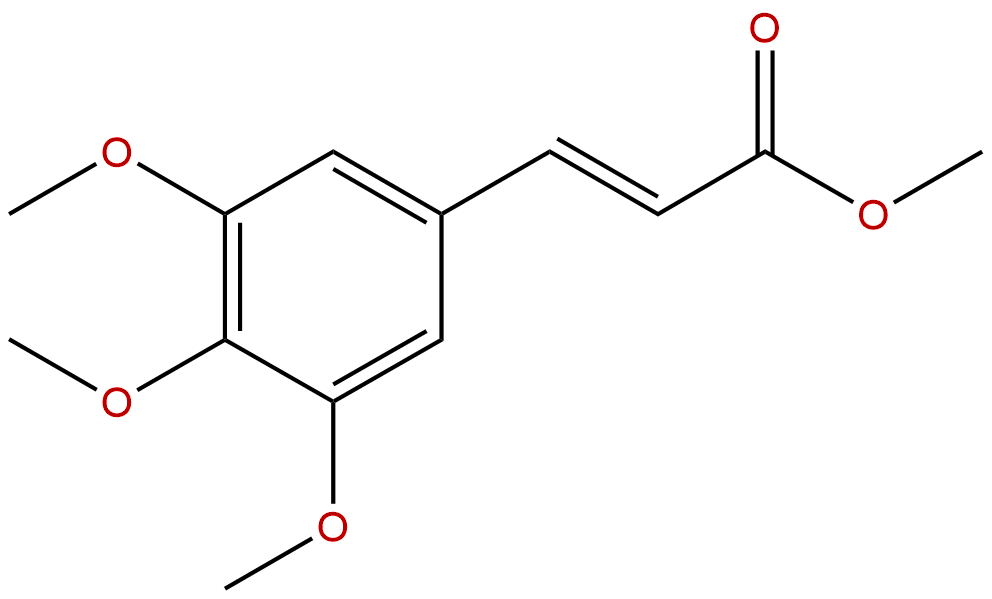
The chemical name of 3,4,5-trimethoxycinnamic acid methyl ester is its systematic name, with a molecular formula of C ₁∝ H ₁₆ O ₅ and a molecular weight of 252.2660 g/mol. Structurally, MTMC consists of two core components: one is the phenyl ring substituted with 3,4,5-trimethoxy (i.e. the phenyl ring portion of methyl gallate), and the other is the methylated carboxyl group connected by α, β - unsaturated double bonds of acrylic acid. This structure makes it a typical cinnamic acid alkyl ester compound.
The key pharmacophores in its structure include: 1)3,4,5-trimethoxyphenyl The strong electron donating effect and steric hindrance of methoxy groups significantly affect the electron cloud distribution, lipid solubility, and interaction mode with target proteins of compounds, often associated with anti-inflammatory and antioxidant activities. 2)Acrylic acid alpha, beta unsaturated double bond This structure is a typical feature of Michael reaction receptors, allowing them to covalently or non covalently bind with biomolecules such as thiol groups in proteins, and is the structural basis for many biological activities. 3)Methyl ester group Compared to the free acid form, esterification can usually improve the lipid solubility and membrane permeability of compounds, affecting their pharmacokinetic behavior.
Based on its structure, MTMC exhibits the following key physicochemical properties: the calculated lipid water partition coefficient (LogP) is approximately 2.28, indicating its good lipid solubility, which facilitates transmembrane transport and cell permeation. The topologically polar surface area (TPSA) is 53.99 Å ², which is relatively small and further supports its good membrane permeability. The predicted low water solubility (about 0.36 mg/mL) suggests that solubilization strategies may need to be considered in formulation development. It is worth noting that its blood-brain barrier permeability is predicted to be "high", which means it may have central nervous system activity potential, although current research mainly focuses on peripheral inflammatory diseases. In addition, preliminary pharmacological warnings showed no significant inhibition of hERG potassium channels (indicating low risk of cardiac toxicity), and the Ames test result was 0.3 (usually considered a value<1.5 indicating no mutagenicity), providing preliminary positive signals for its safety.
Plant sources and extraction methods
MTMC is not a common component widely present in the plant kingdom, but is mainly isolated and identified as a characteristic or secondary metabolite of specific medicinal plants. According to literature reports, its main plant sources include:
- Orchid plants: Various Dendrobium species(Dendrobium)Plants, such as Dendrobium officinale(D. officinale)Golden Hairpin Dendrobium(D. nobile)The stem is one of the important sources of MTMC. These plants are commonly used in traditional medicine to nourish yin and clear heat, and their anti-inflammatory activity is partly attributed to these ingredients.
- Umbelliferae plants In some species of the genus Ferula(Ferula)Or when belonging(Angelica)It has also been detected in plants. These plants are usually rich in coumarins and phenylpropanoids.
- Other families and genera MTMC has also been occasionally isolated from extracts of some folk medicinal plants, such as certain Asteraceae and Lauraceae plants.
The extraction and separation of MTMC usually follow the conventional process of natural product chemistry. Firstly, organic solvents such as methanol, ethanol, or acetone are used for cold soaking or heating reflux extraction of dried plant materials. After vacuum concentration, the crude extract obtained was preliminarily enriched using solvent partitioning methods (such as petroleum ether/ethyl acetate/water system), with MTMC mostly concentrated in the ethyl acetate fraction. Further purification mainly relies on column chromatography technology, often using silica gel as the stationary phase, with different ratios of petroleum ether ethyl acetate or chloroform methanol gradient elution. Based on the polarity and quantity of the target compound, multiple column chromatography or combined thin layer chromatography, high-performance liquid chromatography, and other techniques may be required to obtain high-purity MTMC monomers. Structural identification is accomplished through nuclear magnetic resonance (¹ H-NMR, ¹ ³ C-NMR), mass spectrometry (MS), and comparison with standard samples.
In recent years, chemical synthesis of MTMC has become an important approach to meet the demand for a large number of standard products in pharmacological research. Its synthesis usually starts from 3,4,5-trimethoxybenzaldehyde and reacts with methyl malonate through classical Perkin reaction or Knoevenagel condensation reaction to produce the target product. The synthesis method has the advantages of stable yield and controllable cost, which is conducive to further research on structure-activity relationships and drug development.
Pharmacological activity research
A large number of in vitro and in vivo pharmacological studies have confirmed that MTMC has a wide range of biological activities, and its core pharmacological effects revolve around anti-inflammatory, immune regulation, and cell protection, which are highly compatible with the treatment needs of RA.
1. Anti inflammatory activity
The anti-inflammatory effect of MTMC is its most prominent pharmacological characteristic. MTMC has shown significant effects in various animal models of acute and chronic inflammation. For example, in mouse ear xylene induced inflammation models and carrageenan induced rat paw swelling models, MTMC pretreatment can dose dependently reduce tissue edema and inflammatory exudation. More importantly, in classic RA animal models such as adjuvant arthritis (AA) rats or collagen induced arthritis (CIA) mice, oral administration of MTMC can significantly improve joint swelling, reduce arthritis scores, and alleviate radiological and histopathological changes in bone erosion and cartilage destruction. Its anti-inflammatory effect is often comparable or synergistic with first-line clinical drugs methotrexate or dexamethasone.
2. Immune regulatory activity
The essence of RA is immune system dysfunction. MTMC can regulate immune cell function. Research has shown that MTMC can inhibit excessive proliferation of lymphocytes (such as T cells and B cells) induced by lipopolysaccharide (LPS) or concanavalin A (ConA). It can regulate the polarization of macrophages, inhibit the activation of pro-inflammatory M1 macrophages, and may also promote the expression of anti-inflammatory M2 macrophages. In addition, MTMC can also inhibit the migration and activation of neutrophils, reducing the release of inflammatory mediators.
3. Antioxidant and cell protective activities
Oxidative stress is an important driving factor for joint injury in RA. The benzene ring structure of MTMC endows it with the ability to scavenge free radicals. In cell models, it can effectively counteract oxidative damage induced by hydrogen peroxide (H ₂ O ₂) or tert butyl hydroperoxide (t-BHP), increase the activity of intracellular antioxidant enzymes such as superoxide dismutase (SOD) and glutathione peroxidase (GPx), and reduce the levels of reactive oxygen species (ROS) and malondialdehyde (MDA). This antioxidant effect is crucial for protecting synovial cells and chondrocytes from the dual impact of inflammation and oxidation.
4. Other potential activities
In addition to the core activities mentioned above, research also suggests that MTMC may have analgesic effects (reducing pain responses in acetic acid writhing tests), as well as the potential to inhibit osteoclast differentiation and bone resorption, which has direct implications for preventing bone erosion in RA.
Mechanism of action and molecular targets
The anti RA effect of MTMC is not achieved through a single target, but through the synergistic action of multiple targets and pathways, forming a networked regulatory system. Based on the provided target information, its mechanism of action can be summarized as follows:
1. Regulating energy metabolism and inflammation switch: AMPK pathway
AMP activated protein kinase (AMPK) is a core sensor of cellular energy metabolism and an important anti-inflammatory target. MTMC has been confirmed to be an activator of AMPK (encoded by PRKAA1). Activation of AMPK can inhibit mammalian rapamycin target protein (mTOR) signaling and reduce the production of pro-inflammatory cytokines; Meanwhile, AMPK activation can directly phosphorylate and inhibit the transcriptional activity of NF - κ B, and promote the activation of Nrf2, thereby fundamentally inhibiting inflammation from the perspective of energy metabolism.
2. Inhibit the inflammatory signaling center: NF - κ B and STAT3 pathways
Nuclear factor kappa B (NF - κ B) and signal transduction and transcription activator 3 (STAT3) are the two core transcription factors involved in RA synovitis and hyperplasia. MTMC can effectively inhibit the phosphorylation of IKK/I κ B, prevent NF - κ B nuclear translocation, and downregulate its target genes such as IL-6、TNF-α、COX-2 and MMP1 Expression of matrix metalloproteinase 1. Meanwhile, MTMC can inhibit IL-6 Induced JAK2/STAT3 phosphorylation, blocking STAT3 dimerization and nuclear translocation, and inhibiting gene expression related to cell proliferation and survival.
3. Regulating immune tolerance and tryptophan metabolism: IDO1
Indoleamine 2,3-dioxygenase 1 (IDO1) is a key enzyme in tryptophan metabolism and plays an important role in immune tolerance. In the inflammatory environment of RA, IDO1 activity may be dysregulated. The regulatory effect (inhibition or regulation) of MTMC on IDO1 may affect the levels of tryptophan metabolites, thereby regulating the balance of Treg/Th17 cells, providing a new perspective for its immunomodulatory role.
4. Identify and activate innate immunity: TLR4
Toll like receptor 4 (TLR4) is a key receptor that recognizes endogenous damage associated molecular patterns (DAMPs) and exogenous pathogen associated molecular patterns (PAMPs), and its overactivation is one of the initiating stages of RA inflammation. MTMC may inhibit TLR4 signaling by interfering with the binding of TLR4 to ligands or the recruitment of downstream adaptor proteins (such as MyD88), thereby suppressing excessive immune responses at the source.
5. Intervention in the synthesis of lipid inflammatory mediators: ALOX5
5-Lipoxygenase 5 (ALOX5) is a key enzyme involved in the synthesis of leukotrienes in the arachidonic acid metabolic pathway. Leukotriene is a potent pro-inflammatory and chemotactic mediator. The inhibitory effect of MTMC on ALOX5 can reduce the production of mediators such as leukotriene B4 (LTB4), thereby alleviating the recruitment and activation of inflammatory cells.
6. Activate the cellular defense system: Nrf2 pathway
Nuclear factor E2 related factor 2 (NFE2L2/Nrf2) is the main regulator of antioxidant response elements (ARE). MTMC can promote the transfer of Nrf2 from cytoplasm to nucleus, upregulate the expression of phase II detoxifying enzymes such as heme oxygenase-1 (HO-1), NAD (P) H quinone oxidoreductase 1 (NQO1), and antioxidant proteins, enhance the antioxidant stress resistance of cells, and protect joint tissues.
7. Affects cell signaling and effector enzymes: PI3K γ and PKC α
Phosphatidylinositol 3-kinase gamma subtype (PIK3CG/PI3K gamma) plays a crucial role in immune cell chemotaxis and activation. Protein kinase C alpha (PRKCA/PKC alpha) is involved in the activation of various inflammatory signaling pathways. MTMC may interfere with the migration, survival, and effector functions of inflammatory cells, as well as the production of inflammatory mediators, by inhibiting the activity of PI3K γ/Akt and PKC α.
In summary, MTMC is like a "versatile hand" that constructs a three-dimensional anti-inflammatory and joint protection network by simultaneously acting on key nodes such as AMPK, TLR4, NF - κ B, STAT3, Nrf2, etc. from multiple levels including energy metabolism, innate immune recognition, inflammatory signal transduction, and oxidative stress defense.
Evaluation of drug properties and pharmacokinetics
Although MTMC exhibits excellent pharmacological activity, its potential as a drug still requires systematic pharmacological evaluation.
1. Physical and chemical properties and preliminary ADMET properties
As mentioned earlier, MTMC has a moderate LogP value, indicating its good oral absorption potential. A higher blood-brain barrier permeability suggests potential benefits for central complications such as RA related fatigue and depression, but attention should also be paid to the risk of central side effects. The absence of hERG inhibition and negative Ames test are important early safety signals. However, its low water solubility may affect the dissolution and bioavailability of oral formulations, and in the future, solid dispersion, cyclodextrin inclusion, or nanocrystal technologies may be needed to improve the formulation.
2. Current status of pharmacokinetic research
At present, there are relatively limited reports on pharmacokinetic studies of MTMC systems, which is often a bottleneck for natural product monomers to enter drug development. Based on its ester structure, it can be inferred that it may undergo the following processes in vivo:
* absorb With good fat solubility, it should be able to be well absorbed in the gastrointestinal tract.
* distribution Due to its small molecular weight and moderate protein binding rate (subject to experimental verification), it is expected to be widely distributed in the body, including inflamed joint sites.
* Metabolism As an ester compound, MTMC is easily hydrolyzed by esterases (such as carboxylesterases) in blood and tissues, generating its active metabolites 3,4,5-trimethoxycinnamic acid The latter may further undergo II combination reactions such as demethylation, glucuronidation, or sulfation. Therefore, MTMC is likely to be a "prodrug", and its in vivo activity may be the result of the interaction between the prototype drug and its hydrolyzed acid. It is crucial to clarify its main metabolites, metabolic enzymes, and metabolic pathways.
* excretion Metabolites are mainly excreted from the body through the kidneys (urine) or bile (feces).
In the future, comprehensive preclinical pharmacokinetic studies are needed, including determination of its absolute bioavailability, plasma protein binding rate, major tissue distribution, identification of metabolites and excretion pathways, and evaluation of its potential for interaction with commonly used RA drugs.
3. Preliminary toxicological considerations
In addition to preliminary safety signals for genetic toxicity (Ames test) and cardiac toxicity (hERG), systematic acute toxicity, subacute toxicity, long-term toxicity tests, as well as specialized studies on reproductive toxicity, carcinogenicity, etc., are also needed to comprehensively evaluate their safety. Although its methoxy structure is commonly found in drugs, attention should also be paid to whether it produces potential toxic intermediates after metabolic demethylation in vivo.
Clinical application prospects and prospects
MTMC, as a natural small molecule with clear multi-target anti RA activity, has broad prospects for clinical application and development, but also faces challenges.
Potential application directions:
1. As a novel anti RA chemical entity drug This is the main development direction. It can be developed into oral tablets or capsules as a supplement or alternative to traditional DMARDs, especially suitable for patients who are intolerant or have poor response to existing drugs. Its multi-target characteristics may bring more comprehensive disease control.
2. As an adjuvant drug or health supplement for RA treatment Given that it originates from traditional medicinal plants and has good safety expectations, it can be explored and developed as a health food or herbal medicine to assist in the treatment of RA, used to alleviate inflammation and improve oxidative stress status.
3. Local administration formulation: For the local joint symptoms of RA, we can consider developing MTMC transdermal gel, cream or intra-articular injection to directly act on the diseased joints, increase the local concentration, and reduce systemic exposure and side effects.
4. Combination therapy strategy Studying the synergistic effect of MTMC with standard therapeutic drugs such as methotrexate and leflunomide may help reduce the dosage of these drugs, thereby alleviating their side effects such as liver toxicity and bone marrow suppression, and improving the treatment index.
Challenges and future research directions:
1. In depth study of structure-activity relationships Systematically study the effects of the number and position of methoxy groups on the benzene ring of MTMC, as well as modifications of side chain double bonds and ester groups, on its activity, selectivity, and pharmacokinetic properties, in order to discover derivatives with stronger activity and better drug properties.
2. Comprehensive preclinical development Completing the gaps in pharmacokinetic and systemic toxicology research, clarifying its in vivo fate and safety window, is the necessary path to advance its entry into clinical trials.
3. Fine characterization of the mechanism of action Although it is known to act on multiple targets, further research is needed to clarify its direct binding mode with each target (such as through surface plasmon resonance, co crystallization, and other techniques), binding strength, and the weight of each target's contribution, in order to achieve a cognitive leap from "multi-target" to "precise multi-target".
4. Exploration of Biomarkers Finding biomarkers that can predict MTMC treatment response can help achieve personalized and precise treatment of RA in the future.
Conclusion
3,4,5-trimethoxycinnamic acid methyl ester (MTMC) is a structurally clear cinnamic acid ester compound isolated from traditional medicinal plants. A large amount of pharmacological evidence shows that it exerts strong anti-inflammatory, immune regulatory, antioxidant, and joint protective effects by synergistically activating protective pathways such as AMPK/Nrf2, while inhibiting inflammatory core pathways such as TLR4/NF - κ B/STAT3/ALOX5, demonstrating enormous potential in the treatment of autoimmune diseases such as RA. Its multi-target action characteristics are consistent with the concept of modern complex disease systemic therapy. Although there are still gaps in the development of drug properties, especially in systematic pharmacokinetics and toxicology research, its clear chemical structure, clear biological activity, good preliminary safety warning, and advantages of chemical synthesis have laid a solid foundation for further drug chemistry optimization and preclinical development. In the future, through interdisciplinary collaboration and in-depth research on its structure-activity relationship, in vivo processes, mechanism of action, and formulation, MTMC is expected to gradually develop from a potential natural active molecule into a promising new star in the pipeline of anti rheumatoid arthritis drug development.