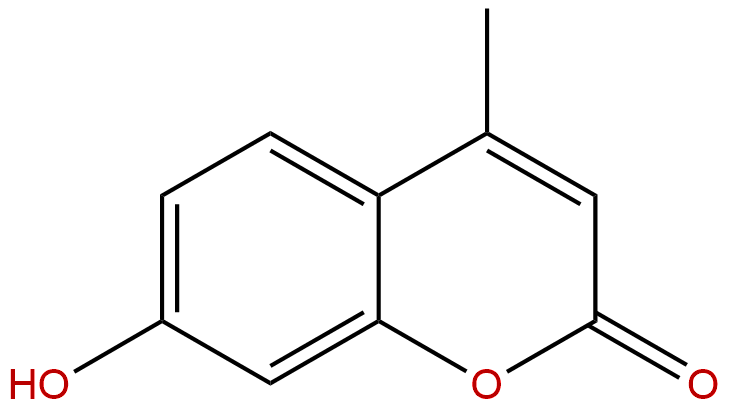


Product name: 4-Methylumbelliferone
Synonym name: 7-Hydroxy-4-methylcoumarin; 4-Methyl-7-hydroxycoumarin; beta-methylumbelliferone; cantabilin
Catalogue No.: SBP03388
Cas No.: 90-33-5
Formula: C10H8O3
Mol Weight: 176.171
Botanical Source:
Type of Compound:
Purity: 95%~99%
Analysis Method: HPLC-DAD or/and HPLC-ELSD
Identification Method: Mass, NMR
Packing: Brown vial or HDPE plastic bottle
Storage: Store in a well closed container, protected from air and light. Put into refrigerate or freeze for long term storage.
Whenever possible, you should prepare and use solutions on the same day. However, if you need to make up stock solutions in advance, we recommend that you store the solution as aliquots in tightly sealed vials at -20℃. Generally, these will be useable for up to two weeks.
The product could be supplied from milligrams to grams
Inquire for bulk scale.
For Reference Standard and R&D, Not for Human Use Directly.
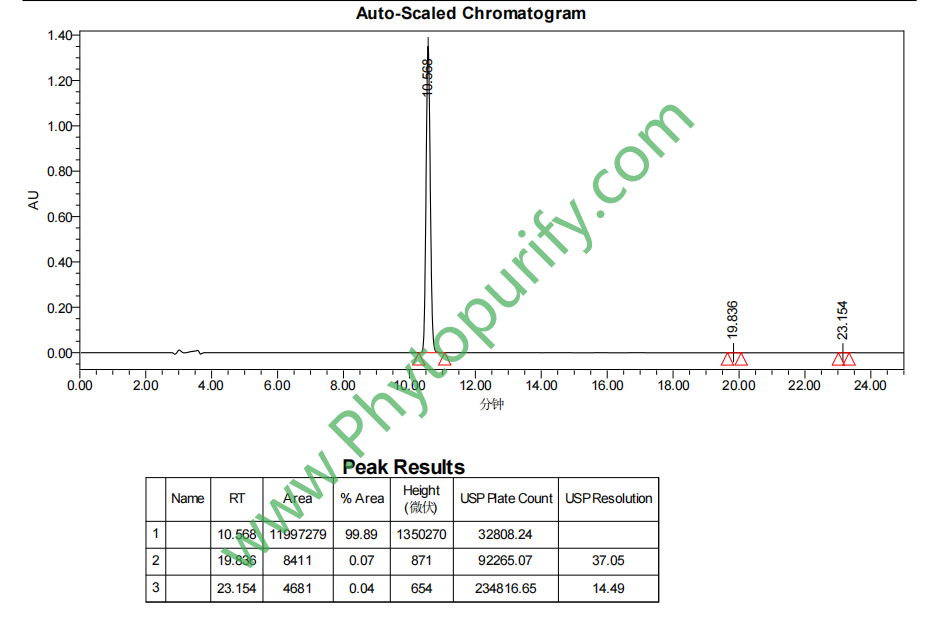
HPLC of 4-Methylumbelliferone
Storage conditions:Short-term storage at 2~8℃, long-term storage at -20 ~ -80℃
50.4400
1.8946
1.8225
.5309
2.6379
18.7595
High
83.2004
1.9638
Yes
No
Yes
No
Yes
Yes
0.6
Yes
No
Yes
Yes
Natural products, as an important source of drug discovery, have long played an indispensable role in the human fight against diseases. Among them, coumarin compounds have attracted much attention due to their structural diversity and wide range of biological activities. 4-Methylumbelliferone (4-MU), as a structurally simple hydroxycoumarin derivative, has shown unique value and potential in pharmacological research, especially in the treatment of oncology and fibrotic diseases, in recent years. Its CAS registration number is 90-33-5, and its chemical structure is umbelliferone (7-hydroxycoumarin) with the 4th hydrogen atom replaced by a methyl group.
4-methylumbelliferone was initially used as a substrate for enzyme activity detection due to its fluorescent properties, such as for detecting β - glucuronidase. However, what truly sets it apart from many coumarin compounds is its discovery as an inhibitor of hyaluronic acid (HA) biosynthesis. Hyaluronic acid is an important component of the extracellular matrix (ECM), playing a crucial role in tissue hydration, cell proliferation, migration, and inflammation regulation. In various pathological states, such as malignant tumors, fibrotic diseases, and inflammatory diseases, the synthesis and metabolism of HA are often disrupted, and its abnormal accumulation is closely related to disease progression and poor prognosis. 4-methylumbelliferone can effectively intervene in these pathological processes by inhibiting the synthesis of HA, exhibiting multiple pharmacological activities such as anti-tumor, anti metastasis, anti fibrosis, and anti-inflammatory.
This article aims to provide a systematic professional review of 4-methylumbelliferone. We will start from its chemical structure and physicochemical properties, trace its plant origin and extraction methods, deeply explore its pharmacological activity, mechanism of action, and molecular targets, evaluate its pharmacological properties and pharmacokinetic characteristics, and finally look forward to its clinical application prospects. By integrating various research advances, this article aims to provide a comprehensive and in-depth knowledge framework for scholars engaged in natural product pharmacology, medicinal chemistry, and translational medicine research, in order to promote the translation of this highly promising natural compound into clinical applications.
The chemical name of 4-methylumbelliferone is 7-hydroxy-4-methyl-2H-1-benzopyran-2-one, and its core skeleton is a benzopyranone (i.e. coumarin) structure. Specifically, it is composed of a benzene ring fused with an alpha pyranone ring. There is a hydroxyl group (- OH) connected to the 7th position of the coumarin parent nucleus, and a methyl group (- CH3) connected to the 4th position. This simple structural modification - introducing a methyl group at position 4- endows 4-MU with different physicochemical properties and biological activity from the parent compound, umbelliferone. Its molecular formula is C ₁₀ H ₈ O3, and its molecular weight is 176.17 g/mol.
In terms of physical and chemical properties, 4-methylumbelliferone appears as a white to off white crystalline powder with a weak distinctive odor. Its melting point is between 185-190 ° C. Due to the presence of conjugated systems in the molecule, 4-MU can emit strong blue fluorescence under ultraviolet light irradiation, which makes it widely used as a fluorescent probe in biochemical analysis. Its fluorescence properties also provide convenience for its distribution and metabolic research in vivo.
From the perspective of medicinal chemistry, the pharmacological parameters of 4-MU exhibit some characteristics. Its lipid water partition coefficient (LogP) is 1.89, indicating that it has moderate lipophilicity and is conducive to transmembrane transport. The topological polar surface area (TPSA) is 50.44 Å ², which is lower than the commonly believed passive absorption threshold (140 Å ²), indicating its good oral absorption potential. Its water solubility (LogS) is 0.53, belonging to the category of slight solubility, which may pose certain requirements for its formulation development. It is worth noting that 4-MU has a high blood-brain barrier (BBB) penetration ability, which provides a possibility for its application in central nervous system diseases, but may also bring related neurotoxic risks. In addition, the predictive model shows that it does not have hERG (human ether - à - go related gene) channel inhibitory activity, indicating a low risk of cardiac toxicity. The Ames test result is 0.6, indicating a low potential genetic toxicity risk, but further experimental verification is needed. These physicochemical properties together form the basis for 4-MU as a drug lead compound or candidate drug.
Although 4-methylumbelliferone can be efficiently synthesized through chemical methods, it is also a naturally occurring coumarin compound widely present in various plants. Its natural sources mainly include plant families such as Apiaceae, Rutaceae, Fabaceae, and Asteraceae. For example, the commonly used Fructus Psorale in traditional Chinese medicine(Psoralea corylifolia)Former Hu(Peucedanum spp.)、 Solo living(Angelica 4-MU or its glycoside form can be detected in plants such as spp. In addition, certain microorganisms, such as fungi, can also produce 4-MU.
The extraction of 4-methylumbelliferone from plants is usually carried out using classical natural product chemistry methods. Due to the fact that coumarin compounds often exist in the form of free or glycosides bound to sugars in plants, the extraction process needs to be comprehensively considered. Common extraction solvents include methanol, ethanol, ethyl acetate, or their mixed solvents. The extraction methods include:
1. Solvent extraction method Soak or percolate the dried and crushed plant materials in methanol or ethanol at room temperature or under heating conditions for extraction. This is the most commonly used and convenient method.
2. Ultrasound assisted extraction Using the cavitation effect of ultrasound to destroy plant cell walls, accelerate solvent penetration and solute dissolution, can significantly improve extraction efficiency and shorten extraction time.
3. Microwave assisted extraction By utilizing the heating effect of microwaves, the internal temperature of plants rapidly increases, promoting the dissolution of target components.
After concentration, the extract needs to be separated and purified. Common separation methods include:
1. Liquid-liquid extraction Using different solvents (such as petroleum ether, ethyl acetate, n-butanol) to perform graded extraction on the extract, in order to enrich coumarin components of different polarities.
2. Column chromatography method This is the most essential purification method. Common stationary phases include silica gel, alumina, polyamide and dextran gel (such as Sephadex LH-20). By selecting appropriate eluents (such as petroleum ether ethyl acetate, chloroform methanol gradient systems, etc.), 4-MU can be effectively separated from other impurities.
3. Preparation type high performance liquid chromatography (Prep HPLC)For components with similar structures that are difficult to separate, preparative HPLC can provide high-purity products.
Due to its strong fluorescence properties, 4-MU can be rapidly localized and monitored during the separation and purification process through thin layer chromatography (TLC) combined with ultraviolet light (365 nm) irradiation. The final pure product can be structurally confirmed by spectroscopic methods such as nuclear magnetic resonance (NMR) and mass spectrometry (MS).
The pharmacological activity research of 4-methylumbelliferone mainly revolves around its core mechanism as an inhibitor of hyaluronic acid synthesis, which has led to a wide range of biological effects.
This is the most in-depth field of 4-MU research. A large number of in vitro and in vivo experiments have confirmed that 4-MU has inhibitory effects on a variety of malignant tumor cells, including breast cancer, pancreatic cancer, prostate cancer, lung cancer, colorectal cancer, melanoma, glioblastoma, etc.
* Inhibit tumor cell proliferation 4-MU inhibits the synthesis of HA and destroys the HA matrix around tumor cells, thereby suppressing the proliferation of tumor cells. HA binds to the cell surface receptor CD44, activating downstream signaling pathways such as PI3K/Akt and Ras/ERK to promote cell growth. 4-MU blocks these pro proliferative signals by reducing HA levels.
* Inhibit tumor cell migration and invasion The HA matrix provides a "highway" for the migration of tumor cells. 4-MU treatment can significantly reduce the migration and invasion ability of tumor cells. In both scratch and Transwell experiments, 4-MU showed significant inhibitory effects. The mechanism involves downregulating the expression and activity of matrix metalloproteinases (MMPs), as well as inhibiting the epithelial mesenchymal transition (EMT) process.
* Inhibit tumor angiogenesis HA and its degradation fragments can stimulate the proliferation and migration of endothelial cells, promoting neovascularization. 4-MU can reduce the microvascular density in tumor tissue by inhibiting HA synthesis, thereby "starving" the tumor.
* Inhibit tumor metastasis In various animal metastatic tumor models, oral or intraperitoneal injection of 4-MU can significantly reduce the number of metastatic lesions in distant organs such as the lungs and liver. For example, in the lung metastasis model of breast cancer, the number of lung metastasis nodules in the 4-MU treatment group was significantly lower than that in the control group.
Fibrosis is a common pathological feature of various chronic diseases, with the core being the excessive deposition of ECM (especially HA and collagen). 4-MU has shown protective effects in models of liver fibrosis, pulmonary fibrosis, renal fibrosis, and myocardial fibrosis.
* Liver fibrosis In liver fibrosis models induced by carbon tetrachloride (CCl ₄) or bile duct ligation, 4-MU treatment can reduce the HA content in the liver, inhibit the activation and proliferation of hepatic stellate cells (HSCs), reduce collagen deposition, and thus alleviate the degree of liver fibrosis.
* Pulmonary fibrosis In the bleomycin induced pulmonary fibrosis model, 4-MU can alleviate alveolar inflammation, inhibit the transformation of fibroblasts into myofibroblasts, reduce the deposition of collagen and HA, and improve lung function.
* renal fibrosis In the unilateral ureteral obstruction (UUO) model, 4-MU can inhibit EMT of renal tubular epithelial cells and activation of fibroblasts, reduce ECM deposition, and delay the progression of renal fibrosis.
HA plays a dual role in inflammatory response. High molecular weight HA has anti-inflammatory effects, while low molecular weight HA has pro-inflammatory effects. 4-MU may alter the molecular weight distribution of HA by inhibiting its synthesis, thereby affecting the inflammatory process. Research has shown that 4-MU is effective in various inflammatory models.
* arthritis In the collagen induced arthritis (CIA) model, 4-MU can alleviate joint swelling, cartilage destruction, and bone erosion, and reduce the levels of inflammatory factors such as TNF - α, IL-1 β, and IL-6.
* sepsis In the sepsis model induced by lipopolysaccharide (LPS), 4-MU can reduce the levels of pro-inflammatory cytokines in serum and improve the survival rate of mice.
* Autoimmune diseases In experimental autoimmune encephalomyelitis (EAE, a multiple sclerosis model), 4-MU can alleviate inflammation and demyelinating lesions in the central nervous system.
Based on the target information you provided, 4-MU has potential effects on various bacterial and fungal targets. Although its antibacterial activity is not as strong as traditional antibiotics, as a multi-target natural product, its antibacterial mechanism may have uniqueness.
* antibacterial mechanism 4-MU may exert antibacterial effects by inhibiting key enzymes such as bacterial DNA gyrase (GYRA/GYPB), cell division protein FTSZ, fatty acid synthase FABI, dihydrofolate reductase DHFR, as well as affecting bacterial resistance related proteins such as MECA and PENA. For fungi, it may inhibit lanosterol 14 α - demethylase (ERG11/CYP51A1) and resistance associated efflux pump (CDR1). This multi-target mode of action may reduce the development of bacterial resistance.
* Research status At present, there is relatively little research on the antibacterial activity of 4-MU, mainly staying in the in vitro experimental stage. Its MIC values for common pathogens such as Staphylococcus aureus, Escherichia coli, and Candida albicans are usually in the range of tens to hundreds of micrograms per milliliter, with moderate activity. More research is needed in the future to verify its in vivo antibacterial effect and synergistic effect with existing antibiotics.
The pharmacological mechanism of 4-methylumbelliferone is complex, but its core lies in its inhibition of hyaluronic acid synthase. In addition, it exerts its wide-ranging biological effects by affecting multiple signaling pathways and molecular targets.
This is the most clear and important mechanism of action for 4-MU. Hyaluronic acid is synthesized on the cell membrane by three hyaluronan synthases (HAS1, HAS2, HAS3). 4-MU is a competitive inhibitor of HAS, which acts as an analog of the substrate (UDP glucuronic acid) and competes with UDP glucuronic acid for the active site of HAS, thereby blocking the extension of the HA chain. Research has shown that 4-MU has a particularly significant inhibitory effect on HAS2 and HAS3. By reducing the levels of intracellular and extracellular HA, 4-MU can reverse various pathological processes driven by excessive HA synthesis.
The reduction of HA will further affect its interaction with cell surface receptors, thereby regulating downstream signaling pathways.
* CD44 signaling pathway CD44 is the main receptor of HA. The interaction between HA-CD44 can activate proliferation promoting and anti apoptotic signaling pathways such as PI3K/Akt, Ras/ERK, Wnt/β - catenin, etc. 4-MU induces tumor cell apoptosis, inhibits proliferation and migration by reducing HA levels and inhibiting the activation of these pathways.
* RHAMM signaling pathway RHAMM (Hyaluronic Acid Mediated Movement Receptor) is another important HA receptor primarily involved in cell movement and migration. 4-MU inhibits cell migration by reducing HA, suppressing RHAMM mediated cytoskeleton rearrangement, and phosphorylation of focal adhesion kinase (FAK).
* TGF - β signaling pathway Transforming growth factor - β (TGF - β) is a key driver of fibrosis. HA can enhance the binding of TGF - β to its receptor and promote the phosphorylation of Smad2/3. 4-MU can inhibit the excessive activation of TGF - β signaling by suppressing HA synthesis, thereby inhibiting fibroblast activation and ECM deposition.
In addition to HAS, 4-MU may also directly or indirectly act on other molecular targets.
* Matrix metalloproteinases (MMPs)4-MU can downregulate the expression and activity of MMP-2 and MMP-9, which are key enzymes that degrade ECM, promote tumor invasion and metastasis.
* Epithelial mesenchymal transition (EMT) related proteins 4-MU can upregulate the expression of epithelial markers (such as E-cadherin) and downregulate the expression of mesenchymal markers (such as N-cadherin and Vimentin), thereby reversing the EMT process.
* Inflammatory related factors 4-MU can inhibit the activation of NF - κ B, thereby reducing the production of pro-inflammatory cytokines (such as TNF - α, IL-1 β, IL-6) and chemokines.
* Antibacterial targets As mentioned earlier, 4-MU has potential inhibitory activity against bacterial targets such as GYRA, GYPB, FTSZ, FABI, DHFR, as well as fungal targets such as ERG11 and CDR1. However, its specific binding mode and inhibition constant still need further investigation.
To promote the clinical application of 4-methylumbelliferone from the laboratory, a systematic evaluation of its pharmacological properties and pharmacokinetic characteristics is required.
From the perspective of medicinal chemistry, 4-MU has some ideal pharmacological characteristics:
* Low molecular weight(176.17 Da): Complies with Lipinski's Rule of Five and is beneficial for oral absorption.
* Moderate lipid solubility(LogP 1.89): Balancing water solubility and membrane permeability.
* Moderate polar surface area(TPSA 50.44 Å ²): indicating its good oral bioavailability potential.
* Low risk of cardiac toxicity No hERG inhibitory activity.
* Low genetic toxicity risk The Ames test result is negative.
However, its poor water solubility (LogS 0.53) is a potential weakness that may limit its oral absorption and in vivo exposure. In addition, its high BBB penetration ability is both an advantage and a risk, and attention should be paid to its central nervous system side effects.
The pharmacokinetic (PK) studies of 4-MU mainly come from animal experiments.
* absorb 4-MU is rapidly absorbed after oral administration, but there is a significant first pass effect. It is rapidly metabolized into glucuronic acid complex (4-MU-glucuronide) in the body, which is its main circulating form. Therefore, after oral administration, the concentration of free 4-MU in the plasma is relatively low.
* distribution 4-MU and its metabolites are widely distributed in various tissues throughout the body, including the liver, kidneys, lungs, spleen, and brain. Its high BBB penetration allows it to enter the central nervous system.
* Metabolism The liver is the main site of 4-MU metabolism. The main metabolic pathway is the glucuronic acid binding reaction, catalyzed by uridine diphosphate glucuronosyltransferase (UGT) to generate inactive 4-MU-glucuronic acid glycosides. In addition, sulfation binding may also occur.
* excretion 4-MU and its metabolites are mainly excreted through urine and bile. In urine, it mainly exists in the form of glucuronic acid conjugates.
Due to the fact that 4-MU is mainly metabolized by UGT enzymes, it may interact with drugs that are also metabolized by UGT. In addition, the inhibitory effect of 4-MU on the CYP450 enzyme system is weak, so the risk of CYP based interactions with other drugs is low.
In terms of safety, animal experiments have shown that 4-MU has low toxicity. Long term administration may lead to mild gastrointestinal reactions (such as diarrhea) and mild elevation of liver function indicators (such as transaminase). Central nervous system inhibitory effects may be observed at high doses. Overall, 4-MU has a good safety window, but safety data from human clinical trials still needs to be accumulated.
Based on its unique pharmacological effects and good safety, 4-methylumbelliferone has shown broad clinical application prospects in multiple disease fields.
This is the field where 4-MU is closest to clinical application. As an inhibitor of HA synthesis, it can inhibit tumor progression from multiple levels, especially for aggressive tumors with high expression of HA, such as pancreatic cancer, triple negative breast cancer and glioblastoma.
* Combination chemotherapy/targeted therapy: 4-MU combined with gemcitabine (for pancreatic cancer), paclitaxel (for breast cancer) and other chemotherapy drugs showed synergistic effect in animal models. It can overcome chemotherapy resistance by reducing tumor interstitial fluid pressure and improving drug penetration.
* Preventing tumor metastasis For cancer patients with high risk of metastasis, 4-MU may be used as an adjuvant therapy to prevent postoperative recurrence and distant metastasis.
* Overcoming drug resistance HA in the tumor microenvironment is one of the important factors leading to drug resistance. 4-MU is expected to restore the sensitivity of tumor cells to treatment by reshaping the tumor microenvironment.
Currently, there is a lack of effective therapeutic drugs for fibrotic diseases such as cirrhosis, idiopathic pulmonary fibrosis, and renal fibrosis. 4-MU provides a new therapeutic strategy for these diseases by inhibiting HA synthesis and TGF - β signaling. The convenience and good safety of oral administration make it a potential long-term medication for chronic diseases.
The anti-inflammatory and immunomodulatory effects of 4-MU may bring therapeutic benefits in diseases such as rheumatoid arthritis, osteoarthritis, and inflammatory bowel disease. Local administration (such as intra-articular injection) or oral administration are both possible.
Although 4-MU has moderate antibacterial activity, its multi-target mechanism of action makes it difficult to develop drug resistance. Improving its antibacterial activity through structural modification or combining it with existing antibiotics to overcome drug-resistant strains is a future research direction.
Despite the promising prospects, the clinical translation of 4-MU still faces some challenges:
* Pharmacokinetic optimization Its rapid first pass metabolism and low free drug concentration are the main bottlenecks. Developing prodrugs (such as ester prodrugs), nano formulations, or changing the route of administration (such as transdermal or inhalation administration) are effective strategies for improving their bioavailability.
* Insufficient targeting 4-MU has a wide range of effects and may lead to off target effects. Developing more specific inhibitors targeting HAS is the future direction. Structural modification of 4-MU to enhance its selectivity towards specific HAS subtypes (such as HAS2) is an important task for medicinal chemists.
* Lack of clinical evidence Currently, all evidence comes from preclinical studies. Rigorous Phase I and Phase II clinical trials are needed to validate its safety, pharmacokinetics, and initial efficacy in humans.
4-methylumbelliferone, a seemingly simple natural coumarin derivative, has demonstrated remarkable multiple activities in the field of pharmacology due to its unique mechanism of action as an inhibitor of hyaluronic acid synthesis. From anti-tumor and anti fibrotic to anti-inflammatory and antibacterial, its broad pharmacological spectrum provides new ideas and candidate molecules for the treatment of various refractory diseases. Its excellent pharmaceutical properties, such as small molecular weight, moderate lipid solubility, low toxicity, and high safety, make it have the potential to become a clinical drug.
However, the transformation of 4-MU from laboratory discovery to clinical application remains challenging. The low bioavailability caused by its first pass metabolism, the wide range of targets, and the lack of human clinical data are key issues that urgently need to be addressed. Future research should focus on: 1) optimizing its pharmacokinetic properties through medicinal chemical methods or novel formulation technologies; 2) Thoroughly elucidate its specific molecular mechanisms in different diseases, especially its precise regulatory relationship with the HA-CD44/RHAM signaling axis; 3) Conduct systematic preclinical toxicology studies and standardized clinical trials to confirm its safety and efficacy.
In summary, 4-methylumbelliferone is a highly valuable natural product lead compound for development. With a deeper understanding of its pharmacological mechanisms and the continuous emergence of new dosage forms and derivatives, we have reason to believe that this ancient fluorescent molecule will eventually shine on the stage of modern medicine and contribute to the cause of human health.
