Introduction/Overview
Natural products, as an important source of drug discovery, play an indispensable role in the long history of human struggle against diseases. The isolation and identification of small molecule compounds with biological activity from traditional medicinal plants, and elucidation of their pharmacological mechanisms, are important paradigms in modern medicinal chemistry and pharmacology research. Among the many plants with medicinal value, Apiaceae belongs to the family Apiaceae(Angelica)Plants have attracted much attention due to their rich chemical composition and diverse pharmacological activities. among which,Angelica keiskei As a perennial herbaceous plant native to Hachijojima and other places in Japan, (also known as Tomorrow Leaf or Hachijojima) is not only consumed as a vegetable in the local area, but also widely used in traditional medicine due to its reputation as the "elixir of life". It is used to treat various diseases, including infections, inflammation, gastrointestinal disorders, and metabolic disorders.
Angelica keiskei Its chemical composition is complex and rich in various secondary metabolites, among which chalcone compounds are one of its most characteristic and biologically active components. Xanthoangelol, abbreviated as XAG, is a representative isopentenyl chalcone isolated from this plant. Since its first report in the 1970s, XAG has attracted sustained attention from researchers both domestically and internationally due to its novel structure and extensive biological activity. Early research mainly focused on its antibacterial and anti-inflammatory properties. With the deepening of research, XAG has shown remarkable potential in multiple fields such as anti obesity, anti allergy, neuroprotection, and anti-tumor. Its mechanism of action is gradually being revealed, involving the regulation of multiple key signaling pathways.
This article aims to provide a systematic review of the research progress on yellow Angelica sinensis alcohol (XAG). The article will first introduce its chemical structure and physicochemical properties, then elaborate on its plant origin and extraction methods, focusing on its pharmacological activities in anti-inflammatory, anti allergic, antibacterial, anti-tumor, and neuroprotective aspects, and deeply explore its mechanism of action and molecular targets. On this basis, combined with its pharmacological parameters and pharmacokinetic characteristics, the clinical application prospects and challenges faced by this natural product are discussed, in order to provide comprehensive reference for the in-depth development and utilization of this natural product.
Chemical structure and physicochemical properties
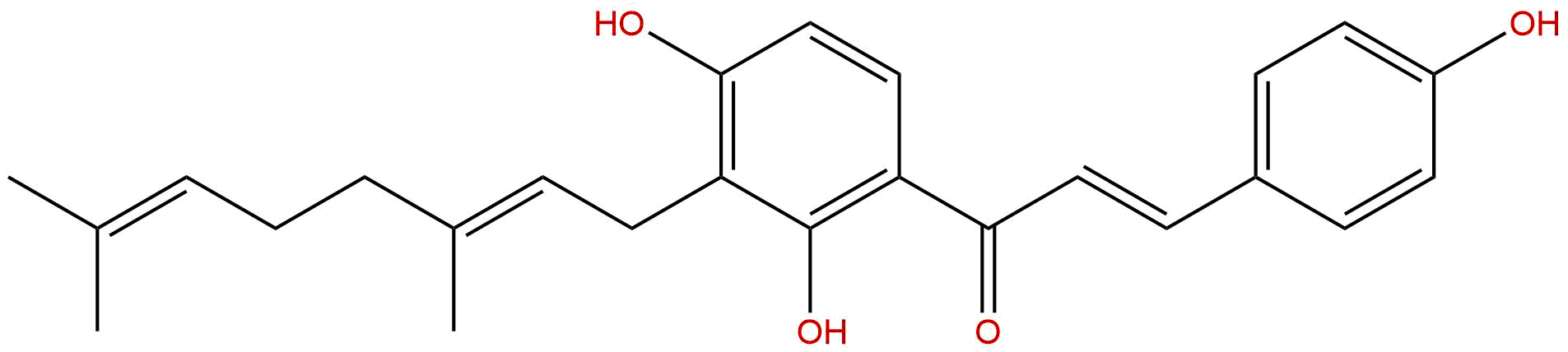
Xanthoangelol is a typical isopentenyl chalcone. Chalcone is a subclass of flavonoids, whose basic skeleton is composed of two aromatic rings (A and B) connected by an α, β - unsaturated ketone (i.e. a three carbon chain, - CO-CH=CH -). The structural feature of XAG is the presence of an isopentenyl (3,3-dimethylallyl) side chain attached to its A ring, which is considered a key modification for its various biological activities.
Specifically, the chemical name of XAG is (E) -1- [2,4-dihydroxy-3- (3-methyl-2-buten-1-yl) phenyl] -3- (4-hydroxyphenyl) -2-propen-1-one. Its molecular formula is C ₂₅ H ₂₈ O ₄, and its molecular weight is 392.4950 g/mol. The phenolic hydroxyl groups on the A ring (2,4-dihydroxyphenyl) and B ring (4-hydroxyphenyl) in its structure endow the molecule with certain polarity and hydrogen bond donor/acceptor ability, while the isopentenyl side chain increases its lipophilicity. This "amphiphilic" structural feature profoundly affects its physical and chemical properties.
From the perspective of physicochemical parameters, the lipid water partition coefficient (LogP) of XAG is 5.9361, indicating that it has high lipid solubility and tends to be distributed in lipid environments such as biofilms. Its topological polar surface area (TPSA) is 77.7600 Å ², which is at a moderate level, indicating that it has a certain transmembrane ability, but may be affected by transport proteins. The water solubility data is 0.0346 mg/mL, which belongs to poorly soluble compounds, which may be one of the main challenges facing their oral bioavailability. In addition, drug evaluation shows that XAG has a low blood-brain barrier penetration ability, which to some extent limits its application in central nervous system diseases, but may also mean a lower risk of peripheral effects related side effects. The prediction result of hERG inhibition is' no ', indicating a low risk of inducing QT interval prolongation and arrhythmia in the heart. The Ames test result is 0.0, indicating a low risk of genetic toxicity. These preliminary pharmacological data provide positive signals for the subsequent development of XAG, but the problem of poor water solubility needs to be addressed through pharmaceutical methods.
Plant sources and extraction methods
The main plant source of Huangdanggui alcohol (XAG) is a plant belonging to the Umbelliferae family Angelica keiskei(Tomorrow's leaves). This plant has been introduced and cultivated in some regions of Japan, South Korea, and China. XAG is mainly distributed in the stems, leaves, and roots of plants, but the content varies in different parts. Research has shown that the XAG content in stems and leaves is usually higher than in roots, and its content fluctuates with changes in plant growth cycle, harvest season, and cultivation conditions such as light and temperature. Except for Angelica keiskei, XAG is also present in small quantities in other plants of the same genus, such as Angelica archangelica But Angelica keiskei It is still the most important and abundant natural source for obtaining this compound at present.
from Angelica keiskei The extraction of XAG usually follows the classic process of natural product chemistry, which includes three main stages: extraction, separation, and purification.
-
Extract Given the lipophilic properties of XAG, organic solvent extraction is the preferred method. Common solvents include methanol, ethanol, ethyl acetate, or their mixed solvents. Usually, dried and crushed plant materials (such as stem and leaf powders) are soaked or percolated with a certain concentration of ethanol (such as 70% -95% ethanol) at room temperature or under heating conditions. In order to improve extraction efficiency and selectivity, modern technologies such as ultrasound assisted extraction and microwave-assisted extraction have also been adopted in recent years. These technologies can destroy cell walls, accelerate solvent permeation, and achieve higher extraction rates in a shorter period of time.
-
Separation and Purification The crude extract obtained has complex components and requires a series of chromatographic techniques for separation and purification. The most commonly used method is silica gel column chromatography. Firstly, the crude extract was subjected to gradient elution using solvents of different polarities (such as petroleum ether, ethyl acetate, methanol, etc.), and XAG was preliminarily separated from other compounds (such as other chalcones, flavonoids, coumarins, volatile oils, etc.) based on the polarity differences. The fraction containing XAG is usually further refined by preparative HPLC to obtain high-purity monomeric compounds. In addition, high-speed countercurrent chromatography (HSCCC), as a liquid-liquid distribution chromatography technique, has been successfully applied to the separation and purification of XAG due to its advantages of irreversible adsorption and high sample recovery rate. During the separation process, the detection of XAG usually relies on its UV absorption characteristics (the chalcone structure has a characteristic absorption peak at around 370 nm), and is tracked by thin layer chromatography (TLC) and mass spectrometry (MS).
Pharmacological activity research
The pharmacological activity research of Huangdanggui alcohol (XAG) covers multiple fields, including anti-inflammatory, anti allergic, anti-tumor, neuroprotective, etc., demonstrating its enormous potential as a multi-target natural product.
1. Anti inflammatory and anti obesity activity
One of the most notable activities of XAG is its inhibitory effect on obesity related inflammation. Obesity is a chronic low-grade inflammatory state, and the infiltration of macrophages and the release of pro-inflammatory cytokines in adipose tissue are key factors leading to insulin resistance and metabolic syndrome. Research has shown that XAG can significantly inhibit the production of nitric oxide (NO) and prostaglandin E2 (PGE2) in macrophages (such as RAW264.7 cells) induced by lipopolysaccharide (LPS), and downregulate the expression of inducible nitric oxide synthase (iNOS) and cyclooxygenase-2 (COX-2). In animal models, XAG can alleviate high-fat diet induced weight gain in mice, improve glucose tolerance and insulin sensitivity, and reduce the levels of pro-inflammatory factors such as tumor necrosis factor - α (TNF - α) and interleukin-6 (IL-6) in adipose tissue. The mechanism is partially attributed to the inhibition of the nuclear factor kappa B (NF - κ B) signaling pathway.
2. Anti allergic activity
XAG exhibits significant anti allergic effects. Allergic reactions, especially type I hypersensitivity reactions, involve the activation of mast cells and eosinophils, as well as the release of allergens such as histamine and leukotrienes. XAG can inhibit antigen induced degranulation of mast cells and reduce histamine release. In addition, it can also inhibit allergic reactions mediated by immunoglobulin E (IgE). XAG has also shown symptom relief effects in animal models of allergic dermatitis and asthma. Its anti allergic effect is related to regulating Th1/Th2 immune balance and inhibiting the production of Th2 cytokines (such as IL-4, IL-5, IL-13).
3. Antibacterial activity
XAG has broad-spectrum antibacterial activity, especially showing strong inhibitory effects on Gram positive bacteria. Research has found that XAG has an effect on Staphylococcus aureus(Staphylococcus aureus)Bacillus subtilis(Bacillus subtilis)And some methicillin-resistant Staphylococcus aureus (MRSA) strains have inhibitory effects. Its antibacterial mechanism may involve disrupting the integrity of bacterial cell membranes and inhibiting the synthesis of bacterial nucleic acids or proteins. In addition, XAG is effective against certain fungi such as Candida albicans(Candida albicans)It also shows a certain inhibitory effect.
4. Antitumor activity
XAG exhibits activity in inducing apoptosis and inhibiting proliferation in various tumor cell lines. Research has confirmed that XAG can induce apoptosis in human neuroblastoma cells (such as SH-SY5Y cells) and various leukemia cells (such as HL-60, U937 cells). The mechanism involves activation of mitochondrial pathways, including loss of mitochondrial membrane potential, release of cytochrome c, and cascade activation of caspase-9 and caspase-3. In addition, XAG can promote cell apoptosis by upregulating the expression of pro apoptotic protein Bax and downregulating the expression of anti apoptotic protein Bcl-2. In some solid tumor cells (such as colon cancer, breast cancer, and lung cancer cells), XAG also showed the ability to inhibit cell migration and invasion, suggesting that it may have anti metastasis potential.
5. Neuroprotective activity
The inhibitory effect of XAG on monoamine oxidase (MAO) is an important basis for its neuroprotective activity. MAO is a key enzyme that catalyzes the oxidation and deamination of monoamine neurotransmitters such as dopamine, norepinephrine, and serotonin. Its excessive activity is associated with neurological and psychiatric disorders such as Parkinson's disease and depression. XAG can reversibly inhibit MAO, especially MAO-B subtype, thereby increasing the levels of monoamine neurotransmitters in synaptic cleft, exerting antidepressant and neuroprotective effects. In addition, its antioxidant and anti-inflammatory properties also help alleviate neuroinflammation and oxidative stress damage, which is of great significance for the prevention and treatment of neurodegenerative diseases such as Alzheimer's disease.
Mechanism of action and molecular targets
The pharmacological activity of Huangdanggui alcohol (XAG) is the result of multi-target and multi pathway synergistic effects. Its core mechanism of action can be summarized as follows:
1. Regulating inflammation and immune related signaling pathways
- NF - κ B pathway XAG is an effective inhibitor of the NF - κ B signaling pathway. In the resting state, NF - κ B binds to its inhibitory protein I κ B in the cytoplasm. When stimulated by LPS, TNF - α, etc., I κ B kinase (IKK) is activated, phosphorylates and degrades I κ B, releases NF - κ B into the nucleus, and initiates the transcription of pro-inflammatory genes (such as iNOS, COX-2, TNF - α, IL-6). XAG can inhibit the activity of IKK or directly prevent the phosphorylation of I κ B, thereby blocking the nuclear translocation of NF - κ B and exerting anti-inflammatory effects.
- STAT6 pathway XAG targets the STAT6 signaling pathway in its anti allergic effect. After binding to their receptors, Th2 cytokines such as IL-4 and IL-13 activate JAK kinase, which in turn phosphorylates and activates transcription factor STAT6. Activated STAT6 dimerization is incorporated into the nucleus, driving the expression of Th2 type immune response related genes such as IL-4, IL-5, IL-13, FCER1A, etc. XAG can inhibit the phosphorylation of STAT6, thereby downregulating the production of Th2 cytokines and alleviating allergic reactions.
- ALOX5 (5-lipoxygenase)ALOX5 is a key enzyme involved in the synthesis of leukotrienes in the arachidonic acid metabolism pathway. Leukotriene is a potent pro-inflammatory and allergic mediator. XAG may exert anti-inflammatory and anti allergic effects by directly inhibiting the activity or downregulating the expression of ALOX5, reducing the production of leukotrienes.
2. Mitochondrial pathway inducing cell apoptosis
XAG induces tumor cell apoptosis mainly through the mitochondrial pathway (endogenous pathway). Its targets include:
- Bcl-2 family proteins XAG can upregulate the expression of pro apoptotic proteins such as Bax and Bak, while downregulating the expression of anti apoptotic proteins such as Bcl-2 and Bcl xL. This change in proportion leads to an increase in mitochondrial outer membrane permeability.
- Mitochondrial membrane potential XAG treatment leads to a decrease in mitochondrial membrane potential (Δ PSI m) in tumor cells, which is an early event of cell apoptosis.
- Release of cytochrome c and activation of caspase After the increase of mitochondrial membrane permeability, cytochrome c is released from mitochondria into the cytoplasm and binds with Apaf-1 and procaspase-9 to form apoptotic bodies, activating caspase-9. Activated caspase-9 further activates downstream executing caspases (such as caspase-3, -7), ultimately leading to cell apoptosis.
3. Inhibit monoamine oxidase (MAO)
The inhibitory effect of XAG on MAO is a direct target of its neuroprotective activity. XAG is a reversible MAO inhibitor with higher selectivity for MAO-B subtype than MAO-A. By inhibiting MAO-B, XAG can reduce the catabolism of monoamine neurotransmitters such as dopamine, increase their concentration in the brain, improve motor symptoms in Parkinson's disease patients, and may delay disease progression. Its antioxidant activity may also protect neurons by reducing the production of reactive oxygen species (ROS) in MAO catalyzed reactions.
4. Other potential targets
- HRH1 (histamine H1 receptor)XAG may directly block histamine induced allergic symptoms such as vasodilation and smooth muscle contraction by antagonizing the HRH1 receptor.
- TBXA2R (thromboxane A2 receptor)XAG may exert cardiovascular protection by antagonizing TBXA2R, inhibiting platelet aggregation and vasoconstriction.
- TSLP (thymic stromal lymphopoietin)TSLP is a key cytokine that initiates Th2 type immune response. XAG may block the occurrence of allergic reactions upstream by inhibiting the expression or signaling of TSLP.
Evaluation of drug properties and pharmacokinetics
Although XAG exhibits encouraging pharmacological activity, its pharmacological properties remain the key to determining its ultimate clinical application.
1. Analysis of pharmacological parameters
According to the provided parameters, the molecular weight (392.5 Da) and LogP value (5.94) of XAG exceed the recommended range of Lipinski's Rule of Five (MW<500, LogP<5). A high LogP value indicates excessive lipid solubility, which may lead to poor water solubility (0.0346 mg/mL), incomplete oral absorption, potential metabolic instability, and high plasma protein binding rate. The TPSA is 77.76 Å ², which is within an acceptable range (<140 Å ²), indicating that it has a certain degree of membrane permeability. HERG inhibition and negative Ames test are positive signals, reducing the risk of cardiac toxicity and genetic toxicity. Overall, the pharmaceutical challenges of XAG mainly lie in its solubility and oral bioavailability.
2. Pharmacokinetic characteristics
At present, there is relatively limited in vivo research on the pharmacokinetics of XAG, but existing in vitro and animal experiments have preliminarily revealed some of its characteristics:
- absorb Due to poor water solubility, XAG may have poor oral absorption and low bioavailability. Its high lipid solubility may facilitate its passive diffusion into intestinal epithelial cells, but it may be influenced by efflux transporters such as P-glycoprotein (P-gp).
- distribution XAG may be widely distributed in the body, especially in lipid rich tissues. Its low blood-brain barrier penetration ability suggests limited distribution in the central nervous system, which may limit its application in neurological diseases but also reduce central nervous system related side effects.
- Metabolism XAG, as a chalcone, has its α, β - unsaturated ketone structure as a potential metabolic site, which may be metabolized by glutathione S-transferase or reductase in the body. In addition, its phenolic hydroxyl group is a common substrate for II phase metabolic enzymes such as UDP glucuronosyltransferase and sulfotransferase, which are prone to undergo glucuronidation and sulfation binding reactions and are quickly cleared. Isopentenyl side chains may also undergo oxidative metabolism.
- excretion Metabolites are mainly excreted through bile and urine.
3. Strategies for improving drug properties
Given the pharmacokinetic bottleneck of XAG, future research needs to focus on the following strategies:
- Prodrug design Modify the phenolic hydroxyl groups of XAG (such as esterification or etherification) to prepare prodrugs, in order to improve their water solubility and oral absorption, and convert them into active active active ingredients in vivo.
- Formulation technology The use of nanotechnology (such as liposomes, nanoemulsions, solid lipid nanoparticles), cyclodextrin inclusion complexes, phospholipid complexes, and other modern formulation methods can significantly improve the solubility and bioavailability of XAG.
- structural optimization On the basis of retaining key pharmacophores such as chalcone nucleus and isopentenyl, structural modifications are carried out on the molecule to search for derivatives with higher activity, better selectivity, and better pharmacokinetic properties.
Clinical application prospects and prospects
Based on its diverse pharmacological activities, Huangdanggui alcohol (XAG) has shown potential clinical application prospects in multiple therapeutic fields.
1. Metabolic disorders XAG is expected to be a candidate drug for the treatment of metabolic syndrome such as obesity, type 2 diabetes and nonalcoholic fatty liver disease (NAFLD) due to its anti-inflammatory and anti obesity activities. XAG or its derivatives may be used as an adjuvant therapy in combination with existing drugs by inhibiting adipose tissue inflammation and improving insulin resistance.
2. Allergic diseases XAG inhibits allergic reactions through multiple targets (such as STAT6, ALOX5, HRH1), making it potential for the treatment of allergic rhinitis, asthma, atopic dermatitis, and other diseases. Its mechanism of action is different from existing anti allergic drugs such as antihistamines and glucocorticoids, which may provide a new option for patients who are insensitive or develop resistance to existing therapies.
3. Neuropsychiatric disorders XAG, as a MAO-B inhibitor, has the potential to be developed into an anti Parkinson's disease drug. Compared with existing MAO-B inhibitors such as selegiline and rasagiline, XAG may have different safety and tolerability characteristics. In addition, its anti-inflammatory and antioxidant activities may also be beneficial for neurodegenerative diseases such as Alzheimer's disease. However, its low blood-brain barrier penetration ability is a key issue that urgently needs to be addressed.
4. Tumor treatment The ability of XAG to induce tumor cell apoptosis and inhibit metastasis makes it a promising anti-tumor lead compound. It can be used as a chemotherapy sensitizer in combination with conventional chemotherapy drugs to enhance efficacy and reduce side effects. Further preclinical and clinical research is of great significance for tumor types sensitive to XAG, such as neuroblastoma and leukemia.
5. Anti infection The antibacterial activity of XAG against resistant bacteria such as MRSA provides clues for the development of new antibiotics. In today's increasingly severe antibiotic resistance, it is particularly important to search for new antibacterial lead compounds from natural products.
Outlook and Challenges:
Despite its broad prospects, the clinical translation of XAG still faces many challenges. The primary challenge is its poor pharmacokinetic properties, particularly low water solubility and oral bioavailability. Secondly, although its multi-target nature brings extensive pharmacological activity, it may also lead to off target effects and potential toxic side effects, requiring comprehensive toxicological evaluation. In addition, current research on XAG mostly focuses on in vitro and animal experiments, lacking high-quality human clinical trial data to verify its effectiveness and safety.
Future research directions should focus on: 1) systematically addressing the issue of XAG's pharmacological properties through medicinal chemistry and formulation methods; 2) By utilizing systems pharmacology and network pharmacology methods, we aim to elucidate the multi-target mechanism of action and predict potential side effects; 3) Conduct standardized pharmacological, pharmacokinetic, and toxicological studies to lay the foundation for clinical trials; 4) Explore the synergistic effects of XAG with existing drugs and develop combination therapy regimens.
Conclusion
Xanthoangelol, a traditional medicinal plant derived from yellow Angelica sinensis Angelica keiskei Isopentenyl chalcone, with its unique chemical structure and rich pharmacological activity, has become a shining pearl in the field of natural product research. XAG exhibits multi-target and multi pathway effects, ranging from anti-inflammatory, anti allergic, antibacterial to anti-tumor and neuroprotective. Its mechanism of action involves regulation of NF - κ B, STAT6, mitochondrial apoptosis pathway, and monoamine oxidase. The preliminary pharmacological evaluation also provides positive evidence for its safety.
However, from laboratory discoveries to clinical applications, XAG still faces significant challenges such as poor water solubility and low oral bioavailability. Future research requires collaborative efforts from multiple disciplines such as medicinal chemistry, pharmacy, pharmacology, and toxicology to overcome these bottlenecks through structural optimization, development of novel formulations, and in-depth mechanism studies. We have reason to believe that with the continuous deepening of research, yellow Angelica sinensis alcohol and its derivatives are expected to play an important role in the treatment of major diseases such as metabolic diseases, allergic diseases, neurodegenerative diseases, and tumors, and contribute to human health. The continuous exploration of XAG is not only the excavation of a natural product, but also a vivid practice of the combination of traditional medical wisdom and modern science.