Introduction/Overview
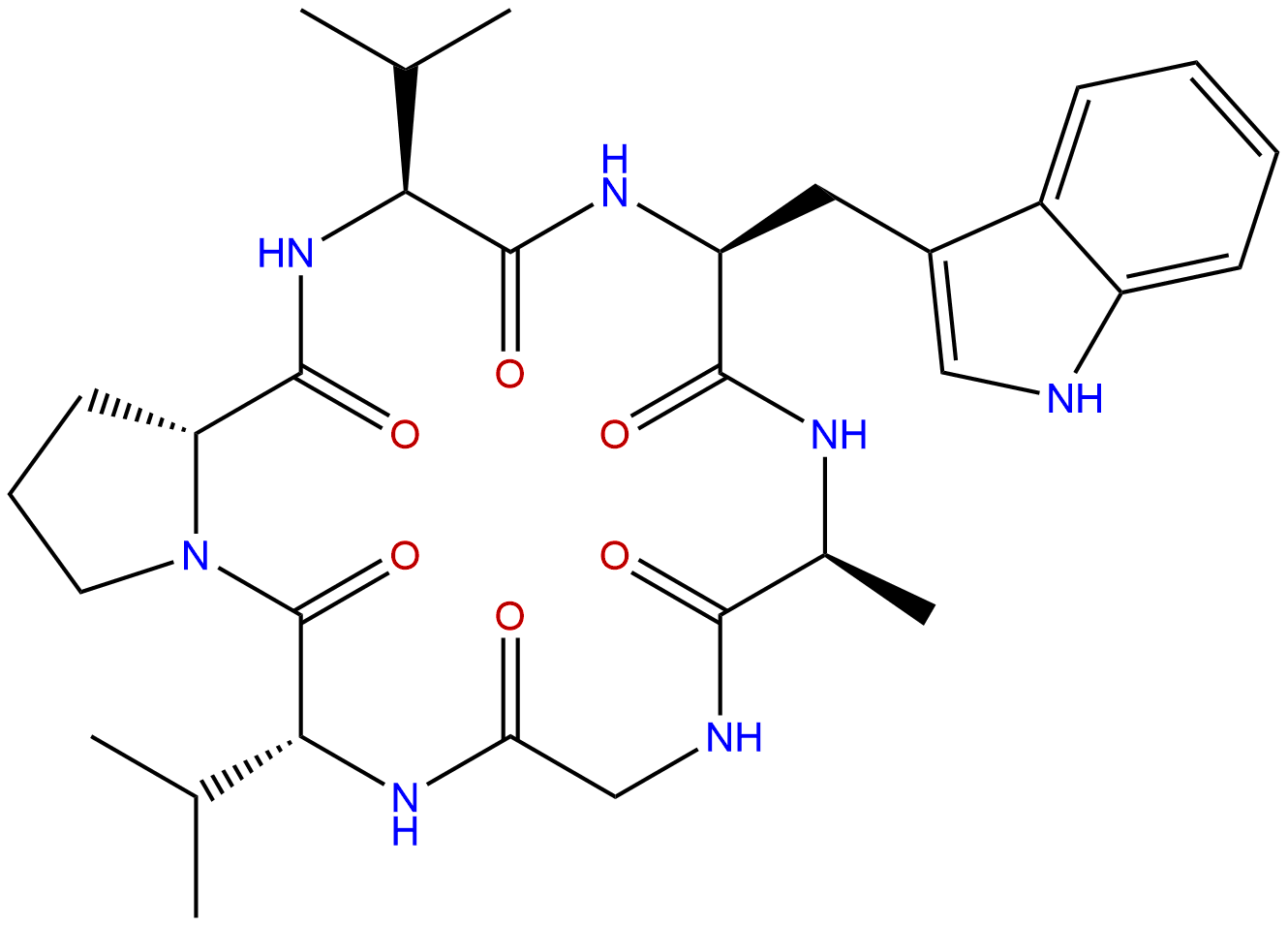
Natural products have always been an important source of innovative drug discovery, and their structural diversity and wide range of biological activities provide unique molecular frameworks and lead compounds for the treatment of various diseases, especially malignant tumors. Cyclic peptide compounds have attracted much attention in the field of medicinal chemistry due to their stable cyclic conformation, good membrane permeability, and high affinity for specific targets. Segetalin A, a cyclic heptapeptide isolated from the seeds of traditional Chinese medicine Vaccaria hispanica, has become a hot topic in pharmacological research due to its significant anti-tumor activity since its discovery. Its CAS number is 161875-97-4. Research has shown that Segetalin A exhibits the potential to inhibit tumor growth and metastasis through multiple pathways by acting on multiple key tumor related targets, such as MCL1, BCL2, STAT3, etc. This article aims to systematically review the chemical structure, plant origin, pharmacological activity, mechanism of action, pharmacological evaluation, and clinical application prospects of Segetalin A, in order to provide comprehensive academic references for the in-depth research and development of this compound.
Chemical structure and physicochemical properties
Segetalin A is a cyclic heptapeptide with a molecular formula of C29H43N7O8 and a molecular weight of 609.7280 Da. Its core structure consists of seven amino acid residues connected end-to-end by peptide bonds to form a cyclic skeleton, with the specific sequence being Gly Phe Val Pro Ile Ala Ser. This cyclic structure maintains its stable spatial conformation through intramolecular hydrogen bonding and hydrophobic interactions, making it less susceptible to rapid degradation by proteases, thereby enhancing its stability in living organisms.
From the analysis of physical and chemical properties, the lipid water partition coefficient (LogP) of Segetalin A is 0.4144, indicating that it has moderate lipophilicity but overall leans towards hydrophilicity. Its topological polar surface area (TPSA) is as high as 181.6000 Å ², mainly attributed to the presence of multiple amide bonds and polar amino acid side chains (such as serine) in its peptide chain. Higher TPSA typically affects the membrane permeability of compounds. Its water solubility value is 1.5785 (usually measured in mg/mL or log mol/L, relative here), indicating that it has a certain degree of water solubility, but may still belong to the category of slightly soluble or poorly soluble. Based on the comprehensive LogP and TPSA values, Segetalin A meets three criteria in the five rules for class drugs (molecular weight<500, LogP<5, hydrogen bond donor<5, hydrogen bond acceptor<10), but its molecular weight slightly exceeds 500, and the number of hydrogen bond acceptors may be close to or exceed 10, indicating that its oral bioavailability may face challenges. Its blood-brain barrier permeability is predicted to be 'low', which means it may have difficulty entering the central nervous system. In the preliminary safety screening, the compound did not show hERG potassium channel inhibitory activity (hERG inhibition: No), and the Ames test result was 0.0, indicating a low risk of mutagenicity and providing a favorable safety starting point for its further development.
Plant sources and extraction methods
Wangbuliuxing cyclic peptide A is derived from the dried and mature seeds of Vaccaria hispanica (Mill.) Rauschert, a plant in the Caryophyllaceae family. This medicinal herb is known as "Wangbuliuxing" in traditional Chinese medicine theory and has the effects of promoting blood circulation, reducing swelling in the lower breast, diuresis, and promoting lymphatic drainage. It is commonly used to treat conditions such as amenorrhea, dysmenorrhea, milk retention, and breast abscess swelling and pain. Modern research has isolated a series of cyclic peptide components from this plant, and Segetalin A is one of the representative active ingredients.
Its extraction and separation usually use classical natural product chemical methods. Firstly, the seeds of Wang Buliuxing are crushed and subjected to cold soaking or reflux extraction using organic solvents such as methanol, ethanol, or acetone. After concentration, the crude extract is obtained. Subsequently, the crude extract was preliminarily separated using solvent partitioning methods (such as extraction with petroleum ether, ethyl acetate, and n-butanol in sequence), and the active cyclic peptides were mostly enriched in the ethyl acetate or n-butanol fractions. Further purification relies on various chromatographic techniques. Silica gel column chromatography is commonly used for preliminary separation, followed by reverse phase high performance liquid chromatography (RP-HPLC, commonly C18 column, using methanol water or acetonitrile water as mobile phase) for fine purification, ultimately obtaining high-purity Segetalin A monomer. Modern separation techniques such as high-speed countercurrent chromatography (HSCCC) have also been applied to the preparation of such cyclic peptides due to their high efficiency and avoidance of adsorption losses. During the extraction process, attention should be paid to controlling temperature and pH to maintain the integrity of the cyclic peptide structure.
Pharmacological activity research
Numerous in vitro and in vivo pharmacological studies have confirmed that the core biological activity of Wang Buliuxing cyclic peptide A is concentrated in the field of anti-tumor, and it exhibits significant inhibitory effects on proliferation and induces apoptosis in various human cancer cell lines.
1. Antitumor activity:
* In vitro cytotoxicity: Segetalin A has cytotoxicity to breast cancer (such as MCF-7, MDA-MB-231), liver cancer (HepG2), lung cancer (A549), colon cancer (HCT-116) and other cancer cells, and its IC50 values are mostly in the micromolar level, showing a broad spectrum of anti-cancer potential. Its sensitivity to certain cancer cells is even better than some traditional chemotherapy drugs.
* Inhibition of cell proliferation and colony formation: This compound can effectively inhibit DNA synthesis in cancer cells, block cell cycle progression (often blocking cells in G0/G1 or G2/M phases), and significantly reduce the ability of cancer cells to form clones, indicating that it can inhibit the long-term proliferation potential of tumors.
* Inducing cell apoptosis: One of the most prominent functions of Segetalin A is to trigger the intrinsic apoptotic pathway of cancer cells. It can cause a decrease in mitochondrial membrane potential, promote the release of cytochrome c, and activate the caspase cascade reaction, ultimately leading to cell apoptosis.
* Inhibition of invasion and metastasis: Research has shown that Segetalin A can downregulate the expression of proteolytic enzymes related to extracellular matrix degradation, thereby inhibiting the migration and invasion ability of cancer cells, indicating its potential application value in anti-tumor metastasis.
* In vivo anti-tumor effect: In a nude mouse transplant tumor model, intraperitoneal injection or gavage of Segetalin A significantly inhibited tumor growth in a dose-dependent manner, and no significant weight loss or organ toxicity was observed, indicating its in vivo anti-tumor activity and therapeutic window.
In addition, in addition to its clear anti-tumor effect, early studies have also suggested that Segetalin A may have mild estrogen like activity, which may be related to its background as a traditional lactation inducing herb. However, its main research focus and potential value still lie in the field of anti-tumor.
Mechanism of action and molecular targets
The anti-tumor effect of Segetalin A is not achieved through a single pathway, but involves a complex multi-target regulatory network. Existing research has revealed its interactions with multiple key tumor associated proteins:
- Regulating apoptosis related proteins (MCL1, BCL2): Segetalin A can downregulate the expression of anti apoptotic proteins MCL1 and BCL2. MCL1 and BCL2 are important members of the Bcl-2 family, which prevent apoptosis by inhibiting mitochondrial outer membrane permeability. Segetalin A inhibits them, releasing the binding of pro apoptotic proteins such as Bax and Bak, thereby initiating mitochondrial pathway mediated cell apoptosis.
- Inhibition of STAT3 signaling pathway: Signal transducer and activator of transcription factor 3 (STAT3) is a core regulatory factor for tumor occurrence, development, immune escape, and chemotherapy resistance. Segetalin A has been shown to inhibit the phosphorylation (activation) of STAT3, prevent its nuclear translocation and transcription of downstream target genes (such as Cyclin D1, Bcl xl, VEGF), thereby inhibiting cell proliferation, promoting apoptosis, and weakening angiogenesis.
- Affects extracellular matrix degradation (MMP2): Matrix metalloproteinase-2 (MMP2) is a key enzyme that degrades type IV collagen and promotes tumor invasion and metastasis. Segetalin A can reduce the expression and activity of MMP2, thereby inhibiting tumor cell damage to the basement membrane and distant metastasis.
- Interference with DNA metabolism (TOP1, TOP2A): Segetalin A may serve as an inhibitor for topoisomerase I (TOP1) and topoisomerase II alpha (TOP2A). These enzymes are crucial in DNA replication, transcription, and chromosome separation. Inhibiting its activity can lead to the accumulation of DNA damage, triggering activation of cell cycle checkpoints and apoptosis.
- Regulating hypoxia response and growth signals (HIF1A, MAPK1): Segetalin A can downregulate the expression of hypoxia inducible factor-1 alpha (HIF1 alpha), which is the main switch for tumor adaptation to hypoxic microenvironment, promotion of angiogenesis, and metabolic reprogramming. Meanwhile, it can also affect the activity of mitogen activated protein kinase 1 (MAPK1, ERK2), which regulates cell growth, differentiation, and survival.
- Intervention in hormone related pathways (ESR1, CYP19A1): For hormone dependent tumors (such as some breast cancer), Segetalin A may interfere with estrogen driven tumor growth by influencing the signal of estrogen receptor alpha (ESR1) or inhibiting the activity of aromatase (CYP19A1, the key enzyme that converts androgen into estrogen).
In summary, Segetalin A forms a synergistic anti-tumor network by simultaneously acting on multiple levels such as apoptosis regulation, signal transduction, extracellular matrix remodeling, DNA metabolism, and hormone environment, which helps overcome the problem of resistance to single target drugs.
Evaluation of drug properties and pharmacokinetics
Although Segetalin A exhibits good biological activity in vitro, its drug like and pharmacokinetic properties are key to its successful development as a drug.
Drug analysis:
As stated in the physical and chemical properties section, the molecular weight of Segetalin A (609.7) is slightly higher than the ideal oral drug range (<500), and its cyclic peptide structure contains multiple amide bonds, resulting in a higher polar surface area (TPSA). These factors working together may seriously affect its gastrointestinal absorption and oral bioavailability. Its moderate LogP value and certain water solubility provide the possibility for its formulation improvement (such as making prodrugs, nano formulations, or using absorption enhancers). Fortunately, it has no hERG inhibition or Ames mutagenicity, reducing the risk of cardiac toxicity and genetic toxicity in early development.
Pharmacokinetic challenges and exploration:
At present, there are relatively limited reports on pharmacokinetic studies of the Segetalin A system, but based on its cyclic peptide properties, some challenges can be foreseen:
1. Absorption: When administered orally, passive diffusion may be poor due to high molecular weight and polarity, and it is easily degraded by peptidases in the gastrointestinal tract, resulting in low absorption rate.
2. Distribution: The predicted blood-brain barrier permeability is low, which limits its therapeutic application for brain tumors, but may also reduce central nervous system side effects. The distribution volume and plasma protein binding rate need to be clarified experimentally.
3. Metabolism: As a peptide compound, its main metabolic pathway may be hydrolyzed by various peptidases and proteases in plasma and tissues. The metabolism of liver cytochrome P450 enzyme system may not be the main pathway.
4. Excretion: The prototype drug and its metabolites may be mainly excreted through the kidneys or bile.
To improve its pharmacokinetic properties, research strategies include:Structural modification(such as methylation of easily hydrolyzed peptide bonds, introduction of D-type amino acids or non natural amino acids to enhance enzyme stability);Develop a new drug delivery system(such as liposomes, polymer nanoparticles, microemulsions, etc., to improve their stability, promote absorption, and achieve targeted delivery); And explore Non oral administration route(such as injection administration, especially long-acting injections or local administration).
Clinical application prospects and prospects
Wang Buliuxing cyclic peptide A, as a multi-target anti-tumor natural cyclic peptide, has broad clinical application prospects, but also faces many challenges.
Potential application directions:
1. Development of new anti-tumor drugs: As a lead compound, it is directly developed as a new multi-target anti-tumor drug, especially suitable for malignant tumors that are resistant to single target drugs or need multi-channel inhibition, such as triple negative breast cancer, liver cancer, lung cancer, etc.
2. Combination therapy sensitizer: Due to its unique mechanism of action (such as inhibiting STAT3 and inducing apoptosis), Segetalin A may have a synergistic effect with existing chemotherapy drugs (such as paclitaxel, cisplatin) or targeted drugs, reducing drug dosage, minimizing toxic side effects, and reversing drug resistance.
3. Model of modernization of traditional Chinese medicine: The in-depth study of Segetalin A is a successful example of clarifying active ingredients, interpreting scientific connotations, and developing innovative drugs from traditional Chinese medicine, which helps to promote the modernization and international recognition of traditional Chinese medicine.
Challenges and future research directions:
1. Improve bioavailability: This is the biggest obstacle it faces in its development. Future research needs to focus on significantly improving oral absorption or developing suitable injectable formulations through chemical modification or advanced formulation technologies.
2. In depth mechanism research: At present, the interaction mechanisms of some targets (such as TOP1/2A, ESR1) are still at the level of correlation, and surface plasmon resonance (SPR), co crystallization, gene knockout/knock in and other technologies need to be used to directly verify their binding sites and patterns with target proteins.
3. Comprehensive preclinical evaluation: We need to complete systematic studies on pharmacodynamics (validated on more clinical PDX models), pharmacokinetics (ADME), toxicology (acute toxicity, long-term toxicity, reproductive toxicity, etc.) to provide sufficient data for its clinical trial application.
4. Exploring new indications: In addition to tumors, based on their potential estrogenic regulatory activities, their potential applications in gynecological related diseases (such as breast hyperplasia) or other chronic diseases can be explored.
Conclusion
Segetalin A is a cyclic peptide compound with significant anti-tumor activity discovered from traditional Chinese medicine, Segetalin A. It exhibits multi pathway and multi link anti-tumor effects in inhibiting cell proliferation, inducing apoptosis, and preventing invasion and metastasis by synergistically acting on multiple key tumor targets such as MCL1, BCL2, STAT3, and MMP2. Although its large molecular weight and high polarity pose challenges to its drug development, especially oral bioavailability, its clear multi-target mechanism of action, good preliminary safety characteristics, and structural advantages derived from natural products make it a highly valuable anti-tumor lead compound for development. Future research should strive to overcome its pharmacokinetic shortcomings through rational structural optimization and innovative formulation strategies, and conduct systematic preclinical and clinical studies in order to ultimately transform this ancient medicinal wisdom into modern anti-tumor drugs that benefit patients worldwide.