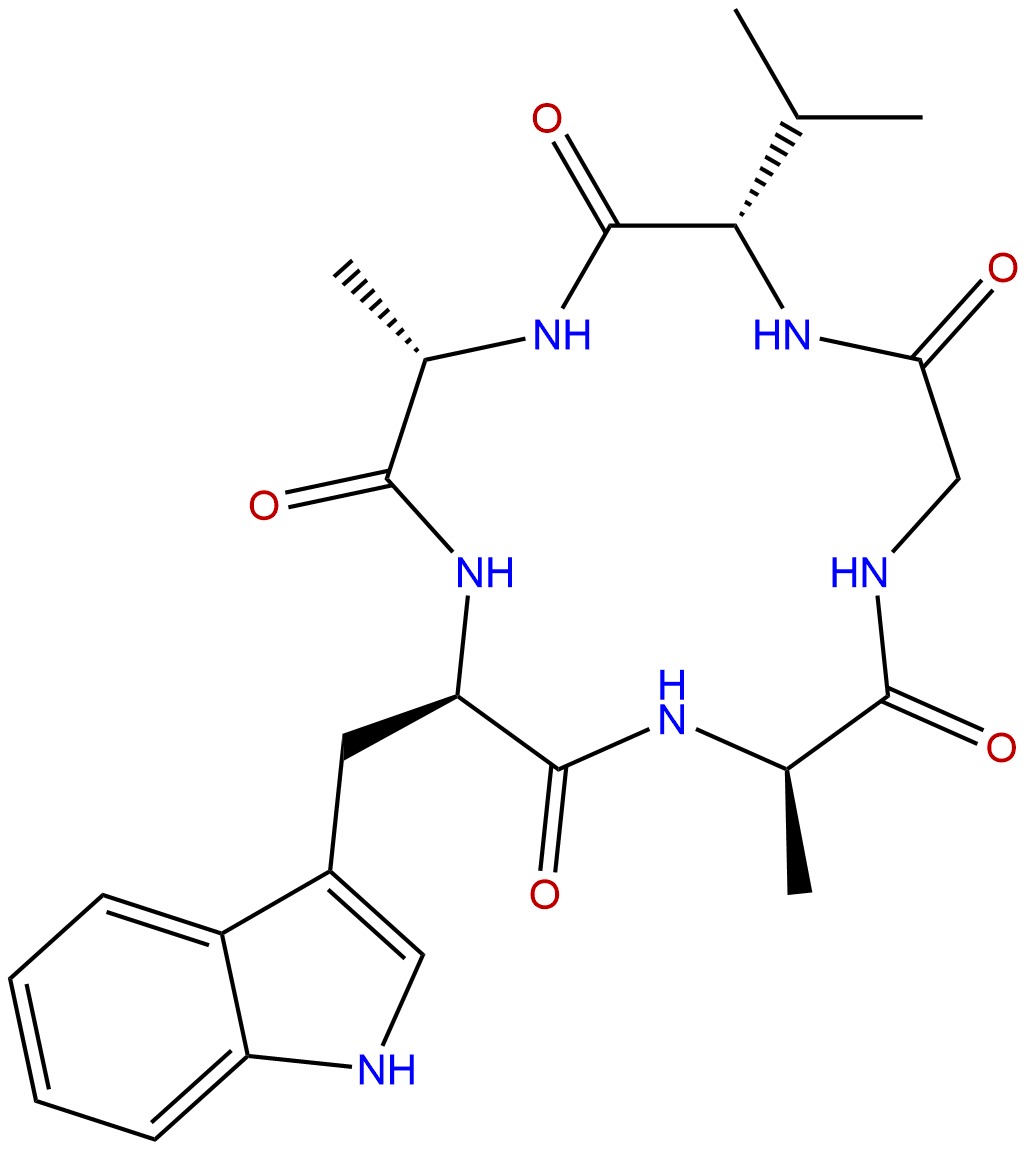


Product name: Segetalin B
Synonym name:
Catalogue No.: BP3426
Cas No.: 164991-89-3
Formula: C24H32N6O5
Mol Weight: 484.557
Botanical Source:
Physical Description:
Type of Compound: Cyclopeptide
Purity: 95%~99%
Analysis Method: HPLC-DAD or/and HPLC-ELSD
Identification Method: Mass, NMR
Packing: Brown vial or HDPE plastic bottle
The product could be supplied from milligrams to grams. Inquire for bulk scale.
We provide solution to improve the water-solubility of compounds, thereby facilitating the variety of activity tests and clinic uses.
For Reference Standard and R&D, Not for Human Use Directly.
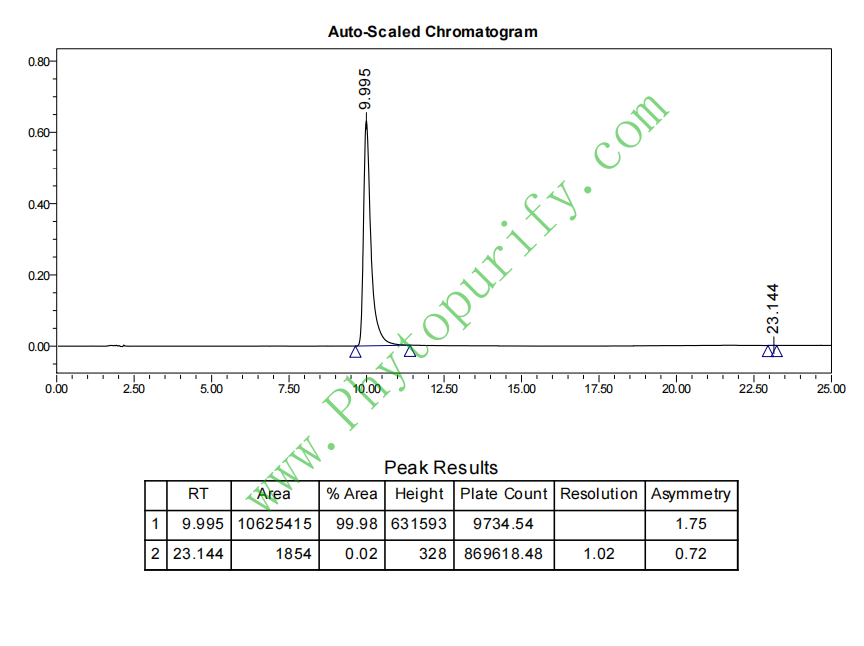
HPLC of Segetalin B
Storage conditions:Short-term storage at 2~8℃, long-term storage at -20 ~ -80℃
161.2900
-.0855
-.0852
.8416
.4702
.1637
Low
76.0362
4.4212
Yes
Yes
No
No
Yes
No
0.0
Yes
No
Yes
Yes
Postmenopausal osteoporosis (PMOP), as a systemic bone metabolism disease closely related to a sudden drop in estrogen levels, seriously threatens the health and quality of life of middle-aged and elderly women worldwide. The core pathological feature is that bone resorption exceeds bone formation, leading to microstructural damage, increased bone fragility, and significantly increased risk of fracture. Although the traditional hormone replacement therapy is effective, long-term use may be accompanied by risks such as breast cancer and cardiovascular events, prompting researchers to constantly explore new therapeutic drugs that are more targeted and have less side effects. In this context, natural active small molecules derived from traditional medicinal plants have become an important treasure trove for new drug development due to their structural diversity and multi-target action characteristics.
Segetalin B, a cyclic pentapeptide isolated from the seeds of the Caryophyllaceae plant Vaccaria segetalis (also known as the traditional Chinese medicine "Segetalin B"), has attracted much attention since its discovery due to its unique estrogenic activity. Early research revealed its potential to promote osteoblast differentiation and mineralization in vitro. In recent years, with the deepening of research, its pharmacological activity spectrum has continuously expanded, especially in the field of anti-tumor, showing the potential to interact with multiple key targets, suggesting that it may be a natural product with multiple effects. This article aims to provide a systematic review of the chemical properties, plant origin, pharmacological activity, mechanism of action, pharmacological properties, and application prospects of Wang Buliuxing cyclic peptide B in diseases such as PMOP and tumors, in order to provide comprehensive scientific references for the in-depth research and development of this compound.
Wang Buliuxing cyclic peptide B (CAS number: 164991-89-3) is a cyclic pentapeptide formed by the end-to-end connection of five amino acid residues through peptide bonds. Its molecular formula is C ₂₄ H ∝₂ N ₆ O ₇, and its molecular weight is 484.5570 Da. The compact structure of this cyclic peptide is the structural basis of its biological activity. The precise composition of its amino acid sequence determines its specific three-dimensional spatial conformation, which is crucial for its specific recognition and binding to target proteins such as estrogen receptors.
From the analysis of physical and chemical properties, Wang Buliuxing cyclic peptide B exhibits typical peptide compound characteristics. Its lipid water partition coefficient (LogP) is -0.0855, indicating that the molecule has moderate lipophilicity but overall leans towards hydrophilicity. The topologically polar surface area (TPSA) is as high as 161.29 Å ², mainly due to the presence of multiple polar groups such as amide bonds and carboxyl groups in its molecules, which are key sites for hydrogen bonding and affect its solubility and membrane permeability. Both computational and experimental data support its good water solubility (approximately 0.84 mg/mL), which is beneficial for its dissolution and in vivo distribution in aqueous media. However, higher polarity also suggests that its transmembrane transport ability may be limited, and its blood-brain barrier permeability is predicted to be "low", meaning it is not easily accessible to the central nervous system. In the preliminary safety screening, the compound did not show hERG potassium channel inhibitory activity (low risk of QT interval prolongation), and the Ames test result was negative (0.0), indicating that it has no significant genetic toxicity mutagenic potential, laying a preliminary safety foundation for its subsequent development.
Wang Buliuxing's cyclic peptide B mainly comes from the original plant of traditional Chinese medicine Wang Buliuxing - Vaccaria segatalis (Neck.) Garcke. This plant is widely distributed in the Eurasian continent, and its dry and mature seeds are used as medicine. It has the effects of promoting blood circulation and meridians, reducing swelling in the lower breast, and is commonly used in gynecological and postpartum diseases. Modern plant chemistry research has isolated a series of cyclic peptide compounds from the seeds of this plant, collectively known as Segetalins, among which Segetalin B is one of the components with more concentrated activity research.
Its extraction and separation usually follow the classic process of natural product chemistry. Firstly, the seeds of Wang Buliuxing are crushed and subjected to cold soaking or reflux extraction using polar solvents such as methanol, ethanol, or hydrous alcohol. After concentration, the crude extract is obtained. Subsequently, the crude extract was preliminarily separated using solvent partitioning methods (such as sequential extraction with petroleum ether, ethyl acetate, and n-butanol), and cyclic peptide components were mostly enriched in n-butanol or water-soluble sites. Further purification relies on various chromatographic techniques: macroporous adsorption resin column chromatography is commonly used for decolorization and preliminary enrichment; Subsequently, silica gel column chromatography, reverse phase silica gel (such as ODS) column chromatography, and high-performance liquid chromatography (HPLC, especially preparative HPLC) were used for fine separation. During the separation process, thin-layer chromatography (TLC) and high-performance liquid chromatography-mass spectrometry (HPLC-MS) are often combined for online monitoring and compound identification. Nuclear magnetic resonance (NMR, including ¹ H-NMR, ¹ ³ C-NMR, 2D-NMR) and mass spectrometry (MS) are the core technologies for ultimately determining the chemical structure of Wang Buliuxing cyclic peptide B. At present, there are also reports on its total synthesis route, providing another way to obtain sufficient samples for in-depth pharmacological research and structural modification.
The pharmacological activity research of Wang Buliuxing cyclic peptide B mainly focuses on its two core directions of "estrogen like" and "anti-tumor", reflecting its multi-target properties.
1. Estrogen like activity and anti osteoporosis effect
This is the earliest identified and most extensively studied activity of Wang Buliuxing's cyclic peptide B. In the classic postmenopausal osteoporosis model of ovariectomy (OVX) rats, the osteogenic differentiation ability of bone marrow mesenchymal stem cells (BMSCs) is impaired. Research has found that Wang Buliuxing cyclic peptide B can effectively promote the in vitro mineralization nodule formation of BMSCs derived from OVX rats, which is a direct marker of bone formation. At the molecular level, it significantly upregulates the activity and expression of key markers of osteogenic differentiation, such as osteocalcin and alkaline phosphatase (ALP). More importantly, it can induce the expression of bone morphogenetic protein-2 (BMP-2). BMP-2 is a potent inducer of osteogenic differentiation, which can activate downstream Smad signaling pathways, thereby initiating the transcription program of osteogenic related genes. In addition, the study also found that Wang Buliuxing cyclic peptide B can enhance the activity of deacetylase SIRT1. SIRT1 plays an important role in regulating cellular metabolism, antioxidant stress, and promoting osteogenic differentiation by deacetylating transcription factors such as Runx2 and FOXO. These effects collectively indicate that Wang Buliuxing cyclic peptide B can activate multiple signaling pathways that promote bone formation by mimicking some of the functions of estrogen, thereby combating bone loss caused by estrogen deficiency.
2. Antitumor activity
In recent years, research has revealed the potential of Wang Buliuxing cyclic peptide B in the field of anti-tumor therapy, which involves multiple key links and targets in the occurrence and development of tumors
* Inducing apoptosis of tumor cells Its function is related to regulating the balance of Bcl-2 family proteins, possibly by inhibiting the anti apoptotic proteins MCL1 and BCL2, and/or promoting the expression of pro apoptotic proteins, thereby inducing cell apoptosis through the mitochondrial pathway.
* Inhibit tumor cell proliferation and survival signals Signal transduction and transcription activator 3 (STAT3) is an important oncogenic transcription factor, and sustained activation of STAT3 promotes cell proliferation, survival, and immune escape. Wang Buliuxing's cyclic peptide B has been predicted or confirmed to inhibit the phosphorylation or activation of STAT3, thereby suppressing the expression of its downstream target genes.
* Inhibit tumor invasion and metastasis Matrix metalloproteinase-2 (MMP2) is a key enzyme that degrades extracellular matrix and promotes tumor invasion and metastasis. Inhibiting the activity or expression of MMP2 is one of the anti metastatic strategies, and Wang Buliuxing's cyclic peptide B has shown potential value in this regard.
* Interference with DNA metabolism and hypoxia adaptation Its potential interaction with topoisomerases I and II α (TOP1, TOP2A) may interfere with DNA replication and repair in tumor cells. Meanwhile, regulation of hypoxia inducible factor-1 alpha (HIF1A) may affect tumor adaptation and angiogenesis in hypoxic microenvironments.
* Regulating hormone related pathways: By acting on estrogen receptor α (ESR1) and aromatase (CYP19A1), Wangbuliuxing cyclic peptide B may affect the growth of hormone dependent tumors (such as breast cancer).
The multiple pharmacological activities of Wang Buliuxing cyclic peptide B stem from its interactions with multiple molecular targets, forming a complex network.
1. Core target: Estrogen receptor 1 (ESR1)
The most direct mechanism by which Wang Buliuxing cyclic peptide B exerts estrogen like activity may be as a selective estrogen receptor modulator (SERM). Its cyclic peptide structure may bind to the ligand binding domain of estrogen receptor alpha (ESR1) in a unique way, inducing conformational changes in the receptor and enabling it to recruit specific co activators, thereby initiating or inhibiting transcription of specific genes. This effect may have tissue selectivity, such as activating bone genes (such as BMP-2, ALP) in bone tissue, while its effect may be weaker or different in breast or uterine tissue, which may be its potential advantage.
2. osteogenic differentiation related signal network
* BMP-2/Smad pathway Wang Buliuxing's cyclic peptide B upregulates BMP-2 expression, which binds to receptors on the cell membrane, phosphorylates Smad1/5/8, and then forms a complex with Smad4 to enter the nucleus, activating osteogenic transcription factors such as Runx2, which is the core pathway driving BMSCs to differentiate into osteoblasts.
* SIRT1 deacetylation regulation The increase in SIRT1 activity is another key mechanism. SIRT1 enhances its transcriptional activity by deacetylating Runx2; Meanwhile, deacetylated FOXO transcription factors can enhance the antioxidant stress resistance of cells and protect osteoblasts from oxidative damage, which is particularly important in osteoporosis associated with aging and estrogen deficiency.
* MAPK signaling pathway There are studies suggesting that it may activate extracellular signal regulated kinases (such as MAPK1/ERK2) and other members of the MAPK pathway, which are also involved in regulating cell proliferation, differentiation, and survival. This pathway has a cross dialogue with the BMP/Smad pathway and works together to coordinate osteogenic responses.
3. Multi target mechanism of anti-tumor effect
Its anti-tumor activity involves a broader target group, reflecting the concept of multi-target synergistic therapy:
* Apoptosis regulatory targets (MCL1, BCL2)Directly or indirectly inhibit these anti apoptotic proteins, disrupting the balance of cell apoptosis.
* Signal transduction targets (STAT3, MAPK1)Inhibition of abnormal sustained activation of STAT3 and interference with survival promoting signals; The regulation of the MAPK pathway may have background dependence, inhibiting its excessive activation in certain tumors.
* Extracellular matrix degradation and transfer targets (MMP2)Downregulate the expression or activity of MMP2 and inhibit the invasive ability of tumor cells.
* DNA metabolism and microenvironment targets (TOP1, TOP2A, HIF1A)Interference with DNA topology structure, causing DNA damage; Inhibit the stability and transcriptional activity of HIF1A, and disrupt the hypoxic adaptation of tumors.
* Hormone metabolism target (CYP19A1)It can inhibit aromatase activity and reduce the transformation of androgen to estrogen, which may have therapeutic significance for hormone receptor positive breast cancer.
Based on its physicochemical parameters and preliminary biological data, a preliminary evaluation of the pharmacological properties of Wang Buliuxing cyclic peptide B is conducted
Advantage aspects:
1. Moderate molecular weight The molecular weight is about 485 Da, which meets the basic requirements for molecular weight in the five rules of generic drugs.
2. Good security warning No hERG inhibition and Ames mutagenicity alert, reducing the risk of cardiac toxicity and genetic toxicity.
3. Good water solubility Beneficial for formulation development, especially for the dissolution of oral solid preparations and the formulation of injections.
4. Clear activity Has clear estrogen like and anti-tumor activity at the cellular and molecular levels, with relatively diverse targets of action.
Challenges and research questions:
1. Membrane permeability and oral bioavailability A higher TPSA (>140 Å ²) and peptide properties suggest that it may have poor oral absorption and limited intestinal permeability. The description of its "oral activity" is mostly based on in vitro or partial in vivo pharmacological experiments, and the exact absolute oral bioavailability, absorption site, and mechanism still need to be confirmed by systematic pharmacokinetic studies.
2. Metabolic stability As peptide compounds, they are easily hydrolyzed by peptidases and proteases in the gastrointestinal tract and blood, and may have a short half-life in the body. Its metabolic pathways, major metabolites, and enzyme stability urgently need to be studied.
3. Organizational distribution and blood-brain barrier Predicting its difficulty in crossing the blood-brain barrier is disadvantageous for central nervous system related diseases, but may reduce the risk of central side effects. The distribution characteristics of it in target organs such as bone tissue and tumor tissue need to be explored using radioactive labeling or high-sensitivity mass spectrometry methods.
4. Potential off target effects and long-term toxicity Although there is no genetic toxicity alert, strict long-term toxicological evaluation is needed to determine whether long-term use of estrogen like activity will have a stimulating effect on tissues such as the breast and endometrium.
At present, there is insufficient public literature on the pharmacokinetics of Wang Buliuxing's cyclic peptide B system (such as detailed parameters of absorption, distribution, metabolism, and excretion), which is a key data gap that must be filled for its preclinical development.
As a natural cyclic peptide with dual potential, the clinical application prospects of Wang Buliuxing cyclic peptide B mainly focus on the following directions:
1. Treatment and prevention of postmenopausal osteoporosis (PMOP)
This is its most direct application direction. Developing into a new type of plant-based SERM drug is expected to provide a different option from traditional hormone therapy and may have a better safety window. Future research needs to focus on: ① validating the in vivo anti osteoporosis efficacy of OVX in a complete animal model (such as increasing bone density, improving bone microstructure, and reducing fracture risk); ② Systematically evaluate its long-term effects on estrogen sensitive tissues such as the uterus and breast, and clarify its tissue selectivity; ③ Explore its potential for combination therapy with existing anti osteoporosis drugs such as bisphosphonates and RANKL inhibitors.
2. Adjuvant or combination therapy for tumors
Given its multi-target anti-tumor properties, Wang Buliuxing cyclic peptide B may not be suitable as a monotherapy, but it has great potential as an adjuvant drug or in combination with existing chemotherapy and targeted drugs. For example, when used in combination with chemotherapy drugs, sensitizing chemotherapy and reversing drug resistance by inhibiting targets such as STAT3 and BCL2; ② It is used for hormone receptor positive breast cancer and plays a therapeutic role by regulating ESR1 and inhibiting CYP19A1; ③ Using it to inhibit the activity of MMP2 and HIF1A to assist in controlling tumor metastasis. Further research is needed on its specific anti-tumor spectrum, effective concentration window, and synergistic effects with standard therapies.
3. Pharmaceutical chemistry optimization and novel drug delivery systems
To enhance its medicinal properties, future work can focus on two aspects:
* Structural modification By replacing amino acids, modifying side chains, introducing non natural amino acids, or altering cyclization methods, the aim is to improve metabolic stability, membrane permeability, affinity and selectivity for specific targets, while reducing potential side effects.
* New formulation technology Develop delivery systems based on nanoparticles, liposomes, microemulsions, or transdermal delivery to protect them from enzymatic hydrolysis, improve oral bioavailability, achieve bone targeted or tumor targeted delivery, thereby enhancing efficacy, reducing systemic exposure, and toxicity.
4. Modern interpretation of traditional Chinese medicine theory
The discovery of monomeric compounds with clear anti osteoporosis activity from traditional Chinese medicine Wang Buliuxing is a successful example of "modernization of traditional Chinese medicine" and "clarification of material basis". In depth research on the mechanism of action of Wang Buliuxing's cyclic peptide B can help explain the positive regulatory effects on bone metabolism that may be included in Wang Buliuxing's "Tongjing" function from a modern pharmacological perspective, and promote the development of integrated traditional Chinese and Western medicine theory.
Segetalin B is a structurally unique and biologically diverse cyclic pentapeptide isolated from the traditional Chinese medicine Segetalin B. It not only demonstrates clear potential in promoting osteogenic differentiation and preventing postmenopausal osteoporosis by simulating estrogen action, activating BMP-2/Smad pathway and SIRT1 mechanisms, but also reveals its broad-spectrum anti-tumor application prospects by acting on multiple key targets such as MCL1, STAT3, MMP2, etc. This compound has good water solubility and preliminary safety characteristics, but the challenges of drug development such as oral absorption and metabolic stability caused by its peptide properties cannot be ignored. Future research needs to combine systematic pharmacokinetic evaluation, in-depth in vivo efficacy verification, precise analysis of target action mechanisms, and optimization through drug chemistry and novel delivery technologies in order to fully unleash its therapeutic potential. The research on Wang Buliuxing's cyclic peptide B is a bridge connecting the wisdom of traditional Chinese medicine with the development of modern innovative drugs. Its subsequent development deserves continuous attention in the fields of natural product pharmacology and translational medicine.
