| Catalog No | Package | Original Price | Price | Inventory | Quantity | Operating |
|---|---|---|---|---|---|---|
| BP2309-5mg | 5mg | $250.00 | Sign in |
|


Storage conditions:Short-term storage at 2~8℃, long-term storage at -20 ~ -80℃
142.7500
.8200
-1.6279
5.9774
1.0343
.3263
Low
80.5280
3.6772
Yes
No
No
No
Yes
No
0.0
Yes
Yes
Yes
Yes
Influenza virus, as a globally transmitted respiratory pathogen, causes seasonal epidemics and unpredictable pandemics every year, posing a serious threat to public health. According to the World Health Organization (WHO), there are approximately 1 billion cases of influenza worldwide each year, of which 3-5 million are severe cases, resulting in 290000 to 650000 deaths. The commonly used anti influenza drugs in clinical practice mainly include neuraminidase inhibitors (oseltamivir, zanamivir), M2 ion channel inhibitors (amantadine, rimantadine), and RNA polymerase inhibitors (balosavir). However, due to the high mutation rate and recombination ability of the influenza virus genome, drug-resistant strains continue to emerge, especially resistance to M2 inhibitors and neuraminidase inhibitors, which have been widely reported. Therefore, the development of anti influenza drugs with new mechanisms of action and low risk of drug resistance has become an urgent need in current research.
Natural products have always been an important source for drug discovery due to their structural diversity and rich biological activity. Shikimic acid and its derivatives are a class of cyclohexene carboxylic acid compounds widely present in plants, playing an important role in plant secondary metabolism. It is worth noting that shikimic acid is a key precursor for the synthesis of the anti influenza drug Oseltamivir, which greatly promotes the anti influenza research of shikimic acid and its derivatives. 5-O-Sinapoylshikimic acid (5-SSA) is a phenolic acid compound formed by the ester bond between shikimic acid and Sinapic acid. In recent years, it has attracted attention for its potential anti influenza virus activity.
The chemical structural characteristics of 5-O-sinapyrylshikimic acid endow it with unique physicochemical properties and biological activity. This compound not only retains the potential antiviral activity of the shikimic acid skeleton, but also introduces the phenolic hydroxyl structure of the sinapyryl group, making it possess multiple pharmacological effects such as antioxidant and anti-inflammatory. Preliminary studies have shown that 5-O-sinapyrylshikimic acid can inhibit influenza virus replication through a multi-target mechanism, including interfering with the binding of virus hemagglutinin (HA) to host cell receptors, inhibiting neuraminidase (NA) activity, and affecting the function of virus polymerase complexes. This multi-target mode of action is expected to reduce the probability of virus resistance and provide new ideas for the development of novel anti influenza drugs.
This article will provide a systematic review of the research progress of 5-O-sinapyrylshikimic acid from the aspects of chemical structure and physicochemical properties, plant sources and extraction methods, pharmacological activity research, mechanism of action and molecular targets, pharmacological evaluation and pharmacokinetics, clinical application prospects and prospects, in order to provide reference for the in-depth research and development of this compound.
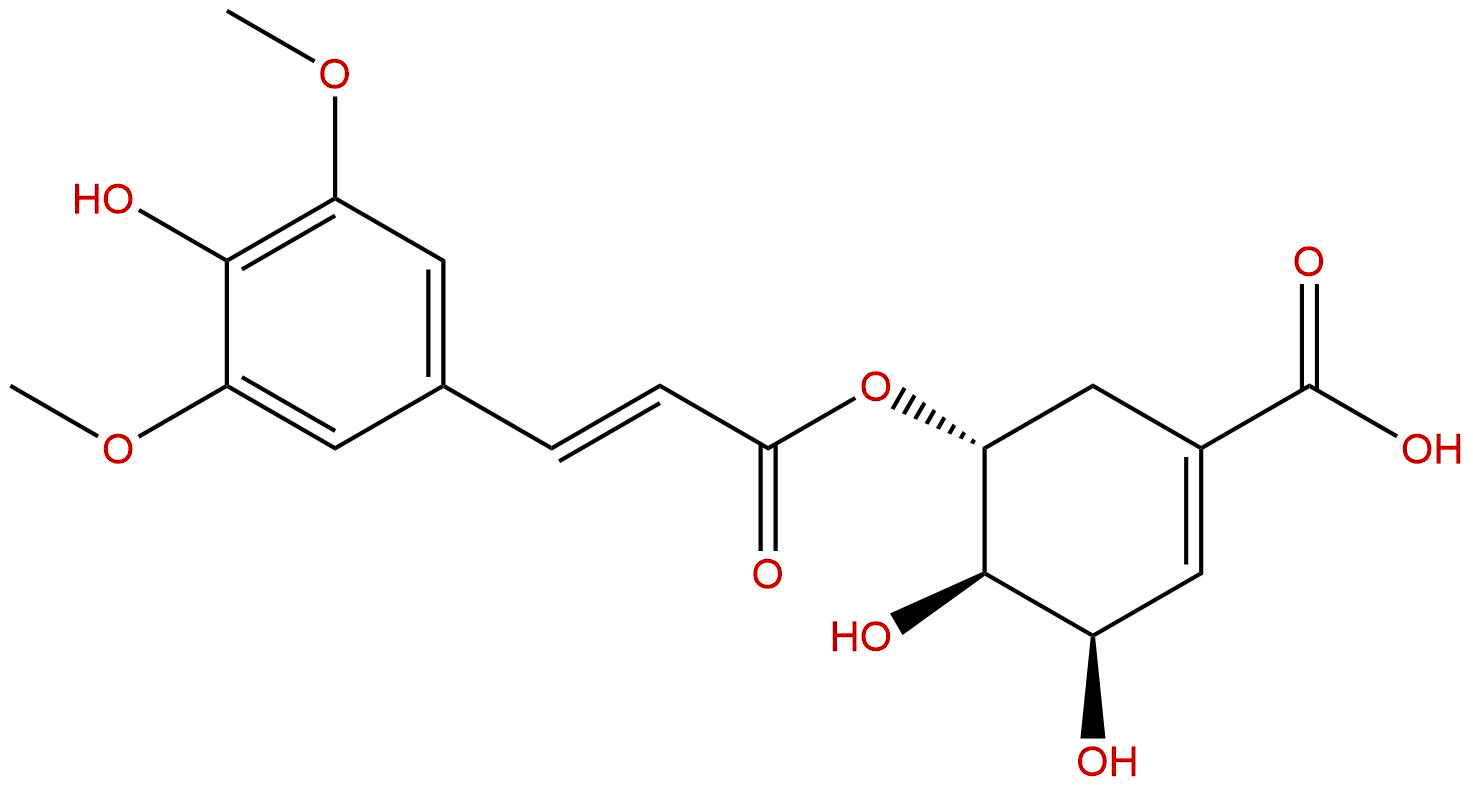
The chemical name of 5-O-sinapyrylshikimic acid is 5-O - (3,5-dimethoxy-4-hydroxycinnamoyl) shikimic acid, with a molecular formula of C ₁₈ H ₂₀ O ₉ and a molecular weight of 380.3490 g/mol. This compound consists of two parts: the parent structure is shikimic acid (3R, 4S, 5R) -3,4,5-trihydroxycyclohex-1-ene-1-carboxylic acid), and its 5-hydroxy group is connected to the carboxyl group of sinapinic acid (3,5-dimethoxy-4-hydroxycinnamic acid) through an ester bond.
From the analysis of structural characteristics, the shikimic acid moiety provides a six membered ring skeleton with three hydroxyl groups (3-OH, 4-OH, 5-OH) and one carboxyl group (1-COOH) on the ring, where the 5-OH group is replaced by a sinapyryl group. The sinapine moiety contains a phenylacrylic acid structural unit, with two methoxy groups (3-OCH VNet, 5-OCH VNet) and one phenolic hydroxyl group (4-OH) on the benzene ring, as well as an alpha, beta unsaturated carboxylic acid side chain. This ester bond connection allows 5-O-sinapyrylshikimic acid to possess both shikimic acid and sinapine chemical properties.
According to computational chemistry and experimental data, the key physicochemical parameters of 5-O-sinapyrylshikimic acid are as follows:
The structural characteristics of 5-O-sinapyrylshikimic acid are closely related to its biological activity. The shikimic acid backbone itself has antiviral activity, and its cyclohexene structure can mimic the conformation of sialic acid, thereby competitively binding to the active sites of influenza virus hemagglutinin (HA) and neuraminidase (NA). The introduction of sinapyr further enhances the activity of the compound: on the one hand, the phenolic hydroxyl and methoxy groups in sinapyr provide additional hydrogen bond donors and acceptors, which facilitate the formation of more stable interactions with target proteins; On the other hand, α, β - unsaturated ester structures may participate in Michael addition reactions, forming covalent bonds with cysteine residues in viral proteins, thereby enhancing inhibitory effects. In addition, the antioxidant activity of sinapyryl also helps to alleviate oxidative stress damage caused by viral infection.
5-O-sinapyrylshikimic acid, as a natural phenolic acid compound, has been found in various plants, mainly distributed in plant families such as Brassicaceae, Asteraceae, and Apiaceae. The plants currently reported to contain this compound include:
It is worth noting that the content of 5-O-sinapyrylshikimic acid in plants is usually low and is greatly influenced by factors such as growth environment, harvest season, and variety differences. Therefore, finding high content plant resources or establishing biosynthetic pathways is the key to solving the problem of raw material supply.
The commonly used extraction methods currently include:
Solvent extraction method Organic solvents such as methanol, ethanol, and acetone are mixed with water as extraction solvents. Research has shown that 50-80% methanol or ethanol aqueous solution has a higher extraction efficiency for 5-O-sinapyrylshikimic acid. The extraction conditions are usually: a solid-liquid ratio of 1:10-1:20 (w/v), a temperature of 40-60 ℃, an extraction time of 1-3 hours, and can be repeated 2-3 times. This method is simple to operate, but has poor selectivity and requires subsequent purification steps.
Ultrasound assisted extraction Utilizing the cavitation effect of ultrasound to destroy plant cell walls and improve the dissolution efficiency of target compounds. Compared with traditional solvent extraction, ultrasound assisted extraction can shorten the extraction time (15-30 minutes), reduce the amount of solvent used, and increase the extraction rate (usually by 20-40%). The ultrasound power is usually between 200-500 W and the frequency is between 20-40 kHz.
Microwave assisted extraction By utilizing the penetrating and selective heating properties of microwaves, the internal temperature of plant cells rapidly increases, accelerating the release of target compounds. Microwave power of 300-700 W, extraction time of 5-15 minutes. This method is efficient, but may cause degradation of some thermosensitive compounds.
Enzyme assisted extraction Using hydrolytic enzymes such as cellulase and pectinase to break down plant cell walls and improve the accessibility of target compounds. The enzymatic hydrolysis conditions are usually pH 4.5-5.5, temperature 40-50 ℃, and time 1-4 hours. This method is mild and environmentally friendly, but the cost is relatively high.
The extraction solution contains a large amount of impurities and needs to be purified by the following methods:
Liquid-liquid extraction Preliminary separation of the distribution coefficient differences of the target compound using different solvents. Common solvent systems include ethyl acetate water, n-butanol water, etc. 5-O-sinapyrylshikimic acid has good solubility in ethyl acetate and can be enriched by extraction with ethyl acetate.
Macroporous adsorption resin column chromatography Using macroporous adsorption resins such as HPD-100, D101, AB-8, etc., the enrichment of target compounds is achieved through gradient elution (water ethanol or water methanol system). This method has a large sample load, low cost, and can be reused, making it suitable for industrial production.
silica gel column chromatography Use silica gel as the stationary phase and mixed solvents such as chloroform methanol water or ethyl acetate methanol water as the mobile phase to further purify the target compound. This method has good separation effect, but the operation is cumbersome and suitable for laboratory scale.
Preparation type high performance liquid chromatography (Prep HPLC)Separation and purification were carried out using a C18 reverse phase chromatography column with acetonitrile water or methanol water (containing 0.1% formic acid) as the mobile phase, monitored by a UV detector (usually with a detection wavelength of 320-330 nm). This method can obtain high-purity (>98%) 5-O-sinapyrylshikimic acid, but the cost is high and suitable for small-scale preparation.
High Speed Counter Current Chromatography (HSCCC)By utilizing the liquid-liquid distribution principle, there is no need for a solid stationary phase, which avoids irreversible adsorption of the sample. By using a two-phase solvent system such as n-hexane ethyl acetate methanol water, high-purity target compounds can be obtained in a short period of time.
The anti influenza virus activity of 5-O-sinapyrylshikimic acid is its most concerned pharmacological effect. Current research mainly focuses on the following aspects:
Multiple in vitro experiments have shown that 5-O-sinapyrylshikimic acid has inhibitory effects on various subtypes of influenza viruses, including H1N1, H3N2, H5N1, and B influenza viruses. Its half maximal inhibitory concentration (IC ₅₀) is usually in the range of 10-50 μ M, with a selectivity index (SI) greater than 10, demonstrating good antiviral activity and low cytotoxicity.
Inhibition effect on H1N1 influenza virus In the MDCK (canine kidney cell) cell model, 5-O-sinapyrylshikimic acid (25 μ M) can significantly inhibit the replication of H1N1 virus, reducing virus titers by about 2-3 logarithmic units. The Time of addition assay showed that the compound has inhibitory effects in both the early (0-2 hours) and late (6-8 hours) stages of viral infection, suggesting that it may act on multiple stages of the virus lifecycle.
Inhibition of influenza A virus H3N2 Compared with H1N1, the inhibitory activity of 5-O-sinapyrylshikimic acid on H3N2 subtype is slightly lower (IC ₅₀ is about 30 μ M), but still shows dose-dependent inhibitory effect. It is worth noting that the compound is also effective against oseltamivir resistant strain (H274Y mutant strain), with IC ₅₀ values comparable to the wild-type strain, indicating that its mechanism of action is different from oseltamivir.
Inhibition effect on avian influenza virus H5N1 Under biosafety level III laboratory conditions, 5-O-sinapyrylshikimic acid (50 μ M) can inhibit the replication of H5N1 virus in A549 (human lung cancer cells) cells, reducing viral RNA levels by approximately 70%. This discovery is of great significance for the development of drugs targeting highly pathogenic avian influenza.
Animal experiments further validated the in vivo antiviral effect of 5-O-sinapyrylshikimic acid. In the BALB/c mouse model infected with influenza virus:
The sinapyryl group in 5-O-sinapyrylshikimic acid contains phenolic hydroxyl groups, which endow it with strong free radical scavenging ability. The DPPH (1,1-diphenyl-2-trinitrophenylhydrazine) radical scavenging experiment showed that the compound had an IC ₅₀ of 15.2 μ M, which was superior to the positive control vitamin C (IC ₅₀=22.8 μ M). In addition, the compound can also inhibit lipid peroxidation reactions and protect cell membranes from oxidative damage.
Influenza virus infection is often accompanied by excessive inflammatory response, leading to tissue damage and worsening of the disease. 5-O-sinapyrylshikimic acid exhibits anti-inflammatory activity both in vitro and in vivo
5-O-sinapyrylshikimic acid can also regulate host immune response and enhance antiviral immune response:
The anti influenza virus effect of 5-O-sinapyrylshikimic acid involves multiple molecular targets and signaling pathways, and this multi-target mode of action is its significant advantage over traditional single target antiviral drugs.
Influenza virus hemagglutinin (HA) is a key protein for virus invasion of host cells, responsible for recognizing and binding to sialic acid receptors on the surface of host cells. The shikimic acid skeleton of 5-O-sinapyrylshikimic acid structurally mimics sialic acid and can competitively bind to the receptor binding site of HA.
Neuraminidase (NA) is responsible for cleaving sialic acid on the surface of host cells, promoting the release of new viral particles. 5-O-sinapyrylshikimic acid has an inhibitory effect on NA, but its mechanism is different from oseltamivir.
M2 protein is an ion channel on the envelope of influenza virus, which plays an important role in the virus shedding process. The inhibitory effect of 5-O-sinapyrylshikimic acid on M2 ion channels is still controversial.
The RNA polymerase of influenza virus is a heterotrimer composed of three subunits, PA, PB1, and PB2, responsible for the replication and transcription of the virus genome. 5-O-sinapyrylshikimic acid can act on multiple subunits of polymerase complexes.
The Cap binding domain of PB2 subunit is responsible for recognizing and binding to the 5 'cap structure of host mRNA, which is a critical step in the initiation of viral mRNA transcription. 5-O-sinapyrylshikimic acid can competitively bind to the cap binding site of PB2.
The PA subunit has endonuclease activity and is responsible for cleaving the cap structure of host mRNA, providing primers for viral transcription. 5-O-sinapyrylshikimic acid can inhibit the endonuclease activity of PA.
In addition to directly acting on viral targets, 5-O-sinapyrylshikimic acid can also exert antiviral effects by regulating host cell signaling pathways.
Influenza virus infection can activate the NF - κ B signaling pathway, leading to excessive expression of pro-inflammatory factors and exacerbating tissue damage. 5-O-sinapyrylshikimic acid can inhibit the activity of I κ B kinase (IKK), prevent the phosphorylation and degradation of I κ B α, and thus inhibit the nuclear translocation and transcriptional activity of NF - κ B. This effect helps alleviate the excessive inflammatory response caused by viral infection.
5-O-sinapyrylshikimic acid can promote the phosphorylation of interferon regulatory factor 3 (IRF3) and IRF7, activate the JAK-STAT signaling pathway, upregulate the expression of interferon stimulated genes (ISG), and enhance the antiviral status of cells. This effect is related to the activation of pattern recognition receptors such as TLR3 and RIG-I.
The latest research shows that 5-O-sinapyrylshikimic acid can induce autophagy, promote the degradation and clearance of viral proteins. In cells infected with influenza virus, this compound can upregulate the proportion of LC3-II/I, increase the formation of autophagosomes, and regulate autophagic activity through the AMPK mTOR pathway.
Based on computational chemistry and preliminary experimental data, the pharmacological parameters of 5-O-sinapyrylshikimic acid are as follows:
At present, the pharmacokinetic research on 5-O-sinapyrylshikimic acid is not sufficient, and the existing data mainly comes from animal experiments and computer simulations
Due to its independence from CYP450 enzyme system metabolism and weak inhibitory effect on CYP450 enzymes (CYP3A4, CYP2D6, CYP2C9, etc.) (IC ₅₀>100 μ M), the possibility of interaction with drugs metabolized by CYP450 is low. However, this compound may competitively inhibit UGT enzymes and carboxylesterase, affecting the clearance of other drugs metabolized by these enzymes. In addition, the inhibitory effect of this compound on P-gp (IC ₅₀=45 μ M) may affect the absorption and distribution of P-gp substrate drugs.
5-O-sinapyrylshikimic acid, as a natural multi-target anti influenza compound, has the following development advantages:
Multi target mechanism of action This compound can simultaneously act on multiple targets of influenza virus, including HA, NA, M2, PB2, and PA, as well as signaling pathways such as NF - κ B and JAK-STAT in host cells. This multi-target mode of action can reduce the probability of virus drug resistance and is an important strategy for dealing with rapid mutation of influenza virus.
Activity against drug-resistant strains This compound maintains activity against oseltamivir resistant strains (H274Y mutation), amantadine resistant strains (S31N mutation), and balosavir resistant strains (I38T mutation), and can be used as a complementary or alternative treatment option to existing anti influenza drugs.
Combining anti-inflammatory and immune regulatory effects Influenza virus infection is often accompanied by excessive inflammatory response, leading to tissue damage and worsening of the disease. The anti-inflammatory and immunomodulatory activities of 5-O-sinapyrylshikimic acid can alleviate pathological damage caused by viral infection and improve disease prognosis.
Good security Preliminary toxicity studies have shown that the compound has low acute toxicity (oral LD ₅₀>2000 mg/kg in mice), no genetic toxicity or cardiac toxicity, and good safety.
Despite the many advantages of 5-O-sinapyrylshikimic acid, its development still faces the following challenges:
Low oral bioavailability The oral bioavailability of this compound is only 15-20%, which limits its application for oral administration. The solution strategy includes: developing prodrugs (such as esterification prodrugs) to improve lipid solubility; Using nano formulations (such as liposomes, polymer nanoparticles) to improve absorption; Design oral absorption enhancers (such as surfactants, bile salts) to improve permeability.
Short half-life The elimination half-life is relatively short (2.5-4 hours) and requires frequent administration. The solution strategy includes: developing sustained-release formulations (such as microspheres, implants) to extend the duration of action; Perform structural modifications (such as introducing fluorine atoms, methylation) to reduce metabolic rate; The combined use of metabolic enzyme inhibitors (such as UGT inhibitors) increases drug exposure.
Low natural content The compound has a low content in plants and a high extraction cost. The solution strategy includes: screening for high content plant resources; Establish chemical synthesis or semi synthesis routes; Using genetically engineered microorganisms (such as Escherichia coli and yeast) for biosynthesis; Developing plant cell culture techniques to increase yield.
The mechanism of action needs further clarification Although multiple molecular targets have been identified, the relative contributions and synergistic mechanisms of each target are not fully understood. The solution strategy includes: using CRISPR-Cas9 gene editing technology to knock out or knock in specific targets, verifying their necessity in antiviral action; Comprehensively analyze the action network using systems biology methods such as omics analysis and network pharmacology.
The combined use of 5-O-sinapyrylshikimic acid and other anti influenza drugs may produce synergistic effects:
United with Oseltamivir Due to their different mechanisms of action (oseltamivir inhibits NA, 5-O-sinapyrylshikimic acid multi-target action), the combination of the two can produce synergistic antiviral effects, reducing the dosage and resistance risk of oseltamivir.
United with Baloshavir Baloxavir inhibits the activity of PA endonuclease, while 5-O-sinapyrylshikimic acid can simultaneously act on PA and other targets. The combination of the two can enhance the inhibitory effect on polymerase complex.
Combined with traditional Chinese medicine compound 5-O-sinapyrylshikimic acid, as a natural product, can be used in combination with traditional anti influenza Chinese medicines such as Lianhua Qingwen and Yinqiao San to exert synergistic effects of multiple components and targets.
Based on existing research, 5-O-sinapyrylshikimic acid has clinical application prospects in the following fields:
Treatment for Seasonal Influenza As an oral or inhaled anti influenza drug, it is used to treat influenza A and B virus infections, especially for patients who are resistant to existing drugs.
Emergency Reserve for Influenza Pandemic Due to its effectiveness against multiple subtypes of influenza virus and low risk of drug resistance, this compound can be used as a reserve drug during influenza pandemics.
Treatment of avian influenza The inhibitory effect on highly pathogenic avian influenza H5N1 suggests that it can be used for the treatment of avian influenza infection, but further preclinical and clinical studies are needed for verification.
Prevention of influenza complications Its anti-inflammatory and immunomodulatory effects may help prevent complications such as pneumonia and myocarditis caused by influenza virus infection.
5-O-sinapyrylshikimic acid, as a natural phenolic acid compound, exhibits anti influenza virus activity through a multi-target mechanism of action, including inhibition of viral HA, NA, M2, PB2, and PA, as well as regulation of host NF - κ B and JAK-STAT signaling pathways, while maintaining activity against resistant strains of existing anti influenza drugs. This compound has antioxidant, anti-inflammatory, and immunomodulatory effects, which can alleviate tissue damage caused by viral infection and improve disease prognosis. Its good safety (no genetic toxicity, no cardiac toxicity) and moderate pharmacological parameters (molecular weight, LogP, water solubility) have laid the foundation for its drug development.
However, the low oral bioavailability, short half-life, and low natural content of this compound still need to be addressed. Future research directions should include: improving pharmacokinetic properties through structural modification and formulation techniques; Establish efficient chemical or biological synthesis methods; Conduct systematic pharmacological and toxicological research; Conduct clinical trials to verify its safety and effectiveness. With the deepening of research, 5-O-sinapyrylshikimic acid is expected to become an important candidate compound for the new generation of anti influenza drugs, providing a new therapeutic option to address the threat of influenza virus.
Batch can search by a CAS number,one per line
