Research progress on ginkgolic acid C17:2: a natural alkylphenolic acid with antiplatelet aggregation activity
Introduction/Overview
Cardiovascular diseases (CVDs) are one of the major causes of death and disability worldwide, and their pathological basis often involves atherosclerosis, thrombosis and other processes. Platelets play a central role in thrombosis, and abnormal platelet aggregation is a key trigger for thrombotic diseases such as acute coronary syndrome and ischemic stroke. Therefore, antiplatelet therapy has become an important strategy for preventing and treating thrombotic diseases. At present, commonly used antiplatelet drugs in clinical practice, such as aspirin, clopidogrel, ticagrelor, etc., although have definite therapeutic effects, long-term use often accompanies limitations such as increased risk of bleeding, gastrointestinal injury, and drug resistance. It is urgent to develop new, safe, and effective antiplatelet drugs.
Natural products, as an important source of drug discovery, provide abundant chemical entities for the development of antiplatelet drugs. Ginkgo biloba(Ginkgo biloba L. As a "living fossil" plant, its extracts have been used in traditional medicine for thousands of years. Modern research has confirmed that it has various pharmacological activities such as improving cognitive function, dilating blood vessels, and antioxidation. Ginkgo biloba leaf extract is rich in flavonoids and terpenoids, while the outer and root bark of Ginkgo biloba contain another characteristic component - ginkgolic acids. Ginkgolic acid belongs to the class of alkylphenolic compounds, consisting of a salicylic acid core and a long-chain alkyl side chain. Depending on the number of carbon atoms and unsaturation of the side chain, it can be classified into various homologs. Among them, Ginkgolic Acid C17:2 (GA C17:2) has attracted much attention due to its unique chemical structure and significant anti platelet aggregation activity.
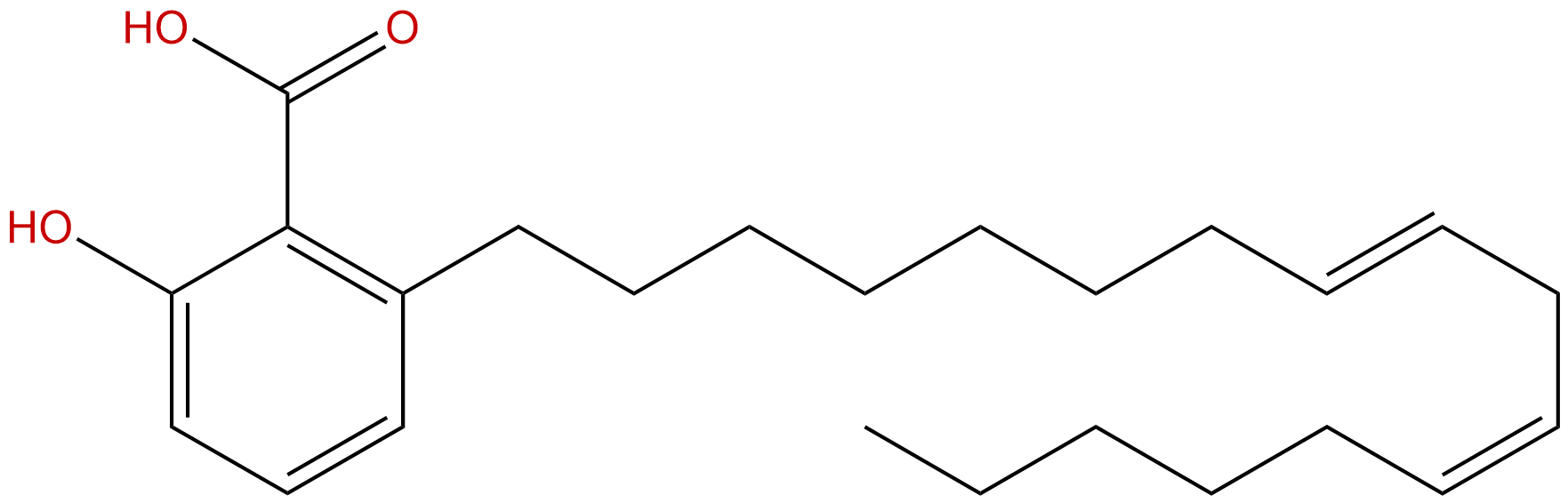
The chemical name of GA C17:2 is 6- [(8Z, 11Z) - heptadecadienyl] -2-hydroxybenzoic acid, with a CAS number of 102811-39-2. In recent years, with the deepening of research on ginkgolic acid compounds, the mechanism of action of GA C17:2 in antiplatelet aggregation has gradually been elucidated. It regulates the platelet activation signaling pathway through multiple targets and exhibits different characteristics from traditional antiplatelet drugs. This article will provide a systematic review of the research progress of GA C17:2 from the aspects of chemical structure, plant origin, pharmacological activity, mechanism of action, pharmacological evaluation, and clinical application prospects.
Chemical structure and physicochemical properties
Chemical structural characteristics
Ginkgolic acid C17:2 belongs to alkylphenolic acid compounds, and its basic skeleton is 2-hydroxy-6-alkylbenzoic acid (i.e. 6-alkylsalicylic acid). Specifically, the chemical structural characteristics of GA C17:2 are as follows: the parent nucleus is salicylic acid (2-hydroxybenzoic acid), and there is a long-chain alkyl side chain containing 17 carbon atoms connected to the 6th position of the benzene ring. The side chain contains two cis double bonds located at the 8th and 11th positions (i.e. Δ 8,11). Therefore, its system is named 6- [(8Z, 11Z) - heptadecadienyl] -2-hydroxybenzoic acid.
Structurally, GA C17:2 combines hydrophilic (carboxyl and phenolic hydroxyl) and lipophilic (long-chain alkyl) groups, allowing it to interact with cell membranes and various proteins. Compared with other members of the ginkgolic acid family such as C13:0, C15:1, C17:1, etc., the side chain length and unsaturation of C17:2 endow it with a unique spatial conformation and biological activity. The presence of double bonds gives the side chain a certain degree of flexibility and bending ability, which may affect its binding mode with the target protein.
Physical and chemical property parameters
According to computational chemistry and experimental measurement data, the main physicochemical properties of GA C17:2 are as follows:
- molecular weight:372.5490 Da
- Molecular formula:C24H36O3
- Lipid water partition coefficient (LogP): 8.2653. This value is relatively high, indicating that GA C17:2 has strong lipophilicity and is easily soluble in organic solvents such as ethanol, dimethyl sulfoxide, chloroform, etc., while its solubility in water is extremely low.
- Topological Polarity Surface Area (TPSA): 57.53 Å ². TPSA reflects the surface area of polar atoms (such as oxygen and nitrogen) in a molecule, which is typically associated with oral absorption and blood-brain barrier penetration ability. The TPSA value of GA C17:2 is moderate, mainly due to the contributions of carboxyl and phenolic hydroxyl groups.
- Water solubility:0.0163 mg/mL。 One of the main challenges in the development of GA C17:2 as an oral drug is its extremely low water solubility, which may limit its bioavailability.
- Blood-brain barrier penetrability: Low. This property suggests that GA C17:2 is not easily accessible to the central nervous system, which may reduce central related side effects, but also limits its direct therapeutic effect on brain diseases.
- HERG inhibition: No. HERG potassium channel inhibition is an important indicator of drug cardiac toxicity, and GA C17:2 has no hERG inhibitory effect, indicating its good cardiac safety.
- Ames test: 0.0. The Ames test is used to detect the mutagenicity of compounds, and the GA C17:2 result is negative, indicating that it has no significant genetic toxicity.
These physicochemical properties provide important references for the drug development of GA C17:2. High LogP and low water solubility suggest the need for appropriate formulation techniques (such as liposomes, nanoemulsions, cyclodextrin inclusion complexes, etc.) to improve their solubility and bioavailability; The good cardiac safety and non mutagenicity lay the foundation for its further development.
Plant sources and extraction methods
Plant-based
Ginkgolic acid C17:2 mainly comes from the Ginkgo biloba plant in the Ginkgo family(Ginkgo biloba L. There are significant differences in the distribution of content among different parts of the plant. Ginkgolic acid compounds were detected in the outer seed coat (fleshy seed coat), root coat, bark, and leaves of Ginkgo biloba, with the highest content found in the outer seed coat and root coat. It is worth noting that commercially available standard extracts of Ginkgo biloba leaves (such as EGb 761) are usually subjected to deacidification treatment to remove potential allergenic and toxic ginkgolic acid components. Therefore, commercial Ginkgo biloba leaf extracts have extremely low levels of ginkgolic acid (usually controlled below 5 ppm). However, the content of ginkgolic acid in the outer seed coat and root coat of Ginkgo biloba can reach thousands of ppm, making it an ideal raw material for obtaining GA C17:2.
In addition to ginkgo, some other plants also contain small amounts of alkylphenolic compounds, such as cashews(Anacardium occidentale)Anacardiac acid in shell fluid has a similar structure to ginkgolic acid, but differs in side chain length and unsaturation. At present, the main source of GA C17:2 is still the outer seed coat of Ginkgo biloba.
Extraction and Separation Purification Methods
1. Extraction method
Based on GA C17:2 lipophilicity, commonly used extraction methods include:
- Organic solvent extraction method Soak or reflux extract the dried and crushed Ginkgo biloba outer seed coat using organic solvents such as methanol, ethanol, acetone, or chloroform. Ethanol is the most commonly used solvent in laboratory and industrial production due to its low toxicity and good extraction efficiency. Usually, 70% -95% ethanol is used to extract 2-3 times at room temperature or heating conditions, and the extracted liquids are combined and concentrated under reduced pressure to obtain the crude extract.
- Supercritical fluid extraction (SFE)Using CO ₂ as the extraction solvent, selective extraction is achieved by adjusting pressure and temperature. Supercritical CO ₂ extraction has the advantages of no solvent residue, low extraction temperature, and good selectivity, making it particularly suitable for the extraction of thermosensitive components. Research has shown that under conditions of pressure of 30-40 MPa and temperature of 40-50 ℃, it is possible to efficiently extract ginkgolic acid components from the outer seed coat of Ginkgo biloba.
- Ultrasonic assisted extraction Using the cavitation effect of ultrasound to destroy cell walls, accelerate solvent penetration and component dissolution, can significantly shorten extraction time and improve extraction efficiency.
2. Separation and purification methods
The crude extract contains various ginkgolic acid homologues (C13:0, C15:1, C17:1, C17:2, etc.) and other lipophilic impurities, which need to be further separated and purified to obtain high-purity GA C17:2.
- silica gel column chromatography Preliminary separation of ginkgolic acid homologues was achieved based on polarity differences using n-hexane ethyl acetate or petroleum ether acetone as eluents. Due to the small difference in polarity of ginkgolic acids with different side chain lengths, repeated column chromatography is often required.
- Reversed phase high performance liquid chromatography (RP-HPLC)High efficiency separation of GA C17:2 from other homologues can be achieved using a C18 reverse phase chromatography column with methanol water (containing 0.1% formic acid) or acetonitrile water as the mobile phase. By gradient elution, GA C17:2 usually peaks after C17:1 and before C18:1. Preparative HPLC can be used to obtain high-purity samples ranging from milligrams to grams.
- High Speed Counter Current Chromatography (HSCCC)The use of a two-phase solvent system (such as n-hexane ethyl acetate methanol water) for separation has the advantages of high sample recovery and irreversible adsorption, making it suitable for the large-scale preparation of ginkgolic acid compounds.
Pharmacological activity research
Antiplatelet aggregation activity
The most noteworthy pharmacological activity of GA C17:2 is its antiplatelet aggregation effect. Multiple in vitro and in vivo studies have confirmed that GA C17:2 can effectively inhibit platelet aggregation induced by various inducers.
- In vitro research Measure the aggregation rate of washed platelets or platelet rich plasma (PRP) using turbidity method. The results showed that GA C17:2 (1-100 μ M) concentration dependently inhibited platelet aggregation induced by adenosine diphosphate (ADP), arachidonic acid (AA), collagen, and thrombin. Among them, the aggregation inhibition effect induced by AA is the most significant, with IC ₅₀ values at the micromolar level. It is worth noting that GA C17:2 also has a strong inhibitory effect on ADP induced aggregation, suggesting that its target may involve multiple signaling pathways.
- In vivo research In rat or mouse thrombus models, gavage or intraperitoneal injection of GA C17:2 can significantly prolong tail bleeding time, inhibit arteriovenous bypass thrombosis formation, and reduce collagen adrenaline induced pulmonary thromboembolism mortality. Compared with aspirin, GA C17:2 has a milder damaging effect on gastrointestinal mucosa at equivalent antithrombotic doses, demonstrating a certain safety advantage.
Other pharmacological activities
In addition to antiplatelet aggregation, GA C17:2 also exhibits various biological activities:
- anti-inflammatory activity GA C17:2 can inhibit the release of tumor necrosis factor - α (TNF - α), interleukin-6 (IL-6), and prostaglandin E ₂ (PGE ₂) in macrophages induced by lipopolysaccharide (LPS), and its mechanism is related to the inhibition of the nuclear factor kappa B (NF - κ B) signaling pathway.
- Antibacterial activity It has inhibitory effects on gram-positive bacteria (such as Staphylococcus aureus, Bacillus subtilis) and certain fungi, and its antibacterial mechanism may be related to the destruction of bacterial cell membrane integrity.
- Antitumor activity: In many tumor cell lines (such as breast cancer, lung cancer and liver cancer cells), GA C17:2 can induce cell apoptosis and cycle arrest, but its activity is generally weaker than other ginkgolic acid homologues (such as C15:1).
- Neuroprotective activity Low concentrations of GA C17:2 can protect neurons from oxidative stress damage, but high concentrations exhibit neurotoxicity, suggesting its biphasic dose-response.
Mechanism of action and molecular targets
The antiplatelet aggregation effect of GA C17:2 involves multiple molecular targets and signaling pathways, exhibiting characteristics of multi-target regulation. According to existing research, its main mechanism of action can be summarized as follows:
1. Inhibit cyclooxygenase (COX) activity
Cyclooxygenase (COX) is a key enzyme involved in arachidonic acid metabolism, including two subtypes: COX-1 (PTGS1) and COX-2 (PTGS2). COX-1 is constitutively expressed in platelets, catalyzing the conversion of arachidonic acid to thromboxane A ₂ (TXA ₂), which is a potent inducer of platelet aggregation and vasoconstrictor. GA C17:2 can directly inhibit the enzymatic activity of COX-1 and COX-2, thereby reducing the production of TXA ₂. Unlike aspirin, which irreversibly acetylates COX-1, GA C17:2 has a reversible inhibitory effect on COX and a relatively stronger inhibitory effect on COX-2. This characteristic may explain its antiplatelet effect while having a relatively small impact on the synthesis of protective prostaglandins (such as PGE ₂, PGI ₂) in the gastrointestinal mucosa.
2. Antagonism of platelet membrane receptors
Platelet membrane surface expresses multiple receptors that participate in platelet adhesion, activation, and aggregation processes. GA C17:2 can act on the following receptors:
- P2Y12 receptor (P2RY12)P2Y12 is a key receptor for ADP induced platelet aggregation and a target for drugs such as clopidogrel and ticagrelor. GA C17:2 can competitively antagonize P2Y12 receptors, inhibit ADP mediated Gi protein activation and downstream signaling, thereby reducing platelet aggregation.
- Thromboxane A ₂ receptor (TBXA2R)TXA ₂ activates platelets by binding to its receptor TP (TBXA2R). GA C17:2 can directly block TP receptors and inhibit platelet aggregation induced by TXA ₂ analogue U46619.
- Integrin α IIb β 3 (ITGA2B/ITGB3)Integrin α IIb β 3 (GPIIb/IIIa) is the ultimate common pathway for platelet aggregation, mediating the cross-linking between fibrinogen and platelets. GA C17:2 can inhibit the conformational transition of integrin α IIb β 3 activation, thereby blocking platelet aggregation.
3. Inhibit phosphodiesterase (PDE) activity
Phosphodiesterase 3A (PDE3A) is the main cAMP hydrolase enzyme in platelets. GA C17:2 can inhibit PDE3A activity, leading to an increase in cAMP levels in platelets. CAMP, as a second messenger, activates protein kinase A (PKA) to phosphorylate various downstream proteins (such as VASP and IP3 receptors), inhibiting platelet calcium ion mobilization and granule release, thereby suppressing platelet activation.
4. Regulating platelet membrane fluidity
The long-chain alkyl side chains of GA C17:2 can be embedded into the platelet membrane lipid bilayer, altering the physical properties of the membrane such as fluidity and microstructure. This membrane perturbation effect may affect the conformation and function of membrane receptors, indirectly inhibiting platelet signaling.
Multi target synergistic effect
In summary, GA C17:2 exerts antiplatelet effects through a multi-level and multi-target mechanism of "upstream inhibition (COX) - midstream blockade (receptor) - downstream regulation (PDE3A/cAMP)". This multi-target mode of action allows it to produce significant anti aggregation effects at lower concentrations and may reduce the risk of drug resistance caused by single target inhibition. However, multi-target action may also lead to the problem of insufficient selectivity, and further evaluation is needed to assess its effects on other cell types such as endothelial cells and white blood cells.
Evaluation of drug properties and pharmacokinetics
Drugability assessment
Based on the aforementioned physicochemical properties and pharmacological activity data, a comprehensive evaluation of the pharmacological properties of GA C17:2 is conducted
Pharmacokinetic characteristics
At present, there is insufficient systematic research on the pharmacokinetics of GA C17:2, but based on data from similar compounds (such as ginkgolic acid C15:1), its general characteristics can be inferred:
- absorb Poor oral absorption, absolute bioavailability may be less than 5%. Transdermal or injectable administration may be a more feasible route of administration.
- distribution Due to its high lipophilicity, GA C17:2 may be widely distributed in adipose tissue, liver, and lungs, with a relatively large apparent distribution volume. The blood-brain barrier has low penetration and limited central distribution.
- Metabolism Mainly metabolized by the liver, involving pathways such as oxidation (ω - oxidation, β - oxidation), glucuronic acid binding, and sulfate binding. Side chain double bonds may be epoxidized or reduced.
- excretion Metabolites are mainly excreted through bile, with some excreted through urine. The detection level of the prototype drug in urine is extremely low.
Formulation strategy
To overcome the pharmacological barrier of GA C17:2, the following formulation strategies can be considered:
- Liposomes or nano lipid carriers Encapsulate GA C17:2 in a lipid bilayer to improve water dispersibility and bioavailability.
- Cyclodextrin inclusion complex Using hydroxypropyl - β - cyclodextrin and other substances to increase apparent solubility.
- Phospholipid complex Forming drug phospholipid complexes to improve oral absorption of lipophilic drugs.
- Prodrug design Esterification modification of carboxyl or phenolic hydroxyl groups to enhance lipid solubility or alter metabolic pathways.
- Transdermal drug delivery system: Use its lipophilicity to develop patches or gel for local or systemic administration.
Clinical application prospects and prospects
Potential indications
Based on the antiplatelet aggregation activity and multi-target mechanism of GA C17:2, its potential clinical application directions include:
- Prevention and treatment of thrombotic diseases Such as coronary heart disease, myocardial infarction, ischemic stroke, peripheral arterial disease, etc. GA C17:2 may serve as an alternative or complementary medication to aspirin or clopidogrel, especially for patients who are intolerant or resistant to existing drugs.
- Antiplatelet combination therapy The target of GA C17:2 overlaps or complements aspirin (COX-1), P2Y12 inhibitor (clopidogrel), and integrin α IIb β 3 inhibitor (aximumab), and may be developed as a combination therapy to achieve synergistic antithrombotic effects and reduce the dosage and side effects of each drug.
- Inflammation related thrombosis Given its anti-inflammatory activity, GA C17:2 may have therapeutic potential for thrombosis in inflammatory states, such as sepsis related coagulation disorders and COVID-19 related thrombosis.
Development Challenges and Solutions
Despite its broad prospects, the clinical translation of GA C17:2 still faces many challenges:
- The issue of bioavailability It is necessary to improve oral absorption through pharmaceutical methods or structural modifications (such as prodrug design).
- Toxicity issue The long-term toxicity, genetic toxicity, reproductive toxicity, and immunotoxicity of GA C17:2 need to be systematically evaluated, especially its allergenicity (ginkgolic acid is a known contact allergen).
- selectivity Although multi-target effects can enhance therapeutic efficacy, they may also lead to off target effects. We need to study the structure-activity relationship (SAR) to find derivatives with higher selectivity.
- quality control As a natural product, it is necessary to establish standardized extraction, purification processes, and quality control standards for GA C17:2 to ensure consistency between batches.
Future research directions
- structural optimization Based on the parent nucleus structure of GA C17:2, derivatives with higher activity, lower toxicity, and better pharmacokinetic properties can be obtained through side chain modification (shortening chain length, changing double bond position or number, introducing heteroatoms) or parent nucleus modification (such as carboxyl esterification, phenolic hydroxyl protection).
- Target validation Using gene knockout mice, light affinity labeling, surface plasmon resonance (SPR) and other techniques, further confirm the direct interaction and binding mode of GA C17:2 with various targets.
- In vivo efficacy and safety Systematic evaluation of the in vivo antithrombotic effect and bleeding risk of GA C17:2 in various thrombosis animal models, such as FeCl ∝ - induced carotid artery thrombosis and laser-induced small artery thrombosis.
- Combination therapy research Explore the synergistic antithrombotic effects of GA C17:2 with low-dose aspirin, P2Y12 inhibitors, or anticoagulants such as rivaroxaban, and search for the optimal compatibility scheme.
Conclusion
Ginkgolic acid C17:2, as a unique alkylphenolic acid component in Ginkgo biloba, provides valuable lead compounds for the development of new antiplatelet drugs due to its unique chemical structure and multi-target antiplatelet aggregation activity. It achieves comprehensive regulation of platelet activation through multiple mechanisms such as inhibiting COX activity, antagonizing P2Y12 and TXA ₂ receptors, inhibiting PDE3A, and regulating membrane fluidity, demonstrating different characteristics of action from traditional antiplatelet drugs. However, extremely low water solubility, potential toxicity, and pharmacokinetic defects remain the main bottlenecks restricting its clinical translation.
In the future, GA C17:2 or its derivatives are expected to be developed into safe and effective antiplatelet drugs through structural optimization using medicinal chemistry methods, combined with advanced formulation technology to improve their drug properties, and in-depth pharmacological, toxicological, and pharmacokinetic studies. Meanwhile, in-depth research on ginkgolic acid compounds will also enrich our understanding of the regulation of platelet function by natural products, providing new ideas and strategies for the prevention and treatment of cardiovascular diseases. In the context of precision medicine and drug discovery returning to nature, the study of GA C17:2 has important scientific significance and application value.