Introduction/Overview
Coumarin compounds are a class of benzo [a] - pyranone derivatives widely found in nature, which have attracted much attention due to their diverse chemical structures and extensive biological activities. Among them, hydroxycoumarin is an important branch of the coumarin family, and its pharmacological activity is closely related to the number and position of hydroxyl groups. 4-Methyl-6,7-dihydroxycoumarin (CAS number: 529-84-0), as a typical dihydroxy substituted coumarin, has been applied in the field of analytical chemistry not only due to its unique fluorescence properties, but also due to its significant multiple biological activities such as inhibition of hyaluronic acid synthesis, antioxidant, anti-inflammatory, and potential anticoagulant, making it an important molecule in the study of natural product pharmacokinetics. In recent years, with the deepening of research on inflammation related diseases, thrombotic diseases, and tumor metastasis mechanisms, the role of this compound in regulating extracellular matrix metabolism, oxidative stress, and coagulation cascade reactions has become increasingly prominent. This article aims to systematically review the chemical properties, plant sources, pharmacological activities, mechanisms of action, pharmacological properties, and clinical application prospects of 6,7-dihydroxy-4-methylcoumarin, in order to provide comprehensive scientific references for the deep development and utilization of this compound.
Chemical structure and physicochemical properties
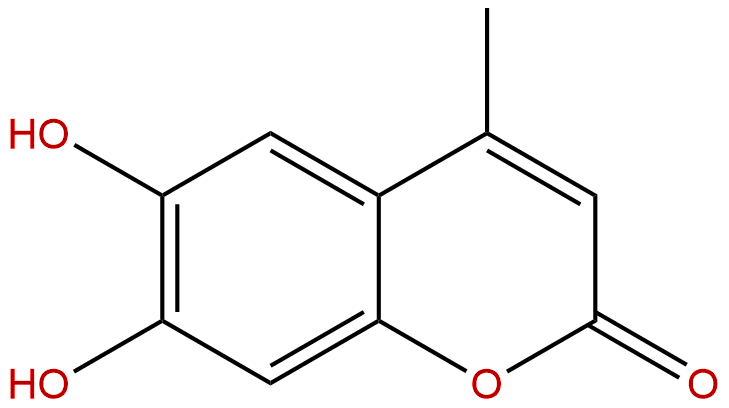
The molecular formula of 6,7-dihydroxy-4-methylcoumarin is C10H8O4, with a molecular weight of 192.17 g/mol. Its basic structure is benzo [a] - pyranone (coumarin nucleus), with a phenolic hydroxyl group attached to the 6th and 7th positions of the benzene ring, and a methyl group attached to the 4th position of the pyranone ring. This structural feature combines the planar rigidity of coumarin skeleton, strong hydrophilicity and reactivity of phenolic hydroxyl groups, and moderate hydrophobicity endowed by methyl groups.
Its physical and chemical properties are as follows:
1. solubility The compound exhibits a certain degree of amphiphilicity. The calculated lipid water partition coefficient (LogP) is approximately 1.56, indicating moderate lipophilicity. The theoretical polar surface area (TPSA) is 70.67 Å ², mainly contributed by two phenolic hydroxyl and carbonyl oxygen atoms. Its water solubility value is about 0.434 mg/mL, belonging to the range of slightly soluble to insoluble, but it has good solubility in organic solvents such as methanol, ethanol, acetone, and dimethyl sulfoxide (DMSO). This property affects its extraction, purification, and subsequent formulation development strategies.
2. Spectral characteristics As a derivative of coumarin, one of its most prominent features is its strong fluorescence properties. The conjugated system and electron donating hydroxyl substituents within the molecule enable it to produce strong blue or blue-green fluorescence under ultraviolet light (especially 365 nm) excitation. This characteristic has been cleverly applied in the field of chemical sensing, such as as as a fluorescent probe, which can conveniently monitor the consumption of boronic acid reagents in Suzuki coupling reactions with the naked eye through fluorescence quenching or enhancement effects.
3. Stability The presence of phenolic hydroxyl groups makes them easily oxidized, especially under alkaline or light conditions. Therefore, during storage and experimentation, it is often necessary to avoid light, maintain low temperatures, and operate under inert atmosphere or with the addition of antioxidants (such as BHT). The coumarin nucleus is relatively stable in terms of acidity and heat.
Plant sources and extraction methods
6,7-dihydroxy-4-methylcoumarin is not widely present in high quantities in plants, but is found as a secondary metabolite in specific plant families and genera. The literature reports that it mainly comes from some plants in the Asteraceae, Apiaceae, and Rutaceae families. For example, in various species of Artemisia(Artemisia Spp. plants, Peucedanum genus(Peucedanum It has been detected in the skin or leaves of both spp plants and citrus plants. It often coexists with other coumarins and flavonoids.
The extraction and separation methods follow the conventional process of natural product chemistry, but need to be optimized for their phenolic hydroxyl properties:
1. Extract Common solvent extraction methods. Due to the polarity of compounds, methanol, ethanol, or acetone water mixed solvents are often used for cold soaking, reflux, or ultrasound assisted extraction. To protect the phenolic hydroxyl group from oxidation, the extraction process is sometimes carried out under nitrogen protection and avoid prolonged high-temperature heating.
2. Separation and purification After vacuum concentration, the crude extract was subjected to liquid-liquid extraction using solvents such as petroleum ether and ethyl acetate. The compound was mainly enriched in the ethyl acetate fraction. Further purification relies on chromatographic techniques. Silica gel column chromatography is a commonly used method, and the eluent is usually a chloroform methanol or petroleum ether ethyl acetate gradient system. Considering its presence of phenolic hydroxyl groups, polyamide column chromatography can also be used to separate it through hydrogen bonding. High performance liquid chromatography (HPLC), especially preparative HPLC, is the final key step in obtaining high-purity monomers. It often uses a C18 reverse phase column with methanol water or acetonitrile water (pH adjusted with a small amount of formic acid or acetic acid) as the mobile phase.
3. appraisal The structural identification of compounds mainly relies on modern spectroscopic techniques. UV spectroscopy can display the characteristic absorption of coumarin. Infrared spectroscopy (IR) can indicate functional groups such as hydroxyl and carbonyl groups. Nuclear magnetic resonance hydrogen and carbon spectra (¹ H NMR, ¹ ³ C NMR) can accurately assign the chemical shifts of all hydrogen and carbon atoms, which is the key to determining the position of substituents. Mass spectrometry (MS) is used to determine molecular weight and fragment information.
Pharmacological activity research
A large number of in vitro and partially in vivo studies have shown that 6,7-dihydroxy-4-methylcoumarin has various pharmacological activities and demonstrates good potential for development.
- Inhibition of hyaluronic acid synthesis The compound has been identified as a hyaluronic acid synthesis inhibitor. Hyaluronic acid is an important extracellular matrix component that plays a crucial role in tissue hydration, lubrication, cell migration, and signal transduction. However, excessive synthesis of hyaluronic acid is closely related to pathological processes in rheumatoid arthritis, tumor invasion and metastasis, and certain fibrotic diseases. Research has shown that 6,7-dihydroxy-4-methylcoumarin can effectively inhibit the activity of hyaluronic acid synthase (HAS), especially the HAS2 subtype, thereby reducing excessive production of cellular hyaluronic acid. This provides a theoretical basis for its application in anti arthritis and anti-tumor metastasis.
- antioxidant activity The two adjacent phenolic hydroxyl groups on the benzene ring are the chemical basis for its strong antioxidant capacity. This compound can effectively scavenge DPPH radicals, ABTS ⁺ radicals, superoxide anions (O ₂⁻), and hydroxyl radicals (· OH). Its mechanism includes directly providing hydrogen atoms or electrons to neutralize free radicals, as well as possibly activating the intracellular antioxidant defense system, such as upregulating the nuclear factor E2 related factor 2 (Nrf2) pathway, enhancing the activity of enzymes such as superoxide dismutase (SOD) and glutathione peroxidase (GPx), thereby reducing oxidative stress damage to cell membranes, proteins, and DNA.
- anti-inflammatory activity In the lipopolysaccharide (LPS) - induced macrophage (such as RAW264.7) inflammation model, 6,7-dihydroxy-4-methylcoumarin can dose dependently inhibit the production of nitric oxide (NO), prostaglandin E2 (PGE2), as well as pro-inflammatory factors such as tumor necrosis factor - α (TNF - α) and interleukin-6 (IL-6). Its anti-inflammatory effect is closely related to the regulation of nuclear factor kappa B (NF - κ B) and mitogen activated protein kinase (MAPK) signaling pathways.
- Potential anticoagulant activity Based on its structural similarity with certain known anticoagulant coumarin drugs (such as warfarin), as well as computational biology predictions of potential interactions with multiple coagulation factors and anticoagulant protein targets (such as FII, FVII, FIX, FX, VKORC1, etc.), it suggests that this compound may have the potential to anticoagulant or affect coagulation cascades. However, the current experimental data is not sufficient, and further biochemical and pharmacological experiments are needed to verify its exact anticoagulant potency, action mechanism, and treatment window.
- Other activities Preliminary studies also suggest that it may have antibacterial, antiviral, and mild cytotoxicity (against certain tumor cell lines), but these activities require more systematic and in-depth research to confirm.
Mechanism of action and molecular targets
The multiple pharmacological activities of 6,7-dihydroxy-4-methylcoumarin stem from its regulation of multiple molecular targets and signaling pathways.
- Hyaluronic acid synthase (HAS)As a direct enzyme inhibitor, it may bind to the active or allosteric sites of HAS (especially HAS2) through competitive or non competitive means, interfering with the polymerization process of uridine diphosphate glucuronic acid and N-acetylglucosamine, thereby inhibiting the extension of the hyaluronic acid chain.
- NF - κ B and MAPK signaling pathway In anti-inflammatory effects, this compound can inhibit LPS induced degradation of I κ B α protein, prevent NF - κ B p65 subunit from transferring into the nucleus, and thereby downregulate the gene expression of inducible nitric oxide synthase (iNOS) and cyclooxygenase-2 (COX-2). Meanwhile, it can also inhibit the phosphorylation activation of p38 MAPK, JNK, and ERK1/2, synergistically suppressing the production of inflammatory mediators through multiple pathways.
- Nrf2/ARE pathway In terms of antioxidant activity, studies have shown that it can promote the dissociation and transfer of Nrf2 from the cytoplasm to the nucleus, bind to antioxidant response elements (ARE), initiate the transcription of downstream phase II detoxifying enzymes and antioxidant enzymes (such as HO-1, NQO1), and enhance the overall antioxidant defense ability of cells.
- Coagulation system related targets According to computer simulation docking analysis, the molecular structure of 6,7-dihydroxy-4-methylcoumarin may have a high affinity for vitamin K epoxide reductase complex subunit 1 (VKORC1). VKORC1 is a key enzyme in the gamma carboxylation process of vitamin K-dependent coagulation factors (FII, FVII, FIX, FX). Inhibiting its activity leads to a decrease in the synthesis of physiologically functional coagulation factors, resulting in anticoagulant effects. In addition, it may also interact with the active centers of serine protease coagulation factors (such as F2, F10) or regulatory proteins (such as PROC, PROS1), but the specific mechanism needs to be experimentally confirmed.
- Direct free radical scavenging Its phenolic hydroxyl structure enables it to act as a hydrogen donor, directly neutralizing various reactive oxygen species (ROS) and reactive nitrogen species (RNS), interrupting free radical chain reactions.
Evaluation of drug properties and pharmacokinetics
The preliminary evaluation of pharmacological parameters and limited pharmacokinetic studies provide reference for the development of 6,7-dihydroxy-4-methylcoumarin, but also point out challenges.
-
Analysis of drug properties parameters:
- Molecular weight (192.17)Meets the requirements for small molecule drugs (<500 Da).
- Fat solubility (LogP ≈ 1.56)A moderate LogP value is beneficial for its penetration through the cell membrane while maintaining a certain level of water solubility.
- Polar surface area (TPSA ≈ 70.67 Å ²)It is generally believed that TPSA<140 Å ² is beneficial for cell infiltration and oral absorption, and this value is within a favorable range.
- Water solubility Low water solubility (0.434 mg/mL) may be one of the main limiting factors for its oral bioavailability, which needs to be improved through formulation techniques such as making nanocrystals, cyclodextrin inclusion complexes, solid dispersions, or prodrugs.
- Blood-brain barrier permeability The prediction shows that it has high blood-brain barrier permeability potential, which provides a possibility for its application in central nervous system related diseases such as neuroinflammation and oxidative stress injury.
- Preliminary safety indicators The inhibitory prediction of hERG is' no ', indicating a low risk of causing QT interval prolongation in the heart. The Ames test value is 0.6 (usually with a critical value of 1.0 or 1.2, which is considered negative if it is less than this value and there is no dose-response relationship), indicating a low risk of mutagenicity. However, further genetic toxicity tests need to be combined to make a comprehensive judgment.
-
Prospects of pharmacokinetics:
Currently, there are few reports on the pharmacokinetic studies of this compound system. Based on its structural characteristics, it can be inferred that:
- absorb After oral administration, there may be some absorption in the gastrointestinal tract, but low solubility and first pass effects (phenolic hydroxyl groups are prone to II binding reactions) may limit their bioavailability.
- distribution Moderate LogP and smaller molecular weight are beneficial for its distribution to various tissues throughout the body, and its high BBB permeability prediction is worth verifying in in vivo experiments.
- Metabolism Phenolic hydroxyl is its main metabolic site, which is prone to undergo glucuronidation and sulfation binding reactions, generating more water-soluble metabolites that are excreted through urine or bile. Methylation or further oxidation may also occur. The cytochrome P450 enzyme system may be involved in its metabolism.
- excretion Mainly excreted through the kidneys in the form of bound metabolites.
In the future, it is necessary to conduct systematic in vivo pharmacokinetic studies to clarify its absolute bioavailability, half-life, tissue distribution, and major metabolites, providing a basis for dosage form design and administration plan formulation.
Clinical application prospects and prospects
The multi-target activity of 6,7-dihydroxy-4-methylcoumarin has broad prospects for its application in various disease fields, but the transformation still needs to overcome many challenges.
-
Potential application areas:
- Osteoarthritis and Rheumatoid Arthritis Based on its strong inhibitory and anti-inflammatory effects on hyaluronic acid synthesis, it may be considered to develop it into a local injection or transdermal formulation for joint cavity injection supplementation therapy or topical relief of joint inflammation and pain, which may have more etiological and therapeutic significance than simply supplementing exogenous hyaluronic acid.
- Skin diseases and wound healing Inhibiting excessive deposition of hyaluronic acid may be beneficial in fibrotic skin diseases such as keloids and hypertrophic scars. Its antioxidant and anti-inflammatory properties are also suitable for treating UV damage, dermatitis, and other conditions. In the process of wound healing, regulating the synthesis stage of hyaluronic acid may promote orderly repair.
- cardiovascular disease If its anticoagulant activity is confirmed in vivo and the treatment window is appropriate, it is expected to be developed into a new type of anticoagulant drug for the prevention and treatment of thrombotic diseases. Its antioxidant effect also has potential benefits for atherosclerosis.
- Antitumor adjuvant therapy By inhibiting the synthesis of hyaluronic acid related to tumor cells, it may interfere with the formation and metastasis of the tumor microenvironment. Combined use with chemotherapy drugs may enhance therapeutic efficacy.
- Chemical sensing materials Its unique fluorescence properties can continue to expand its applications in analytical chemistry, environmental monitoring, and biological imaging fields.
-
Challenges faced and future research directions:
- Activity optimization Enhance its activity strength, selectivity, and metabolic stability through structural modifications such as hydroxyl protection and introduction of other functional groups.
- Formulation development It is crucial to solve the problem of poor water solubility. Nano drug delivery systems (liposomes, polymer nanoparticles) and prodrug strategies are important research directions.
- In depth mechanism research Especially the specific targets, potency, and validation in animal models of its anticoagulant activity. It is necessary to clarify the synergistic or antagonistic relationship between its multi-target effects.
- System security evaluation Complete comprehensive preclinical toxicology studies, including acute toxicity, long-term toxicity, reproductive toxicity, etc., and clarify their safe dose range.
- clinical translation On the basis of completing sufficient preclinical research, gradually advance clinical trials to explore its effectiveness and safety in humans.
Conclusion
6,7-dihydroxy-4-methylcoumarin, as a naturally occurring hydroxycoumarin compound, combines fluorescence properties and multiple biological activities, making it a highly valuable lead molecule for research. Its role in inhibiting hyaluronic acid synthesis, antioxidant, anti-inflammatory and other aspects has received considerable experimental support, and its potential anticoagulant activity is also worth exploring in depth. Despite facing challenges such as poor water solubility and rapid metabolism in drug development, these obstacles are expected to be overcome through rational drug chemical modification and advanced formulation technology. Future research should focus on the systematic analysis of its deep molecular mechanisms, comprehensive evaluation of pharmacokinetic properties, and preclinical development based on clear indications. With the continuous deepening of research, 6,7-dihydroxy-4-methylcoumarin is expected to develop from an interesting natural product into a candidate drug or important functional ingredient with practical application value in the treatment of inflammatory diseases, fibrotic diseases, and even thrombotic diseases.