Introduction/Overview
Inflammation is the core defensive response of the body to infection, injury or stress. However, uncontrolled chronic inflammation is the common pathological basis for the occurrence and development of many major diseases, such as rheumatoid arthritis, atherosclerosis, neurodegenerative diseases and even cancer. The nuclear factor kappa B (NF - κ B) signaling pathway, as a key hub for regulating inflammatory responses, is closely related to abnormal activation in the above-mentioned diseases. Therefore, the search for efficient and low toxicity natural NF - κ B inhibitors has become an important direction for drug development. Pratol (CAS number: 487-24-1), an flavonoid compound isolated from leguminous plants, has attracted much attention in recent years due to its significant anti-inflammatory activity. Research has shown that coumarin can effectively inhibit the NF - κ B signaling pathway, downregulate the expression of various pro-inflammatory mediators, and does not exhibit significant cytotoxicity in experimental models, demonstrating great potential as an anti-inflammatory lead compound or dietary supplement. This article aims to systematically review the chemical properties, plant sources, pharmacological activities, molecular mechanisms of action, medicinal characteristics, and clinical application prospects of Caryophyll, in order to provide comprehensive scientific references for the in-depth research and development of this natural product.
Chemical structure and physicochemical properties
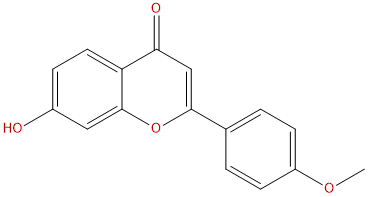
The chemical name of coumarin is 7-hydroxy-4 '- methoxyflavone, with a molecular formula of C16H12O4 and a molecular weight of 268.2680. Its core structure is the classic isoflavone skeleton, which is composed of a benzopyran-4-one (C ring) connected to a benzene ring (A ring) and a phenyl group (B ring). Specifically, the 7-position of the A ring is a phenolic hydroxyl group, and the 4 'position of the B ring is substituted with a methoxy group. This specific substitution pattern is crucial for its biological activity.
From the analysis of physical and chemical properties, the lipid water partition coefficient (LogP) of Caryophyllol is 2.7762, indicating its moderate lipophilicity, which is beneficial for transmembrane transport and bioavailability. Its topological polar surface area (TPSA) is 59.6700 Å ², which is relatively small and consistent with its molecular structure. The water solubility data is 0.0201 mg/mL, which belongs to the category of slightly soluble to poorly soluble. This is a common characteristic of many flavonoids, and solubilization strategies may need to be considered in formulation development. The preliminary drug risk assessment shows that its Ames test value is 0.6, indicating a low risk of mutagenicity; There is no inhibitory effect on hERG potassium channels, indicating a low potential risk of arrhythmia; And it is predicted that its blood-brain barrier permeability is high, which provides the possibility for its application in the study of central nervous system inflammation related diseases (such as neuroinflammation).
Plant sources and extraction methods
Caryophyllol is mainly found in various plants such as Leguminosae, Trifolium, such as Trifolium pratense and Trifolium repens. These plants are often used in traditional medicine, and modern research has identified various isoflavone components, including coumarin, from them.
The extraction of coumarin from plant materials is usually carried out using organic solvent extraction method. The common process includes: leaching or reflux extraction of dried and crushed plant materials (such as aboveground parts) using polar solvents such as methanol, ethanol, or acetone. After vacuum concentration, the crude extract can be preliminarily enriched using liquid-liquid partitioning (such as extraction with ethyl acetate). Further purification depends on various chromatographic techniques, such as silica gel column chromatography, Sephadex LH-20 column chromatography and high performance liquid chromatography (HPLC). In recent years, green extraction techniques such as ultrasound assisted extraction and microwave-assisted extraction have also been applied to improve extraction efficiency and shorten extraction time. The optimization of extraction and separation processes is crucial for obtaining high-purity coumarin monomers to meet the needs of in-depth pharmacological and clinical research.
Pharmacological activity research
A large number of in vitro and partially in vivo studies have confirmed that coumarin has a wide range of anti-inflammatory activities, which extend to fields such as anti-tumor.
1. Anti inflammatory activity:
This is the most prominent pharmacological effect of coumarin. In the RAW 264.7 mouse macrophage model stimulated by lipopolysaccharide (LPS), carvacrol can dose dependently inhibit the production of nitric oxide (NO) and prostaglandin E2 (PGE2). NO is catalyzed by inducible nitric oxide synthase (iNOS, encoded by NOS2), while PGE2 is catalyzed by cyclooxygenase-2 (COX-2, encoded by PTGS2), both of which are key inflammatory mediators. The treatment with coumarin significantly reduced the levels of these mediators, and no significant cytotoxicity was observed during this process, indicating that its anti-inflammatory effect is not derived from cell killing. In addition, coumarin can effectively inhibit the expression and release of various pro-inflammatory cytokines, including tumor necrosis factor - α (TNF - α), interleukin-6 (IL-6), etc. In animal models of acute inflammation such as carrageenan induced paw edema in rats, carvacrol also showed good anti-inflammatory effects.
2. Antitumor potential:
Chronic inflammation is closely related to the occurrence and development of tumors, and sustained activation of NF - κ B can promote tumor cell proliferation, survival, invasion, and metastasis. Based on its strong NF - κ B inhibitory ability, carvacrol has also shown potential in cancer research. Research has shown that it can inhibit the proliferation of certain cancer cells and induce their apoptosis. Its function may be related to the downregulation of survival genes targeted by NF - κ B (such as Bcl-2 family members) and cell cycle proteins. However, its exact spectrum of anti-tumor effects and in vivo efficacy still require further research to confirm.
3. Other potential activities:
Given the potential effects of coumarin on transient receptor potential vanillic acid subtype 1 (TRPV1) and transient receptor potential anchor protein subtype 1 (TRPA1) (relevant target cues), it may be involved in regulating pain perception as these two channels are important pain sensors. In addition, its antioxidant properties (as a commonality of phenolic compounds) may also synergize with its anti-inflammatory effects, reducing oxidative stress-related tissue damage.
Mechanism of action and molecular targets
The anti-inflammatory effect of coumarin is mainly attributed to its effective inhibition of the NF - κ B signaling pathway and involves regulation of multiple upstream and downstream targets.
Core mechanism: Inhibit the NF - κ B pathway.
NF - κ B usually binds to its inhibitory protein I κ B and is in an inactive state. When cells are stimulated by LPS, TNF - α, etc., the I κ B kinase complex (IKK, where IKBKB is a key catalytic subunit) is activated, phosphorylating I κ B, leading to its ubiquitination degradation, thereby releasing NF - κ B (mainly p65/RELA and p50 dimers) and causing its nuclear translocation, initiating target gene transcription. Research has confirmed that coumarin can inhibit the activity of IKK (especially IKBKB), prevent the phosphorylation and degradation of I κ B, and thus block the nuclear translocation and DNA binding activity of NF - κ B. This is the root cause of its downregulation of the expression of a series of pro-inflammatory genes.
Key downstream effect molecules:
Caryophyllol affects the expression of multiple key inflammatory mediators by inhibiting NF - κ B:
* NOS2 (iNOS) and NO: Inhibit the expression of iNOS and reduce the production of excessive NO.
* PTGS1/2 (COX-1/COX-2) and PGE2: It has an inhibitory effect on the expression and activity of COX-2, reducing the synthesis of PGE2. It may also have a regulatory effect on PTGS1 (COX-1), but the selectivity may vary.
* Inflammatory cytokines: Inhibit the transcription and secretion of genes such as TNF - α (TNF) and IL-6.
* STAT3 signal: Cytokines such as IL-6 can amplify inflammatory responses by activating the Janus kinase/signal transduction and transcription activator 3 (JAK/STAT3) pathway. Caryophyllol may indirectly affect the activation of STAT3 by inhibiting IL-6 production, forming a synergistic inhibition of the inflammatory network.
* Cellular pyroptosis related proteins: Cysteine protease-1 (CASP1) is a key effector protein for inflammasome activation, mediating cell pyroptosis and maturation of IL-1 β. NF - κ B is an upstream regulatory factor for the expression of inflammasome components such as NLRP3. Caryophyllol may indirectly affect the activation and pyroptosis process of CASP1 by inhibiting NF - κ B.
Other potential targets:
* Pain sensation channel: The potential regulatory effects on TRPV1 and TRPA1 may provide another pathway for their anti-inflammatory and analgesic effects.
In summary, carvacrol inhibits inflammatory response in multiple dimensions and levels by targeting the central link of IKK/NF - κ B. Its mechanism of action is shown in the figure (editor's note: this is a textual description, and a schematic diagram can be provided in the actual article): inhibits IKBKB activity → stabilizes I κ B → blocks NF - κ B (RELA) nuclear translocation → downregulates gene transcription of NOS2, PTGS2, TNF, IL-6, etc. → reduces the production of mediators such as NO, PGE2, TNF - α, IL-6, etc. → inhibits inflammatory response; Meanwhile, the reduction of IL-6 may indirectly inhibit the JAK/STAT3 pathway; The possible regulation of TRPV1/TRPA1 acts on peripheral sensory neurons.
Evaluation of drug properties and pharmacokinetics
Based on calculations and preliminary experimental data, Caryophyll has shown certain potential as a drug, but its comprehensive pharmacokinetic characteristics still need to be further explored.
Analysis of pharmacological parameters:
As mentioned earlier, its molecular weight is moderate (268), meeting the basic requirements of the Rule of Five for generic drugs. A moderate LogP value (~2.78) is beneficial for its oral absorption and distribution. The lower risk of hERG inhibition and negative Ames test results provide preliminary assurance for its safety. The high blood-brain barrier permeability prediction is its characteristic, which broadens its application scope. The main challenge lies in its low water solubility, which may affect its oral bioavailability. Future formulation development may require the use of technologies such as nanocrystals, cyclodextrin inclusion, phospholipid complexes, or solid dispersions for improvement.
Prospects of pharmacokinetics (ADME):
At present, there are relatively limited research reports on the pharmacokinetics of Caryophyll system. Based on its isoflavone structure, it can be inferred that its ADME characteristics are:
* Absorption: It may be absorbed through passive diffusion in the intestine, but its water solubility and metabolism in the intestine (such as glycoside hydrolysis and binding reactions) will affect the absorption rate and degree.
* Distribution: Moderate lipophilicity and high BBB permeability predict that it can be widely distributed in the body, including entering the central nervous system.
* Metabolism: Isoflavones are common substrates for liver and intestinal microbiota metabolism. It is expected that coumarin will undergo extensive phase I (such as hydroxylation, demethylation) and phase II (glucuronidation, sulfation) metabolism. The 7th phenolic hydroxyl group is the main site for binding reactions. Metabolism may significantly affect its active form and exposure time in the body.
* Excretion: Metabolites are mainly excreted through urine and bile.
Future research needs to clarify its absolute bioavailability, plasma half-life, tissue distribution characteristics, and major metabolites and pathways through in vivo experiments, which are essential steps for its conversion into drugs.
Clinical application prospects and prospects
Caryophyllol, as a natural product with clear molecular targets and multiple anti-inflammatory activities, has potential application value in multiple disease fields.
Potential therapeutic areas:
1. Inflammatory diseases:
* Rheumatoid arthritis (RA) and osteoarthritis (OA): By inhibiting NF - κ B, COX-2, iNOS, TNF - α, IL-6, etc., joint synovitis, cartilage destruction, and pain may be alleviated.
* Inflammatory bowel disease (IBD): Like Crohn's disease and ulcerative colitis, their anti-inflammatory effects may help alleviate intestinal mucosal damage.
* Neuroinflammatory related diseases: Due to its high BBB permeability, it has research value in models such as Alzheimer's disease, Parkinson's disease, multiple sclerosis, and cerebral ischemia/reperfusion injury, and may exert neuroprotective effects by inhibiting excessive activation of microglia.
* Skin inflammation: For conditions such as atopic dermatitis and psoriasis, the development of topical preparations may be considered.
* Acute lung injury/asthma: Inhibit airway inflammation response.
-
Chemotherapy prevention and adjuvant therapy for cancer: As an NF - κ B inhibitor, it may be used to prevent cancers driven by chronic inflammation, such as colon cancer and liver cancer. Or combined with conventional chemotherapy/radiotherapy to enhance efficacy and reduce inflammation related side effects.
-
Pain management: Combining its regulation of inflammatory mediators and potential pain sensing channels (TRPV1/TRPA1), a novel analgesic may be developed for the treatment of inflammatory pain and neuropathic pain.
Development Challenges and Prospects:
Despite its broad prospects, the development of coumarin still faces challenges: ① Water solubility and bioavailability This is the primary bottleneck that requires innovative formulation strategies. ② Systematic in vivo pharmacological validation Not yet sufficient, evaluation needs to be conducted in more and more complex animal models of diseases. ③ Comprehensive pharmacokinetic and safety evaluation Urgent action is needed, including long-term toxicity, reproductive toxicity, etc. ④ mechanism of action Although NF - κ B is the core, the exact interaction relationship with other targets such as STAT3 and TRP channels needs further clarification. ⑤ structural optimization Using it as the parent nucleus for structural modification may result in derivatives with stronger activity, higher selectivity, and better pharmacokinetic properties.
Future research directions should focus on improving delivery efficiency through the use of nanotechnology and other technologies; Conduct standardized preclinical pharmacological, pharmacokinetic, and toxicological studies to lay the foundation for clinical trials; Deeply explore its role in emerging fields such as tumor immunity and metabolic inflammation; And carry out rational drug design based on structure.
Conclusion
Pratol, as a flavonoid compound derived from traditional medicinal plants, has shown significant potential in the fields of anti-inflammatory and related disease treatment due to its clear molecular mechanism as an effective NF - κ B inhibitor. It targets the IKK/NF - κ B signaling axis and inhibits the production of key inflammatory mediators such as NO, PGE2, TNF - α, IL-6 through multiple targets, demonstrating good safety under experimental conditions. Its moderate physicochemical properties and high blood-brain barrier permeability provide a favorable basis for its drug development. Although there are still challenges in terms of solubility, systemic pharmacokinetics, and in-depth preclinical validation, with the advancement of formulation technology and in-depth research, carvacrol is expected to develop into a candidate drug or lead compound for the treatment of chronic inflammatory diseases, neurodegenerative diseases, and even cancer, fully reflecting the enormous value of exploring modern therapeutic drugs from natural products. Continuous and in-depth research on it will not only help reveal its complete pharmacological action network, but also provide important scientific basis for the development of related innovative drugs.