Introduction/Overview
Natural products, as an important source of drug discovery, play an irreplaceable role in the long history of human struggle against diseases. Flavonoids, as a class of secondary metabolites widely present in the plant kingdom, have attracted much attention due to their structural diversity and extensive biological activities. Among them, polymethoxyflavonoids (PMFs), as an important subclass of flavonoids, have become a hot topic in natural product chemistry and pharmacology research in recent years due to their unique methoxy substitution pattern and significant pharmacological activity. Compared with common hydroxyflavonoids, the introduction of methoxy groups not only changes the physicochemical properties of the molecule, such as lipophilicity and metabolic stability, but also endows it with unique biological activities, especially in anti-inflammatory, anti-tumor, neuroprotective and other aspects, showing great potential.
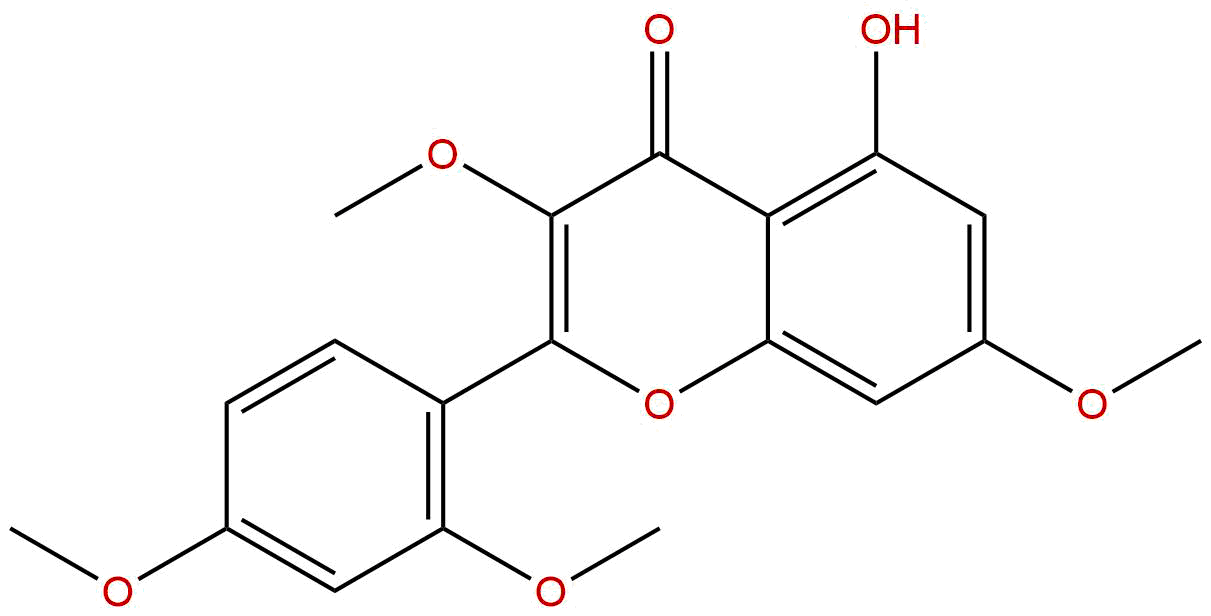
5-hydroxy-2 ', 3,4', 7-tetramethoxyflavone (5-hydroxy-2 ', 3,4', 7-tetramethoxyflavone), as a typical PMF, is characterized by the retention of a free hydroxyl group at the C-5 position of the A ring in the flavonoid core, while the C-7 position and C-2 ', C-3', C-4 'positions of the B ring are replaced by methoxy groups. This unique substitution mode combines the hydrogen bond donor ability of hydroxyflavones with the high lipid solubility of polymethoxyflavones. This compound has been found in various medicinal plants, such as citrus plants in the Rutaceae family and Asteraceae plants. In recent years, research on 5-hydroxy-2 ', 3,4', 7-tetramethoxyflavone has been increasingly in-depth, especially in the field of anti-inflammatory. It exhibits multi-target and multi pathway intervention potential by regulating multiple key signaling pathways, such as IL-6/STAT3, NF - κ B, NLRP3 inflammasome, etc. In addition, its regulatory effect on transient receptor potential channels such as TRPV1 and TRPA1 provides a new perspective for its application in sensory disorders such as pain and itching.
This article aims to systematically review the research progress of 5-hydroxy-2 ', 3,4', 7-tetramethoxyflavone, covering its chemical structure and physicochemical properties, plant sources and extraction methods, pharmacological activity, mechanism of action and molecular targets, pharmacological evaluation and pharmacokinetic characteristics, and prospects for its clinical application, in order to provide comprehensive scientific basis for the in-depth development and utilization of this natural product.
Chemical structure and physicochemical properties
The chemical structure of 5-hydroxy-2 ', 3,4', 7-tetramethoxyflavone is based on the flavonoid (2-phenylchromenone) core. Its systematic naming clearly reveals its substitution pattern: on the A ring of the flavonoid skeleton, a methoxy group (- OCH ∝) is connected to the C-7 position, and a hydroxyl group (- OH) is connected to the C-5 position; On the B ring, C-2 ', C-3', and C-4 'positions are respectively connected to a methoxy group. Therefore, its molecular formula is C ₁₉ H ₁₈ O ₇, and its molecular weight is 358.3460 g/mol. This structure makes it a typical "trimethoxy B-cyclic" multi methoxy flavonoid, which differs significantly from common citrus PMFs such as nobiletin (5,6,7,8,3 ', 4' - hexamethoxyflavone) and tangeretin (5,6,7,8,4 '- pentamethoxyflavone) in substitution mode, especially the presence of the C-5 free hydroxyl group, which is a key structural feature that distinguishes it from fully methoxylated flavonoids.
In terms of physical and chemical properties, this compound exhibits typical "drug like" characteristics. Its lipid water partition coefficient (LogP) is 2.771, indicating that it has moderate lipid solubility, which is beneficial for crossing biofilms, but may also affect its solubility in aqueous environments. Its water solubility is only 0.0735 mg/mL, which is a poorly soluble compound, which to some extent limits its oral bioavailability. The Topological Polar Surface Area (TPSA) is 87.36 Å ², which is lower than 100 Å ² and is generally considered an indicator of good oral absorption, as a large polar surface area is not conducive to passive diffusion through intestinal epithelial cells. Overall, this molecule has good membrane permeability potential, but solubility is one of the key bottlenecks that restrict its in vivo efficacy.
In addition, the blood-brain barrier (BBB) permeability evaluation in the pharmacological parameters is "low", indicating that the compound is not easily able to penetrate the blood-brain barrier and enter the central nervous system. This feature may be an advantage for developing peripheral anti-inflammatory drugs, as it can avoid central nervous system related side effects. The evaluation of hERG inhibition is' no ', indicating that it has a low risk in terms of cardiac safety and is less likely to cause fatal arrhythmias such as QT interval prolongation. The Ames test result is 0.6, and it is generally considered negative (non mutagenic) if the Ames test value is less than 0.5. A result of 0.6 is near the critical value, indicating that its potential genetic toxicity risk needs to be further confirmed and evaluated through more comprehensive in vitro and in vivo experiments. These physicochemical properties and preliminary pharmacological parameters provide important foundational data for subsequent drug design and formulation development.
Plant sources and extraction methods
5-hydroxy-2 ', 3,4', 7-tetramethoxyflavone is widely distributed in nature, but its content is usually not high, mainly found in plants such as Rutaceae and Asteraceae. In the Rutaceae family, the Citrus genus(Citrus)Plants are one of its important sources, such as in lime(Citrus aurantium)Sweet Orange(Citrus sinensis)And some bergamot oranges(Citrus medica var. sarcodactylis)It can be detected in both the fruit and skin. In addition, in Asteraceae plants such as Artemisia argyi(Artemisia argyi)Salvia genus(Salvia)Plants and certain species of Leymus(Elephantopus)The compound has also been found in plants. The content of this compound varies significantly among different plant sources, production areas, harvest seasons, and tissue parts (such as skin, leaves, and flower buds). Usually, the peel of citrus fruits (especially the outer colored part) is considered a relatively enriched area.
Given the low content of this compound in plants and its frequent coexistence with other structurally similar flavonoids, efficient and specific methods are required for its extraction, separation, and purification. The classic extraction process usually includes the following steps:
-
Raw material pretreatment and extraction Crush the dried plant raw materials and extract them using organic solvents. Due to its moderate lipid solubility, methanol, ethanol, or their aqueous solutions are often used as extraction solvents. Heating reflux extraction, ultrasound assisted extraction, or microwave-assisted extraction are commonly used methods that can effectively improve extraction efficiency. For example, ultrasonic extraction of citrus peel using 70% -95% ethanol solution can obtain crude extracts rich in PMFs.
-
Preliminary separation and enrichment The crude extract is filtered and concentrated under reduced pressure to obtain a paste. Subsequently, liquid-liquid extraction was used for preliminary separation, with commonly used solvent systems including petroleum ether, ethyl acetate, n-butanol, and water. Due to the moderate polarity of 5-hydroxy-2 ', 3,4', 7-tetramethoxyflavone, it is usually enriched in the ethyl acetate extraction layer. In addition, macroporous adsorption resin (such as D101, AB-8) column chromatography is often used to enrich total flavonoids. By gradient elution with different concentrations of ethanol water system, a large amount of water-soluble impurities and lipid soluble pigments can be removed.
-
Chromatographic Separation and Purification This is a crucial step in obtaining high-purity target compounds. The components that have been preliminarily enriched usually require fine separation using various modern chromatographic techniques. Silica gel column chromatography is the most commonly used method, which uses petroleum ether ethyl acetate or chloroform methanol as the mobile phase for gradient elution. For components with similar structures and difficult separation, polyamide column chromatography can be used, which utilizes the difference in the ability of amide groups to form hydrogen bonds with flavanone hydroxyl groups to achieve efficient separation. Furthermore, preparative high-performance liquid chromatography (Prep HPLC) or high-speed countercurrent chromatography (HSCCC) are the ultimate means of obtaining high-purity monomer compounds. HSCCC exhibits unique advantages in the separation and purification of PMFs due to its irreversible adsorption and high sample recovery rate. By optimizing the solvent system (such as n-hexane ethyl acetate methanol water), efficient separation of 5-hydroxy-2 ', 3,4', 7-tetramethoxyflavonoids can be achieved.
Pharmacological activity research
In recent years, significant progress has been made in the pharmacological activity research of 5-hydroxy-2 ', 3,4', 7-tetramethoxy flavonoids, especially in terms of anti-inflammatory, antioxidant, and neuroprotective activities.
anti-inflammatory activity It is currently the most in-depth and extensive field of research. Inflammation is a defense response of the body against infection and tissue damage, but excessive or persistent inflammation is the pathological basis of various chronic diseases such as arthritis, cardiovascular disease, neurodegenerative diseases, and cancer. Multiple in vitro and in vivo studies have confirmed that 5-hydroxy-2 ', 3,4', 7-tetramethoxyflavone has significant anti-inflammatory effects. In the lipopolysaccharide (LPS) - stimulated macrophage model (such as RAW264.7 cells), this compound can dose dependently inhibit the production of pro-inflammatory cytokines such as tumor necrosis factor - α (TNF - α), interleukin-6 (IL-6), and nitric oxide (NO). In addition, it can significantly downregulate the expression of inducible nitric oxide synthase (iNOS/NOS2) and cyclooxygenase-2 (COX-2/PTGS2), thereby reducing the production of inflammatory mediators such as NO and prostaglandin E ₂ (PGE ₂). In animal models, such as the carrageenan induced rat foot swelling model or mouse ear swelling model, this compound also exhibits good anti-inflammatory effects and can effectively reduce the degree of edema.
antioxidant activity It is also one of the important pharmacological properties of this compound. Flavonoids are generally considered effective free radical scavengers. Research has shown that 5-hydroxy-2 ', 3', 4 ', 7-tetramethoxyflavonoids can directly scavenge various free radicals, such as DPPH free radicals, ABTS cationic free radicals, and superoxide anion free radicals. The hydroxyl group at position C-5 is a key active group that provides hydrogen atoms and quenches free radicals. In addition, it can also chelate transition metal ions (such as Fe ² ⁺, Cu ² ⁺) to inhibit the reactive oxygen species (ROS) produced by the Fenton reaction, thereby protecting cells from oxidative stress damage. In the hydrogen peroxide (H ₂ O ₂) - induced cellular oxidative damage model, pretreatment with this compound can significantly improve cell survival rate, reduce intracellular ROS levels, and decrease the content of lipid peroxidation product malondialdehyde (MDA).
Neuroprotective activity Research in this area also shows positive signals. Although its blood-brain barrier permeability is low, under certain pathological conditions such as cerebral ischemia-reperfusion injury or neuroinflammation, the permeability of the blood-brain barrier may increase, giving the compound the opportunity to enter the central nervous system. In vitro neuronal cell models, such as PC12 cells or primary cortical neurons, 5-hydroxy-2 ', 3', 4 ', 7-tetramethoxyflavone can counteract neurotoxicity induced by glutamate, A β - amyloid protein, or oxygen glucose deprivation (OGD). Its protective mechanism may be related to inhibiting oxidative stress, reducing endoplasmic reticulum stress, and regulating the expression of apoptosis related proteins (such as Bax, Bcl-2, Caspase-3). In addition, its inhibitory effect on the activation of microglia (immune cells in the nervous system) suggests that it may exert neuroprotective effects by alleviating neuroinflammation.
Mechanism of action and molecular targets
The pharmacological activity of 5-hydroxy-2 ', 3', 4 ', 7-tetramethoxyflavone is not derived from a single target, but is achieved through the synergistic action of multiple targets and pathways. The core mechanism mainly revolves around the regulation of the inflammatory signaling network.
1. Regulating the NF - κ B signaling pathway: Nuclear factor kappa B (NF - κ B) is the core transcription factor in inflammatory response. In the resting state, NF - κ B binds to the inhibitory protein I κ B and exists in an inactive form in the cytoplasm. When stimulated by LPS, TNF - α, etc., I κ B kinase (IKK, encoded by IKBKB) is activated, phosphorylating I κ B, leading to its ubiquitination degradation. The released NF - κ B (mainly p65/RELA subunit) is immediately translocated into the nucleus, initiating the transcription of downstream pro-inflammatory genes such as TNF - α, IL-6, iNOS, COX-2. Research has shown that 5-hydroxy-2 ', 3', 4 ', 7-tetramethoxyflavone can effectively inhibit the activity of IKK, thereby blocking the phosphorylation and degradation of I κ B, inhibiting the nuclear translocation of NF - κ B, and ultimately suppressing the expression of inflammatory genes.
2. Regulating the STAT3 signaling pathway: Signal transducer and activator of transcription factor 3 (STAT3) is a key node connecting cytokine signaling and gene transcription. After binding to cytokines such as IL-6 and their receptors, JAK kinase is activated, which phosphorylates STAT3 to form dimers and integrate into the nucleus, regulating cell proliferation, survival, and inflammation related genes. Abnormal activation of STAT3 is a common feature in various inflammation and tumor models. This compound has been shown to inhibit the phosphorylation of STAT3, particularly at the Tyr705 site, thereby blocking its transcriptional activity. By inhibiting the IL-6/STAT3 signaling axis, it can effectively reduce inflammatory response and suppress tumor cell proliferation.
3. Regulating NLRP3 inflammasome: The NOD like receptor heat protein domain associated protein 3 (NLRP3) inflammasome is an important component of the innate immune system, and its abnormal activation is closely related to various inflammatory diseases. The assembly of NLRP3 inflammasomes requires two signals: the initiation signal (such as LPS activation of NF - κ B, upregulation of NLRP3 and pro-IL-1 β expression) and the activation signal (such as ATP, uric acid crystallization, ROS, etc.). After activation, NLRP3 recruits ASC and pro-caspase-1 (CASP1) to form a complex, promoting caspase-1 self cleavage activation. Activated caspase-1 subsequently cleaves pro-IL-1 β and pro-IL-18, producing mature IL-1 β and IL-18, and may induce cell apoptosis. Research has found that 5-hydroxy-2 ', 3', 4 ', 7-tetramethoxyflavone can inhibit the assembly and activation of NLRP3 inflammasomes, reduce the activation of caspase-1 and the secretion of IL-1 β. Its mechanism may be related to the inhibition of upstream ROS production or interference with the interaction between NLRP3 and ASC.
4. Regulating transient receptor potential (TRP) channels: The regulatory effect of this compound on TRPV1 and TRPA1 channels is its unique mechanism of anti-inflammatory and analgesic activity. TRPV1 and TRPA1 are non selective cation channels expressed on sensory neurons, which can be activated by various inflammatory mediators, heat, acid, and chemical stimuli (such as capsaicin, mustard oil), mediating pain, itching, and neurogenic inflammation. Research has shown that 5-hydroxy-2 ', 3', 4 ', 7-tetramethoxyflavonoids can directly act on these channels as antagonists or desensitizers, inhibiting their excessive activation. For example, it can inhibit TRPV1 currents induced by capsaicin and TRPA1 currents induced by mustard oil. By blocking these channels, the compound can effectively alleviate pain and itching caused by inflammation, and reduce the release of neuropeptides such as substance P and calcitonin gene-related peptides, thereby inhibiting neurogenic inflammation.
In summary, 5-hydroxy-2 ', 3', 4 ', 7-tetramethoxyflavone forms a multi-level anti-inflammatory network by simultaneously acting on multiple key nodes such as IKBKB/NF - κ B, IL-6/STAT3, CASP1/NLRP3, and TRPV1/TRPA1. This multi-target mode of action has potential advantages in treating complex inflammatory diseases, but it also increases the complexity of studying its mechanism of action.
Evaluation of drug properties and pharmacokinetics
Although 5-hydroxy-2 ', 3', 4 ', 7-tetramethoxyflavone has shown outstanding performance in in vitro and in vivo pharmacological studies, whether it can ultimately become a clinical drug depends on its pharmacological properties, especially its pharmacokinetic (ADME) characteristics.
absorb As mentioned earlier, the water solubility of this compound is extremely poor (0.0735 mg/mL), which is the primary challenge facing its oral absorption. Although its LogP is moderate and TPSA conforms to the rules of oral absorption, its extremely low water solubility severely limits its dissolution in the gastrointestinal tract, thereby affecting absorption. Therefore, its oral bioavailability is usually low. In order to improve its oral absorption, it is necessary to use pharmaceutical methods such as preparing solid dispersions, phospholipid complexes, liposomes, or nanoemulsions to increase its apparent solubility and dissolution rate.
distribution This compound has high lipid solubility and theoretically is easy to bind with plasma proteins (such as albumin) and distribute to lipid rich tissues. Its apparent distribution volume (Vd) may be relatively large. The low permeability of the blood-brain barrier makes it mainly distributed in peripheral tissues, which is beneficial for treating peripheral inflammatory diseases and can reduce central side effects.
Metabolism Flavonoids typically undergo extensive phase II metabolism in the body, including glucuronidation, sulfation, and methylation. For 5-hydroxy-2 ', 3', 4 ', 7-tetramethoxyflavonoids, the free hydroxyl group at position C-5 is the main site of action for phase II metabolic enzymes such as UGTs and SULTs, generating corresponding glucuronic acid or sulfate complexes. In addition, its methoxy group may undergo O-demethylation reaction under the action of cytochrome P450 enzymes (CYPs), generating more hydroxylated metabolites. These metabolites may retain or alter their original biological activity. The first pass effect may be another important reason for its low oral bioavailability.
excretion The compound and its metabolites are mainly excreted through bile and urine. Due to its moderate molecular weight and increased water solubility after phase II metabolism, bile excretion may be its main clearance pathway. Its half-life (t ₁/₂) may be short and requires frequent administration to maintain effective blood drug concentration.
safety evaluation Preliminary pharmacological parameters indicate that the compound has no hERG inhibitory effect and a low risk of cardiac toxicity. But the Ames test result (0.6) suggests that it may have potential genetic toxicity, which needs to be highly valued. A more comprehensive genetic toxicity assessment must be conducted, including in vivo micronucleus testing and chromosome aberration testing, to clarify its safety. In addition, acute toxicity, subchronic toxicity, and chronic toxicity experiments are required to determine the safe dose range and potential target organ toxicity.
Clinical application prospects and prospects
Based on its unique pharmacological activity and multi-target mechanism of action, 5-hydroxy-2 ', 3', 4 ', 7-tetramethoxyflavone has shown potential clinical application prospects in multiple disease fields.
1. Inflammatory diseases Its strong anti-inflammatory activity makes it promising for the treatment of various chronic inflammatory diseases, such as rheumatoid arthritis, inflammatory bowel disease (such as Crohn's disease, ulcerative colitis), dermatitis, and psoriasis. By inhibiting the NF - κ B and STAT3 pathways, as well as regulating the NLRP3 inflammasome, it can suppress the inflammatory cascade at multiple levels. Especially its regulatory effect on TRPV1 and TRPA1 gives it unique advantages in treating inflammatory diseases accompanied by pain and itching, such as atopic dermatitis and contact dermatitis.
2. Pain management As a regulator of TRPV1 and TRPA1 channels, this compound has the potential to be developed into a novel non opioid analgesic. It may be effective for neuropathic pain, inflammatory pain, and visceral pain. Compared to traditional opioid drugs, its addiction and risk of side effects such as respiratory depression are lower.
3. Metabolic disorders Chronic low-grade inflammation is a common feature of metabolic diseases such as obesity, type 2 diabetes and atherosclerosis. This compound may play a role in the prevention and treatment of metabolic syndrome by improving insulin resistance, regulating lipid metabolism, and inhibiting vascular inflammation.
4. Neurodegenerative diseases Despite its low BBB permeability, it is still possible to deliver it to the central nervous system by designing prodrugs or nano delivery systems, or utilizing the increased BBB permeability in disease states. Its antioxidant and anti neuroinflammatory activities make it of research value in the treatment of neurodegenerative diseases such as Alzheimer's disease and Parkinson's disease.
Future research directions:
- In depth mechanism research Using modern omics technologies such as proteomics and metabolomics, as well as gene knockout/knock in animal models, to more comprehensively reveal the direct targets and signaling networks of its in vivo effects.
- Pharmaceutical Chemistry and Structural Optimization Using this compound as a lead, carry out systematic structural modifications, such as introducing water-soluble groups (such as phosphate groups, amino acid esters), or preparing prodrugs to improve its water solubility and oral bioavailability. Meanwhile, explore the effects of different substituents on its activity and selectivity.
- Formulation development Develop efficient delivery systems, such as liposomes, nanoparticles, phospholipid complexes, etc., to overcome the bottlenecks of poor solubility and low bioavailability, and achieve targeted delivery and slow controlled release.
- safety evaluation A comprehensive preclinical safety evaluation must be rigorously conducted, especially for the in-depth validation of potential genetic toxicity suggested by Ames tests, and the safety of long-term use must be evaluated.
- Clinical translational research After completing sufficient preclinical research, rigorous clinical trials should be designed to validate its effectiveness and safety in specific diseases such as atopic dermatitis and oral mucositis.
Conclusion
5-hydroxy-2 ', 3', 4 ', 7-tetramethoxyflavone, as a structurally unique natural multi methoxyflavone, exhibits biological activity potential beyond traditional flavonoids due to its unique combination of C-5 free hydroxyl group and B-cyclic trimethoxy group. This article systematically reviews its chemical structure, plant origin, pharmacological activity, molecular mechanism, and medicinal characteristics. Research has shown that this compound exerts strong anti-inflammatory, antioxidant, and neuroprotective effects by regulating multiple key signaling pathways such as NF - κ B, STAT3, NLRP3 inflammasomes, and TRPV1/TRPA1 channels, particularly in the fields of anti-inflammatory and analgesic applications.
However, the compound still faces many challenges in transitioning from laboratory discovery to clinical application. Its extremely low water solubility and potential genetic toxicity risk are the two core bottlenecks that constrain its drug development. Future research should focus on optimizing the structure through medicinal chemical methods to improve its physicochemical properties and safety; Develop advanced drug delivery systems to improve their bioavailability; And utilize modern molecular biology techniques to further elucidate its in vivo targets and metabolic fate. Despite the long road ahead, 5-hydroxy-2 ', 3', 4 ', 7-tetramethoxyflavone, as a brilliant gem in the natural product library, provides valuable lead molecules and new ideas for the development of novel therapeutic drugs for complex diseases due to its multi-target and multi pathway pharmacological characteristics. With the continuous deepening of research and the advancement of technology, this natural product is expected to contribute to human health in the future.