| Catalog No | Package | Original Price | Price | Inventory | Quantity | Operating |
|---|---|---|---|---|---|---|
| BP2312-5mg | 5mg | $250.00 | Sign in |
|


Storage conditions:Short-term storage at 2~8℃, long-term storage at -20 ~ -80℃
122.5200
1.1803
-1.3221
4.8618
.9155
1.1764
Low
84.0201
3.5104
Yes
No
No
No
No
No
0.0
Yes
Yes
Yes
Yes
Alzheimer's disease (AD) is a central nervous system degenerative disease characterized by progressive cognitive impairment and memory loss, and has become a major challenge in the global public health field. With the acceleration of population aging, the incidence of AD continues to rise, bringing a heavy burden to patients, families, and the social healthcare system. Despite significant investment in drug development over the past few decades targeting core pathological features such as beta amyloid (A β) deposition and tau protein hyperphosphorylation, the success rate of clinical translation is extremely low. Currently approved drugs can only partially alleviate symptoms and cannot effectively delay or reverse disease progression. This dilemma has prompted researchers to turn their attention to natural products with multi-target regulatory potential, in order to achieve comprehensive intervention in the complex pathological network of AD through the synergistic mode of "multi-target multi pathway".
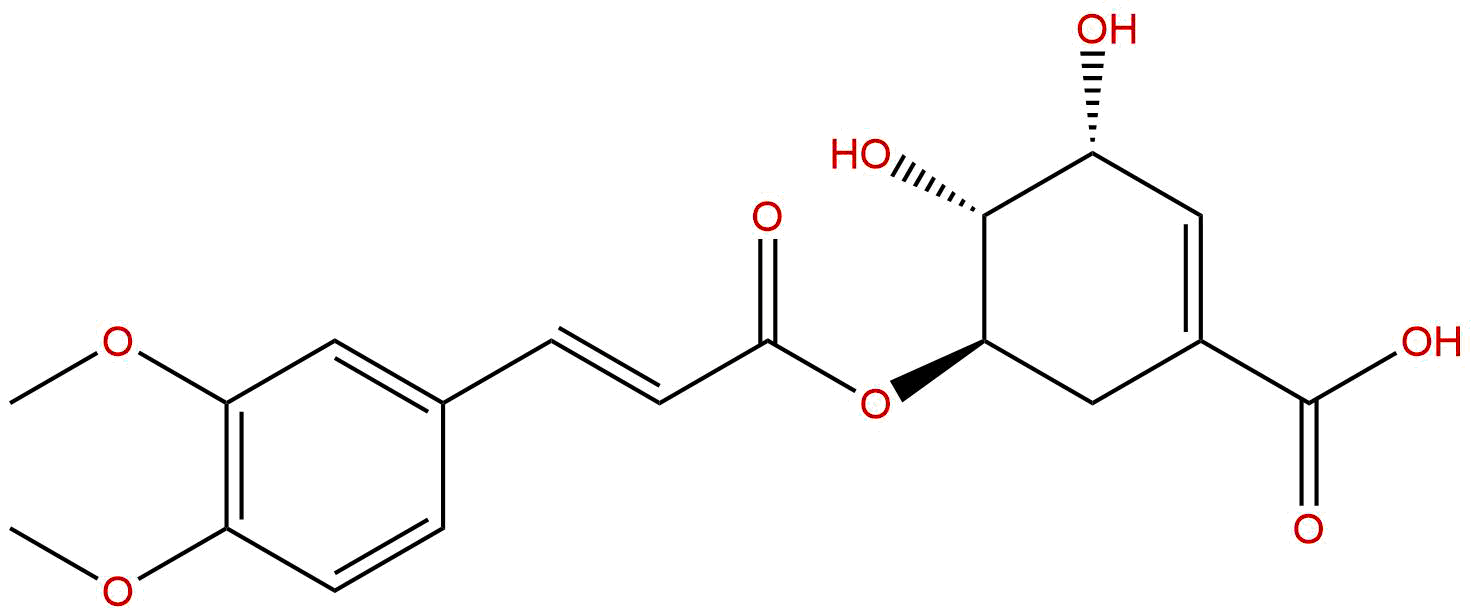
5-O - (3,4-dimethoxycinnamoyl) shikimic acid (DMCSA) is a natural phenolic acid compound isolated and identified from traditional medicinal plants in recent years. Its chemical structure is formed by ester bonding between the parent nucleus of shikimic acid and 3,4-dimethoxycinnamoyl, which combines the polyol properties of shikimic acid skeleton with the aromatic ring conjugation system of cinnamoyl. Preliminary pharmacological studies have shown that DMCSA exhibits significant activity in neuroprotection, anti-inflammatory, antioxidant, and energy metabolism regulation. It is particularly noteworthy that it can simultaneously act on multiple key targets in the pathogenesis of AD, including AMPK, BACE1, APP, BCL2 family proteins, and IDO1, exhibiting typical "multi-target drug" characteristics. In addition, its good water solubility, moderate fat solubility, and low toxicological risk lay an important foundation for its further development as an anti AD candidate drug. This article will provide a systematic review of the research progress of DMCSA from the aspects of chemical structure, plant origin, pharmacological activity, molecular mechanism, medicinal properties, and clinical application prospects.
The chemical name of DMCSA is 5-O - (3,4-dimethoxycinnamoyl) shikimic acid, with a molecular formula of C ₁₈ H ₂₀ O ₈ and a molecular weight of 364.3500 g/mol. Its structure consists of two parts: the parent part is shikimic acid, which is a cyclohexene carboxylic acid containing three hydroxyl groups and one carboxyl group. It is widely present in various plants and is a key intermediate in the biosynthesis pathway of aromatic amino acids; The side chain is 3,4-dimethoxycinnamoyl, which is derived from cinnamic acid derivatives. It has a methoxy group attached to the 3rd and 4th positions of the benzene ring, giving the molecule additional hydrophobicity and π - π conjugation ability. The two are connected to the 5-hydroxy group of shikimic acid through ester bonds, forming a complete DMCSA molecule.
From the perspective of physical and chemical properties, the lipid water partition coefficient (LogP) of DMCSA is 1.1803, indicating its moderate lipophilicity and ability to achieve equilibrium between the lipid bilayer and aqueous environment. This characteristic is beneficial for the transmembrane transport and distribution of compounds in vivo. Its topological polar surface area (TPSA) is 122.5200 Å ², which is slightly higher than the classical oral drug threshold (usually considered favorable for oral absorption with TPSA<140 Å ²), but still within an acceptable range. It is worth noting that the water solubility (LogS) of DMCSA is 4.8618, which is a highly water-soluble compound, providing favorable conditions for its dissolution and absorption in the gastrointestinal tract. However, blood-brain barrier (BBB) permeability assessment showed that DMCSA has lower permeability, which may be due to the presence of multiple polar groups (such as carboxyl and hydroxyl groups) and a higher number of hydrogen bond donors/acceptors in its molecule. This characteristic is both a challenge and an opportunity - low BBB permeability means that there may be fewer toxic side effects outside the central nervous system, but at the same time, strategies such as prodrug design or nano delivery systems are needed to enhance its brain delivery efficiency.
In terms of chemical stability, ester bonds in DMCSA molecules may undergo hydrolysis under acidic or alkaline conditions, producing shikimic acid and 3,4-dimethoxycinnamic acid. Therefore, in the development of formulations and in vivo metabolism research, attention needs to be paid to their stability under different pH environments. In addition, the α, β - unsaturated double bonds of its cinnamoyl moiety may participate in Michael addition reactions, which are both the structural basis for its biological activity and potential sites for metabolic transformation.
DMCSA, as a natural product, mainly comes from certain traditional medicinal plants. At present, in literature reports, this compound is mainly isolated from Asteraceae and Apiaceae plants. Specifically, reported plant sources include:Artemisia scoparia(Artemisia capillaris Thunb.)、Artichoke(Cynara scolymus L. ) and Chinese angelica(Angelica sinensis (Oliv.) Diels, etc. These plants have a long history of application in traditional medicine in Asia and Europe, often used to treat liver and gallbladder diseases, inflammatory diseases, and neurological disorders. It is worth noting that the content of DMCSA in these plants is usually low and belongs to trace active ingredients, which poses certain difficulties for their large-scale preparation.
In terms of extraction methods, the current strategy mainly adopts solvent extraction combined with chromatographic separation. The typical extraction process involves crushing dry plant materials and then using an ethanol water mixed solvent (usually 50% -80% ethanol) for leaching or reflux extraction at room temperature or under heating conditions. After vacuum concentration, the extract was subjected to liquid-liquid extraction using petroleum ether, ethyl acetate, and n-butanol in sequence to remove lipid soluble impurities and polar impurities. DMCSA is mainly enriched in the ethyl acetate extraction site. Subsequently, stepwise purification was performed using silica gel column chromatography, ODS reverse phase column chromatography, and preparative high-performance liquid chromatography (pre HPLC). In HPLC separation, the commonly used mobile phase system is acetonitrile water (containing 0.1% formic acid or acetic acid), and the separation of the target compound is achieved through gradient elution. Due to the UV absorption characteristics of DMCSA (strong absorption of cinnamoyl moiety at 280-330 nm), it can be monitored online through a UV detector.
In recent years, in order to meet the needs of pharmacological research and drug development, researchers have begun to explore more efficient extraction and purification methods. For example, the use of high-speed countercurrent chromatography (HSCCC) or molecular imprinting technology (MIT) can significantly improve the separation efficiency and purity of DMCSA. In addition, biotechnology methods based on plant cell culture or hairy root culture are also being explored, which are expected to achieve sustainable production of this compound. However, the current acquisition of DMCSA still mainly relies on direct extraction of natural plant resources, and its yield is greatly affected by factors such as plant growth cycle, origin, and harvest season.
The neuroprotective activity of DMCSA is one of its most noteworthy pharmacological properties. In vitro experiments have shown that DMCSA can increase cell survival rate, reduce lactate dehydrogenase (LDH) release, and inhibit cell apoptosis in a concentration dependent manner in SH-SY5Y human neuroblastoma cell injury models induced by A β ₂₅₋③₅ or A β ₁₋₄₂. Further research has found that DMCSA pretreatment can significantly reduce reactive oxygen species (ROS) levels, restore mitochondrial membrane potential, and alleviate oxidative stress-induced mitochondrial dysfunction. In the glutamate induced excitotoxicity model, DMCSA also showed protective effects, suggesting that it may exert its effects by regulating glutamate receptors or downstream signaling pathways.
Chronic neuroinflammation is one of the important pathological features of AD. DMCSA showed significant anti-inflammatory activity in the BV-2 microglial cell model stimulated by lipopolysaccharide (LPS). It can inhibit the excessive production of nitric oxide (NO) and prostaglandin E ₂ (PGE ₂), and reduce the mRNA and protein expression levels of pro-inflammatory cytokines such as tumor necrosis factor - α (TNF - α), interleukin-1 β (IL-1 β), and interleukin-6 (IL-6). Mechanism studies have shown that DMCSA can block the activation of the nuclear factor kappa B (NF - κ B) signaling pathway, inhibit the phosphorylation and degradation of I κ B α, and thus reduce the nuclear translocation of p65 subunit. In addition, it can upregulate the expression of nuclear factor E2 related factor 2 (Nrf2), activate gene transcription driven by antioxidant response elements (ARE), and enhance the intrinsic antioxidant defense ability of cells.
The abnormal aggregation and deposition of A β is one of the initial events in the onset of AD. DMCSA has been reported to directly inhibit the self aggregation process of A β ₁₋₄₂. In the thioflavin T (ThT) fluorescence experiment, DMCSA reduced the fluorescence intensity in a dose-dependent manner, indicating its activity in inhibiting the formation of A β fibers. Transmission electron microscopy (TEM) observation further confirmed that the number of fibers in the A β sample treated with DMCSA was significantly reduced, and the fiber length was shortened. In addition, DMCSA can promote the phagocytic and clearance of A β by microglia, which may be related to its regulation of the expression of phagocytic receptors such as TREM2 and CD36.
Energy metabolism disorders, especially glucose utilization disorders and mitochondrial dysfunction, occur in the early stages of AD. DMCSA has been found to activate AMP activated protein kinase (AMPK), which is a core sensor for cellular energy homeostasis. In neuronal cells, DMCSA treatment can increase the phosphorylation level of AMPK, thereby promoting glucose uptake and fatty acid oxidation, and improving energy metabolism status. The activation of AMPK is closely related to the initiation of autophagy, which is an important pathway for cells to clear misfolded proteins and damaged organelles. Therefore, DMCSA may promote the degradation of A β and tau proteins through the AMPK autophagy axis, thereby alleviating AD related pathology.
Apoptosis plays a crucial role in the loss of neurons in Alzheimer's disease. The regulatory effect of DMCSA on apoptosis related proteins is reflected at multiple levels. It can upregulate the expression of anti apoptotic protein BCL2, while downregulating the levels of pro apoptotic proteins BAX and MCL1, thereby increasing the BCL2/BAX ratio and inhibiting mitochondrial pathway apoptosis. In addition, DMCSA can inhibit the activation of caspase-3 and caspase-9, reducing DNA fragmentation. It is worth noting that the regulatory effect of DMCSA on MCL1 may have a dual significance - MCL1 is not only an apoptosis regulator, but also participates in the regulation of mitochondrial dynamics and autophagy, which further expands the network of action of DMCSA.
The pharmacological activity of DMCSA originates from its interactions with multiple molecular targets, exhibiting a typical "multi-target" mode of action. Based on existing research, the key molecular targets and mechanisms of action can be summarized as follows:
AMPK is a core regulatory factor of cellular energy metabolism, consisting of catalytic subunit alpha (PRKAA1/2) and regulatory subunits beta and gamma. DMCSA can directly or indirectly activate AMPK, and its mechanism may involve: ① inhibiting the activity of mitochondrial complex I, leading to an increase in the AMP/ATP ratio and conformational activation of AMPK; ② Promote AMPK phosphorylation through upstream kinases LKB1 or CaMKK β. Activated AMPK regulates fatty acid oxidation, protein synthesis, and autophagy processes by phosphorylating downstream substrates such as ACC, Raptor, and ULK1. In the context of AD, activation of AMPK helps improve brain energy metabolism, promote A β autophagic degradation, and inhibit mTOR mediated protein synthesis abnormalities.
β - secretase 1 (BACE1) is a key rate limiting enzyme for A β production, catalyzing the cleavage of the β - site of APP. DMCSA has been reported to inhibit the enzymatic activity of BACE1, with a half maximal inhibitory concentration (IC ₅₀) at the micromolar level. Molecular docking simulations show that DMCSA may competitively inhibit the binding of substrate APP by forming hydrogen bonds and π - π stacking with the catalytic sites (Asp32 and Asp228) of BACE1 through its cinnamoyl moiety. In addition, DMCSA can also reduce the protein expression level of BACE1, which may be related to its inhibition of transcription factors such as NF - κ B or STAT3. By inhibiting BACE1, DMCSA can reduce the production of A β ₁₋₄₀ and A β ₁₋₄₂, while increasing the release of sAPP α, which has neurotrophic effects.
BCL2 family proteins are key executors of the mitochondrial apoptosis pathway. DMCSA alters the permeability of the mitochondrial outer membrane by upregulating BCL2 and downregulating BAX and MCL1, preventing the release of cytochrome c and the initiation of caspase cascade reactions. It is worth noting that the regulation of MCL1 is particularly unique - it not only acts as an anti apoptotic protein to maintain mitochondrial integrity, but also participates in autophagy regulation through interaction with Beclin1. The bidirectional regulation of MCL1 by DMCSA (inhibiting its pro survival function in apoptosis and possibly promoting its degradation in autophagy) demonstrates its fine molecular regulatory ability.
The NOTCH1 signal plays an important role in neural development and synaptic plasticity, but its abnormal activation in AD is associated with neuroinflammation and A β deposition. DMCSA has been found to inhibit the activation of NOTCH1, reduce the nuclear translocation of its intracellular domain (NICD), and downregulate the expression of target genes such as Hes1 and Hey1. This effect may help alleviate NOTCH1 mediated neuroinflammatory responses and improve synaptic function.
ABCA1 is a key protein involved in cholesterol transport in the brain, responsible for transporting cholesterol to apolipoprotein E (ApoE) and forming high-density lipoprotein like particles. ABCA1 functional defects are closely related to increased A β deposition and decreased cognitive function. DMCSA can upregulate the expression of ABCA1, promote the efflux of cholesterol from the brain, reduce the formation of lipid rafts, and thus inhibit the generation and aggregation of A β. In addition, upregulation of ABCA1 can enhance the lipid level of ApoE and promote the clearance of A β by microglia.
Indoleamine 2,3-dioxygenase 1 (IDO1) is the rate limiting enzyme in the tryptophan kynurenine metabolic pathway, and its overactivation leads to the accumulation of neurotoxic metabolite quinoline acid and depletion of neuroprotective metabolite kynurenine acid. IDO1 activity is significantly elevated in the brains of AD patients. DMCSA has been reported to inhibit the enzymatic activity of IDO1, reduce the production of canine uric acid, and restore the balance of tryptophan metabolism. This effect may indirectly exert neuroprotective effects by reducing excitotoxicity and oxidative stress.
Retinoic acid receptor alpha (RARA) is a member of the nuclear receptor superfamily, involved in the regulation of neural differentiation, synaptic plasticity, and cognitive function. DMCSA may act as a ligand or regulator of RARA, activating the retinoic acid signaling pathway and promoting neuronal maturation and synapse formation. However, there is currently insufficient evidence regarding the direct interaction between DMCSA and RARA, and further combined experiments and transcriptome analysis are needed to validate it.
Based on Lipinski's "Rule of Five", the molecular weight of DMCSA (364.35) is less than 500, LogP (1.18) is less than 5, the number of hydrogen bond donors (4 hydroxyl groups) is less than 5, and the number of hydrogen bond acceptors (8 oxygen atoms) is less than 10, meeting the basic requirements for oral medication. Its TPSA is 122.52 Å ², slightly higher than the recommended upper limit of 140 Å ², but still within an acceptable range. Good water solubility (LogS=4.86), which is beneficial for the development of oral formulations.
In terms of toxicological safety, the Ames test result is 0.0, indicating that DMCSA does not have mutagenicity. The hERG inhibition assessment is negative, indicating a low risk of causing QT interval prolongation in the heart. These data preliminarily indicate that DMCSA has a good safety profile, but a systematic in vivo toxicological evaluation is still needed, including acute toxicity, subchronic toxicity, and reproductive toxicity.
At present, there is limited data on the pharmacokinetics of DMCSA in vivo, but based on its physicochemical properties and studies of structurally similar compounds, its basic characteristics can be inferred:
absorb The high water solubility and moderate lipid solubility of DMCSA facilitate its dissolution and transmembrane transport in the gastrointestinal tract. However, there are multiple polar groups in its molecule, which may limit its passive diffusion rate. Oral bioavailability may be low and needs to be improved through formulation methods such as phospholipid complexes and self microemulsion delivery systems.
distribution The LogP of DMCSA is 1.18, indicating that it tends to be distributed in tissues rich in aqueous phase. The plasma protein binding rate is not yet clear, but phenolic compounds typically have high protein binding rates (>90%). The key challenge lies in the low BBB permeability, which limits its distribution in the central nervous system. However, in the state of neuroinflammation, BBB permeability may increase, which is beneficial for the intracerebral delivery of DMCSA.
Metabolism The ester bond of DMCSA is the main metabolic site, which may be hydrolyzed by esterases in plasma or liver to produce shikimic acid and 3,4-dimethoxycinnamic acid. In addition, the double bond of its cinnamoyl moiety may undergo epoxidation or glutathione binding reactions. Methoxy may undergo O-demethylation metabolism mediated by cytochrome P450 enzyme (CYP450). These metabolites may retain some biological activity or be further converted into glucuronic acid or sulfate complexes and excreted from the body.
excretion Due to its high water solubility, DMCSA and its metabolites are mainly excreted through the kidneys in the form of urine. Bile excretion may also be an important pathway, especially for larger molecular weight complexes.
Given the low BBB permeability of DMCSA, the development of an effective brain targeted delivery system is a key bottleneck for its clinical translation. Possible strategies include: ① prodrug design: esterification or amidation modification of the carboxyl or hydroxyl groups of DMCSA, introduction of lipophilic groups (such as acetoxymethyl ester and neopentyloxymethyl ester) to enhance its lipophilicity, and release of the original drug after hydrolysis by esterases in the brain; ② Nanocarrier delivery: Using polylactic acid glycolic acid copolymer (PLGA) nanoparticles, liposomes, or solid lipid nanoparticles to encapsulate DMCSA, receptor mediated cross BBB transport is achieved by surface modification of transferrin receptor or glucose transporter ligands; ③ Nasal administration: drugs are delivered directly into the brain by bypassing the BBB through the olfactory nerve pathway, but the enzymatic degradation and clearance of the nasal mucosa need to be addressed.
The multi-target mode of action of DMCSA gives it unique advantages in the treatment of AD. Compared with single target drugs, it can simultaneously intervene in multiple pathological processes such as A β generation and aggregation, neuroinflammation, energy metabolism disorders, apoptosis, and synaptic dysfunction, and is expected to produce synergistic therapeutic effects. In addition, its good safety profile and low risk of toxic side effects make it suitable for long-term use and meet the management needs of chronic disease progression in AD.
Considering the complexity of AD, DMCSA may be used in combination with other anti AD drugs (such as acetylcholinesterase inhibitor donepezil, NMDA receptor antagonist memantine) or natural products (such as curcumin, resveratrol) to enhance overall efficacy through complementary mechanisms. For example, the AMPK activation effect of DMCSA partially overlaps with the mechanism of metformin, and the combination of the two may produce a synergistic effect, but attention should be paid to the potential risk of hypoglycemia.
In addition to AD, the multi-target nature of DMCSA makes it have potential application value in other neurodegenerative diseases (such as Parkinson's disease, Huntington's disease) and metabolic diseases (such as type 2 diabetes, nonalcoholic fatty liver). Especially its AMPK activation and anti-inflammatory effects may be beneficial for improving insulin resistance and hepatic steatosis. In addition, the inhibitory effect of DMCSA on IDO1 suggests its potential in tumor immunotherapy - IDO1 inhibitors can reverse immune suppression in the tumor microenvironment and enhance the efficacy of immune checkpoint inhibitors.
Despite its broad prospects, the clinical translation of DMCSA still faces many challenges: ① pharmacokinetic properties need to be optimized, especially the improvement of BBB permeability; ② Reliable synthetic or semi synthetic methods need to be established to meet the requirements of large-scale production and quality control; ③ Systematic in vivo pharmacological evaluation is required, including long-term administration experiments in transgenic AD mouse models (such as APP/PS1, 3xTg AD); ④ It is necessary to clarify its interaction with CYP450 enzymes and drug transporters, and evaluate the risk of drug drug interactions; ⑤ Further preclinical toxicology research is needed, including assessments of reproductive toxicity, genetic toxicity, and carcinogenicity.
Future research should focus on the following directions: ① Using structural biology and computational chemistry methods to analyze the crystal structure of DMCSA complexes with key targets such as BACE1 and AMPK, providing guidance for structural optimization; ② Develop DMCSA derivatives with higher BBB permeability and metabolic stability; ③ Explore brain targeted delivery systems based on nanotechnology and evaluate their distribution and efficacy in vivo; ④ Conduct multicenter, randomized, double-blind clinical trials to validate its safety and efficacy in AD patients.
5-O - (3,4-dimethoxycinnamoyl) shikimic acid, as a structurally unique natural phenolic acid compound, has shown remarkable potential in the development of anti Alzheimer's disease drugs due to its multi-target regulatory ability. It can simultaneously act on multiple molecular targets closely related to the pathogenesis of AD, such as AMPK, BACE1, BCL2 family, NOTCH1, ABCA1, IDO1, etc. By integrating multiple mechanisms such as energy metabolism regulation, anti-inflammatory, anti apoptotic, anti A β aggregation, and promoting A β clearance, it achieves systematic intervention in the complex pathological network of AD. Its excellent physicochemical properties and preliminary safety data have laid the foundation for its further development. However, bottleneck issues such as low BBB permeability, need for optimization of pharmacokinetic properties, and difficulties in large-scale preparation still need to be addressed through prodrug design, nano delivery technology, and synthetic biology. With a deeper understanding of the pharmacological mechanism of DMCSA and advances in delivery technology, this natural product is expected to become a novel multi-target candidate drug for the treatment of AD, bringing new hope to millions of AD patients worldwide. Discovering lead compounds with multi-target activity from natural products and optimizing them using modern medicinal chemistry and nanotechnology is an effective strategy for addressing complex diseases such as AD. The research history of DMCSA is a vivid manifestation of this strategy.
Batch can search by a CAS number,one per line
