Jin Yao Yi Su: Natural Multimethoxy Flavonoids Derived from Traditional Herbs and Their Pharmacological Potential Analysis
1. Overview
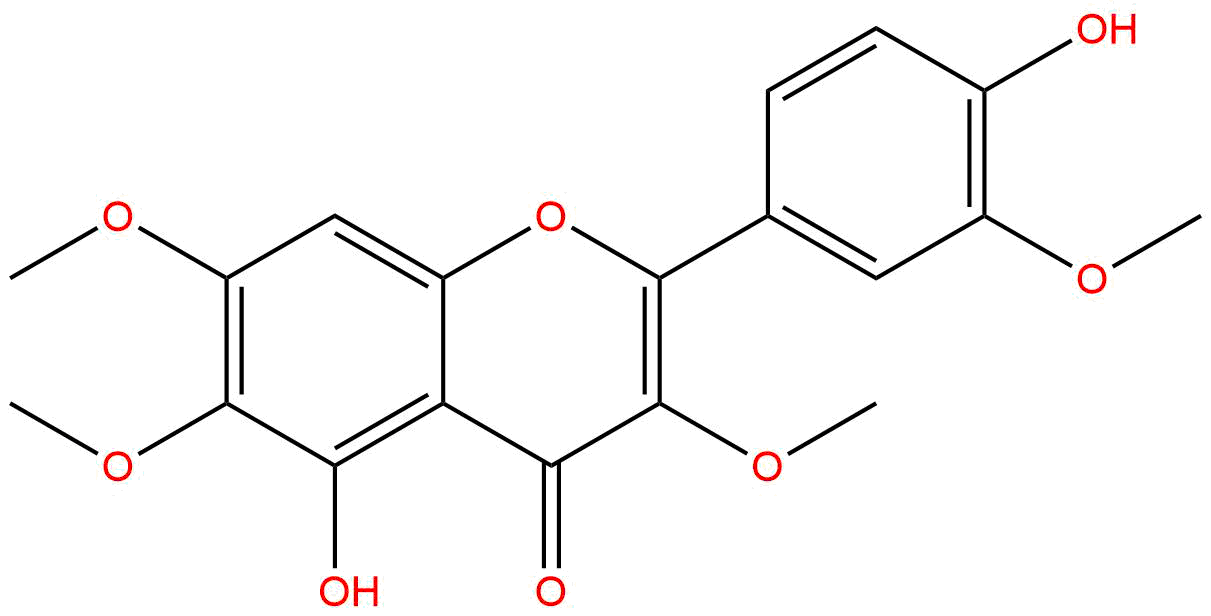
Chrysosplenetin B is a naturally occurring multi methoxylated flavonoid compound with a CAS number of 603-56-5, a molecular formula of C19H18O8, and a molecular weight of approximately 374.3450 g/mol. This compound has attracted much attention in the fields of natural product chemistry and pharmacology research, mainly due to its presence in various medicinal plants and the diverse biological activities it exhibits. One of the most famous sources of Jin Yao Yi Su is Artemisia annua(Artemisia annua)The raw material plant of artemisinin, the star anti malaria drug. However, it is not limited to this, in the stinky elixir(Adenosma glutinosum)It is also distributed in other traditional medicinal plants.
The research background shows that berberine was initially discovered for its role in regulating artemisinin metabolism. Artemisinin is currently the first-line drug for anti malaria treatment, but its metabolism in the body is fast and its bioavailability is limited. Research has found that berberine can significantly increase the plasma concentration and antimalarial efficacy of artemisinin in rats by inhibiting the activity of the drug efflux pump P-glycoprotein (P-gp) and reversing the upregulation of P-gp and multidrug resistance gene MDR1 induced by artemisinin. In addition, the non competitive or anti competitive inhibitory effect of Jinyuanyi on cytochrome P450 enzyme systems, especially CYP3A, is also considered one of the important mechanisms for enhancing the efficacy of artemisinin. In addition to its anti malaria adjuvant effect, existing research also suggests that Jinyuanyi has antiviral (such as anti enterovirus 71 EV71) and anti-inflammatory activities, and its targets involve key inflammatory mediators such as TNF, PTGS2, NF - κ B. Therefore, as a structurally unique natural flavonoid, Jinyaoyi not only provides new ideas for improving existing antimalarial therapies, but also lays a scientific foundation for its application and development in anti-inflammatory, antiviral and other fields.
2. Chemical structure and physicochemical properties
Jin Yao Yi Su is classified as a tetramethoxyflavonoid in terms of chemical structure and is a 3,6,7,3 '- tetramethylether derivative of Quercetagetin. The SMILES string is COc1cc (- c2oc3cc (OC) c (OC) c (O) c3c (=O) c2OC) ccc1O, which clearly depicts its benzo [a] - pyranone (flavonoid) core structure, as well as specific methoxy and hydroxyl substitution patterns on the A and B rings. The structural feature of multi methoxy substitution may give it advantages in lipid solubility and metabolic stability compared to many flavonoids containing only hydroxyl groups.
According to the analysis of drug parameters, its molecular weight (MW) is 374.34 g/mol, which meets the requirement of "molecular weight less than 500 Da" in Lipinski's five rules. The calculated logarithm of the lipid water partition coefficient (LogP) is 1.85, indicating that the compound has moderate lipophilicity, neither too hydrophilic (not easily transmembrane) nor too lipophilic (not easily soluble in aqueous phase), which is usually beneficial for its oral absorption and distribution. The topological polar surface area (TPSA) is 119.25 Å ², slightly higher than the threshold typically considered favorable for cell permeability (below approximately 140 Å ²), but still within an acceptable range, suggesting that it may have moderate membrane permeability. Its acidic pKa value is about 6.80, indicating that under physiological pH conditions, the compound may exist partially in ionic form, which can affect its distribution and protein binding.
Taking into account these physical and chemical parameters (MW<500, LogP<5, TPSA<140, HBA=8, HBD can be estimated as 2 phenolic hydroxyl groups), Jin Yao Yi Su basically conforms to the Lipinski Five Rules, indicating that it has a good drug like basis. Moderate LogP and TPSA values provide favorable conditions for its absorption in the gastrointestinal tract (predicted to be good for human intestinal absorption HIA), but at the same time, the predicted blood-brain barrier penetrability (BBB-permeability) is low, indicating that it may not easily enter the central nervous system. This can sometimes avoid central side effects for drug development targeting peripheral diseases.
3. Plant sources and traditional applications
Jinyuanyi has been identified to exist in various plants, among which one of the most representative sources is Stinky elixir(Sticky Adenosma), scientific name Adenosma glutinosum Stinky elixir is a plant in the family Scrophulariaceae, belonging to the genus Moschus. It is distributed in Southeast Asia and southern China (such as Yunnan, Guangxi, Guangdong) and is a folk herb with a long history.
In the traditional medical system, stinky pills are often used as medicine with whole herbs. It has a pungent, bitter, and warm nature, and has the effects of dispelling wind, relieving external symptoms, resolving phlegm and cough, dispersing blood stasis and relieving pain, and anti-inflammatory and detoxifying. In folk medicine, it is often used to treat diseases such as colds, fever, sore throat, cough and phlegm, rheumatism and rheumatism, injuries from falls, and venomous snake bites. These traditional applications are often related to concepts such as "anti-inflammatory", "detoxification", and "anti infection", implying that they contain active ingredients that can regulate inflammation and immune responses. Jin Yao Yi Su, as a multi methoxy flavonoid isolated from this plant, is likely one of the material bases for its anti-inflammatory and detoxifying effects. Modern pharmacological research has partially confirmed these traditional uses from a scientific perspective, such as the regulatory effect of berberine on key inflammatory factors such as TNF and IL-6, providing a molecular explanation for its anti-inflammatory efficacy.
Another important source is Artemisia annua(Artemisia annua)The source plant of artemisinin. In traditional Chinese medicine, Artemisia annua (Qinghao) is mainly used for clearing heat, relieving summer heat, removing steam, and stopping malaria. The coexistence of berberine and artemisinin in the same plant suggests the possibility of a chemical defense or metabolic synergy within the plant. The inhibitory effect of Jinyuanyi on artemisinin metabolism revealed by modern research seems to be a pre designed "drug synergistic combination" by nature, which provides an excellent example for understanding the rationality of traditional compound medicine and developing new therapies based on natural product combinations.
4. Pharmacological activity and mechanism of action
The pharmacological activities of Jin Yao Yi Su are diverse, mainly focusing on Anti malaria efficacy enhancement、antiviral and anti-inflammatory The three core directions are unfolded, and their mechanisms of action involve multi-target regulation.
(1) The synergistic effect and mechanism of anti malaria:
This is the earliest activity of Jin Yao Yi Su that has been extensively studied. Although artemisinin based drugs are highly effective, they have problems such as short half-life and high recurrence rate when used alone. Jin Yao Yi Su has been found to significantly enhance the antimalarial effect of artemisinin. The mechanism mainly involves two aspects:
- Inhibition of drug efflux transporter P-gp P-gp is an ATP binding cassette transporter widely present in the intestine, liver, blood-brain barrier, and tumor cells. It can actively pump drugs out of cells, leading to a decrease in intracellular drug concentration and the development of drug resistance. Jinyuanyi can directly inhibit the activity of P-gp. More importantly, artemisinin itself induces upregulation of P-gp and its encoded gene MDR1, forming a "self resistance" effect. Jinyuanyi can reverse this upregulation, thereby maintaining effective cellular uptake of artemisinin.
- Inhibition of drug metabolizing enzyme CYP3A CYP3A is one of the most important drug metabolizing enzymes in the liver and intestine, and artemisinin is its substrate. Artemisinin itself can induce CYP3A activity (self induction), accelerating its own metabolism. Jinyuanyi exhibits non competitive or anti competitive inhibitory effects on CYP3A, slowing down the metabolic clearance of artemisinin and prolonging its in vivo exposure time. Animal experiments have confirmed that the combination of artemisinin and berberine in a 1:2 ratio can produce a synergistic anti malaria effect and significantly increase the plasma concentration of artemisinin.
(2) Antiviral activity:
In vitro studies have shown that Jinyuanyi has strong inhibitory activity against enterovirus 71 (EV71), a major pathogen causing severe hand, foot, and mouth disease, and has low cytotoxicity. Its antiviral mechanism may be related to its flavonoid structure interfering with the virus replication cycle, but the specific target remains to be further elucidated.
(3) Anti inflammatory effects and target analysis:
According to database information, the targets of Jin Yaoyi include TNF, PTGS2 (COX-2), NFKB1 (NF - κ B p50), IL6, and IL1B. These targets form a closely related classical inflammatory signaling network, clearly revealing the molecular basis of their anti-inflammatory effects.
- TNF (tumor necrosis factor) and IL-1B, IL-6 They are key pro-inflammatory cytokines that play a central role in initiating and amplifying the inflammatory cascade. Jinyuanyi may inhibit the production or release of these cytokines, thereby upstream suppressing excessive inflammatory reactions.
- PTGS2 (prostaglandin endoperoxide synthase 2/cyclooxygenase-2)This is a key enzyme that mediates inflammation, pain, and fever, catalyzing the production of prostaglandins (such as PGE2) from arachidonic acid. Inhibition of COX-2 is the mechanism of action of many nonsteroidal anti-inflammatory drugs, such as celecoxib. Jin Yao Yi Su targets COX-2, indicating its potential to alleviate inflammatory pain and fever.
- NFKB1 (nuclear factor kappa B p50 subunit)NF - κ B is a pivotal transcription factor that regulates the gene expression of numerous inflammatory factors, including TNF, IL-6, IL-1 β, COX-2. Jin Yao Yi Su acts on the NF - κ B pathway, which is likely the root cause of its ability to simultaneously downregulate the expression of multiple inflammatory target genes. By inhibiting the activation or nuclear translocation of NF - κ B, the production of inflammatory mediators can be widely suppressed at the transcriptional level.
The synergistic effect between these targets indicates that the anti-inflammatory effect of Jin Yao Yi Su is not achieved through a single link, but through a multi-target, multi-level network regulation, which helps to more effectively control complex inflammatory pathological processes and may reduce the side effects caused by excessive inhibition of a single target. The labeling of anti-inflammatory related diseases has received solid scientific support in this mechanism background.
5. Evaluation of drug properties
Based on the provided comprehensive pharmacological parameters, a systematic evaluation can be conducted on the development prospects of Jin Yao Yi Su as a potential drug lead compound.
(1) Compliance with the basic rules of drug properties (Lipinski's Five Rules):
- Molecular weight (MW): 374.34 (<500), compliant.
- Lipid water partition coefficient LogP: 1.85 (<5), consistent and numerically ideal, balancing solubility and membrane permeability.
- Number of hydrogen bond donors (HBD): Inferred from the structural formula as 2 phenolic hydroxyl groups (<5), consistent.
- Number of hydrogen bond acceptors (HBA): 8 (<10), compliant.
- Number of rotatable keys: Not directly provided, but the flavonoid skeleton is relatively rigid and there are usually not many rotatable bonds, which is expected to be consistent.
Conclusion: Jin Yao Yi Su fully complies with Lipinski's five rules and has a good oral pharmacological basis.
(2) Absorption, distribution, metabolism, excretion (ADME) related parameters:
- Absorption: The predicted human intestinal absorption (HIA) is "Good", which is consistent with its moderate LogP and acceptable TPSA, indicating good potential for oral bioavailability.
- Distribution: The blood-brain barrier (BBB) penetration is predicted to be 'Low'. This may be an advantage for drugs primarily targeting peripheral inflammation or diseases such as malaria, as they can reduce the potential risk of side effects in the central nervous system.
- Metabolism: The data shows that it is neither a substrate nor an inhibitor of major CYP450 enzymes (including CYP1A2, 2C9, 2C19, 2D6, 3A4). This seems to contradict the description of "inhibition of CYP3A" in the previous pharmacological research. It should be pointed out that,The "CYP3A4_inhibitor: No" in the database is a prediction/annotation based on specific computational models or limited experimental data, while pharmacological descriptions are based on the results of specific experimental studies. In actual research and development, experimental data should be used as the standard. If the confirmed CYP3A inhibitory activity is actually strong, then caution should be exercised about the risk of drug drug interactions when using combination therapy, but this is also the mechanism of its use as an artemisinin enhancer.
- Excretion: No clear parameters were provided, but the medium molecular weight and polarity suggest that it may be metabolized by the liver and excreted by the kidneys.
(3) Toxicity risk prediction:
According to database predictions, Jin Yaoyi Su is rated as "No" or low-risk in multiple key toxicity endpoints, including hepatotoxicity, cardiotoxicity (hERG inhibition, QT interval prolongation), nephrotoxicity, neurotoxicity, drug-induced liver injury, skin sensitization, and phototoxicity. This is a very positive signal, indicating that the compound has a high level of safety at the preliminary computer prediction level. Of course, this must be validated through subsequent comprehensive in vitro and in vivo toxicology experiments.
Comprehensive Assessment: Jin Yao Yi Su has shown excellent performance in terms of drug like properties, oral absorption potential, and predictive safety. The main challenge may lie in: ① requiring experimental confirmation of its in vivo metabolic stability and precise pharmacokinetic characteristics; ② Clarify the strength and selectivity of its CYP inhibitory activity to evaluate the interaction risk when used as a monotherapy or combination therapy ingredient; ③ Although the targets are clear, the strength (potency) and selectivity of their effects on each target need to be further quantified. Overall, it is a highly valuable natural product lead compound for development.
6. Research Status and Application Prospects
At present, research on Jin Yaoyi has gradually progressed from early discovery and activity screening to mechanism exploration and preliminary application exploration. In the field of anti malaria, its concept as a "natural enhancer" of artemisinin has received experimental support, providing a new strategy to address the pharmacokinetic shortcomings faced by artemisinin monotherapy. Future research can focus on optimizing the optimal ratio and administration regimen of artemisinin and berberine; Develop fixed dose compound formulations based on this combination; And further explore its potential in overcoming malaria parasite drug resistance.
In the field of anti-inflammatory, its multi-target effect on the inflammatory core pathway is remarkable. Compared to single target anti-inflammatory drugs, multi-target drugs may have better efficacy and lower resistance to complex chronic inflammatory diseases such as rheumatoid arthritis and inflammatory bowel disease. The next step of research is to validate its efficacy in more complex animal models of inflammatory diseases; Clarify the specific molecular mechanisms involved in its intervention in pathways such as NF - κ B (whether to inhibit IKK activation or prevent p50/p65 nuclear translocation)? ); And evaluate its long-term safety for use.
In terms of antiviral activity, its activity against EV71 provides clues for the development of new anti hand, foot and mouth disease drugs, but research is still in its early stages, and its mechanism of action (such as inhibiting virus adsorption, replication or assembly) needs to be clarified and validated through in vivo experiments.
In addition, as a natural product, the sustainability of its sources (such as stinky pills and Artemisia annua), extraction and purification processes, as well as possible fully synthetic or semi synthetic routes, are also issues that need to be considered for future industrialization.
In summary, Jin Yao Yi Su, as a natural flavonoid compound with novel structure, diverse activities, and good prediction of medicinal properties, demonstrates the enormous value of exploring modern drugs from traditional herbs. It not only has immediate application prospects in improving existing anti malaria therapies, but also demonstrates great potential as a new multi-target therapeutic drug in broad fields such as anti-inflammatory and antiviral. With the in-depth study of its pharmacological mechanism, pharmacokinetics, and toxicology, Jinyuanyi is expected to transform from an ancient phytochemical pearl into a modern drug candidate with clinical application value.