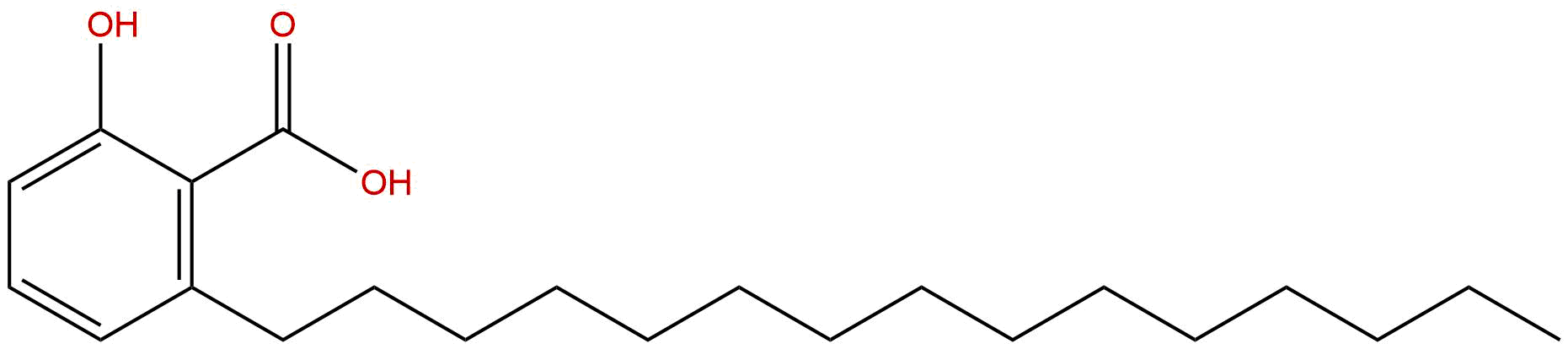


Product name: Ginkgolic acid C15:0
Synonym name: 6-Pentadecyl-2-hydroxybenzoic acid; 6-Pentadecylsalicylic acid; Cyclogallipharic acid;Hydrogenated anacardic acid;Hydroginkgolic acid
Catalogue No.: BP5109
Cas No.: 16611-84-0
Formula: C22H36O3
Mol Weight: 348.527
Botanical Source:
Type of Compound: Phenols
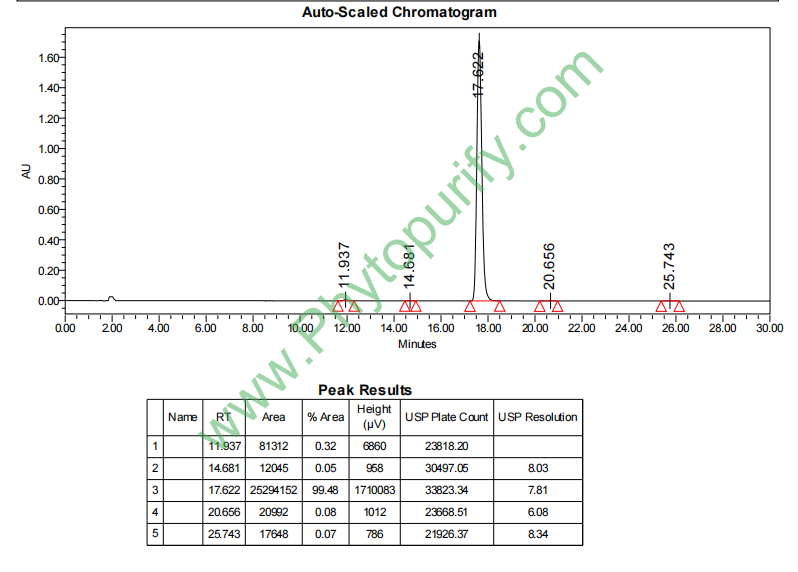
Purity: 95%~99%
Analysis Method: HPLC-DAD or/and HPLC-ELSD
Identification Method: Mass, NMR
Packing: Brown vial or HDPE plastic bottle
Storage: Store in a well closed container, protected from air and light. Put into refrigerate or freeze for long term storage.
Whenever possible, you should prepare and use solutions on the same day. However, if you need to make up stock solutions in advance, we recommend that you store the solution as aliquots in tightly sealed vials at -20℃. Generally, these will be useable for up to two weeks.
The product could be supplied from milligrams to grams
Inquire for bulk scale.
For Reference Standard and R&D, Not for Human Use Directly.
HPLC of Ginkgolic acid C15:0
Storage conditions:Short-term storage at 2~8℃, long-term storage at -20 ~ -80℃
57.5300
8.3043
5.8847
.0156
3.8907
1.6892
Low
95.6629
2.0693
Yes
No
No
No
No
No
0.0
No
No
No
No
Natural products, as an important source of drug discovery, play an indispensable role in the long struggle between humans and diseases. From ancient plant therapies to the development of modern targeted drugs, the chemical diversity inherent in nature provides endless inspiration for the development of innovative drugs. Among numerous natural products with biological activity, ginkgolic acids and their homologs have attracted much attention due to their unique chemical structures and extensive pharmacological activities. Ginkgolic acid is present in ginkgo trees(Ginkgo biloba L. Leaves, outer seed coat, and cashews(Anacardium occidentale L. A type of alkylphenolic acid compound in shell liquid. Among them, Ginkgolic acid C15:0, also known as lacquer tree acid, is an important member of this family. Its chemical structural feature is that the 6th position of salicylic acid is replaced by a saturated pentadecyl chain.
For a long time, Ginkgo biloba extract (especially Ginkgo biloba leaf standard extract EGb 761) has been renowned for its application in improving cognitive function and treating peripheral vascular diseases. However, ginkgolic acid components were often considered as "toxic" or "allergenic" components that needed to be removed in early research. As research deepens, the scientific community gradually realizes that these so-called "toxic" ingredients actually contain enormous therapeutic potential. The molecular weight of ginkgolic acid C15:0 is 348.53, with high lipophilicity (LogP up to 8.30), which allows it to easily cross biofilms and interact with various intracellular targets. Its pharmacological activity spectrum is extremely broad, covering multiple fields such as anti-inflammatory, antibacterial, antiviral, anti-tumor, neuroprotective, and antiplatelet aggregation. Especially in recent years, studies have found that ginkgolic acid C15:0 can effectively inhibit the main protease (3CLpro) of SARS coronavirus and exhibit broad-spectrum anti coronavirus activity, which has attracted widespread attention in dealing with new infectious diseases.
However, the medicinal properties of ginkgolic acid C15:0 also face severe challenges. Its extremely low water solubility (0.0156 mg/mL) and potential toxic side effects such as cytotoxicity and sensitization are the main obstacles to its clinical application. Therefore, a deep understanding of the chemical properties, pharmacological mechanisms, pharmacokinetic characteristics, and relationship with disease targets of ginkgolic acid C15:0 is of great scientific significance for the rational evaluation of its therapeutic value, avoidance of potential risks, and guidance for subsequent structural optimization and drug development. This article aims to provide a systematic review of the research progress of ginkgolic acid C15:0, covering its chemical structure, sources, pharmacological activity, mechanism of action, pharmacological evaluation, and clinical application prospects, in order to provide reference for further research and development of this natural product.
Ginkgolic acid C15:0, also known as 6-Pentadecylsalicylic acid, has a chemical structure consisting of two parts: a polar head - a salicylic acid (2-hydroxybenzoic acid) skeleton, and a non-polar tail - a saturated pentadecyl side chain located at position 6 of the salicylic acid benzene ring (- C ₁₅ H ∝₁). This head tail amphiphilic structure is the basis for its physicochemical properties and biological activity. Its molecular formula is C ₂₂ H ∝₆ O ∝, and its molecular weight is 348.5270 g/mol. The CAS registration number is 16611-84-0.
From the perspective of physical and chemical properties, the most significant feature of ginkgolic acid C15:0 is its high lipophilicity. Its oil-water partition coefficient (LogP) is as high as 8.3043, indicating its extremely low solubility in aqueous phase and strong affinity in organic solvents and biofilms. This characteristic determines that its solubility (water solubility) in water is only 0.0156 mg/mL, making it a poorly soluble compound. This low water solubility is a key factor limiting its oral bioavailability and in vivo distribution. Its topological polar surface area (TPSA) is 57.53 Å ², mainly contributed by the carboxyl and phenolic hydroxyl groups in the salicylic acid structure. The TPSA value is commonly used to predict the oral absorption and blood-brain barrier permeability of drugs. It is generally believed that molecules with TPSA greater than 140 Å ² are less likely to pass through the cell membrane, while molecules with TPSA less than 60 Å ² are more likely to pass through. The TPSA value of ginkgolic acid C15:0 is within the critical range, but its extremely high LogP value makes it more inclined to bind to the lipid environment, which may explain why its blood-brain barrier permeability is evaluated as "low". This compound contains two ionizable functional groups: carboxyl (pKa of approximately 2-3) and phenolic hydroxyl (pKa of approximately 8-10). At physiological pH (7.4), carboxyl groups mainly exist in the form of dissociated anions, while phenolic hydroxyl groups are partially dissociated. This ionization state will affect its electrostatic interaction with protein targets.
In terms of structure-activity relationship (SAR), the activity of ginkgolic acid C15:0 is closely related to its side chain length and saturation. Compared with homologues containing unsaturated side chains (such as C15:1), there are differences in the activity spectrum and intensity of C15:0. For example, in terms of antiplatelet aggregation, saturated C15:0 exhibits stronger inhibitory activity. In addition, the carboxyl and phenolic hydroxyl groups on the salicylic acid backbone are crucial for its binding to target proteins such as cyclooxygenase COX, and are essential functional groups for its biological activity.
Ginkgolic acid C15:0 is not unique to Ginkgo biloba. It is widely present in various plants such as the Anacardiaceae and Ginkgo families, and is one of the main active ingredients in Cashew Nut Shell Liquid (CNSL), Ginkgo biloba outer seed coat, and leaves.
Main plant sources:
1. Cashew nuts(Anacardium occidentale L.)Waist fruit shell liquid is the most abundant natural source of ginkgolic acid compounds. CNSL is rich in various alkylphenolic acids, including cashew acid (6-alkylsalicylic acid), cardanol, and cardiol. Among them, malic acid is the main component of CNSL, while ginkgolic acid C15:0 is a member of the cashew acid family with a saturated pentadecyl side chain. In CNSL, the content of cashew acid C15:0 is usually lower than its unsaturated homologues (such as C15:1, C15:2, C15:3).
2. Ginkgo biloba(Ginkgo biloba L.)Ginkgo biloba leaves and outer seed coat also contain ginkgolic acid. In the commercial production process of Ginkgo biloba leaf extract (such as EGb 761), the content of ginkgolic acid components is usually controlled at a very low level (usually below 5 ppm) through specific process steps (such as water washing, adsorption) to avoid its potential allergenicity and cytotoxicity. However, in untreated Ginkgo biloba leaves or outer seed coat, ginkgolic acid C15:0 is one of the main homologs.
Extraction and Separation Methods:
Due to the strong lipophilicity of ginkgolic acid C15:0, its extraction is usually carried out using organic solvent extraction method. Common solvents include methanol, ethanol, acetone, ethyl acetate, chloroform, or n-hexane. For cashew shell liquid, the crude extract is usually obtained directly by pressing or solvent extraction. For Ginkgo biloba leaves or outer seed coat, they need to be dried and crushed first, and then extracted by reflux or cold soaking with organic solvents (such as 70-95% ethanol).
The crude extract after extraction contains a large amount of impurities and requires further separation and purification. Common methods include:
1. Liquid-liquid extraction By using solvents of different polarities (such as petroleum ether, ethyl acetate, n-butanol, and water) for fractional extraction, ginkgolic acid C15:0 can be enriched in the medium polarity ethyl acetate or n-butanol extraction phase.
2. column chromatography Silica gel column chromatography is a classic method for separating ginkgolic acid homologues. Separation can be achieved using gradient elution systems such as n-hexane ethyl acetate or chloroform methanol, depending on the length and saturation of the side chains. In addition, reverse phase silica gel column chromatography (such as C18 column) is also commonly used for further purification.
3. High performance liquid chromatography (HPLC)Preparation HPLC is the most effective method for obtaining high-purity ginkgolic acid C15:0 monomer. Usually, a reverse phase C18 chromatography column is used, with acetonitrile water or methanol water (often with a small amount of formic acid or acetic acid added) as the mobile phase, combined with ultraviolet detection (usually at a wavelength of 210-310 nm) for separation. Mass spectrometry (MS) and nuclear magnetic resonance spectroscopy (NMR) are used for the final structural identification.
Ginkgolic acid C15:0 exhibits rich and diverse pharmacological activities, which make it potentially applicable in the treatment of multiple diseases.
Antiplatelet aggregation effect This is one of the most classic and extensively studied effects of ginkgolic acid C15:0. Research has shown that ginkgolic acid C15:0 can effectively inhibit platelet aggregation caused by various inducers such as arachidonic acid, ADP, collagen, and thrombin. Its mechanism of action involves multiple targets, including inhibiting the activity of cyclooxygenase-1 (COX-1) and cyclooxygenase-2 (COX-2), thereby blocking the synthesis of thromboxane A ₂ (TXA ₂). In addition, it can directly act on glycoprotein receptors (such as GPIIb/IIIa, integrin α IIb β 3) and P2Y12 receptors on the platelet membrane, interfering with platelet adhesion, activation, and aggregation processes. This multi-target mode of action makes it a potential lead compound for antithrombotic drugs.
anti-inflammatory effect Ginkgolic acid C15:0 exhibits significant anti-inflammatory activity in various inflammatory models. It can inhibit the production of nitric oxide (NO), prostaglandin E ₂ (PGE ₂), and various pro-inflammatory cytokines (such as TNF - α, IL-1 β, IL-6) in macrophages stimulated by lipopolysaccharide (LPS). The mechanism is related to the inhibition of the activation of the nuclear factor kappa B (NF - κ B) signaling pathway, which inhibits the nuclear translocation and transcriptional activity of NF - κ B by preventing the phosphorylation and degradation of I κ B α. In addition, it can inhibit the phosphorylation of the mitogen activated protein kinase (MAPK) signaling pathway (such as p38, ERK, JNK), thereby exerting anti-inflammatory effects through multiple pathways.
Antibacterial and antiviral effects Ginkgolic acid C15:0 has broad-spectrum antibacterial activity and has inhibitory effects on various Gram positive bacteria (such as Staphylococcus aureus and Bacillus subtilis) and Gram negative bacteria (such as Escherichia coli and Pseudomonas aeruginosa). Its antibacterial mechanism may be related to the destruction of bacterial cell membrane integrity and the inhibition of key bacterial enzymes such as tyrosine phosphatase activity. In terms of antiviral activity, the most notable discovery in recent years is its inhibitory effect on the major protease of SARS coronavirus (3CLpro). 3CLpro is a key enzyme in the process of coronavirus replication, and inhibiting its activity can block virus replication. Ginkgolic acid C15:0 has been proven to be an effective 3CLpro inhibitor, providing important evidence for its development as a broad-spectrum antiviral drug, including targeting SARS-CoV-2.
antitumor activity: Ginkgolic acid C15:0 shows cytotoxicity to a variety of cancer cell lines (such as liver cancer, gastric cancer, breast cancer, lung cancer, melanoma, etc.) and can induce apoptosis. The mechanism involves multiple aspects: inducing apoptosis through the mitochondrial pathway (endogenous pathway), manifested as loss of mitochondrial membrane potential, release of cytochrome c, activation of caspase-9 and caspase-3; By inhibiting the activity of histone acetyltransferase (HAT, especially p300/CBP), altering chromatin structure, and regulating the expression of apoptosis related genes; In addition, it can inhibit the activity of topoisomerases I and II, interfere with DNA replication and transcription.
Neuroprotective effect Although ginkgolic acid C15:0 has low blood-brain barrier permeability, it may still enter the central nervous system and exert its effects under certain pathological conditions, such as blood-brain barrier damage. Research has shown that ginkgolic acid C15:0 can protect neurons from glutamate induced excitotoxic damage in vitro, and its mechanism may be related to the inhibition of calcium influx, antioxidant stress, and anti apoptosis. However, some studies have suggested that high concentrations of ginkgolic acid C15:0 may be toxic to nerve cells, and its effects are bidirectional and closely related to concentration.
The pharmacological activity of ginkgolic acid C15:0 originates from its interactions with various molecular targets. Its amphiphilic structure allows it to interact with both membrane lipid bilayers and bind to specific proteins.
Cyclooxygenase (COX) inhibition This is the core mechanism of its antiplatelet aggregation and anti-inflammatory effects. Ginkgolic acid C15:0, as a derivative of salicylic acid, can competitively inhibit the binding of arachidonic acid to COX-1 and COX-2 active sites. Unlike aspirin, which irreversibly inhibits COX through acetylation modification, the inhibitory effect of ginkgolic acid C15:0 is reversible. Its inhibitory effect on COX-1 is stronger than COX-2, which explains its strong anti platelet aggregation activity (platelets mainly express COX-1).
SARS coronavirus major protease (3CLpro) inhibition Molecular docking and enzyme kinetics studies have shown that ginkgolic acid C15:0 can embed into the active site of 3CLpro, forming hydrogen bonds and hydrophobic interactions with key catalytic residues such as Cys145 and His41, thereby blocking its ability to hydrolyze substrates. Its long alkyl chain plays a crucial anchoring role in the hydrophobic pocket.
Histone Acetyltransferase (HAT) Inhibition Ginkgolic acid C15:0 has been identified as an inhibitor of p300/CBP HAT. It can directly bind to the active center of p300, interfering with the binding of acetyl CoA to substrates, thereby inhibiting the acetylation of histones and non histones (such as p53). This mechanism is closely related to its anti-tumor activity, inducing cancer cell apoptosis and cell cycle arrest by altering gene expression profiles.
Platelet receptor antagonist Ginkgolic acid C15:0 can directly interact with various receptors on the surface of platelets. For example, it may inhibit platelet aggregation by binding to GPIIb/IIIa receptors, blocking the binding of fibrinogen to them. In addition, it can also antagonize P2Y12 receptors and block ADP induced platelet activation signals.
Signal pathway regulation Ginkgolic acid C15:0 exerts its biological effects by affecting multiple intracellular signaling pathways. In addition to the aforementioned NF - κ B and MAPK pathways, it can also activate or inhibit pathways such as PI3K/Akt and JAK/STAT, whose regulation is closely related to their anti-inflammatory, anti-tumor, and neuroprotective effects.
Despite the strong pharmacological activity of ginkgolic acid C15:0, its medicinal properties face significant challenges, mainly due to its unfavorable physicochemical properties and potential toxicity.
Drug Evaluation:
According to the Lipinski Five Rules, the molecular weight of ginkgolic acid C15:0 (348.5<500) and the number of hydrogen bond donors/acceptors (meeting requirements) are acceptable, but its LogP value (8.3) is much higher than 5, indicating its excessive lipophilicity, which usually leads to poor water solubility, metabolic instability, and increased toxicity. Its water solubility (0.0156 mg/mL) is extremely low, belonging to BCS Class IV (low solubility, low permeability) or Class II (low solubility, high permeability) drugs, which severely limits its oral absorption. In addition, its blood-brain barrier permeability has been evaluated as' low ', which is a disadvantageous factor for neuroprotective agents that need to function in the central nervous system. The hERG inhibition assessment is' no ', indicating a low risk of cardiac toxicity. The Ames test result was 0.0, indicating that it did not show mutagenicity in the bacterial recovery mutation test, which is a positive signal.
Pharmacokinetic characteristics:
The pharmacokinetic studies of ginkgolic acid C15:0 are relatively limited, but existing data reveal the complexity of its in vivo behavior.
- absorb Poor oral absorption and extremely low bioavailability. Its high lipophilicity makes it easy to be absorbed by the lymphatic system, but the overall absorption is limited by its extremely poor water solubility.
- distribution Due to its high lipophilicity, ginkgolic acid C15:0 is widely distributed in the body, especially tending to accumulate in lipid rich tissues such as the liver and adipose tissue. Its binding rate with plasma proteins (especially albumin) is extremely high (possibly exceeding 99%), which limits the concentration of free drugs but also prolongs their retention time in the body.
- Metabolism The main metabolic pathways include phase I metabolism (such as side chain oxidation of ω - and β -) and phase II metabolism (such as binding with glucuronic acid or sulfuric acid). The liver is its main metabolic organ. The oxidation of the side chain shortens its alkyl chain, which may produce active or toxic metabolites.
- excretion Metabolites are mainly excreted through bile and urine. Due to extensive metabolism and protein binding, the excretion of the prototype drug is minimal.
Toxicity issue:
The main toxicity of ginkgolic acid C15:0 includes:
1. cytotoxicity It also exhibits certain cytotoxicity towards various normal cells, such as liver cells, kidney cells, and skin fibroblasts, and its therapeutic window may be narrow.
2. allergenicity As a component of the lacquer tree family, ginkgolic acid C15:0 is a potent contact allergen that can cause allergic dermatitis. This is the main reason for limiting its application in cosmetics and oral preparations.
3. Hepatotoxicity High doses or long-term exposure may cause liver damage.
Despite the existence of pharmacological barriers, the unique pharmacological activity spectrum of ginkgolic acid C15:0 still makes it have broad clinical application prospects. Future research directions mainly focus on the following aspects:
Structural modification and drug design The key to overcoming its low water solubility and high toxicity lies in structural modification. By designing prodrugs for the carboxyl and phenolic hydroxyl groups of salicylic acid skeleton (such as esterification and salt formation), or modifying long alkyl chains (such as introducing polar groups, shortening chain length, and introducing unsaturated bonds), it is expected to improve its water solubility and pharmacokinetic properties while reducing toxicity. For example, converting carboxyl groups into ester prodrugs can enhance their oral absorption and release active parent drugs after enzymatic hydrolysis in the body.
Development of anti coronavirus drugs Given its effective inhibitory activity against SARS-CoV-2 3CLpro, ginkgolic acid C15:0 or its derivatives are expected to be developed as novel antiviral drugs. Optimizing its binding ability with 3CLpro and improving its pharmacokinetic properties through structure based drug design is currently a research hotspot.
Antiplatelet and Antithrombotic Therapy As a multi-target antiplatelet aggregation agent, ginkgolic acid C15:0 may have better efficacy and lower bleeding risk than single target drugs such as aspirin and clopidogrel. Develop new drug delivery systems (such as liposomes and nanoparticles) to improve their bioavailability and explore their applications in the prevention and treatment of cardiovascular and cerebrovascular diseases.
Antitumor adjuvant therapy By utilizing its HAT inhibitory activity, ginkgolic acid C15:0 can be used as an epigenetic regulator in combination with traditional chemotherapy drugs or targeted drugs, exerting synergistic anti-tumor effects and potentially reversing drug resistance in certain tumors.
Development of new dosage forms The use of nanotechnology (such as lipid nanoparticles, polymer micelles, self microemulsifying drug delivery systems) to encapsulate ginkgolic acid C15:0 can significantly improve its water solubility, stability, and bioavailability, and may increase drug enrichment at the lesion site through passive targeting, thereby reducing systemic toxicity.
Ginkgolic acid C15:0, a natural product derived from the ancient plant Ginkgo biloba and cashew shell liquid, is a typical "double-edged sword" molecule. On the one hand, it has remarkable pharmacological activities covering multiple fields such as antiplatelet, anti-inflammatory, antiviral, anti-tumor, and neuroprotective effects. Its mechanism of action involves multiple important targets such as COX, 3CLpro, HAT, etc., demonstrating its enormous potential as a lead compound for multi-target drugs. On the other hand, its extremely poor solubility, high lipophilicity, potential allergenicity, and cytotoxicity constitute the main obstacles to its conversion into clinical drugs.
The research process of ginkgolic acid C15:0 vividly illustrates the complexity and challenges of natural product drug development. It reminds us that we cannot simply judge a natural compound as' toxic 'or' ineffective '. Future research should focus on utilizing modern medicinal chemistry techniques (such as prodrug design and skeleton transitions) and advanced drug delivery technologies (such as nanomedicine) to "leverage strengths and avoid weaknesses", while effectively improving its pharmacokinetic properties and safety while retaining its core pharmacological activity. With the continuous deepening of our understanding of the relationship between the structure and activity, mechanism of action, and in vivo processes of ginkgolic acid C15:0, we have reason to believe that through the unremitting efforts of scientists, this ancient natural molecule will eventually be revitalized and contribute to the cause of human health.
