| Catalog No | Package | Original Price | Price | Inventory | Quantity | Operating |
|---|---|---|---|---|---|---|
| BP0722-20mg | 20mg | $20.00 | Sign in |
|


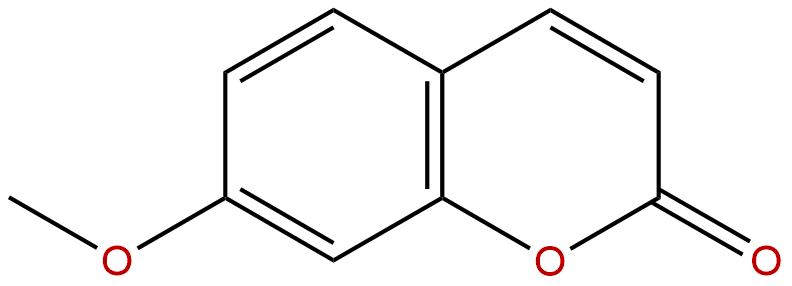
Synonym name: 7-Methoxycoumarin; Umbelliferone methyl ether; Ayapanin
Catalogue No.: BP0722
Cas No.: 531-59-9
Formula: C10H8O3
Mol Weight: 176.171
Botanical Source: Present in Herniaria spp., Eupatorium ayapana, Matricaria chamomilla var. recutita, Ruta pinnata, Prunus mahaleb (mahaleb cherry) and other plants
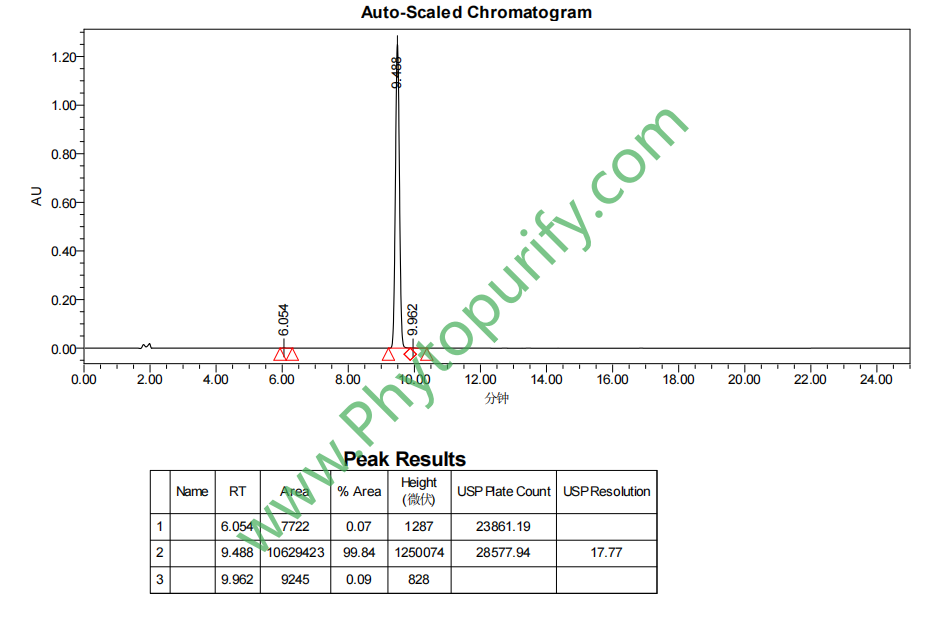
Purity: 95%~99%
Analysis Method: HPLC-DAD or/and HPLC-ELSD
Identification Method: Mass, NMR
Packing: Brown vial or HDPE plastic bottle
Can be supplied from milligrams to grams.
For Reference Standard and R&D, Not for Human Use Directly.
Inquire for bulk scale.
HPLC of Herniarin
Storage conditions:Short-term storage at 2~8℃, long-term storage at -20 ~ -80℃
7-Methoxycoumarin (Herniarin, CAS number: 531-59-9) is a naturally occurring coumarin compound widely distributed in various flowering plants. As an important member of the coumarin family, 7-methoxycoumarin has attracted widespread attention in the field of natural product pharmacology in recent years due to its unique chemical structure and biological activity. A large number of studies have shown that 7-methoxycoumarin not only has significant anti-cancer activity, especially in inducing apoptosis in breast cancer cells (MCF-7), but also shows multiple biological activities such as anti-inflammatory and anti dermatophyte. These pharmacological properties make it a potential candidate molecule in the research of malignant tumors such as bladder cancer and breast cancer. In addition, the role of 7-methoxycoumarin in regulating inflammation related signaling pathways further expands its application prospects as a natural medicine.
This review aims to systematically summarize the chemical structure and physicochemical properties, plant sources and extraction methods, pharmacological activity and mechanism of action of 7-methoxycoumarin, and explore its clinical application potential and future development direction in combination with drug evaluation and pharmacokinetic characteristics, providing theoretical basis and reference for research in related fields.
The chemical structure of 7-methoxycoumarin is based on the coumarin skeleton, with a molecular formula of C10H8O3 and a molecular weight of 176.1710. Its structural feature is the introduction of a methoxy (- OCH3) substituent at the 7th position of the coumarin core, which endows it with unique biological activity and physicochemical properties. The LogP value of this compound is 1.9653, indicating its moderate lipophilicity, which facilitates cell membrane permeation and in vivo distribution. The polarization surface area (TPSA) is 39.44 Å ², indicating that its molecule has good membrane permeability, especially high blood-brain barrier penetration, which is consistent with its potential application in the central nervous system.
The water solubility is 0.2367 mg/mL, indicating a low solubility in water, suggesting the need to consider solubility enhancement strategies in drug formulation development. The negative result of hERG channel inhibition experiment indicates a low risk of cardiac toxicity and good safety. The Ames mutagenicity test result is 1.5, which is within the low mutagenicity risk range, indicating weak genotoxicity and meeting the safety requirements for drug development.
7-Methoxycoumarin is widely present in multiple plant families and genera such as Umbelliferae, Leguminosae, and Asteraceae, and is particularly abundant in certain flowering plants such as Rutaceae. Common natural sources include celery, fennel, certain medicinal plants such as Humulus lupulus, and related species.
The traditional method for extracting 7-methoxycoumarin mainly relies on organic solvent extraction, with commonly used solvents including ethanol, methanol, ethyl acetate, etc. The typical extraction process includes crushing of plant materials, solvent soaking, ultrasound assisted extraction or reflux heating extraction, followed by separation and purification techniques such as liquid-liquid distribution and column chromatography to obtain high-purity 7-methoxycoumarin. In recent years, the application of supercritical CO2 extraction and microwave-assisted extraction technology has improved extraction efficiency and purity, and has more environmental advantages.
During the purification process, silica gel column chromatography and reverse phase high-performance liquid chromatography (RP-HPLC) are widely used to ensure the structural integrity and purity of compounds. Structural identification relies on modern analytical techniques such as nuclear magnetic resonance (NMR), mass spectrometry (MS), and infrared spectroscopy (IR).
7-Methoxycoumarin has shown significant anti-cancer potential in multiple in vitro cell experiments. Especially in breast cancer cell line MCF-7, 7-methoxycoumarin can induce cell apoptosis, leading to a significant decline in cell viability. Its anti-cancer mechanism involves cell cycle arrest, loss of mitochondrial membrane potential, elevated levels of reactive oxygen species (ROS), and regulation of apoptosis related protein expression. Research has shown that 7-methoxycoumarin promotes programmed cell death by activating apoptosis executing enzymes such as Caspase-3 and Caspase-9.
In addition, 7-methoxycoumarin also showed the activity of inhibiting proliferation and promoting apoptosis in bladder cancer cells, suggesting its potential application in the treatment of urinary system tumors. Its anti-cancer activity may also be related to the ability to inhibit tumor cell migration and invasion, reducing the risk of metastasis.
Research on the anti-inflammatory properties of 7-methoxycoumarin has also made progress. It can significantly inhibit the expression and release of various inflammatory mediators, including IL-6, TNF - α, NOS2, PTGS2 (COX-2), etc. By regulating the NF - κ B signaling pathway and STAT3 transcription factor activity, 7-methoxycoumarin inhibits inflammatory responses and reduces tissue damage.
In addition, 7-methoxycoumarin has a regulatory effect on TRPV1 and TRPA1 plasma channels, which play an important role in the transmission of inflammatory pain, indicating its potential in the management of inflammatory pain.
7-Methoxycoumarin exhibits good inhibitory effects on dermatophytes, demonstrating its potential for development as an antifungal drug. Its antibacterial mechanism may involve cell membrane disruption and metabolic inhibition, and the specific target of action still needs further research.
The multi-target mechanism of action of 7-methoxycoumarin is the basis of its multiple pharmacological activities. Its main targets include:
The synergistic regulation of these targets enables 7-methoxycoumarin to exhibit multiple mechanisms of action in both anti-cancer and anti-inflammatory fields, reflecting its complexity and potential as a natural drug molecule.
The pharmacological parameters of 7-methoxycoumarin show that it has good potential for drug development. The molecular weight of 176.1710 conforms to Lipinski's rule, and the LogP value of 1.9653 indicates moderate lipid solubility, which is beneficial for oral absorption and in vivo distribution. The TPSA is 39.44 Å ², and the low polarization surface area facilitates cell membrane penetration and blood-brain barrier passage, supporting its potential application in central nervous system diseases.
The low water solubility (0.2367 mg/mL) suggests the need for solubility improvement techniques in formulation design, such as nanocarriers, solid dispersions, etc., to enhance bioavailability. The negative inhibition of hERG channel indicates a low risk of cardiac toxicity and good safety. The Ames test result is 1.5, indicating a low risk of genotoxicity and meeting the preclinical safety evaluation criteria.
Regarding pharmacokinetics, current research on in vivo metabolism and excretion is relatively limited. It is speculated that 7-methoxycoumarin is metabolized by the liver and may involve the cytochrome P450 enzyme system. The activity and toxicity of the metabolites need further evaluation. Its high blood-brain barrier permeability suggests good distribution in the central system, but potential central nervous system side effects also need to be considered.
Based on the biological activities of 7-methoxycoumarin in anti-cancer, anti-inflammatory, and antibacterial aspects, it has broad prospects for clinical application. Especially in the adjuvant treatment of breast cancer and bladder cancer, 7-methoxycoumarin is expected to be a natural source of anti-tumor candidate drugs, playing a role in inducing tumor cell apoptosis and inhibiting tumor progression.
In addition, its anti-inflammatory activity provides new ideas for the treatment of chronic inflammatory diseases such as rheumatoid arthritis and inflammatory bowel disease. The anti fungal activity supports its potential application in the treatment of fungal infections in the skin.
Future research should focus on the following aspects:
Through interdisciplinary collaboration, 7-methoxycoumarin is expected to become an important breakthrough in the development of natural medicines.
7-Methoxycoumarin, as a natural coumarin with multiple biological activities, has shown extensive pharmacological potential due to its significant anti-cancer, anti-inflammatory, and antibacterial activities. Its unique chemical structure endows it with good drug properties and safety, providing a solid foundation for the development of new drugs. In the future, combining modern medicinal chemistry, molecular biology, and pharmacokinetic research to further elucidate its mechanism of action and optimize drug properties will help promote the transition of 7-methoxycoumarin from laboratory research to clinical application, benefiting patients. As an important resource for drug discovery, the research progress of 7-methoxycoumarin further proves the irreplaceable value of natural products in modern pharmaceutical research and development.
