Introduction/Overview
Natural products, as an important source of drug discovery, have always played an indispensable role in the long struggle between humans and diseases. Essential oils and their monomeric components extracted from plants have long been of great concern to pharmaceutical researchers due to their diverse biological activities and relatively low toxicity. Menthone, as a typical monoterpene compound, is widely present in plants of the Lamiaceae family such as peppermint(Mentha Among the essential oils of spp, it is one of its characteristic volatile flavor components. Menthone not only endows mint with a unique cool aroma, but also becomes a research hotspot in the field of natural product pharmacology due to its rich pharmacological activity.
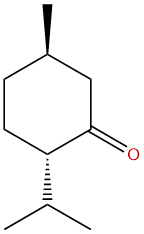
The chemical structure of menthone is p-menthan-3-one, with two chiral centers and multiple stereoisomers, among which (-) - menthone and (+) - isomenthone are the most common. Its molecular formula is C ₁₀ H ₁₈ O, and its molecular weight is 154.25. As a natural small molecule with oral activity, menthone exhibits broad-spectrum biological effects, including antibacterial, anti-tumor, antioxidant, antiviral, and significant anti-inflammatory properties. Especially in inflammation related disease models such as Schistosoma mansoni infection and rheumatoid arthritis, menthone exhibits good anti-inflammatory effects, suggesting its potential value in immune regulation and treatment of chronic inflammatory diseases.
In recent years, with the advancement of modern pharmacology, molecular biology, and medicinal chemistry techniques, research on menthone has progressed from early activity descriptions to the molecular mechanism level. Research has found that the analgesic effect of menthone is closely related to multiple key targets, including transient receptor potential vanillic acid subtype 1 (TRPV1), transient receptor potential anchor protein 1 (TRPA1), cannabinoid receptor 1 (CNR1), opioid receptors (OPRM1, OPRD1, OPRK1), cyclooxygenase (PTGS1/2), dopamine receptor D2 (DRD2), and serotonin transporter (SLC6A4). This multi-target mode of action provides a theoretical basis for its application in complex diseases such as chronic pain and neuroinflammation.
In addition, the pharmacological parameters of menthone also demonstrate its potential as a lead compound. Its molecular weight is moderate (154.25), and its lipid water partition coefficient (LogP) is about 3.17, indicating that it has good lipid solubility and is easy to penetrate biofilms; The topological polar surface area (TPSA) is only 17.07 Å ², far below the 140 Å ² threshold typically required for oral medications, indicating excellent oral absorption and blood-brain barrier penetration capabilities. More importantly, preliminary toxicological assessments (such as Ames test negative, no hERG inhibition risk) suggest a low risk of genetic toxicity and cardiac toxicity. These characteristics make menthone not only a natural product worthy of further research, but also a highly promising drug lead scaffold.
This article aims to systematically review the chemical structure, plant origin, pharmacological activity, mechanism of action, pharmacological evaluation, and clinical application prospects of menthone, in order to provide comprehensive academic references for the further development and utilization of this compound.
Chemical structure and physicochemical properties
The chemical name of Menthone is 2-isopropyl-5-methylcyclohexanone, which belongs to monocyclic monoterpene ketone compounds. Its core skeleton is p-menthane, which is connected to methyl and isopropyl groups at positions 1 and 4 of the cyclohexane ring, and contains a ketone carbonyl group at position 3. This structure endows menthone with typical ketone chemical properties, such as nucleophilic addition, reduction (e.g. to produce menthol), and oxidation reactions.
There are two chiral centers (C2 and C5) in the menthone molecule, resulting in four optical isomers: (-) - menthone ((2S, 5R) - menthone), (+) - menthone ((2R, 5S) - menthone), (-) - isomenthone (2R, 5R) - isomenthone), and (+) - isomenthone ((2S, 5S) - isomenthone). In nature, (-) - menthone and (+) - isomenthone are the most abundant, and they often exist in a dynamic equilibrium form in plants, which can be transformed into each other through alcoholization. The biological activities of different isomers may vary, providing an important entry point for the study of structure-activity relationships.
From the perspective of physical and chemical properties, the molecular weight of menthone is 154.25 g/mol, and it is a colorless or light yellow oily liquid at room temperature, with a strong mint aroma and coolness. Its boiling point is about 207-210 ° C, density is about 0.89 g/cm ³, slightly soluble in water, and easily soluble in organic solvents such as ethanol, ether, chloroform, etc. According to the calculated chemical parameters, the LogP value of menthone is 3.1743, indicating its moderate lipophilicity, which facilitates transmembrane transport and binding to target proteins in the lipid environment. Its water solubility (LogS) is 0.6054, which belongs to low water solubility compounds, which to some extent limits its bioavailability in aqueous phase, but also suggests that solubilization technology needs to be considered in formulation development.
Topological Polarity Surface Area (TPSA) is a key parameter for evaluating the oral absorption and blood-brain barrier penetration ability of drugs. The TPSA of menthone is only 17.07 Å ², far below the usual threshold for oral medication (140 Å ²). A very low TPSA means that the molecule carries almost no polar groups and has strong lipophilicity, which is consistent with its high LogP value. This characteristic makes menthone highly permeable to biological membranes, including the blood-brain barrier (BBB), indicating its high BBB penetration. This prediction is crucial for understanding the central nervous system (CNS) activity of menthone, such as analgesia and sedation, as many analgesic targets, such as opioid receptors and dopamine receptors, are located within the CNS.
Plant sources and extraction methods
Menthone is a widely distributed monoterpene component in nature, mainly found in the mint genus of the Lamiaceae family(Mentha)In the essential oils of plants. Among them, peppermint(Mentha × piperita)And Japanese mint(Mentha arvensis)It is the main source of commercial production of menthone. In peppermint essential oil, menthone content usually accounts for 20% -40%, and together with menthol, it constitutes its main flavor and active ingredients. In addition, menthone is also present in other plants, such as bee grass(Melissa officinalis)Rosemary(Rosmarinus officinalis)Thyme(Thymus vulgaris)And in some Rutaceae plants, but their content is usually low.
The extraction of menthone is usually carried out simultaneously with the preparation process of peppermint essential oil. The most traditional and widely used method is steam distillation. Place the dried or fresh aboveground parts (stems, leaves) of mint in a still, introduce water vapor, and volatile components are distilled out with the water vapor. After condensation, an oil-water mixture is obtained, and the essential oil is collected through an oil-water separator. Menthone, as one of the main components of essential oils, is efficiently enriched during this process. The steam distillation method is simple to operate and cost-effective, but high temperatures may lead to the degradation of some thermosensitive components.
In order to obtain higher purity menthone, it is usually necessary to combine modern separation and purification techniques. Supercritical fluid extraction (SFE), especially using carbon dioxide as a solvent, is used to extract high-value menthone products due to its advantages of low operating temperature, no solvent residue, and high selectivity. In addition, organic solvent extraction (such as using n-hexane, ethanol) combined with column chromatography (such as silica gel column, alumina column) is a commonly used purification method in laboratory and industrial production. By gradient elution, menthone can be effectively separated from other monoterpene components such as menthol and menthol furan. In recent years, high-speed countercurrent chromatography (HSCCC) and molecular distillation techniques have also been applied to the efficient separation and purification of menthone to obtain high-purity (>98%) single isomers.
It is worth noting that menthone does not exist statically in the plant body. During the growth process of peppermint, menthone is a precursor for the biosynthesis of menthol. Under the action of menthol dehydrogenase, menthone can be reduced to menthol. Therefore, the timing of extraction, plant variety, and growth environment (such as light, temperature, soil) can significantly affect the content and proportion of menthone in essential oils. For example, under high temperature stress, the accumulation of menthone may increase. Therefore, optimizing the harvesting time and extraction process is crucial for obtaining high-yield and high-quality menthone.
Pharmacological activity research
As a natural product with a long history of use, menthone has been widely studied for its pharmacological activities, covering multiple fields such as antibacterial, anti-inflammatory, antioxidant, anti-tumor, antiviral, and analgesic.
1. Antibacterial activity
Menthone exhibits inhibitory effects on various bacteria and fungi. Research has shown that menthone has an effect on Staphylococcus aureus(Staphylococcus aureus)Escherichia coli(Escherichia coli)Pseudomonas aeruginosa(Pseudomonas aeruginosa)Common pathogenic bacteria have moderate antibacterial effects. The mechanism may be related to the destruction of bacterial cell membrane integrity, increased membrane permeability, and leakage of intracellular substances. In addition, menthone has an effect on Candida albicans(Candida albicans)Fungi also have inhibitory effects, indicating their potential in combating fungal infections. It is worth noting that menthone is often used in combination with other essential oil components such as menthol and eucalyptus oil, exhibiting a synergistic antibacterial effect.
2. Anti inflammatory activity
Anti inflammation is one of the most concerned pharmacological activities of menthone. Menthone has shown significant effects in various inflammatory models. In the model of Schistosoma mansoni infection, menthone can alleviate granulomatous inflammatory response caused by worm eggs and reduce the inflammatory index of the liver and spleen. In rheumatoid arthritis models, menthone can inhibit the proliferation of synovial cells and the release of inflammatory factors (such as TNF - α, IL-1 β, IL-6), reducing joint swelling and bone erosion. Its anti-inflammatory mechanism involves inhibiting the nuclear factor kappa B (NF - κ B) and mitogen activated protein kinase (MAPK) signaling pathways, thereby downregulating the expression of cyclooxygenase-2 (COX-2, PTGS2) and inducible nitric oxide synthase (iNOS), and reducing the production of prostaglandin E ₂ (PGE ₂) and nitric oxide (NO).
3. Antioxidant activity
Menthone has a certain ability to scavenge free radicals. In vitro antioxidant experiments such as DPPH, ABTS, and FRAP, menthone exhibited concentration dependent antioxidant activity. Although its antioxidant capacity is weaker than potent antioxidants such as vitamin C or BHT, in cell models, menthone can reduce reactive oxygen species (ROS) levels and protect cells from oxidative stress damage. This antioxidant activity complements its anti-inflammatory effect, jointly exerting a cell protective effect.
4. Antitumor activity
In recent years, the anti-tumor potential of menthone has gradually been discovered. In vitro experiments have shown that menthone can inhibit the proliferation of many cancer cell lines (such as HepG2, breast cancer MCF-7, lung cancer A549, and colon cancer HT-29). The mechanism may include inducing cell cycle arrest (such as G0/G1 phase arrest), activating mitochondrial pathway apoptosis (upregulating Bax, downregulating Bcl-2, releasing cytochrome c, activating Caspase-3/9), and inhibiting tumor cell migration and invasion. In addition, menthone can enhance the sensitivity of chemotherapy drugs by inhibiting the NF - κ B pathway, demonstrating its potential as a chemotherapy sensitizer.
5. Antiviral activity
Menthone has inhibitory effects on certain viruses. Research reports that menthone can inhibit the replication of herpes simplex viruses (HSV-1 and HSV-2), possibly by interfering with the viral envelope or inhibiting viral DNA synthesis. In addition, in the influenza virus model, menthone also exhibits certain antiviral activity. However, its antiviral mechanism is not fully understood and further research is needed.
6. Analgesic activity
The analgesic effect of menthone is one of its most classic applications, often used to relieve headaches, muscle pain, and neuralgia. Its analgesic mechanism is complex and involves multiple targets. Menthone can activate TRPM8 (cold receptor) and TRPA1 channels, producing a cooling sensation and analgesic effect. At the same time, it can regulate the opioid receptor system (OPRM1, OPRD1, OPRK1) and dopamine system (DRD2), as well as inhibit COX-2 activity and reduce the production of pain mediators. This multi-target and multi-level analgesic mechanism gives it unique advantages in the treatment of chronic pain.
Mechanism of action and molecular targets
The pharmacological activity of menthone originates from its interactions with various biomolecules. Modern molecular pharmacology research has revealed its action network, especially in the fields of analgesia and anti-inflammatory, with clear targets and mechanisms.
1. Transient receptor potential (TRP) channel
The TRP channel is a key target for menthone to exert sensory neural regulation. Menthone is an agonist of TRPM8 (cold and menthol receptor), which produces a cooling sensation and analgesic effect upon activation. More importantly, menthone has a bidirectional regulatory effect on TRPA1 (mustard oil receptor): it is activated at low concentrations and desensitized at high concentrations. TRPA1 plays an important role in inflammatory pain and neuropathic pain, and menthone can inhibit pain signaling caused by inflammatory mediators such as bradykinin and prostaglandins by desensitizing TRPA1. In addition, menthone can inhibit the activity of TRPV1 (capsaicin receptor) and reduce thermal hyperalgesia.
2. Opioid receptor system
Opioid receptors (OPRM1, OPRD1, OPRK1) are the core targets of central and peripheral analgesia. Research has found that menthone can bind to opioid receptors and exert analgesic effects similar to opioid drugs, but may not cause typical addiction and respiratory depression side effects. In animal models, the analgesic effect of menthone can be partially reversed by the opioid receptor antagonist naloxone, confirming the involvement of the opioid pathway. Menthone may inhibit neuronal excitability by activating G protein coupled opioid receptors, inhibiting adenylate cyclase, and reducing cAMP levels.
3. Cannabinoid receptor system
Cannabinoid receptor 1 (CNR1) is mainly distributed in the central nervous system and participates in the regulation of pain, emotion, and appetite. Menthone has been reported as a ligand for CNR1, which may produce analgesic and anti anxiety effects by activating this receptor. This provides a new molecular basis for the application of menthone in chronic pain and mood disorders.
4. Cyclooxygenase (COX) system
Cyclooxygenase (PTGS1/PTGS2) is a key enzyme involved in the metabolism of arachidonic acid into prostaglandins. Prostaglandins are important mediators of inflammation and pain. Menthone can inhibit the activity of COX-2 (PTGS2), reduce the synthesis of PGE ₂, and thus exert anti-inflammatory and analgesic effects. Unlike selective COX-2 inhibitors, menthone has a weaker inhibitory effect on COX-1 (PTGS1), suggesting that it may have a lower risk of gastrointestinal side effects.
5. Monoamine energy system
Menthone has a regulatory effect on dopamine receptor D2 (DRD2) and serotonin transporter (SLC6A4). DRD2 is involved in reward, motor, and cognitive functions, while SLC6A4 is responsible for the reuptake of serotonin in synaptic cleft. Menthone may affect mood and pain perception by regulating these targets, which is consistent with its use in traditional medicine for relieving anxiety and depression.
6. Signal pathway regulation
At the cellular level, menthone downregulates the expression of various inflammatory factors (TNF - α, IL-1 β, IL-6) and chemokines by inhibiting the NF - κ B and MAPK (such as p38, JNK, ERK) signaling pathways. At the same time, it can activate the Nrf2/ARE antioxidant pathway, enhance the expression of antioxidant enzymes such as HO-1 and NQO1, thereby reducing oxidative stress damage.
In summary, the mechanism of action of menthone exhibits typical "multi-target, multi pathway" characteristics. This network pharmacology characteristic gives it unique advantages in treating complex diseases such as chronic pain, neuroinflammation, and metabolic syndrome, but also increases the difficulty of precise mechanism analysis.
Evaluation of drug properties and pharmacokinetics
The evaluation of drug properties is a crucial step in determining whether natural products can be transported from the laboratory to clinical practice. The physicochemical properties and preliminary toxicological data of menthone provide a favorable basis for its drug development.
1. Physical and chemical properties and drug like properties
According to Lipinski's "Five Rules", the molecular weight of menthone (154.25<500), LogP (3.17<5), number of hydrogen bond donors (0<5), and number of hydrogen bond acceptors (1<10) all meet the basic requirements for oral medication. Its TPSA is extremely low (17.07 Å ²), indicating high membrane permeability and good oral absorption potential. These parameters indicate that menthone is a typical drug like molecule with the prerequisite conditions to become an oral medication.
2. Penetration ability of blood-brain barrier
The high lipid solubility and low TPSA of menthone enable it to easily penetrate the blood-brain barrier. This characteristic is crucial for its central analgesic, anti anxiety, and neuroprotective effects. However, high BBB penetration also means that menthone may cause central nervous system side effects such as sedation, dizziness, etc., which need to be taken into account in clinical applications.
3. Toxicological evaluation
The preliminary toxicological data is encouraging. The Ames test result was negative (0.0), indicating that menthone does not have significant genetic toxicity. The prediction of hERG inhibition is' no ', indicating a low risk of cardiac toxicity and no significant prolongation of QT interval. In addition, in the acute toxicity experiment, the LD ₅₀ value of menthone was relatively high (about 2000 mg/kg orally in rats), indicating its low acute toxicity. However, research on long-term toxicity, reproductive toxicity, and carcinogenicity is still insufficient and will be the focus of future studies.
4. Pharmacokinetic characteristics
There is relatively limited research on the pharmacokinetics (ADME) of menthone, but some key findings have been made. After oral administration, menthone is rapidly absorbed in the gastrointestinal tract. Due to its high lipid solubility, it has a large distribution volume and can be widely distributed in tissues throughout the body, especially in the brain, liver, and adipose tissue. Menthone is mainly oxidized in the liver through the cytochrome P450 enzyme system (such as CYP2B6, CYP3A4), producing hydroxylated metabolites (such as 8-hydroxymenthone), which then combine with glucuronic acid or sulfuric acid and are excreted through urine and bile. Its plasma half-life (t ₁/₂) is relatively short (about 1-2 hours), indicating that frequent administration or development of sustained-release formulations may be necessary to maintain effective blood drug concentrations.
5. Formulation challenges and strategies
The water solubility of menthone is poor (LogS=0.6054), which limits its oral bioavailability. To improve its solubility and bioavailability, various formulation strategies can be employed, such as cyclodextrin inclusion, liposome encapsulation, solid dispersion, nanoemulsion, etc. For example, hydroxypropyl - β - cyclodextrin inclusion can significantly improve the water solubility and stability of menthone. In addition, transdermal drug delivery systems (such as patches and gel) are also ideal dosage forms of menthone, which can bypass the first pass effect of the liver, directly enter the systemic circulation, and achieve local analgesia.
Clinical application prospects and prospects
Based on the rich pharmacological activity and good drug properties of menthone, it has shown broad application prospects in multiple therapeutic fields.
1. Pain management
The analgesic effect of menthone involves multiple targets such as opioids, cannabinoids, TRP channels, and COX, making it uniquely advantageous in treating chronic pain such as neuropathic pain, arthritis pain, and cancer pain. Compared to traditional opioid drugs, menthone may have a lower risk of addiction and respiratory depression; Compared to nonsteroidal anti-inflammatory drugs (NSAIDs), their gastrointestinal side effects may be smaller. Developing oral sustained-release formulations or transdermal delivery systems of menthone for long-term management of chronic pain is a highly promising direction.
2. Anti inflammatory and immune regulation
The anti-inflammatory activity of menthone has been preliminarily validated in chronic inflammatory diseases such as rheumatoid arthritis, inflammatory bowel disease, and dermatitis. It is expected to become a new natural anti-inflammatory drug for treating these diseases by inhibiting the NF - κ B and MAPK pathways, downregulating various inflammatory factors. In addition, the anti-inflammatory effect of menthone in Schistosoma mansoni infection suggests its potential application in parasitic infection related inflammation.
3. Neuroprotection and Mental Disorders
The high BBB penetration of menthone makes it potentially applicable in CNS diseases. Its analgesic, anti anxiety, and potential antidepressant effects make it a candidate drug for treating comorbidities of anxiety, depression, and chronic pain. In addition, the antioxidant and anti-inflammatory activities of menthone may have a protective effect on neurodegenerative diseases such as Alzheimer's disease and Parkinson's disease, but this requires further preclinical and clinical research to confirm.
4. Anti tumor adjuvant therapy
The anti-tumor activity of menthone and its potential as a chemotherapy sensitizer make it occupy a place in the comprehensive treatment of tumors. Through combination therapy, menthone may reduce the dosage of chemotherapy drugs, alleviate their toxic side effects, and enhance therapeutic efficacy. However, its anti-tumor mechanism still needs further research, and its in vivo efficacy and safety also need to be further validated.
5. Antibacterial and antiviral
The broad-spectrum antibacterial and antiviral activity of menthone makes it valuable for the development of natural preservatives, disinfectants, and anti infective drugs. Especially in the context of increasingly severe antibiotic resistance, developing antibacterial strategies based on natural products is of great significance.
Future research directions:
- Study on Structure Activity Relationship Systematically study the pharmacological activity differences of different isomers of menthone (such as (-) - menthone vs (+) - isomenthone) and their derivatives, and search for lead compounds with stronger activity and higher selectivity.
- In depth analysis of the mechanism of action Using knockout/knock in animal models, proteomics, and metabolomics techniques, comprehensively reveal the molecular targets and signaling network of menthone.
- Pharmacokinetic optimization By structural modification (such as prodrug design) or formulation technology (such as nano delivery systems), the bioavailability and targeting of menthone can be improved.
- Clinical translational research Conduct standardized clinical trials to evaluate the efficacy and safety of menthone in indications such as pain, inflammation, and anxiety, and provide evidence for its ultimate clinical application.
Conclusion
Menthone, a monoterpenoid ketone derived from the ancient mint plant, has undergone a magnificent transformation from a traditional spice to a modern drug leader, demonstrating its enormous potential as a multi-target natural medicine. Its unique chemical structure endows it with excellent drug like properties and blood-brain barrier penetration ability; Its broad-spectrum pharmacological activity, especially its multi-target mechanism of action in the fields of analgesia and anti-inflammatory, provides new ideas for the treatment of complex chronic diseases. Although research on menthone is still in a critical stage of transitioning from basic to clinical use, its low toxicity, high activity, and clear target network make it a shining pearl in the development of natural product drugs. In the future, with the deepening of structure-activity relationships, optimization of pharmacokinetics, and advancement of clinical research, menthone and its derivatives are expected to play an important role in pain management, inflammation treatment, and neuroprotection, contributing the wisdom from nature to human health.