Introduction/Overview
Allergic diseases, such as allergic rhinitis, asthma, atopic dermatitis, etc., have become a global public health issue with complex pathogenesis involving abnormal activation and imbalance of the immune system. Traditional anti allergic drugs, such as antihistamines and glucocorticoids, can effectively control symptoms, but long-term use often accompanies side effects and is difficult to fundamentally regulate immune disorders. Therefore, searching for efficient and low toxicity novel immunomodulators from natural products has always been an important direction in drug development. Gymnoside VII, a unique glycosyl oxybenzyl 2-isobutyl malate compound isolated from the traditional medicinal plant Gymnoside VII and its closely related species Flammulina velutipes, has attracted much attention in recent years due to its significant anti allergic and immunomodulatory activities. Its CAS number is 899430-07-0. This article aims to systematically review the chemical structure, plant origin, pharmacological activity, molecular mechanism of action, pharmacological characteristics, and clinical application potential of Panax ginseng glycoside VII, in order to provide comprehensive scientific references for the in-depth research and development of this natural product.
Chemical structure and physicochemical properties
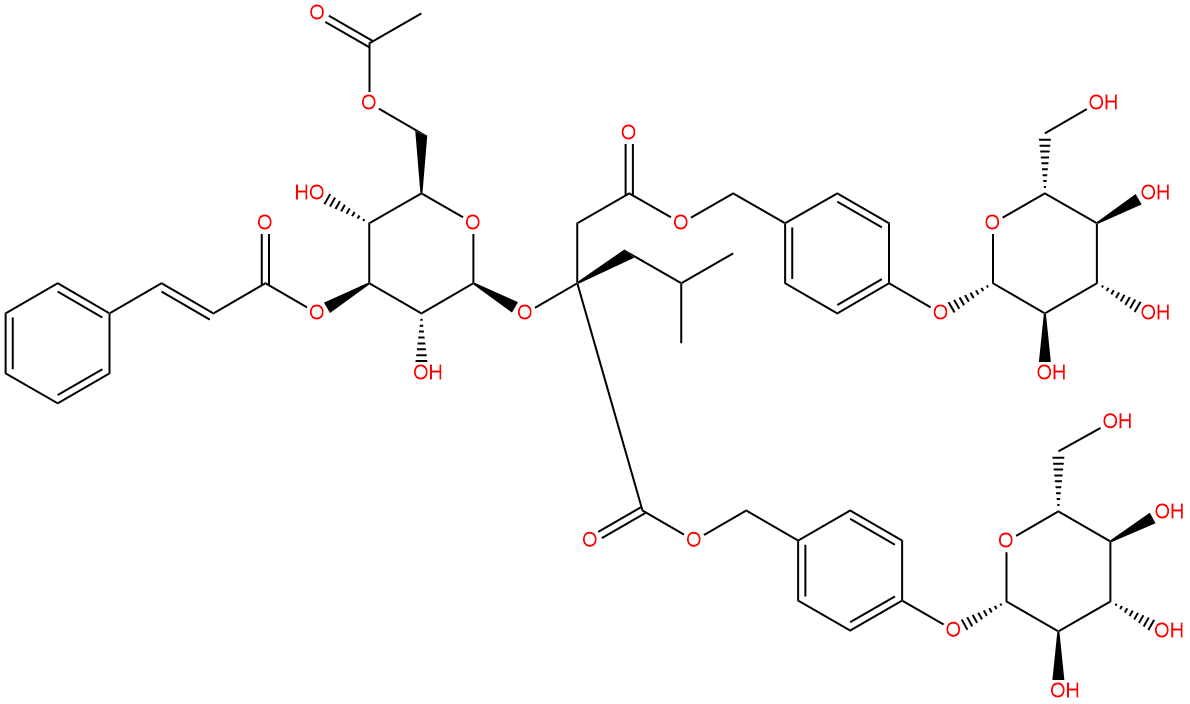
Hand ginseng glycoside VII is a complex natural glycoside compound. Its core skeleton is 2-isobutyl malate, which is connected to a highly glycosylated oligosaccharide chain through an oxybenzyl (benzyloxy) group. Its molecular formula is C ₄₈ H ₇₆ O ₂₅, and its molecular weight is 1061.0490 Da. This structure endows it with unique physicochemical properties.
Based on the analysis of pharmacological parameters, the lipid water partition coefficient (LogP) of Panax ginseng glycoside VII is 1.6539, indicating its lipophilicity but not high hydrophobicity. Its topological polar surface area (TPSA) is as high as 362.88 Å ², mainly attributed to the abundant hydroxyl and glycosidic bonds in its molecule, which are potential hydrogen bond donors and acceptors. High TPSA values are usually associated with poor cell membrane permeability. The water solubility parameter is 0.1855, indicating limited solubility in water, which is consistent with its larger molecular weight and complex sugar based structure. These physicochemical properties collectively determine its pharmacokinetic behavior: the predicted blood-brain barrier permeability is "low", which means it is difficult to enter the central nervous system. This may actually reduce potential central nervous system side effects for anti allergic drugs that mainly act on the peripheral immune system. In addition, the preliminary safety assessment of the drug indicates that the hERG inhibition risk is "no", and the Ames test result is 0.0, suggesting that it may not have significant cardiac toxicity (QT interval prolongation risk) and genetic toxicity, laying a good safety foundation for its further development.
Plant sources and extraction methods
Hand ginseng glycoside VII is mainly derived from the plant hand ginseng in the Orchidaceae family(Gymnadenia conopsea)Dry tubers. Hand ginseng, as a traditional Chinese medicine, is often used in Tibetan and Mongolian medicine systems to nourish and strengthen the body, relieve cough and asthma. It is worth noting that modern research has found that certain edible mushrooms, especially shiitake mushrooms(Flammulina velutipes)It also contains hand ginseng glycoside VII or its structural analogues, which provides a wider range of biological resources for obtaining this compound.
The extraction of hand ginseng glycoside VII from plant materials usually involves the use of organic solvent extraction combined with various chromatographic separation techniques. The conventional process is as follows: first, the dried ginseng tubers or enoki mushroom fruiting bodies are crushed, and then heated with high concentration ethanol (such as 70% -95%) or methanol aqueous solution for reflux or ultrasound assisted extraction to fully extract the polar components. The crude extract was obtained by vacuum concentration of the extraction solution. Subsequently, macroporous adsorption resins (such as D101, AB-8) were used for preliminary enrichment and decolorization, with water ethanol gradient elution commonly used. Hand ginseng glycoside VII is usually enriched in the medium polarity elution site (such as 30% -60% ethanol). Further purification relies on techniques such as normal or reverse phase silica gel column chromatography, high performance liquid chromatography (HPLC), and preparative thin layer chromatography (PTLC). The combination of reverse phase C18 chromatography column with acetonitrile water or methanol water system is an effective method for separating and purifying highly polar glycoside compounds such as Panax ginseng glycoside VII. In recent years, liquid-liquid distribution chromatography techniques such as high-speed countercurrent chromatography (HSCCC) have also been applied to the separation of such compounds, as they can avoid irreversible adsorption losses caused by solid adsorbents. Finally, through techniques such as nuclear magnetic resonance (NMR) and mass spectrometry (MS), the structure was identified and confirmed to be Hand Ginseng Glycoside VII.
Pharmacological activity research
Numerous in vitro and in vivo pharmacological studies have confirmed that hand ginseng glycoside VII has broad and significant immunomodulatory and anti allergic activities.
1. Anti allergic effect: In various allergic animal models, hand ginseng glycoside VII has shown strong therapeutic effects. For example, in a mouse allergic asthma model induced by ovalbumin (OVA), pretreatment with ginsenoside VII can dose dependently reduce airway hyperresponsiveness, decrease the infiltration of inflammatory cells such as eosinophils and lymphocytes in bronchoalveolar lavage fluid (BALF), and lower the levels of OVA specific IgE and histamine in serum. In the mouse model of systemic allergic reaction induced by compound 48/80, hand ginseng glycoside VII can also significantly inhibit degranulation of mast cells and reduce mortality. These results indicate that hand ginseng glycoside VII can intervene in the early sensitization stage and late effector stage of allergic reactions.
2. Immune regulatory effect: The immune regulatory effect of hand ginseng glycoside VII is bidirectional, which can both inhibit excessive inflammatory reactions and promote immune tolerance.
* Anti inflammation and immune suppression: In the lipopolysaccharide (LPS) - stimulated macrophage model (such as RAW264.7 cells), ginsenoside VII can significantly inhibit the production of nitric oxide (NO), prostaglandin E2 (PGE2), as well as pro-inflammatory cytokines such as tumor necrosis factor - α (TNF - α) and interleukin-6 (IL-6). In T cell-mediated immune responses, it can inhibit ConA or anti-CD3/CD28 antibody induced excessive proliferation of T lymphocytes.
* Promote immune tolerance: More importantly, research has found that hand ginseng glycoside VII can promote the differentiation and function of regulatory T cells (Tregs). In vitro, it can enhance the differentiation of initial CD4 ⁺ T cells into Foxp3 ⁺ Treg cells induced by TGF - β 1. In the in vivo allergic model, after administration of hand ginseng glycoside VII, the proportion and absolute number of Treg cells in the spleen and draining lymph nodes significantly increased, and their immunosuppressive function was also enhanced.
In addition, the study suggests that hand ginseng glycoside VII may have a certain improvement effect on autoimmune disease models such as rheumatoid arthritis and experimental autoimmune encephalomyelitis, which is closely related to its broad immune regulatory properties.
Mechanism of action and molecular targets
The multi-target immunomodulatory effect of hand ginseng glycoside VII is the molecular basis of its pharmacological activity. Existing research has revealed that it exerts its effects by intervening in multiple key signaling pathways and molecular targets, mainly focusing on the following aspects:
1. Regulating the Toll like receptor 4/nuclear factor kappa B (TLR4/NF - κ B) signaling pathway: TLR4 is a key receptor that recognizes pathogen associated molecular patterns (such as LPS) and initiates innate immune responses. Hand ginseng glycoside VII has been shown to bind to TLR4 or interfere with its downstream signal transduction, thereby inhibiting LPS induced activation of NF - κ B (encoded by the NFKB1 gene). NF - κ B is a core transcription factor that regulates the expression of numerous pro-inflammatory factors (such as TNF - α, IL-6, IL-1 β) and chemokines. By inhibiting the TLR4/NF - κ B axis, hand ginseng glycoside VII effectively suppresses excessive inflammatory responses from the source.
2. Regulating the JAK/STAT signaling pathway: This pathway is crucial in cytokine signaling transduction and immune cell differentiation. Hand ginseng glycoside VII can affect multiple members of the STAT family.
* Inhibition of STAT3/STAT4 pro-inflammatory pathway: The phosphorylation activation of STAT3 and STAT4 is a crucial step in the differentiation of Th17 and Th1 cells. Hand ginseng glycoside VII can inhibit IL-6-induced STAT3 phosphorylation and IL-12-induced STAT4 phosphorylation, thereby reducing the production of pro-inflammatory IL-17 (Th17 characteristic factor) and IFN - γ (Th1 characteristic factor, encoded by the IFNG gene).
* Potential impact on pathways such as STAT5: Although there is limited research, its role in promoting Treg differentiation may be related to the IL-2 (encoded by the IL2 gene) signaling pathway and its downstream STAT5 activation, which requires further validation.
3. Key transcription factors and cytokines regulating T cell differentiation and function: This is the core of the immune balancing effect of hand ginseng glycoside VII.
* Upregulation of immune tolerance related factors: Hand ginseng glycoside VII can significantly upregulate specific transcription factors in Treg cells FOXP3 This is direct evidence of its promotion of Treg differentiation and function. Meanwhile, it can promote anti-inflammatory cytokines IL-10 The secretion of IL-10 (encoded by the IL10 gene) is an important mediator for Treg to exert inhibitory functions.
* Regulating TGF - β 1 (encoded by TGFB1 gene): TGF - β 1 is a key cytokine that induces the differentiation of initial T cells into Tregs. Research has shown that hand ginseng glycoside VII may create a favorable microenvironment for Treg differentiation by enhancing the expression or signal sensitivity of TGF - β 1.
* Inhibition of co stimulatory signals: There are studies suggesting that hand ginseng glycoside VII may upregulate cytotoxic T lymphocyte associated antigen-4(CTLA4)The expression. CTLA4 is an inhibitory receptor on the surface of T cells, which can transmit inhibitory signals when bound to CD80/CD86. It is one of the important mechanisms for Treg inhibition of T cell activation and maintenance of immune tolerance.
In summary, hand ginseng glycoside VII synergistically inhibits TLR4/NF - κ B mediated innate immune overactivation and STAT3/STAT4 mediated Th1/Th17 type acquired immune response through multi-target action, while enhancing Treg immune suppression function mediated by TGF - β 1, IL-10, FOXP3, CTLA4, etc., thereby bringing the imbalanced immune state (Th2/Th17 dominance, Treg deficiency) back to balance. This perfectly explains its therapeutic effect in allergy and autoimmune models.
Evaluation of drug properties and pharmacokinetics
Although the pharmacological activity of hand ginseng glycoside VII is clear, its pharmacological properties, especially pharmacokinetic properties, are the key challenge for its successful development as a drug.
Absorption and distribution: As a glycoside compound with a large molecular weight (>1000 Da) and high polarity (TPSA>360 Å ²), the oral bioavailability of Panax ginseng glycoside VII is expected to be low. Its limited lipophilicity (LogP~1.65) and large molecular size may hinder its passive diffusion through intestinal epithelial cells. It may serve as a substrate for efflux pumps such as P-glycoprotein, further limiting its absorption. After absorption, due to its high hydrophilicity and unknown ability to bind to plasma proteins, its distribution volume may be small, mainly distributed in blood and extracellular fluid. The prediction of low blood-brain barrier permeability is consistent with its peripheral targets.
Metabolism and excretion: Glycoside compounds are easily hydrolyzed by gut microbiota and glycosidases in the liver, leading to deglycosylation reactions and the formation of aglycones or other secondary glycosides. The complex sugar chain of hand ginseng glycoside VII is likely to undergo gradual degradation in the body, and its metabolites may still have activity, even stronger or weaker, which requires further research. The prototype drug and its metabolites may be mainly excreted through the kidneys (via glomerular filtration, but with a molecular weight close to the upper limit of filtration) or bile.
Formulation strategy: To enhance its pharmacological properties, advanced formulation techniques may be required. For example, utilizing phospholipid complexes, cyclodextrin inclusion, or nano formulations (such as liposomes, polymer nanoparticles) to enhance their solubility, stability, and intestinal permeability. Structural modification, such as derivatization of sugar or ester bonds to improve their pharmacokinetic properties, is also a potential research direction. At present, there is still a lack of publicly available data on the pharmacokinetics of the Hand Ginseng Glycoside VII system (such as absolute bioavailability, tissue distribution, metabolic profile), which is a gap that must be filled in future preclinical development.
Clinical application prospects and prospects
Hand ginseng glycoside VII, as a natural product with multiple targets and bidirectional immune regulation, has shown broad application prospects in the treatment of various immune related diseases.
1. Treatment field:
* Allergic diseases: As its most direct application direction, hand ginseng glycoside VII is expected to be developed as a new drug for the treatment of moderate to severe allergic asthma, allergic rhinitis, atopic dermatitis, and food allergies. It may bring more lasting and fundamental therapeutic effects by regulating the immune system rather than just antagonizing mediators.
* Autoimmune diseases: Given its regulatory effect on Th17/Treg balance, hand ginseng glycoside VII has potential value in the treatment of autoimmune diseases such as rheumatoid arthritis, systemic lupus erythematosus, multiple sclerosis, and inflammatory bowel disease.
* organ transplant: Its ability to promote Treg function and inhibit effector T cell activation suggests that it may be used as an immunosuppressant to prevent rejection after organ transplantation, or in combination with existing immunosuppressants to reduce its dosage and toxicity.
2. R&D challenges and prospects:
* Deep analysis of the mechanism of action: More precise elucidation of its direct interaction mode with targets such as TLR4 and STAT3 (such as binding sites and affinity) is needed, and its specificity needs to be validated in vivo using techniques such as gene knockout/knock in.
* System drug optimization: Comprehensive pharmacokinetic and toxicological studies must be conducted. Developing suitable drug delivery systems based on their physicochemical properties, such as formulations targeting the lymphatic system and long-acting injections, is the key to success.
* Clinical translational studies: After completing the standardized preclinical safety and efficacy evaluation, gradually advance clinical trials to verify its efficacy and safety in humans.
* Research on Structure Activity Relationship: Systematically modify the chemical structure of Panax ginseng glycoside VII to search for derivatives or analogues with better activity and drug properties.
Conclusion
Hand ginseng glycoside VII is a natural glycoside compound with unique structure and significant biological activity found in traditional medicinal plants and edible fungi. It intervenes in key inflammatory signaling pathways such as TLR4/NF - κ B and JAK/STAT through multi-target intervention, and positively regulates the immune tolerance network mediated by TGF - β 1/FOXP3/IL-10/CTLA4, demonstrating excellent bidirectional immune regulation and anti allergic potential. Although its large molecular weight and complex sugar structure pose challenges for its pharmacological properties, especially oral absorption, its clear multi-target mechanism of action and good preliminary safety prediction (without hERG inhibition and genetic toxicity) have laid a solid foundation for its drug development. Future research should focus on in-depth analysis of its molecular action details, systematic optimization of its pharmacokinetic properties, and active exploration of its clinical application value in major chronic immune diseases such as allergies and autoimmune disorders. The research on hand ginseng glycoside VII not only provides lead compounds for the development of new immunomodulatory drugs, but also reflects the eternal charm and scientific value of exploring complex disease treatment strategies from natural products.