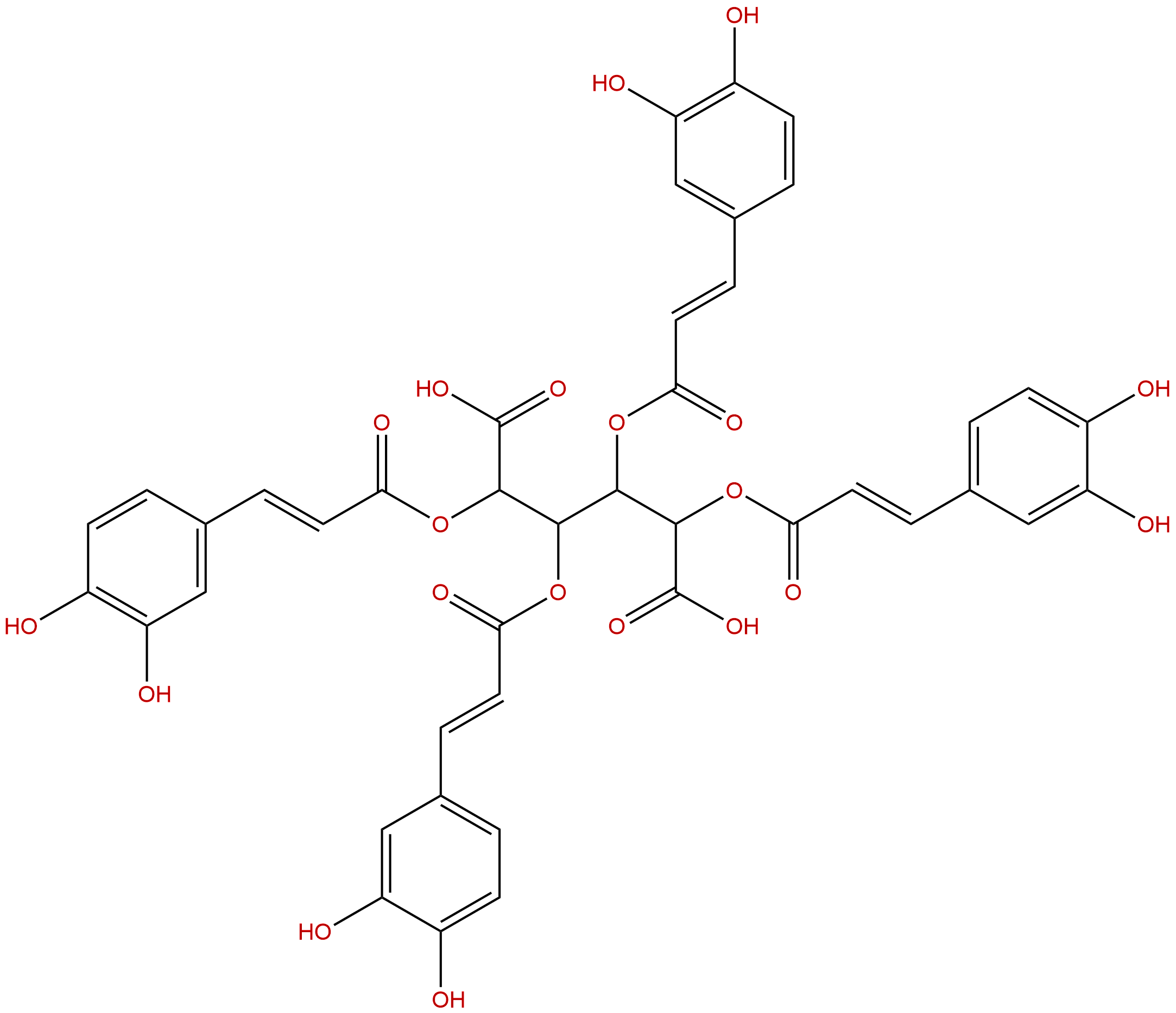


Product name: 2,3,4,5-Tetracaffeoyl-D-Glucaric acid
Synonym name: 2,3,4,5-Tetracaffeoyl-Saccharic acid; D-Glucaric acid, 2,3,4,5-tetrakis[(2E)-3-(3,4-dihydroxyphenyl)-2-propenoate]
Catalogue No.: BP2000
Cas No.: 1419478-52-6
Formula: C42H34O20
Mol Weight: 858.714
Botanical Source:
Physical Description: Light yellow powder
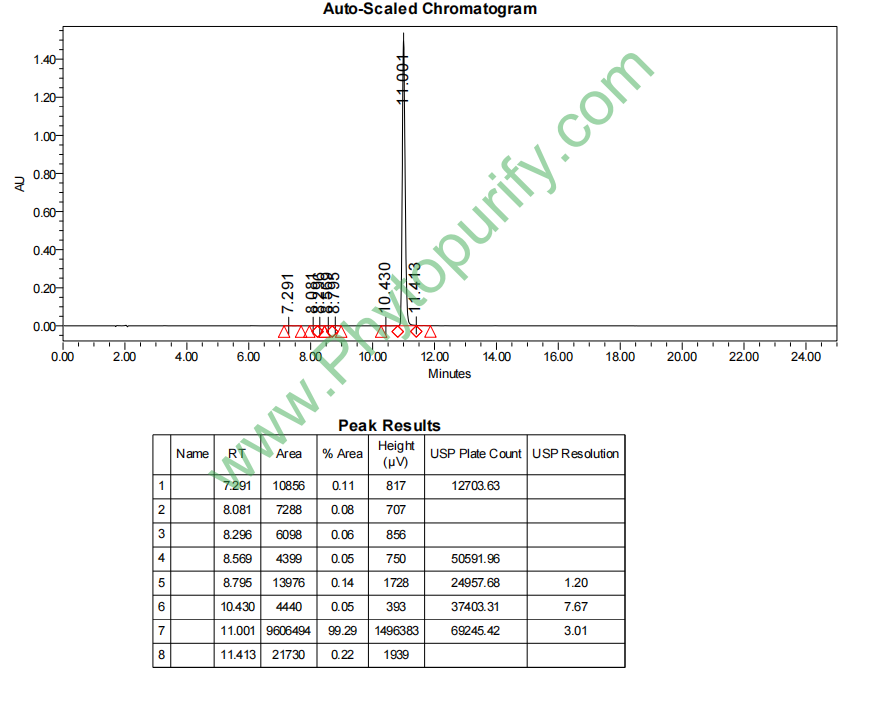
Purity: 95%~99%
Analysis Method: HPLC-DAD or/and HPLC-ELSD
Identification Method: Mass, NMR
Packing: Brown vial or HDPE plastic bottle
The product could be supplied from milligrams to grams. Inquire for bulk scale.
We provide solution to improve the water-solubility of compounds, thereby facilitating the variety of activity tests and clinic uses.
For Reference Standard and R&D, Not for Human Use Directly.
HPLC of 2,3,4,5-Tetracaffeoyl-D-Glucaric acid
Storage conditions:Short-term storage at 2~8℃, long-term storage at -20 ~ -80℃
341.6400
2.5143
2.5140
.0618
.7612
.1620
Low
91.2111
4.4799
Yes
Yes
Yes
No
Yes
No
0.0
Yes
Yes
Yes
Yes
Natural products, as important resources for drug development, have long held a significant position in the development of antiviral drugs due to their structural diversity and wide range of biological activities. With the constant threat of viral diseases, especially the global prevalence of HIV, herpes virus (HSV) and other viral infections, finding effective and low toxic antiviral natural compounds has become a research hotspot. 2,3,4,5-Tracaffeoyl-D-Glucaric acid (hereinafter referred to as "the compound"), as a polyphenolic natural product, has received widespread attention in recent years due to its unique structure and potential antiviral activity.
The compound contains multiple caffeoyl groups in its structure, endowing it with strong antioxidant and biological activity potential. Previous studies have shown that this compound exhibits inhibitory effects on various virus related targets, covering key molecules from viral replicases, viral envelope proteins to host cell receptors, demonstrating broad-spectrum antiviral potential. This article will systematically review the chemical structure and physicochemical properties, plant sources and extraction methods, pharmacological activity, mechanism of action, pharmacological evaluation, and clinical application prospects of the compound, aiming to provide theoretical basis and practical guidance for further research and drug development.
2,3,4,5-tetracaffeoyl-D-glucuronic acid is a polyphenolic derivative with a molecular formula of C42H30O24 and a molecular weight of 858.7140. Its core structure is a D-gluconic acid skeleton, with four carboxyl groups modified by caffeoyl groups located at positions 2, 3, 4, and 5, respectively. The introduction of caffeic acid not only increases the polarity of the molecule and the number of hydrogen bond donors/acceptors, but also endows it with significant antioxidant and biological activity.
In terms of physical and chemical properties, the LogP value of the compound is 2.5143, indicating that it has moderate lipid solubility and is conducive to cell membrane penetration; The TPSA (topological polar surface area) is 341.6400, indicating high polarity and poor water solubility (actual water solubility is 0.0618 mg/mL), which may limit its oral bioavailability. The low permeability of the blood-brain barrier indicates that it is difficult to enter the central nervous system, reducing the risk of central neurotoxicity. The hERG channel inhibition experiment result was negative, indicating that the compound has high electrophysiological safety for the heart. The Ames mutagenicity test showed a value of 0.0, indicating a low risk of genotoxicity.
The structural characteristics of this compound enable it to exhibit diversity in intermolecular forces, including hydrogen bonding, π - π stacking, and electrostatic interactions, which provide possibilities for its binding to various protein targets.
2,3,4,5-tetracaffeoyl-D-glucuronic acid is mainly found in various plants, especially in medicinal and edible plants with rich polyphenolic components. For example, some Rutaceae plants, Asteraceae plants, and green tea have reported the presence of multi caffeoyl derivatives with similar structures. Specific plant species include but are not limited to:
The common methods for extracting this compound include:
Solvent extraction
Ultrasonic assisted extraction or reflux extraction of plant dry powder using ethanol, water, or their mixed solvents. Ethanol water mixed solvents (such as 70% ethanol) are commonly used to improve the dissolution rate of polar compounds.
Liquid-liquid separation
The crude extract was partitioned with different polar solvents such as ethyl acetate and n-butanol to enrich polyphenolic components.
Column chromatography purification
By using silica gel column, C18 reverse phase column or resin column for separation and purification, combined with gradient elution technology, high-purity 2,3,4,5-tetracaffeoyl-D-gluconic acid can be obtained.
Identification and Quantification by High Performance Liquid Chromatography (HPLC)
Use HPLC-UV or HPLC-MS technology to identify and determine the content of purified products, ensuring the purity and structural correctness of the compounds.
In recent years, supercritical fluid extraction and membrane separation techniques have also been attempted for efficient extraction of this compound, showing promising application prospects.
The research on this compound in the field of antiviral mainly focuses on its inhibitory effect on various viruses, especially its activity against viruses such as HIV and herpes simplex virus (HSV). In vitro cell models and molecular docking studies have shown that this compound can effectively interfere with multiple key steps in the virus lifecycle.
HIV virus
This compound exhibits antagonistic effects on HIV related targets such as CCR5 and CXCR4 receptors, blocking virus entry into host cells. In addition, it has inhibitory effects on HIV1 protease (HIV1-PR) and integrase (INT), hindering virus replication and integration processes.
Herpes virus (HSV)
By inhibiting key proteins such as UL42 (DNA polymerase cofactor), UL54 (DNA polymerase catalytic subunit), ICP27 (transcriptional regulatory protein), and TK (thymidine kinase) of the virus, virus replication and transcription are suppressed.
Other viruses
This compound has a regulatory effect on macrophage peroxidase (MPO), indirectly enhancing the host's antiviral immune response.
The polyphenol structure endows the compound with significant antioxidant capacity, capable of clearing free radicals and reducing oxidative stress-related cell damage. Its anti-inflammatory effect is further enhanced by inhibiting the release of inflammatory factors and regulating immune cell function, thereby enhancing its antiviral effect.
Multiple cell experiments have shown that the compound has no significant cytotoxicity within the effective concentration range and does not induce gene mutations (Ames test negative), indicating its high safety and suitability for further development.
The antiviral mechanism of this compound involves multi-target and multi pathway synergistic effects, including:
Block virus entry
By binding to CCR5 and CXCR4 receptors, the interaction between HIV envelope protein gD and host cell receptors is prevented, inhibiting virus entry into cells.
Inhibition of viral replicase activity
Directly bind and inhibit HIV1 protease (HIV1-PR), herpes virus DNA polymerase cofactor UL42, and catalytic subunit UL54, blocking viral genome replication.
Interference with viral transcription and protein expression
Inhibit the function of ICP27 protein, reduce viral gene transcription efficiency, and decrease viral protein synthesis.
Regulating host immune response
By regulating MPO activity, enhancing the antiviral ability of macrophages and promoting immune clearance.
Antioxidant Protection
Clearing oxygen free radicals, reducing oxidative damage caused by viral infection, and protecting cellular function.
Molecular docking and dynamic simulations further confirmed the high affinity binding of the compound to the aforementioned targets, supporting the theoretical basis for its multi-target antiviral activity.
Molecular weight (858.7 Da)
Exceeding the ideal range of traditional oral medications (<500 Da) may affect intestinal absorption.
LogP value (2.5143)
Moderate lipid solubility is beneficial for cell membrane penetration, but combined with high TPSA values, overall membrane permeability is limited.
TPSA(341.64 Ų)
High polarity indicates good water solubility, but may also limit oral absorption and blood-brain barrier penetration.
Water solubility (0.0618 mg/mL)
Lower water solubility may affect bioavailability and needs to be improved through formulation technology.
Low blood-brain barrier penetration
Limit the occurrence of central nervous system side effects, but not applicable to central nervous system viral infections.
HERG inhibition negative
Good cardiac safety and reduced risk of arrhythmia.
Ames test negative
Low risk of genotoxicity.
Currently, there is limited research on the in vivo pharmacokinetics of this compound. Based on its physicochemical properties, it is speculated that oral absorption is poor, and it may be necessary to improve bioavailability through nanocarriers, liposomes, or other delivery systems. The metabolic pathway may involve polyphenol metabolism in the liver enzyme system, and further research is needed on the activity and safety of its metabolites.
In terms of internal distribution, due to the low permeability of the blood-brain barrier, it is mainly distributed in peripheral tissues. The excretion pathway may be mainly through the kidneys, and combined with their high polarity, the excretion rate may be relatively fast.
Given the broad-spectrum inhibitory effect and good safety of this compound on various viral targets, it has the potential to become a novel antiviral drug. Its multi-target mode of action helps reduce the occurrence of viral resistance and is suitable for combination therapy strategies.
Future clinical applications may consider the following directions:
Anti HIV therapy
As a CCR5 and CXCR4 receptor antagonist and viral replicase inhibitor, combined with existing antiretroviral drugs, it improves efficacy and reduces the risk of drug resistance.
Herpesvirus infection
Used for adjuvant therapy of HSV infection, especially as a substitute or combination therapy for traditional drug-resistant strains.
immunomodulator
By regulating the host immune response and enhancing antiviral immunity, it is suitable for adjuvant therapy of viral infections.
Formulation development
It is necessary to break through the limitations of its water solubility and bioavailability, and develop oral sustained-release formulations, nano drug carriers, or local delivery systems.
Safety and Toxicological Assessment
Systematic animal experiments and preclinical toxicology studies are required to ensure long-term medication safety.
Clinical trial design
Based on existing in vitro and in vivo data, design a reasonable clinical trial plan to verify its efficacy and safety.
2,3,4,5-tetracaffeoyl-D-glucuronic acid, as a structurally unique polyphenolic natural product, exhibits broad-spectrum and multi-target antiviral activity. Combined with its good safety and potential immune regulatory function, it has great potential to become a novel antiviral drug. Despite challenges in terms of water solubility and bioavailability, it is expected to overcome these bottlenecks and achieve clinical translation through modern pharmaceutical formulation technology and in-depth pharmacokinetic research.
Future research should focus on in-depth analysis of its mechanism of action, in vivo pharmacokinetic and toxicological evaluation, and development of combination therapy strategies based on its multi-target characteristics. I believe that with the continuous advancement of research, this compound will play an important role in the field of antiviral drugs, providing new ideas and choices for the treatment of viral diseases.
