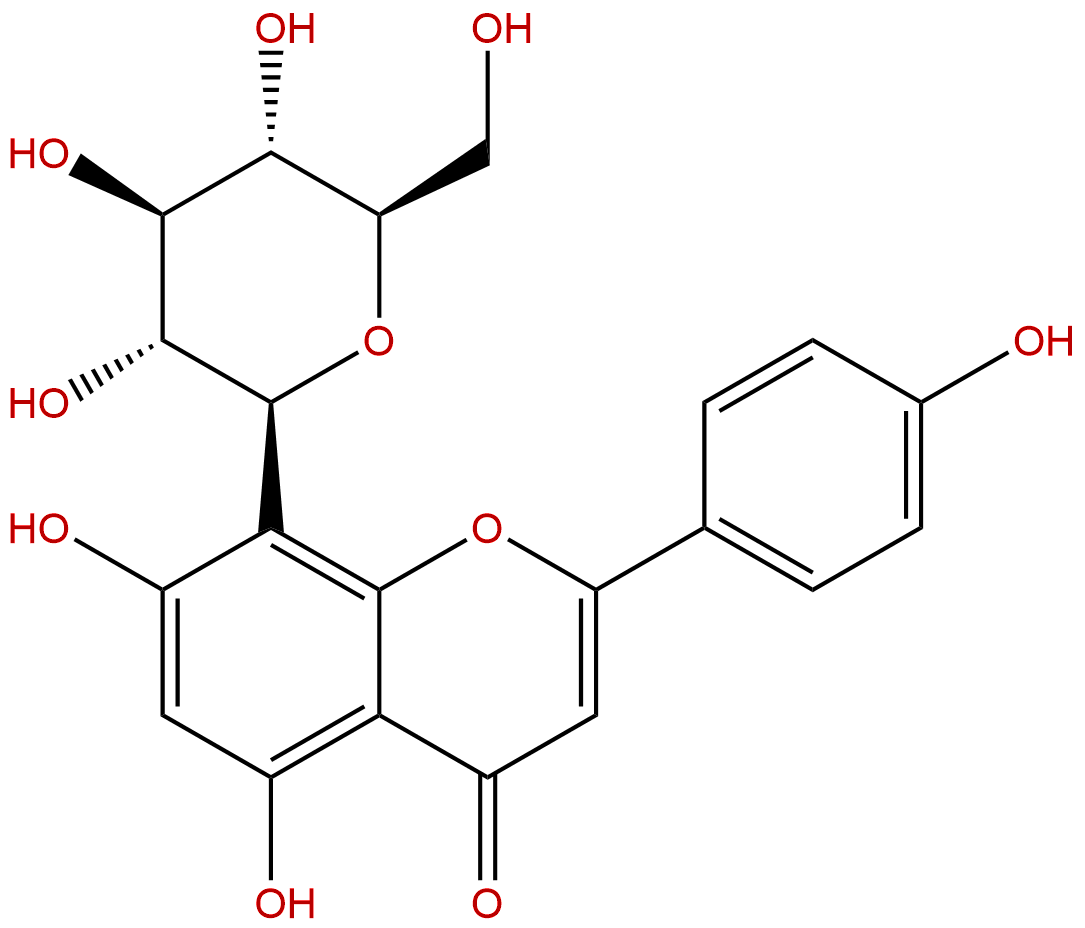


Synonym name: 8-Glucopyranosylapigenin; 8-Glucosylapigenin; Orientoside
Catalogue No.: BP1447
Cas No.: 3681-93-4
Formula: C21H20O10
Mol Weight: 432.381
Botanical Source: Vitex littoralis, Adonis spp., Cyathea spp., Larix spp., Lespedeza spp., Prosopis spp. and many other plants. tea leaves
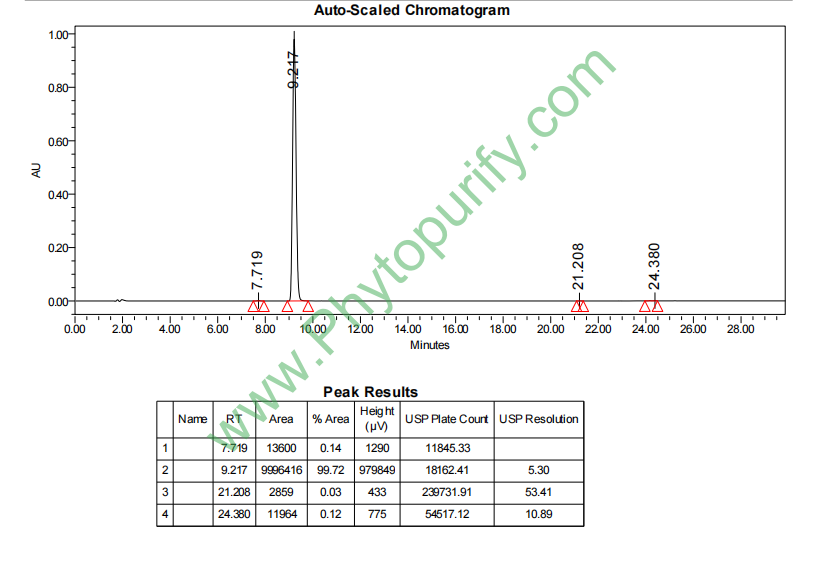
Purity: 95%~99%
Analysis Method: HPLC-DAD or/and HPLC-ELSD
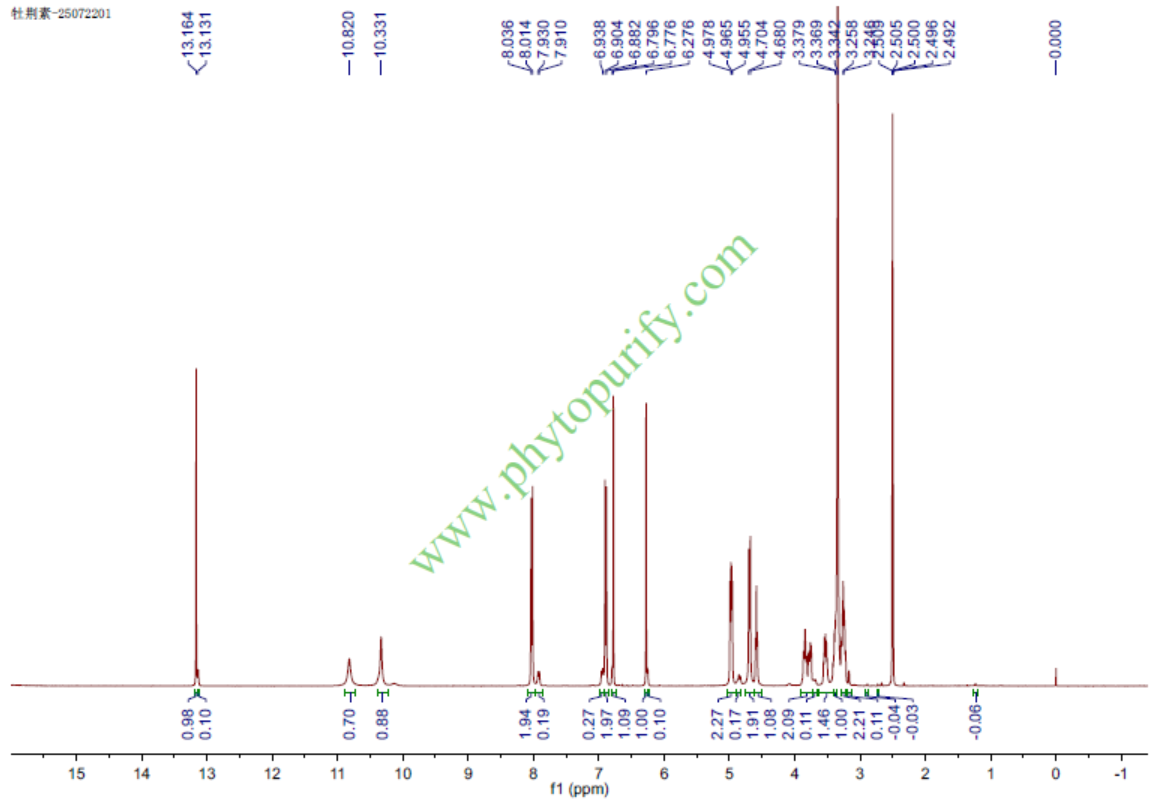
Identification Method: Mass, NMR
Packing: Brown vial or HDPE plastic bottle
Can be supplied from milligrams to grams, up to kilograms.
Inquire for bulk scale.
Storage conditions:Short-term storage at 2~8℃, long-term storage at -20 ~ -80℃
181.0500
.0801
-.0491
.9437
.5534
.2348
Low
78.6953
3.9545
Yes
No
No
No
Yes
No
1.2
Yes
No
Yes
No
Vitexin (CAS number: 3681-93-4) is a typical C-glycosylated flavonoid widely found in various traditional medicinal plants, such as Trigonella foenum graecum Linn. As an important flavonoid compound in natural products, vitexin has received widespread attention in pharmacology and natural medicine research in recent years due to its diverse biological activities and good safety. A large number of in vitro and in vivo experiments and molecular mechanism studies have shown that vitexin has significant multiple pharmacological effects such as antioxidant, anti-inflammatory, anticancer, anti hyperalgesia, and neuroprotective effects, demonstrating good potential for development.
This article provides a systematic review of the chemical structure and physicochemical properties, plant sources, and extraction methods of vitexin. It delves into its pharmacological activity and mechanism of action, evaluates its potential development value as a drug based on its pharmacological parameters and pharmacokinetic characteristics, and looks forward to its clinical application prospects, aiming to provide comprehensive theoretical basis and reference for related research.
Vitexin belongs to the C-glycosides of flavonoids, and its specific structure is that the flavonoid nucleus is connected to glucose through a carbon carbon bond, which is different from the common O-glycosidic structure. Its molecular formula is C21H20O10 and its molecular weight is 432.3810. The chemical structure of vitexin contains multiple hydroxyl groups, which endow it with strong hydrophilicity and antioxidant activity.
In terms of physical and chemical properties, the LogP value of vitexin is about 0.0801, indicating its low hydrophobicity and good water solubility (about 0.9437), which is beneficial for its dissolution and distribution in vivo. The extremely high polar surface area (TPSA of 181.05 Å ²) suggests that vitexin may have difficulty passing through the blood-brain barrier, and its ability to penetrate the blood-brain barrier is relatively low. In addition, vitexin does not exhibit hERG channel inhibitory activity, and the Ames mutagenicity test index is 1.2, indicating good safety and low mutagenicity risk.
The C-glycosidic bond stability of vitexin is relatively high, making it difficult to be hydrolyzed during in vivo metabolism, increasing its bioavailability and in vivo half-life, and becoming one of its advantages as a drug candidate molecule.
Arbutin is widely distributed in various medicinal plants, especially in Trigonella foenum graecum Linn., Vitex agnus catus, Ginkgo biloba leaves, as well as some tea and herbaceous plants. There are certain differences in the content and composition of vitexin from different plant sources, which are significantly affected by growth environment, harvesting time, and processing technology.
The extraction methods mainly include traditional solvent extraction, ultrasound assisted extraction, microwave-assisted extraction, and supercritical fluid extraction. The commonly used solvents are methanol, ethanol, and their aqueous solution systems. Ultrasound assisted extraction is widely used due to its simple operation and high extraction efficiency, which can effectively improve the extraction rate and purity of vitexin. After extraction, liquid-liquid separation, column chromatography, HPLC and other methods are usually used for purification and quantitative analysis.
In recent years, green and efficient extraction technologies such as deep eutectic solvent assisted extraction and membrane separation have gradually been applied to the extraction of vitexin, aiming to improve yield, reduce energy consumption and environmental pollution, and promote its large-scale production and industrial application.
Vitexin has significant antioxidant activity, which can effectively eliminate free radicals and alleviate cell damage caused by oxidative stress. In vitro experiments have shown that vitexin can enhance the activity of superoxide dismutase (SOD1, SOD2), catalase (CAT), and glutathione peroxidase (GPX1), promoting the balance of intracellular antioxidant enzyme system. In addition, vitexin can induce the expression of heme oxygenase 1 (HMOX1) and exert a cell protective effect.
In various oxidative stress models, vitexin enhances cellular antioxidant capacity, reduces tissue damage, and demonstrates good protective effects by activating the nuclear factor erythroid 2-related factor 2 (NFE2L2/NRF2) signaling pathway.
Vitexin exhibits inhibitory effects on proliferation, induces apoptosis, and blocks cell cycle in various tumor cell lines. Its anti-cancer mechanism involves regulating multiple signaling pathways, including PI3K/Akt, MAPK, NF - κ B, and p53. Vitexin can induce mitochondrial apoptosis pathway, activate caspase family proteins, and promote programmed cell death in tumor cells.
In addition, vitexin can also inhibit the migration and invasion of tumor cells, block epithelial mesenchymal transition (EMT), thereby reducing the risk of tumor metastasis. Its anticancer activity has been reported in a variety of cancer models, such as breast cancer, lung cancer, liver cancer, and so on, showing a broader application potential.
Inflammatory response is the common pathological basis of various diseases, and vitexin exerts good anti-inflammatory effects by regulating the release of inflammatory mediators through multiple targets. Research has shown that vitexin can inhibit the expression of pro-inflammatory cytokines such as TNF - α, IL-1 β, and IL-6, reduce the activity of the inflammatory signaling pathway NF - κ B, and alleviate tissue inflammatory responses.
In inflammatory disease models, vitexin significantly reduces inflammatory symptoms and improves histopathological changes, indicating its potential as an anti-inflammatory drug.
Vitexin exhibits a regulatory effect on hyperalgesia in the nervous system. By inhibiting neuroinflammation and regulating neurotransmitter release, vitexin can alleviate chronic pain and neuropathic pain. Its mechanism of action involves inhibiting the activation of microglia and reducing the production of inflammatory mediators, alleviating the overactive state of the nervous system.
Vitexin has a protective effect on the nervous system, which can reduce oxidative damage and inflammatory response of nerve cells, and promote the survival of nerve cells. It activates the NRF2 signaling pathway, enhances antioxidant enzyme activity, reduces reactive oxygen species (ROS) levels, and alleviates neurodegenerative diseases.
In neurodegenerative disease models such as Alzheimer's disease and Parkinson's disease, vitexin shows the potential to improve cognitive function and motor disorders, demonstrating promising neuroprotective prospects.
The multiple pharmacological effects of vitexin mainly rely on its regulation of key molecular targets in cells, especially in the fields of antioxidant and anti-inflammatory effects.
Vitexin inhibits the NF - κ B signaling pathway, reduces the expression of pro-inflammatory cytokines, and alleviates inflammatory responses. Simultaneously regulating PI3K/Akt, MAPK and other pathways, affecting cell proliferation, apoptosis and migration processes, and exerting anti-cancer effects.
By regulating neuroinflammatory mediators and antioxidant enzyme systems, vitexin protects nerve cells from oxidative damage and inflammatory invasion, promoting neurological function recovery.
The pharmacological evaluation of vitexin shows good safety and biological activity basis. Its molecular weight is 432.38, which falls within the range of most small molecule drugs; Low LogP values and high TPSA values indicate strong hydrophilicity, but low blood-brain barrier permeability limits its direct role in central nervous system diseases.
In terms of safety, vitexin does not inhibit hERG channels, reducing the risk of cardiac toxicity; The Ames test results showed no significant mutagenicity and good genetic safety.
In terms of pharmacokinetics, the C-glycosidic structure of vitexin endows it with high stability, avoiding hydrolysis of glycosidic bonds in the gastrointestinal tract and improving oral bioavailability. However, due to its high polarity, intestinal absorption may be limited. Metabolism in the body is mainly carried out through the liver enzyme system, and further research is needed on the metabolites and their activities.
At present, the pharmacokinetic data of vitexin is relatively limited, and it is urgent to evaluate its absorption, distribution, metabolism, and excretion (ADME) characteristics through in vivo and in vitro experimental systems to provide a basis for clinical development.
With its multi-target and multi mechanism pharmacological activity, vitexin has demonstrated extensive clinical application potential. Its antioxidant and anti-inflammatory effects provide the possibility for adjuvant therapy of chronic inflammatory diseases, metabolic syndrome, and neurodegenerative diseases. The anti-cancer effect provides new ideas for tumor treatment and prevention.
However, the clinical translation of vitexin still faces many challenges, including limited bioavailability, unclear pharmacokinetic characteristics, and insufficient in vivo targeting. Future research should focus on:
In summary, as a natural flavonoid compound, vitexin has good pharmacological activity and safety, and is expected to become a new natural medicine or adjuvant drug for the treatment of various diseases in the future.
As a typical C-glycosylated flavonoid, vitexin has become a hot topic in natural product pharmacology research due to its diverse biological activities and good safety. Its mechanism of action in antioxidant, anti-inflammatory, anticancer, and neuroprotective aspects has gradually become clear, and related targets such as NFE2L2/NRF2, SOD1, CAT provide molecular basis for its pharmacological effects.
Although vitexin has shown extensive pharmacological activity in vitro and animal models, its clinical application still needs to overcome limitations in terms of bioavailability and pharmacokinetics. In the future, through innovative drug delivery technology, structural optimization, and systematic clinical research, it is expected to achieve the clinical translation of vitexin and benefit patients.
In summary, as a potential natural drug candidate molecule, vitexin deserves in-depth research and development in the fields of natural product pharmacology and drug development.
