Introduction/Overview
Natural products, as an important source of drug discovery, play an indispensable role in the long history of human struggle against diseases. Flavonoids, as one of the most widely distributed and structurally diverse secondary metabolites in nature, have always been a hot topic in medicinal chemistry and pharmacology research due to their rich biological activity and relatively low toxicity. Among them, Isovitexin (also known as apidin-6-C-glucoside) and its glycosylated derivatives have shown excellent metabolic stability and diverse pharmacological activities due to their unique C-glycosidic bond structure, and have attracted much attention from the academic community.
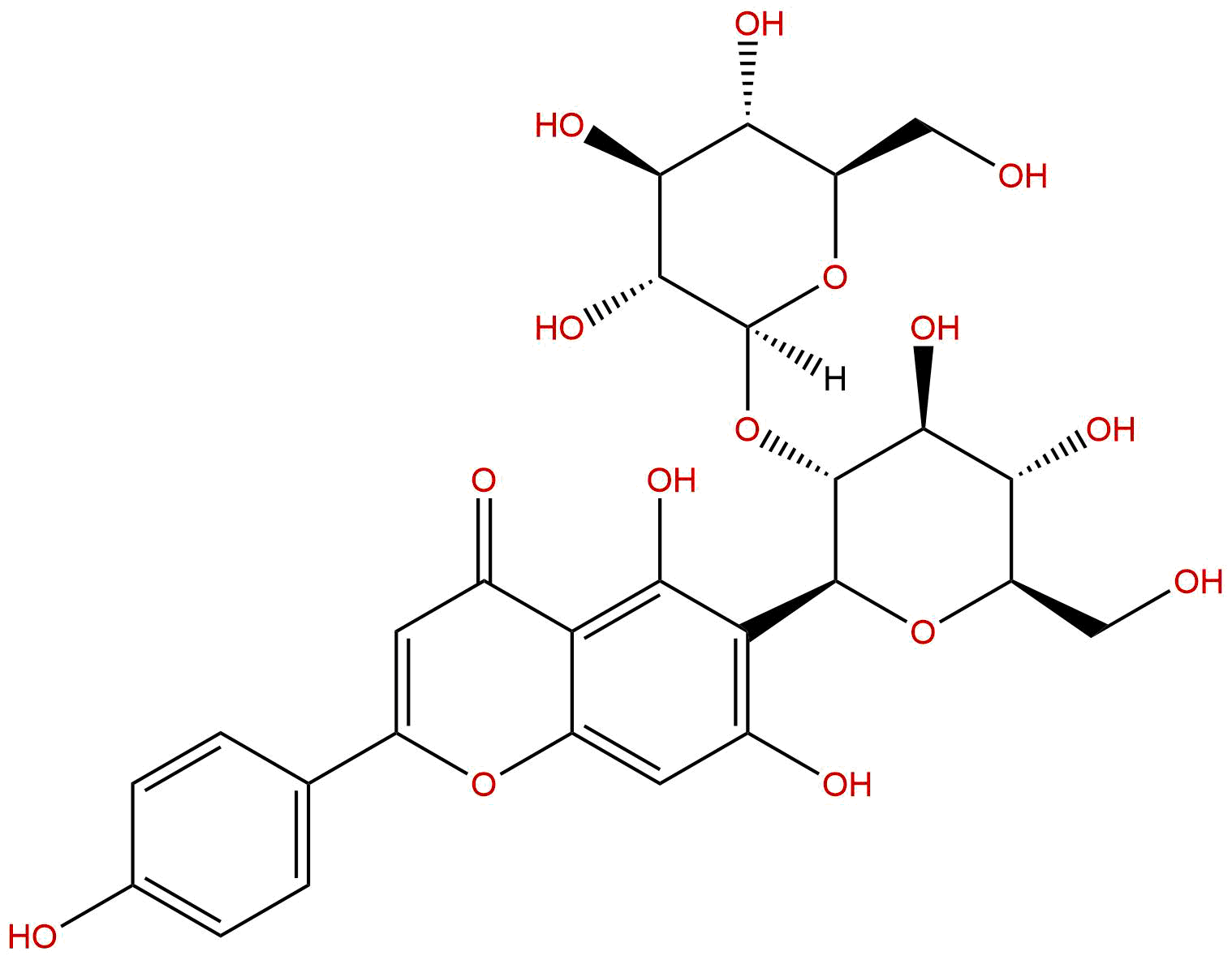
Isovitexin-2 '' - O - β - glucoside (IVG) is a disaccharide formed by the further attachment of one molecule of glucose to the 2 '' position of the glucose group of isovitexin under the catalysis of glucosyltransferase. This compound originally originated from the genus Passionflower(Passiflora spp.)、 Cannabis(Cannabis sativa)And the isolation and identification of palm family plants are important active ingredients for the efficacy of these medicinal plants. Structurally, IVG belongs to the flavonoid carbon glycoside class, with its core parent nucleus being apigenin, which is connected to the sugar group through stable C-C bonds. This structural feature makes it difficult to be hydrolyzed by conventional glycosidases in vivo, thus having a longer half-life and higher bioavailability potential.
In recent years, with the clarification of the key roles of oxidative stress and chronic inflammation in the occurrence and development of various major diseases such as cardiovascular disease, neurodegenerative diseases, metabolic syndrome, and cancer, the search for highly efficient and low toxicity antioxidant and anti-inflammatory active molecules has become an important direction for drug development. IVG exhibits great potential as a lead compound or dietary supplement due to its significant antioxidant and anti-inflammatory activities, particularly its ability to inhibit the JNK1/2 (c-Jun N-terminal kinase 1/2) signaling pathway and the unique mechanism of NF - κ B activation. This article will provide a systematic and comprehensive review of isovitexin 2 '' - O-glucoside from the aspects of chemical structure, plant origin, pharmacological activity, mechanism of action, medicinal properties, and clinical application prospects, aiming to provide reference for in-depth research in related fields.
Chemical structure and physicochemical properties
Chemical structure analysis
The chemical name of isovitexin 2 '' - O-glucoside is 4 ', 5,7-trihydroxyflavone-6-C - β - D-glucopyranosyl-2' '- O - β - D-glucopyranoside. Its structure consists of three parts: the flavonoid nucleus (apigenin), the C-glycosidic bond connected glucose group (internal sugar), and the second glucose group (external sugar) connected to the 2 '' position of the internal sugar through an O-glycosidic bond.
From the perspective of structural features, IVG has the following significant characteristics:
1. C-glycosidic bond The internal sugar is directly connected to the C-6 position of the flavonoid nucleus through a C-C bond. Compared with O-glycosidic bonds, C-glycosidic bonds have high resistance to acid hydrolysis and enzymatic hydrolysis (such as β - glucosidase), which endows IVG with excellent metabolic stability in the gastrointestinal tract and blood circulation.
2. O-glycosidic bond The external sugar is connected to the C-2 '' position of the internal sugar through an O-glycosidic bond. This bond may break under specific conditions (such as the action of gut microbiota), releasing metabolites of isovitexin or isovitexin-2 '' - O-glucoside.
3. Polyphenolic hydroxyl group The mother nucleus contains three phenolic hydroxyl groups (4 ', 5, 7 positions), which are key functional groups for IVG to exert antioxidant activity and effectively scavenge free radicals and chelate metal ions.
4. disaccharide chain The presence of two glucose groups significantly increases the hydrophilicity and steric hindrance of the molecule, affecting its interaction mode with biological targets such as proteins and enzymes.
Physicochemical properties
According to computational chemistry and experimental data, the main physicochemical parameters of IVG are as follows:
- Molecular formula:C₂₇H₃₀O₁₅
- molecular weight:594.5220 Da
- Lipid water partition coefficient (LogP): -0.8782. This negative value indicates that IVG has extremely strong hydrophilicity, with much higher solubility in aqueous phase than in lipid phase. This is highly consistent with the structural feature of having multiple hydroxyl and sugar groups in its molecule. High hydrophilicity means that IVG is difficult to passively diffuse through biological membranes, and its transmembrane transport may depend on specific transporters such as glucose transporters GLUTs or sodium dependent glucose transporters SGLTs.
- Topological Polarity Surface Area (TPSA): 260.2000 Å ². TPSA is an important parameter for predicting drug oral absorption and blood-brain barrier permeability. Generally, molecules with TPSA greater than 140 Å ² are considered to have poor oral absorption and difficulty crossing the blood-brain barrier. The TPSA value of up to 260 Å ² in IVG strongly suggests that its oral bioavailability may be low and the exposure to the central nervous system may be limited.
- Water solubility 2.1147 (LogS, molar solubility). This value indicates that IVG has good solubility in water, which provides convenience for its in vitro experiments and formulation development.
- Blood-brain barrier permeability: Low. Combined with its high TPSA and low LogP values, IVG is almost unable to penetrate the blood-brain barrier through passive diffusion. This suggests that its pharmacological effects may be mainly limited to peripheral tissues or require active transport mechanisms to enter the central nervous system.
- HERG inhibition: No. The inhibition of hERG (human ether - à - go related gene) potassium channels is the main cause of prolonged QT interval and fatal arrhythmias (such as apical twisted ventricular tachycardia) in the heart. IVG has no hERG inhibitory activity, indicating a low risk of cardiac toxicity, which is an important safety advantage.
- Ames test: 0.6. The Ames test is used to evaluate the mutagenicity of compounds. This value indicates that IVG shows a lower risk of mutagenicity in standard testing and a lower potential for genetic toxicity.
In summary, IVG is a highly polar, water-soluble, and low fat soluble polyphenolic glycoside with excellent chemical stability and preliminary safety characteristics. However, its extreme hydrophilicity also poses challenges for its oral absorption and in vivo distribution.
Plant sources and extraction methods
Main plant sources
Isovitexin 2 '' - O-glucoside is not widely present in all plants, but is a characteristic component of specific families and genera of plants. The main sources reported so far include:
- Passionflower genus(Passiflora spp.): Passionfruit (such as Passiflora incarnata Also known as medicinal passion fruit or pink passion fruit, it is one of the most famous sources of IVG. The above ground parts (stems and leaves) of passion fruit are commonly used in traditional medicine to treat anxiety, insomnia, and nervous tension. IVG is considered one of its active ingredients that exert sedative and anti anxiety effects. In addition, in Passiflora edulis IVG was also detected in the leaves of eggnog/passion fruit.
- Cannabis(Cannabis sativa L.)Cannabis plants not only contain cannabinoids (such as THC and CBD), but also are rich in various flavonoids, known as "cannabinoids". IVG is one of the flavonoid carbon glycosides with high content in cannabis, especially in the leaves and flower buds of cannabis. Its antioxidant and anti-inflammatory activities are believed to be related to the overall pharmacological effects of cannabis.
- Palm family plants In some palm plants, such as Phoenix dactylifera(date palm) and Euterpe oleracea IVG was also isolated from Asai palm/Acai berry. Acai berry is known as a "super fruit" due to its high antioxidant capacity, and IVG is an important member of its antioxidant profile.
- Other sources In addition, in leguminous plants (such as Vigna radiata Green beans), Asteraceae plants (such as Cirsium spp., There are also sporadic reports in the genus Cirsium and certain medicinal fungi.
Extraction and Separation Purification Methods
Given that the content of IVG in plants is usually low and often coexists with structurally similar flavonoid glycosides, specific strategies are required for its extraction and purification.
-
Extract:
- Solvent selection Due to the high polarity of IVG, high polarity solvents are usually used for extraction. The most commonly used solvents are methanol, ethanol, or methanol water/ethanol water mixed solvents (such as 70% methanol or 80% ethanol). Pure water can also be used as an extraction solvent, but the efficiency may be lower. Acidizing solvents (such as alcohol water solutions containing 0.1% formic acid or hydrochloric acid) can help improve the extraction rate of flavonoids.
- extraction method Traditional methods include room temperature soaking, heating reflux, and Soxhlet extraction. Modern technologies such as ultrasound assisted extraction (UAE) and microwave-assisted extraction (MAE) are widely used due to their high efficiency, time-saving, and low solvent consumption. For example, using ultrasound assisted 70% ethanol to extract passion fruit leaves at 40 ° C can effectively obtain IVG.
-
Separation and Purification:
- Preliminary separation After the extraction solution is concentrated under reduced pressure, liquid-liquid extraction is usually used for preliminary separation. Due to its high polarity, IVG is mainly enriched in the aqueous phase or n-butanol phase. Ethyl acetate extraction mainly removes flavonoid glycosides or monoglycosides with lower polarity.
- Column chromatography separation This is the core step of purifying IVG.
- Macroporous adsorption resin Common methods for separating flavonoid glycosides include D101, AB-8, etc. By gradient ethanol water washing, IVG can be enriched and a large amount of impurities such as sugars and proteins can be removed.
- Polyamide column chromatography Polyamide adsorbs flavonoids through hydrogen bonding and has a good separation effect. Commonly used water methanol or water ethanol systems for gradient elution.
- Silica gel column chromatography Although IVG has high polarity and strong adsorption on normal silica gel, separation can still be achieved by using highly polar solvents such as chloroform methanol water and ethyl acetate methanol water.
- Sephadex gel column chromatography For example, Sephadex LH-20 can be separated based on molecular size and adsorption, and is commonly used in the final refining step.
- High performance liquid chromatography (HPLC)Preparation HPLC is the most effective method for obtaining high-purity IVG (>98%). Usually, a reverse phase C18 column is used, with methanol water or acetonitrile water (often containing a small amount of formic acid or acetic acid) as the mobile phase for isocratic or gradient elution. The UV detector is set at the characteristic absorption wavelength of flavonoids (such as 330 nm or 254 nm).
- Structural Identification The purified compound was structurally confirmed by ultraviolet spectroscopy (UV), infrared spectroscopy (IR), mass spectrometry (MS, especially high-resolution mass spectrometry HR-ESI-MS), and nuclear magnetic resonance spectroscopy (¹ H-NMR, ¹ ³ C-NMR, 2D-NMR such as HSQC, HMBC). The correlation between the sugar terminal matrix and the flavonoid core carbon in the HMBC spectrum, as well as the connection position (2 '' position) between the two sugar groups, are key for identification.
Pharmacological activity research
antioxidant activity
Oxidative stress is the result of an imbalance between the production of reactive oxygen species (ROS) and reactive nitrogen species (RNS) in the body and the antioxidant defense system, and is closely related to various pathological processes such as aging, inflammation, and cancer. IVG exhibits multifaceted antioxidant capabilities.
- In vitro chemical clearance experiment Multiple studies have shown that IVG can effectively scavenge various free radicals, including DPPH free radicals, ABTS cationic free radicals, hydroxyl free radicals (• OH), and superoxide anion free radicals (O ₂⁻ •). Its clearing ability is usually stronger than its glycoside isovitexin, which may be attributed to the disaccharide chain structure providing more hydrogen atom donors or better electron delocalization ability. Its IC ₅₀ value is usually in the micromolar range, indicating strong direct antioxidant potential.
- Cellular level antioxidant In cell models, IVG can significantly reduce intracellular ROS levels induced by hydrogen peroxide (H ₂ O ₂), tert butyl hydroperoxide (t-BHP), or lipopolysaccharide (LPS). For example, in the oxidative damage model of human liver cells (L02 or HepG2), IVG pretreatment can effectively inhibit the burst of ROS and improve cell survival rate.
- Activate endogenous antioxidant system IVG not only acts as a direct antioxidant, but more importantly, it can upregulate the expression of a series of endogenous antioxidant enzymes by activating the nuclear factor E2 related factor 2 (Nrf2) signaling pathway. These enzymes include:
- Superoxide dismutase (SOD1, SOD2)Catalytic dismutation of superoxide anions into H ₂ O ₂ and O ₂.
- Catalase (CAT)Decompose H ₂ O ₂ into H ₂ O and O ₂.
- Glutathione peroxidase 1 (GPX1)Using glutathione to reduce H ₂ O ₂ and organic peroxides.
- Heme oxygenase-1 (HMOX1)Catalyze the degradation of heme, producing biliverdin, CO, and Fe ² ⁺ with antioxidant and anti-inflammatory effects.
- Quinone oxidoreductase 1 (NQO1)Detoxification of quinone compounds.
By upregulating the expression of these enzymes, IVG can enhance the overall antioxidant defense ability of cells, providing more lasting and comprehensive protection.
anti-inflammatory activity
Chronic inflammation is the common pathological basis of various diseases. IVG exhibits significant inhibitory effects in various inflammatory models.
- Inhibit the production of inflammatory mediators In the LPS stimulated macrophage model (such as RAW264.7), IVG can dose dependently inhibit the production of pro-inflammatory cytokines such as nitric oxide (NO), prostaglandin E ₂ (PGE ₂), tumor necrosis factor - α (TNF - α), interleukin-1 β (IL-1 β), and interleukin-6 (IL-6). The mechanism is related to the inhibition of inducible nitric oxide synthase (iNOS) and cyclooxygenase-2 (COX-2) expression.
- Inhibition of inflammatory signaling pathway The anti-inflammatory effect of IVG is closely related to its regulation of key inflammatory signaling pathways. Research has shown that IVG can:
- Inhibition of NF - κ B activation NF - κ B is the core transcription factor of inflammatory response. IVG inhibits the phosphorylation and degradation of I κ B α, preventing the translocation of NF - κ B p65 subunit to the nucleus, thereby suppressing its transcriptional activity and reducing the expression of downstream inflammatory genes.
- Inhibition of MAPK pathway The mitogen activated protein kinase (MAPK) pathway, particularly JNK1/2 and p38 MAPK, plays an important role in inflammatory signaling. IVG has been reported to selectively inhibit the phosphorylation of JNK1/2, thereby affecting the activity of transcription factors such as AP-1, and synergistically exerting anti-inflammatory effects through the NF - κ B pathway. This mode of action is similar to that of JNK1/2 specific inhibitors, suggesting that IVG may directly or indirectly act on JNK kinase or its upstream regulatory factors.
Other pharmacological activities
- Neuroprotective effect Given its antioxidant and anti-inflammatory activities, IVG exhibits protective potential in neurodegenerative disease models. In the A β - amyloid induced neuronal toxicity model, IVG can reduce ROS production and inhibit neuronal apoptosis. Although its blood-brain barrier permeability is low, it may indirectly affect the central nervous system by acting on cerebral vascular endothelial cells or through peripheral anti-inflammatory mechanisms.
- Cardiovascular protective effect By inhibiting the oxidative stress and inflammatory reaction of vascular endothelial cells, IVG may help improve vascular function and inhibit the occurrence and development of atherosclerosis. In addition, its protective effect on myocardial cells has also been mentioned in some studies.
- Anti diabetes effect Some studies suggest that IVG may have a positive impact on blood glucose regulation by inhibiting alpha glucosidase activity, improving insulin resistance, and other pathways.
- Anti anxiety effect As the main active ingredient of passion fruit, IVG has shown clear anti anxiety effects in animal models, and its mechanism may be related to regulating the GABAergic nervous system, but the specific molecular targets are not fully understood.
Mechanism of action and molecular targets
The pharmacological activity of IVG is not derived from a single target, but is achieved through the synergistic action of multiple targets and pathways. The core mechanism can be summarized as the precise regulation of redox balance and inflammatory signaling network.
Regulation of core signaling pathways
-
Activation of Nrf2/ARE pathway:
- mechanism Under normal physiological conditions, Nrf2 binds to the inhibitory protein Keap1 in the cytoplasm and is degraded by ubiquitination. When cells are stimulated by oxidative stress or electrophilic agents (including IVG itself or its metabolites), the conformation of Keap1 changes, leading to the release and stabilization of Nrf2. Nrf2 then translocates into the nucleus and binds to antioxidant response elements (ARE), activating a series of downstream protective genes (such as HMOX1, NQO1, SOD1, CAT, GPX1 The transcription of (etc.).
- The role of IVG IVG may directly react with the cysteine residue of Keap1 through its phenolic hydroxyl structure, or trigger Nrf2 nuclear translocation by inducing mild oxidative stress. This explains why IVG can systematically upregulate multiple antioxidant enzymes, rather than just acting as a free radical scavenger. Target:NFE2L2 (NRF2) It is the core transcription factor of this pathway, and HMOX1, SOD1, CAT, GPX1, SOD2 It is its downstream effector protein.
-
Inhibition of NF - κ B signaling pathway:
- mechanism NF - κ B usually binds to the inhibitory protein I κ B in the form of a p50/p65 heterodimer and exists in the cytoplasm. Inflammatory signals (such as TNF - α, LPS) activate the I κ B kinase (IKK) complex, leading to phosphorylation, ubiquitination, and proteasomal degradation of I κ B α. Free NF - κ B immediately enters the nucleus and activates inflammation related genes (such as TNF-α, IL-1β, IL-6, iNOS, COX-2)The transcription.
- The role of IVG IVG stabilizes I κ B α by inhibiting the activity of IKK or directly interfering with its phosphorylation, thereby preventing nuclear translocation of NF - κ B. In addition, IVG can also inhibit the binding ability of NF - κ B to DNA. Target:NF-κB The complex and its upstream kinase IKK are key nodes in the action of IVG.
-
Regulation of MAPK signaling pathway:
- mechanism The MAPK family includes ERK, JNK, and p38. JNK and p38 are mainly activated by stress and inflammatory signals, phosphorylated to activate downstream transcription factors (such as c-Jun, ATF-2), and regulate the expression of inflammation and apoptosis related genes.
- The role of IVG IVG has been reported to specifically inhibit the phosphorylation of JNK1/2, and its mode of action is similar to that of JNK inhibitors. This inhibition may occur at the level of MKK4/MKK7 (upstream kinase of JNK) or through competitive binding to the ATP binding site of JNK. By inhibiting the JNK pathway, IVG can weaken the transcriptional activity of AP-1 (activator protein-1), thereby synergistically inhibiting NF - κ B and more effectively suppressing inflammatory responses. Target:JNK1/2 And its upstream kinases.
Summary of Molecular Targets
Overall, the direct and indirect molecular targets of IVG include:
- Upstream signal sensor This may include cell membrane receptors (such as TLR4), intracellular kinases (such as IKK, MKK4/7), and redox sensitive proteins (such as Keap1).
- transcription factor:NRF2 and NF-κB It is the two core transcription factors that play a role.
- Downstream effector protein Including antioxidant enzymes(SOD1, SOD2, CAT, GPX1, HMOX1)And pro-inflammatory enzymes/cytokines (iNOS, COX-2, TNF - α, IL-1 β, etc.).
This multi-target mode of action enables IVG to intervene from both the "source" (oxidative stress) and "process" (inflammatory signal amplification) levels, demonstrating superior therapeutic potential and lower resistance risk than single target drugs.
Evaluation of drug properties and pharmacokinetics
Drugability assessment
Based on classic drug evaluation criteria such as the Lipinski Five Rules and Veber Rules, the physicochemical properties of IVG exhibit a clear "double-edged sword" characteristic.
-
Advantage:
- High metabolic stability The C-glycosidic bond endows it with the ability to resist phase I metabolic enzymes and intestinal glycosidase hydrolysis, prolonging its in vivo action time.
- Good safety No hERG inhibitory activity, Ames test negative, preliminary low risk of genetic toxicity and cardiac toxicity.
- Good water solubility Beneficial for formulation development, especially for injectable or oral liquid formulations.
-
challenge:
- Oral bioavailability is extremely low This is the biggest challenge facing the development of IVG drugs. Its high polarity (LogP<0), high molecular weight (>500 Da), and high TPSA (>140 Å ²) severely limit its ability to passively diffuse through intestinal epithelial cells. Its oral absorption may mainly rely on active transport of intestinal transporters such as SGLT1 or GLUT2, but the efficiency is usually not high.
- Poor membrane permeability Not only is intestinal absorption difficult, but its entry into target cells (such as liver cells and immune cells) may also be restricted, requiring the use of endocytosis or specific transporters.
- Low blood-brain barrier permeability Restricted its application in central nervous system diseases.
Pharmacokinetic characteristics (speculation and preliminary study)
At present, there is insufficient systematic research on the pharmacokinetics of IVG in vivo, but based on its structural characteristics and related flavonoid carbon glycosides (such as isovitexin and vitexin), its approximate outline can be inferred:
- absorb After oral administration, IVG remains stable in the stomach and small intestine. Its absorption mainly occurs in the small intestine, possibly mediated by transport proteins such as SGLT1 or GLUT2. The absorption rate is usually very low, and most of the unabsorbed IVG will enter the colon.
- Metabolism:
- Metabolism of gut microbiota In the colon, the O-glycosidic bond of IVG may be hydrolyzed by β - glucosidase produced by gut microbiota, releasing isovitexin. As a secondary glycoside, isovitexin may be further metabolized (such as methylation, sulfation, glucuronidation) or absorbed. Therefore, the in vivo effects of IVG may be partially attributed to its metabolite isovitexin.
- Liver metabolism The absorption of IVG or isovitexin into the bloodstream mainly undergoes phase II metabolism (glucuronic acid binding, sulfuric acid binding) in the liver, generating more polar metabolites that facilitate excretion from urine and bile. C-glycosidic bonds are not easily broken in the liver.
- distribution Due to its high polarity, IVG is mainly distributed in plasma and extracellular fluid, and its binding rate with plasma proteins may not be high. Its tissue distribution is limited, mainly enriched in metabolic and excretory organs such as the liver and kidneys.
- excretion IVG and its metabolites are mainly excreted through bile and urine. Due to its high molecular weight and polarity, bile excretion may be its main clearance pathway.
Strategies for improving drug efficacy
Given the pharmaceutical bottleneck of IVG, future research can start from the following aspects:
- Prodrug design Esterification or etherification modification (such as acetylation or phosphorylation) of the phenolic hydroxyl group of IVG to enhance its lipid solubility and membrane permeability. The prodrug releases the parent drug through enzymatic interpretation in the body.
- nano-formulation Encapsulation of IVG using carriers such as liposomes, polymer nanoparticles, and solid lipid nanoparticles can significantly improve its oral bioavailability, achieving targeted delivery and sustained release effects.
- Phospholipid complex Preparation of complexes of IVG and phospholipids can improve their lipid solubility and promote transmembrane transport.
- Structural modification On the basis of maintaining the core pharmacophore, selectively modify the sugar moiety or search for analogs with equivalent activity and lower molecular weight.
Clinical application prospects and prospects
Potential application areas
Based on its clear pharmacological activity and preliminary safety data, IVG has broad clinical application prospects in the following fields:
- As a dietary supplement or functional food ingredient Due to its strong antioxidant and anti-inflammatory activities, IVG can be added as a natural antioxidant to food or health products for the prevention of chronic diseases related to oxidative stress, such as cardiovascular disease, metabolic syndrome, and aging. Extracts of passion fruit and Brazilian berry rich in IVG have been applied.
- Development of anti-inflammatory drugs The dual inhibitory effect of IVG on NF - κ B and JNK pathways makes it a lead compound for the development of novel anti-inflammatory drugs. Especially for chronic inflammatory diseases such as rheumatoid arthritis and inflammatory bowel disease, IVG may provide a treatment option different from traditional nonsteroidal anti-inflammatory drugs (NSAIDs) and glucocorticoids, with potentially fewer side effects.
- Liver protectants By activating the Nrf2 pathway and inhibiting inflammation, IVG has shown protective effects in chemical liver injury (such as alcohol and drugs) and non-alcoholic fatty liver disease (NAFLD) models, and is expected to be developed as a hepatoprotective drug or adjuvant therapy.
- Adjuvant therapy for neurodegenerative diseases Although the blood-brain barrier has low permeability, IVG may indirectly improve the neuroinflammatory environment through peripheral anti-inflammatory and antioxidant effects. In addition, the development of nano formulations capable of delivering IVG across the blood-brain barrier will open the door for their application in diseases such as Alzheimer's disease and Parkinson's disease.
Future research directions
- In depth pharmacokinetic research Systematic in vivo pharmacokinetic studies are needed to clarify the absorption mechanism, metabolic pathways, tissue distribution, and excretion kinetics of IVG. Especially to clarify the role of gut microbiota in its metabolism and drug efficacy.
- Study on Structure Activity Relationship Compare the activity differences between IVG and its analogues (such as isovitexin, vitexin 2 '' - O-glucoside, etc.), clarify the effects of glycosylation quantity and connection position on activity, metabolic stability, and bioavailability, and provide a basis for structural optimization.
- Target confirmation and mechanism deepening Using techniques such as chemical proteomics, surface plasmon resonance (SPR), or cellular thermal transition analysis (CETSA), identify and confirm the direct protein targets of IVG. Especially to elucidate the molecular details of its interaction with JNK1/2 and Keap1.
- Formulation development and clinical translation Focus on developing new formulations to improve the oral bioavailability of IVG, such as nanoemulsions, phospholipid complexes, and self microemulsifying drug delivery systems. After completing sufficient preclinical toxicology evaluation, gradually conduct clinical trials to verify its effectiveness and safety in specific diseases such as non-alcoholic fatty liver disease and osteoarthritis.
- Biological synthesis research Exploring the use of synthetic biology techniques to efficiently produce IVG in microorganisms such as yeast and Escherichia coli, in order to solve the problem of high extraction cost and low yield from natural plants and lay the foundation for its industrial application.
Conclusion
Isovitexin 2 '' - O-glucoside, as a unique flavonoid carbon glycoside, has shown important research value in the field of natural product pharmacology due to its stable C-glycosidic structure, significant antioxidant (by activating the Nrf2 pathway), and anti-inflammatory (by inhibiting the NF - κ B and JNK1/2 pathways) dual activities. It is not only a key active ingredient in medicinal plants such as passion fruit and hemp, but also a lead compound with multi-target regulatory characteristics.
However, the low oral bioavailability caused by the extreme hydrophilicity of IVG is the main obstacle to its transition from laboratory to clinical application. Future research should focus on: (1) breaking through its absorption bottleneck through pharmaceutical methods or prodrug strategies; (2) Using modern molecular biology techniques to further elucidate its direct target and fine regulatory network; (3) Based on the structure-activity relationship, rational structural optimization is carried out in order to obtain derivatives with stronger activity and better pharmacokinetic properties.
In summary, isovitexin 2 '' - O-glucoside is a natural product molecule that combines traditional application foundations with modern scientific connotations. Although challenges still exist, with the continuous deepening of research in medicinal chemistry, pharmacy, and pharmacology, this natural flavonoid glycoside is expected to play an important role in the prevention and treatment of antioxidant, anti-inflammatory, and related diseases in the future, contributing new strength to human health.