Introduction/Overview
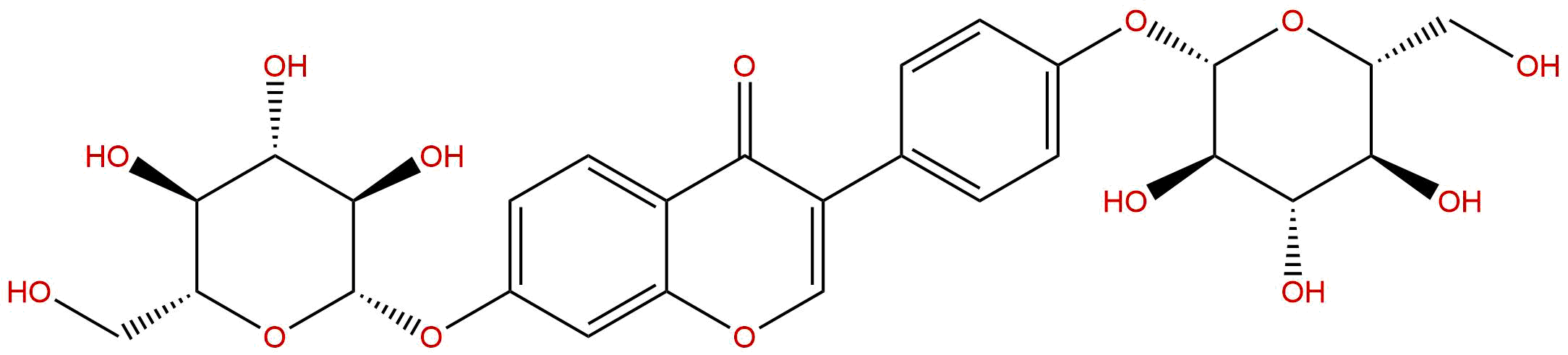
Natural products have always been an important source of drug discovery and development, especially in the treatment of chronic diseases and metabolic syndrome. Plant derived active ingredients have attracted much attention due to their multi-target and low toxicity characteristics. Soy isoflavones are a class of secondary metabolites widely present in leguminous plants. Their structure is similar to endogenous estrogen 17 β - estradiol, and therefore have weak estrogenic activity, classified as phytoestrogens. Among numerous soy isoflavones, daidzein and its glycoside derivatives are one of the most extensively studied representative compounds. Daidzein 4 ', 7-diglucoside (CAS number: 53681-67-7) is a disaccharide form of daidzein formed by simultaneously attaching glucose groups to the hydroxyl groups at positions 4' and 7. Unlike common monoglycosides such as daidzin, this diglycoside has higher water solubility and unique metabolic fate. Its biotransformation process and pharmacological effects in vivo exhibit complex and interesting characteristics.
In recent years, with the continuous deepening of research on isoflavone compounds, the biological functions of daidzein-4 ', 7-glucoside have surpassed the traditional scope of estrogen regulation. Research has shown that this compound is not only an activator of peroxisome proliferator activated receptors (PPARs), but also demonstrates potential in the prevention and treatment of glucose and lipid metabolism, inflammatory response, oxidative stress, and hormone dependent diseases by regulating multiple nuclear receptors and signaling pathways. Its target network includes estrogen receptors (ESR1/ESR2), sex hormone binding globulin (SHBG), aromatase (CYP19A1), androgen receptors (AR), progesterone receptors (PGR), follicle stimulating hormone receptors (FSHR), and luteinizing hormone beta subunit (LHB), indicating its versatile role in the endocrine regulatory network. This article will provide a systematic professional review of daidzein-4 ', 7-diglucoside from the aspects of chemical structure, plant origin, pharmacological activity, molecular mechanism, medicinal characteristics, and clinical application prospects, aiming to provide comprehensive theoretical references for subsequent basic research and drug development.
Chemical structure and physicochemical properties
The chemical essence of daidzein-4 ', 7-diglucoside belongs to the flavonoid glycosides. The glycoside part is daidzein (4 ', 7-dihydroxyisoflavone), and the molecular skeleton is composed of two benzene rings (A ring and B ring) connected by an oxygen-containing pyran ring (C ring). The 2nd position of the C ring is connected to the B ring, the 3rd position is a carbonyl group, and the 4th position is an oxygen atom. The structural feature of daidzein is that there is a phenolic hydroxyl group at the 7th position of the A ring and the 4 'position of the B ring, which are the sites of glycosylation modification. In the daidzein-4 ', 7-diglucoside molecule, two glucose groups are respectively connected to the hydroxyl oxygen atoms at positions 7 and 4' through β - glycosidic bonds, forming O - β - D-glucoside. The molecular formula of this compound is C ₂₇ H ∝₀ O ₁₄, with a molecular weight of 578.5230 g/mol, belonging to medium-sized natural glycoside molecules.
From the perspective of physical and chemical properties, this compound exhibits significant amphiphilic characteristics. The calculated lipid water partition coefficient (LogP) is -0.5553, indicating that its hydrophilicity is significantly stronger than its lipophilicity, mainly due to the large number of hydroxyl groups brought by the two glucose groups in the molecule. The polar surface area (TPSA) is as high as 228.9700 Å ², far exceeding the recommended upper limit of 140 Å ² for oral medications. This feature suggests that the compound has poor ability to penetrate cell membranes through passive diffusion, and its transmembrane transport may be highly dependent on glycoside transporters in the gut or absorbed in the form of glycosides after deglycosylation by gut microbiota. The water solubility parameter (2.0258) further confirms its good water solubility, which is closely related to its distribution and excretion characteristics in plasma. It is worth noting that the blood-brain barrier (BBB) penetration ability of this compound was evaluated as "low", which is consistent with its substrate properties of high polarity, high molecular weight, and efflux transporters (such as P-glycoprotein), indicating that its direct action in the central nervous system may be limited, and its pharmacological effects are more mediated through peripheral targets or metabolites. In addition, the hERG inhibition risk assessment was negative, reducing the risk of cardiac toxicity; The Ames test result is 1.5, indicating a low risk of genetic toxicity, but further confirmation is needed based on the specific experimental system. These physicochemical parameters collectively outline the characteristics of daidzein-4 ', 7-diglucoside as a typical natural glycoside: high water solubility, low membrane permeability, low central exposure, and good preliminary safety.
Plant sources and extraction methods
The distribution of daidzein-4 ', 7-glucoside in nature is relatively limited, mainly found in leguminous plants, especially soybean (Glycine max) and its products. In soybean seeds, isoflavones mainly exist in the form of three glycosides (daidzein, genistein, and daidzein), among which glucoside is the most important type. Compared with the higher content of daidzin (7-O - β - D-glucoside), the content of daidzein-4 ', 7-diglucoside is usually lower and belongs to the secondary component. However, in certain specific varieties of soybeans, black beans (Glycine max var.), and fermented soy products (such as fermented black beans and miso), the proportion of double glycosides may increase due to differences in β - glucosidase activity. In addition, in medicinal plants rich in isoflavones such as Pueraria lobata, although the main component is Puerarin (8-C-glucoside), there are also small amounts of daidzein glycoside derivatives. It is worth noting that this compound can also be obtained through chemical synthesis or enzymatic synthesis, using daidzein as a substrate and introducing glucose groups at positions 4 'and 7 through glycosyltransferase or chemical glycosylation reactions.
Extracting and purifying daidzein-4 ', 7-diglucoside requires designing strategies based on its polarity characteristics. The conventional extraction process includes reflux extraction or ultrasound assisted extraction of dried plant materials (such as soybean flour) using polar solvents (such as methanol, ethanol, or aqueous ethanol). Due to its good water solubility, the hot water extraction method can also be used. After concentration of the extraction solution, liquid-liquid extraction (such as n-hexane degreasing, ethyl acetate extraction) is usually used to remove fat soluble impurities. Further purification mainly relies on column chromatography technology, including preliminary separation using macroporous adsorption resins (such as D101, AB-8), and enrichment of isoflavone glycoside components using ethanol water gradient elution at different concentrations. Subsequently, preparative high-performance liquid chromatography (Prep HPLC) or high-speed countercurrent chromatography (HSCCC) can be used for purification, with C18 reverse phase column as the stationary phase and acetonitrile water or methanol water system as the mobile phase. The baseline separation of daidzein-4 ', 7-diglucoside from structurally similar compounds such as daidzein and genistein can be achieved by adjusting the gradient program. Due to its characteristic absorption in the ultraviolet region (around 248 nm and 305 nm), the compound can be monitored online using a UV detector. The structural confirmation of the final product requires the combination of mass spectrometry (MS) and nuclear magnetic resonance spectroscopy (NMR), especially the confirmation of the β - configuration through the anomeric hydrogen signal of the glycosidic bond (δ 5.0-5.5 ppm) and coupling constant (J ≈ 7 Hz), and the verification of the connection site between the sugar group and the glycosidic hydroxyl group through HMBC spectroscopy.
Pharmacological activity research
Although the pharmacological activity research of daidzein-4 ', 7-diglucoside is not as extensive as that of its glycoside daidzein, accumulated evidence in recent years shows that this diglucoside exhibits unique activity at multiple biological levels, and some effects are closely related to its metabolic transformation.
Estrogen like activity and endocrine regulation As a member of the soy isoflavone family, daidzein-4 ', 7-glucoside itself has a lower affinity for estrogen receptors (ER), especially weaker binding ability to ER β (ESR2) than aglycones. However, the daidzein produced by the hydrolysis of glycosides by gut microbiota in the body can exert classic estrogenic excitatory or antagonistic effects. Research has found that this compound can upregulate the expression of sex hormone binding globulin (SHBG), reduce free sex hormone levels, and indirectly regulate the bioavailability of androgens and estrogens. In addition, its inhibitory effect on aromatase (CYP19A1) has also received attention, which may affect the progression of hormone dependent diseases by reducing the conversion of androgens to estrogens. In terms of the gonadotropin axis, this compound can affect the expression of follicle stimulating hormone receptor (FSHR) and luteinizing hormone beta subunit (LHB), suggesting its regulatory potential on the hypothalamic pituitary gonadal axis.
PPAR activation and metabolic regulation This compound is clearly described as a PPAR activator, which is an important characteristic that distinguishes it from other isoflavone glycosides. PPARs (including PPAR α, PPAR γ, and PPAR δ) are key nuclear receptors that regulate lipid metabolism, glucose homeostasis, and inflammatory responses. Research has shown that daidzein-4 ', 7-diglucoside or its metabolites can activate PPAR γ, promote adipocyte differentiation, improve insulin sensitivity, and reduce free fatty acid levels. At the same time, the activation of PPAR α helps promote fatty acid β - oxidation and reduce liver lipid accumulation. This dual PPAR activation mode shows potential value in the treatment of nonalcoholic fatty liver disease (NAFLD) and type 2 diabetes. In addition, the activation of PPAR is also associated with anti-inflammatory effects, reducing the production of pro-inflammatory cytokines such as TNF - α and IL-6 by inhibiting the NF - κ B pathway.
Antioxidant and anti-inflammatory activities Although glycosylation modification reduces the ability of aglycones to directly scavenge free radicals, daidzein-4 ', 7-diglucoside can be metabolized into aglycones in vivo, thereby exerting indirect antioxidant effects. In addition, the compound itself can induce the expression of antioxidant enzymes such as superoxide dismutase (SOD) and glutathione peroxidase (GPx) by activating the Nrf2/ARE pathway. In cell models, this compound can inhibit lipopolysaccharide (LPS) - induced macrophage inflammatory response, reduce the release of nitric oxide (NO) and prostaglandin E2 (PGE2), which is related to the inhibition of inducible nitric oxide synthase (iNOS) and cyclooxygenase-2 (COX-2) expression.
Protective effect on bone metabolism Given that estrogen deficiency is the main cause of postmenopausal osteoporosis, the bone protective effect of soy isoflavones has always been a research hotspot. Daidzein-4 ', 7-diglucoside binds to ER β through its glycoside form, which can inhibit osteoclast differentiation (via the RANKL/OPG pathway) and promote osteoblast activity. Animal experiments have shown that long-term administration of this compound can improve bone density and bone microstructure in ovariectomized rats, with effects comparable to low-dose estrogen, but avoiding the risk of endometrial hyperplasia.
Cardiovascular protection The protective effect of this compound on the cardiovascular system involves multiple mechanisms. By activating PPAR α and PPAR γ, the blood lipid profile is improved (reducing total cholesterol and low-density lipoprotein cholesterol, and increasing high-density lipoprotein cholesterol); It can delay the process of atherosclerosis by inhibiting the proliferation and migration of vascular smooth muscle cells; Promote vasodilation by enhancing endothelial nitric oxide synthase (eNOS) activity. In addition, there have been occasional reports of its antiplatelet aggregation and anti thrombotic effects.
Mechanism of action and molecular targets
The pharmacological effects of daidzein-4 ', 7-diglucoside are not dominated by a single mechanism, but are achieved through a complex multi-target network. Its mechanism of action can be summarized into two levels: direct action and indirect action.
Direct target action Although the glycoside itself has a weak affinity for classical nuclear receptors, research suggests that it may directly interact with certain membrane receptors or intracellular proteins. For example, as a ligand for PPARs, it can directly bind to the ligand binding domain (LBD) of PPAR γ, induce conformational changes, promote heterodimerization with retinol X receptor (RXR), and then bind to the PPAR response element (PPRE) in the promoter region of the target gene. Molecular docking studies have shown that the sugar moiety may interact with polar amino acid residues (such as Ser289, His323) in the AF-2 helix region of PPAR γ through hydrogen bonding, while the glycoside moiety is embedded in hydrophobic pockets. In addition, the compound may directly inhibit the activity of CYP19A1, and its sugar moiety may occupy the active site channel of the enzyme, interfering with the binding of androstenedione and heme.
Indirect mechanism of action This is the main pathway through which the compound exerts its biological effects. After oral administration, most of the daidzein-4 ', 7-diglucosides are hydrolyzed in the intestine by β - glucosidase (mainly derived from gut microbiota such as lactobacilli and bifidobacteria), gradually removing glycosides, and first converted into daidzein-7-glucoside (daidzein), ultimately producing daidzein. Daidzein is the main form that truly enters the systemic circulation and exerts activity. After entering target cells through passive diffusion or transporter mediation, aglycones can play the following roles: 1) bind to ER α and ER β, exert selective estrogen receptor modulator (SERM) effects, and exhibit excitatory or antagonistic activity in different tissues; 2) Inhibit tyrosine kinase activity (such as Src, EGFR) and interfere with growth factor signaling pathways; 3) Regulating epigenetic modifications, such as inhibiting histone deacetylase (HDAC) and DNA methyltransferase (DNMT), to reactivate silenced tumor suppressor genes.
Molecular target network Based on existing research, the molecular targets involved in this compound can be constructed into a functional network. The core targets include ESR1, ESR2, PPAR alpha, PPAR gamma, CYP19A1, and SHBG. The interaction (crosstalk) between these targets is crucial. For example, activation of PPAR γ can inhibit ER α - mediated proliferation signals, while activation of ER β can enhance the transcriptional activity of PPAR γ. In addition, the regulatory effect of this compound on AR and PGR may be indirect, achieved by altering the levels of sex hormone binding proteins and aromatase activity. The regulation of FSHR and LHB suggests their intervention in the reproductive endocrine axis. This multi-target synergistic mode of action suggests that daidzein-4 ', 7-diglucoside may have better efficacy and lower resistance risk than single target drugs in the treatment of complex diseases such as metabolic syndrome and hormone dependent tumors.
Evaluation of drug properties and pharmacokinetics
From the perspective of medicinal properties, daidzein-4 ', 7-diglucoside exhibits typical characteristics of natural glycoside compounds, with both advantages and challenges.
Absorption and Metabolism As mentioned earlier, the oral bioavailability of this compound is highly dependent on the deglycosylation ability of the gut microbiota. Its high water solubility and low LogP value limit its passive diffusion through intestinal epithelial cells, so the main absorption mechanism is that it is hydrolyzed by β - glucosidase in the intestinal lumen to daidzein, which is passively absorbed due to enhanced lipid solubility. There are significant individual differences in this process, which are influenced by factors such as gut microbiota composition, dietary structure, and antibiotic use. After absorption, daidzein undergoes extensive phase II metabolism in the liver, mainly producing glucuronic acid complexes and sulfate complexes. These complexes are excreted into the intestine with bile and can be hydrolyzed again by gut microbiota, forming enterohepatic circulation and prolonging the retention time in the body. The compound has a high plasma protein binding rate and mainly binds to albumin. Its distribution volume is relatively large, indicating that it can be widely distributed in tissues, especially target tissues rich in ER and PPAR (such as fat, liver, breast, bone tissue).
Metabolic stability and toxicity The compound has moderate metabolic stability in liver microsomes, mainly through the hydrolysis of glycosidic bonds and the binding of aglycone II. Its metabolites (daidzein and its complexes) are considered the main active forms. In terms of safety, hERG inhibition negative reduces the risk of cardiac toxicity; The Ames test result (1.5) is within the critical range, indicating a possible slight mutagenicity, but it is generally considered that the risk is controllable at conventional doses. Long term toxicity studies have shown that high-dose soy isoflavones may cause thyroid suppression and endometrial hyperplasia, but daidzein-4 ', 7-diglucoside has relatively weak estrogenic activity due to glycosylation modification, and theoretically is safer than daidzein.
Optimization strategy for drug properties To address the pharmaceutical bottleneck of this compound - low oral bioavailability and significant individual differences, the following strategies can be adopted: 1) prodrug design: chemical modification of the sugar group, such as introducing ester or phosphate groups, to increase membrane permeability and be specifically enzymatically hydrolyzed in vivo; 2) Formulation optimization: Using nanoliposomes, phospholipid complexes, or self microemulsifying drug delivery systems to improve their transmembrane transport efficiency; 3) Microbial regulation: Combining prebiotics or probiotics to optimize gut microbiota composition and improve deglycosylation efficiency; 4) Structural modification: Develop non glycosylated daidzein derivatives that retain PPAR activation activity while improving pharmacokinetic properties.
Clinical application prospects and prospects
Based on its multi-target pharmacological activity, daidzein-4 ', 7-glucoside has shown potential clinical application prospects in the following disease fields.
Metabolic diseases As a PPAR α/γ dual activator, this compound has unique advantages in the treatment of type 2 diabetes, non-alcoholic fatty liver disease (NAFLD) and atherosclerosis. Compared with classic PPAR gamma agonists such as Rosiglitazone, its activation intensity is weaker, but it may bring lower risks of weight gain and edema. Combined with PPAR alpha agonists (such as beta agonists), it can synergistically improve the lipid profile. Preclinical studies have confirmed its effectiveness in improving insulin resistance and reducing liver steatosis. Future clinical trials are needed to validate its efficacy and safety in patients with metabolic syndrome.
Hormone related diseases In menopausal syndrome, osteoporosis, and prostate hyperplasia, this compound, as a natural SERM, may provide an alternative to hormone replacement therapy (HRT). Its weak estrogen activity on the breast and endometrium theoretically reduces the risk of breast cancer and endometrial cancer. Regarding polycystic ovary syndrome (PCOS), its upregulation of SHBG and inhibition of CYP19A1 may help correct hyperandrogenism and ovulation disorders. In addition, its regulatory effects on FSHR and LHB suggest that it may be used for follicle development regulation in assisted reproductive technology.
Cancer Prevention and Treatment Although the role of soy isoflavones in breast cancer and prostate cancer is controversial (high doses may stimulate the growth of ER positive breast cancer), daidzein -4 ', 7-diglucoside may have chemopreventive effect on hormone dependent tumors due to its weak estrogen activity and PPAR γ activation. The activation of PPAR γ can induce tumor cell differentiation and apoptosis, and inhibit angiogenesis. In addition, its inhibition of aromatase can reduce the local estrogen level, which may be beneficial to postmenopausal breast cancer patients. Future research needs to clarify the differences in its effects under different ER subtype expression states and explore its combined application with chemotherapy drugs or endocrine therapy drugs.
Challenges and Prospects At present, research on daidzein-4 ', 7-diglucoside is still mainly focused on in vitro and animal experiments, and clinical translation faces multiple challenges. Firstly, the uncertainty of its pharmacokinetic characteristics (large individual differences) poses difficulties for dose design. Secondly, although its multi-target nature brings widespread activity, it also increases the risk of off target effects. In addition, as a natural product, its intellectual property protection is difficult and its commercial development motivation is insufficient. Future research directions should include: 1) using metabolomics and gut microbiota analysis to establish personalized dosing regimens; 2) Develop highly selective structural analogues to isolate the activity of different targets; 3) Conduct high-quality, multicenter randomized controlled clinical trials to clarify their efficacy and safety in specific indications; 4) Explore its application in functional foods and dietary supplements for daily health care at lower doses.
Conclusion
The research value of daidzein-4 ', 7-diglucoside, as a relatively minor but uniquely functional disaccharide in the soy isoflavone family, is being re evaluated. From a chemical structure perspective, the introduction of two glucose groups endows it with unique physicochemical properties and metabolic fate; From the perspective of pharmacological activity, it is not only a classic plant estrogen, but also an activator of PPARs, playing a dual role in metabolic regulation and endocrine regulation. Its mechanism of action involves a complex multi-target network, covering nuclear receptors, metabolic enzymes, transporters, and signaling pathways, reflecting the typical characteristics of natural products with multiple targets and pathways. Despite the challenges of low oral bioavailability and significant individual differences in drug development, it is expected to overcome these obstacles through strategies such as prodrug design, formulation optimization, and microbiota regulation. With the deepening understanding of the interaction between gut microbiota and host metabolism, as well as the popularization of precision medicine concepts, the application prospects of daidzein-4 ', 7-diglucoside and its derivatives in the fields of metabolic syndrome, hormone related diseases, and tumor chemoprevention are worth looking forward to. Future research should focus on elucidating its in vivo active forms, identifying the structural biology basis of key targets, and verifying its translational potential through rigorous clinical studies, ultimately benefiting humanity with the health benefits of this natural molecule.